Yellow Seedlings on Lavender: Causes, Checks & Fixes
Quick answer
If lavender seedlings are yellow, first let the tray surface dry slightly before watering again. Most cases come from wet, low-oxygen mix plus weak light, not true nutrient shortage. Check the stem collar right at the soil line: firm stems can recover, but mushy collapsed collars point to damping off and those seedlings will not rebound.
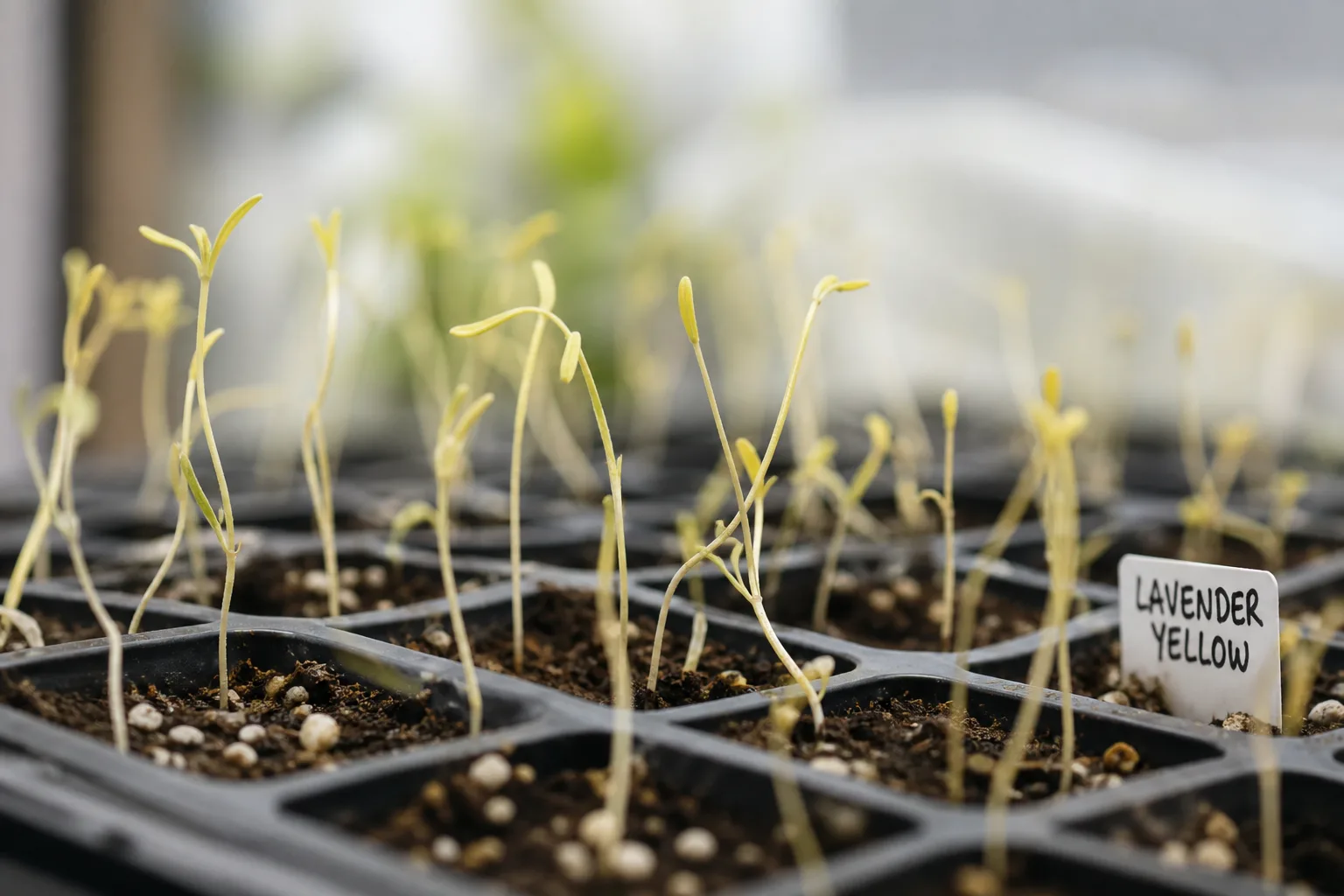
Yellow Seedlings on Lavender: Causes, Checks & Fixes
This guide covers yellow seedlings on Lavender. See also the general Yellow Seedlings guide, watering, and light pages for this plant.
Yellow Seedlings on Lavender: Causes, Checks & Fixes
Quick answer
If your lavender seedlings are yellow, take one action first: pause watering until the media surface is no longer wet and glossy. English lavender (Lavandula angustifolia) is less forgiving of constantly wet media than many tender seedlings, because it is adapted to drier, sharply drained conditions (Missouri Botanical Garden, RHS). Yellowing in this stage is usually a tray-management issue (water, light, air, or fertilizer timing), not a signal to feed more.
Lavender often germinates unevenly, so trays can sit moist for longer than fast-sprouting herbs. That longer waiting window increases yellowing risk from wet, low-oxygen mix before seedlings are fully established.
What yellow lavender seedlings look like
On lavender, true “problem yellowing” usually appears as one of these patterns:
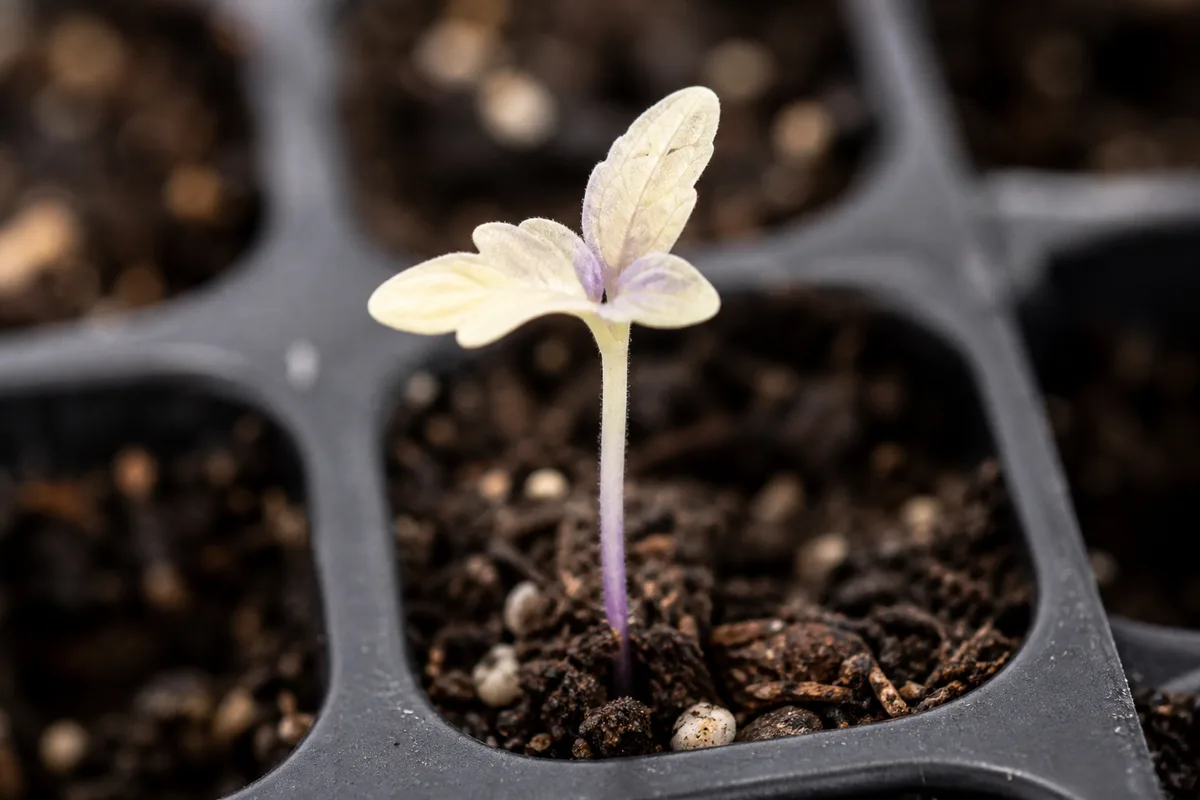
Yellow Seedlings symptoms on Lavender - compare with healthy tissue on the same plant.
- Wet-tray yellowing: leaves look washed-out yellow-green, seedlings feel soft, and growth stalls in persistently damp cells.
- Low-light yellow stretch: stems elongate and lean, leaves stay pale, and seedlings flop toward light.
- Feed stress yellowing: yellowing appears shortly after fertilizer is introduced too early or too strong.
- Early damping-off overlap: stems narrow or soften at the soil line, then seedlings topple.
Healthy lavender seedlings are typically compact and gray-green to silvery green as they establish, not bright yellow and floppy.
Why Lavender seedlings yellow
1) Media stays too wet for too long
Seedlings in constantly wet media lose root-zone oxygen, which slows growth and can trigger yellowing and collapse. Damping-off organisms are also most active when seedlings are stressed in cool, wet conditions (UMN Extension, Penn State Extension, Wisconsin Horticulture).
2) Light is too weak
Windows often do not provide enough intensity for compact seedlings. Weak light produces stretched, pale growth and makes yellowing look like a nutrient problem when it is actually a light problem (UMN Extension). For indoor starts, aim for a consistent 12 to 16 hours of strong artificial light and keep fixtures close enough to avoid stretching.
3) Fertilizer is added too early or too strong
Lavender generally prefers lean fertility once mature, and seedlings can be especially sensitive to high salts in starter cells (Missouri Botanical Garden, Iowa State Extension). Overfeeding young roots can cause yellowing that resembles deficiency.
4) Damping off starts in susceptible seedlings
Damping off is caused by several fungi and water molds and can kill seedlings quickly, especially in high humidity and overcrowded conditions (RHS, UMN Extension).
How to confirm the cause
Use this order so you do not chase the wrong fix:
- Collar check (highest priority): pinch gently at the soil line. Firm = potentially recoverable. Mushy/pinched = likely damping off.
- Moisture check: if the top stays wet all day, watering is too frequent or drainage is too slow.
- Light check: pale, long stems signal weak light even when moisture is acceptable.
- Fertilizer check: recent feeding before strong true-leaf growth raises feed-stress risk.
- Pattern check: tray-wide decline in humid conditions points toward disease pressure more than deficiency.
Yellow seedlings vs lookalikes on lavender
| Pattern | Most likely issue | What confirms it | What to do first |
|---|---|---|---|
| Yellow + soft in wet cells | Overwatering / low oxygen | Surface rarely dries, roots weak | Pause watering until surface lightens |
| Pale + stretched + leaning | Low light stress | Long thin stems reaching for light | Increase light intensity and duration |
| Yellow soon after feeding | Fertilizer stress | Timing closely follows feed | Flush lightly and stop feeding |
| Yellow + pinched/mushy stem base | Damping off | Collapse at soil line | Remove affected seedlings and improve airflow |
If you are unsure between this page and related issues, use:
- Lavender leggy seedlings for mostly stretch without collar damage.
- Lavender damping off for clear collapse at the soil line.
- Lavender yellow leaves for mature lavender chlorosis, not seedling trays.
Scope router: pick the right lavender page
| If you see this first | Start here | Why this is the best fit |
|---|---|---|
| Pale, stretched stems reaching for light | Lavender leggy seedlings | Stretch from weak light is usually structural, not true chlorosis |
| Sudden collapse at the soil line with mushy collars | Lavender damping off | This is a disease-pressure emergency, not a nutrition issue |
| Yellowing on established outdoor or potted plants | Lavender yellow leaves | Mature-plant chlorosis has different root and soil causes |
| Poor emergence plus later weak yellow starts | Lavender seeds not germinating | Slow or uneven emergence often drives overwatering mistakes |
The first fix to try
Let the top of the mix dry slightly before the next watering cycle. That single change reduces oxygen stress and slows damping-off pressure while you reassess light and spacing. Do not apply fertilizer as your first response to yellow seedlings.
Step-by-step recovery
- Cull failed seedlings: remove any cell with a mushy, collapsed collar.
- Correct moisture rhythm: water only when the surface has lightened and cells feel lighter in weight.
- Increase usable light: keep grow lights close enough for compact growth and run a consistent daily photoperiod.
- Improve air movement: open domes after emergence and use gentle airflow to reduce stagnant humidity.
- Delay fertilizer: wait until seedlings are established with true leaves and active growth.
- Thin crowded cells: crowding holds humidity and increases disease pressure.
If collapse has spread through much of the tray, restarting in clean containers and sterile media is usually more reliable than trying to rescue every cell (UMN Extension, Texas A&M Plant Disease Diagnostic Lab).
Recovery timeline
- Low-light yellowing: often improves within several days after light is corrected.
- Overwatering yellowing: improvement is usually visible in 3 to 7 days if collars remain firm.
- Fertilizer stress: new growth may normalize after feed is stopped; damaged tissue may stay discolored.
- Damping off: affected seedlings do not recover; focus on stopping spread to healthy cells.
Judge recovery by new growth color and stem firmness, not by old cotyledons returning to perfect color.
Causes to rule out before adding nutrients
- Normal cotyledon aging: some cotyledon fade is expected as true leaves develop.
- Cold stress from low media temperature: slow growth in cool media increases disease vulnerability (Penn State Extension).
- Generic “lavender is hungry” assumption: nutrient deficiency is usually not the first diagnosis in fresh seed-start mix.
What not to do
- Do not keep repeatedly saturated cells “just in case.”
- Do not keep a humidity dome sealed after emergence.
- Do not treat every yellow seedling with fertilizer.
- Do not leave collapsed seedlings in place where disease can spread.
How to prevent yellow seedlings next time
Use clean trays, sterile seed-starting media, and strong light from day one (UMN Extension). Keep irrigation even but never constantly wet, and prioritize drainage because lavender performs best in drier, sharply drained conditions (Iowa State Extension, RHS, Missouri Botanical Garden).
If you are starting lavender from seed in cool seasons, remember germination can be slow. That longer tray period means more time for overwatering mistakes, so build a watering routine around tray weight and surface drying rather than a fixed daily schedule.
For seed-start setup, use a free-draining mix and avoid deep sowing that keeps seed zones wetter for longer than needed. If emergence is poor and uneven, use the prevention checklist on Lavender seeds not germinating before increasing water frequency.
Lavender care cross-check
Seedling-stage success should already reflect adult lavender biology: fast drainage, bright light, and modest fertility. When your tray setup matches that profile, yellowing rates drop sharply.
For full culture alignment after seedlings stabilize, cross-check with Lavender propagation and Lavender overwatering.
When to worry
Treat it as urgent when you see any combination of:
- rapid collapse at the soil line
- mushy stem bases
- tray-wide decline despite reducing water
- fuzzy or mold-like growth near stems
At that point, remove affected cells immediately and consider restarting in sanitized equipment.
Conclusion
Most yellow lavender seedlings improve when you correct moisture and light early, before stem collars soften. Start with a drying interval, then stabilize light, airflow, and spacing. For overlap cases, route next steps quickly with Lavender leggy seedlings, Lavender damping off, and Lavender seeds not germinating.
When to use this page vs other Lavender guides
- Lavender watering guide - Use for routine moisture checks before assuming yellow seedlings is the main issue.
- Lavender problems hub - Browse all 51 common issues on this species.