Leggy Seedlings on Lavender: Causes, Checks & Fixes
Quick answer
Leggy lavender seedlings stretch from too little light during slow multi-week germination, warm dim windowsills, or crowded trays. First step: move trays under a grow light 5–8 cm above tops for 14–16 hours daily, remove humidity domes after emergence, and thin to one seedling per cell.
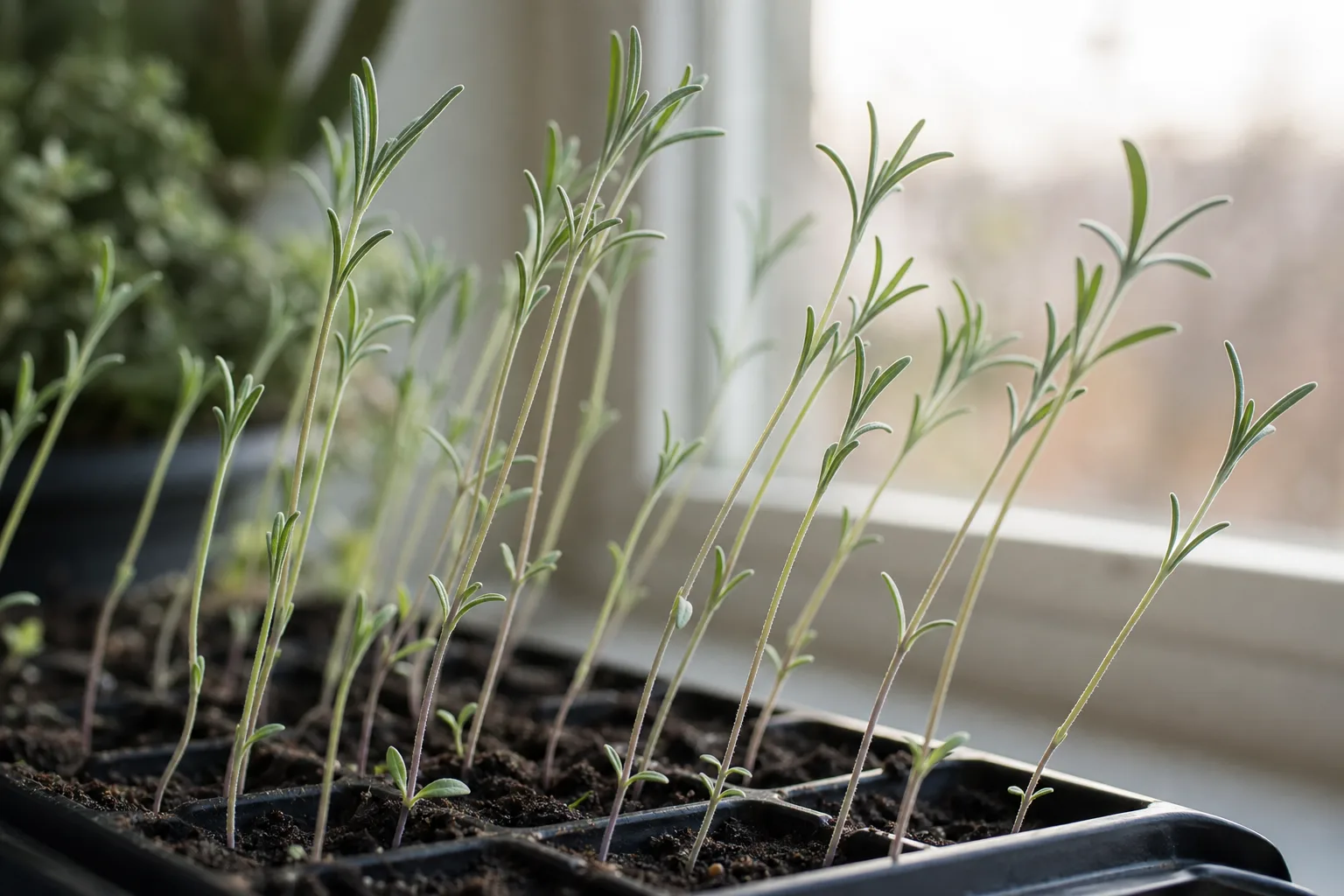
Leggy Seedlings on Lavender: Causes, Checks & Fixes
This guide covers leggy seedlings on Lavender. See also the general Leggy Seedlings guide, watering, and light pages for this plant.
Leggy Seedlings on Lavender: Causes, Checks & Fixes
Quick answer
Leggy seedlings on English lavender (Lavandula angustifolia) are stretched thin stems with wide leaf spacing from insufficient light, warm dim windowsills, or crowded trays-not slow germination by itself. Lavender often needs two to four weeks (sometimes longer without stratification) before sprouts appear, so trays sit under weak light far longer than fast herbs. That waiting window is when most stretch happens.
First step: add bright supplemental light immediately-a grow lamp 5–8 cm (2–3 in) above the tops for 14–16 hours daily. Remove humidity domes after emergence, thin to one seedling per cell, and plan a gritty pot-up once true leaves firm up. If germination was uneven or trays sat covered too long, cross-check Lavender seeds not germinating before assuming light alone failed.
What leggy lavender seedlings look like
On lavender, etiolation shows a recognizable tray pattern:
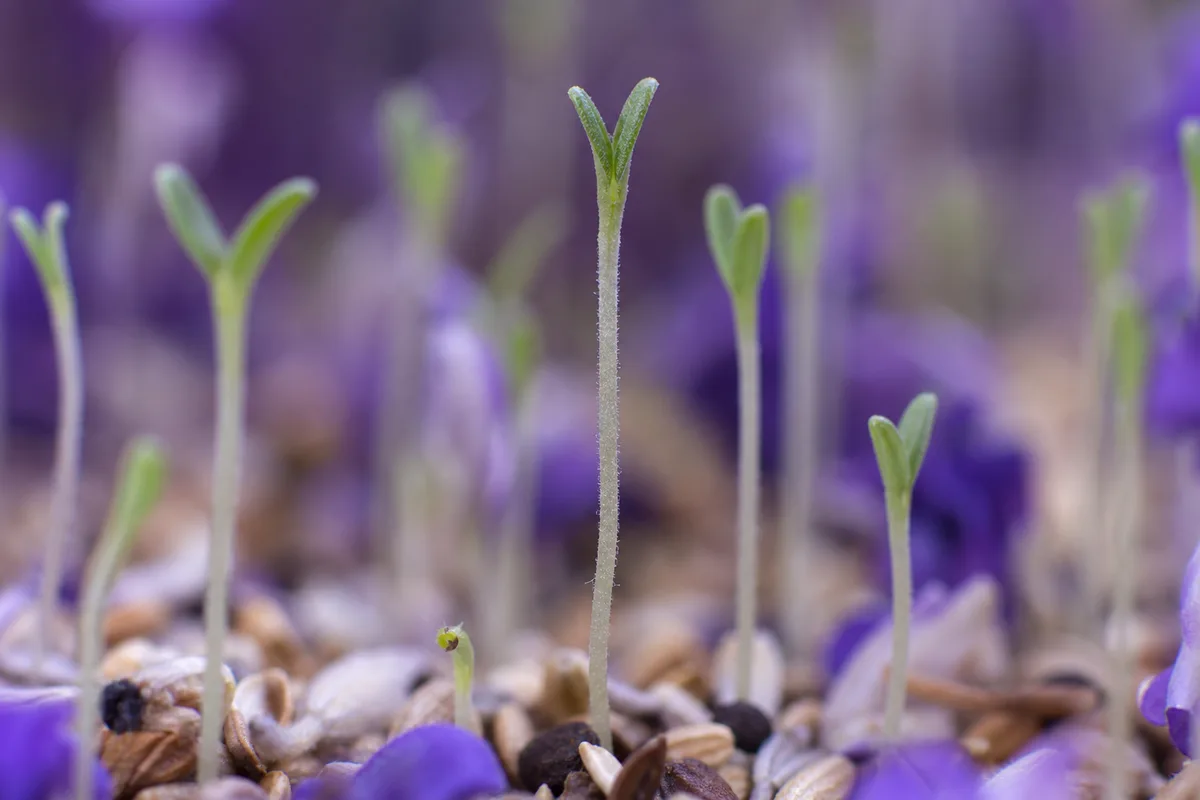
Leggy Seedlings symptoms on Lavender - compare with healthy tissue on the same plant.
- Long internodes - bare stem between silvery-green cotyledons or true leaves is longer than the leaf blades
- Pale, silvery-green foliage - chlorophyll lags when photons are scarce, the same fade-and-stretch pattern UMD Extension describes on light-starved indoor plants
- Window lean - all seedlings tilt toward the brightest side of the tray
- Thin, floppy stems - gentle touch bends the stem; it may not support its own weight
- Firm collar - tissue at the soil line stays hard, unlike damping-off mush
Healthy lavender seedlings under adequate light stay relatively compact until several pairs of true leaves develop. Stretch that begins in week two or three of a slow-germination tray is culture failure, not normal Mediterranean growth habit.
Why lavender seedlings get leggy
Slow germination plus weak light
Lavender seed is slow to germinate and many named cultivars do not come true from seed-so trays often remain in starter cells for weeks before you have a full canopy. During that interval, any windowsill-only setup lets stems elongate before true leaves expand. This is the core lavender-specific risk: the problem is not that sprouts are late; it is that dim culture continues while you wait.
Heat without matching photons
Bottom heat mats encourage cell division in warm soil. Without overhead light of equal intensity, that warmth produces fast, weak stretch-the same etiolation pattern UMN Extension documents when seedlings lack adequate artificial light. Never run a heat mat in a dim corner without a lamp directly above the tray.
Humidity domes left on after emergence
Clear domes help retain moisture during the long lavender germination window. Once cotyledons emerge, however, domes should come off when seedlings touch the plastic-otherwise they shade and humidify the canopy. Stagnant humid air also raises damping-off pressure on slow trays (UMN Extension).
Overcrowded cells
Multiple seedlings per cell shade each other. Even a reasonably bright room fails when canopies overlap. Thin to the strongest seedling early.
Windowsill-only culture
Windowsill-grown seedlings tend to be tall with thin, bent stems. Late-winter and early-spring sun is weak compared with a lamp kept 2–4 in (5–10 cm) from the tops. Lavender needs full sun and sharply drained soil once established-seedlings inherit that demand from emergence onward (RHS).
How to confirm the cause
Work through these checks before Lavender repotting guide or feeding:
- Light distance and duration - Are tops within 5–8 cm of a grow lamp for 12–16 hours daily? If you rely on a window alone during seed-start season, assume light is inadequate unless seedlings stay compact.
- Daily lean test - Rotate the tray 180° in the morning. Re-leaning by evening confirms active phototropism.
- Seedlings per cell - More than one strong seedling per cell means mutual shading.
- Dome status - Is a humidity cover still sealed after emergence?
- Temperature pattern - Warm nights above 21 °C (70 °F) with dim days worsen stretch; cooler 15–21 °C (59–70 °F) nights with strong light tighten growth.
- Collar firmness - Firm tissue at the soil line points to light stress. Mushy, pinched collars point to damping off instead.
If light is weak, overcrowding is present, and collars are firm, you have confirmed etiolation from culture, not disease.
Leggy seedlings vs lookalikes on lavender
| Pattern | Most likely issue | What confirms it | What to do first |
|---|---|---|---|
| Long pale stems leaning to light | Seedling etiolation | Firm collar, white firm roots | Add grow light 5–8 cm above tops |
| Mushy pinched collar, overnight collapse | Damping off | Soft stem base, tray-wide spread in humid air | Remove affected cells; improve airflow |
| Uniform yellow in wet cells | Overwatering / low oxygen | Surface rarely dries | Pause watering; see yellow seedlings |
| Long bare stems on mature potted plant | Mature leggy growth | Woody base, established root ball | Route to leggy growth |
Scope router: pick the right lavender page
| If you see this first | Start here | Why this is the best fit |
|---|---|---|
| Thin stretched stems in a seed tray after slow sprout | This page | Propagation-tray etiolation during multi-week germination |
| Long weak stems on an established outdoor or potted shrub | Leggy growth | Mature subshrub stretch-not seed-start culture |
| Yellowing with wet collars in humid trays | Yellow seedlings | Moisture and oxygen stress often precede collapse |
| Collapse at soil line with mushy tissue | Damping off | Fungal emergency-not fixable with more light alone |
| Empty cells or sprouts still underground after weeks | Seeds not germinating | Dormancy, depth, or temperature-not post-emergence stretch |
First fix for lavender seedlings
Move the tray under a grow light 5–8 cm above the seedling tops.
Hang the fixture on chains so you can raise it as plants grow. Run the lamp 14–16 hours per day on a timer. Lack of light is the major cause of elongated, skinny stems on indoor seedlings-correction belongs before fertilizer, deeper pots, or outdoor hardening.
Immediately after the lamp is running:
- Remove humidity domes if cotyledons have cleared the soil
- Thin to one seedling per cell - snip extras at soil level rather than pulling roots
- Lower room temperature toward 15–21 °C if the tray was on a heat mat in a dim room
Step-by-step recovery
- Install supplemental LED or fluorescent grow light; raise daily to maintain the 5–8 cm gap as stems grow.
- Thin overcrowded cells the same day you notice stretch.
- Transplant into 7–10 cm pots with roughly one part compost to three parts grit or perlite when true leaves are firm and roots fill the cell.
- Bury elongated green stem only up to the first true leaves-the crown junction stays above the mix. Adult lavender crowns must remain high later; see lavender repotting for long-term depth rules.
- Water when the surface dries; avoid resealing domes after sprout.
- Add gentle fan airflow across the tray to strengthen stems and reduce fungal pressure.
- Harden gradually to outdoor full sun over 7–10 days before permanent planting-match the acclimation approach on the lavender light guide.
Recovery timeline
Leggy lavender seedlings do not shrink-old stretched internodes stay long. Judge recovery by new growth:
| Timeframe | What you should see |
|---|---|
| 3–7 days after light correction | Lean reduces; new leaves emerge closer together |
| 2–3 weeks | Stem color deepens; touched stems feel firmer |
| 4–6 weeks | Upper growth looks proportionate; buried green stem roots if potted deep |
If stems keep elongating under the lamp, the fixture is still too far, too dim, or on too short a timer. Move it closer before repotting again.
Signs the problem is worsening: stems fold at the soil line, cotyledons yellow while mix stays wet, gray mold on the surface, or cluster collapse-these suggest damping off or overwatering, not light alone.
What not to do
- Do not wait for “true leaves before lights”-bright overhead light belongs from emergence day one.
- Do not fertilize heavily to fatten weak stretch; lean fertility suits lavender (Missouri Botanical Garden).
- Do not transplant floppy seedlings straight to blazing outdoor sun without hardening.
- Do not bury woody tissue or the crown during rescue pot-up.
- Do not confuse tray stretch with mature leggy growth on established plants.
How to prevent leggy lavender seedlings next sowing
Build the setup before sprouts appear:
- Stratify seed if needed - cold stratification improves speed and uniformity on many lavender lines; uneven slow emergence extends dim tray time (RHS). Full protocol lives on Lavender seeds not germinating.
- Sow under grow lights from day one - keep lamps 5–8 cm above the canopy and run 14–16 hours daily.
- Remove domes at emergence - not when true leaves appear.
- Pair bottom heat with overhead light if you use a mat.
- Use gritty, fast-draining mix in individual cells early; lavender hates wet stagnation (Illinois Extension).
- Thin early to one seedling per cell when the first true leaves show.
If seed starts repeatedly fail, lavender propagation from softwood cuttings is often more reliable than fighting another dim tray-especially for named cultivars that do not come true from seed.
Lavender care cross-check
Seedling culture should preview adult needs: bright light, sharp drainage, modest fertility. Leggy tray starts become leggy mature lavender if light never improves-correct at the propagation stage, not after years of shade. Once seedlings harden off, align permanent placement with the lavender light guide full-sun targets.
When to worry
Treat it as urgent when:
- Stems are so floppy they break when moved-support with deeper pot-up and corrected light within 24 hours
- Collars turn mushy-switch to damping off protocol
- More than half the tray collapses despite light correction-restart in clean media rather than rescuing every cell
Low urgency compared with damping off, but act before outdoor transplant season if stems cannot survive wind during hardening.
Related tool
Use the Plant Problem Diagnosis Tool to narrow causes for leggy seedlings on this plant before changing multiple variables at once.
Related guides
- Lavender propagation - cuttings vs seed, stratification, and restart paths
- Lavender seeds not germinating - slow emergence before stretch begins
- Lavender damping off - mushy collar confusion
- Lavender leggy growth - mature subshrub etiolation scope boundary
- Lavender yellow seedlings - nutrient vs light vs moisture yellowing
- Lavender light - adult full-sun requirements after hardening
Conclusion
Leggy lavender seedlings almost always mean insufficient light during slow indoor germination, often combined with warm dim windowsills or overcrowded trays. Add strong supplemental light immediately, remove domes after emergence, thin cells, and pot up into gritty mix with only green stem buried. Stocky silver adult lavender starts with stocky lit seedlings-route mature stretch questions to leggy growth and germination delays to seeds not germinating.
Recommendations were checked against Missouri Botanical Garden L. angustifolia data, Illinois Extension lavender culture notes, the RHS lavender growing guide, UMN Extension indoor seed-starting guidance, and LeafyPixels propagation and sibling problem guides before publication.
When to use this page vs other Lavender guides
- Lavender watering guide - Use for routine moisture checks before assuming leggy seedlings is the main issue.
- Lavender problems hub - Browse all 51 common issues on this species.