Fungus Gnats on Lavender: Causes, Checks & Fixes
Quick answer
Fungus gnats on lavender almost always mean the potting mix stays moist longer than this drought-tolerant Mediterranean herb can tolerate. First step: let the top 2–5 cm of soil dry completely before the next watering, and set yellow sticky traps at the pot rim.
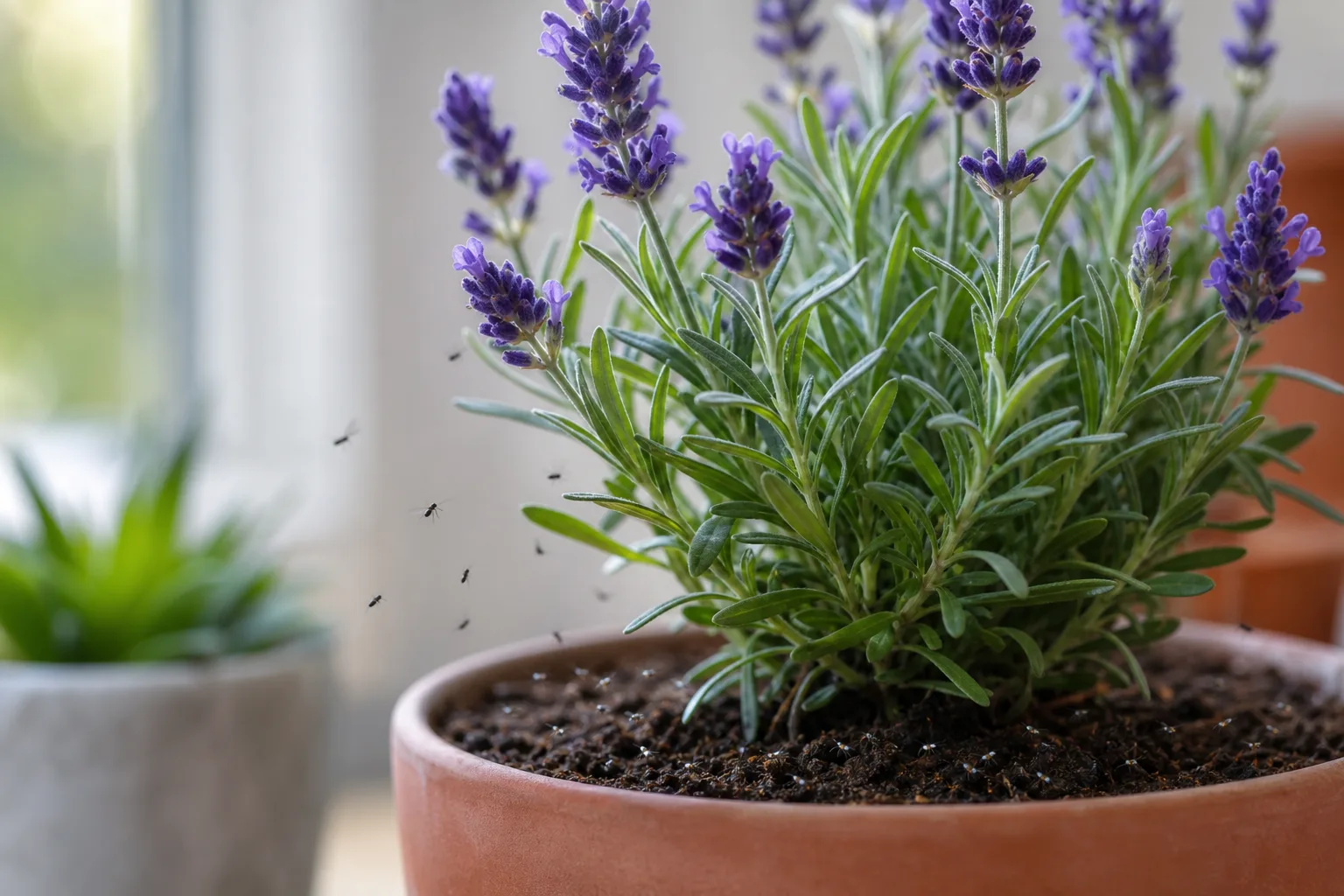
Fungus Gnats on Lavender: Causes, Checks & Fixes
This guide covers fungus gnats on Lavender. See also the general Fungus Gnats guide, watering, and light pages for this plant.
Fungus Gnats on Lavender: Causes, Checks & Fixes
Quick answer
Fungus gnats on lavender almost always mean the potting mix stays moist longer than this drought-tolerant Mediterranean herb can tolerate-not that the plant is inherently pest-prone.
First step: let the top 2–5 cm of soil dry completely before the next watering, and set yellow sticky traps at the pot rim.
That single change attacks the gnat life cycle and aligns with how lavender should be watered anyway. Adults are mostly a nuisance, but larvae in the top layer of moist mix feed on fungi, organic debris, and tender feeder roots. On a plant that does poorly in wet or waterlogged soil, chronic dampness is the real problem gnats expose.
Two depth checks serve different jobs: the top 2–5 cm must dry to disrupt gnat eggs and larvae; the 7 cm dry-down governs when to resume deep watering per lavender watering culture.
Why lavender gets fungus gnats
English lavender (Lavandula angustifolia) evolved on dry, stony Mediterranean slopes. It wants full sun and well-drained soil with long dry intervals between deep soaks. Fungus gnats want the opposite: persistently moist organic topsoil where females lay eggs. When those two habitats overlap, you get flies-and a lavender plant sitting in conditions that invite root stress and eventual crown rot.
The mismatch usually comes from how lavender is grown at home, not from the species attracting gnats uniquely:
Overwatering on a calendar. Lavender is often watered like a leafy houseplant. If the top 2–5 cm is still damp but you water again because the foliage looks stiff or the pot feels light on a schedule, the surface never dries and larvae stay viable in the upper 5–8 cm of mix.
Peat-heavy nursery or potting mix. Grocery-store lavender often arrives in moisture-retaining peat that never dries on a windowsill. Standard indoor blends hold water and break down into fungus-friendly organic matter-exactly what gnat larvae eat. Lavender needs gritty, fast-draining media per the lavender soil guide. Peat-rich mix keeps the root zone wet longer and doubles as gnat habitat.
Winter indoor overwintering. Lavender moved inside for winter often lands in dim, cool rooms with sharply reduced evaporation. Cautious extra watering creates weeks of damp surface soil-ideal for gnats, fatal for lavender roots over time. This is one of the most common scenarios: gnats appear on an otherwise healthy-looking woody plant because the surface never dries even though you believe you are watering sparingly.
Terracotta vs. plastic pots. Terracotta breathes and dries faster than plastic-often the difference between a surface that crusts dry in three days versus one that stays dark and cool for a week. If gnats persist on plastic in a cool room, switching to holed terracotta can speed dry-down without changing your watering intent.
Oversized pots and saucer water. A pot much larger than the root ball holds a wide ring of wet mix the plant never dries. Standing water in saucers keeps the bottom saturated even when the surface looks acceptable.
Monsoon or heavy rain on outdoor containers. Lavender in open rain without shelter can sit in saturated mix for days. Gnats follow the wet surface; overwatering damage follows if drainage is poor.
New plant introduction. Gnats hitchhike in nursery media and spread to nearby pots. A fresh lavender from a greenhouse bench can bring eggs home even when the plant looks clean at purchase. Quarantine new pots for two to three weeks with their own sticky traps.
Gnats are a moisture alarm for lavender. Fixing the wet habitat usually matters more than chasing every flying adult.
What fungus gnats look like on lavender
Adults:
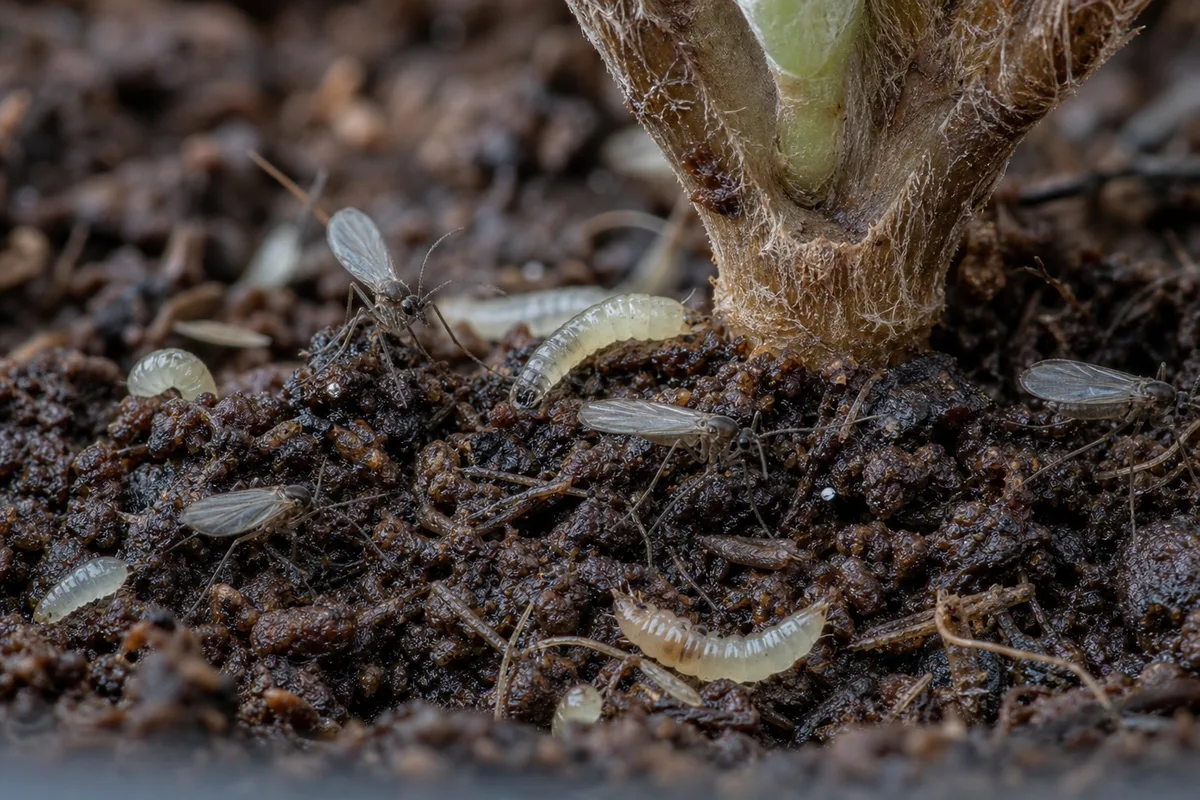
Fungus Gnats symptoms on Lavender - compare with healthy tissue on the same plant.
- Tiny dark or grayish flies, roughly 2–3 mm long, resembling small mosquitoes
- Cloud of insects when you water, move, or bump the pot
- Resting on the soil surface, pot rim, or nearby windows-especially in morning light on warm days
- More noticeable on indoor or sheltered pots than on lavender in open full-sun ground plantings
Larvae and soil signs:
- Glossy, translucent worm-like larvae in the top 5–8 cm when you scrape the surface gently
- Mix that stays dark and cool to the touch for many days after watering
- White fungal growth or green algae on the soil surface in severe cases
Lavender plant signals that often accompany gnats:
- Slowed new growth despite wet mix-not the spring push you expect in full sun
- Lower leaves yellowing while soil is damp (overlaps with early root stress, not drought)
- Faint sour smell from the pot when lifted
- Wilting or limp stems on wet soil-a dangerous mismatch pointing toward root rot rather than thirst
Heavy infestations rarely chew through a mature woody lavender overnight, but larvae plus constant wetness weaken feeder roots on a plant with little tolerance for stagnant moisture.
How to confirm the cause
Work through these checks before buying sprays or Lavender repotting guide everything:
- Fly behavior - Do insects rise specifically from the lavender pot when disturbed? Random kitchen fruit flies ignore soil; fungus gnats cluster at the container.
- Surface moisture - Push your finger 2–5 cm deep. If the top layer is still damp days after watering, you have both gnat habitat and a lavender watering problem.
- Larva check - Scrape aside the top 2 cm of mix with a spoon. Translucent larvae confirm breeding in that pot-not just adults passing through. A potato slice on the surface for three to four days can draw larvae up for inspection.
- Trap test - Set a yellow sticky trap vertically at the pot rim for three to five days. Multiple catches confirm an active population.
- Deep dry-down audit - Check 7 cm depth per the lavender watering guide. Water only when completely dry at that depth for routine drinks; keep the surface drier between those deep soaks.
- Drainage audit - Water until runoff, then lift the pot. Does water sit in the saucer? Are drainage holes open? Is the mix peat-heavy and spongy?
- Light cross-check - Count direct sun hours. Lavender in fewer than six hours of direct sun dries slowly indoors and stays vulnerable to gnats and rot together.
- Root sniff test - If leaves yellow on wet soil, slide the plant partly out of the pot. Firm pale roots suggest gnats are mainly a warning. Mushy brown roots mean rot has joined the picture and needs separate urgent treatment.
If traps stay empty, soil dries fast, and no larvae appear, you may be seeing incidental flies-not a pot infestation.
First fix for lavender
Stop watering until the top 2–5 cm of mix is completely dry, and place a yellow sticky trap at the pot rim.
Do not pour another drink because foliage looks dull while the soil is still damp-that extends larval survival and reduces egg and larva viability in drier media. Empty any saucer water immediately. One clear drying cycle plus traps is the correct opening move for lavender; it respects the plant’s drought rhythm and breaks the gnat cycle at the same time.
Do not repot on day one, drench with hydrogen peroxide, or fog the foliage before you confirm larvae and fix the wet surface. Do not increase watering to “help” a limp plant when the mix is already wet.
Step-by-step recovery
After the initial dry-down and trap setup, work through severity tiers:
Light infestation (few flies, firm stems, no yellowing)
- Maintain dry-top watering - Water deeply only when the full 7 cm profile is dry per lavender watering, then let excess drain freely.
- Replace traps weekly until adult catches drop to near zero for two consecutive weeks.
- Improve light - Move the pot to the sunniest spot available. More direct sun speeds evaporation.
Moderate infestation (daily flies, damp surface, slowed growth)
- Complete light-tier steps above.
- Top-dress with grit - A thin layer of coarse sand or fine gravel on the surface can discourage adults from laying eggs and matches the gritty mix lavender prefers.
- Apply BTI if larvae persist - For stubborn infestations, soak Mosquito Bits or similar BTI products in water and use that to moisten the top layer. Apply every five to seven days per label for several weeks to catch newly hatched larvae. BTI targets larvae in soil without changing lavender’s need for dry cycles between soaks.
- Bottom-water selectively if needed - For established plants in fast-draining mix, soaking from below can hydrate roots while keeping the surface drier. Skip this if mix is already waterlogged or roots are rotting.
Heavy infestation (swarms, yellowing on wet soil, larvae visible after two weeks of drying)
- Complete moderate-tier steps.
- Repot when mix will not dry - If peat-heavy nursery media stays damp for a week despite corrected watering, repot into gritty alkaline mix with open drainage per the lavender soil guide. Trim mushy roots first if rot is present.
- Quarantine new arrivals - Isolate fresh purchases for two to three weeks with their own traps so hitchhikers do not reinfest corrected lavender pots.
Avoid broad indoor insecticide sprays on an edible herb unless extension guidance for your situation recommends them and you observe label restrictions for food plants. Cultural drying and BTI usually suffice on home lavender.
Recovery timeline
Expect visible improvement in stages, not overnight eradication. Eggs and larvae continue emerging for weeks because life stages overlap.
Within three to seven days of proper dry-top watering, you should see fewer flies when watering and declining trap catches. Larval pressure drops as the surface stays dry. Two to four weeks of consistent habitat correction plus traps-or weekly BTI on stubborn pots-typically breaks the cycle on established lavender.
Plant recovery lags pest control slightly. New shoot tips should feel firm and aromatic within one to three weeks once the root zone stops staying wet. Old yellow leaves rarely green up fully; judge success by fresh growth, not restored lower foliage. Seedlings and soft cuttings may take longer or fail if roots were heavily damaged-restart from clean cuttings in dry gritty mix if collapse continues.
Lookalike symptoms to rule out
| Symptom pattern | Likely cause | Key differentiator |
|---|---|---|
| Flies from pot when disturbed | Fungus gnats | Larvae in top 5–8 cm of mix; damp surface |
| Flies around fruit bowl or compost | Fruit flies | Ignore soil; cluster on ripening produce |
| White cloud from shaken foliage | Whiteflies | Breed on leaf undersides, not in soil |
| Algae on saucer, flies on wet rim | Shore flies | Larvae on algae, not always in potting mix |
| Green fuzz on wet surface, no flies | Mold on soil | Fungal growth; may share overwatering cause |
| Crisp dry mix, no insects | underwatering on Lavender | Pot very light; soil bone dry at 7 cm |
| Yellowing + mushy roots, no flies | Root rot alone | Unpot to inspect; rot can precede gnats |
Fruit flies hover around ripening produce or compost bins, not consistently from lavender soil when disturbed.
Whiteflies rise in a white cloud from leaf undersides when stems are shaken; they do not breed in soil.
Shore flies resemble fungus gnats but breed in algae on constantly wet surfaces; confirm larvae location in the potting mix, not just on saucer slime.
Mold on soil surface often shares the same overwatering cause but is fungal growth, not insects. Fix is still drying and drainage-may overlap with gnat correction.
Underwatering stress makes lavender foliage stiff and grey; pot weight is very light. Soil is bone dry throughout, not persistently damp with flying insects.
Root rot without gnats produces yellowing and soft stems on wet mix with no flies. Unpot to inspect roots; rot can exist before or without a gnat infestation.
Mistakes to avoid
Do not water lavender on a fixed calendar while gnats are present. The top 2–5 cm surface and 7 cm dry-down must lead every decision.
Do not keep peat-heavy all-purpose or nursery mix because “herbs like organic soil.” Lavender wants aeration and fast dry-down, not moisture retention.
Do not assume gnats mean the plant is doomed. They often appear early, while correction is still straightforward.
Do not spray only adults with soapy or neem products while leaving soil soggy-adults are short-lived; larvae in moist mix drive reinfestation.
Do not leave saucers full “for humidity.” Lavender dislikes very high humidity and wet roots.
Do not fertilize a stressed, wet-rooted plant hoping to push growth. Soft nitrogen-rich shoots in damp mix worsen both gnats and rot risk.
Do not keep stressed lavender constantly moist to “help” recovery-that extends gnat habitat and invites crown rot.
Do not compost heavily infested peat from a failed pot without understanding it may carry eggs to other containers.
Lavender care cross-check during treatment
Healthy container lavender dries predictably in full sun. Use this table against your current setup while correcting gnats:
| Care target | Gnat-friendly mistake | Correct lavender norm |
|---|---|---|
| Watering trigger | Calendar or “when leaves look dull” | Dry at 7 cm depth - watering guide |
| Surface layer | Always dark and cool | Top 2–5 cm dry between drinks |
| Mix | Peat-heavy all-purpose or nursery blend | Gritty, fast-draining - soil guide |
| Pot type | Sealed plastic in cool dim room | Holed terracotta in brightest window |
| Saucer | Standing water after every drink | Emptied immediately after soak |
| Winter indoor | Extra water because plant looks stiff | Longer dry intervals; surface may take 10–14 days |
| New plants | Grouped with established pots day one | Quarantine 2–3 weeks with traps |
| Rainy season | Leaving outdoor pots in open downpour | Shelter until mix dries at 7 cm |
If gnats persist on a plant that otherwise gets good sun, the mix or pot size is usually wrong-not the species. Clay pots dry faster than plastic and can help indoors. In humid climates, lavender fails more often from overwatering than from drought; gnats are an early visible clue that you are on the wrong side of that balance.
How to prevent fungus gnats next time
Match watering to how fast your pot dries in your light, not a generic houseplant schedule. In summer sun, that might mean every five to ten days; in a cool indoor winter window, it can mean two to three weeks or longer.
Use gritty, fast-draining mix and a pot sized to the root mass. Avoid oversized decorative containers that hold wet margins.
Give at least six hours of direct sun daily so evaporation keeps pace with occasional deep watering.
Scrape fallen leaf debris from the soil surface during weekly care-decaying organic matter on wet mix feeds larvae.
Quarantine new plants with sticky traps before placing them beside established lavender.
When bringing outdoor lavender inside for winter, inspect the soil surface first and reduce watering immediately-indoor evaporation drops sharply.
Consider preventive yellow traps near high-risk pots in late fall when plants move indoors, catching hitchhikers before populations build.
When to worry - crown rot inspection and gritty repot escalation
Treat as urgent when:
- Flies increase weekly despite dry-top watering and traps
- Seedlings, newly rooted cuttings, or small starter pots collapse suddenly
- Stem bases soften or grey while mix is wet
- The plant wilts on damp soil-unpot and inspect for mushy roots immediately
- Larvae remain visible in the top layer after three weeks of corrected care and BTI
- Sour smell from the drain hole accompanies persistent gnats
Replace severely rotted plants rather than repeating endless drenches on a rootless stump. Mature woody lavender with firm roots and only moderate gnat pressure almost always recovers once soil management improves.
A few flies above dry gritty mix in full sun after a single deep watering is low urgency-confirm larvae, set a trap, and stay on dry-down rhythm.
Persistent gnats on container lavender in a cool, slow-drying indoor winter setup often precede crown rot. If soil stays wet at 7 cm depth even after you stop calendar watering, repot into gritty mix, trim any mushy tissue, and review overwatering and root rot rescue steps before the woody base fails.
Conclusion
On lavender, fungus gnats are less a mysterious pest invasion than a visible sign that soil stays wet too long for a drought-adapted Mediterranean subshrub. Dry the top 2–5 cm between drinks, hold deep watering until 7 cm is dry, trap adults, and target larvae with BTI only if needed. Fix light, mix, and drainage so the habitat stops inviting gnats-and so lavender roots stay firm, aromatic, and ready to push new silver growth.
When to use this page vs other Lavender guides
- Lavender watering guide - Use for routine moisture checks before assuming fungus gnats is the main issue.
- Lavender problems hub - Browse all 51 common issues on this species.
- Root Rot on Lavender - Different entry point when symptoms overlap with fungus gnats.
- Slow Growth on Lavender - Different entry point when symptoms overlap with fungus gnats.