No New Growth on Lavender: Causes, Checks & Fixes
Quick answer
No new growth on lavender may be normal winter dormancy on firm plants, but stalled silver shoots in growing season mean shade, wet roots, root-bound pots, or exhausted woody centers. Confirm season and crown firmness, then fix sun, repot into gritty mix, or hard-prune renewal in spring.
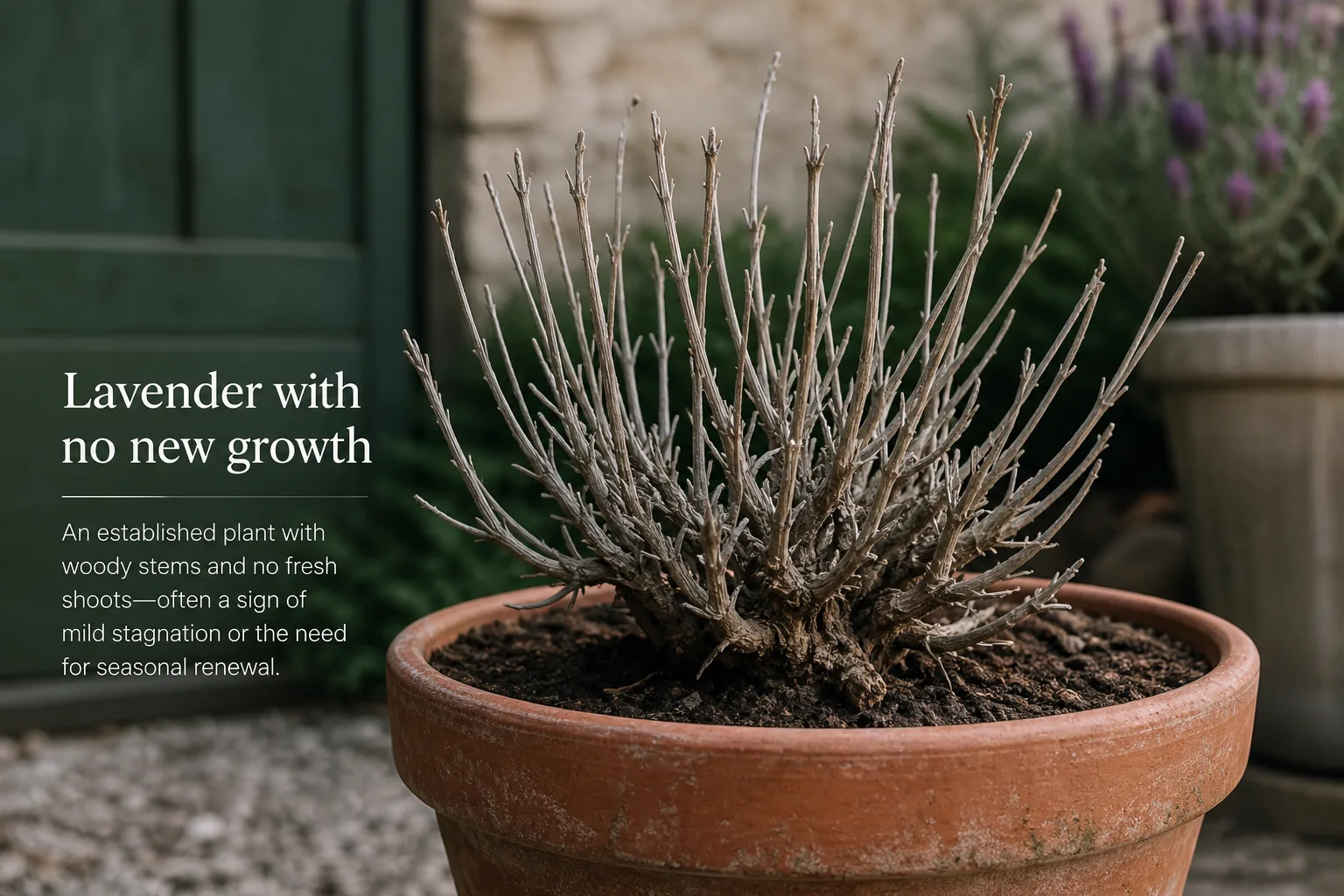
No New Growth on Lavender: Causes, Checks & Fixes
This guide covers no new growth on Lavender. See also the general No New Growth guide, watering, and light pages for this plant.
No New Growth on Lavender: Causes, Checks & Fixes
Quick answer
No new growth on English lavender (Lavandula angustifolia) in cool winter may be normal dormancy on a firm mound. In spring and summer, stalled silver shoots signal shade, wet rotting roots, root-bound pots, or an exhausted woody center-not patience.
This page covers zero silver tips through a full warm month. If your plant pushes modest new shoots but never fills out, that is slow growth-a different diagnostic path with overlapping causes but a less urgent stall.
First step: confirm season and crown firmness. Press the woody base gently-firm and dry in winter means wait. Dull grey-green foliage with no tips in Lavender light guide through May or June means fix culture, not calendar patience.
What no new growth looks like on Lavender
Healthy lavender signals life through silver tips at stem ends during the growing season. A complete stall means those tips never appear for weeks while neighbors in the same bed push fresh shoots.
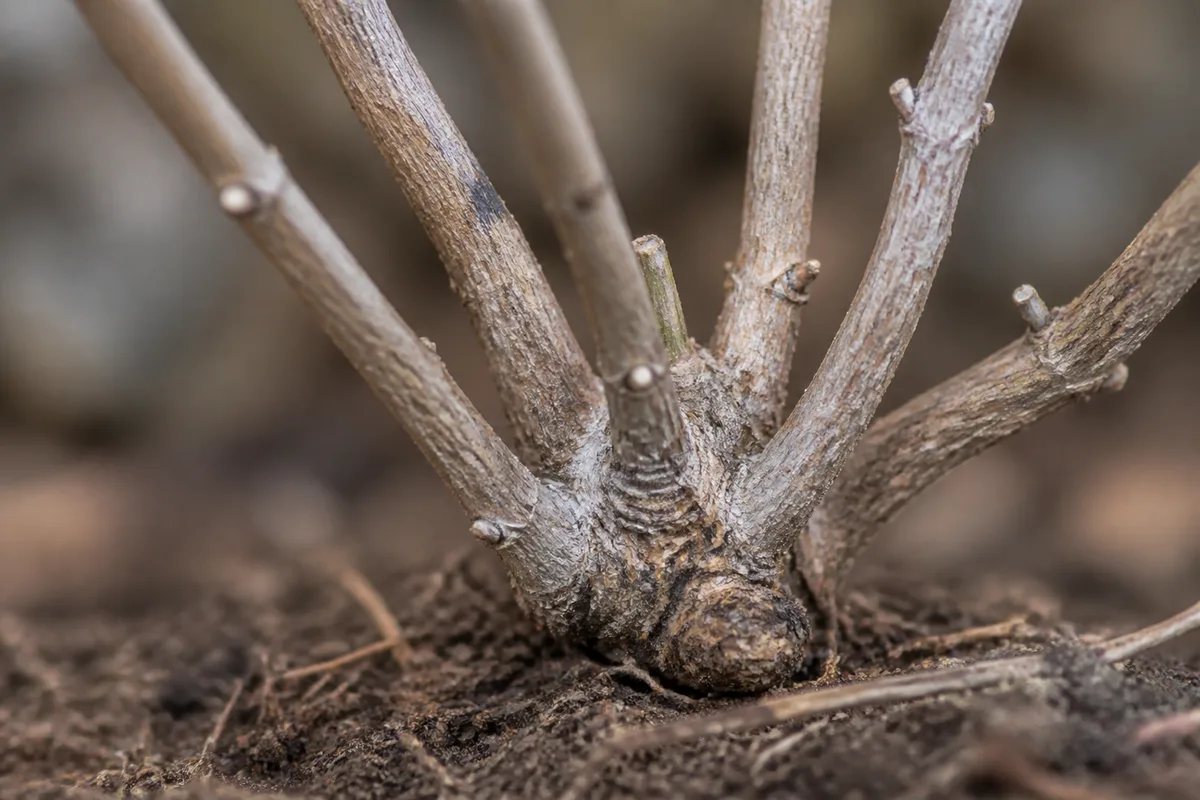
No New Growth symptoms on Lavender - compare with healthy tissue on the same plant.
Normal seasonal pause:
- Same leaf count and mound shape for weeks during cool short days
- Firm woody crown; no widespread yellowing or grey wilt
- Pot dries slowly because metabolism is low
- No silver tips, but also no decline-just winter rest on a Mediterranean subshrub
Problem stall (needs intervention):
- No new tips for six or more weeks once spring warmth arrives
- Dull grey-green foliage without the silvery sheen of active growth
- Old woody lavender shows a bare hollow center with only outer brittle wands still standing
- Wet heavy pot with grey stems-rot-linked stall before obvious collapse
- Root-bound circling roots visible when you slide the plant out
Rot-linked stall pairs static tops with chronic wet soil. Lavender often looks merely “quiet” for weeks while fine roots die underground-then the crown softens suddenly. That silent phase is why zero growth in summer deserves inspection, not assumption.
Normal seasonal pause vs. problem stall
| Pattern | Crown feel | Soil | Season | Silver tips |
|---|---|---|---|---|
| Winter rest | Firm, dry-ish | Dry-down normal | Cool months | None expected |
| Spring stall | Firm | May be dry or wet | Warm growing season | Missing weeks |
| Silent rot | Softening | Chronic wet, heavy pot | Any warm month | None; grey stems |
| Woody exhaustion | Firm but hollow | Usually dry | Mature plant, 4+ years | None on old wands |
No new growth vs. slow growth vs. woody exhaustion
These three patterns get confused because all involve a plant that “isn’t doing much.”
No new growth (this page): Stem ends stay frozen. You cannot find a single fresh silver tip through a full warm month. Causes are usually shade, wet roots, binding, dormancy misread, or hollow woody centers.
Slow growth: Tips do emerge-just slowly. Measured extension over weeks, modest annual mound expansion. See slow growth on lavender when the issue is pace, not a full stop.
Woody exhaustion: Outer wands may look alive while the center is bare brown wood with no buds. The plant is not growing because old stems lost their ability to sprout-renewal pruning or replacement is the fix, not more water.
Leggy stretch without tips overlaps not enough light-stems may lean or elongate weakly while tips still fail. Light correction is the shared first check.
Why Lavender stops growing
Several causes fit lavender’s Mediterranean subshrub biology better than generic houseplant advice.
Winter dormancy
English lavender naturally pauses in cool months. Short days and cool soil temperatures slow metabolism. Dampness more than cold kills lavender-a firm dry mound through winter is rest, not decline. Do not force growth with heat, fertilizer, or extra water during this phase.
Insufficient direct sun
Lavender needs full sun with dry well-drained soil. NC State defines full sun as six or more hours of direct sunlight daily. Chronic shade stops silver tips entirely-foliage may persist but photosynthesis cannot fuel new tissue. Indoor north windows and shaded balconies are common stall sites.
Wet roots and silent rot
Lavender evolved on dry rocky hillsides. Chronic wet mix suffocates fine roots while older leaves still look grey-green. The plant stalls weeks before stems wilt dramatically. English lavender does not like wet feet and dies out in heavy clays or peat-heavy pots that never dry. See root rot and overwatering for rescue detail.
Root-bound pots
When roots circle into a dense brick, little fresh soil remains to hold air and water. The pot may dry within hours yet produce no new tips because the root zone is exhausted. Binding stalls growth even when watering looks correct. See root-bound lavender.
Woody aging and hollow centers
Left unpruned, English lavender develops non-productive hollow centers. The RHS notes that lavender does not break new growth easily from old stems-do not cut back into bare woody stems without visible green shoots below. Annual post-bloom pruning keeps mounds compact; neglected plants need spring renewal cuts to green buds at the base. Full technique lives on the lavender pruning guide.
Heat dormancy mid-summer
In extreme heat on firm plants, extension may slow to near-zero without crown decline. This is temporary if sun and drainage are sound-distinct from a month-long spring stall with dull foliage.
Lookalike branches
- Spider mites - Fine stippling and webbing on leaf undersides after dry indoor winters can stall tips. See spider mites on lavender.
- Cold damage - Brown brittle stems after harsh winter may show no spring tips on dead wood while live shoots emerge only from the base. See cold damage.
- Recent hard prune - Temporary pause for two to four weeks after cutting is normal on firm wood.
- French lavender (L. stoechas) - Less woody than English types; hard English-style renewal cuts may not apply. Treat as a seasonal container plant in cold climates.
How to confirm the cause
Work through these checks in order before changing care.
- Season and temperature - Cool short days fit dormancy. If nights stay warm and days lengthen past mid-spring, expect silver tips within weeks on healthy plants.
- Sun hours - At midday, does the pot receive six or more hours of direct sun? Use the shadow test: a sharp hand shadow means enough light for growth.
- Crown firmness - Press the woody base. Firm and dry supports rest or culture stall. Mushy with wet soil suggests crown rot or root failure.
- Stem scratch test - Scrape a lower stem lightly. Green moist tissue underneath means the plant is alive but waiting or stalled. Brown hollow wood on that stem is dead tissue.
- Unpot inspection - Slide the plant out. White firm roots with circling at the edges confirm binding. Brown mushy roots confirm rot. Smell sour? Stop watering and trim before expecting growth.
- Woodiness check - Bare brown center with only outer wands? Renewal prune candidate if green shoots sit at the base.
- Moisture at depth - Check 7 cm down per the lavender watering guide. Chronic wet at depth explains silent stall even when the surface looks dry.
If winter rest checks pass-firm crown, appropriate dry-down, no pests-wait until days lengthen rather than forcing feed or repotting.
Decision table: rest vs. stall vs. rot vs. woody
| If you find… | Likely cause | First action |
|---|---|---|
| Firm crown, cool season, dry soil | Winter dormancy | Wait; reduce water |
| Firm crown, warm season, <6 h sun | Shade stall | Move to maximum sun; acclimate 7–10 days |
| Firm crown, warm season, full sun, circling roots | Root-bound | Repot into gritty mix one size up |
| Softening crown, wet heavy pot | Rot | Trim roots, repot dry, see root-rot guide |
| Bare center, green shoots at base only | Woody exhaustion | Spring renewal prune above green buds |
| Stippling + webbing on leaves | Spider mites | Rinse undersides; isolate plant |
First fix for Lavender
Growing season stall: move to maximum sun and confirm dry-down watering before anything else.
Relocate the pot to the sunniest spot available-open south or west exposure, not bright indirect indoors. If the plant lived in deep shade, harden gradually over seven to ten days so leaves do not scorch.
While sun is corrected, check whether soil stays wet at 7 cm depth. If chronic wetness is present, skip fertilizer and do not renewal-prune yet-dry down and inspect roots first.
Old woody plant with green shoots at the base: plan a spring renewal prune to just above visible green buds once sun and drainage are confirmed-never into bare brown wood. See lavender pruning for old-wood limits.
Winter firm rest: do nothing aggressive. Hold water until the root zone dries at depth; resume normal rhythm as spring arrives.
Do not fertilize stalled wet plants. Do not repot on day one unless roots are clearly bound or mushy.
Step-by-step recovery
Once you have identified the cause beyond normal rest, follow the matching path.
Shade stall:
- Move to full sun; acclimate over seven to ten days if coming from deep shade.
- Confirm gritty mix drains in seconds when you water.
- Wait four weeks for silver tip response before a second intervention.
Root-bound:
- Repot in early spring one container size up into gritty alkaline mix per the lavender soil guide.
- Tease outer circling roots gently; trim only mushy tissue.
- Water to settle, then dry-down only. Hold fertilizer two weeks.
Root rot:
- Unpot; trim all brown mushy roots to firm white tissue.
- Repot into clean gritty mix sized to the remaining root ball-not oversized.
- Water sparingly until new tips appear. Take cuttings from firm green shoots as backup.
Woody exhaustion:
- Wait until new green growth shows at the base in spring.
- Cut outer wands back to just above green shoots-do not cut into old wood without buds below.
- Apply light mulch; avoid wetting the crown. Expect shoots from base in four to eight weeks.
Spider mites:
- Rinse leaf undersides with lukewarm water every three to five days for three weeks.
- Increase airflow; avoid nitrogen feed while stressed.
Recovery timeline
Young firm plants in corrected sun and drainage often push silver tips within two to four weeks during warm weather.
Renewal-pruned old plants may need four to eight weeks before base shoots fill in-lavender is not a fast responder after hard cuts.
Silent rot can look static for weeks, then collapse suddenly. Monitor crown firmness weekly; if no tips appear eight weeks after root correction, the remaining root mass may be too small.
Winter dormancy resolves on its own over six to twelve weeks as days lengthen-judge by base shoots, not top wands.
Judge success by new silver tips on firm wood, not by old stems lengthening on their own.
Causes to rule out
- Winter dormancy - Firm crown, seasonal pause; low urgency until spring passes with still no tips in full sun.
- Recent hard prune - Two to four week pause on firm wood is normal.
- Heat dormancy mid-summer - Slowed extension on firm plants in extreme heat; not zero tips for a full spring month.
- Slow measured growth - Tips move but slowly; see slow growth.
- Transplant shock - Two to three week pause after repotting if crown stays firm.
What not to do
Do not heavy-feed static wet plants-nitrogen on rotting roots worsens stall.
Do not renewal-prune weak rotting plants; fix roots first.
Do not cut into bare brown woody stems without green shoots below-the plant will not regenerate from that wood.
Do not assume dead until a spring sun trial on firm wood with a scratch test.
Do not overpot when repotting-a huge wet pot around a small root ball stalls lavender worse than a slightly tight one.
How to prevent stalled growth next time
Give well-drained alkaline soil in full sun. Repot every two to three years before roots circle tightly per the lavender repotting guide. Prune spent wands after bloom annually to keep centers from hollowing. Water dry-down only per lavender watering. Plan renewal cuts before bare wood dominates the mound.
When to worry
Growing season stall with soft crown and wet soil is rot urgency-act before the woody base collapses.
Zero tips through June despite full sun, firm roots, and correct watering may need expert help. Contact your local cooperative extension office or a reputable nursery if crown firmness is ambiguous after four weeks of corrected care.
Winter firm pause is normal-do not panic until spring sun and warmth fail to wake the mound.
Related lavender problems
- Lavender overview - Sun, soil, watering, and culture hub
- Slow growth on lavender - Modest tips that inch forward but never fill out
- Not enough light on lavender - Shade stretch and closed-flower stall patterns
- Root-bound lavender - Circling roots exhausting the pot
- Root rot on lavender - Mushy roots and wet-soil rescue
- Crown rot on lavender - Soft woody base failure
- Overwatering on lavender - Chronic wet mix stall before wilt
- Lavender pruning - Renewal cuts and old-wood limits
- Lavender repotting - Gritty mix and pot sizing
- Spider mites on lavender - Stippling stall after dry winters
- Cold damage on lavender - Winter-killed stems with base-only recovery
When to use this page vs other Lavender guides
- Lavender watering guide - Use for routine moisture checks before assuming no new growth is the main issue.
- Lavender problems hub - Browse all 51 common issues on this species.