Brown Flowers on Lavender: Causes, Checks & Fixes
Quick answer
Brown lavender flowers are usually dry tan spent wands on firm stems after peak bloom-not washed-out fade. Mushy brown heads with grey fuzzy mold in humid weather point to botrytis on spent blooms; heat scorch crisps open florets after hot sun. Deadhead dry wands just above the first healthy leaves, cut moldy tissue to firm wood, and dry the crown. Soft stem bases mean crown rot-open the crown-rot guide instead of deadheading flowers only.
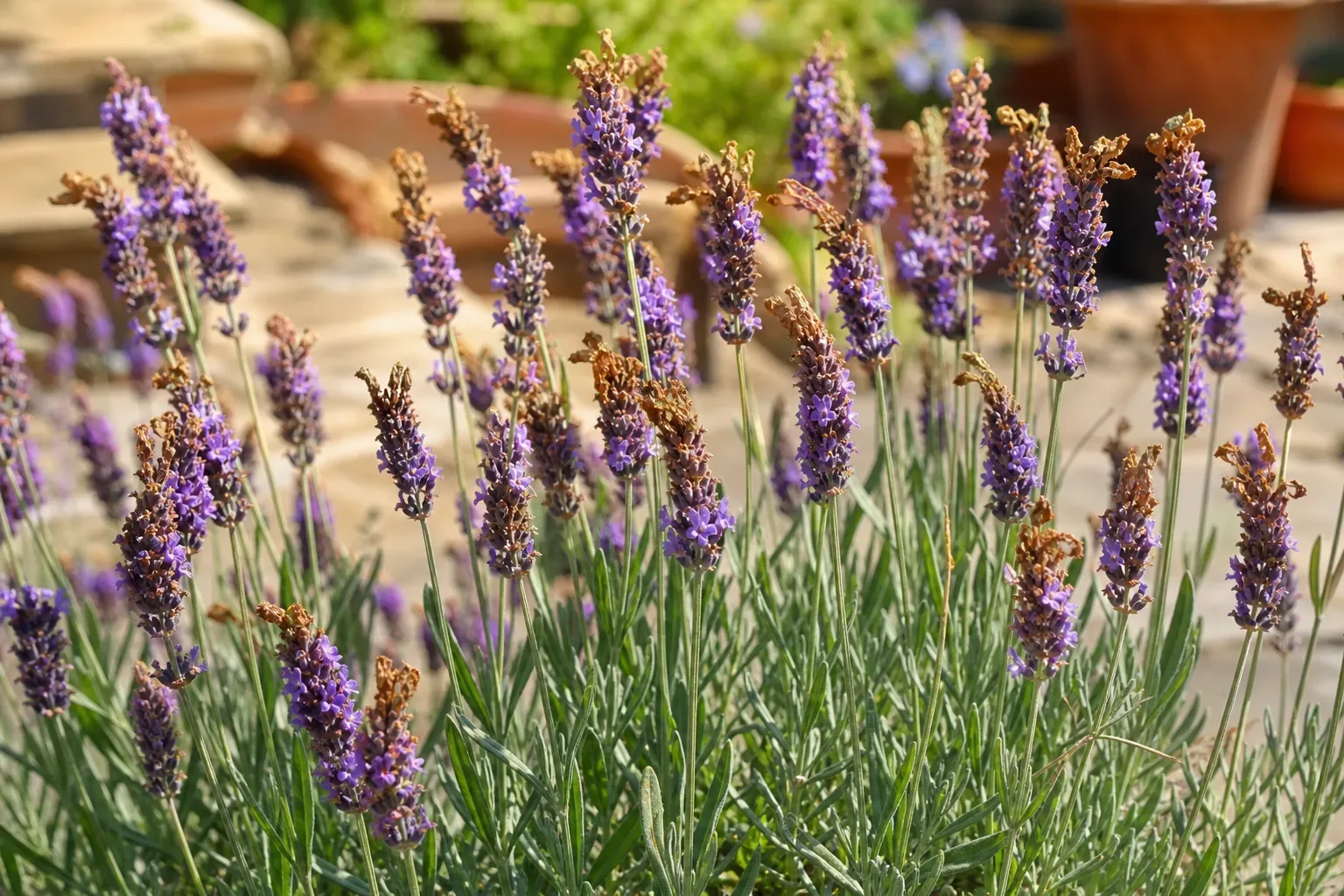
Brown Flowers on Lavender: Causes, Checks & Fixes
This guide covers flowers turning brown on Lavender. See also the general Flowers Turning Brown guide, watering, and light pages for this plant.
Brown Flowers on Lavender: Causes, Checks & Fixes
Quick answer
Brown flowers on lavender mean dry tan spent wands (normal), mushy botrytis mold in humid rain, heat-scorched open florets, or crown-rot overlap when the stem base stays wet-not the washed-out dull fade covered on the faded flowers page.
First step: squeeze the flower wand and lowest stem. Firm dry papery brown → deadhead just above the first healthy leaves. Mushy grey-mold brown → cut to firm wood, bag infected tissue, improve airflow. Soft stem base in wet mix → open crown rot rescue the same day.
This URL is the brown texture and mold sub-intent hub-dull color loss without dry papery or mushy texture belongs on faded flowers.
What brown flowers look like on lavender
Normal dry spent wands
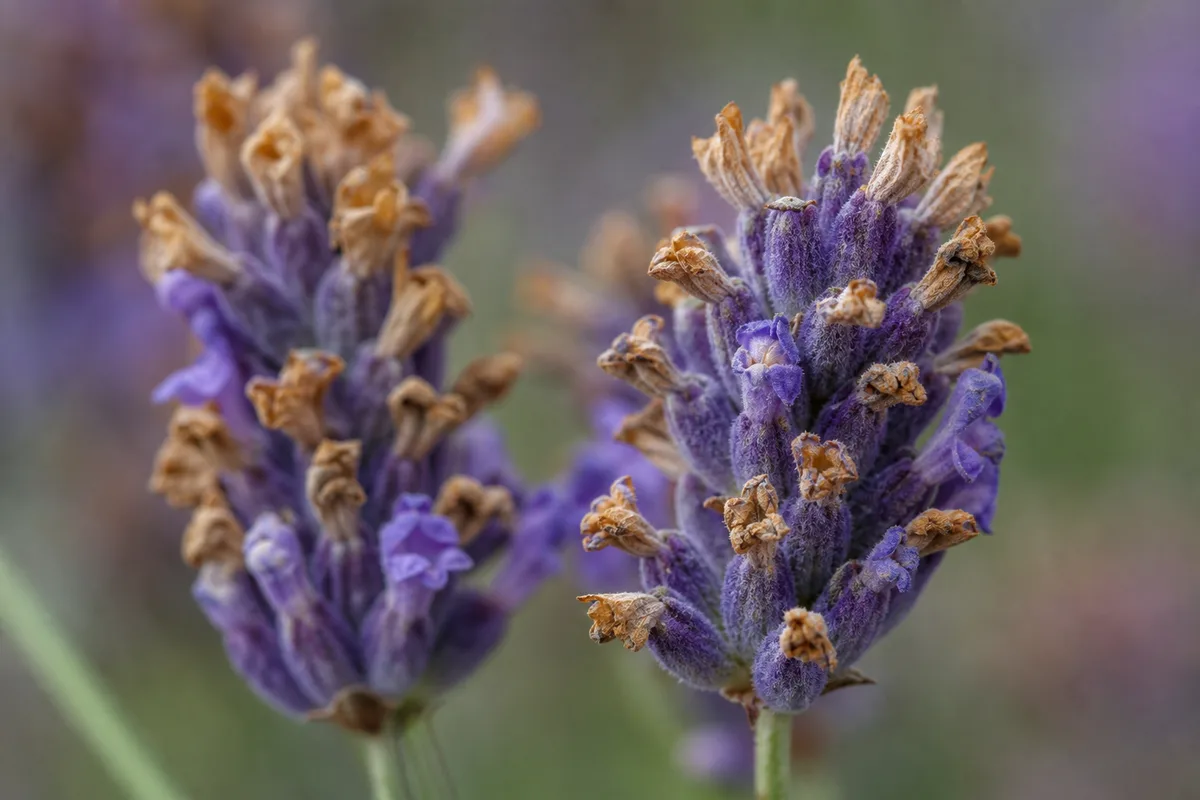
Flowers Turning Brown symptoms on Lavender - compare with healthy tissue on the same plant.
Open purple wands turn dry tan-brown top-down as individual florets complete their cycle. Stems snap dry and firm; no grey fuzz. Side shoots may still carry green buds below the browned tip. This is harvest-or-deadhead timing, not a crisis.
Botrytis grey mold on wet spent blooms
Mushy brown flower heads with grey fuzzy spores appear after rainy humid spells-often starting on dense spent blooms that stayed wet overnight. Botrytis cinerea often gains entry through dead or senescent flower tissue before spreading to living stems in contact. Stems above the mold may still feel firm early; left unchecked, wands wilt as infection girdles tissue.
Heat scorch on open florets
Open florets turn crisp brown suddenly after an extreme hot day while stems stay firm and soil reads dry at probe depth. This differs from slow top-down tan aging and from mushy mold. Scorched tips do not re-green; new buds form on side shoots if culture stabilizes.
Crown-rot overlap at stem base
Brown wands plus soft grey stem base at the soil line in a pot with standing saucer water point to wet-crown decline-not flower aging alone. Browning may climb from base upward, opposite of normal tip-down senescence. Full rescue steps live on crown rot; do not deadhead flowers only while the crown softens.
Why lavender flowers turn brown
Natural senescence after bloom completes is expected-especially if you did not harvest at peak. Lavender wands hold hundreds of tiny florets that brown individually as seeds ripen; deadheading after the floral display encourages a new flush on many English cultivars.
Mediterranean culture limits disease: full sun with extremely well-drained soil and good air circulation between plants keeps crowns dry. Dense wet flower heads in monsoon humidity invite Botrytis cinerea on spent blooms-the fungus thrives on wounded or old plant tissue and flowers under cool, wet, humid conditions. Overhead watering that wets wands overnight accelerates this entry point.
Heat above typical Mediterranean comfort bleaches then browns open flowers on plants pushed from shade or reflected heat on balconies. Crown wetness from saucer standing water, organic mulch against stems, or peaty mix that never dries spreads browning from base upward-distinct from tip-down aging.
How to confirm the cause
| Check | Normal spent | Botrytis | Heat scorch | Crown overlap |
|---|---|---|---|---|
| Wand texture | Dry, papery, snaps firm | Mushy, wet brown | Crisp dry brown tips | Brown wands, may be dry or mushy |
| Mold visible | None | Grey fuzzy fuzz on wet heads | None | Sometimes grey at base |
| Stem base | Firm at soil line | Firm early; may soften if spread | Firm | Soft, grey, wet |
| Weather cue | Post-peak bloom timing | Humid rain, monsoon | Hot dry spike | Wet saucer, soggy mix |
| Spread pattern | Tip-down on one wand | Wand to adjacent stems | Open florets only | Base upward |
Run these six checks in order:
- Texture - Dry papery vs mushy moldy?
- Mold - Visible grey fuzz on wet brown heads?
- Stem base - Firm vs soft at soil line?
- Weather - Recent monsoon vs heat spike vs normal post-bloom timing?
- Watering - Overhead on flowers or saucer standing water?
- Spread - Single wand vs multiple branches browning from base?
First fix for lavender
Deadhead dry brown spent wands just above the first set of healthy leaves on firm wood-do not cut into old bare woody stems that rarely resprout.
If wands are mushy with grey mold, cut out infected flower stems to firm wood with sterilized shears, bag and trash moldy heads (do not compost diseased blossom tissue), then stop wetting flowers and improve airflow between pots.
If the stem base is soft in wet mix, withhold the deadheading-only approach-open crown rot and prioritize drying the crown in full sun with gritty drainage per the watering guide.
Step-by-step recovery
Normal spent blooms
- Identify fully open wands with dry tan tips and firm stems.
- Snip each flower stem just above the first healthy leaf pair-avoid old wood.
- Harvest at peak next cycle if you dry bundles; earlier cuts hold color better than waiting for full brown.
- Watch for secondary bud push on side shoots within two to four weeks in full sun.
Botrytis on flower wands
- Remove mushy brown wands to firm green wood; disinfect pruners between cuts.
- Bag infected heads and dispose in trash-burying at least a foot deep is an alternative where permitted; home compost rarely kills spores.
- Pull wet organic mulch away from the crown; top-dress with gravel if needed.
- Space pots for airflow; switch to morning soil-level watering per lavender watering.
- Wait for dry weather before expecting clean new wands-many flowering plants recover when warm dry conditions return.
Heat-scorched wands
- Remove only crisp brown floret tips; leave firm stem and healthy lower leaves.
- Confirm six or more hours direct sun without reflected oven heat on balcony rails.
- Hold dry-down watering-do not flood stressed plants hoping to rehydrate dead petals.
- Cross-check heat stress if foliage silvering or wilting accompanies scorched blooms.
Crown-rot overlap
- Stop watering immediately; empty saucers.
- Unpot if mix smells sour and crown is soft-follow full trim-and-repot on crown rot.
- Take cuttings from firm upper stems if base salvage is uncertain.
- Do not expect rebloom from a rotting crown-prioritize saving firm tips.
Recovery timeline
Normal deadheading supports rebloom on many English lavender (Lavandula angustifolia) cultivars within two to four weeks when humidity drops and sun is strong . Spanish lavender (L. stoechas) often produces repeat flushes through summer with regular deadheading ; English types may offer only a smaller second flush or wait until next spring on single-flush varieties.
Mold cleanup needs several dry days before new buds stay clean-grey mold can rapidly blight flowers and spread from infected petals onto foliage or stems. Crown-soft plants may not rebloom this season; judge success by firm new silver growth, not old wand color.
Causes to rule out
- Bud drop - Buds fall before browning open; different from spent open florets.
- Frost - Blackened unopened buds after freeze, not tan dry open flowers.
- Blight - Branch wilt without starting at spent flower only.
- Faded flowers - Washed-out dull lilac or grey-tan pigment loss; not crisp dry brown or mushy mold.
What not to do
Do not overhead soak brown moldy heads-that splashes spores to healthy tissue. Do not leave saucers full through monsoon weeks. Do not compost moldy flower heads. Do not ignore soft stem bases while deadheading flowers only. Do not reach for fungicide before removing infected blooms and fixing wet culture-extension guidance seldom recommends fungicides for gray mold in home flower gardens when cultural fixes and dry weather can suffice.
How to prevent brown flowers next time
Harvest peak wands before prolonged wet weather. Deadhead dry spent blooms before monsoon spells when botrytis recurred last season. Grow in full sun with extremely well-drained soil; use terracotta with open drainage holes and gritty mix per the watering guide. Mulch crowns with inorganic gravel rather than moisture-holding organic mulch to keep stems dry. Space pots so wands dry after rain. Water at soil level in the morning-not over flower heads in humid evenings.
Lavender care cross-check
Brown flowers are often the end of a successful bloom cycle-unless mushy, moldy, or tied to soft crowns. Match the fix to the texture pattern. If your checklist keeps pointing to wet mix and base softness, pair this page with crown rot and overwatering. The lavender overview explains Mediterranean dryland biology.
When to worry
Same day: mushy grey mold spreading to green stems, or soft crown in wet saucer mix-open crown rot.
This week: recurring botrytis on spent blooms despite dry-down fixes-review spacing, overhead watering, and gravel crown mulch.
Lower urgency: dry tan-brown on fully open spent wands with firm stems-deadhead and monitor for secondary buds.
Brown vs faded vs crown rot
| Symptom | Brown flowers (this page) | Faded flowers | Crown rot |
|---|---|---|---|
| Primary look | Dry tan papery or mushy moldy brown | Washed-out dull lilac-grey; pigment loss | Wands brown while base softens |
| Texture | Papery dry or mushy wet | Soft fade, not mush | Stem base mushy, sour wet mix |
| Normal? | Dry tan spent = yes | Open grey-tan aging = yes | Never normal |
| First fix | Deadhead dry wands; cut mold to firm wood | Deadhead; fix sun and lean culture | Root rescue, dry crown |
| Read next | You are here | Faded flowers | Crown rot |
When to use this page vs other Lavender guides
- Lavender watering guide - Use for routine moisture checks before assuming flowers turning brown is the main issue.
- Lavender problems hub - Browse all 51 common issues on this species.