Plant Leaning on Lavender: Causes, Checks & Fixes
Quick answer
Lavender leans from reaching toward light, top-heavy flower wands, shallow loose repot, or soft rotting crown in wet soil. Squeeze the crown base first-if firm, rotate for even sun and stake wands; if soft with wet mix, stop watering and repot with crown high, never buried deeper for support.
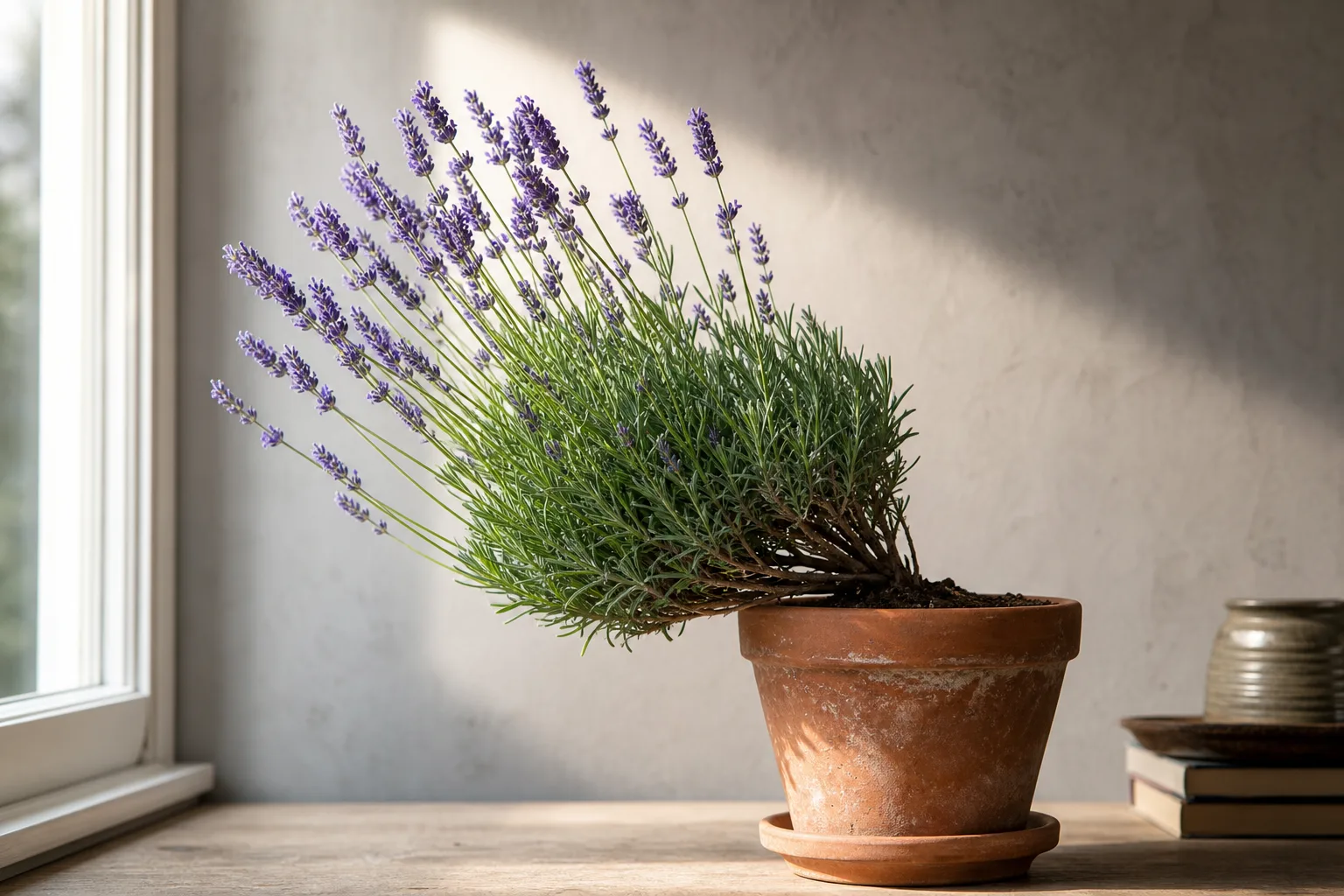
Plant Leaning on Lavender: Causes, Checks & Fixes
This guide covers plant leaning on Lavender. See also the general Plant Leaning guide, watering, and light pages for this plant.
Plant Leaning on Lavender: Causes, Checks & Fixes
Quick answer
A leaning lavender plant usually reaches toward uneven light, lists under heavy bloom wands, wobbles after a shallow loose repot, or collapses when rot softens the woody crown in wet soil. English lavender (Lavandula angustifolia) forms a compact silver mound on a woody base-when that base stays firm, lean is almost always cultural; when it turns soft and grey, you are in rot territory.
First step: squeeze the crown where stem meets soil. A hard woody base means rotate for even sun or stake heavy wands. A mushy grey base in a wet heavy pot means stop watering, unpot, and follow crown rot rescue-never bury the woody stem deeper to prop the plant upright.
Leaning vs. leggy growth on lavender
These symptoms overlap but need different fixes. Leaning is the whole mound or pot tilting-often from phototropism, bloom weight, loose anchorage, or crown failure. Leggy growth is long bare woody stems with sparse needles stretching toward light; the mound may still sit upright while individual wands reach. If wide internodes and pale stretch dominate without pot tilt, read leggy growth and the lavender light guide for the sun-hour audit. Pure insufficient light without structural tilt is covered on not enough light-this page focuses on tilt, flop, wobble, and rot collapse.
What leaning looks like on lavender
Phototropic tilt develops gradually over weeks. The mound angles toward the sunniest balcony edge or window; new silver shoots point the same direction while the shaded side carries fewer needles. The crown stays hard when you press it.
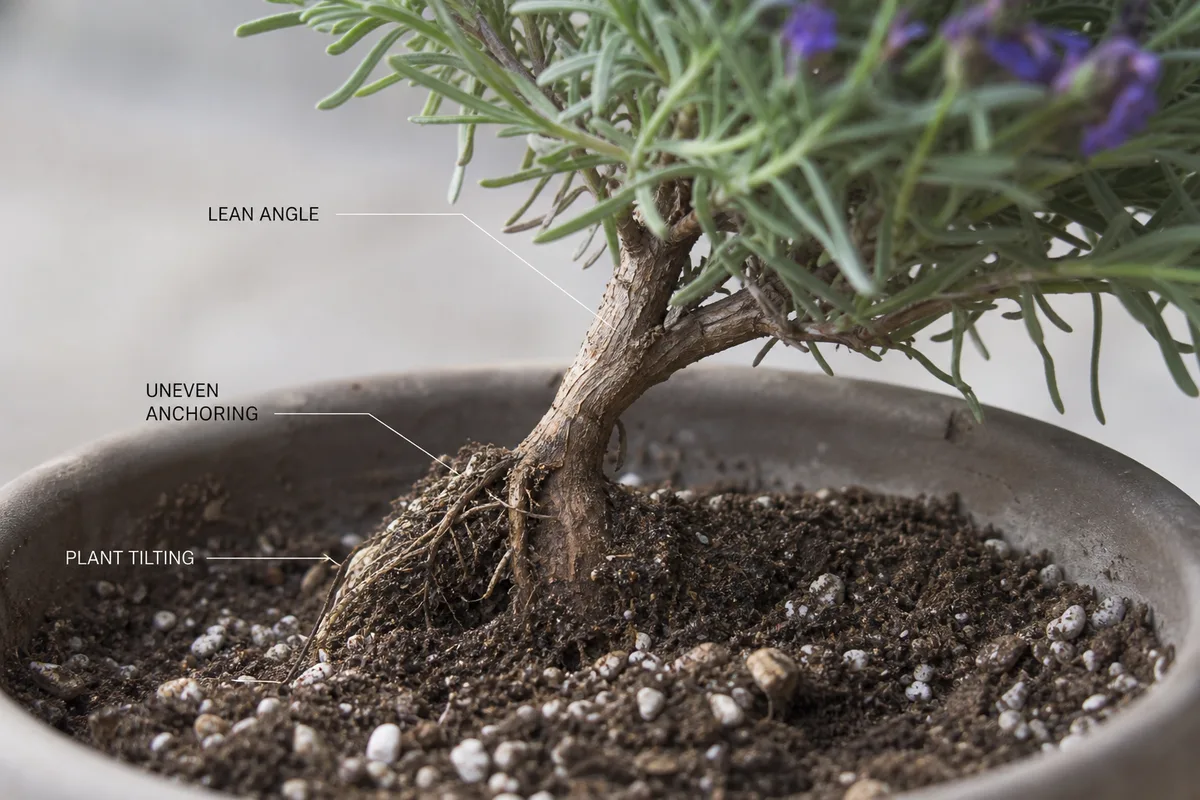
Plant Leaning symptoms on Lavender - compare with healthy tissue on the same plant.
Post-bloom flop hits after peak summer flowering. Tall English lavender wands-often 30–60 cm above the mound-collect rain or harvest weight on one side and pull the whole display sideways. The base remains firm; only the flower stems flex or the pot tips.
Fresh repot wobble appears within days of moving into new mix. The plant rocks when touched even though stems look green and the crown is hard. Air gaps around a loose root ball let the mound shift until roots re-anchor.
Rot lean looks different and moves faster. Grey lower stems, a soft base at the soil line, a sour smell from the drain hole, and a pot that stays heavy for days signal crown or root decay undermining anchoring roots. The plant may fall suddenly rather than lean slowly.
French lavender (Lavandula dentata) and lavandin hybrids often grow taller and looser than English types; they lean more easily from height alone but follow the same firm-vs-soft crown rules.
Why lavender leans
Mediterranean dryland biology and directional stretch
Lavender evolved on dry, stony Mediterranean slopes where full sun and fast drainage are the norm. In partial sun or one-sided indoor light, shoots elongate toward the brightest source-a response called phototropism. Cells on the shaded side grow faster, bending the stem. Without weekly pot rotation, a container mound develops a persistent lean even when otherwise healthy.
Lavender needs full sun and dry well-drained soil. Weak light produces thinner wands that lean more easily under their own weight, but a firm crown still points to rotation and brighter placement-not emergency repot.
English lavender wand weight and peak bloom
English lavender typically stays under 60 cm tall with narrow grey-green leaves and long flower wands in summer. MOBOT notes most cultivars reach under 2 feet with narrow leaves-compact at the base but top-heavy in bloom. Rain-soaked wands or a heavy harvest on one side list the mound without disease. Wind on exposed balconies pushes the same wands sideways until tied.
Shallow repot and anchorage in gritty mix
Lavender wants gritty, fast-draining mix in a pot with open drainage. After repotting, peat-heavy nursery soil or unfirmed grit leaves air pockets; the root ball shifts inside the container. Plant the crown at least one inch above the soil line and firm mix around roots-see the lavender repotting guide for shallow planting steps. Terracotta weighs more than plastic and tips less, but a loose root ball wobbles in either.
In-ground plants lean less often because roots spread wide; container lavender on a windy railing depends entirely on root grip inside a small pot.
Crown rot undermining structural roots
Lavender cannot tolerate wet feet. Dampness in poorly drained soil kills roots and crown tissue faster than cold alone. When anchoring roots decay, the woody base softens and the mound lists or collapses even without reaching for light. Humid monsoon culture-rain plus saucer water on a balcony-creates ideal rot conditions. Burying the woody crown deeper at repot to fix lean invites the same decay herbaceous houseplants sometimes survive.
How to confirm the cause
Work through these checks in order:
- Crown squeeze - Press the stem base at soil level. Hard wood vs. mushy grey tissue is the primary branch point.
- Lean direction - Toward the brightest window supports phototropism on a firm crown.
- Bloom weight - Heavy wands on one side after flowering supports stake-or-prune, not rot treatment.
- Repot timing - Wobble within two weeks of repot with firm crown supports settling, not disease.
- Soil moisture - Wet mix at 7 cm depth with grey stems and soft base supports rot-cross-check lavender watering.
- Root grip - Gentle upward tug: firm resistance means anchored roots; free shift means loose ball or decay.
Firm vs. soft crown decision table
| Crown feel | Soil / pot | Lean pattern | Likely cause | First action | Urgency |
|---|---|---|---|---|---|
| Hard woody | Normal dry-down | Gradual tilt toward sun | Phototropism | Rotate weekly; move to fuller sun | Routine |
| Hard woody | Normal | Sudden post-bloom list | Heavy wands | Stake individual wands; deadhead after harvest | Seasonal |
| Hard woody | Recently repotted | Pot rocks when touched | Loose root ball | One settling water; hand-firm grit around ball | Low-2–3 weeks |
| Soft grey | Wet heavy pot | Collapse or fast worsening lean | Crown / root rot | Stop water; unpot; crown rot protocol | Same day |
| Hard woody | Dry | Brief tilt after wind gust | Mechanical push | Re-position; stake on exposed sites | Low |
First fix for lavender
Squeeze the crown base before anything else.
If the crown is firm, rotate the pot a quarter turn so the lean faces your brightest full-sun spot and leave it for one week. That single step separates phototropic lean from problems needing repot or rot rescue. Add wand stakes only after you confirm the base is hard-staking a rotting plant upright delays the rescue that matters.
If the crown is soft in wet mix, do not rotate or stake hoping for the best. Stop watering, unpot, inspect roots, trim mushy tissue, repot shallow with crown above the soil line, and take 10 cm semi-ripe cuttings from firm upper stems as backup per the crown rot guide.
Step-by-step recovery
Firm crown - phototropic lean
- Move to the sunniest spot available-lavender wants six or more hours of direct sun daily.
- Rotate the pot weekly during the growing season.
- Optionally light-prune the longest reaching wand to reduce one-sided pull.
- Judge success by new upright silver shoots within four to eight weeks-not by old woody stem angle.
Firm crown - post-bloom flop
- Tie individual heavy wands loosely to bamboo stakes-never bundle the whole woody mound tight.
- Deadhead or harvest spent wands to shed weight.
- Plan post-flowering prune per lavender pruning so next season’s wands stay manageable.
Firm crown - loose repot wobble
- Water once to settle mix, then let drain fully.
- Hand-firm gritty mix around the root ball without burying the crown deeper.
- Avoid moving the pot for two weeks while roots re-anchor.
Soft crown - rot lean (summary; full steps on crown-rot page)
- Stop all watering immediately.
- Unpot; rinse roots; cut mushy crown and root tissue back to firm wood.
- Air-dry trimmed plant 24 hours if cuts are extensive.
- Repot into fresh gritty alkaline mix with crown above the old soil line-never deeper.
- Water lightly once, then resume dry-down only when soil is dry at 7 cm depth.
- Take cuttings from firm upper growth before full collapse; advanced rot may be fatal within days.
If roots are mushy but the crown is still firm, also review root rot overlap.
Recovery timeline
Weekly rotation straightens new growth over four to eight weeks on a firm crown; old woody stems keep their tilt-that is normal. Staked bloom lean stabilizes the display for the current season immediately. Loose repot wobble usually resolves in two to three weeks when mix is firmed and watering follows dry-down rules.
Rot lean on a soft base rarely self-corrects. Localized early crown rot with firm upper stems may push new silver shoots in three to five weeks after shallow repot and strict dryness. Full base collapse often kills the plant within days-cuttings are the practical backup.
Causes to rule out
- Normal mound asymmetry - Slight natural dome shape is not a problem to correct.
- Wind push on exposed balconies - Temporary tilt on a firm crown; stake wands or move pot to a wind shadow.
- Leggy shade stretch - Long internodes without pot tilt; see leggy growth.
- Pure low light - Sparse needles and poor bloom without structural flop; see not enough light.
- Drought wilt - Limber stems on a dry light pot with hard crown-not the wet-heavy pattern of rot lean.
What not to do
Do not bury the woody stem deeper to prop a leaning mound-that traps moisture against crown tissue and invites rot on a plant that requires perfectly drained soil on the dry side. Do not keep watering a soft-base lean. Do not tie stakes so tight they cut woody bark as stems thicken. Do not assume all lean is harmless phototropism in humid wet culture-squeeze the crown first.
How to prevent leaning next time
Grow lavender in full sun with weekly rotation during active growth. Use holed terracotta and gritty alkaline mix firmed at repot per the lavender overview and soil guide. Stake or prune heavy wands before peak bloom weight lists the pot. Keep crowns dry above the soil line through monsoon season-empty saucers, shelter open rain, and water only on dry-down. Annual post-flowering prune keeps the mound compact so wands stay shorter.
When to worry
Treat as same-day urgent when lean worsens while the crown softens, soil stays wet, lower stems turn grey, or the pot smells sour. That pattern matches crown rot collapse-not cosmetic light lean.
Lower urgency: gradual window tilt on a hard crown, or two-week wobble after a careful repot with draining mix. Still fix sun and anchorage, but you have weeks-not hours-for rotation and staking.
If a firm plant keeps listing after corrected sun, firmed repot, and wand stakes, contact your local extension office before assuming the specimen is saveable.
Related lavender guides
- Lavender overview - Sun, soil, and lean-culture hub
- Lavender light - Hour audit and balcony placement
- Lavender repotting - Shallow crown-high planting
- Lavender watering - Dry-down rhythm for firm wood
- Crown rot on lavender - Full mushy-base rescue protocol
- Root rot on lavender - Below-crown root decay overlap
- Not enough light on lavender - Shade stretch scope (not pot tilt)
- Leggy growth on lavender - Long internodes without structural lean
Conclusion
Leaning lavender splits cleanly at the crown: firm wood means rotate for even sun, stake heavy wands, or firm a loose repot; soft grey base in wet mix means same-day unpot and crown-rot rescue, never deeper planting. Phototropic tilt and post-bloom flop are fixable cultural issues; rot lean can kill the mound within days if watering continues. Use the decision table, link out to sibling guides for depth, and judge recovery by new upright silver growth-not by whether old woody stems ever stand perfectly vertical again.