Exposed Roots on Lavender: Causes, Checks & Fixes
Quick answer
Exposed roots on English lavender usually mean gritty mix washed away from top-watering, a root-bound pot pushing soil upward, or a shallow repot-not instant death. Cover firm white feeder roots with coarse grit while keeping the woody crown above the soil line; repot one size up if more than one-third of the root ball is bare.
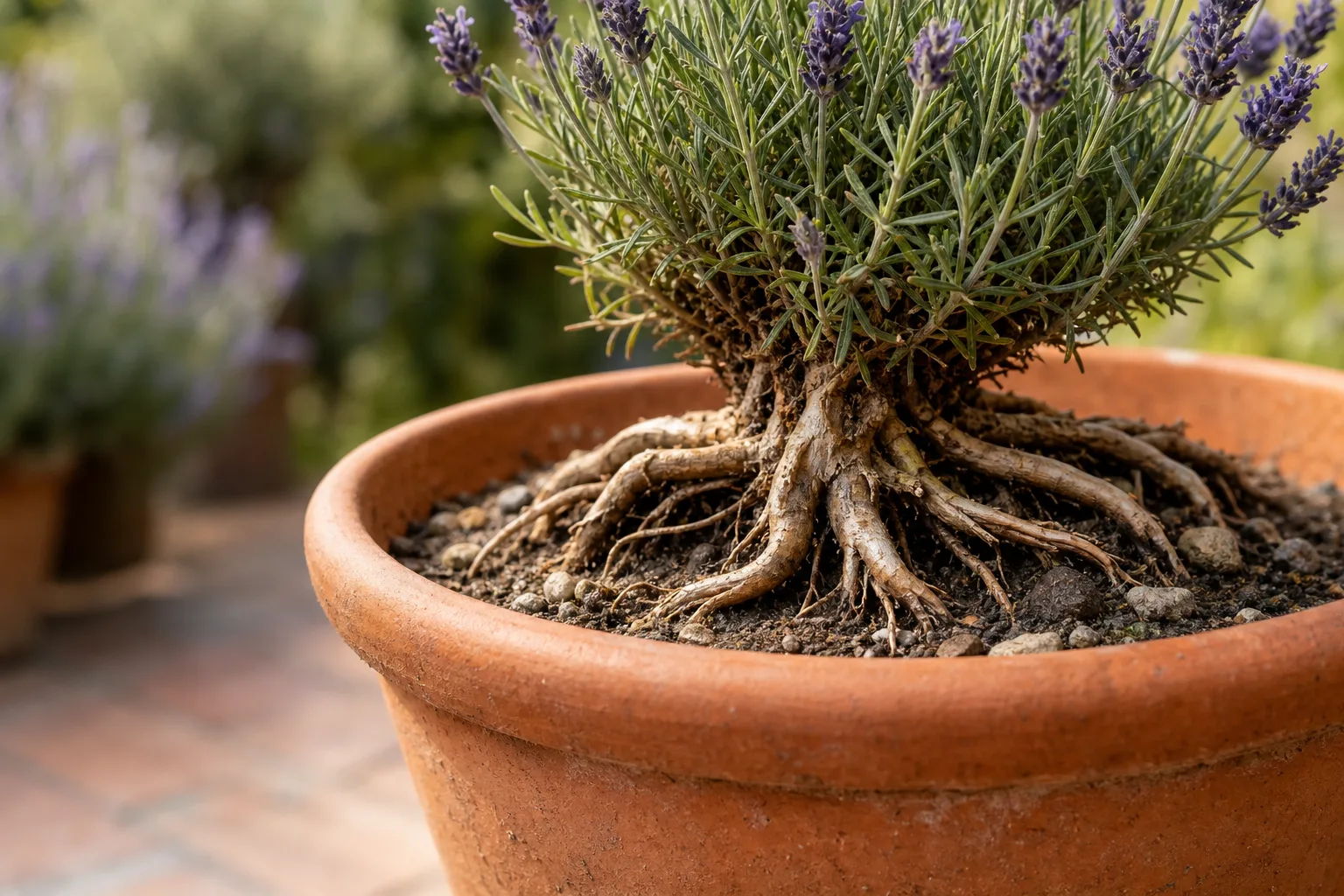
Exposed Roots on Lavender: Causes, Checks & Fixes
This guide covers exposed roots on Lavender. See also the general Exposed Roots guide, watering, and light pages for this plant.
Exposed Roots on Lavender: Causes, Checks & Fixes
Quick answer
Exposed roots on English lavender (Lavandula angustifolia) usually mean gritty mix eroded from top-watering, a root-bound pot displacing soil upward, or a shallow repot that left fine feeders drying in air-not crown rot yet. The woody crown must stay at or above the soil line; only cover firm white feeder roots with dry coarse grit.
First step: feel exposed root firmness and inspect crown position. Firm white or tan tissue gets a gritty top-dress or one-size-up repot. Black mushy roots with sour smell need the root rot trim-and-repot protocol before any cover.
This page is the erosion and top-dress hub for surface-root maintenance on container and mound-planted lavender. Full repot mechanics live on lavender repotting; post-decay rescue on root rot. Buried-crown setup mistakes belong on poor potting setup.
Exposed roots vs root rot on lavender
Both can show bare tissue at the soil line, but the texture and smell split the diagnosis.
| What you see | Root texture | Crown | Smell | Urgency | First action |
|---|---|---|---|---|---|
| Gully after heavy watering; grit in saucer | Firm white or tan | Firm woody base above line | Neutral or earthy | Medium | Top-dress with coarse grit |
| Roots through drain holes; mix pushed up | Firm, circling | Firm | Neutral | Medium–high | Repot one size up per repotting guide |
| Bare roots after windy rooftop season | Firm but dry at tips | Firm | Neutral | High in summer heat | Same-day gritty cover + light soak |
| Mushy brown surface roots; wilt on wet mix | Slimy, slips off when touched | May soften | Sour | Same day | Root rot rescue-not cover alone |
| Minor white rim on old plant; no wilt | Firm | Firm | Neutral | Low | Annual grit refresh; monitor |
Photo callout: Compare firm white feeder roots snaking across dry gritty mix on terracotta (flexible, no odor) against mushy brown exposed tissue on wet heavy mix (translucent, sour smell, soft crown). Crown position matters as much as root color-the woody junction where stem meets roots should sit visibly above the soil mound, not buried to hide feeders.
What exposed roots look like on lavender
Fine white or tan roots snake across the soil surface, peek from drain holes, or sit in a shallow gully after aggressive hand-watering washed grit toward the saucer. On mound-planted in-ground lavender, rain and sprinkler splash can erode the ridge until upper feeders show on the berm slope-RHS guidance recommends planting on a 20–30 cm mound in heavy soil precisely so roots do not sit in wet ground; erosion on that mound exposes the same fine feeders containers show.
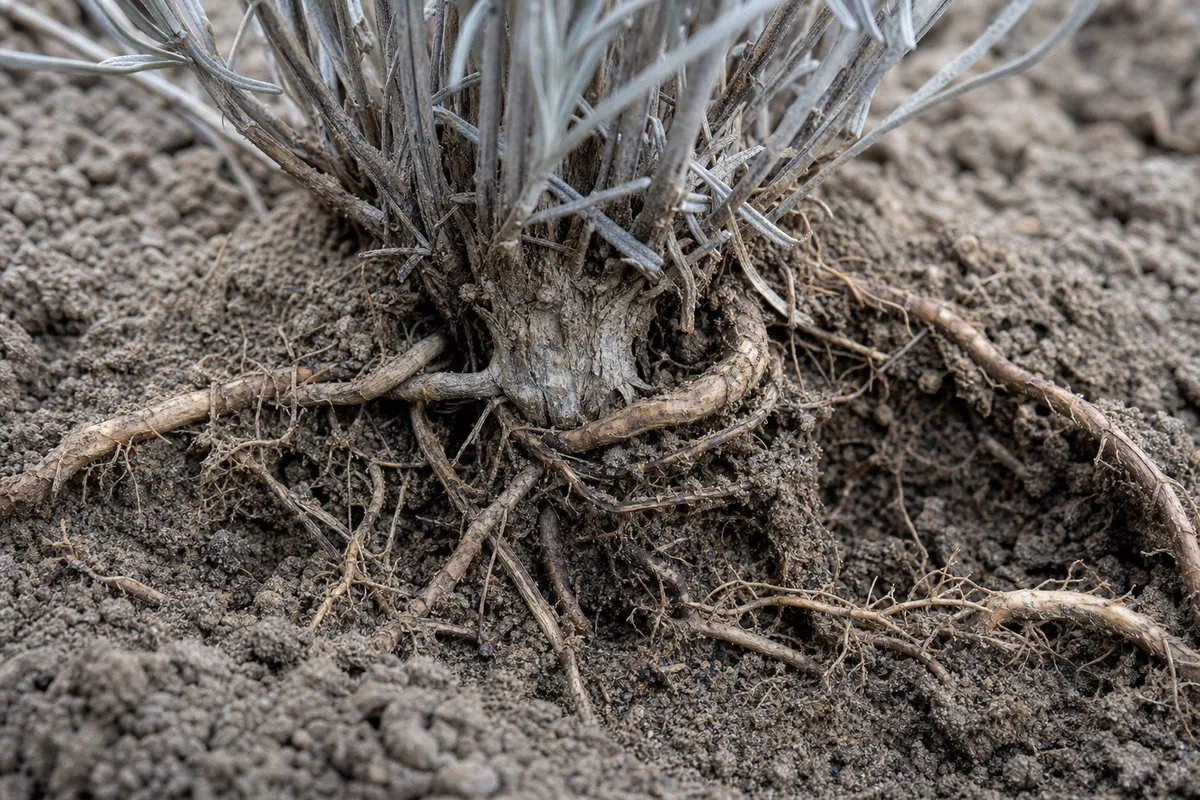
Exposed Roots symptoms on Lavender - compare with healthy tissue on the same plant.
Root-bound plants push mix upward until only a thin layer covers circling roots inside. Shallow repots leave the crown high with feeders drying at the surface-especially on unglazed terracotta, which pulls moisture from the upper inch faster than plastic and can desiccate bare fine roots within hours on a hot balcony.
Healthy exposed roots feel firm and flexible. Rotting exposed roots are brown, slimy, and smell sour-that is decay, not simple erosion, and covering without trimming fails.
Firm white surface feeders vs mushy decay
- Erosion pattern: Grit collects in the saucer or downhill on a mound; crown stays firm; wilting-if any-tracks dry exposed tissue, not wet mix throughout
- Rot pattern: Mushy texture, sour drain-hole odor, possible yellow-grey needles on wet mix because damaged roots cannot take up water
- Normal aging: Thin white rim on a multi-year plant without wilting or ongoing erosion-low urgency if culture otherwise matches lavender overview dryland rules
Crown position relative to soil line
English lavender forms a woody subshrub; the crown-the junction where square stems meet roots-must stay at or slightly above surrounding mix. Illinois Extension stresses that dampness kills lavender in poorly drained culture; burying the woody base to hide surface roots invites the crown rot that makes exposed-root rescue impossible. When top-dressing, taper gritty mix around the stem so the crown sits at the same height it held before erosion, not deeper.
Why lavender roots become exposed
Top-watering erosion and gritty mix displacement
Aggressive top watering without annual top-dress washes lightweight grit down drain holes-common on balconies where mix is one-part compost to three-parts coarse grit. Lavender needs full sun and extremely well-drained soil; fast-draining blends move more than heavy peat when flushed, leaving a hollow around the stem.
Root-bound pots and shallow repotting
Undersized pots fill with circling roots that displace soil upward until feeders show at the rim. Utah State Extension notes lavender in permanent pots should re-pot every spring into a larger container with fresh gritty mix before roots exhaust the volume-waiting until mix is mostly root mass accelerates surface exposure. Shallow repots that set the crown too high leave roots drying in air and sun.
Rooftop wind and in-ground mound erosion
Wind on exposed rooftop pots can blow lightweight grit away from mound-shaped plantings. In-ground berms suffer splash erosion from sprinklers or heavy rain on sloped beds-feeder roots that were correctly elevated above grade can surface on the downhill side even when the crown remains properly placed. Inorganic rock mulch helps keep crowns dry but fine organic mulch on slopes washes unevenly; coarse grit top-dress self-stabilizes better on windy terraces.
Terracotta vs plastic dry-down on surface roots
Unglazed terracotta wicks moisture from the upper root zone through porous walls. Bare fine feeder roots on terracotta bake faster in midday sun than the same exposure on plastic-English lavender’s fine roots desiccate quickly when uncovered, while the woody crown tolerates brief air exposure. That is why summer same-day cover matters more on sunny terracotta than on shaded plastic nursery pots.
How to confirm the cause
Work through these checks before repotting or flooding the pot:
- Root color and firmness - White firm vs black mushy that slips off when touched
- Soil level history - Recent repot, heavy flush, windy week, or years without grit refresh?
- Pot size vs plant - Circling roots inside when you slide the plant partly out?
- Crown position - Woody stem buried too deep, correctly above line, or lifted too high after shallow repot?
- Wilting pattern - Wilting with dry exposed roots vs limp grey foliage on wet mix (uptake failure, not thirst)
- Smell at drain hole - Sour odor means rot; neutral or earthy suggests erosion or binding
- Exposure extent - Thin rim vs more than one-third of root ball bare (repot threshold)
First fix for lavender
Assess root firmness and how much of the ball is bare before choosing top-dress or full repot.
Severity ladder:
- Firm surface feeders only, mix intact inside → Top-dress with fresh one-part compost to three-parts coarse grit, crown unchanged
- More than one-third of root ball bare, or tight circling through holes → Repot one size up following lavender repotting-tease outer circling roots gently, same crown depth
- Mushy exposed roots or soft crown → Root rot protocol first-trim decay, fresh gritty mix, no burying stem
Water lightly once to settle grit after top-dress; do not flood. Move to full sun only after roots are covered-bare fine roots in midday heat desiccate fast on terracotta. Well-drained soils are required-cover with grit, not wet compost alone.
Step-by-step recovery
- Brush away algae or crust from firm exposed roots only-mushy tissue gets trimmed, not brushed
- Trim black mushy root tips back to firm white tissue; leave healthy white feeders intact
- Add gritty mix around the stem, tapering so the crown sits at original depth-never bury woody base
- Repot fully if more than one-third of the root ball was bare or roots circle tightly with little soil left
- Water once to settle; empty saucer; resume dry-down when mix is dry 7 cm deep per lavender watering
- Top-dress annually with coarse gravel or grit to prevent repeat erosion-especially on windy balconies
Recovery timeline
Covered firm roots support perk within days if drought-stressed from surface drying. New silver shoots at stem tips within two to three weeks in full sun confirm stability. Rotting exposed roots need root-rot protocol-covering alone fails. Crispy sun-baked feeders rarely regrow; judge success by aromatic new growth, not old grey needles reversing.
Lookalike symptoms
| Symptom pattern | Key check | Likely cause | Read next |
|---|---|---|---|
| Minor white rim, no wilt | Firm crown; stable mix depth | Normal aging on old plant | This page-annual top-dress |
| Mushy roots, sour wet mix | Soft crown possible | Root or crown rot | Root rot |
| Dry whole pot, no surface gully | Light weight throughout | underwatering on Lavender | Underwatering |
| Water runs off; dusty surface | Dry core below crust | Hydrophobic mix | Dry hydrophobic soil |
| Tight circling, little surface visibility | Fast dry-down; holes blocked | Root bound | Root bound + repotting |
| Mix compacted, slow drain | Heavy pot; sour risk | Compacted soil | Compacted soil |
What not to do
Do not bury the woody lavender stem to cover roots-that invites crown rot. Do not cover mushy rotted roots without trimming. Do not use fine organic mulch that washes away in the next rain on sloped pots. Do not overwater after top-dress to “help roots settle.” Do not jump several pot sizes when repotting-excess wet volume around sparse roots worsens the rot that exposes roots in the first place.
How to prevent exposed roots next time
Use wide stable terracotta with open drain holes, annual grit top-dress, gentle soil-level watering at the pot edge-not a hard flush on the crown-and repot every two to three years before roots displace mix. Rock or pea gravel mulch keeps crowns dry better than fine bark that erodes unevenly. French lavender (L. stoechas) and other tender types in pots may need more frequent summer watering checks but the same crown-above-soil and gritty-volume rules apply.
Cross-check lavender soil mix ratios and poor potting setup if erosion repeats despite top-dress-wrong mix or buried crown at planting often precedes chronic surface exposure.
When to worry - summer heat and crown-rot escalation
Same day: summer wilting with baking bare roots on terracotta, or mushy exposed tissue with soft crown-cover firm feeders immediately and light-soak; escalate to crown rot if base tissue softens on wet mix.
This week: more than one-third bare ball, circling roots through holes, or erosion after repot-schedule repot per lavender repotting.
Monitor: minor rim visibility on firm winter plants-top-dress before spring growth resumes.
Related lavender problems
- Lavender overview - Species, sun, soil, and Mediterranean culture hub
- Lavender repotting - Full repot when binding displaces mix
- Root rot - Mushy roots and trim-and-repot protocol
- Crown rot - Soft base tissue after failed cover
- Compacted soil - Slow drain that precedes erosion
- Dry hydrophobic soil - Water runs off while core stays dry
- Poor potting setup - Buried crown at planting
- Root bound - Circling roots pushing mix upward
- Lavender watering - 7 cm dry-down rhythm after top-dress
FAQs
Is it normal to see some lavender roots on the soil surface?
Mature English lavender may show minor white feeder roots at the soil edge without wilting-that is low urgency if the woody crown stays firm and mix is not eroding further. Actionable exposure means a visible gully around the stem, roots baking dry in summer sun, or more than a thin rim of bare tissue after watering washed grit away.
Should I repot or just top-dress exposed lavender roots?
Top-dress when firm white roots sit bare at the surface but the root ball still holds gritty mix inside. Full repot when more than one-third of the ball was exposed, roots circle tightly through drain holes, or water runs straight through without soaking. Mushy black exposed roots need trim-and-repot per the root-rot guide-not cover alone.
Can burying the stem to hide roots cause crown rot on lavender?
Yes. Lavender’s woody crown must stay at or above the soil line; burying green or woody stem tissue to hide surface roots traps moisture against tissue that evolved for air exposure. Illinois Extension notes dampness around the crown kills lavender faster than cold in poorly drained culture-cover only fine feeder roots with dry gritty mix.
How long until new silver shoots appear after top-dressing?
Firm roots covered before they desiccate often support perk within days once watering follows a 7 cm dry-down rhythm. New silver shoots at stem tips within two to three weeks in full sun confirm stability. Crispy sun-baked feeders rarely regrow-judge success by fresh aromatic tips, not old grey needles alone.
When are exposed roots urgent on lavender?
Same-day cover if fine roots bake dry on terracotta in midsummer heat while the plant wilts, or if exposed tissue is mushy and black with a soft crown. Stable winter exposure on a firm plant is lower urgency if you top-dress before spring growth. Normal minor rim visibility without wilting can wait for your next scheduled grit refresh.
Conclusion
Exposed roots on English lavender split into three paths: gritty top-dress for firm surface feeders with intact mix inside, full repot when more than one-third of the ball is bare or roots circle tightly, and same-day root-rot escalation when tissue is mushy or the crown softens. Keep the woody crown above the line, refresh coarse grit before summer heat bakes bare feeders on terracotta, and use the repotting and root rot hubs when top-dress alone cannot restore stable gritty volume around fine roots.
When to use this page vs other Lavender guides
- Lavender watering guide - Use for routine moisture checks before assuming exposed roots is the main issue.
- Lavender problems hub - Browse all 51 common issues on this species.