Small Flowers on Lavender: Causes, Checks & Fixes
Quick answer
Small lavender flowers often mean too little sun, young first-year plants, heavy nitrogen soft growth, or weak etiolated winter growth-not a disease. Move to six or more hours of direct sun, hold lean watering on gritty mix, skip excess feed, and expect fuller wands as the plant matures and wood hardens.
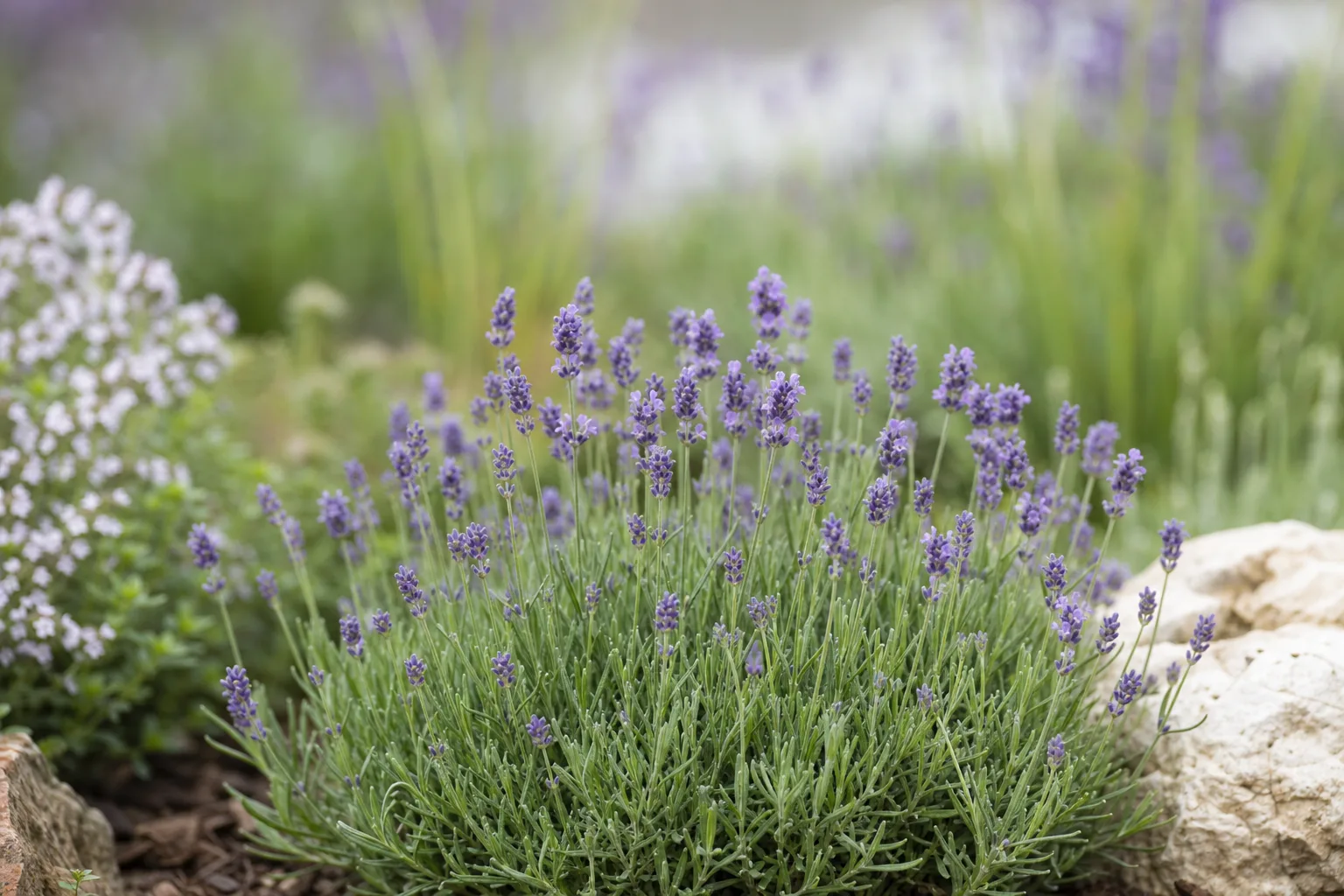
Small Flowers on Lavender: Causes, Checks & Fixes
This guide covers small flowers on Lavender. See also the general Small Flowers guide, watering, and light pages for this plant.
Small Flowers on Lavender: Causes, Checks & Fixes
Quick answer
English lavender (Lavandula angustifolia) with small flowers shows short wands with few florets compared to mature sun-grown specimens-usually insufficient sun, young plant age, soft nitrogen-rich growth, or weak indoor winter conditioning, not fungus. First step: move to maximum direct sun and hold lean gritty mix with dry to medium, well-drained soil in full sun-skip heavy feed through bloom.
This page is the primary small-bloom hub for lavender: short wands and low floret count on a plant that is flowering. For near-zero bloom output, see slow growth and no new growth. For buds that abort before open, see bud drop. For long bare stems without bloom focus, see not enough light and leggy growth.
Small flowers vs. no bloom vs. bud drop on lavender
Owners often land on the wrong slug because all three involve disappointing bloom. The symptom pattern and urgency differ.
| What you see | Wand status | Stem health | Likely cause | Urgency | Read next |
|---|---|---|---|---|---|
| Short wands, few florets, plant blooms | Open but small | Firm wood | Shade, youth, nitrogen, weak conditioning | Low–medium | This page |
| Zero or nearly zero wands | No bloom set | Firm foliage | Age, wrong prune timing, deep shade | Medium | Slow growth |
| Buds dry and fall before open | Buds abort | Firm unless rot overlap | Water swings, heat, repot stress | Medium | Bud drop |
| Long stretch, tiny wands at tips | Weak bloom | Bare lower stems | Chronic low light | Medium | Not enough light |
| Moldy shrunken distorted blooms | Small diseased heads | May wilt if spreading | Botrytis in humid wet weather | High | Blight |
| Intentionally short wands on label | Small by design | Compact mound | Dwarf cultivar genetics | None | Lavender overview cultivar notes |
Small flowers on a firm, blooming plant is almost always a culture and maturity fix-not an emergency unless blooms are grey fuzzy and distorted.
What small flowers look like on lavender
Healthy mature English lavender in full sun carries long dense purple-blue wands with dozens of florets per spike. Small-flower problems show three common patterns:
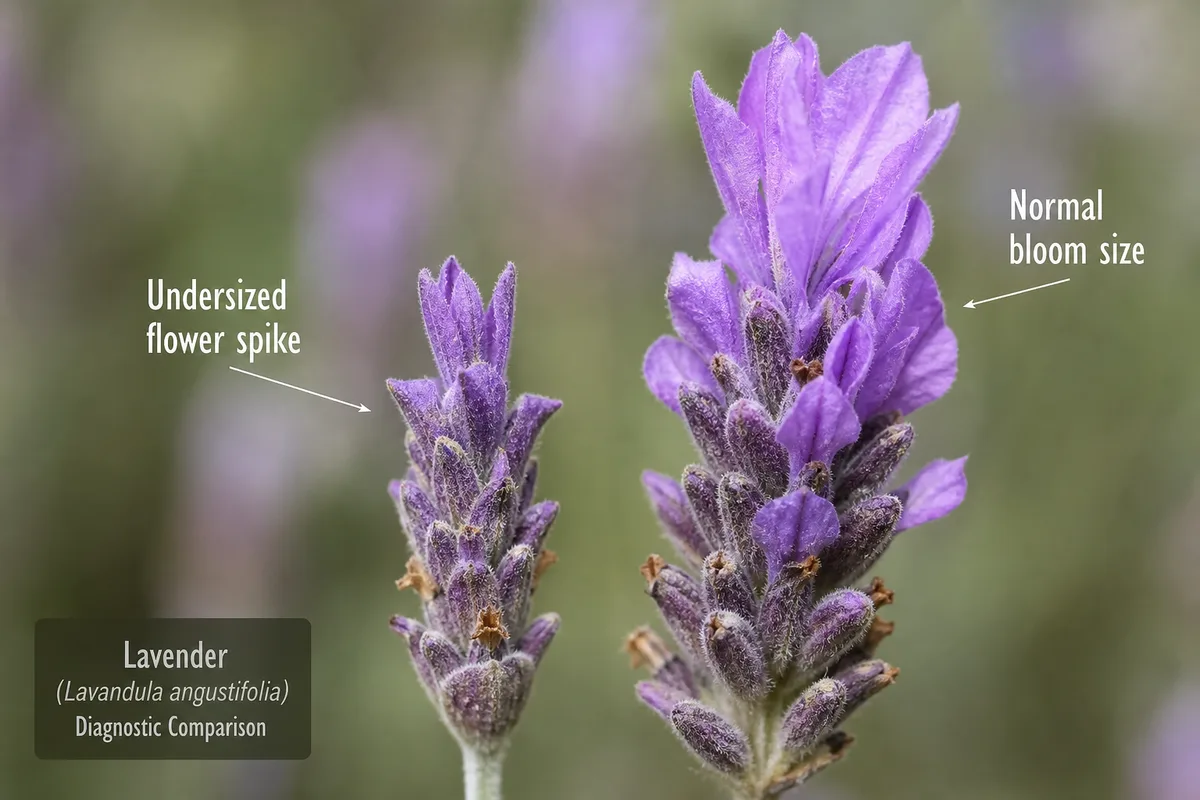
Small Flowers symptoms on Lavender - compare with healthy tissue on the same plant.
First-year seedlings and young rooted cuttings
First bloom year plants naturally produce modest short wands-the shrub is still building flowering wood from semi-woody stems. Illinois Extension notes English lavender grows one to three feet tall at maturity; a twelve-month-old pot will not match a third-year border plant. Compare fairly against age, not catalogue photos of established specimens.
Shaded pots and pale short wands
Partial sun on balconies or north-facing rails yields short pale lilac wands with wide gaps between florets. Stems may be firm but leggy, reaching toward the brightest direction. Inner wood stays silver-green while outer bloom wands underperform-shade limits both wand elongation and floret density because the plant allocates less energy to reproductive tissue.
Nitrogen-soft lush growth
Heavy spring feed or rich potting mix produces tender bright shoots with weak small wands that never lengthen. Lavender thrives in somewhat low fertility-excess nitrogen pushes vegetative soft growth over dense bloom spikes.
Dwarf cultivars by design
Compact English types such as ‘Hidcote’ (deep purple, compact habit) and ‘Munstead’ (slightly larger, early bloomer) differ in typical wand length. True dwarf edging cultivars are bred for shorter mounds and smaller spikes-confirm your label before treating normal dwarf sizing as failure.
Not small flowers: moldy grey shrunken heads in humid rain (botrytis), or no wands at all on an otherwise healthy mound.
Why lavender flowers stay small
Bloom-wood maturation and wand elongation
Lavender flowers on current-season wood extending from semi-woody stems. Young plants have thin immature flowering branches-wand length and floret count improve as the shrub hardens wood through years two and three in full sun. Utah State University Extension lists full sun as a baseline requirement for English lavender culture; without it, bloom wood never ripens to full length.
Under shade stress, the plant prioritizes stem extension toward light over dense floret packing-you get long thin wands with few flowers, or short pale wands if light is marginally low. Wand elongation and floret count are separate energy sinks; both need strong photosynthesis from six or more hours of direct sun.
Shade, nitrogen, youth, and weak winter conditioning
Lavender requires full sun and extremely well-drained soil-Illinois Extension is explicit that dampness and shade shorten garden life. Container plants overwintered indoors with weak light often push etiolated spring growth that blooms small when moved outdoors without hardening off.
Excess nitrogen after a shaded winter produces the worst combination: soft pale shoots with toy wands. Root-bound stall in the same pot for three or more years can shrink bloom indirectly-roots cannot support full wand development. See root bound for repot timing before next spring bud set.
Renewal wood on old neglected mounds
Woody lavender with hollow bare centers loses bloom vigor on old stems. RHS guidance recommends annual pruning after flowering to keep plants compact-neglected mounds bloom on weak outer wood with short wands until renewal pruning rebuilds productive shoots in early spring before bloom season.
How to confirm the cause
Work through these checks in order:
- Sun hours - Does the pot receive six or more hours of direct sun during bloom season?
- Plant age - First bloom year vs. mature third-year stock?
- Cultivar label - Dwarf edging type vs. full-size English lavender?
- Feed history - Recent high-nitrogen liquid or slow-release feed?
- Winter light - Overwintered indoors with etiolated pre-bloom growth?
- Crown firmness - Firm wood vs. soft rot stunting bloom indirectly?
- Wand health - Clean pale short wands vs. grey fuzzy moldy distorted blooms?
Lookalike confirmation table
| Finding | Points to | First action |
|---|---|---|
| Under 6 h sun, firm stems, pale short wands | Shade-small bloom | Move to sunniest spot; harden over a week if from deep shade |
| First-year seedling, lean culture, full sun | Normal youth sizing | Wait for year two–three; keep culture lean |
| Recent feed + shade, soft shoots | Nitrogen-soft | Stop feed; improve sun-see lavender fertilizer |
| Tight root ball, stalled vigor | Root-bound stall | Repot gritty mix before next spring-root bound |
| Moldy distorted blooms, humid weather | Botrytis | Prune affected wands same day-blight |
| Label says dwarf compact type | Genetics | Compare to cultivar reference-not culture failure |
Full light placement targets live on the lavender light guide.
First fix for lavender (by likely cause)
Relocate to the sunniest feasible spot and hold lean dry-down watering on gritty mix-that is the first fix for most small-flower cases on firm blooming plants.
| Likely cause | First action |
|---|---|
| Shade | Move pot to maximum direct sun immediately if season allows; harden five to seven days from deep shade |
| Youth | Keep full sun and lean culture; judge next spring, not same-week miracle |
| Excess nitrogen | Stop all feed through bloom; improve sun only |
| Weak indoor conditioning | Harden off gradually before outdoor bloom season; do not rush into blistering midday without acclimation |
| Root-bound stall | Repot into gritty alkaline mix one size up before next spring bud formation |
| Old hollow woody center | Renewal prune in early spring before bloom-remove dead center wood, keep live green shoots |
Hold fertilizer through bloom recovery. Deadhead spent small wands to redirect energy if your cultivar produces a secondary flush.
Step-by-step recovery
- Sun correction - Move to sunniest spot; rotate weekly; empty saucers within 30 minutes after watering.
- Lean culture - Water only when soil is dry 7 cm deep; confirm mix drains in seconds-see lavender watering.
- Stop feeding - No bloom-boost fertilizer on drought-loving lavender; soft growth shrinks wands further.
- Harden indoor plants - Increase outdoor hours over five to seven days before peak bloom if overwintered inside.
- Repot if bound - Fresh gritty mix in holed terracotta before next spring if roots circle the pot.
- Renewal prune - Early spring on woody neglected mounds: remove hollow dead center, shape live wood-never cut deep into bare old stems that will not resprout.
- Evaluate next spring - Judge wand length on new bloom wood, not mid-season wood already set small.
Recovery timeline
Same-season improvement is limited once bloom wood is set on small wands mid-flush-deadheading may trigger a modest secondary flush on some English cultivars within two to four weeks in full sun, but major upsize waits for next spring.
Year two and three typically show longer denser wands on plants moved from shade to full sun with lean culture. First-year seedlings should not be judged against mature border specimens.
Botrytis small moldy blooms need immediate pruning; clean new wands appear on the next cycle if humidity drops and airflow improves.
What not to do
Do not bloom-boost with heavy nitrogen fertilizer-that softens growth and invites aphids while wands stay short. Do not shade small blooms to protect them-that worsens size next cycle. Do not repot during active bloom unless root-bound stall is severe. Do not confuse dwarf cultivar sizing with fixable culture failure. Do not treat clean small wands on firm stems like moldy diseased heads-different urgency and fixes.
How to prevent small flowers next time
Establish in permanent full sun per the light guide; use well-drained lean alkaline gritty mix; avoid heavy nitrogen-most container lavender needs no routine feed. Harden overwintered plants before outdoor bloom. Annual shaping prune after flowering keeps productive wood instead of hollow centers that bloom weakly. Repot before root-bound stall reduces wand vigor-typically every two to three years in containers.
When to worry - botrytis and crown rot signals
Low urgency for clean small wands on a firm young shaded plant-culture fix, not crisis.
Escalate same day when small blooms are:
- Grey fuzzy and distorted in humid rainy weather-prune and improve airflow; see blight
- Paired with soft crown, sour soil, or wilting on wet mix-rot overlap, not cosmetic small bloom; see crown rot
Persistent small bloom after one full season in proven six-plus-hour sun with lean culture may need a county extension office or local nursery review-especially in humid climates where botrytis recurs on spent wands.
Related lavender problems
- Not enough light - Leggy stretch and closed-flower shade patterns
- Leggy growth - Long bare stems without bloom-size focus
- Lavender fertilizer - Nitrogen excess and lean-feed rules
- Root bound - Stall shrinking wand vigor
- Bud drop - Buds abort before open
- Slow growth - Near-zero bloom with overall low vigor
- No new growth - Stalled growth and weak bloom push
- Blight - Moldy distorted blooms in humid weather
- Lavender overview - Species, cultivars, sun, soil, and Mediterranean culture hub
Conclusion
Small lavender flowers trace to shade, youth, overfeeding, weak conditioning, or old woody centers more than disease-full sun, lean gritty culture, and maturing bloom wood build larger wands on the next cycle, not instant fertilizer fixes. Wait for year two–three sizing on young plants; prune moldy blooms urgently in humid weather; escalate to rot protocols if the crown softens. Use the comparison table above when bloom disappointment could be no bloom or bud drop instead.
When to use this page vs other Lavender guides
- Lavender watering guide - Use for routine moisture checks before assuming small flowers is the main issue.
- Lavender problems hub - Browse all 51 common issues on this species.