Curated list62 plants

Best Low Light Indoor Plants - Ranked for Dim Rooms

Indoor plants that tolerate low-light rooms, offices, and north-facing windows.
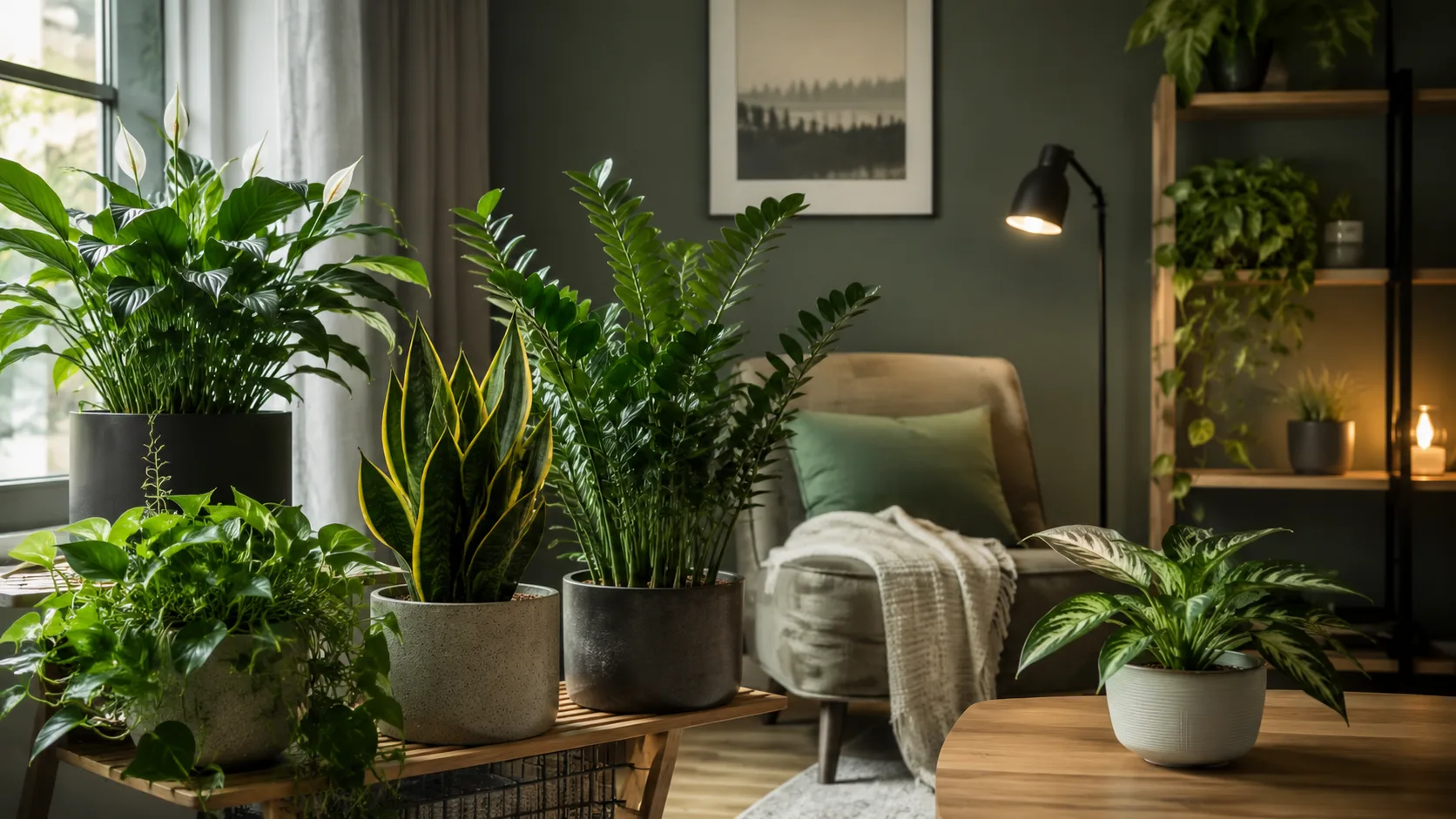
Best Low Light Indoor Plants hero

Best Low Light Indoor Plants

Quick recommendation

Snake plant, ZZ plant, and pothos top our list for dim spaces.

Best Low Light Indoor Plants

62 plants · Best Low Light Indoor Plants
#PlantLightDifficultyPet safe
1Snake Plantindirect lightMediumNo
2ZZ Plantindirect light, low light, fluorescent office light, medium indirect lightMediumNo
3Pothosbright to medium indirect light, low light, fluorescent office lightMediumNo
4Aglaonemalow to medium indirect lightMediumNo
5Dracaenamedium to bright indirect lightMediumNo
6Parlor Palmmedium indirect light, low indirect light, bright indirect lightMediumYes
7Aglaonema Marialow to medium indirect light, low lightMediumNo
8Aglaonema Silver Baymedium indirect light, low light, bright indirect lightMediumNo
9Alocasia Dragon Scalebright indirect light, medium indirect lightMediumNo
10AnubiasModerate to bright aquarium or pond light; avoid sudden harsh outdoor sun without acclimation.EasyNo
11Bird's Nest Fernmedium indirect lightMediumYes
12Blue Star Fernmedium indirect lightMediumYes
13Boston Fernbright to medium indirect light, medium indirect lightMediumYes
14Calathea Medallionmedium indirect light, low indirect lightMediumYes
15Calathea Orbifoliamedium indirect light, low indirect light, bright indirect (not harsh)MediumYes
16Calathea Peacock Plantmedium indirect light, low indirect lightMediumYes
17Calathea Rattlesnakemedium indirect light, low indirect lightMediumYes
18Calathea Roseopictamedium indirect light, low indirect lightMediumYes
19Cast Iron Plantlow to medium indirect light, very low lightMediumYes
20Christmas Cactusbright indirect light, medium indirect lightMediumYes
21Corn Plantmedium to bright indirect light, low lightMediumNo
22Dischidiabright indirect light, medium indirect light, gentle direct morning sunMediumNo
23Dragon Treebright indirect light, medium indirect light, some direct sunMediumNo
24Dwarf Umbrella Treebright indirect light, medium indirect lightMediumNo
25Ficus Audreybright indirect light, medium indirect lightMediumNo
26Ficus Benjaminabright indirect light, medium indirect lightMediumNo
27Ficus Burgundybright indirect light, medium indirect lightMediumNo
28Ficus Tinekebright indirect light, medium indirect lightMediumNo
29Fittonialow to medium indirect lightMediumYes
30Golden Pothosmedium indirect lightMediumNo
31Janet Craig Dracaenamedium indirect light, low light, bright indirect lightMediumNo
32Java FernModerate to bright aquarium or pond light; avoid sudden harsh outdoor sun without acclimation.EasyNo
33Lucky Bamboomedium indirect light, low indirect light, bright indirect lightMediumNo
34Maidenhair Fernmedium indirect lightMediumYes
35Maranta Leuconeuramedium indirect light, low indirect lightMediumYes
36Monstera Adansoniibright indirect light, medium indirect lightMediumNo
37Monstera Deliciosabright indirect light, medium indirect lightMediumNo
38Peace Lilylow to medium indirect light, bright indirect light, fluorescent office lightMediumNo
39Peperomia Hopebright indirect light, medium indirect lightMediumYes
40Phalaenopsis Orchidbright indirect light (east or north-facing window), medium indirect lightMediumYes
41Philodendron Birkinbright indirect light, medium indirect lightMediumNo
42Philodendron Brasilbright indirect light, medium indirect lightMediumNo
43Philodendron Gloriosumbright indirect light, medium indirect lightMediumNo
44Philodendron Lemon Limemedium to bright indirect light, low light (colour becomes greener)MediumNo
45Philodendron Melanochrysumbright indirect light, medium indirect lightMediumNo
46Philodendron Pink Princessbright indirect light, medium indirect light (pink fades)MediumNo
47Philodendron Selloumbright indirect light, medium indirect lightMediumNo
48Philodendron White Knightbright indirect light, medium indirect light (variegation fades)MediumNo
49Pilea Moon Valleybright indirect light, medium indirect lightMediumYes
50Pilea Peperomioidesbright indirect light, medium indirect lightMediumYes
51Prayer Plantmedium indirect light, low indirect light, bright indirect lightMediumYes
52Raindrop Peperomiabright indirect light, medium indirect lightMediumYes
53Schefflerabright indirect light, medium indirect lightMediumNo
54Song of Indiabright indirect light, medium indirect lightMediumNo
55Spider Plantbright to medium indirect light, low light, some morning direct sunMediumYes
56Swedish Ivybright indirect light, medium indirect lightMediumYes
57Syngonium Albobright indirect light, medium indirect lightMediumNo
58Syngonium Neon Robustabright indirect light, medium indirect lightMediumNo
59Syngonium Pinkbright indirect light, medium indirect lightMediumNo
60Tradescantia Zebrinabright indirect light, medium indirect lightMediumNo
61Watermelon Peperomiabright indirect light, medium indirect lightMediumYes
62Zebra Plantbright indirect light, medium indirect lightMediumYes

Low light indoor plants - complete plant list (62)

All 62 low light indoor plants on this page, ranked with care notes on light, watering, mature size, humidity, and difficulty. Each plant links to a full growing guide. Compare quick specs in the comparison table above.

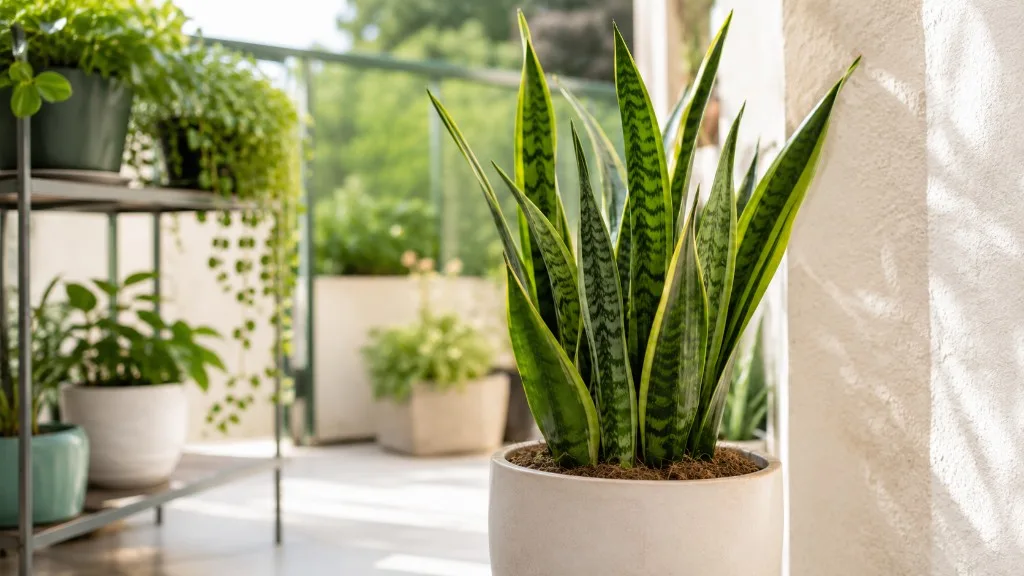
  1. Snake Plant houseplant

    Snake PlantDracaena trifasciata

    • Snake plant care indoors - how often to water, best light, soil mix, and fixes for root rot and brown tips.
    • Snake Plant is not pet-safe and is toxic to cats, dogs, rabbits, horses, turtles, tortoises.
    • Snake Plant grows best in indirect light when grown as an indoor houseplant.
    • For Snake Plant, water only when the soil is completely dry - roughly every 2–6 weeks depending on season.
    • Snake Plant grows to 2–4 ft indoors; sword-shaped leaves 1–3 inches wide indoors, does best at 30–50% humidity and needs fast-draining, gritty mix that prevents waterlogging.
    • Snake Plant is rated medium care for indoor growing.
    Full care guide →
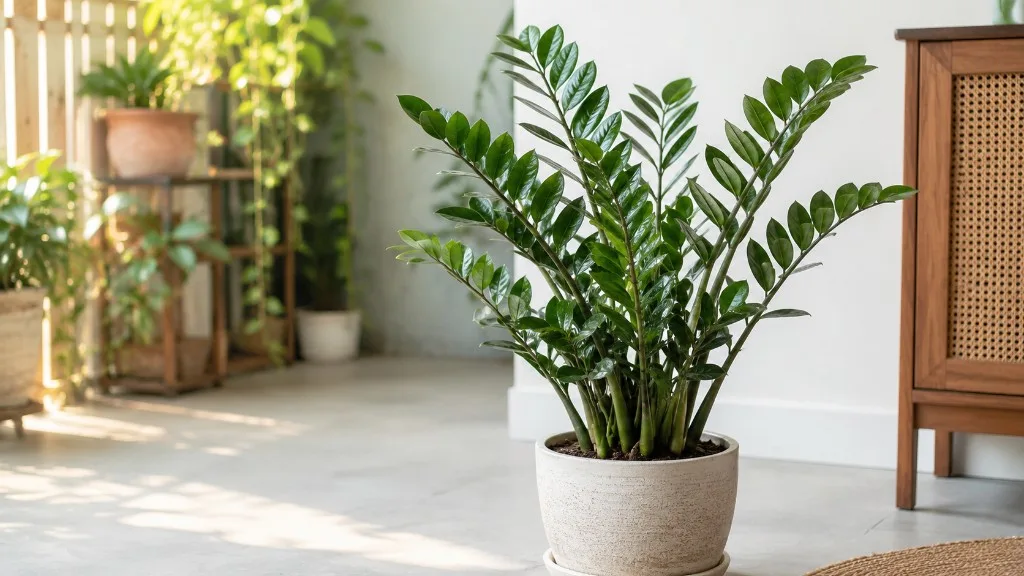
  2. ZZ Plant houseplant

    ZZ PlantZamioculcas zamiifolia

    • ZZ plant care for low-light offices - infrequent watering, soil mix, and toxicity notes for pets.
    • ZZ Plant is not pet-safe and is toxic to cats, dogs, rabbits, birds, horses, turtles, tortoises.
    • ZZ Plant grows best in indirect light, low light, fluorescent office light, medium indirect light when grown as an indoor houseplant.
    • For ZZ Plant, water only when the soil is completely dry - ZZ stores water in rhizomes and is highly drought-tolerant.
    • ZZ Plant does best at 30–50% humidity and needs very well-draining, low-nutrient mix to prevent rhizome rot.
    • ZZ Plant is rated medium care for indoor growing.
    Full care guide →
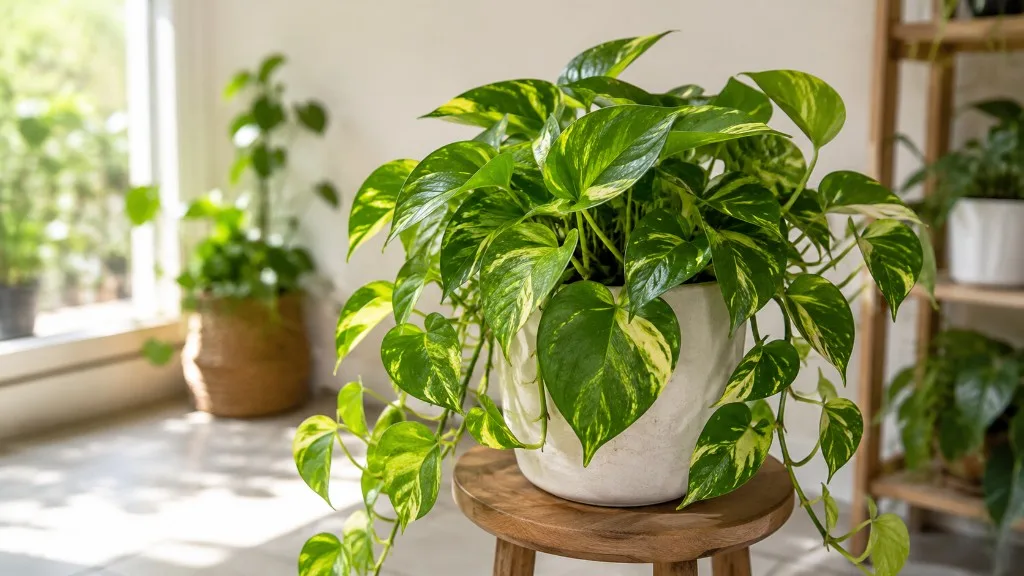
  3. Pothos houseplant

    PothosEpipremnum aureum

    • How to grow pothos indoors - watering rhythm, best light, soil mix, propagation from cuttings, and fixes for yellow leaves and brown tips.
    • Pothos is not pet-safe and is toxic to cats, dogs, rabbits, birds, horses, turtles, tortoises.
    • Pothos grows best in bright to medium indirect light, low light, fluorescent office light when grown as an indoor houseplant.
    • For Pothos, water when the top 2 inches of soil are dry - roughly every 7–10 days in summer.
    • Pothos does best at 40–60% humidity and needs light, well-draining potting mix with added perlite.
    • Pothos is rated medium care for indoor growing.
    Full care guide →
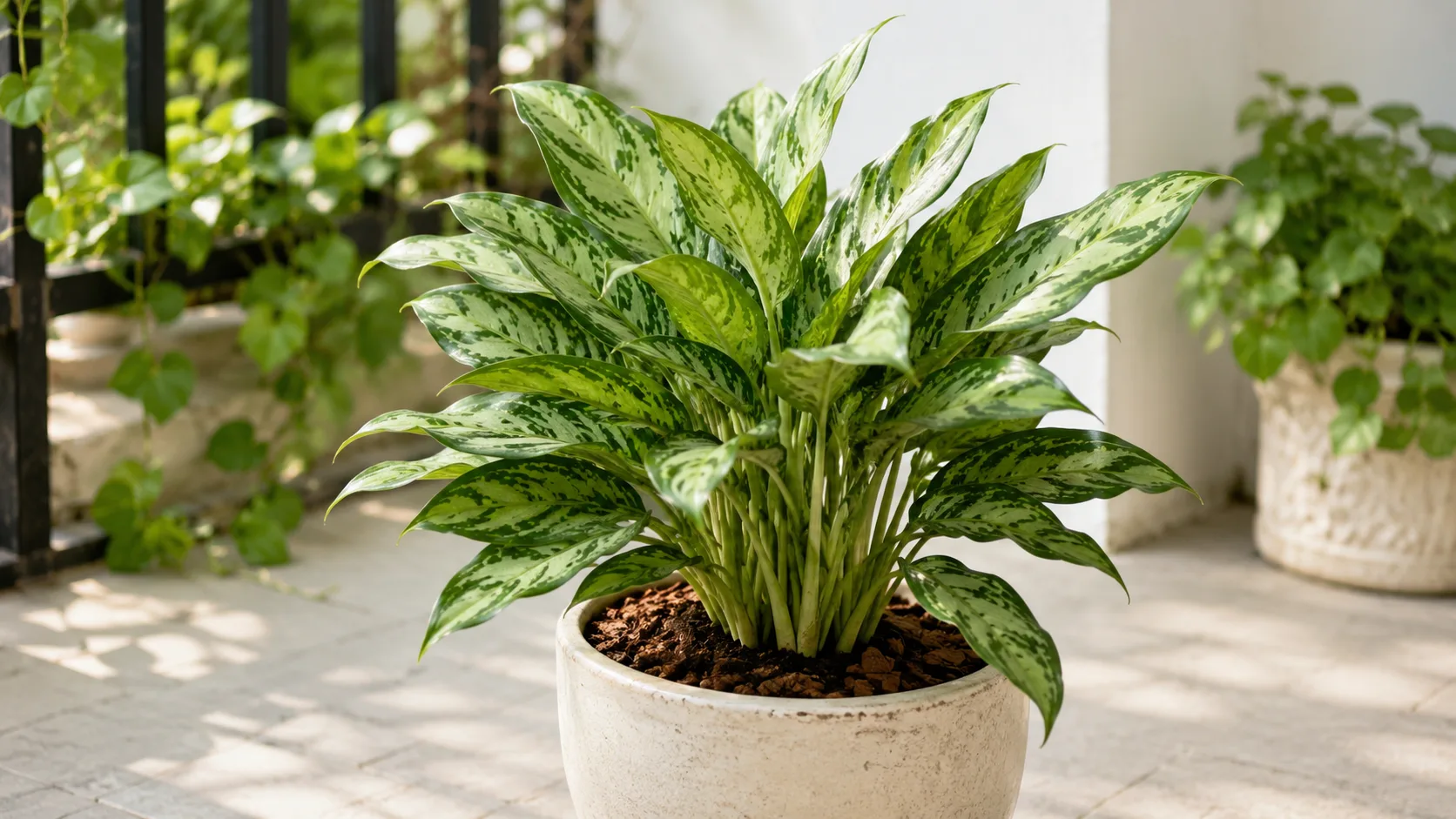
  4. Aglaonema houseplant

    AglaonemaAglaonema commutatum

    • Aglaonema thrives in low to medium indirect light and only needs watering every 7–10 days when the top 2 inches of soil are dry. One of the most forgiving colourful houseplants for warm climates, though toxic to pets.
    • Aglaonema is not pet-safe and is toxic to cats, dogs, rabbits, birds, horses, turtles, tortoises.
    • Aglaonema grows best in low to medium indirect light when grown as an indoor houseplant.
    • For Aglaonema, water when the top 2 inches of soil are dry - roughly every 7–10 days in summer.
    • Aglaonema grows to 1–3 ft tall and wide; lance-shaped leaves patterned in green, silver, and red indoors, does best at 40–60% humidity and needs well-draining, lightly fertile potting mix.
    • Aglaonema is rated medium care for indoor growing.
    Full care guide →
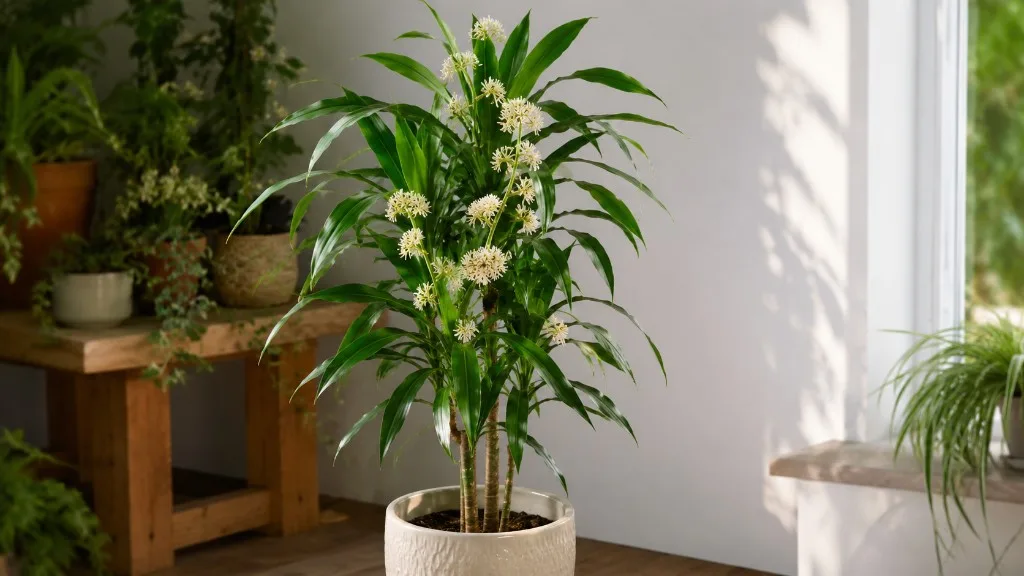
  5. Dracaena houseplant

    DracaenaDracaena fragrans

    • Dracaena thrives in medium indirect light, watered every 7–14 days when the top 2 inches dry. Use filtered water to prevent fluoride-induced brown tips.
    • Dracaena is not pet-safe and is toxic to cats, dogs, rabbits, horses, turtles, tortoises.
    • Dracaena grows best in medium to bright indirect light when grown as an indoor houseplant.
    • For Dracaena, water when top 2 inches are dry; every 7–14 days in summer; 14–21 days in winter.
    • Dracaena grows to 4–6 ft tall indoors as a cane plant; large strap leaves 2–3 ft long indoors, does best at 40–60% humidity and needs well-draining potting mix with perlite and coarse bark.
    • Dracaena is rated medium care for indoor growing.
    Full care guide →

Need more options for dim rooms?

Filter our plant library by low and medium indirect light so you only see varieties that can thrive away from sunny windows.

Open low-light plant finder
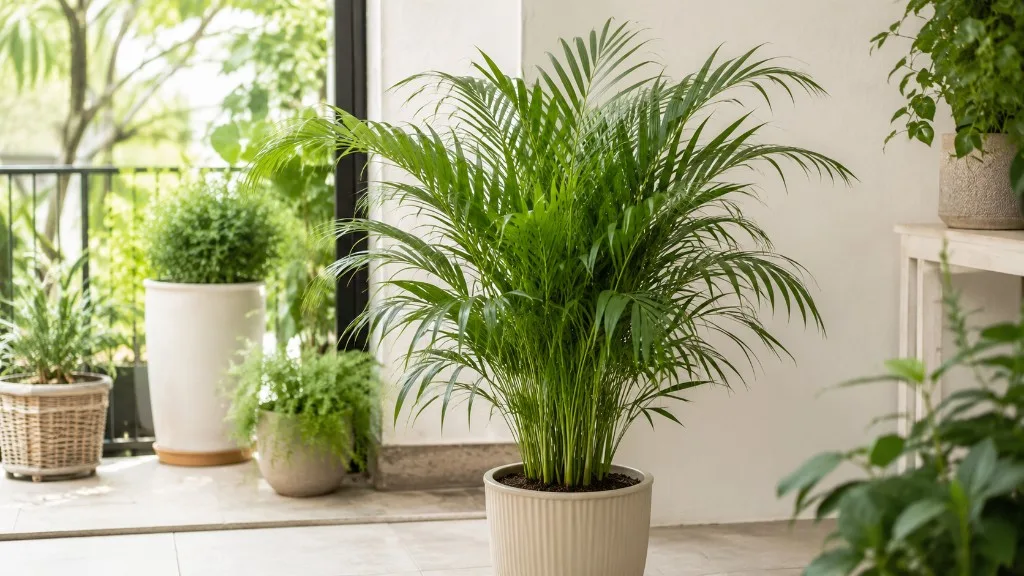
  1. Parlor Palm houseplant

    Parlor PalmChamaedorea elegans

    • Parlor Palm needs bright to low indirect light, watering every 7–10 days when top 3–5 cm is dry, and 40–60 % humidity. Non-toxic to pets - an excellent pet-safe indoor palm.
    • Parlor Palm is widely grown as a pet-friendly houseplant and is listed as non-toxic to cats and dogs by major poison-control references.
    • Parlor Palm grows best in medium indirect light, low indirect light, bright indirect light when grown as an indoor houseplant.
    • For Parlor Palm, every 7–10 days - allow top 3–5 cm to dry. Every 14 days in winter.
    • Parlor Palm does best at 40–60% humidity and needs standard potting mix + 20 % perlite. well-draining. ph 5.5–7.0.
    • Parlor Palm is rated medium care for indoor growing.
    Full care guide →
  2. Aglaonema Maria houseplant

    Aglaonema MariaAglaonema commutatum 'Maria'

    • Aglaonema Maria is one of the toughest low-light tolerant houseplants. Its dark green and silver leaves thrive even in dim offices.
    • Aglaonema Maria is not pet-safe and is toxic to cats, dogs, rabbits, birds, horses, turtles, tortoises.
    • Aglaonema Maria grows best in low to medium indirect light, low light when grown as an indoor houseplant.
    • For Aglaonema Maria, water when top half of soil dries; very drought-tolerant.
    • Aglaonema Maria does best at average household humidity humidity and needs well-draining potting mix.
    • Aglaonema Maria is rated medium care for indoor growing.
    Full care guide →
  3. Aglaonema Silver Bay houseplant

    Aglaonema Silver BayAglaonema commutatum 'Silver Bay'

    • Aglaonema Silver Bay is one of the easiest indoor plants, tolerating low light and drought. Its silver-green leaves brighten any dim room.
    • Aglaonema Silver Bay is not pet-safe and is toxic to cats, dogs, rabbits, birds, horses, turtles, tortoises.
    • Aglaonema Silver Bay grows best in medium indirect light, low light, bright indirect light when grown as an indoor houseplant.
    • For Aglaonema Silver Bay, water when the top half of soil dries; very tolerant of underwatering.
    • Aglaonema Silver Bay does best at average household humidity (40–60%) humidity and needs well-draining potting mix with perlite.
    • Aglaonema Silver Bay is rated medium care for indoor growing.
    Full care guide →
  4. Alocasia Dragon Scale houseplant

    Alocasia Dragon ScaleAlocasia baginda 'Dragon Scale'

    • Alocasia Dragon Scale needs bright indirect light, 70–80% humidity, and excellent drainage. It is prone to root rot-never let soil stay wet.
    • Alocasia Dragon Scale is not pet-safe and is toxic to cats, dogs, rabbits, birds, horses, turtles, tortoises.
    • Alocasia Dragon Scale grows best in bright indirect light, medium indirect light when grown as an indoor houseplant.
    • For Alocasia Dragon Scale, water when the top 2–3 cm of soil is dry. Highly sensitive to overwatering.
    • Alocasia Dragon Scale does best at 70–80% humidity and needs extremely well-draining aroid mix; this cultivar is especially prone to root rot.
    • Alocasia Dragon Scale is rated medium care for indoor growing.
    Full care guide →
  5. Anubias aquatic plant in clean aquarium water

    AnubiasAnubias barteri and related Anubias spp.

    • Anubias is commonly used in aquatic turtle setups, but LeafyPixels does not treat it as a universally verified turtle-safe food or enclosure plant across species. Use it as a cautious aquarium-plant candidate, not as a feeding….
    • Anubias is not pet-safe and is toxic to common pets. Anubias is commonly used in turtle aquariums, but that husbandry pattern is not the same as species-wide veterinary….
    • Anubias grows best in moderate to bright aquarium or pond light; avoid sudden harsh outdoor sun without acclimation., with tolerance for low-tech aquarium light when grown as an indoor houseplant.
    • For Anubias, keep the rhizome attached to rock or driftwood in clean aquarium water; do not bury the rhizome. Check water clarity, temperature, flow, and leaf color rather than watering by a calendar.
    • Anubias grows to 10-45 cm depending on species and cultivar indoors, does best at aquatic or constantly humid surface conditions humidity and needs no soil needed; attach the rhizome to hardscape or keep roots in inert aquarium substrate with the rhizome exposed.
    • Anubias is an easy-care plant that works well for turtle tanks, low light aquariums, attached rhizome plants.
    Full care guide →

Already have a plant that looks unhappy?

Match symptoms to likely causes in under a minute, then jump to the right fix guide.

Run plant diagnosis
  1. Bird's Nest Fern houseplant

    Bird's Nest FernAsplenium nidus

    • Grow bird's nest fern indoors with bright indirect light, consistent moisture, and 60%+ humidity. Easy to care for with no direct sun.
    • Bird's Nest Fern is widely grown as a pet-friendly houseplant and is listed as non-toxic to cats and dogs by major poison-control references.
    • Bird's Nest Fern grows best in medium indirect light when grown as an indoor houseplant.
    • For Bird's Nest Fern, every 5–7 days summer (top 2–3 cm dry). Water into soil, never the central rosette.
    • Bird's Nest Fern grows to 30–90 cm tall and wide indoors, does best at 50–70% humidity and needs well-draining potting mix with 20% orchid bark or coco coir for aeration. ph 5.5–7.0.
    • Bird's Nest Fern is rated medium care for indoor growing.
    Full care guide →
  2. Blue Star Fern houseplant

    Blue Star FernPhlebodium aureum

    • Blue star fern needs medium to bright indirect light (no direct sun), watering every 5–7 days when the top 3 cm is dry, 40–60%+ humidity (more forgiving than most ferns), and monthly half-strength fertiliser in the growing season.
    • Blue Star Fern is widely grown as a pet-friendly houseplant and is listed as non-toxic to cats and dogs by major poison-control references.
    • Blue Star Fern grows best in medium indirect light when grown as an indoor houseplant.
    • For Blue Star Fern, every 5–7 days summer (top 3 cm dry). 7–10 days winter.
    • Blue Star Fern grows to 30–60 cm tall indoors, does best at 40–60% humidity and needs well-draining potting mix with 20% orchid bark. wide, shallow pot for spreading rhizome. ph 6.0–7.0.
    • Blue Star Fern is rated medium care for indoor growing.
    Full care guide →
  3. Boston Fern houseplant

    Boston FernNephrolepis exaltata

    • Keep Boston fern lush - high humidity, consistent moisture, indirect light, and brown frond fixes.
    • Boston Fern is widely grown as a pet-friendly houseplant and is listed as non-toxic to cats and dogs by major poison-control references.
    • Boston Fern grows best in bright to medium indirect light, medium indirect light when grown as an indoor houseplant.
    • For Boston Fern, every 3–5 days spring and summer (top 2 cm beginning to dry). 5–7 days in winter.
    • Boston Fern does best at 50–70% humidity and needs well-draining but moisture-retentive potting mix. ph 5.0–5.5. peat or coco-based with perlite.
    • Boston Fern is rated medium care for indoor growing.
    Full care guide →
  4. Calathea Medallion houseplant

    Calathea MedallionCalathea veitchiana

    • Calathea Medallion needs filtered water, 60–80% humidity (humidifier essential), medium indirect light (no direct sun), and watering every 5–7 days when the top 2 cm is beginning to dry.
    • Calathea Medallion is widely grown as a pet-friendly houseplant and is listed as non-toxic to cats and dogs by major poison-control references.
    • Calathea Medallion grows best in medium indirect light, low indirect light when grown as an indoor houseplant.
    • For Calathea Medallion, every 5–7 days growing season (top 2 cm beginning to dry). 7–10 days winter.
    • Calathea Medallion does best at high humidity (60%+) humidity and needs moisture-retentive but well-draining potting mix. ph 6.0–7.5.
    • Calathea Medallion is rated medium care for indoor growing.
    Full care guide →
  5. Calathea Orbifolia houseplant

    Calathea OrbifoliaCalathea orbifolia

    • Calathea Orbifolia needs filtered water, 60–80% humidity (humidifier essential), medium indirect light (no direct sun), and watering every 5–7 days when the top 2 cm is beginning to dry.
    • Calathea Orbifolia is widely grown as a pet-friendly houseplant and is listed as non-toxic to cats and dogs by major poison-control references.
    • Calathea Orbifolia grows best in medium indirect light, low indirect light, bright indirect (not harsh) when grown as an indoor houseplant.
    • For Calathea Orbifolia, every 5–7 days growing season (top 2 cm beginning to dry). 7–10 days winter.
    • Calathea Orbifolia does best at high humidity (60%+); extremely sensitive to dry air humidity and needs moisture-retentive but well-draining potting mix. ph 6.0–7.5.
    • Calathea Orbifolia is rated medium care for indoor growing.
    Full care guide →

Need more options for dim rooms?

Filter our plant library by low and medium indirect light so you only see varieties that can thrive away from sunny windows.

Open low-light plant finder
  1. Calathea Peacock Plant houseplant

    Calathea Peacock PlantCalathea makoyana

    • Calathea Peacock Plant is calathea Peacock needs filtered water, 60–80% humidity (humidifier essential), medium indirect light (no direct sun), and watering every 5–7 days when the top 2 cm is beginning to dry.
    • Calathea Peacock Plant is widely grown as a pet-friendly houseplant and is listed as non-toxic to cats and dogs by major poison-control references.
    • Calathea Peacock Plant grows best in medium indirect light, low indirect light when grown as an indoor houseplant.
    • For Calathea Peacock Plant, every 5–7 days growing season (top 2 cm beginning to dry). 7–10 days winter.
    • Calathea Peacock Plant does best at high humidity (60%+) humidity and needs moisture-retentive but well-draining potting mix. ph 6.0–7.5.
    • Calathea Peacock Plant is rated medium care for indoor growing.
    Full care guide →
  2. Calathea Rattlesnake houseplant

    Calathea RattlesnakeGoeppertia insignis

    • Calathea Rattlesnake needs filtered water, 60–80% humidity (humidifier essential), medium indirect light (no direct sun), and watering every 5–7 days when the top 2 cm is beginning to dry.
    • Calathea Rattlesnake is widely grown as a pet-friendly houseplant and is listed as non-toxic to cats and dogs by major poison-control references.
    • Calathea Rattlesnake grows best in medium indirect light, low indirect light when grown as an indoor houseplant.
    • For Calathea Rattlesnake, every 5–7 days growing season (top 2 cm beginning to dry). 7–10 days winter.
    • Calathea Rattlesnake does best at high humidity (60%+) humidity and needs moisture-retentive but well-draining potting mix. ph 6.0–7.5.
    • Calathea Rattlesnake is rated medium care for indoor growing.
    Full care guide →
  3. Calathea Roseopicta houseplant

    Calathea RoseopictaCalathea roseopicta

    • Calathea Roseopicta needs filtered water, 60–80% humidity (humidifier essential), medium indirect light (no direct sun), and watering every 5–7 days when the top 2 cm is beginning to dry.
    • Calathea Roseopicta is widely grown as a pet-friendly houseplant and is listed as non-toxic to cats and dogs by major poison-control references.
    • Calathea Roseopicta grows best in medium indirect light, low indirect light when grown as an indoor houseplant.
    • For Calathea Roseopicta, every 5–7 days growing season (top 2 cm beginning to dry). 7–10 days winter.
    • Calathea Roseopicta does best at high humidity (60%+) humidity and needs moisture-retentive but well-draining potting mix. ph 6.0–7.5.
    • Calathea Roseopicta is rated medium care for indoor growing.
    Full care guide →
  4. Cast Iron Plant houseplant

    Cast Iron PlantAspidistra elatior

    • Cast iron plant tolerates deep shade, irregular watering (every 10–14 days), and low humidity. Avoid direct sun and overfeeding.
    • Cast Iron Plant is widely grown as a pet-friendly houseplant and is listed as non-toxic to cats and dogs by major poison-control references.
    • Cast Iron Plant grows best in low to medium indirect light, very low light when grown as an indoor houseplant.
    • For Cast Iron Plant, every 10–14 days (top 3–5 cm dry). Every 14–21 days in winter or low light.
    • Cast Iron Plant does best at 40–50% humidity and needs well-draining potting mix. ph 6.0–7.0. undemanding.
    • Cast Iron Plant is rated medium care for indoor growing.
    Full care guide →
  5. Christmas Cactus houseplant

    Christmas CactusSchlumbergera x buckleyi

    • Christmas cactus needs bright indirect light (no direct sun), watering every 7–10 days when the top 2–3 cm is dry, and a 6-week cool dark period (10–13°C nights, 14+ dark hours) in autumn to trigger flowering.
    • Christmas Cactus is widely grown as a pet-friendly houseplant and is listed as non-toxic to cats and dogs by major poison-control references.
    • Christmas Cactus grows best in bright indirect light, medium indirect light when grown as an indoor houseplant.
    • For Christmas Cactus, every 7–10 days growing season (top 2–3 cm dry). Reduce to every 14 days in pre-flowering dormancy.
    • Christmas Cactus does best at 50–60% humidity and needs well-draining potting mix with 20% orchid bark. ph 6.0–7.0. aerated, not compacted.
    • Christmas Cactus is rated medium care for indoor growing.
    Full care guide →

Already have a plant that looks unhappy?

Match symptoms to likely causes in under a minute, then jump to the right fix guide.

Run plant diagnosis
  1. Corn Plant houseplant

    Corn PlantDracaena fragrans

    • Corn plant tolerates low light and needs watering every 1–2 weeks when the top two inches dry out. Switch to filtered water to prevent fluoride-induced brown tips.
    • Corn Plant is not pet-safe and is toxic to cats, dogs, rabbits, horses, turtles, tortoises.
    • Corn Plant grows best in medium to bright indirect light, low light when grown as an indoor houseplant.
    • For Corn Plant, water when the top half of soil is dry; very sensitive to fluoride in tap water.
    • Corn Plant does best at average household humidity (40–50%) humidity and needs well-draining loamy potting mix with perlite.
    • Corn Plant is rated medium care for indoor growing.
    Full care guide →
  2. Dischidia houseplant

    DischidiaDischidia spp.

    • Dischidia is epiphytic - it needs orchid bark mix, very infrequent watering (every 10–14 days), and bright indirect light. Mist foliage between waterings.
    • Dischidia is not pet-safe and is toxic to common pets.
    • Dischidia grows best in bright indirect light, medium indirect light, gentle direct morning sun when grown as an indoor houseplant.
    • For Dischidia, water sparingly every 10–14 days; allow mix to dry almost completely. Mist foliage between waterings.
    • Dischidia does best at 50–70% humidity and needs orchid bark-based epiphytic mix with perlite and a small amount of sphagnum moss.
    • Dischidia is rated medium care for indoor growing.
    Full care guide →
  3. Dragon Tree houseplant

    Dragon TreeDracaena marginata

    • Dragon tree tolerates low light and irregular watering. Avoid fluoride-rich tap water to prevent brown tips.
    • Dragon Tree is not pet-safe and is toxic to cats, dogs, rabbits, horses, turtles, tortoises.
    • Dragon Tree grows best in bright indirect light, medium indirect light, some direct sun when grown as an indoor houseplant.
    • For Dragon Tree, allow top half of soil to dry. Every 10–14 days in summer; every 21 days in winter.
    • Dragon Tree does best at average humidity (40–50%); tolerates dry air humidity and needs standard potting mix with 20% perlite. well-draining. slightly acidic ph 6–7.
    • Dragon Tree is rated medium care for indoor growing.
    Full care guide →
  4. Dwarf Umbrella Tree houseplant

    Dwarf Umbrella TreeSchefflera arboricola

    • Dwarf umbrella tree needs bright indirect light to avoid legginess. Allow top half of soil to dry before watering to prevent root rot.
    • Dwarf Umbrella Tree is not pet-safe and is toxic to cats, dogs, rabbits, horses, turtles, tortoises.
    • Dwarf Umbrella Tree grows best in bright indirect light, medium indirect light when grown as an indoor houseplant.
    • For Dwarf Umbrella Tree, allow top half of soil to dry before watering. Every 7–10 days in summer; every 14–21 days in winter.
    • Dwarf Umbrella Tree does best at average to moderate humidity (40–60%) humidity and needs well-draining potting mix with perlite. slightly acidic ph 6–6.5.
    • Dwarf Umbrella Tree is rated medium care for indoor growing.
    Full care guide →
  5. Ficus Audrey houseplant

    Ficus AudreyFicus benghalensis

    • Ficus Audrey is more forgiving than fiddle leaf fig. Needs bright indirect light.
    • Ficus Audrey is not pet-safe and is toxic to cats, dogs, rabbits, birds, horses, turtles, tortoises.
    • Ficus Audrey grows best in bright indirect light, medium indirect light when grown as an indoor houseplant.
    • For Ficus Audrey, water when top 2–3 cm of soil dries. Every 7–10 days in summer; every 14–21 days in winter.
    • Ficus Audrey does best at moderate humidity (50–60%) humidity and needs well-draining standard potting mix with perlite.
    • Ficus Audrey is rated medium care for indoor growing.
    Full care guide →

Need more options for dim rooms?

Filter our plant library by low and medium indirect light so you only see varieties that can thrive away from sunny windows.

Open low-light plant finder
  1. Ficus Benjamina houseplant

    Ficus BenjaminaFicus benjamina

    • Ficus benjamina: find the right position and never move it. Water consistently when top inch dries.
    • Ficus Benjamina is not pet-safe and is toxic to cats, dogs, rabbits, birds, horses, turtles, tortoises.
    • Ficus Benjamina grows best in bright indirect light, medium indirect light when grown as an indoor houseplant.
    • For Ficus Benjamina, water when top inch dries. Every 7 days in summer; every 10–14 days in winter.
    • Ficus Benjamina does best at moderate to high humidity (50–60%) humidity and needs well-draining potting mix with perlite. slightly acidic ph 6–6.5.
    • Ficus Benjamina is rated medium care for indoor growing.
    Full care guide →
  2. Ficus Burgundy houseplant

    Ficus BurgundyFicus elastica 'Burgundy'

    • Ficus Burgundy needs bright light to maintain deep colour - in low light leaves turn muddy green. Water when top inch dries.
    • Ficus Burgundy is not pet-safe and is toxic to cats, dogs, rabbits, birds, horses, turtles, tortoises.
    • Ficus Burgundy grows best in bright indirect light, medium indirect light when grown as an indoor houseplant.
    • For Ficus Burgundy, water when top 2–3 cm dries. Every 7–10 days summer; 14–21 days winter.
    • Ficus Burgundy does best at average humidity (40–60%) humidity and needs well-draining standard potting mix with 20% perlite.
    • Ficus Burgundy is rated medium care for indoor growing.
    Full care guide →
  3. Ficus Tineke houseplant

    Ficus TinekeFicus elastica 'Tineke'

    • Ficus Tineke needs bright light for cream-and-green variegation. Cream sectors are vulnerable - maintain humidity above 50%.
    • Ficus Tineke is not pet-safe and is toxic to cats, dogs, rabbits, birds, horses, turtles, tortoises.
    • Ficus Tineke grows best in bright indirect light, medium indirect light when grown as an indoor houseplant.
    • For Ficus Tineke, water when top 2–3 cm dries. Every 7–10 days summer; 14–21 days winter.
    • Ficus Tineke does best at average to moderate humidity (40–60%) humidity and needs standard potting mix with 20% perlite.
    • Ficus Tineke is rated medium care for indoor growing.
    Full care guide →
  4. Fittonia houseplant

    FittoniaFittonia albivenis

    • Fittonia wilts dramatically when thirsty but recovers quickly. Keep humidity high - dry air causes permanent leaf margin browning.
    • Fittonia is widely grown as a pet-friendly houseplant and is listed as non-toxic to cats and dogs by major poison-control references.
    • Fittonia grows best in low to medium indirect light when grown as an indoor houseplant.
    • For Fittonia, water when top inch dries - before dramatic wilt stage. Every 4–7 days depending on humidity and temperature.
    • Fittonia grows to 3–6 inches tall; low-spreading mat; oval leaves 1–3 inches indoors, does best at 60–90% humidity and needs moist, well-draining potting mix. slight moisture retention acceptable.
    • Fittonia is rated medium care for indoor growing.
    Full care guide →
  5. Golden Pothos houseplant

    Golden PothosEpipremnum aureum

    • Golden pothos is highly tolerant and beginner-friendly. Variegation fades in low light - brighter light maintains the gold.
    • Golden Pothos is not pet-safe and is toxic to cats, dogs, rabbits, birds, horses, turtles, tortoises.
    • Golden Pothos grows best in medium indirect light when grown as an indoor houseplant.
    • For Golden Pothos, water when top half of soil dries. Every 7–10 days in bright light; every 14–21 days in low light.
    • Golden Pothos grows to up to 12 m in natural habitat; 2–3 m indoors indoors, does best at 30–50% humidity and needs well-draining standard potting mix.
    • Golden Pothos is rated medium care for indoor growing.
    Full care guide →

Already have a plant that looks unhappy?

Match symptoms to likely causes in under a minute, then jump to the right fix guide.

Run plant diagnosis
  1. Janet Craig Dracaena houseplant

    Janet Craig DracaenaDracaena deremensis 'Janet Craig'

    • Janet Craig Dracaena is janet Craig is the best large Dracaena for low light. Avoid fluoride tap water to prevent brown tips.
    • Janet Craig Dracaena is not pet-safe and is toxic to cats, dogs, rabbits, horses, turtles, tortoises.
    • Janet Craig Dracaena grows best in medium indirect light, low light, bright indirect light when grown as an indoor houseplant.
    • For Janet Craig Dracaena, allow top half to dry. Very infrequent in low-light positions - every 21–28 days or more.
    • Janet Craig Dracaena does best at average household humidity (40–50%) humidity and needs standard well-draining potting mix with perlite.
    • Janet Craig Dracaena is rated medium care for indoor growing.
    Full care guide →
  2. Java Fern aquatic plant in clean aquarium water

    Java FernMicrosorum pteropus

    • Java fern is common in aquatic turtle setups, but LeafyPixels does not treat it as a universally verified turtle-safe food or enclosure plant across species. Use it as a cautious aquarium-plant candidate, not as a feeding….
    • Java Fern is not pet-safe and is toxic to common pets. Java fern is commonly used in turtle aquariums, but that husbandry pattern is not the same as species-wide veterinary….
    • Java Fern grows best in moderate to bright aquarium or pond light; avoid sudden harsh outdoor sun without acclimation., with tolerance for low-tech aquarium light when grown as an indoor houseplant.
    • For Java Fern, keep the rhizome attached to rock or driftwood in clean aquarium water; do not bury the rhizome. Check water clarity, temperature, flow, and leaf color rather than watering by a calendar.
    • Java Fern grows to 15-35 cm rhizome fern in aquariums indoors, does best at aquatic or constantly humid surface conditions humidity and needs no soil needed; attach the rhizome to aquarium-safe rock, wood, or decor.
    • Java Fern is an easy-care plant that works well for turtle tanks, low light aquariums, attached rhizome plants.
    Full care guide →
  3. Lucky Bamboo houseplant

    Lucky BambooDracaena sanderiana

    • Lucky Bamboo needs bright indirect light, clean filtered water changed every 7–10 days, and very dilute fertiliser. Avoid direct sun and fluoridated tap water.
    • Lucky Bamboo is not pet-safe and is toxic to cats, dogs, rabbits, horses, turtles, tortoises.
    • Lucky Bamboo grows best in medium indirect light, low indirect light, bright indirect light when grown as an indoor houseplant.
    • For Lucky Bamboo, keep 5–8 cm of clean, filtered water in the vase. Change every 7–10 days.
    • Lucky Bamboo does best at 40–60% humidity and needs for vase growing: clean filtered water with decorative pebbles. for soil: 60 % potting mix + 40 % perlite. ph 5.5–7.0.
    • Lucky Bamboo is rated medium care for indoor growing.
    Full care guide →
  4. Maidenhair Fern houseplant

    Maidenhair FernAdiantum raddianum

    • Maidenhair Fern needs humidity above 60 %, consistently moist soil (never dry), bright indirect light, and protection from cold drafts. Cut all collapsed fronds to the soil line - new ones emerge in 2–4 weeks.
    • Maidenhair Fern is widely grown as a pet-friendly houseplant and is listed as non-toxic to cats and dogs by major poison-control references.
    • Maidenhair Fern grows best in medium indirect light when grown as an indoor houseplant.
    • For Maidenhair Fern, every 2–3 days - keep soil consistently moist. Never allow the root ball to dry out.
    • Maidenhair Fern grows to 30–60 cm tall and wide indoors, does best at 60–80% humidity and needs 50 % potting compost + 30 % coco coir + 20 % fine orchid bark. moisture-retaining but well-draining. ph 5.5–7.0.
    • Maidenhair Fern is rated medium care for indoor growing.
    Full care guide →
  5. Maranta Leuconeura houseplant

    Maranta LeuconeuraMaranta leuconeura

    • Maranta Leuconeura is prayer Plant needs bright indirect light, consistently moist soil (filtered water), 50%+ humidity, and temperatures above 15 °C. Non-toxic to pets.
    • Maranta Leuconeura is widely grown as a pet-friendly houseplant and is listed as non-toxic to cats and dogs by major poison-control references.
    • Maranta Leuconeura grows best in medium indirect light, low indirect light when grown as an indoor houseplant.
    • For Maranta Leuconeura, every 5–7 days - keep soil consistently moist at 2 cm depth. Use filtered or overnight tap water to avoid fluoride brown tips.
    • Maranta Leuconeura does best at high humidity (60%+); more tolerant than calathea but still prefers humid conditions humidity and needs 60 % potting compost + 20 % perlite + 20 % coco coir. moisture-retaining and well-draining. ph 5.5–7.0.
    • Maranta Leuconeura is rated medium care for indoor growing.
    Full care guide →

Need more options for dim rooms?

Filter our plant library by low and medium indirect light so you only see varieties that can thrive away from sunny windows.

Open low-light plant finder
  1. Monstera Adansonii houseplant

    Monstera AdansoniiMonstera adansonii

    • Monstera Adansonii needs bright indirect light for fenestrations, watering every 7–10 days when top 3–5 cm is dry, 50%+ humidity, and a moss pole for climbing support.
    • Monstera Adansonii is not pet-safe and is toxic to cats, dogs, rabbits, birds, horses, turtles, tortoises.
    • Monstera Adansonii grows best in bright indirect light, medium indirect light when grown as an indoor houseplant.
    • For Monstera Adansonii, every 7–10 days - allow top 3–5 cm to dry. Water thoroughly until drainage from holes.
    • Monstera Adansonii does best at 50–60% humidity and needs standard potting mix + 20–25 % perlite + 10–15 % orchid bark. well-draining aroid mix. ph 5.5–7.0.
    • Monstera Adansonii is rated medium care for indoor growing.
    Full care guide →
  2. Monstera Deliciosa houseplant

    Monstera DeliciosaMonstera deliciosa

    • Monstera Deliciosa is grow split-leaf monstera indoors - watering, bright indirect light, moss pole support, and fixes for yellow leaves.
    • Monstera Deliciosa is not pet-safe and is toxic to cats, dogs, rabbits, birds, horses, turtles, tortoises.
    • Monstera Deliciosa grows best in bright indirect light, medium indirect light when grown as an indoor houseplant.
    • For Monstera Deliciosa, every 7–10 days - allow top 3–5 cm to dry. Water thoroughly.
    • Monstera Deliciosa does best at 50–70% humidity and needs standard potting mix + 20–25 % perlite + 10–15 % orchid bark. well-draining chunky aroid mix. ph 5.5–7.0.
    • Monstera Deliciosa is rated medium care for indoor growing.
    Full care guide →
  3. Peace Lily houseplant

    Peace LilySpathiphyllum wallisii

    • Peace lily care - droop-when-dry watering, medium indirect light, humidity, and brown tip fixes.
    • Peace Lily is not pet-safe and is toxic to cats, dogs, rabbits, birds, horses, turtles, tortoises.
    • Peace Lily grows best in low to medium indirect light, bright indirect light, fluorescent office light when grown as an indoor houseplant.
    • For Peace Lily, every 7–10 days - water when the top 3–5 cm is dry or at the first sign of leaf drooping. Use filtered or settled tap water.
    • Peace Lily does best at 50–60% humidity and needs standard potting mix + 20 % perlite. slightly moisture-retaining but well-draining. ph 5.5–7.0.
    • Peace Lily is rated medium care for indoor growing.
    Full care guide →
  4. Peperomia Hope houseplant

    Peperomia HopePeperomia tetraphylla 'Hope'

    • Peperomia Hope needs bright to medium indirect light, watering every 10–14 days when soil is completely dry, and a fast-draining mix. Non-toxic to pets.
    • Peperomia Hope is widely grown as a pet-friendly houseplant and is listed as non-toxic to cats and dogs by major poison-control references.
    • Peperomia Hope grows best in bright indirect light, medium indirect light when grown as an indoor houseplant.
    • For Peperomia Hope, every 10–14 days - soil must dry completely before watering. Every 3–4 weeks in winter.
    • Peperomia Hope does best at average household humidity (40–50%) humidity and needs 50 % potting compost + 50 % perlite. fast-draining. ph 6.0–7.0.
    • Peperomia Hope is rated medium care for indoor growing.
    Full care guide →
  5. Phalaenopsis Orchid houseplant

    Phalaenopsis OrchidPhalaenopsis spp.

    • Phalaenopsis Orchid is phalaenopsis needs bright indirect light, watering through bark every 7–10 days allowing near-complete drying, 40–70 % humidity, and 5–8 °C cooler nights in autumn to trigger reblooming. Non-toxic to pets.
    • Phalaenopsis Orchid is widely grown as a pet-friendly houseplant and is listed as non-toxic to cats and dogs by major poison-control references.
    • Phalaenopsis Orchid grows best in bright indirect light (east or north-facing window), medium indirect light when grown as an indoor houseplant.
    • For Phalaenopsis Orchid, every 7–10 days - run water through bark until draining, then allow bark to dry almost completely. Silver-grey roots = dry = time to water.
    • Phalaenopsis Orchid does best at 50–70% humidity and needs orchid bark chips or sphagnum moss. never standard potting soil. repot in fresh bark every 1–2 years.
    • Phalaenopsis Orchid is rated medium care for indoor growing.
    Full care guide →

Already have a plant that looks unhappy?

Match symptoms to likely causes in under a minute, then jump to the right fix guide.

Run plant diagnosis
  1. Philodendron Birkin houseplant

    Philodendron BirkinPhilodendron 'Birkin'

    • Philodendron Birkin needs bright indirect light for pinstripe variegation, watering every 7–10 days when top 3–5 cm is dry, 50–60 % humidity, and no moss pole needed. Toxic to pets.
    • Philodendron Birkin is not pet-safe and is toxic to cats, dogs, rabbits, birds, horses, turtles, tortoises.
    • Philodendron Birkin grows best in bright indirect light, medium indirect light when grown as an indoor houseplant.
    • For Philodendron Birkin, every 7–10 days - allow top 3–5 cm to dry. Every 10–14 days in winter.
    • Philodendron Birkin does best at 50–60% humidity and needs standard potting mix + 20–25 % perlite + 10 % orchid bark. well-draining. ph 5.5–7.0.
    • Philodendron Birkin is rated medium care for indoor growing.
    Full care guide →
  2. Philodendron Brasil houseplant

    Philodendron BrasilPhilodendron hederaceum 'Brasil'

    • Philodendron Brasil needs bright indirect light for vivid colour, watering every 7–10 days when top 3–5 cm is dry, and standard well-draining potting mix. Toxic to pets.
    • Philodendron Brasil is not pet-safe and is toxic to cats, dogs, rabbits, birds, horses, turtles, tortoises.
    • Philodendron Brasil grows best in bright indirect light, medium indirect light when grown as an indoor houseplant.
    • For Philodendron Brasil, every 7–10 days in summer - allow top 3–5 cm to dry. Every 10–14 days in winter.
    • Philodendron Brasil does best at 40–60% humidity and needs standard potting mix + 20–25 % perlite. well-draining. ph 5.5–7.0.
    • Philodendron Brasil is rated medium care for indoor growing.
    Full care guide →
  3. Philodendron Gloriosum houseplant

    Philodendron GloriosumPhilodendron gloriosum

    • Philodendron Gloriosum needs bright indirect light, watering every 10–14 days when top 3–5 cm is dry, 60–70 % humidity for velvet texture, and a wide shallow pot for its horizontal growth.
    • Philodendron Gloriosum is not pet-safe and is toxic to cats, dogs, rabbits, birds, horses, turtles, tortoises.
    • Philodendron Gloriosum grows best in bright indirect light, medium indirect light when grown as an indoor houseplant.
    • For Philodendron Gloriosum, every 10–14 days in summer - allow top 3–5 cm to dry. Reduce in winter.
    • Philodendron Gloriosum does best at high humidity (60–70%) humidity and needs well-draining chunky aroid mix: potting mix + perlite + orchid bark. wide shallow pot preferred. ph 5.5–7.0.
    • Philodendron Gloriosum is rated medium care for indoor growing.
    Full care guide →
  4. Philodendron Lemon Lime houseplant

    Philodendron Lemon LimePhilodendron hederaceum 'Lemon Lime'

    • Philodendron Lemon Lime needs bright indirect light for vivid yellow-green colour, watering every 7–10 days when top 3–5 cm is dry, and well-draining aroid mix. Fast-growing.
    • Philodendron Lemon Lime is not pet-safe and is toxic to cats, dogs, rabbits, birds, horses, turtles, tortoises.
    • Philodendron Lemon Lime grows best in medium to bright indirect light, low light (colour becomes greener) when grown as an indoor houseplant.
    • For Philodendron Lemon Lime, every 7–10 days in summer - allow top 3–5 cm to dry. Every 10–14 days in winter.
    • Philodendron Lemon Lime does best at moderate humidity (50–60%) humidity and needs standard potting mix + 20–25 % perlite. well-draining. ph 5.5–6.5.
    • Philodendron Lemon Lime is rated medium care for indoor growing.
    Full care guide →
  5. Philodendron Melanochrysum houseplant

    Philodendron MelanochrysumPhilodendron melanochrysum

    • Philodendron Melanochrysum needs bright indirect light, watering every 7–14 days, 60–70 % humidity, and a tall moss pole for best leaf development. Toxic to pets.
    • Philodendron Melanochrysum is not pet-safe and is toxic to cats, dogs, rabbits, birds, horses, turtles, tortoises.
    • Philodendron Melanochrysum grows best in bright indirect light, medium indirect light when grown as an indoor houseplant.
    • For Philodendron Melanochrysum, every 7–14 days - allow top 3–5 cm to dry. Reduce in winter.
    • Philodendron Melanochrysum does best at high humidity (60–70%) humidity and needs chunky aroid mix: potting mix + perlite + orchid bark. excellent drainage. ph 5.5–7.0.
    • Philodendron Melanochrysum is rated medium care for indoor growing.
    Full care guide →

Need more options for dim rooms?

Filter our plant library by low and medium indirect light so you only see varieties that can thrive away from sunny windows.

Open low-light plant finder
  1. Philodendron Pink Princess houseplant

    Philodendron Pink PrincessPhilodendron erubescens 'Pink Princess'

    • Philodendron Pink Princess needs bright indirect light (essential for pink variegation), watering every 7–10 days when top 3–5 cm is dry, 55–70 % humidity, and a climbing support. Toxic to pets.
    • Philodendron Pink Princess is not pet-safe and is toxic to cats, dogs, rabbits, birds, horses, turtles, tortoises.
    • Philodendron Pink Princess grows best in bright indirect light, medium indirect light (pink fades) when grown as an indoor houseplant.
    • For Philodendron Pink Princess, every 7–10 days in summer - allow top 3–5 cm to dry. Every 10–14 days in winter.
    • Philodendron Pink Princess does best at moderate to high humidity (55–70%) humidity and needs chunky well-draining aroid mix: potting mix + perlite + orchid bark. ph 5.5–6.5.
    • Philodendron Pink Princess is rated medium care for indoor growing.
    Full care guide →
  2. Philodendron Selloum houseplant

    Philodendron SelloumThaumatophyllum bipinnatifidum

    • Philodendron Selloum needs bright to medium indirect light, watering every 7–10 days (top 5 cm dry), 50–60 % humidity, and a large pot. Toxic to pets.
    • Philodendron Selloum is not pet-safe and is toxic to cats, dogs, rabbits, birds, horses, turtles, tortoises.
    • Philodendron Selloum grows best in bright indirect light, medium indirect light when grown as an indoor houseplant.
    • For Philodendron Selloum, every 7–10 days in summer - allow top 5 cm to dry. Every 14–21 days in winter.
    • Philodendron Selloum does best at 50–60% humidity and needs chunky aroid mix: potting mix + 25 % perlite + 25 % orchid bark + 10 % worm castings. large pots with multiple drainage holes.
    • Philodendron Selloum is rated medium care for indoor growing.
    Full care guide →
  3. Philodendron White Knight houseplant

    Philodendron White KnightPhilodendron erubescens 'White Knight'

    • Philodendron White Knight needs bright indirect light for white variegation, watering every 7–10 days when top 3–5 cm is dry, 55–70 % humidity, and a climbing support. Toxic to pets.
    • Philodendron White Knight is not pet-safe and is toxic to cats, dogs, rabbits, birds, horses, turtles, tortoises.
    • Philodendron White Knight grows best in bright indirect light, medium indirect light (variegation fades) when grown as an indoor houseplant.
    • For Philodendron White Knight, every 7–10 days in summer - allow top 3–5 cm to dry. Every 10–14 days in winter.
    • Philodendron White Knight does best at moderate to high humidity (55–70%) humidity and needs chunky aroid mix: potting mix + perlite + orchid bark. well-draining. ph 5.5–6.5.
    • Philodendron White Knight is rated medium care for indoor growing.
    Full care guide →
  4. Pilea Moon Valley houseplant

    Pilea Moon ValleyPilea mollis

    • Pilea Moon Valley needs bright indirect light for deepest colour, watering every 7–10 days when top 2–3 cm is dry, and moderate humidity. Non-toxic to pets.
    • Pilea Moon Valley is widely grown as a pet-friendly houseplant and is listed as non-toxic to cats and dogs by major poison-control references.
    • Pilea Moon Valley grows best in bright indirect light, medium indirect light when grown as an indoor houseplant.
    • For Pilea Moon Valley, every 7–10 days in summer - allow top 2–3 cm to dry. Every 10–14 days in winter.
    • Pilea Moon Valley does best at moderate to high humidity (50–60%) humidity and needs standard potting mix + 15–20 % perlite. well-draining. ph 6.0–7.0.
    • Pilea Moon Valley is rated medium care for indoor growing.
    Full care guide →
  5. Pilea Peperomioides houseplant

    Pilea PeperomioidesPilea peperomioides

    • Pilea peperomioides needs bright indirect light, watering every 7–10 days when top inch is dry, rotation every 2 weeks for symmetry, and pup separation when ready. Non-toxic to pets.
    • Pilea Peperomioides is widely grown as a pet-friendly houseplant and is listed as non-toxic to cats and dogs by major poison-control references.
    • Pilea Peperomioides grows best in bright indirect light, medium indirect light when grown as an indoor houseplant.
    • For Pilea Peperomioides, every 7–10 days in summer - allow top inch to dry. Every 14 days in winter.
    • Pilea Peperomioides does best at average household humidity (40–50%) humidity and needs standard potting mix + 15–20 % perlite. well-draining. ph 6.0–7.0.
    • Pilea Peperomioides is rated medium care for indoor growing.
    Full care guide →

Already have a plant that looks unhappy?

Match symptoms to likely causes in under a minute, then jump to the right fix guide.

Run plant diagnosis
  1. Prayer Plant houseplant

    Prayer PlantMaranta leuconeura

    • Prayer plants need consistently moist soil, high humidity (50–70%), and medium indirect light. Leaves fold upward at night.
    • Prayer Plant is widely grown as a pet-friendly houseplant and is listed as non-toxic to cats and dogs by major poison-control references.
    • Prayer Plant grows best in medium indirect light, low indirect light, bright indirect light when grown as an indoor houseplant.
    • For Prayer Plant, keep soil consistently moist but not waterlogged - water when the top inch dries out.
    • Prayer Plant does best at 50–70% humidity and needs rich, moisture-retentive but well-draining potting mix.
    • Prayer Plant is rated medium care for indoor growing.
    Full care guide →
  2. Raindrop Peperomia houseplant

    Raindrop PeperomiaPeperomia polybotrya

    • Raindrop Peperomia is a compact, pet-safe plant needing bright indirect light and infrequent watering. Let the soil dry completely before watering.
    • Raindrop Peperomia is widely grown as a pet-friendly houseplant and is listed as non-toxic to cats and dogs by major poison-control references.
    • Raindrop Peperomia grows best in bright indirect light, medium indirect light when grown as an indoor houseplant.
    • For Raindrop Peperomia, allow soil to dry completely between waterings.
    • Raindrop Peperomia does best at average household humidity (40–50%) humidity and needs well-draining potting mix with added perlite.
    • Raindrop Peperomia is rated medium care for indoor growing.
    Full care guide →
  3. Schefflera houseplant

    ScheffleraSchefflera arboricola

    • Schefflera needs bright indirect light and watering when the top 2 inches of soil dry out. It tolerates lower light than many tropical trees but responds to any sudden change with dramatic leaf drop.
    • Schefflera is not pet-safe and is toxic to cats, dogs, rabbits, horses, turtles, tortoises.
    • Schefflera grows best in bright indirect light, medium indirect light when grown as an indoor houseplant.
    • Water when the top 2 inches of soil are dry. Schefflera tolerates some drought but dislikes sitting in water.
    • Schefflera does best at 40–60% humidity and needs well-draining potting mix; standard mix with added perlite works well.
    • Schefflera is rated medium care for indoor growing.
    Full care guide →
  4. Song of India houseplant

    Song of IndiaDracaena reflexa

    • Song of India needs bright indirect light to maintain its yellow-green variegation and regular but moderate watering. Avoid fluoride-heavy tap water.
    • Song of India is not pet-safe and is toxic to cats, dogs, rabbits, horses, turtles, tortoises.
    • Song of India grows best in bright indirect light, medium indirect light when grown as an indoor houseplant.
    • For Song of India, water when top 3–5 cm of soil dries; avoid overwatering.
    • Song of India does best at average to moderate humidity (40–60%) humidity and needs well-draining potting mix with perlite.
    • Song of India is rated medium care for indoor growing.
    Full care guide →
  5. Spider Plant houseplant

    Spider PlantChlorophytum comosum

    • Spider plant care for beginners - watering, bright indirect light, propagating plantlets, pet-safe growing tips.
    • Spider Plant is widely grown as a pet-friendly houseplant and is listed as non-toxic to cats and dogs by major poison-control references.
    • Spider Plant grows best in bright to medium indirect light, low light, some morning direct sun when grown as an indoor houseplant.
    • For Spider Plant, water when the top 2 inches of soil are dry - roughly every 7–10 days in the growing season.
    • Spider Plant does best at 40–60% humidity and needs well-draining general-purpose potting mix.
    • Spider Plant is rated medium care for indoor growing.
    Full care guide →

Need more options for dim rooms?

Filter our plant library by low and medium indirect light so you only see varieties that can thrive away from sunny windows.

Open low-light plant finder
  1. Swedish Ivy houseplant

    Swedish IvyPlectranthus australis

    • Swedish Ivy is an easy, fast-growing trailing plant that likes bright indirect light and moderate watering. Pinch tips to keep it bushy.
    • Swedish Ivy is widely grown as a pet-friendly houseplant and is listed as non-toxic to cats and dogs by major poison-control references.
    • Swedish Ivy grows best in bright indirect light, medium indirect light when grown as an indoor houseplant.
    • For Swedish Ivy, water when the top inch of soil dries; allows moderate drying between waterings.
    • Swedish Ivy does best at average household humidity (40–60%) humidity and needs standard well-draining potting mix.
    • Swedish Ivy is rated medium care for indoor growing.
    Full care guide →
  2. Syngonium Albo houseplant

    Syngonium AlboSyngonium podophyllum 'Albo Variegatum'

    • Syngonium Albo needs bright indirect light to keep its white variegation. Remove any fully green stems that revert to maintain the variegated look.
    • Syngonium Albo is not pet-safe and is toxic to cats, dogs, rabbits, birds, horses, turtles, tortoises.
    • Syngonium Albo grows best in bright indirect light, medium indirect light when grown as an indoor houseplant.
    • For Syngonium Albo, water when top inch of soil dries; variegated leaves are slightly more sensitive.
    • Syngonium Albo does best at moderate to high humidity (50–65%) humidity and needs well-draining aroid mix.
    • Syngonium Albo is rated medium care for indoor growing.
    Full care guide →
  3. Syngonium Neon Robusta houseplant

    Syngonium Neon RobustaSyngonium podophyllum 'Neon Robusta'

    • Syngonium Neon Robusta needs bright indirect light to maintain its striking neon-pink colour. Water when the top inch of soil dries out.
    • Syngonium Neon Robusta is not pet-safe and is toxic to cats, dogs, rabbits, birds, horses, turtles, tortoises.
    • Syngonium Neon Robusta grows best in bright indirect light, medium indirect light when grown as an indoor houseplant.
    • For Syngonium Neon Robusta, water when top inch of soil dries.
    • Syngonium Neon Robusta does best at moderate humidity (50–60%) humidity and needs well-draining potting mix.
    • Syngonium Neon Robusta is rated medium care for indoor growing.
    Full care guide →
  4. Syngonium Pink houseplant

    Syngonium PinkSyngonium podophyllum 'Pink'

    • Syngonium Pink needs bright indirect light to keep its rosy colouring. Water when the top inch dries and prune regularly to keep it bushy.
    • Syngonium Pink is not pet-safe and is toxic to cats, dogs, rabbits, birds, horses, turtles, tortoises.
    • Syngonium Pink grows best in bright indirect light, medium indirect light when grown as an indoor houseplant.
    • For Syngonium Pink, water when top inch of soil dries.
    • Syngonium Pink does best at moderate humidity (50–60%) humidity and needs well-draining potting mix.
    • Syngonium Pink is rated medium care for indoor growing.
    Full care guide →
  5. Tradescantia Zebrina houseplant

    Tradescantia ZebrinaTradescantia zebrina

    • Tradescantia zebrina needs bright indirect light to keep its vivid purple-and-silver stripes. Water when the top inch dries and propagate easily from cuttings.
    • Tradescantia Zebrina is not pet-safe and is toxic to cats, dogs, rabbits, horses, turtles, tortoises.
    • Tradescantia Zebrina grows best in bright indirect light, medium indirect light when grown as an indoor houseplant.
    • For Tradescantia Zebrina, water when the top inch of soil is dry; avoid waterlogging.
    • Tradescantia Zebrina does best at average to moderate humidity (40–60%) humidity and needs standard well-draining potting mix.
    • Tradescantia Zebrina is rated medium care for indoor growing.
    Full care guide →

Already have a plant that looks unhappy?

Match symptoms to likely causes in under a minute, then jump to the right fix guide.

Run plant diagnosis
  1. Watermelon Peperomia houseplant

    Watermelon PeperomiaPeperomia argyreia

    • Watermelon Peperomia is pet-safe and easy to grow. It needs bright indirect light and very infrequent watering - let the soil dry completely between waterings.
    • Watermelon Peperomia is widely grown as a pet-friendly houseplant and is listed as non-toxic to cats and dogs by major poison-control references.
    • Watermelon Peperomia grows best in bright indirect light, medium indirect light when grown as an indoor houseplant.
    • For Watermelon Peperomia, allow soil to dry completely between waterings; water sparingly.
    • Watermelon Peperomia does best at average to moderate humidity (40–60%) humidity and needs well-draining potting mix with perlite or coarse sand.
    • Watermelon Peperomia is rated medium care for indoor growing.
    Full care guide →
  2. Zebra Plant houseplant

    Zebra PlantAphelandra squarrosa

    • Zebra plants need bright indirect light, high humidity, and even moisture. They are demanding but reward with stunning striped foliage and yellow bracts.
    • Zebra Plant is widely grown as a pet-friendly houseplant and is listed as non-toxic to cats and dogs by major poison-control references.
    • Zebra Plant grows best in bright indirect light, medium indirect light when grown as an indoor houseplant.
    • For Zebra Plant, keep evenly moist but never waterlogged; water when the top inch of soil dries.
    • Zebra Plant does best at high humidity (60–70%); mist regularly or use a pebble tray humidity and needs well-draining, moisture-retentive peat-based mix with perlite.
    • Zebra Plant is rated medium care for indoor growing.
    Full care guide →

How this Best Low Light Indoor Plants list is reviewed?

Editorial policyReview board

Written by · Reviewed by LeafyPixels Review Board · Updated June 9, 2026

This Best Low Light Indoor Plants plant list was researched and written by . Plant picks, rankings, and suitability notes for Best Low Light Indoor Plants are checked against LeafyPixels plant metadata, care requirements, pet-toxicity references, and practical indoor suitability.

We prioritize sources that hold up under scrutiny:

  • University cooperative extension bulletins and fact sheets (Penn State, Clemson, UMD, NC State, and similar programs)
  • Botanical garden and horticultural society publications
  • Peer-reviewed plant science and veterinary toxicology references where pet safety matters (including ASPCA Animal Poison Control)
  • Established reference works on indoor plant culture

The LeafyPixels editorial team then reviews the draft for clarity, step-by-step usefulness, and fit with real apartment and home conditions-not ideal greenhouse setups. When guidance changes materially, we update the page and note the revision date.


Sources used

  1. ASPCA Toxic and Non-Toxic Plants (n.d.) Toxic And Non Toxic Plants. [Online]. Available at: https://www.aspca.org/pet-care/animal-poison-control/toxic-and-non-toxic-plants (Accessed: 9 June 2026).
  2. NC State Extension (n.d.) Houseplants. [Online]. Available at: https://plants.ces.ncsu.edu/find_a_plant/?plant_type__id=10 (Accessed: 9 June 2026).