Peace Lily Care: Light, Water, Soil & Tips
Spathiphyllum wallisii
Peace lily care - droop-when-dry watering, medium indirect light, humidity, and brown tip fixes.
Peace Lily Care: Light, Water, Soil & Tips
Start with wateringThe most common care mistake for Peace LilyWatering guide →Peace Lily care essentials
Light
low to medium indirect light, bright indirect light, fluorescent office light
Water
Every 7–10 days - water when the top 3–5 cm is dry or at the first sign of leaf drooping. Use filtered or settled tap water. Drooping is the plant's signal for thirst.
Soil
Standard potting mix + 20 % perlite. Slightly moisture-retaining but well-draining. pH 5.5–7.0.
Humidity
50–60%
Temperature
18–30°C (65–85°F)
Fertilizer
Feed lightly during active growth.
About Peace Lily
Peace Lily has a upright growth habit.
| Detail | Information |
|---|---|
| Growth habit | Upright |
| Scientific name | Spathiphyllum wallisii |
Peace Lily Care: Light, Water, Soil & Tips
What Is Peace Lily?
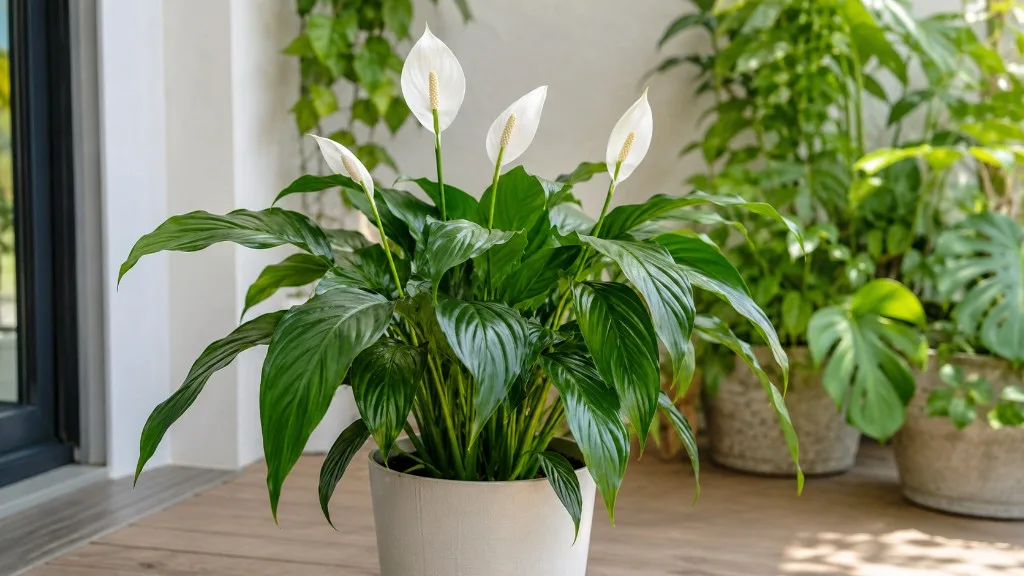
Peace lily is one of the most recognizable indoor plants on the market - glossy green leaves, an upright clumping habit, and those iconic white hood-shaped blooms that look like flags of surrender but are actually modified leaves called spathes. The accepted genus is Spathiphyllum, with Spathiphyllum wallisii among the most common species sold for home cultivation, though nursery tags often list only the genus or a cultivar name such as Mauna Loa. Despite the common name, peace lily is not a true lily and belongs instead to the Araceae (arum) family alongside philodendron, pothos, and dieffenbachia.
Indoors, most peace lilies reach roughly 1 to 4 feet (30 to 120 cm) tall depending on cultivar and pot size, growing at a moderate pace in typical room conditions. They are native to the tropical forest floor of Central and South America, where dappled light, warm stable temperatures, and consistent humidity define the baseline. That origin story matters more than any product label because it explains why the plant tolerates lower light than many flowering houseplants yet still sulks in cold drafts, why it wilts dramatically when dry, and why it responds so well to the steamy air of a bright bathroom.
If you are deciding whether a peace lily fits your home, the honest summary is this: peace lily rewards attentive watering, stable warmth, and humidity above desert-dry levels - and it communicates thirst louder than almost any other common houseplant. It is easier than a finicky orchid and more demanding than a snake plant about moisture balance. The payoff is year-round foliage, periodic white spathe flowers in good conditions, and tolerance of the fluorescent-lit offices where many other plants stall. One critical caveat for pet owners: peace lily contains insoluble calcium oxalate crystals and is toxic to cats and dogs according to the ASPCA, which makes it a poor choice at nose level in households with chewers.
Botanical Background and the White Spathe
Peace lily belongs to Araceae, a family built for understory survival. Araceae plants typically share a few care patterns that transfer directly to the windowsill: they prefer well-drained but moisture-retentive soil, they dislike sustained cold, and root health usually fails before foliage problems become obvious. The inflorescence - what most people call the flower - is a spadix (a spike of tiny true flowers) wrapped by a spathe, a white modified leaf that advertises the bloom to pollinators in nature and to humans in the living room.
Those white spathes are not petals. They can last several weeks, gradually greening as they age, while the actual flowers on the spadix are small and easy to miss unless you look closely. Some cultivars produce spathes more reliably than others, and commercial breeding has pushed toward compact forms for desks and larger statement plants for floor pots. Tags that say only “peace lily” are usually enough to start care, but knowing you have a Spathiphyllum rather than a Lilium matters enormously for pet safety - a distinction covered later in this guide because the common word “lily” causes dangerous confusion.
Why Native Climate Shapes Indoor Care
On the rainforest floor, peace lilies receive filtered light broken by the canopy above, warm air that rarely swings more than a few degrees, and moist but airy root zones where organic matter decomposes quickly. Replicating that indoors does not require a greenhouse. It requires understanding which parts of your home approximate those conditions and which parts fight them.
A north-facing room with steady ambient daylight mimics understory shade well enough for foliage. A bright east window with gentle morning sun can support stronger growth and more frequent flowering. A hot south-facing sill with afternoon sun does not - direct midday rays scorch leaves within hours. Likewise, a pot that stays wet for days mimics swamp conditions the roots never evolved to endure, while a pot that dries to dust every two days forces the plant into repeated stress cycles even if it technically survives. The care goal is not to copy the rainforest literally; it is to remove the extremes that indoor life introduces.
Best Growing Conditions for Peace Lily
Peace lily performs best when four variables align: light, water, soil, and temperature. Nail those and feeding, Peace Lily repotting guide, and pest control become maintenance rather than rescue missions. Miss any one badly - especially water or cold - and no amount of fertilizer will produce a healthy plant.
The plant’s upright clumping habit means older leaves naturally age out at the base while new ones emerge from the crown. That rhythm is normal. What is not normal is widespread yellowing, persistent wilt after watering, or brown tips marching inward from the margins - each of those patterns maps to a specific environmental cause covered in the troubleshooting section below.
Light Requirements (Low to Bright Indirect)
Peace lily is famous for tolerating low to medium indirect light, which is why it survives in offices and dim corners where succulents would etiolate. Tolerance, however, is not the same as preference. The RHS notes that plants in deeper shade grow slowly and rarely flower, while specimens in bright, indirect light - near a window but out of direct summer sun - develop stronger foliage and bloom more reliably. Think of the range as a sliding scale: minimum light keeps the plant alive; brighter indirect light helps it thrive.
A practical placement test: new leaves should be glossy, firm, and deep green without stretching toward the window. Long petioles, pale leaves, and sparse flowering usually mean the plant wants more light. Bleached patches, brown scorched areas, or leaves that curl and crisp at midday mean too much direct sun - pull the pot back or filter the window. East-facing windows are often ideal because they deliver bright morning light without harsh afternoon intensity. North-facing exposures work for foliage. South and west windows need sheer curtains or several feet of setback unless you are acclimating gradually over one to two weeks.
If you want white spathes on a regular basis, treat Peace Lily light guide as the target, not the ceiling. Low light peace lilies can look perfectly healthy for years as foliage plants while never producing the blooms that sold you on the species in the first place. Grow lights are a legitimate fix for dark rooms - a full-spectrum LED positioned 12 to 18 inches above the canopy for 10 to 12 hours daily can substitute for a weak window when configured correctly.
Temperature and Humidity
Peace lily prefers stable indoor warmth in the range most homes already provide: roughly 65 to 80°F (18 to 27°C) during the day according to multiple horticultural references including The Old Farmer’s Almanac. Avoid sustained exposure below 55°F (13°C) - cold damage shows up as blackened leaves, stalled growth, and root stress that invites rot once watering resumes. Problem spots in many homes include window ledges in winter, direct airflow from AC vents, and radiators that cook one side of the pot while the other stays cool.
Humidity is where peace lily earns its high-humidity friendly reputation without being as finicky as a calathea. The plant tolerates average household humidity near 40%, but it looks best closer to 50–60%, and very dry air below 30% encourages brown leaf tips and spider mites according to the RHS and BBC Gardeners’ World. A bright bathroom with shower steam is often the best free upgrade. Elsewhere, a pebble tray (pot elevated above water, not sitting in it), grouping plants, or a small humidifier raises local humidity more effectively than occasional misting - which provides only minutes of relief and can spread fungal spots if leaves stay wet overnight.
Temperature and humidity interact with watering more than beginners expect. A peace lily in a hot, dry, brightly lit window dries out faster and may need water sooner than the same cultivar in a cool north room - even though both are “indoors.” Read the pot, not the calendar.
Soil and Drainage
Use a standard peat- or coco-based potting mix amended with perlite for drainage - a practical starting recipe is roughly 80% potting mix and 20% perlite, adjusted if your home runs warm and dry. The mix should hold moisture without staying soggy for days. Target slightly acidic to neutral pH around 5.5 to 7.0; hobbyists rarely need to test because quality indoor mixes land close enough.
Every peace lily pot needs a drainage hole. No exceptions. Decorative cache pots are fine only if you lift the grow pot out to water and empty runoff. Heavy, compacted mix - often the result of years without repotting - is one of the fastest routes to root rot on Peace Lily because water lingers in airless pockets while the surface looks deceptively dry. Refresh mix every one to two years through repotting rather than trying to rescue concrete-like substrate with more frequent watering.
How to Water Peace Lily
Water peace lily when the top 1 to 2 inches (2.5 to 5 cm) of soil feel dry to the touch, or when you see the first hint of leaf droop - whichever comes first after you learn your plant’s rhythm. There is no honest universal schedule. A peace lily in a 6-inch pot under bright light may need water every 6 to 9 days in summer and every 10 to 14 days in winter; a larger specimen in lower light may go longer. The RHS recommends watering during the active season once the top few centimeters of compost dry, with reduced frequency when growth slows.
Use your finger or a dry wooden chopstick to probe below the surface before every watering. If the deeper mix is still damp, wait. If it is dry and the pot feels noticeably lighter, water thoroughly until a little runs from the drainage hole, then empty the saucer so the roots are not sitting in stagnant water. Peace lilies prefer even moisture during growth - not alternating flood and drought - but they forgive short dry spells better than chronic wet feet.
Reading the Dramatic Wilt Signal
Peace lilies are dramatic wilters. When the root zone dries, the entire plant can collapse within hours, leaves hanging like wet laundry - a visual alarm that terrifies new owners into overcorrecting forever. In most cases, a thirsty peace lily perks back up within 30 to 60 minutes after a thorough drink, sometimes faster. That recovery is one of the plant’s best teaching tools: it shows you exactly where the dry threshold lives in your home.
Do not treat droop as the only watering signal, though. Horticulturists including those cited by Martha Stewart’s growing guide warn that waiting exclusively for collapse stresses the plant over time and can damage roots if dry cycles repeat too often. Combine droop awareness with regular moisture checks - water when the top layer is dry even if the plant has not flopped yet. Conversely, if the plant wilts but does not recover within a few hours after watering, suspect root rot or severe root damage, not thirst. A wet pot plus persistent wilt is a red flag to inspect roots immediately, not to add more water.
Filtered, distilled, or rainwater is worth switching to if brown tips persist despite good humidity and Peace Lily watering guide. Peace lilies can be sensitive to fluoride and chlorine in tap water according to the RHS and Almanac - not every municipal supply causes trouble, but tip burn that ignores other fixes often responds to cleaner water or occasional flushing of the pot with plain water to wash accumulated salts.
Seasonal Adjustments
During active growth - typically spring through early fall when light is stronger and temperatures are warmer - the plant uses water faster and tolerates more frequent irrigation. Match that pace with deeper checks: dry top layer means water; damp means wait. In cooler, dimmer months, growth slows even though peace lilies do not go fully dormant like deciduous outdoor plants. The same weekly summer schedule will overwater a winter plant sitting in cold, slow-evaporating mix.
Reduce watering frequency in winter, keep the plant away from cold window glass, and pause fertilizer until new growth resumes visibly. Resume the warmer-season rhythm only when you see fresh leaves unfurling and the pot drying on a predictable cycle again. Seasonal adjustment is less about calendar dates and more about observing drying speed - a pot that took nine days to dry in July may take fourteen in January without any other variable changing.
Common Watering Mistakes
The single most common peace lily killer is watering on autopilot - every Sunday regardless of soil state - which inevitably overwaters in winter and underwater in heat waves. The second is shallow daily splashes that never reach the root ball while the center stays dry, producing wilt in a technically “watered” pot. The third is leaving runoff in the saucer, which suffocates roots from below even when the surface looks fine.
Underwatering shows up as repeated dramatic wilt, crisp brown tips, and stunted new leaves. Overwatering shows up as yellow leaves, black mushy stems at the base, and a sour-smelling mix. If you are unsure which you have, pull the root ball gently from the pot: white or tan firm roots with moist but not wet mix suggest healthy conditions; brown, black, or slimy roots with wet, compacted mix mean rot. Trim damaged roots, repot into fresh mix, and water lightly until new growth confirms recovery.
How to Feed Peace Lily
Peace lily is a moderate feeder, not a heavy one. During active growth, apply a balanced water-soluble houseplant fertilizer at one-quarter to one-half the label strength every four to six weeks, always on already-moist soil so nutrients distribute without burning roots. The Almanac recommends feeding roughly monthly in spring and summer - adjust downward if your plant sits in lower light and grows slowly.
Skip fertilizer entirely during winter slowdown, immediately after repotting if the mix includes starter charge, and while the plant recovers from root rot, pest damage, or relocation shock. Over-fertilizing peace lilies produces salt buildup and brown leaf tips that mimic water quality problems - if tips brown shortly after feeding, flush the pot with plain water and halve your dose next time. Yellow leaves with green veins sometimes indicate micronutrient issues in very old, exhausted mix; repotting into fresh substrate often fixes that faster than chasing exotic supplements.
Repotting and Root Health
Repot peace lily every one to two years, or whenever roots circle drainage holes, the pot dries within a day of watering, or water runs straight through without absorbing. The best timing is early active growth in spring, giving the plant a full warm season to colonize fresh mix. Move up only one pot size - typically 1 to 2 inches wider in diameter - because oversized pots hold excess moisture the root system cannot use, inviting rot.
Tease circling roots gently, trim any black or mushy sections with clean scissors, and settle the plant at the same depth it grew before. Water lightly for the first week while cut roots callus, then return to normal thorough watering once new growth appears. If the plant was severely rootbound, expect some transient wilt or yellowing as it adjusts; stable light and conservative watering help more than extra fertilizer.
Signs It Is Time to Repot
Physical signs beat calendar guesses. Repot when you see roots emerging from drainage holes or surfacing above the mix, when water channels through the pot without wetting the center, or when the plant is top-heavy and tips easily relative to pot width. A sour smell from the mix indicates breakdown and anaerobic conditions - repot even if the season is slightly off, trimming bad roots first.
Compacted peat that has shrunk away from the pot sides creates a gap where water runs down the edge without reaching roots - a classic cause of wilt in a wet-looking pot. Breaking up or replacing that mix solves the problem better than watering more often.
Propagation Methods for Peace Lily
The most reliable home propagation method for peace lily is division, not leaf cuttings. Mature clumps produce multiple crowns with their own leaves and roots, and separating them gives you instant new plants genetically identical to the parent.
To divide, water the parent well a day ahead, then remove it from the pot and tease apart natural sections - each division needs several healthy leaves, intact roots, and at least one growing point. Use clean, sharp knife or shears if the root mass resists gentle pulling. Pot each division into its own container with fresh well-draining mix, water thoroughly, and place in bright indirect light with stable humidity while roots settle. Expect some wilt for a few days; keep soil evenly moist but not saturated until new growth confirms establishment.
Do not divide a stressed, wilted, pest-infested, or rot-compromised plant - fix the parent first. Spring division succeeds at much higher rates than mid-winter surgery on a cold windowsill.
Common Peace Lily Problems
Most peace lily problems are environmental, not mysterious diseases. The plant telegraphs stress through leaf color, tip condition, and wilt timing long before the entire clump collapses. Check water, light, and humidity in that order before assuming pests or nutrient deficiency.
Yellow Leaves, Brown Tips, and Pests
Yellow leaves can mean overwatering, underwatering, natural aging of lower leaves, sudden temperature drop, or - less commonly - nutrient exhaustion in very old mix. If yellow leaves are soft and the mix is wet, suspect overwatering and inspect roots. If they are crisp on a light, dry pot, underwatering is more likely. A single yellow leaf at the base while new growth stays green is often normal senescence - remove it and monitor rather than rewriting your entire care routine.
Brown leaf tips and edges usually trace to low humidity, inconsistent watering, salt or fluoride buildup, or over-fertilizing. Raise humidity, switch to filtered water if tap water is suspect, flush the pot periodically, and review whether you are letting the plant wilt to the floor repeatedly. Existing brown tips will not revert to green; judge improvement by undamaged new leaves.
Failure to flower almost always means insufficient light according to the RHS - move the plant closer to a bright window or supplement with a grow light before assuming it needs fertilizer. Sun scorch shows as bleached or brown patches on leaves exposed to direct afternoon rays.
Watch for spider mites in dry air - fine webbing and stippled leaves are the tell. Mealybugs appear as white cottony clusters in leaf axils. Scale looks like immobile brown bumps on stems. Fungus gnats indicate overly wet surface mix; let the top layer dry slightly between waterings. Weekly inspection catches infestations early. A strong shower, manual removal, and insecticidal soap applied per label directions handle most outbreaks if you act before populations explode.
Is Peace Lily Safe for Pets?
Peace lily is toxic to cats and dogs according to the ASPCA toxic plant listing. The toxic principle is insoluble calcium oxalate crystals - microscopic needle-like raphides in leaves, stems, and flowers that cause immediate mechanical irritation when chewed. Reported clinical signs include oral irritation, intense burning of mouth and tongue, excessive drooling, vomiting, and difficulty swallowing. The ASPCA also lists toxicity to horses on related entries such as Mauna Loa peace lily.
This is not the same toxicity profile as true lilies (Lilium and Hemerocallis species), which can cause acute kidney failure in cats from even small exposures according to Pet Poison Helpline. Peace lily and calla lily cause painful mouth and GI irritation but not that specific systemic kidney risk - a distinction that matters when someone panics over the word “lily” in an emergency. Toxic still means keep peace lilies out of reach of pets that chew plants; the burning sensation often limits how much is swallowed, but symptoms can still require veterinary support.
For humans, Poison Control notes that minor ingestions typically cause mouth and throat irritation manageable at home, with guidance available through 1-800-222-1222 in the United States. That is general information, not medical advice - seek professional help for significant ingestion or breathing difficulty.
If you suspect your pet ingested peace lily, contact your veterinarian or the ASPCA Animal Poison Control Center at (888) 426-4435 (a consultation fee may apply). Do not induce vomiting unless a professional directs you to. For pet households, peace lily belongs on a high shelf, in a hanging basket, or replaced with a confirmed non-toxic alternative - not on a coffee table at cat height.
Conclusion
Peace lily (Spathiphyllum) is a tropical Araceae houseplant that trades a little attention for glossy foliage and white spathe blooms when light is adequate. Give it low to bright indirect light (brighter if you want flowers), thorough watering when the top inch or two dries or at the first controlled wilt, warm stable temperatures above 60°F, and humidity above desert-dry levels, and it becomes one of the most forgiving communicators in the indoor plant world. Divide mature clumps to propagate, repot before roots strangle the pot, and use filtered water if fluoride keeps browning the tips.
When something looks wrong, read the plant in context: dramatic wilt on dry mix means water; wilt on wet mix means roots; pale stretched leaves mean more light; scorched patches mean less direct sun; brown tips mean humidity, water quality, or salts; persistent yellow on wet soil means rot. Fix the environment first, adjust watering second, and treat pests before they spread. Do that, and peace lily rewards you with years of clean green leaves - as long as you respect its moisture signals and keep it away from pets that treat foliage as a snack.
When to use this page vs other Peace Lily guides
- Peace Lily overview - Canonical hub for this species - care topics and problems branch from here.
- Peace Lily problems - Symptom-first path when you already know something is wrong.
Related Peace Lily guides
How to care for Peace Lily?
How much light does Peace Lily need?
low to medium indirect light, bright indirect light, fluorescent office light
- low to medium indirect light - low to medium indirect light, bright indirect light, fluorescent office light.
- bright indirect light - low to medium indirect light, bright indirect light, fluorescent office light.
- fluorescent office light - low to medium indirect light, bright indirect light, fluorescent office light.
When should you water Peace Lily?
Every 7–10 days - water when the top 3–5 cm is dry or at the first sign of leaf drooping. Use filtered or settled tap water. Drooping is the plant's signal for thirst.
- Check top 2 inches - Every 7–10 days - water when the top 3–5 cm is dry or at the first sign of leaf drooping.
- Drain excess water - Every 7–10 days - water when the top 3–5 cm is dry or at the first sign of leaf drooping.
What soil works best for Peace Lily?
Standard potting mix + 20 % perlite. Slightly moisture-retaining but well-draining. pH 5.5–7.0.
- Well-draining mix - Slightly moisture-retaining but well-draining.
Grower notes for Peace Lily
What matters most with Peace Lily
Peace Lily is easiest to grow when you judge the whole plant: new growth, root-zone moisture, light exposure, and how quickly the pot dries after watering. In practice, the care checkpoint is simple: low to medium indirect light, bright indirect light, fluorescent office light. Pair that with standard potting mix + 20 % perlite. Slightly moisture-retaining but well-draining; pH 5.5–7.0, and avoid changing water, pot size, and placement all at once.
Best placement in a real home
Peace Lily belongs where low to medium indirect light, bright indirect light, fluorescent office light is realistic for most of the day, not only where the pot looks good. Every 7–10 days - water when the top 3–5 cm is dry or at the first sign of leaf drooping. Use filtered or settled tap water. Drooping is the plant's signal for thirst. If the pot stays wet longer than expected, move the plant into better light or reassess the mix before watering again. Humidity target: 50–60%. Temperature comfort zone: 18–30°C (65–85°F).
Before you buy this plant
Choose Peace Lily with firm new growth, clean leaf undersides, and soil that does not smell sour or feel compacted. Be cautious if you see brown-tips, sticky residue, collapsed crowns, or a pot that is wet in poor light. Cosmetic old-leaf damage is less worrying than weak roots or active pests.
First month after bringing it home
Do not repot Peace Lily on day one unless the mix is failing or pests are obvious. Quarantine it, learn how fast the pot dries, and keep care boring while it adjusts. Watch especially for brown-tips, yellow-leaves, and root-rot. If problems appear, correct the condition first rather than stacking fertilizer, repotting, and pruning together.
Safety note for Peace Lily
Peace Lily is not a plant to keep within reach of pets or children. Treat it as an inaccessible display plant. Use gloves if sap or plant tissue is irritating, and pick a pet-safe alternative for floor pots or low shelves.
How to tell Peace Lily is settling in
If you plan to multiply it later, common methods include Division. If yellow-leaves shows up early, inspect light, watering, and roots before assuming the plant is permanently weak.
Is it pet safe?
Peace Lily is toxic to cats and dogs.
Contains calcium oxalate crystals. Causes oral irritation, excessive drooling, vomiting, and difficulty swallowing in cats and dogs. ASPCA classifies as toxic.
Watering Peace Lily
Every 7–10 days - water when the top 3–5 cm is dry or at the first sign of leaf drooping. Use filtered or settled tap water. Drooping is the plant's signal for thirst.
Soil & potting for Peace Lily
Standard potting mix + 20 % perlite. Slightly moisture-retaining but well-draining. pH 5.5–7.0.
Humidity & temperature for Peace Lily
Peace Lily prefers 50–60%, though normal home humidity is usually fine. Keep temperatures around 18–30°C (65–85°F).
| Detail | Information |
|---|---|
| Humidity | 50–60% - normal home humidity is fine. |
| Ideal temperature | 18–30°C (65–85°F) |
Fertilizer & pruning for Peace Lily
Use feed lightly during active growth. for Peace Lily.
| Detail | Information |
|---|---|
| Fertilizer type | Feed lightly during active growth. |
Common problems on Peace Lily
Brown Tips
MediumLikely cause: Fluoride in tap water or low humidity
Quick fix: Use filtered water; increase humidity to 50%+
Full fix guide →Leggy Growth
LowLikely cause: Insufficient light
Quick fix: Move to medium-bright indirect light
Full fix guide →Root Rot
MediumLikely cause: Persistently wet soil
Quick fix: Repot in fresh draining mix
Full fix guide →Yellow Leaves
MediumLikely cause: Overwatering or very low light
Quick fix: Allow top 3–5 cm to dry; move to brighter position
Full fix guide →Aphids
MediumLikely cause: Aphids on Peace Lily cluster on soft new leaves and spathe bases, leaving sticky honeydew on glossy blades. First step: isolate the plant and rinse every leaf base and underside with a strong stream o
Quick fix: See plant-specific guide for step-by-step fixes.
Full fix guide →Drooping Leaves
MediumLikely cause: Drooping leaves on peace lily (*Spathiphyllum wallisii*) usually signal a water mismatch-dry soil thirst or roots failing in wet mix. First step: probe the top 3–5 cm of mix and lift the pot before yo
Quick fix: See plant-specific guide for step-by-step fixes.
Full fix guide →Fungus Gnats
MediumLikely cause: Fungus gnats on Peace Lily mean the potting mix surface stays wet too long-adults hover near soil and larvae feed in the damp top layer. First step: let the top 3–5 cm (~1–2 inches) of mix dry complet
Quick fix: See plant-specific guide for step-by-step fixes.
Full fix guide →Low Humidity
MediumLikely cause: Low humidity on peace lily usually shows as crisp brown tips and margins, often near heating vents or cold windows in winter. First fix: move the plant out of dry airflow, then raise leaf-level humidi
Quick fix: See plant-specific guide for step-by-step fixes.
Full fix guide →Mealybugs
MediumLikely cause: Mealybugs on peace lily show as white cottony clusters in leaf axils, along spathe stems, at the central crown, and on roots near drainage holes-often with sticky honeydew on glossy leaves. First step
Quick fix: See plant-specific guide for step-by-step fixes.
Full fix guide →Mold on Soil
MediumLikely cause: Mold on Peace Lily soil usually means the potting mix surface stays wet from overwatering or poor dry-down-not a leaf disease on the glossy spathes above. First step: scrape the top layer, improve air
Quick fix: See plant-specific guide for step-by-step fixes.
Full fix guide →Not Enough Light
MediumLikely cause: Not enough light on Peace Lily shows as pale stretched leaves, no white spathes, and soil that stays damp for weeks. First step: move the pot to bright indirect light 30–60 cm back from an east window
Quick fix: See plant-specific guide for step-by-step fixes.
Full fix guide →Overwatering
MediumLikely cause: Overwatered peace lily (*Spathiphyllum wallisii*) sits in wet mix too long-lower leaves yellow, the crown droops despite damp soil, and the pot may smell sour. First step: stop watering until the top
Quick fix: See plant-specific guide for step-by-step fixes.
Full fix guide →Slow Growth
MediumLikely cause: Slow growth on Peace Lily is normal in deep shade or cool winter months-but a stall with no new leaves for weeks in warm weather usually means insufficient light, drought stress, or a root-bound pot.
Quick fix: See plant-specific guide for step-by-step fixes.
Full fix guide →Spider Mites
MediumLikely cause: Spider mites on peace lily cause fine stippling and webbing, especially in dry winter rooms. First step: isolate the plant and rinse every leaf underside with lukewarm water before applying any spray.
Quick fix: See plant-specific guide for step-by-step fixes.
Full fix guide →Underwatering
MediumLikely cause: Underwatering on peace lily (*Spathiphyllum wallisii*) shows as dramatic leaf droop when the top 3–5 cm of mix is dry and the pot feels light. First step: probe soil depth before you pour-if dry, wate
Quick fix: See plant-specific guide for step-by-step fixes.
Full fix guide →Wilting
MediumLikely cause: Wilting on peace lily (*Spathiphyllum wallisii*) usually signals a water-pathway problem-dry soil, failed roots, heat stress, or repot shock. First step: probe the top 3–5 cm of mix; water deeply if d
Quick fix: See plant-specific guide for step-by-step fixes.
Full fix guide →Curling Leaves
MediumLikely cause: Common curling leaves pattern on Peace Lily under indoor care stress.
Quick fix: Inspect roots, watering, light, and pests; adjust one variable and monitor new growth.
Full fix guide →Brown Leaves
MediumLikely cause: Common brown leaves pattern on Peace Lily under indoor care stress.
Quick fix: Inspect roots, watering, light, and pests; adjust one variable and monitor new growth.
Full fix guide →Black Spots
MediumLikely cause: Common black spots pattern on Peace Lily under indoor care stress.
Quick fix: Inspect roots, watering, light, and pests; adjust one variable and monitor new growth.
Full fix guide →Holes in Leaves
MediumLikely cause: Common holes in leaves pattern on Peace Lily under indoor care stress.
Quick fix: Inspect roots, watering, light, and pests; adjust one variable and monitor new growth.
Full fix guide →Pale Leaves
MediumLikely cause: Common pale leaves pattern on Peace Lily under indoor care stress.
Quick fix: Inspect roots, watering, light, and pests; adjust one variable and monitor new growth.
Full fix guide →Distorted Leaves
MediumLikely cause: Common distorted leaves pattern on Peace Lily under indoor care stress.
Quick fix: Inspect roots, watering, light, and pests; adjust one variable and monitor new growth.
Full fix guide →Scale Insects
MediumLikely cause: Common scale insects pattern on Peace Lily under indoor care stress.
Quick fix: Inspect roots, watering, light, and pests; adjust one variable and monitor new growth.
Full fix guide →Thrips
MediumLikely cause: Common thrips pattern on Peace Lily under indoor care stress.
Quick fix: Inspect roots, watering, light, and pests; adjust one variable and monitor new growth.
Full fix guide →Whiteflies
MediumLikely cause: Common whiteflies pattern on Peace Lily under indoor care stress.
Quick fix: Inspect roots, watering, light, and pests; adjust one variable and monitor new growth.
Full fix guide →Leaf Miners
MediumLikely cause: Common leaf miners pattern on Peace Lily under indoor care stress.
Quick fix: Inspect roots, watering, light, and pests; adjust one variable and monitor new growth.
Full fix guide →Caterpillars
MediumLikely cause: Common caterpillars pattern on Peace Lily under indoor care stress.
Quick fix: Inspect roots, watering, light, and pests; adjust one variable and monitor new growth.
Full fix guide →Nitrogen Deficiency
MediumLikely cause: Common nitrogen deficiency pattern on Peace Lily under indoor care stress.
Quick fix: Inspect roots, watering, light, and pests; adjust one variable and monitor new growth.
Full fix guide →Iron Deficiency
MediumLikely cause: Common iron deficiency pattern on Peace Lily under indoor care stress.
Quick fix: Inspect roots, watering, light, and pests; adjust one variable and monitor new growth.
Full fix guide →Magnesium Deficiency
MediumLikely cause: Common magnesium deficiency pattern on Peace Lily under indoor care stress.
Quick fix: Inspect roots, watering, light, and pests; adjust one variable and monitor new growth.
Full fix guide →Potassium Deficiency
MediumLikely cause: Common potassium deficiency pattern on Peace Lily under indoor care stress.
Quick fix: Inspect roots, watering, light, and pests; adjust one variable and monitor new growth.
Full fix guide →Calcium Deficiency
MediumLikely cause: Common calcium deficiency pattern on Peace Lily under indoor care stress.
Quick fix: Inspect roots, watering, light, and pests; adjust one variable and monitor new growth.
Full fix guide →