Peace Lily Fertilizer: When, How, and Mistakes to Avoid
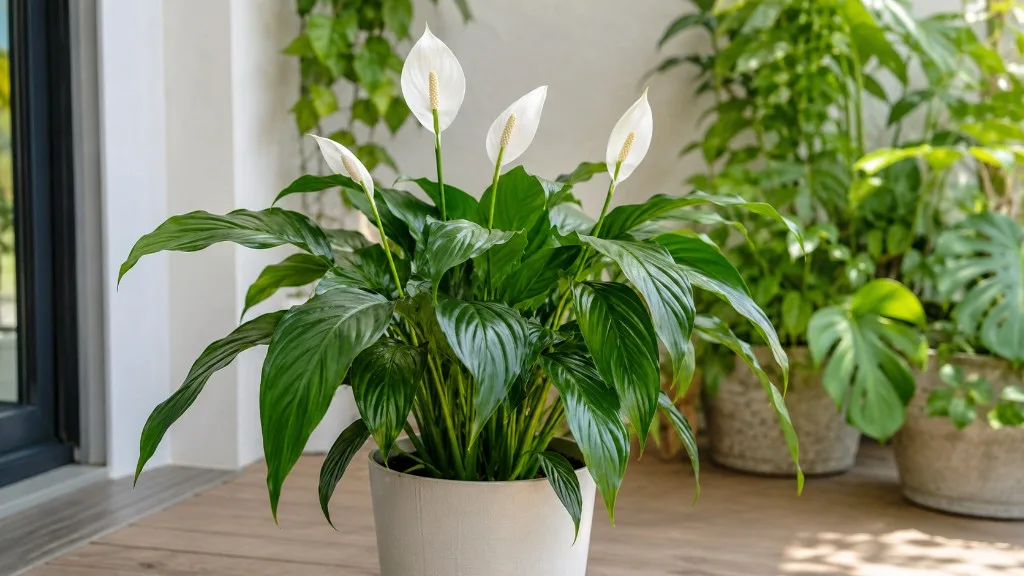
Peace Lily Fertilizer: When, How, and Mistakes to Avoid
Peace Lily Fertilizer: When, How, and Mistakes to Avoid
Peace lily fertilizer is one of those houseplant topics where the conventional advice sounds almost contradictory until you understand how Spathiphyllum actually grows indoors. Peace lilies are not heavy feeders. Clemson University’s Home & Garden Information Center states plainly that these plants need very little fertilizer and that overfertilizing causes leaf tips and roots to burn and turn brown (Clemson HGIC - Peace Lily). Yet a well-fed peace lily in the right season pushes out glossy new leaves, holds its spathes longer, and recovers faster from the occasional wilt that every owner eventually sees. The gap between those two realities is where most brown tips, white salt crust, and frustrated growers come from.
The practical goal for most homes is straightforward: use a balanced water-soluble fertilizer at half the label strength, apply it once a month from spring through summer while the plant is actively growing, and pause or sharply reduce feeding in fall and winter. Water onto moist soil, never onto dry roots. Skip fertilizer entirely on stressed, dry, or newly repotted plants until they stabilize. If you remember one rule above all others, make it this: underfeeding is safer than overfeeding on peace lily - a plant that never sees fertilizer will still grow, just more slowly; a plant that gets too much will show damage you cannot undo on existing leaf tissue.
This guide covers when to fertilize, how much to use, which products work best, how to read deficiency versus burn, and the mistakes that cause more damage than skipping a month ever would.
Why Fertilizer Matters for Peace Lily
Peace lilies (Spathiphyllum species) belong to the Araceae family and typically reach 1 to 4 feet tall indoors depending on cultivar (Clemson HGIC - Peace Lily). Steady foliage production and periodic white spathe development pull nitrogen, phosphorus, potassium, and trace elements out of the potting mix over months. Watering leaches some of those nutrients; root growth and microbial activity consume others. Fertilizer replaces what the plant uses - but only up to the point its roots can absorb without salt damage. Peace lilies benefit from light feeding during active growth, yet the same dose that keeps a pothos happy can scorch peace lily roots in a small pot.
Think of feeding as maintenance for a healthy, actively growing plant - not a rescue tool for a peace lily that is drooping because the soil dried out, sitting in a dark hallway, or struggling in waterlogged mix. Fix light and water first, then add nutrients on a conservative schedule. The Old Farmer’s Almanac notes that peace lilies are not heavy feeders and recommends fertilizing only occasionally with a balanced houseplant formula at half strength to encourage spring and summer growth (Old Farmer’s Almanac - Peace Lilies). That framing matches how peace lily handles nutrition in containers far better than aggressive feeding schedules copied from outdoor vegetable gardens.
Separate magnesium deficiency - interveinal yellowing on well-watered plants in old mix - from fertilizer burn, which shows brown tips with white soil crust (Clemson HGIC - Peace Lily).
When to Fertilize Peace Lily: Active Growth vs Rest
Timing follows the plant’s metabolism more than the calendar on your wall. Feed when the peace lily is actively producing new leaves and occasionally pushing flower stems, and stop when growth slows sharply. Indoors, that rhythm tracks longer days and warmer room temperatures from roughly late winter through early fall. A peace lily kept in a heated room with Peace Lily light guide may grow modestly year-round, but most specimens still slow noticeably from late fall through winter even when foliage looks green and upright.
Feeding on a summer schedule through December because the plant still looks green is the most preventable mistake. Unused nutrients accumulate as soluble salts when growth slows, producing brown tips and weak spring comeback (University of Maryland Extension - Fertilizer Toxicity).
Spring and Summer Feeding Window
Start feeding when you see fresh growth - new leaves unfurling from the crown, existing stems extending, or a new flower stem emerging. In temperate climates with typical indoor conditions, that usually means late winter through late summer, roughly February through August depending on your latitude, room temperature, and light exposure. Clemson HGIC recommends fertilizing every six to eight weeks during the spring and summer growing season (Clemson HGIC - Peace Lily). Many experienced growers find that monthly feeding at half strength during this window works well for actively growing plants in bright indirect light, provided they watch for salt crust and adjust downward if tips brown.
During the active window, apply half-strength balanced liquid fertilizer once a month as your default. Plants in dim corners, very small pots, or pots with slow-release granules already mixed in may do better with every six to eight weeks instead - the plant’s response matters more than the calendar. Both schedules are reasonable if leaves stay deep green, new growth appears at a steady pace, and the soil surface stays free of heavy white crust.
| Month (temperate climate) | Growth phase | Feeding guidance |
|---|---|---|
| February–March | Waking up, new shoots | Start half-strength liquid if active growth visible |
| April–August | Peak foliage and flowering | Monthly half-strength feed; watch for tip burn |
| September | Slowing slightly | Reduce to every 6–8 weeks or skip |
| October | Wind-down | Final light feed if still growing, then pause |
| November–January | Low growth indoors | No fertilizer for typical setups |
The table is a framework, not a law. A peace lily in a bright east window in July may use nutrients faster than one in a north-facing office with fluorescent light only. Watch the plant: if it is building new leaves and occasional blooms steadily, the timing is right. If it is static, solve light and water before adding food.
Fall Taper and Winter Pause
Do not fertilize peace lily in winter under typical indoor conditions. Taper feeding in early to mid-fall as day length drops and room temperatures cool. One practical approach: give a final half-strength feed in early fall if you still see new growth, then stop entirely from late fall through winter - roughly November through February for most homes. Clemson HGIC’s six-to-eight-week spring/summer window implicitly excludes winter feeding, and the Old Farmer’s Almanac similarly treats peace lilies as occasional feeders that need rest (Old Farmer’s Almanac - Peace Lilies).
Winter rest is not full dormancy like a deciduous outdoor tree, but metabolic demand drops. Roots process nutrients more slowly. Salts linger in moist soil longer. Feeding a plant that is not using nutrients is the easiest way to create exactly the brown-tip problem you are trying to avoid.
Exception: if you grow under strong supplemental grow lights and the plant keeps producing new shoots all winter, you can feed lightly - still at half strength - but extend the interval to every six to eight weeks and watch closely for salt crust. Even then, skipping winter feeds is safer than forcing growth with nutrients the roots cannot process.
Best Fertilizer Type for Peace Lily
The best peace lily fertilizer for most homes is a complete, water-soluble, balanced houseplant formula with nitrogen, phosphorus, and potassium in roughly equal proportions, plus listed micronutrients. You want enough nitrogen for healthy green foliage, moderate phosphorus for root function and flowering support, and potassium for overall vigor and stress tolerance. Peace lilies are grown primarily for glossy leaves and white spathes, not for maximum vegetative bulk - so extreme nitrogen-heavy formulas are unnecessary and can backfire.
Avoid shopping by the word “peace lily” on the bottle unless you already trust the brand’s dosing guidance. A standard balanced indoor formula used conservatively outperforms most specialty products applied at full label strength.
Balanced Liquid Formulas and NPK Ratios
A 10-10-10 or 20-20-20 water-soluble fertilizer diluted to half strength is the default recommendation across horticultural sources for peace lily. Clemson HGIC specifically cites 20-20-20 balanced liquid houseplant fertilizer (Clemson HGIC - Peace Lily). Equal ratios keep feeding simple when your main goal is steady health, not pushing one growth mode over another.
Clemson recommends one-quarter label strength - more conservative than the half-strength rate many growers use successfully. Start at quarter strength for your first feed, then move to half if the plant shows no tip burn. The Old Farmer’s Almanac notes that green spathes often indicate excess nitrogen, while weak blooms may respond to higher phosphorus only after light and watering are correct (Old Farmer’s Almanac - Peace Lilies). Liquid formulas win for control in root-bound pots where salts concentrate quickly - mix at half strength, apply to moist soil until a little drains, and discard saucer water.
Organic, Slow-Release, and What to Skip
Organic liquid options - fish emulsion, compost tea, or seaweed extract - work at half strength or weaker if you already use them. They tend to be gentler but smell stronger and can still cause salt buildup if overapplied. Slow-release granules in a small indoor pot release unpredictably and stack with liquid feeds - if slow-release is already in the mix at Peace Lily repotting guide, skip liquid for two to three months and reassess. Skip foliar feeding as a routine practice; peace lily leaves are broad and fertilizer residue on foliage can cause localized burn spots. Skip fertilizer-pesticide combination products for standard care.
Pet and child safety note: Peace lilies contain calcium oxalate crystals that cause burning of the mouth, throat, and tongue if chewed or ingested (Clemson HGIC - Peace Lily). The ASPCA lists peace lily (Spathiphyllum species) as toxic to cats and dogs, with ingestion causing oral irritation, vomiting, and difficulty swallowing (ASPCA - Peace Lily). Concentrated fertilizer solution and crusty soil are not safe for pets to ingest either. Keep plants, runoff, and stored fertilizer out of reach.
How Much Fertilizer to Use on Peace Lily
If you remember one number, make it half strength - and treat quarter strength as the safer starting point if you are new to the plant or it sits in low light. Clemson HGIC’s quarter-strength recommendation exists because peace lilies are among the houseplants most likely to show fertilizer burn at full label rates (Clemson HGIC - Peace Lily).
Houseplant fertilizer labels assume a range of species and pot sizes. Peace lily sits in the light feeder category - far less hungry than tomatoes or citrus, more responsive to feeding than a ZZ plant or succulent, but still vulnerable in small pots with consistently moist soil. Cutting the label rate to one-half is the safest default for monthly liquid feeding during active growth. Quarter strength is reasonable for every-six-to-eight-week feeding or for plants in dim light with a history of tip burn.
Example: if the bottle says 1 teaspoon per gallon for houseplants, use ½ teaspoon per gallon for half strength or ¼ teaspoon per gallon for quarter strength. If it says 1 tablespoon per gallon for outdoor annuals, do not use that rate indoors - find the houseplant dilution on the label and halve it. Measure with a spoon or syringe. Eyeballing concentrates errors because different products use different scoops and concentrations.
For a final fall feed, half strength is enough. Go weaker still if you see salt crust, post-feed tip burn, or a pot that stays wet for many days after watering. Pale new foliage on an otherwise healthy plant usually means insufficient light or inconsistent watering, not hunger - increasing fertilizer concentration on a dim, dry plant is one of the fastest routes to brown tips.
How Often to Fertilize Peace Lily
Frequency should follow growth rate, light level, and salt management - not guilt about whether you are “doing enough” for a plant that famously tells you when it is unhappy.
For most peace lilies indoors:
- Once a month with half-strength balanced liquid from late winter through late summer during active growth
- Every six to eight weeks at half strength if the plant is in low light, a small pot, or you prefer a more conservative schedule aligned with Clemson HGIC guidance
- Once in early fall at half strength if growth is still visible, then pause
- No fertilizer from late fall through winter for typical room-grown plants
- Optional light feed every six to eight weeks only if the plant keeps actively growing under bright light or grow lights in winter
That monthly schedule during spring and summer beats feeding at every watering for most owners because constant low-dose fertilizer stacks salts faster than the plant can use them, especially in root-bound pots. Peace lily does better with a clear feeding date and plain water between feeds.
| Situation | Suggested frequency | Strength |
|---|---|---|
| Active growth, bright indirect light | Monthly | Half label strength |
| Active growth, low light | Every 6–8 weeks | Half or quarter strength |
| Early fall, slowing growth | Once, then pause | Half strength |
| Winter indoors, typical light | Skip | - |
| Winter under grow lights, new shoots | Every 6–8 weeks | Half strength |
| After repotting into fresh mix | Wait 4–6 weeks | Then resume half strength |
| Recovering from over-fertilizing | Pause 4–8 weeks | Flush; resume at quarter strength |
| Slow-release already in potting mix | Skip liquid 2–3 months | Reassess |
The table is a starting framework. Your room, cultivar, water quality, and watering habits matter. A ‘Mauna Loa Supreme’ in a bright living room may use the monthly interval comfortably. A compact ‘Little Angel’ in a dim office may need the longer six-to-eight-week gap. Peace lilies in hard tap water also carry a double mineral load - if you see tip burn while feeding modestly, test your water or switch to filtered or rainwater before increasing fertilizer.
Step-by-Step: How to Feed Peace Lily Safely
Safe feeding is mostly about order of operations. The fertilizer brand matters less than whether the soil was moist first, whether the plant was stressed, and whether salts were already accumulating.
Here is a reliable routine:
- Check the calendar and the plant. Confirm you are inside the active growth window and see new leaves or flower stems forming. If it is winter and nothing is growing, stop here.
- Inspect for salt crust or tip burn. White residue on the soil or pot rim means skip feeding and flush instead.
- Water with plain water if the top layer feels dry. Bring the root zone to evenly moist before any fertilizer touches it. Never pour fertilizer onto dry soil - salts concentrate at the root surface and burn tissue.
- Mix fertilizer at half strength in room-temperature water in a watering can with a narrow spout.
- Apply slowly and evenly across the soil surface, directing solution away from the leaf crown and spathes. Stop when a little water drains from the bottom.
- Discard drainage from the saucer within 30 minutes.
- Mark the date on a calendar or plant note so you do not double-feed in an enthusiastic week.
Water lightly the day before or immediately before feeding - the moist-soil rule matters more than the time of day.
Pre-Feed Checks and the Moist-Soil Rule
Before every feed, run a quick three-point check: soil moisture, newest leaf color, and season.
Soil moisture comes first - water with plain water if dry, wait if waterlogged. Peace lilies wilt dramatically when thirsty; do not misread wilt as hunger. Check newest leaf color next: pale or slow new growth usually means insufficient light or inconsistent watering, not fertilizer shortage. Dim corners need longer intervals, not stronger doses. Season is the gatekeeper: active growth gets food, winter gets plain water.
Signs Your Peace Lily Needs More Nutrition
Under-fertilizing is real but less common than over-fertilizing on container peace lilies, especially when plants start in nutrient-enriched potting mix or were fed heavily in the previous season. Most “hungry” diagnoses are actually low light, inconsistent watering, root issues from poor drainage, or natural senescence of older leaves.
When a plant truly needs more nutrients, signs are gradual and appear on new growth while older leaves still look reasonably healthy:
- Slower leaf production during peak spring and summer despite good light and moisture
- Uniformly paler new leaves, not isolated yellow spots from pests or disease
- Smaller new leaves than the previous generation, with thinner petioles
- Overall lack of vigor after more than a year in the same depleted mix with no feeding
If only older lower leaves yellow while new growth looks fine, suspect natural senescence, overwatering, or underwatering before fertilizer. Peace lilies drop older leaves periodically; that is not automatically a nutrient call. Interveinal yellowing on new leaves in very old, exhausted mix may indicate micronutrient gaps - but try half-strength balanced feeding for one season before chasing individual elements.
When you do increase feeding, move from every six to eight weeks to monthly at half strength for one season - not from a conservative schedule to double dose overnight. Peace lily responds to frequency adjustments more safely than concentration spikes.
Signs of Over-Fertilizing and Salt Buildup
Over-fertilizing is the most common fertilizer mistake on peace lily, and the symptoms are distinctive once you know what to look for. Clemson HGIC warns that overfertilizing causes leaf tips and roots to burn and turn brown (Clemson HGIC - Peace Lily). University of Maryland Extension describes high soluble salts producing brown leaf tips, marginal leaf necrosis, stunted growth, and wilting even when soil is moist (University of Maryland Extension - Fertilizer Toxicity).
Watch for these signs:
- Brown or black leaf tips and margins, often appearing within days to two weeks after a heavy feed
- White or crusty residue on the soil surface, pot rim, or drainage holes
- Sudden leaf yellowing or drop unrelated to a known dry spell
- Wilting despite moist soil - roots damaged by salt stress cannot take up water effectively
- Stunted new growth with distorted or small emerging leaves
- Green spathes that stay green instead of turning white - the Old Farmer’s Almanac links green flowers to excess nitrogen (Old Farmer’s Almanac - Peace Lilies)
- Sour or musty smell from the pot, indicating compromised root health in extreme cases
Brown tips also come from fluoride and chlorine in tap water, low humidity, or letting the plant dry too far between waterings - so read the full context. Fertilizer burn typically follows a feed, shows crust on soil, and affects multiple leaves at once. If tips browned after your last fertilizer application and the soil looks chalky, salts are the prime suspect.
How to Flush Peace Lily After Over-Feeding
If you suspect over-fertilizing, stop feeding immediately and leach the salts from the root zone. Flushing is more effective than hoping the next watering dilutes the problem on its own.
Follow this recovery protocol:
- Move the plant to a sink, tub, or outdoor spot where copious water drainage is acceptable.
- Water slowly with plain room-temperature water until water runs freely from the drainage holes. Let it drain completely.
- Repeat two to three times over 30 to 60 minutes, allowing full drainage between rounds. The goal is to wash dissolved salts out of the potting mix, not to leave the plant sitting in a flood.
- Empty the saucer and return the plant to its normal spot only when the pot feels lighter and drainage has stopped.
- Pause all fertilizer for four to eight weeks. Resume at quarter to half strength on the longer interval - every six to eight weeks - and watch new growth for tip burn.
- Trim badly burned leaf tips with clean scissors if they are unsightly. Existing burned tissue will not green up again, but new leaves can emerge clean once salts drop.
Recovery takes one to two new leaf cycles. If wilting persists in moist soil, inspect roots and repot into fresh mix without fertilizer if tissue is mushy.
Seasonal and Situational Adjustments
The monthly spring/summer schedule is a default, not a mandate. Adjust based on what the plant is actually doing in your specific environment.
In late summer, growth often slows before you notice it on the calendar. If new leaf production drops in August, shift from monthly to every six weeks or skip September’s feed entirely. In early spring, wait until you see active new growth before the first feed - a plant that has not pushed a new leaf in weeks is not ready for nutrients even if the calendar says March.
Plants recently moved from a nursery often arrive in fertilizer-enriched mix. Wait four to six weeks after bringing a new peace lily home before adding any fertilizer. Double-feeding fresh commercial mix is a common first-month mistake.
After Repotting, Stress, and Low Light
After repotting, hold fertilizer for four to six weeks minimum. Fresh potting mix usually contains starter nutrients, and damaged roots from handling need time to heal before salts arrive. Resume at half strength on your normal schedule only when you see new growth.
Stressed plants - those recovering from severe wilt, pest treatment, cold exposure, or root rot on Peace Lily - should not be fertilized until they show stable new growth for two to three weeks. Fertilizer is not medicine. It does not revive a struggling root system; it asks more of one.
Low-light peace lilies use nutrients slowly. A plant in a dim office may need feeding only every six to eight weeks at half or quarter strength, or not at all if it has been in the same pot less than a year. Feeding monthly in low light is one of the most reliable ways to accumulate salts without seeing proportional growth.
Root-bound plants that flower well often stay in the same pot deliberately - mild root binding can encourage blooming. Do not assume a tight pot needs more fertilizer; it may need plain water and adequate light instead. When you do repot, remember the post-repotting pause.
Fertilizer and Other Peace Lily Care
Fertilizer only matters when light, water, and soil are also in range. Peace lily in bright indirect light uses more nutrients than one in a dim corner. The same plant in soggy, poorly drained mix will accumulate salts faster because roots function poorly and evaporation from the soil surface is limited.
Clemson HGIC recommends bright indirect light, moist but not soggy soil, and daytime temperatures between 68 and 85 °F (Clemson HGIC - Peace Lily). Fix watering and light before chasing nutrients. Lack of flowering usually traces to insufficient light, immature age, or recent repotting - not fertilizer deficiency. Pair monthly feeding with occasional plain-water flushes during the active season to wash salts from tap water and fertilizer before tips brown.
Common Peace Lily Fertilizer Mistakes
Most peace lily fertilizer problems come from a short list of repeatable errors: full label strength, fertilizing dry soil, monthly winter feeding, feeding after every wilt, stacking slow-release with liquid, chasing brown tips with more fertilizer, ignoring hard tap water, and feeding newly repotted plants immediately. When in doubt, skip a month - peace lily tolerates a missed feed far better than an extra one.
Conclusion
Peace lily fertilizer is less about finding a magic product and more about respecting a plant that grows well on modest nutrition and punishes excess without much warning. Use a balanced water-soluble formula such as 10-10-10 or 20-20-20, dilute it to half the label strength, and feed once a month during spring and summer while new leaves confirm active growth. Pause through winter, always apply to moist soil, and flush salts when tips brown or crust appears. Match your schedule to the plant’s actual metabolism - light, conservative feeding beats aggressive doses every time.
When to use this page vs other Peace Lily guides
- Peace Lily overview - Start here for whole-plant context before deep-diving this topic.
- Peace Lily problems hub - Jump to symptom-specific fix guides when this care topic does not resolve the issue.
Related Peace Lily guides
- Peace Lily overview
- Peace Lily watering
- Peace Lily light
- Peace Lily soil
- Peace Lily propagation
- Peace Lily repotting
- Peace Lily problems
Related tool
Try the Fertilizer Dilution Calculator with peace-lily pre-selected to estimate needs for your setup.