Root Rot on Peace Lily: Causes, Checks & Fixes
Quick answer
If your peace lily droops while the top few centimeters of mix are still damp-and watering does not perk it up within a day-treat it as possible root rot. First fix: unpot now, trim every soft root, and repot in fresh airy mix in a pot only slightly larger than the cleaned root ball.
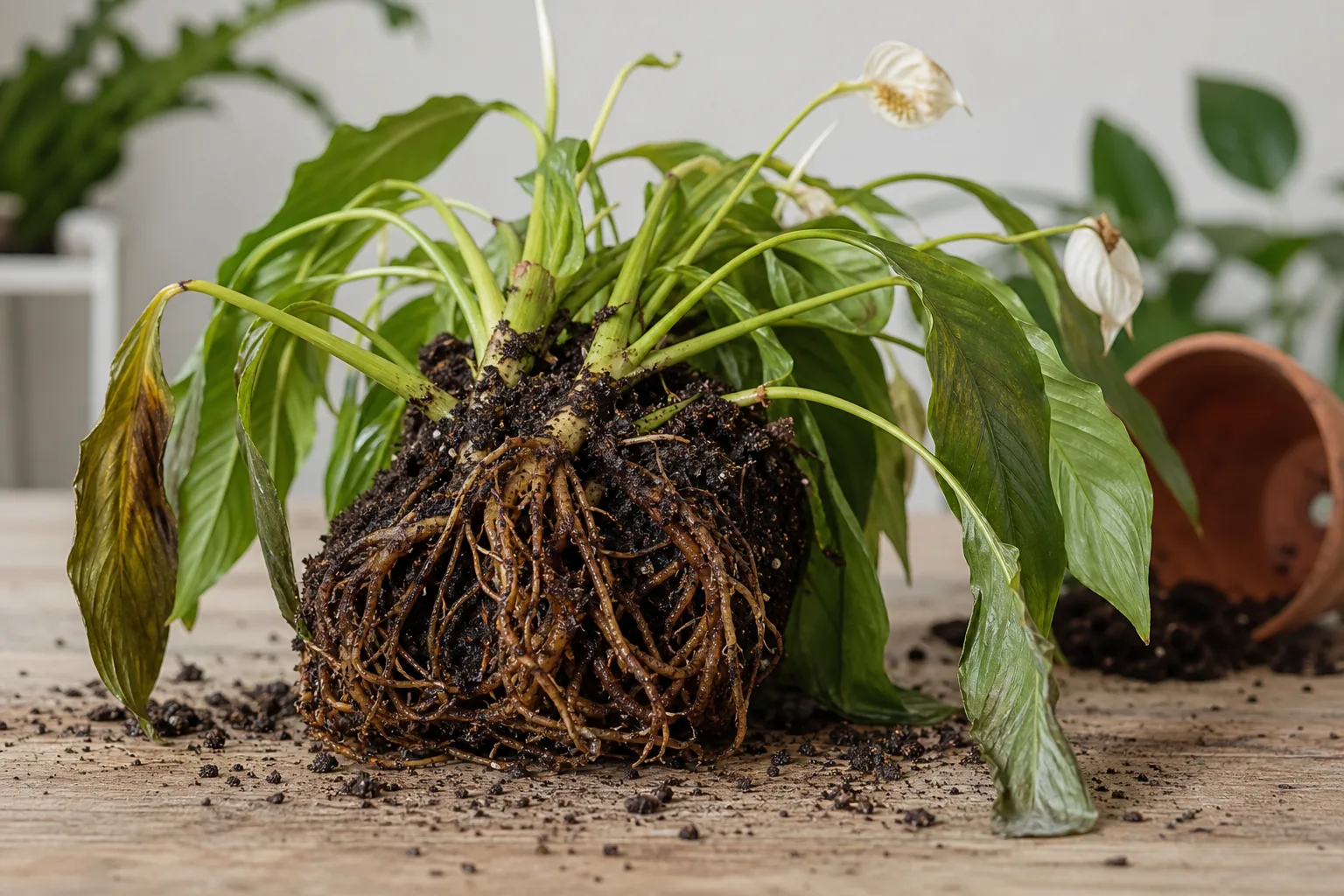
Root Rot on Peace Lily: Causes, Checks & Fixes
This guide covers root rot on Peace Lily. See also the general Root Rot guide, watering, and light pages for this plant.
Root Rot on Peace Lily: Causes, Checks & Fixes
Quick answer
Peace lily root rot starts when compost stays saturated long enough that oxygen drops around the roots and decay organisms take over. The signature trap: Peace Lily overview droops dramatically from thirst, so owners often add more water to a plant that is already drowning.
First fix: unpot immediately. Do not wait for the current mix to dry. Remove wet compost, cut every soft or blackened root back to firm tissue, discard old mix, and repot in fresh fast-draining media in a pot only slightly larger than what remains.
If the top few centimeters are still damp and the plant stays limp after a careful drink, you are past a simple watering mistake-inspect roots today.
Thirst, overwatering stress, or active root rot?
Peace lilies are famous for wilting when dry, then standing upright within hours of watering. That fast perk-up is your best clue against panic-watering into wet soil.
| What you see | Soil at 2–3 cm depth | Root check (if unpotting) | Likely cause | First action |
|---|---|---|---|---|
| Dramatic droop, pot feels light | Dry | Firm, pale roots | Thirst | Water thoroughly; perk-up expected within hours |
| Droopy lower leaves, no sour smell | Damp throughout | Firm roots, no mush | Overwatering stress (not yet advanced rot) | Stop watering until top dries; empty saucer; improve drainage |
| Wilt persists 24+ hours after watering | Damp or wet | Brown/black, soft, slimy roots | Active root rot | Unpot, trim rot, repot in fresh mix-do not water on schedule |
| Wilt after recent repot, roots firm | Evenly moist | Firm, minimal damage | Transplant shock | Peace Lily light guide, stable temperature; hold fertilizer 4–6 weeks |
| Slow wilt in winter, cold windowsill | Wet longer than usual | May be firm but cold-stressed | Cold + wet soil combo | Move above 18°C; stretch watering interval |
Scope note: This page is for confirmed or strongly suspected root decay-mushy roots, sour smell, or wet-soil wilt that will not resolve. If soil is wet but roots are still firm and pale, start with overwatering on peace lily before surgery. If soil was dry and the plant perked up fast, see underwatering or drooping leaves instead.
What root rot looks like on Peace Lily
Early pattern on Spathiphyllum: lower leaves yellow first, turgor drops, and the whole plant looks thirsty even though the pot is heavy-a pattern extension pathologists associate with wilt despite wet soil. As damage advances, the base may soften and the mix can smell swampy or sour.
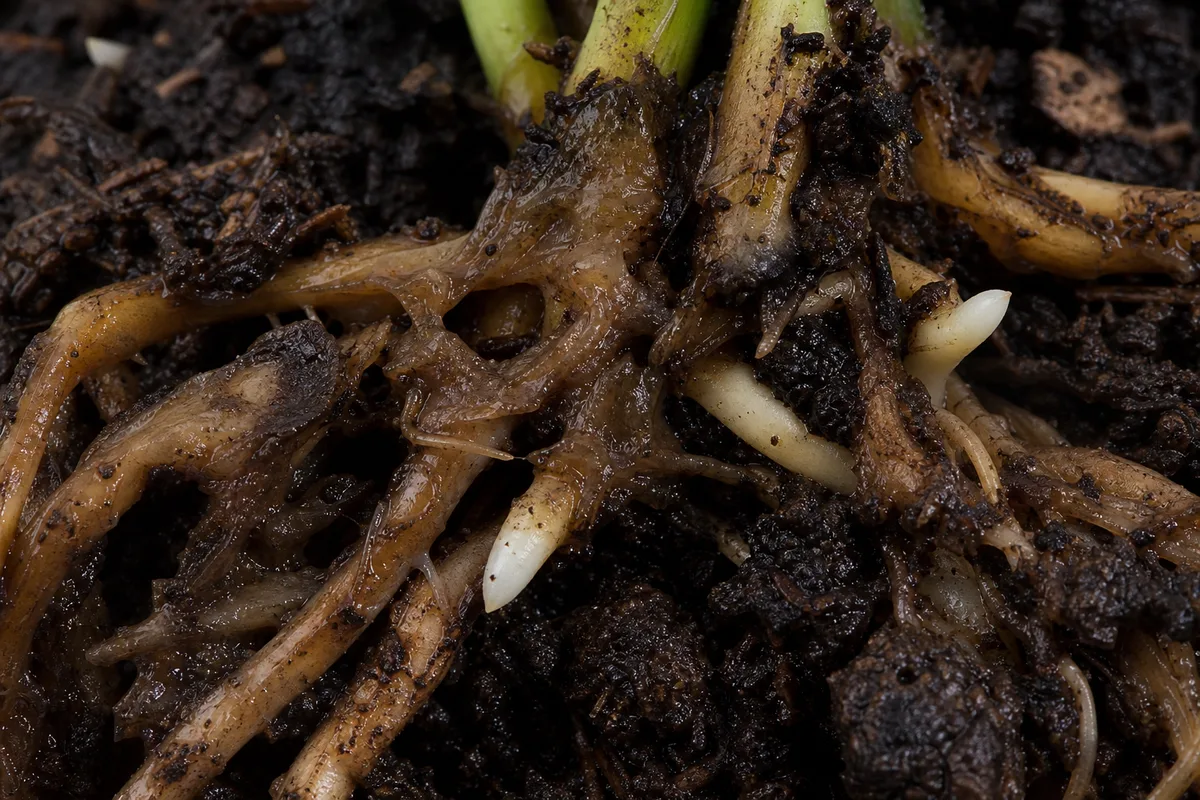
Root Rot symptoms on Peace Lily - compare with healthy tissue on the same plant.
A peace-lily-specific detail: healthy plants also collapse from drought, then recover quickly once rehydrated. With root rot, that recovery does not happen-or it lasts only a few hours before wilt returns while moisture is still present, because damaged roots cannot move water effectively.
Late-stage signs include dark mush at the soil line, persistent fungus gnats in constantly wet compost, and leaf tips turning brown while the base stays wet rather than crisp-dry.
Why Peace Lily gets root rot
Peace lilies prefer evenly moist but not soggy compost. They tolerate brief drying better than chronic saturation, yet their dramatic wilt trains owners to water reflexively.
Common drivers that stack together:
- Watering before the top few centimeters dry - especially on a weekly calendar instead of touch-and-weight checks.
- Standing water in saucers or cachepots - the inner nursery pot marinates after each drink; never let a peace lily sit in a saucer of excess water.
- Oversized pots - too large a pot may keep the potting mix too wet, holding moisture around roots far longer than the plant can use it.
- Low light - slower transpiration means mix stays wet longer even at modest watering volumes.
- Dense, aged media - collapsed peat and fine particles reduce air space at the root zone.
A typical failure combo: large decorative pot, dim corner, and “a little top-up every few days” while the bottom half never dries.
False positives to rule out first
Before cutting roots, confirm you are not misreading a lookalike:
Thirst droop - Soil dry at 2–3 cm, pot light, firm roots if you peek. One thorough watering should restore turgor within hours.
Transplant shock - Expected mild wilt for 24–72 hours after any repot, even when roots are healthy. Hold fertilizer, keep light stable, and recheck only if wilt worsens while soil stays appropriately moist.
Cold root zone - Plants on cold windowsills or stone floors in winter stay wet longer because root uptake slows in cool soil. Wilt plus persistently damp mix in a cold room can mimic rot; warm the plant and stretch the watering interval before assuming infection.
Compacted dry core - Occasionally an outer shell feels damp while the center repels water, causing drought stress in a wet-looking pot. Probe deeper than the surface before deciding.
How to confirm the diagnosis at home
- Check moisture depth and pot weight. Damp top plus heavy pot with limp leaves means do not add water yet.
- Unpot and inspect roots. Healthy peace lily roots are firm and pale cream to light tan. Rotted roots are brown to black, soft, and may slough an outer layer when pinched.
- Smell the mix. Sour or swampy odor supports anaerobic decay in saturated media.
- Press the crown. Browning or softness where stems meet soil suggests advanced disease moving up from roots.
- Note timing after watering. Fast perk-up from dry soil points to thirst. No perk-up from wet soil points to root failure.
If most roots are still firm and pale, you may recover by correcting watering and drainage alone. If a large share is mushy, proceed to trimming and repotting immediately.
Rescue thresholds by root loss
Use this triage after you have bare roots in front of you. Percentages are practical estimates, not lab measurements-judge by how much of the root ball still feels firm.
| Viable root mass remaining | Crown condition | Action | Realistic outlook |
|---|---|---|---|
| More than ~75% firm | Firm at soil line | Trim only soft tips; repot same size or one size down in fresh mix | Good-stabilization often within 1–2 weeks |
| About 50–75% firm | Firm, maybe some lower yellow leaves | Aggressive trim; repot one size down; consider division if multiple crowns | Moderate-new growth in 2–4 weeks if environment is warm and bright |
| About 25–50% firm | Mostly firm but stressed | Salvage firm divisions only; smallest pot that fits; minimal watering until new roots form | Guarded-watch daily for crown softening |
| Less than ~25% firm | Any softness at base | Attempt division of last firm shoots only, or discard | Poor-often better to replace than invest weeks |
| Any amount | Crown soft or foul-smelling | Do not repot and hope-discard plant and soil | Not salvageable |
When only one side of a multi-crown clump is firm, divide during repot and pot the healthy section alone. Discard the rotted portion and all old mix.
First fix to try
Unpot the plant now. Delay gives decay more time to climb the crown.
Do not apply fertilizer, fungicide drench, or extra water “to help stress” before you see firm roots and new growth. Stressed roots burn easily, and wet chemistry worsens anaerobic conditions.
Step-by-step recovery
- Work over newspaper or outdoors. Wear gloves-peace lily sap contains insoluble calcium oxalate crystals that irritate skin and mouths.
- Shake off all wet mix and rinse roots gently if they are heavily coated.
- Trim every mushy root with cleaned scissors or pruners until only firm tissue remains. It is normal to remove more than you expect.
- Discard all old mix and wash or replace the pot before reuse-do not reuse potting mix from infected plants.
- Repot in fresh airy mix-standard peat-based houseplant blend with added perlite works well-in a container only slightly larger than the trimmed root mass. Avoid jumping two sizes up “for growth.”
- Water once lightly to settle mix, then drain completely. Never leave runoff in a saucer or cachepot.
- Place in bright indirect light at roughly 18–24°C. Cool, dark recovery spots slow root regrowth dramatically.
- Pause fertilizer until you see firm new leaves emerging-overfertilizing can burn roots and leaf tips on stressed plants.
First 14 days after surgery
Days 1–3: Mild continued wilt is common. Leaves may yellow further; that old tissue will not green up again. Judge the crown, not cosmetic leaf color.
Days 4–7: Pot should lighten as the top dries. Do not water on a calendar-wait until the upper 2–3 cm are dry and the pot feels noticeably lighter. In a warm bright room that might be 5–7 days; in a cool dim room, longer.
Days 8–14: Success looks like wilt stopping its spread, no new crown softness, and possibly the start of a small new leaf from the base. Failure looks like ongoing collapse in moist mix, returning sour smell, or crown tissue giving way when pressed.
Transplant shock overlap: Some sag right after repot even when surgery was necessary. Give honest rescue cases 10–14 days in stable conditions before deciding the plant is lost-unless the crown softens or odor returns.
Observed in practice
During LeafyPixels peace-lily rescue reviews, one recurring pattern stands out: a 17 cm nursery peace lily in a north-facing room, set inside a sealed decorative cachepot with no runoff emptied after watering.
Presentation: Lower yellow leaves, whole-plant wilt, sour smell when the inner pot was lifted. Top mix felt damp; owner had been adding “a splash” every three days because the plant looked thirsty.
Root exam: Roughly 40% of roots were brown and mushy; crown still firm. Trimmed to firm tissue, repotted one size down in houseplant mix with 20% perlite, placed 1.5 m from a bright window at ~21°C.
Timeline: Wilt stopped spreading by day 9. First new leaf unfolded at day 22. Old yellow foliage was removed gradually; it never re-greened.
Lesson: The cachepot plus low light kept the bottom half anaerobic while the visible wilt triggered more water. Fixing drainage and pot size mattered as much as the trim.
When recovery is unlikely
Stop investing time when:
- The crown or lower stems are soft, blackened, or smell sour after repot.
- More than half the root mass was mush and wilt worsens over 10–14 days in correct aftercare.
- Foul odor returns within a week in fresh mix-secondary rot or crown invasion.
- Only a few papery leaves remain on a rootless crown with no new shoots forming.
At that point, replacing the plant is usually less costly than weeks of false hope. If you salvage divisions, isolate them from other houseplants while monitoring.
Mistakes that cause repeat rot
- Watering on a calendar instead of moisture and pot weight.
- Repotting into a much bigger pot for “future growth.”
- Reusing contaminated wet mix or uncleaned pots.
- Leaving runoff in decorative outer pots.
- Fertilizing during root recovery.
- Misting leaves while ignoring wet soil at the base.
How to prevent root rot next time
Build prevention around peace lily behavior:
- Bright indirect light so the mix dries at a workable pace between drinks-peace lilies grow best in bright indirect light.
- Water when the top 2–3 cm are dry, then soak until excess drains and empty the saucer.
- Right-sized pots with real drainage holes-peace lilies tolerate slight root binding better than swimming in excess compost.
- Seasonal adjustment - stretch intervals in cool winter rooms; compress slightly in warm active growth.
- Repot on schedule, not panic - refresh dense mix every 1–2 years before it collapses into a waterlogged brick.
If your next symptom is…
- Wet soil but firm roots and no mush → Overwatering on Peace Lily
- Dry soil and fast perk-up after water → Peace Lily Watering or underwatering
- Droop without clear rot → Drooping leaves or wilting
- Tiny flies from constantly damp mix → Fungus gnats on Peace Lily
- Repot timing or mix structure questions → Peace Lily Repotting and Peace Lily Soil
When to worry
Treat as high urgency if most roots are gone, the crown is collapsing, or foul odor returns quickly after repotting.
Wear gloves while handling cut tissue, especially in homes with pets or small children, because peace lily contains insoluble calcium oxalate crystals that cause oral irritation if chewed. This is a handling precaution, not veterinary advice-contact a poison-control hotline for ingestion concerns.
If you are unsure whether tissue is salvageable, a local cooperative extension office can sometimes help evaluate houseplant samples.
When to use this page vs other Peace Lily guides
- Peace Lily watering guide - Use for routine moisture checks before assuming root rot is the main issue.
- Peace Lily problems hub - Browse all 4 common issues on this species.
- Yellow Leaves on Peace Lily - Different entry point when symptoms overlap with root rot.