Peace Lily Problems: Causes & Quick Fixes
Quick answer
Peace Lily is prone to 32 common issues - each link below is a plant-specific fix guide.
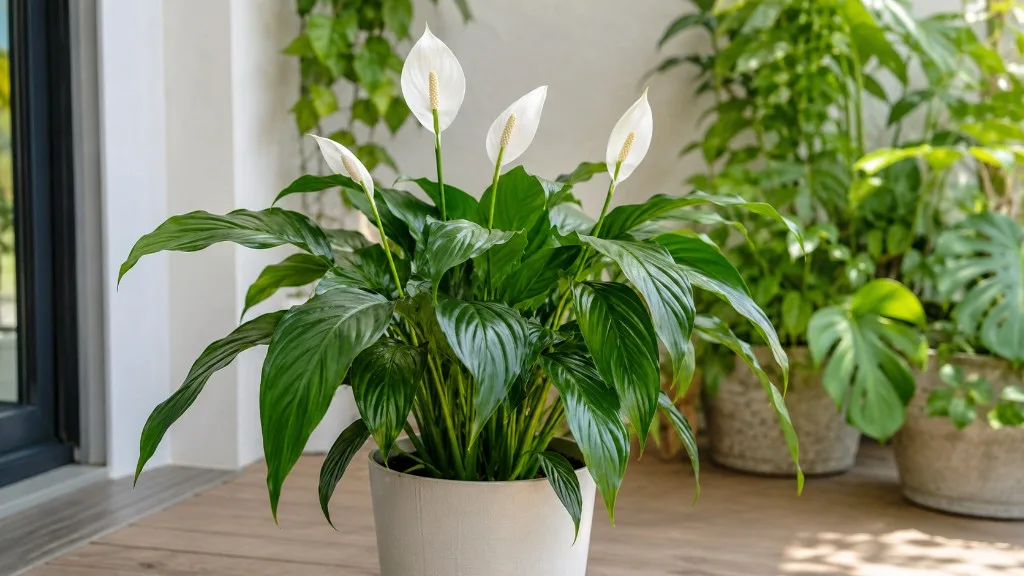
Peace Lily problems
Use the guides below to diagnose and fix common issues on Peace Lily. Each problem page explains why it happens on this species and what to do first.
Or use our problem diagnosis tool to narrow down symptoms.
Common problems on Peace Lily
Brown Tips
MediumLikely cause: Fluoride in tap water or low humidity
Quick fix: Use filtered water; increase humidity to 50%+
Full fix guide →Leggy Growth
LowLikely cause: Insufficient light
Quick fix: Move to medium-bright indirect light
Full fix guide →Root Rot
MediumLikely cause: Persistently wet soil
Quick fix: Repot in fresh draining mix
Full fix guide →Yellow Leaves
MediumLikely cause: Overwatering or very low light
Quick fix: Allow top 3–5 cm to dry; move to brighter position
Full fix guide →Aphids
MediumLikely cause: Aphids on Peace Lily cluster on soft new leaves and spathe bases, leaving sticky honeydew on glossy blades. First step: isolate the plant and rinse every leaf base and underside with a strong stream o
Quick fix: See plant-specific guide for step-by-step fixes.
Full fix guide →Drooping Leaves
MediumLikely cause: Drooping leaves on peace lily (*Spathiphyllum wallisii*) usually signal a water mismatch-dry soil thirst or roots failing in wet mix. First step: probe the top 3–5 cm of mix and lift the pot before yo
Quick fix: See plant-specific guide for step-by-step fixes.
Full fix guide →Fungus Gnats
MediumLikely cause: Fungus gnats on Peace Lily mean the potting mix surface stays wet too long-adults hover near soil and larvae feed in the damp top layer. First step: let the top 3–5 cm (~1–2 inches) of mix dry complet
Quick fix: See plant-specific guide for step-by-step fixes.
Full fix guide →Low Humidity
MediumLikely cause: Low humidity on peace lily usually shows as crisp brown tips and margins, often near heating vents or cold windows in winter. First fix: move the plant out of dry airflow, then raise leaf-level humidi
Quick fix: See plant-specific guide for step-by-step fixes.
Full fix guide →Mealybugs
MediumLikely cause: Mealybugs on peace lily show as white cottony clusters in leaf axils, along spathe stems, at the central crown, and on roots near drainage holes-often with sticky honeydew on glossy leaves. First step
Quick fix: See plant-specific guide for step-by-step fixes.
Full fix guide →Mold on Soil
MediumLikely cause: Mold on Peace Lily soil usually means the potting mix surface stays wet from overwatering or poor dry-down-not a leaf disease on the glossy spathes above. First step: scrape the top layer, improve air
Quick fix: See plant-specific guide for step-by-step fixes.
Full fix guide →Not Enough Light
MediumLikely cause: Not enough light on Peace Lily shows as pale stretched leaves, no white spathes, and soil that stays damp for weeks. First step: move the pot to bright indirect light 30–60 cm back from an east window
Quick fix: See plant-specific guide for step-by-step fixes.
Full fix guide →Overwatering
MediumLikely cause: Overwatered peace lily (*Spathiphyllum wallisii*) sits in wet mix too long-lower leaves yellow, the crown droops despite damp soil, and the pot may smell sour. First step: stop watering until the top
Quick fix: See plant-specific guide for step-by-step fixes.
Full fix guide →Slow Growth
MediumLikely cause: Slow growth on Peace Lily is normal in deep shade or cool winter months-but a stall with no new leaves for weeks in warm weather usually means insufficient light, drought stress, or a root-bound pot.
Quick fix: See plant-specific guide for step-by-step fixes.
Full fix guide →Spider Mites
MediumLikely cause: Spider mites on peace lily cause fine stippling and webbing, especially in dry winter rooms. First step: isolate the plant and rinse every leaf underside with lukewarm water before applying any spray.
Quick fix: See plant-specific guide for step-by-step fixes.
Full fix guide →Underwatering
MediumLikely cause: Underwatering on peace lily (*Spathiphyllum wallisii*) shows as dramatic leaf droop when the top 3–5 cm of mix is dry and the pot feels light. First step: probe soil depth before you pour-if dry, wate
Quick fix: See plant-specific guide for step-by-step fixes.
Full fix guide →Wilting
MediumLikely cause: Wilting on peace lily (*Spathiphyllum wallisii*) usually signals a water-pathway problem-dry soil, failed roots, heat stress, or repot shock. First step: probe the top 3–5 cm of mix; water deeply if d
Quick fix: See plant-specific guide for step-by-step fixes.
Full fix guide →Curling Leaves
MediumLikely cause: Common curling leaves pattern on Peace Lily under indoor care stress.
Quick fix: Inspect roots, watering, light, and pests; adjust one variable and monitor new growth.
Full fix guide →Brown Leaves
MediumLikely cause: Common brown leaves pattern on Peace Lily under indoor care stress.
Quick fix: Inspect roots, watering, light, and pests; adjust one variable and monitor new growth.
Full fix guide →Black Spots
MediumLikely cause: Common black spots pattern on Peace Lily under indoor care stress.
Quick fix: Inspect roots, watering, light, and pests; adjust one variable and monitor new growth.
Full fix guide →Holes in Leaves
MediumLikely cause: Common holes in leaves pattern on Peace Lily under indoor care stress.
Quick fix: Inspect roots, watering, light, and pests; adjust one variable and monitor new growth.
Full fix guide →Pale Leaves
MediumLikely cause: Common pale leaves pattern on Peace Lily under indoor care stress.
Quick fix: Inspect roots, watering, light, and pests; adjust one variable and monitor new growth.
Full fix guide →Distorted Leaves
MediumLikely cause: Common distorted leaves pattern on Peace Lily under indoor care stress.
Quick fix: Inspect roots, watering, light, and pests; adjust one variable and monitor new growth.
Full fix guide →Scale Insects
MediumLikely cause: Common scale insects pattern on Peace Lily under indoor care stress.
Quick fix: Inspect roots, watering, light, and pests; adjust one variable and monitor new growth.
Full fix guide →Thrips
MediumLikely cause: Common thrips pattern on Peace Lily under indoor care stress.
Quick fix: Inspect roots, watering, light, and pests; adjust one variable and monitor new growth.
Full fix guide →Whiteflies
MediumLikely cause: Common whiteflies pattern on Peace Lily under indoor care stress.
Quick fix: Inspect roots, watering, light, and pests; adjust one variable and monitor new growth.
Full fix guide →Leaf Miners
MediumLikely cause: Common leaf miners pattern on Peace Lily under indoor care stress.
Quick fix: Inspect roots, watering, light, and pests; adjust one variable and monitor new growth.
Full fix guide →Caterpillars
MediumLikely cause: Common caterpillars pattern on Peace Lily under indoor care stress.
Quick fix: Inspect roots, watering, light, and pests; adjust one variable and monitor new growth.
Full fix guide →Nitrogen Deficiency
MediumLikely cause: Common nitrogen deficiency pattern on Peace Lily under indoor care stress.
Quick fix: Inspect roots, watering, light, and pests; adjust one variable and monitor new growth.
Full fix guide →Iron Deficiency
MediumLikely cause: Common iron deficiency pattern on Peace Lily under indoor care stress.
Quick fix: Inspect roots, watering, light, and pests; adjust one variable and monitor new growth.
Full fix guide →Magnesium Deficiency
MediumLikely cause: Common magnesium deficiency pattern on Peace Lily under indoor care stress.
Quick fix: Inspect roots, watering, light, and pests; adjust one variable and monitor new growth.
Full fix guide →Potassium Deficiency
MediumLikely cause: Common potassium deficiency pattern on Peace Lily under indoor care stress.
Quick fix: Inspect roots, watering, light, and pests; adjust one variable and monitor new growth.
Full fix guide →Calcium Deficiency
MediumLikely cause: Common calcium deficiency pattern on Peace Lily under indoor care stress.
Quick fix: Inspect roots, watering, light, and pests; adjust one variable and monitor new growth.
Full fix guide →