Yellow Leaves on Peace Lily: Causes, Checks & Fixes
Quick answer
Yellow leaves on peace lily are not one diagnosis. One old lower leaf yellowing while center growth stays green is often normal aging; several soft yellow leaves on wet mix is a root-zone warning-pause watering first. Unpot immediately if soil smells sour or stem bases feel mushy.
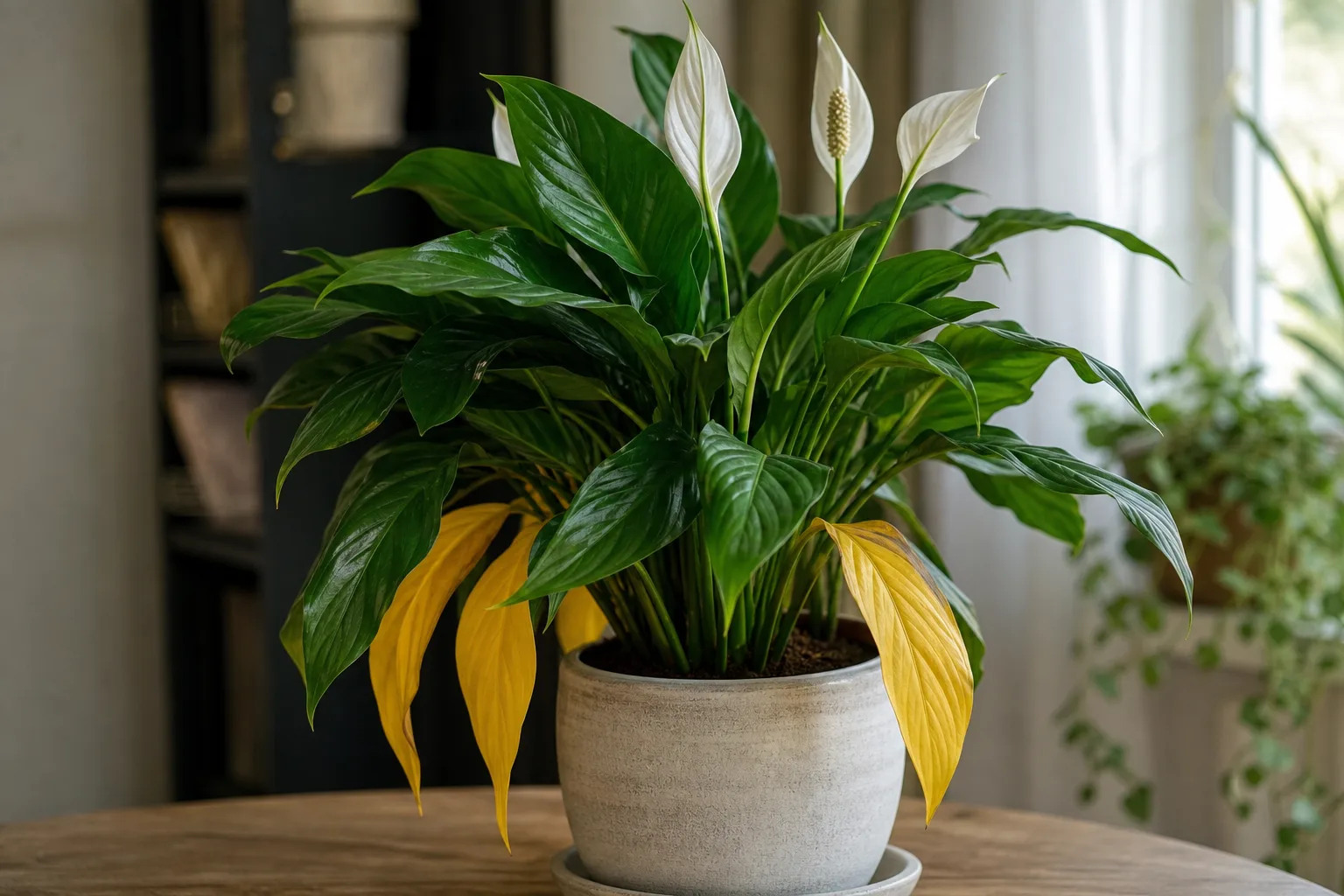
Yellow Leaves on Peace Lily: Causes, Checks & Fixes
This guide covers yellow leaves on Peace Lily. See also the general Yellow Leaves guide, watering, and light pages for this plant.
Yellow Leaves on Peace Lily: Causes, Checks & Fixes
Quick answer
Yellow leaves on Spathiphyllum are a symptom triage page, not a single cause. One older lower leaf turning yellow while new center growth stays green is often normal leaf senescence on a clumping aroid. Several leaves yellowing together on still-wet mix is a root-zone warning-pause watering before you prune, repot, or fertilize.
Red-flag rule: If mix at 3–5 cm depth stays wet for seven or more days, the pot smells sour, or stem bases feel soft at soil level, treat yellowing as active root stress and inspect roots today-not after another watering cycle.
First step: Check moisture 3–5 cm down and lift the pot. Heavy and damp means hold water and increase bright indirect light. Light and dry with limp leaves means a thorough drink-see underwatering. For chronic wet-soil patterns, see overwatering or root rot once mushy roots are confirmed.
Use this page to name the yellowing pattern, confirm the cause, and pick the first fix. For everyday watering rhythm, see peace lily watering. For pale stretched foliage without wet roots, see not enough light.
What pattern of yellowing are you seeing?
Peace lilies yellow in distinct clusters. Match your plant to a row before changing care:
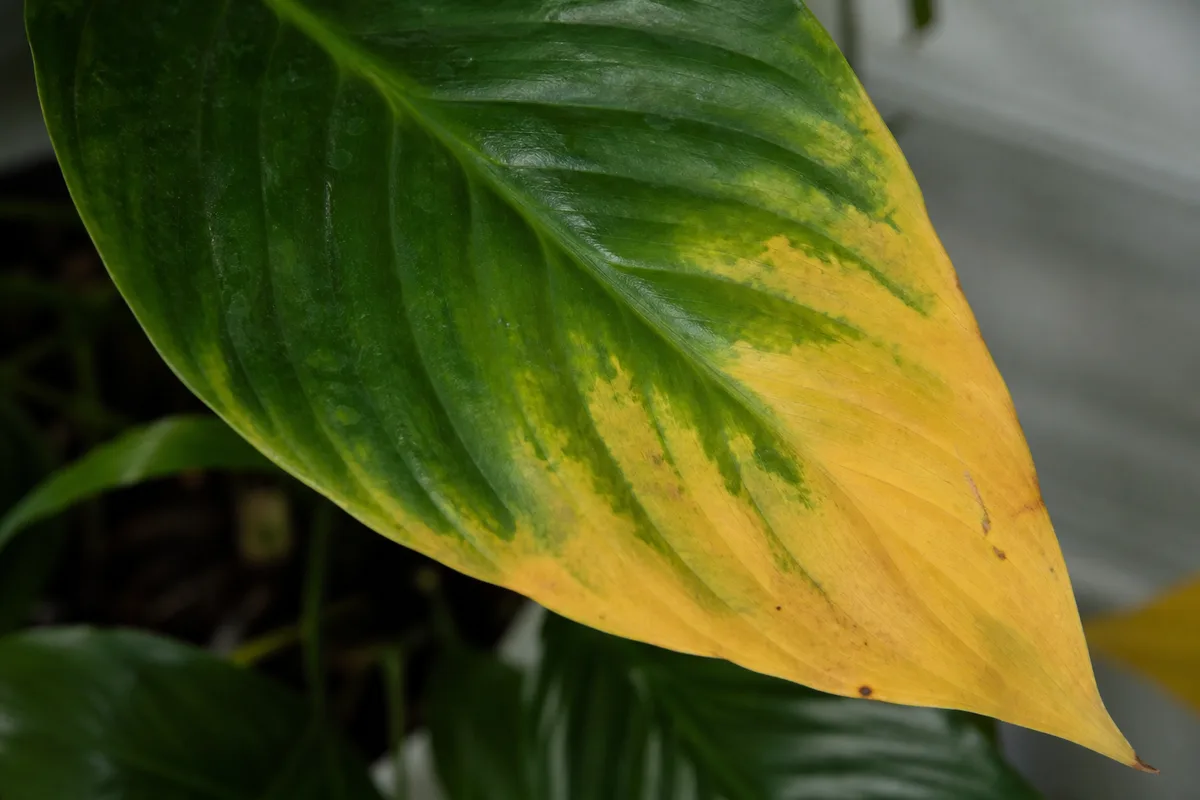
Yellow Leaves symptoms on Peace Lily - compare with healthy tissue on the same plant.
| Pattern | Leaf position & texture | Mix / pot | Smell / pests | Likely cause | First action |
|---|---|---|---|---|---|
| Single aging leaf | One lower leaf; firm petiole; center growth green | Dries normally between drinks | Neutral | Natural senescence | Monitor; remove leaf when fully yellow |
| Multi-leaf wet yellowing | Several leaves soft yellow; may wilt on wet soil | Heavy, damp 3–5 cm down for days | Sour smell, gnats possible | Overwatering / early root stress | Stop watering; brighter indirect light; empty saucer |
| Pale upper leaves | New leaves lighter, smaller; plant leans to window | May stay wet longer in dim rooms | Neutral | Low light + slow water use | Move to bright filtered light; adjust watering-see not enough light |
| Dry-pot yellow edges | Limp collapse; edges yellow after drought | Light pot; dry 3–5 cm down | Neutral | Underwatering episode | Deep soak; wait for top layer to dry-see underwatering |
| Cold-draft yellowing | Slow yellow spread near AC/heater | Variable | Neutral | Cold stress slowing roots | Move off vents; stable 65–85°F range |
| Mushy base + spreading yellow | Stem bases soft; yellow climbs quickly | Wet 7+ days | Rotten smell | Advanced root rot | Unpot now-see root rot |
Yellow tissue rarely turns green again. Recovery means yellowing stops spreading and new center leaves emerge firm and glossy-not old leaves reverting.
Case snapshots (what owners usually describe)
Case A - Normal aging: A three-year-old peace lily in a bright east window loses one bottom leaf every few weeks. The yellowing starts at the tip and moves down one petiole; center leaves and spathes look normal; mix dries in five to seven days. Action: remove the leaf when fully yellow; no repot, no extra water.
Case B - Wet-root yellowing: A peace lily in a dim office keeps getting watered every Monday. Three lower leaves turned soft yellow in ten days; the pot still feels heavy midweek; tiny flies hover over the surface. Action: stop scheduled watering, move closer to filtered light, inspect roots if smell develops within 48 hours.
These snapshots are diagnostic sketches-your plant may combine patterns. Mixed stress is common; use the table and checks below before stacking fixes.
Why Peace Lily gets yellow leaves
Peace lilies are forest-floor aroids that want evenly moist but not soggy mix and bright filtered light indoors. Yellowing usually traces to how water, light, and temperature interact-not a mysterious “plant disease.”
Chronic overwatering is the most common driver. Clemson HGIC links excess water to root and stem diseases on peace lilies. Saturated mix deprives roots of oxygen; damaged roots cannot move water even when soil is wet-so leaves yellow and wilt together. That wilt-on-wet-soil paradox is why owners often water again and deepen the damage. Full wet-soil workflow: overwatering.
Low light slows the whole system. Peace lilies tolerate lower light but perform best with bright filtered conditions. Less photosynthesis means slower water uptake, so the same pour keeps mix wet longer and yellowing follows. See not enough light and leggy growth for stretch patterns.
Natural senescence sheds older lower leaves while the clumping crown pushes new foliage. This is gradual, one leaf at a time, with firm tissue-not a sudden multi-leaf crash.
Underwatering episodes can yellow edges after severe wilt. Peace lilies recover dramatically after a soak when roots are healthy-but repeated drought stress weakens lower leaves. See underwatering and wilting.
Cold drafts slow growth. Missouri Botanical Garden notes that conditions around 55–40°F slow peace lily growth considerably, which can leave roots sluggish and mix wetter than you expect.
Stacked stress: dim room + wet mix + cold draft
Picture a peace lily on a winter windowsill above a heat vent: short daylight, AC-warmed dry air by day, cold glass at night. You water on the same weekly schedule as summer. Growth slows, mix stays damp, lower leaves soft-yellow over two weeks, and the plant droops despite wet soil.
Fix order: stop watering until 3–5 cm dries, move off the cold glass and vent blast, then place in the brightest filtered spot available. Repot only if smell or mushy stems appear-otherwise let dry-down and light do the first work.
Confirm the cause in six checks
Run these in order before repotting, fertilizing, or mass pruning:
- Moisture depth: Push a finger 3–5 cm into mix. Damp on a heavy pot with multi-leaf yellowing means hold water. RHS recommends watering once the top few centimetres dry-not on a calendar.
- Pot weight: Lift the container. A pot that stays heavy many days after one drink points to excess retention or poor drainage.
- Leaf count and position: One old bottom leaf versus three or more yellow leaves across the plant.
- Stem base firmness: Press where petioles meet soil. Soft, dented tissue is escalation-not wait-and-see.
- Light at midday: Bright indirect light should reach the plant; deep shade plus wet mix is a common yellowing stack.
- Smell and surface life: Sour odor, white mold, or fungus gnats from constantly damp peat mean the root zone needs inspection.
If checks point to wet roots but stems are still firm and smell is neutral, monitor 48 hours with no water before unpotting. If checks show mushy bases or rotten smell, skip the wait-see When to unpot now.
First fix by cause
Choose one first action based on what you confirmed:
| Confirmed cause | First fix | Secondary steps (after 48–72 h if stable) |
|---|---|---|
| Wet mix, firm stems | Stop watering; bright indirect light; empty saucer | Resume only when 3–5 cm dries; review watering rhythm |
| Dry mix, limp plant | Water thoroughly until excess drains; discard saucer water | Adjust schedule-underwatering |
| Low light pattern | Move to brightest filtered spot; reduce water frequency | Read light guide |
| Single aging leaf | None required | Snip when fully yellow; see pruning |
| Root stress confirmed | Unpot; trim mush only; repot airy mix | Follow root rot protocol |
| Cold exposure | Relocate off drafts; stable warmth | Hold extra water until growth resumes |
Do not fertilize during acute yellowing. Over-fertilizing can burn peace lily tips and roots, which complicates diagnosis while the plant stabilizes. See fertilizer only after new growth looks healthy.
When to unpot now
Monitor dry-down when stems are firm and smell is neutral. Unpot immediately when any of these appear:
- Mix stays wet at 3–5 cm for seven or more days despite no recent watering
- Sour or rotten smell when lifting the plant or disturbing the surface
- Soft, dark stem bases where multiple petioles emerge
- Yellowing spreads to new leaves within 48 hours while the pot remains heavy
- Wilting returns within one to two days after you watered into already-wet soil
- Surface fungus gnats persist and roots are suspected-see fungus gnats
On unpotting: rinse away old mix, cut only dark mushy roots with clean scissors, leave firm white or tan roots intact, and repot into fresh, free-draining media with drainage holes. Never let peace lily sit in saucer water after repotting.
Do not unpot for a single fully yellow lower leaf on otherwise healthy, normally drying mix-that is senescence, not surgery.
Recovery timeline and checkpoints
Old yellow leaves stay yellow; judge progress by new center growth and stopped spread.
| Phase | Timing | What improvement looks like | What worsening looks like |
|---|---|---|---|
| Stabilization | Days 1–7 | No new yellow leaves; mix dries between checks | More soft yellow leaves while soil stays wet |
| Early recovery | Weeks 2–4 | Firm new leaves from crown; petioles springy | Stem bases soften; smell develops |
| Post-repot repair | Weeks 4–8+ | Gradual new foliage after root trim | No new growth; crown mush spreads |
In mild overwatering cases corrected quickly, new leaf quality often improves within two to four weeks. After root repairs, expect a longer runway-watch firm petioles, not quick green-up of old yellow tissue.
72-hour checkpoint: If yellowing spread stops, pot weight drops, and one new leaf tip stays green, stay the course. If wilt returns on wet mix or smell appears, escalate to root inspection before day four.
What not to do
- Do not keep watering because foliage droops when mix is already wet. Wilting can mean root failure, not thirst-Clemson HGIC describes wilt linked to overwatering injury.
- Do not repot every yellow leaf. Repot on root-zone evidence-persistent wetness, smell, mush-not a single aging lower leaf.
- Do not fertilize to “green it up” during stress. Fix water, light, and roots first.
- Do not cut all yellow leaves day one if partial leaves still have green tissue-correct the cause, then remove fully chlorotic leaves.
- Do not assume every yellow leaf means root rot. Dry-pot edge yellowing after wilt often points to underwatering instead.
How to prevent yellow leaves on Peace Lily
Build a routine that matches Spathiphyllum biology:
- Water when 3–5 cm of mix dries or leaves first droop-not on fixed weekdays.
- Keep bright, indirect light so the plant uses moisture between drinks-RHS peace lily guidance.
- Empty saucers after every watering; avoid cachepots that trap runoff.
- Reduce winter frequency when growth slows and days are short-RHS advises less water in winter.
- Flush occasionally with room-temperature water to limit salt buildup in containers.
- Protect from cold drafts below roughly 55°F for extended periods.
For mix structure and pot sizing, see soil and repotting. For baseline species care, see peace lily overview.
Related peace lily problem guides
- Overwatering - wet-soil wilt paradox and dry-down protocol
- Root rot - mushy roots, trim rules, and salvage cuts
- Underwatering - dry-pot yellow edges and recovery soak
- Wilting and drooping leaves - posture changes without full yellowing
- Not enough light - pale new growth and slow dry-down
- Fungus gnats - damp-surface warning sign
- Brown tips - salt and water-quality edge burn (different from whole-leaf yellow)
- Peace lily watering - moisture rhythm hub
Conclusion
Yellow leaves on peace lily reward systematic triage: pattern first, then moisture and weight, then one targeted fix. Single lower-leaf yellowing on healthy crown growth is often benign; multi-leaf soft yellowing on heavy wet mix is a pause-water moment; mushy stems and sour smell mean unpot today. Route to sibling guides once you know which branch you are on-overwatering, drought, light, or rot-and judge recovery by new center leaves, not old foliage turning green again.