Ficus Burgundy Care: Light, Water & Color Tips
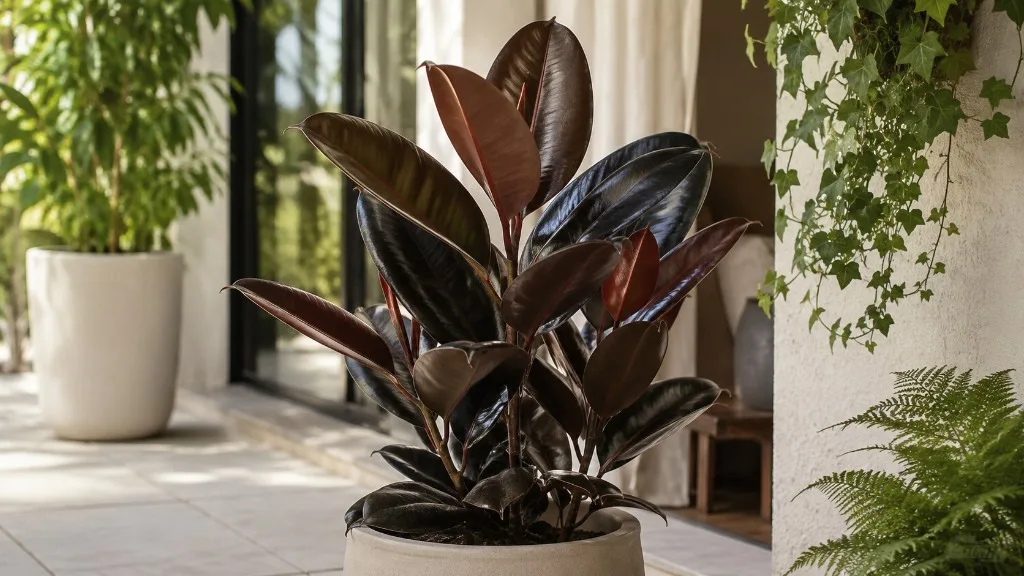
Ficus elastica 'Burgundy'
Ficus Burgundy needs bright light to maintain deep colour - in low light leaves turn muddy green. Water when top inch dries. Wipe waxy leaves monthly. Toxic to pets.
Ficus Burgundy Care: Light, Water & Color Tips
Start with wateringThe most common care mistake for Ficus BurgundyWatering guide →Ficus Burgundy care essentials
Light
bright indirect light, medium indirect light
Water
Water when top 2–3 cm dries. Every 7–10 days summer; 14–21 days winter.
Soil
Well-draining standard potting mix with 20% perlite.
Humidity
Average humidity (40–60%)
Temperature
18°C to 28°C (65–82°F)
Fertilizer
Feed lightly during active growth. Use monthly in spring and summer..
About Ficus Burgundy
Ficus Burgundy has a upright growth habit.
| Detail | Information |
|---|---|
| Growth habit | Upright |
| Scientific name | Ficus elastica 'Burgundy' |
Ficus Burgundy Care: Light, Water & Color Tips
What Ficus Burgundy Actually Is
Ficus Burgundy is a dark-leaved form of Ficus elastica, the rubber plant. It is not a separate species with radically different needs. Most of the core care still comes from the species itself: bright filtered light, moderate watering, warmth, and patience.
What changes with Burgundy is mostly presentation. The leaves carry heavier burgundy to near-black pigmentation, and that makes people assume the plant is either low-light tolerant or unusually fragile. Neither assumption is right.
This plant is usually easier than a fiddle-leaf fig, but it is not a neglect-proof plant. It rewards stability more than constant intervention.
Why the Dark Color Matters
The burgundy tone is one of the main reasons people buy this plant, so it deserves a straight answer.
Good light helps new leaves stay darker. Weak light usually produces:
- greener new growth
- longer spaces between leaves
- a taller, looser silhouette
That does not mean you should put the plant into harsh afternoon sun on day one. It means the cultivar needs strong ambient light if you want the color and form people usually expect when they buy it.
Growth Habit and Mature Size
Indoors, Ficus Burgundy behaves like an upright indoor tree. Missouri Botanical Garden notes that Ficus elastica is a large tropical species outdoors, but in the home it is usually managed as a container specimen.
In practical terms:
- young plants are often sold as single-stem upright specimens
- older plants develop thicker stems and broader branching
- height depends heavily on pot size, pruning, and light
A healthy plant can become a strong vertical focal point. A weak-light plant often becomes a leaning stem with sparse spacing and less impressive foliage.
Light: The Highest-Leverage Variable
Clemson and NC State both support the same general idea: rubber plants want bright light with protection from the harshest direct exposure.
For Burgundy, the useful working rule is:
- bright indirect light as the default
- gentle direct sun only after acclimation
- avoid hot sudden afternoon exposure on an unacclimated plant
Signs the light is working:
- new leaves open at a healthy size
- leaf color stays deep rather than washed green
- the stem stays sturdy
Signs the light is not working:
- long empty spacing between leaves
- smaller newer leaves
- leaning toward the window
- persistent color loss in newer growth
Watering: Dry the Top, Not the Entire Root Ball
The simplest safe rule comes from Clemson’s rubber-plant guidance: let the mix dry slightly between waterings rather than keeping it constantly wet.
For most indoor Burgundy plants, that means watering when:
- the top 1 to 2 inches feel dry
- the pot is lighter than it was right after watering
Then water thoroughly and let excess drain away.
What not to do:
- water on a fixed weekly schedule without checking the pot
- leave runoff in a decorative outer pot
- keep the plant wet because a leaf dropped and you assume it is thirsty
Rubber plants often show root stress late, not early. By the time lower leaves yellow on a wet pot, the roots may already be struggling.
Soil and Drainage
Ficus Burgundy is not fussy about a boutique recipe, but it does need a mix that drains and re-wets predictably. A standard indoor mix improved with perlite or bark is usually more useful than a moisture-retentive heavy blend.
The container matters too. Drainage holes are not optional. A large glossy cachepot with trapped runoff can undo otherwise decent care very quickly.
If the top looks dry but the pot stays heavy for a long time, the issue is often one of these:
- light is too low
- the pot is too large
- the mix is too dense
- the root ball is staying too wet in the center
Temperature and Humidity
Rubber plants are comfortable in ordinary warm indoor conditions. Clemson advises protecting them from cold drafts and temperatures that fall too low, and that is still the main practical warning here.
Watch for:
- exterior doors
- AC vents
- cold winter glass
- radiators or heating vents that dry one side of the plant
Average household humidity is usually acceptable. Very dry air can still increase pest pressure and brown-edge stress, but humidity is rarely the first thing to fix unless the plant is sitting in a severe heater draft.
Fertilizer: Useful, but Secondary
Ficus Burgundy does not need constant feeding. A balanced liquid fertilizer during active growth is usually enough if the plant has good light and a functioning root system.
Hold back on fertilizer if:
- the plant was just repotted
- roots are stressed
- light is weak
- winter growth has slowed
Do not try to feed your way into darker leaves. Better light does more for foliage color than extra nitrogen.
Repotting and Root Health
Repot when the plant actually needs more space or fresher mix, not because a calendar says it is time.
Practical signs include:
- roots circling out of the drainage holes
- water racing through without wetting the mix evenly
- a top-heavy plant that dries unusually fast
- compacted old media
Move up one pot size at a time. Oversizing a rubber plant is one of the easiest ways to create chronic wet-root problems.
Pruning and Shaping
Burgundy responds well to selective pruning if you want a bushier form or need to control height. Make cuts during active growth so the plant has the best chance to branch and recover.
Wear gloves or wash up quickly afterward. NC State and pet-safety references both note the irritating latex sap. That matters more on pruning day than in routine care.
Common Problems That Matter Most
Yellow leaves
Most often a watering and root-zone issue, not a nutrient issue.
Leaf drop after change
Ficus plants dislike abrupt changes. A move, repot, draft, or strong shift in light can trigger some shedding.
Greener new leaves
Usually a light problem before it is a fertilizer problem.
Pests
Scale, mealybugs, and spider mites are worth checking for on stressed plants, especially in dry indoor air.
Pet Safety and Common-Name Confusion
This is one of the most useful trust fixes in the revised page.
Ficus Burgundy is not pet-safe. The latex sap is irritating, and Pet Poison Helpline describes the usual exposure signs as drooling, vomiting, diarrhea, and irritation after chewing.
The main confusion comes from the phrase “rubber plant.” Some growers mix up Ficus elastica with Peperomia obtusifolia, which is commonly called baby rubber plant and is listed separately by ASPCA. They are not the same plant and should not be treated as though they share the same safety profile.
Who This Plant Fits Best
Ficus Burgundy is a strong choice if you want:
- a structural indoor foliage plant
- darker foliage than standard green rubber plants
- a plant that can become a long-term room anchor
It is a weaker choice if you need:
- a genuinely low-light plant
- a pet-accessible floor plant
- a plant you plan to move around often
Conclusion
The best way to keep Ficus Burgundy looking like Ficus Burgundy is to stop treating it like a generic dark houseplant. It wants bright filtered light, a sensible dry-down between waterings, drainage that actually works, and stable placement. Get those right and the plant usually grows with very little drama.
If something starts slipping, check light and root-zone moisture before you change anything else. Those two variables explain most of the plant’s real-world problems, including color loss, yellow leaves, and weak stretched growth.
Related Ficus Burgundy guides
- Ficus Burgundy light for placement and color-retention decisions
- Ficus Burgundy watering for moisture checks and seasonal rhythm
- Ficus Burgundy soil for mix and drainage decisions
- Ficus Burgundy repotting for pot-size and root-health timing
- Yellow Leaves on Ficus Burgundy when moisture or root stress is already showing
- Root Rot on Ficus Burgundy when the pot has stayed wet too long
How to care for Ficus Burgundy?
How much light does Ficus Burgundy need?
bright indirect light, medium indirect light
- bright indirect light, medium indirect light - bright indirect light, medium indirect light.
When should you water Ficus Burgundy?
Water when top 2–3 cm dries. Every 7–10 days summer; 14–21 days winter.
- Check top 2 inches - Water when top 2–3 cm dries.
- Drain excess water - Water when top 2–3 cm dries.
What soil works best for Ficus Burgundy?
Well-draining standard potting mix with 20% perlite.
- Well-draining mix - Well-draining standard potting mix with 20% perlite.
Grower notes for Ficus Burgundy
Burgundy rubber plant identity note
Ficus Burgundy is the darkest rubber plant form, with deep glossy leaves that tolerate slightly lower light than heavily variegated rubber plants. It still needs brightness for strong stems and healthy leaf spacing, but it will not show light stress through fading cream margins. Dust is more obvious on dark leaves, so regular wiping directly improves the plant. If a lower leaf drops after a move, stabilize conditions before changing the pot.
What makes Burgundy Rubber Plant different
Ficus Burgundy is judged by deep, glossy, almost black-green leaves. Weak light makes the plant stretch and lose density, while sudden moves can trigger leaf drop. Keep placement stable once it adjusts.
What matters most with Ficus Burgundy
Ficus Burgundy often reacts to change before it reacts to bad care. Leaf drop after a move is common, but repeated drop means light, drafts, watering, or root conditions are still unstable. In practice, the care checkpoint is simple: bright indirect light, medium indirect light. Pair that with well-draining standard potting mix with 20% perlite, and avoid changing water, pot size, and placement all at once.
Best placement in a real home
Ficus Burgundy belongs where bright indirect light, medium indirect light is realistic for most of the day, not only where the pot looks good. Water when top 2–3 cm dries. Every 7–10 days summer; 14–21 days winter. If the pot stays wet longer than expected, move the plant into better light or reassess the mix before watering again. Humidity target: Average humidity (40–60%).. Temperature comfort zone: 18°C to 28°C (65–82°F).
Before you buy this plant
Choose Ficus Burgundy with firm new growth, clean leaf undersides, and soil that does not smell sour or feel compacted. Be cautious if you see yellow-leaves, sticky residue, collapsed crowns, or a pot that is wet in poor light. Cosmetic old-leaf damage is less worrying than weak roots or active pests.
First month after bringing it home
Do not repot Ficus Burgundy on day one unless the mix is failing or pests are obvious. Quarantine it, learn how fast the pot dries, and keep care boring while it adjusts. Watch especially for yellow-leaves, brown spots, and mealybugs. If problems appear, correct the condition first rather than stacking fertilizer, repotting, and pruning together.
Safety note for Ficus Burgundy
Ficus Burgundy is not a plant to keep within reach of pets or children. Treat it as an inaccessible display plant. Use gloves if sap or plant tissue is irritating, and pick a pet-safe alternative for floor pots or low shelves.
How to tell Ficus Burgundy is settling in
If you plan to multiply it later, common methods include Stem cuttings and Air layering. If brown spots shows up early, inspect light, watering, and roots before assuming the plant is permanently weak.
Is it pet safe?
Ficus Burgundy is toxic to cats and dogs.
Toxic; milky sap causes irritation.
Watering Ficus Burgundy
Water when top 2–3 cm dries. Every 7–10 days summer; 14–21 days winter.
Soil & potting for Ficus Burgundy
Well-draining standard potting mix with 20% perlite.
Humidity & temperature for Ficus Burgundy
Ficus Burgundy prefers average humidity (40–60%), though normal home humidity is usually fine. Keep temperatures around 18°C to 28°C (65–82°F).
| Detail | Information |
|---|---|
| Humidity | Average humidity (40–60%) - normal home humidity is fine. |
| Ideal temperature | 18°C to 28°C (65–82°F) |
Fertilizer & pruning for Ficus Burgundy
Use feed lightly during active growth. Use monthly in spring and summer.. for Ficus Burgundy.
| Detail | Information |
|---|---|
| Fertilizer type | Feed lightly during active growth. Use monthly in spring and summer.. |
Common problems on Ficus Burgundy
Yellow Leaves
MediumLikely cause: Overwatering causes yellow leaves - the most common rubber plant mistake
Quick fix: Allow soil to dry more between waterings; check drainage
Full fix guide →Mealybugs
MediumLikely cause: Mealybugs hide in leaf axils and on new growth of rubber plants
Quick fix: Remove with 70% alcohol on cotton swab; apply neem oil; repeat weekly
Full fix guide →Brown Tips
MediumLikely cause: Common on this plant type; confirm with recent watering, light, and root checks.
Quick fix: Inspect the plant and correct the most likely care stressor before stacking treatments.
Full fix guide →Root Rot
MediumLikely cause: Common on this plant type; confirm with recent watering, light, and root checks.
Quick fix: Inspect the plant and correct the most likely care stressor before stacking treatments.
Full fix guide →Overwatering
MediumLikely cause: Common on this plant type; confirm with recent watering, light, and root checks.
Quick fix: Inspect the plant and correct the most likely care stressor before stacking treatments.
Full fix guide →Underwatering
MediumLikely cause: Common on this plant type; confirm with recent watering, light, and root checks.
Quick fix: Inspect the plant and correct the most likely care stressor before stacking treatments.
Full fix guide →Spider Mites
MediumLikely cause: Common on this plant type; confirm with recent watering, light, and root checks.
Quick fix: Inspect the plant and correct the most likely care stressor before stacking treatments.
Full fix guide →Aphids
MediumLikely cause: Common on this plant type; confirm with recent watering, light, and root checks.
Quick fix: Inspect the plant and correct the most likely care stressor before stacking treatments.
Full fix guide →Leggy Growth
MediumLikely cause: Common on this plant type; confirm with recent watering, light, and root checks.
Quick fix: Inspect the plant and correct the most likely care stressor before stacking treatments.
Full fix guide →Slow Growth
MediumLikely cause: Common on this plant type; confirm with recent watering, light, and root checks.
Quick fix: Inspect the plant and correct the most likely care stressor before stacking treatments.
Full fix guide →Wilting
MediumLikely cause: Common on this plant type; confirm with recent watering, light, and root checks.
Quick fix: Inspect the plant and correct the most likely care stressor before stacking treatments.
Full fix guide →Drooping Leaves
MediumLikely cause: Common on this plant type; confirm with recent watering, light, and root checks.
Quick fix: Inspect the plant and correct the most likely care stressor before stacking treatments.
Full fix guide →Low Humidity
MediumLikely cause: Common on this plant type; confirm with recent watering, light, and root checks.
Quick fix: Inspect the plant and correct the most likely care stressor before stacking treatments.
Full fix guide →Not Enough Light
MediumLikely cause: Common on this plant type; confirm with recent watering, light, and root checks.
Quick fix: Inspect the plant and correct the most likely care stressor before stacking treatments.
Full fix guide →Fungus Gnats
MediumLikely cause: Common on this plant type; confirm with recent watering, light, and root checks.
Quick fix: Inspect the plant and correct the most likely care stressor before stacking treatments.
Full fix guide →Mold on Soil
MediumLikely cause: Common on this plant type; confirm with recent watering, light, and root checks.
Quick fix: Inspect the plant and correct the most likely care stressor before stacking treatments.
Full fix guide →