Best Soil for Ficus Burgundy: Mix, Drainage & Pots
Best Soil for Ficus Burgundy: Mix, Drainage & Pots
Best Soil for Ficus Burgundy: Mix, Drainage & Pots
Author: sai-ananth · Reviewed by: LeafyPixels Review Board · Updated: 2026-06-15
Best Soil for Ficus Burgundy: Mix, Drainage & Pots
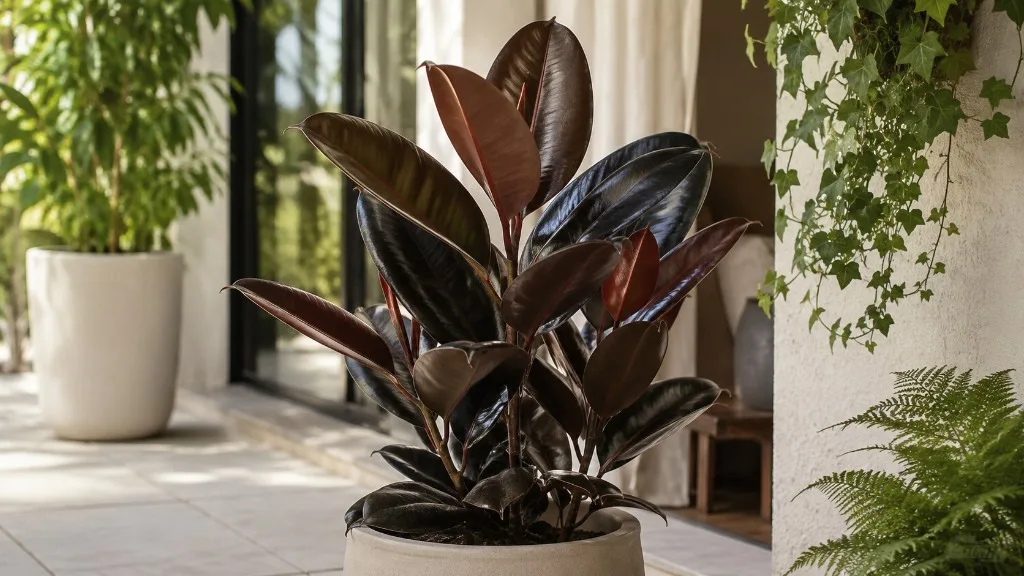
Ficus Burgundy (Ficus elastica ‘Burgundy’) is sold as an easy rubber plant because the leaves are thick, dark, and slow to complain. That visual toughness is exactly why soil problems go unnoticed until lower leaves drop or the stem softens near the base. Burgundy’s near-black foliage does not fade when roots sit in soggy mix the way variegated Ficus Tineke leaves bleach or pink out under stress. The plant can look fine for weeks in a dim living-room corner while the pot center stays wet - then shed several lower leaves after one extra watering. The fix is not exotic ficus burgundy soil; it is a well-draining peat-perlite blend (or an equivalent coco coir version) tuned to how slowly your room dries the pot, paired with a container that actually lets water exit.
This page is for growers who already know rubber plants in general and need Burgundy-specific substrate decisions: when dim placement demands more perlite than a bright-window specimen, how dark-leaf cultivars differ from variegated siblings on dry-down speed, and how soil pairs with the watering rhythm after a mix change. For species-level Ficus elastica background shared across cultivars, see the rubber plant soil hub. For full plant context, start with the Ficus Burgundy overview.
Why Burgundy Rubber Plants Need Faster-Draining Mix Than They Look
Rubber plants evolved in warm, humid forests where organic surface layers drain after rain yet hold moisture for thick roots between wetting events - a pattern consistent with their native range in southeastern Asia. Your apartment is drier, cooler, and more stable than that forest floor, but the root biology is the same: Ficus elastica wants moist but well-drained soil with oxygen between drinks. Burgundy adds a placement wrinkle. Because its dark leaves tolerate moderate indirect light better than heavily variegated rubber plants, it often ends up in corners where evaporation is slow. Slower evaporation means the same bagged mix stays wet longer - so the soil recipe must compensate for the room, not only for the species label on the pot.
Soil is the control system for every watering decision afterward. A fast-draining mix forgives an extra day before you notice dryness at the top; a slow-draining mix turns one heavy watering into days of root stress. Clemson HGIC links root rot to mix that does not drain quickly or to watering before the soil dries slightly. Burgundy also reacts to repotting, moving, and watering shifts by dropping lower leaves even when the underlying fix was correct. Change soil, pot size, placement, and watering frequency in the same week and you will not know which variable helped. Treat substrate as long-term infrastructure - set it up once for your room, then adjust only when clear root-zone signals appear.
Worked scenario (home observation, 2025): A 30 cm glazed ceramic pot in a dim northeast corner held an unamended nursery mix that stayed visibly damp 9–10 days after each watering. Lower leaves yellowed despite a cautious schedule. After repotting into a 3-1-1-1 bark-enhanced blend in the same pot with confirmed drainage holes, dry-down at the top 2–3 inches improved to roughly 5 days, and lower leaf drop stopped within two weeks once light and watering stayed stable. Your numbers will differ - track pot weight for one month rather than copying this timeline.
Burgundy vs Other Ficus elastica Cultivars (Soil Implications)
All Ficus elastica cultivars share thick roots and the same baseline need for aerated, well-drained container mix. The differences that matter for soil choice are placement and transpiration, not a separate species chemistry.
| Factor | Ficus Burgundy (dark leaf) | Ficus Tineke / Ruby (variegated) |
|---|---|---|
| Typical indoor placement | Moderate indirect light; dim corners more common | Bright indirect light required for stable variegation |
| Visible early stress on leaves | Often none until drop or stem softness | Fading variegation, pale panels, brown margins sooner |
| Mix dry-down in same pot/room | Slower in dim placements - bump perlite or bark | Faster in bright rooms; still needs 20–30% perlite minimum |
| When denser mix is tolerable | Bright warm room with careful watering only | Rarely - variegation stress amplifies root-zone mistakes |
Is Burgundy soil different from regular rubber plant soil? Not at the chemistry level. The recipes on the species rubber plant soil page apply. This cultivar page exists because Burgundy growers more often place the plant where mix dries slowly and where leaf color does not warn early. If your Burgundy sits in a bright bay window and you already use amended mix, the species guide may be enough. If it lives in a dim corner or oversized decorative pot, the perlite and bark guidance here matters more.
What Ficus elastica ‘Burgundy’ Roots Need From Container Soil
The best ficus burgundy soil mix accomplishes three jobs at once: move water through the pot instead of pooling around the root ball, retain enough moisture that you are not watering every two days in a normal indoor environment, and maintain pore space so air reaches thick roots between waterings. Rubber plant roots are stouter than fine-rooted ferns; they do not need orchid-only chunk, but they need more aeration than straight all-purpose potting soil provides from the bag.
Drainage Without Constant Drying
Drainage speed is the variable most owners under-measure. After a thorough watering, excess water should exit drainage holes within a few minutes and the top should not remain glossy and pooled for long. If water sits on the surface, runs down the gap between soil and pot wall, or the saucer stays full for hours, correct mix or container setup - not patience.
Fast drainage does not mean living in dust. Ficus Burgundy still needs peat or coconut coir to hold moisture because mineral-only mixes dry unevenly under heating and air conditioning. The goal is a predictable dry-down: as a home-climate heuristic, let the top 2–3 inches (5–7 cm) approach dry before the next watering while the lower root ball holds faint moisture. Pair that check with the watering guide rather than a calendar.
Air Pockets Around Thick Roots
Compaction is the silent killer in older rubber plant pots. Peat breaks down, roots fill channels, and repeated top watering without flushing pushes fine particles downward. Once pore space collapses, water moves more slowly even if your recipe was correct two years ago. Chunky pine bark fines, orchid bark, or pumice keep structure open longer than perlite alone because they resist collapse. Clemson HGIC’s container mix factsheet recommends peat-lite blends with perlite or pine bark for foliage houseplants that need both moisture retention and air porosity.
If you press a finger into healthy mix after watering, it should feel spongy and spring back slightly. Hard, slick, or sour-smelling mix near the drainage hole means aeration failed. Top-dressing perlite onto compacted old media without repotting rarely fixes the core problem.
Slight Acidity for Nutrient Uptake
Ficus elastica grows well in slightly acidic to neutral conditions, commonly cited around pH 5.5 to 7.0. Most quality peat-based and coco coir blends fall inside that range without amendment. Problems appear when tap water is extremely alkaline, fertilizer salts accumulate, or the plant sits in the same mix for years without flushing. Leaf tip browning has many causes, but white crust on the surface alongside tip burn often signals salt buildup in mix that no longer drains freely.
Quick-Reference Recipe Card (Standard / Chunky / Coco Coir)
Use this card before you blend. All ratios are by volume (scoops or pots), not weight.
| Recipe | Parts | Best for | Perlite level |
|---|---|---|---|
| Standard | 4 parts indoor potting soil + 1 part perlite | Bright to moderate light; average waterers | ~20% |
| Chunky | 3 parts potting soil + 1 part perlite + 1 part pine/orchid bark | Dim corners, glazed ceramic, history of soggy mix | ~20% + bark |
| Coco coir | 3 parts rinsed coir + 1 part perlite + 1 part bark (+ optional worm castings) | Peat-free growers; cool humid rooms | ~25% + bark |
Squeeze test target: damp mix holds a loose clump when squeezed, then crumbles when poked - like a moist muffin crumb, not wet dough.
OPEN 4:1 MIX (passes squeeze test)     COMPACTED NURSERY PEAT (fails)
┌─────────────────────────┐            ┌─────────────────────────┐
│ ○ ○  ░░  ○   ░░  ○      │            │████████████████████████│
│  ░░ ○   ░░   ○  ░░      │            │████████████████████████│
│ ○   ░░  ○  ░░    ○      │            │████████████████████████│
└─────────────────────────┘            └─────────────────────────┘
 ○ = perlite    ░░ = peat/coir         water sheets off sides;
Squeezed: crumbles when poked           center stays saturated days
Signs Your Ficus Burgundy Soil Is Failing
Soil problems announce themselves through the root zone before leaves tell the full story - and Burgundy’s dark foliage makes the leaf stage easy to miss.
Slow surface dry-down. Top inch stays cold and damp for a week without watering - mix retains too much water or pot is oversized. Water pooling on the surface after a normal drink means hydrophobic or compacted media. Sour smell near the bottom drainage hole indicates anaerobic conditions. White fuzzy mold on the surface is usually moisture and airflow failure - see mold on soil before reaching for fungicide while ignoring drainage.
Above-ground symptoms overlap with light and watering issues. Yellow lower leaves often trace to overwatering on Ficus Burgundy or poor drainage, especially if the stem feels soft near the base - classic root rot territory when mix stays wet. New leaves smaller than older ones may mean root restriction or nutrition, but check whether mix has broken down first. Before changing light or fertilizer, pull the plant gently from the pot after a moderate dry period. Healthy roots are firm and pale tan to white. Dark, mushy, foul-smelling roots mean the soil system failed regardless of last week’s leaf appearance.
Best DIY Soil Mix Recipes for Ficus Burgundy
Measure by volume. Mix thoroughly so perlite and bark distribute evenly; clumped perlite at the bottom of the bag is a common reason two pots behave differently from the same batch.
Standard Peat-Perlite Houseplant Mix (20% Perlite)
Baseline well-draining standard potting mix with 20% perlite for average indoor conditions and moderate indirect light:
- 4 parts quality indoor potting soil (peat or coir based, labeled for houseplants)
- 1 part perlite (roughly 20% by volume)
Combine in a tub until perlite is evenly distributed. This blend suits bright to moderate rooms and growers who water when the top 2–3 inches feel dry. If your home runs humid or the plant sits in a cooler room, this mix is often enough without bark. If you tend to water generously or the pot dries very slowly, use the chunky recipe instead of jumping pot size.
Chunky Aerated Mix for Dim Corners and Heavy Waterers
When drainage needs to be faster - large pots, low-light corners, or prior soggy mix:
- 3 parts indoor potting soil
- 1 part perlite
- 1 part pine bark fines or orchid bark
Bark creates durable air channels perlite alone cannot maintain over years of root growth. Water thoroughly, then confirm pot weight drops noticeably within an hour as excess moisture exits. A small amount of horticultural charcoal per gallon is optional for odor control in long-lived mix; it does not replace perlite or bark.
Coco Coir Alternative for Peat-Free Growers
Coir alone can hold too much uniform moisture in cool rooms without enough pore space:
- 3 parts coconut coir (rehydrated and fluffed)
- 1 part perlite
- 1 part pine bark fines
- 1 part compost or worm castings (optional)
Increase perlite by one part if the mix still feels heavy after a test watering in the repotting pot. The same pH 5.5 to 7.0 target applies; coir-based mixes usually land in range without amendment.
Ideal pH Range and Home Testing
For container Ficus Burgundy care, treat pH 5.5 to 7.0 as the practical working range, with many growers targeting 6.0 to 6.5 in pots. NC State Extension documents slightly acidic to neutral tolerance for the species. You do not need laboratory precision; avoid extremes and chronic waterlogging, which hurt roots regardless of nominal bag pH.
Heavy garden soil or compost-only blends in pots fail on structure before pH matters indoors. What fails is waterlogging, not a missing decimal on a test strip.
Testing Soil pH at Home
A simple pH meter or slurry test kit is enough for houseplants. Take a small sample of your mixed, moistened blend, test per kit instructions, and record the result before repotting. Retest after switching peat to coir, moving to hard-water regions, or changing fertilizer salt profile.
Container Drainage: Pots, Holes, and Cachepot Workflow
Soil mix and container function as one system. A perfect peat-perlite blend in a pot with no drainage hole - or inside a sealed decorative outer pot - will still fail.
Drainage Holes and Saucer Habits
Yes, Ficus Burgundy needs a drainage hole for long-term indoor health. Clemson Extension stresses proper drainage and emptying excess saucer water after each watering. One hole is minimum; several holes improve flow in large pots. After watering, empty the saucer within 30 minutes. With a cachepot, lift the inner nursery pot to water at the sink, drain fully, then return - never water into a sealed outer shell.
The one-minute check: water until runoff appears, confirm steady exit rather than trickling. Slow exit means compacted mix, blocked holes, or a pot sitting flat on a sealed saucer.
Pot Size, Depth, and Material Choices
Choose a pot only one size larger than the root ball when repotting - typically 1 to 2 inches (2.5 to 5 cm) wider in diameter. Burgundy is not a fast enough indoor grower to justify jumping several sizes “so it can grow into it.” Extra soil without matching roots holds moisture too long.
| Material | Dry-down tendency | Burgundy pairing |
|---|---|---|
| Terracotta | Fastest | Dim rooms, heavy waterers, chunky mix |
| Glazed ceramic | Slower | Bright rooms; add bark or extra perlite |
| Plastic nursery | Moderate | Works inside cachepots; easy lift for weight checks |
Match material to watering personality and room brightness, not Instagram aesthetics alone. A beautiful oversized ceramic pot with dense soil in a dim corner is a common setup behind yellow leaves within months.
Store-Bought Mixes That Work (and What to Amend)
You do not have to mix from scratch. A bag labeled for indoor houseplants with perlite, vermiculite, or bark can work if amended. Read the label for drainage language - not moisture-control formulas designed for thirsty ferns unless you plan to add 20 to 30 percent perlite by volume.
Regular potting soil alone is fine as a base, not as the finished product. Open the bag, mix in perlite until white particles show throughout, and test drainage in a small cup before repotting a large Ficus Burgundy. Cactus or succulent mixes are too lean for many indoor rubber plants unless blended 50/50 with peat or coir-based potting soil to restore moisture retention.
Avoid outdoor garden soil, topsoil, or heavy compost in containers. Clemson HGIC warns that garden soil compacts in pots and introduces pests and weeds. Pre-mixed “aroid” blends from reputable suppliers are starting points - still verify dry-down speed in your home.
When to Refresh Soil (Link to Repotting Guide)
Refresh Ficus Burgundy mix when roots circle densely, emerge from drainage holes, or the substrate has clearly broken down - as a home-climate heuristic, often every two to three years in moderate indoor growth, not on a fixed calendar. Refresh sooner if drainage slowed, salt crust covers the surface, or you suspect root rot.
Best timing is active growth in spring or early summer. Avoid repotting a plant already dropping leaves from a recent move unless the root zone is clearly waterlogged - stabilize first when possible. After refresh, keep light stable, hold fertilizer for several weeks, and water only when new mix approaches dry at the top. Expect some lower leaf drop; stabilize before further changes.
Full repot workflow - unpotting, root trimming, depth placement, and recovery timing - lives on the dedicated Ficus Burgundy repotting guide. This page covers what mix to use; that page covers how to execute the swap.
Pet safety during refresh: Ficus elastica is toxic to cats and dogs if ingested; milky latex sap irritates skin and mouth tissue. Wear gloves if you are sensitive, keep discarded mix and trimmed roots away from pets, and wash hands after handling root balls.
Common Soil Mistakes for Indoor Burgundy Rubber Plants
Gravel or pot shards at the bottom do not improve drainage - they create a perched water table where fine soil meets coarse layer, often keeping the root zone wetter. Gravel layers do not replace perlite in the mix. Oversized pots are the second most common mistake after overwatering. No drainage hole because of a decorative pot guarantees long-term failure indoors. Repotting into wet mix after root rot without trimming damaged roots repeats the cycle. Using only cactus soil dries unevenly and stresses rubber plants that expect moderate moisture between waterings.
Another subtle error is changing too many variables at once after purchase. New Ficus Burgundy plants often drop lower leaves when acclimating. If you immediately repot, fertilize, and move to a new window, soil gets blamed for normal transition stress. Give the plant two to four weeks in stable conditions before repotting unless nursery mix is clearly waterlogged or root-bound.
Do not rely on stones in the saucer to “raise” drainage - they do not aerate the root zone. If you use tap water, occasional flushing through the mix reduces salt buildup better than top-dressing with more fertilizer.
How Soil Connects to Watering and Light
The same ficus burgundy soil mix dries in three days under bright indirect light and ten days in a dim corner. Burgundy tolerates moderate light better than variegated forms, which means the pot may dry more slowly even when the plant looks healthy. In low light, the plant uses less water while mix still dries slowly - a combination that encourages overwatering unless you check moisture physically.
The practical rhythm: let the top 2 to 3 inches of mix dry before watering again in spring and summer, per Clemson HGIC’s rubber plant guidance. In winter, let more of the pot approach dry. PlantTalk Colorado notes rubber plants need evenly moist soil but that keeping soil saturated causes root problems - the soil structure you build determines whether “moist” becomes “soggy.”
If you recently moved Burgundy to a brighter spot, mix will dry faster; adjust before assuming thirst on the old schedule. If soil drains well but leaves still drop after a move, suspect draft, acclimation, or light placement before swapping mix again. Change one variable at a time.
Conclusion
Ficus Burgundy rewards stable root conditions with deep glossy foliage, but dark leaves hide soggy mix longer than variegated rubber plants show stress. Build a well-draining peat-perlite blend - 4:1 for typical rooms, 3-1-1-1 with bark for dim corners or glazed pots - confirm the squeeze test crumbles when poked, and pair the mix with real drainage holes and a pot sized to the root ball. Label dry-down and refresh timing as heuristics you calibrate with pot weight, not calendar dates.
When in doubt, increase perlite before increasing pot size, link your next watering pass to the watering guide, and send full repot steps to the repotting guide. Soil is the part of Burgundy stability you control most directly - get it open, get water out, then let the plant tell you when it is ready for the next drink.
Reviewed by LeafyPixels Review Board · Author: sai-ananth · Methodology: recommendations checked against botanical and extension references, LeafyPixels plant-care data, and practical indoor growing constraints before publication.
When to use this page vs other Ficus Burgundy guides
- Ficus Burgundy overview - Start here for whole-plant context before deep-diving this topic.
- Ficus Burgundy problems hub - Jump to symptom-specific fix guides when this care topic does not resolve the issue.
- Root Rot on Ficus Burgundy - Escalate here when soil adjustments are not enough.
- Mold on Soil on Ficus Burgundy - Escalate here when soil adjustments are not enough.