Best Soil for Ficus Tineke: Peat-Perlite Ratios
Best Soil for Ficus Tineke: Peat-Perlite Ratios
Best Soil for Ficus Tineke: Peat-Perlite Ratios
Ficus Tineke grows best when roots get two things at the same time: moisture and oxygen. Most failures happen when soil holds too much water for too long, especially in oversized decorative pots. The reliable fix is not exotic ingredients; it is a stable, airy mix plus real drainage discipline. This guide gives a practical soil formula, adjustment rules by room conditions, and quick tests you can run before repotting so you can prevent soggy-root decline instead of reacting to it later.
Quick Recipe Card
For most indoor homes, start here:
| Situation | Mix target |
|---|---|
| Standard baseline | 40% peat (or coir) + 30% indoor potting mix + 30% perlite |
| Simpler option | 2 parts indoor potting mix + 1 part perlite |
| Cool/dim room | Push perlite toward 35-40% |
| Very dry/bright room | Keep perlite closer to 25-30% |
This aligns with the need for a well-drained houseplant mix and steady moisture cycles for rubber plants indoors.
Why Soil Matters More on Variegated Tineke
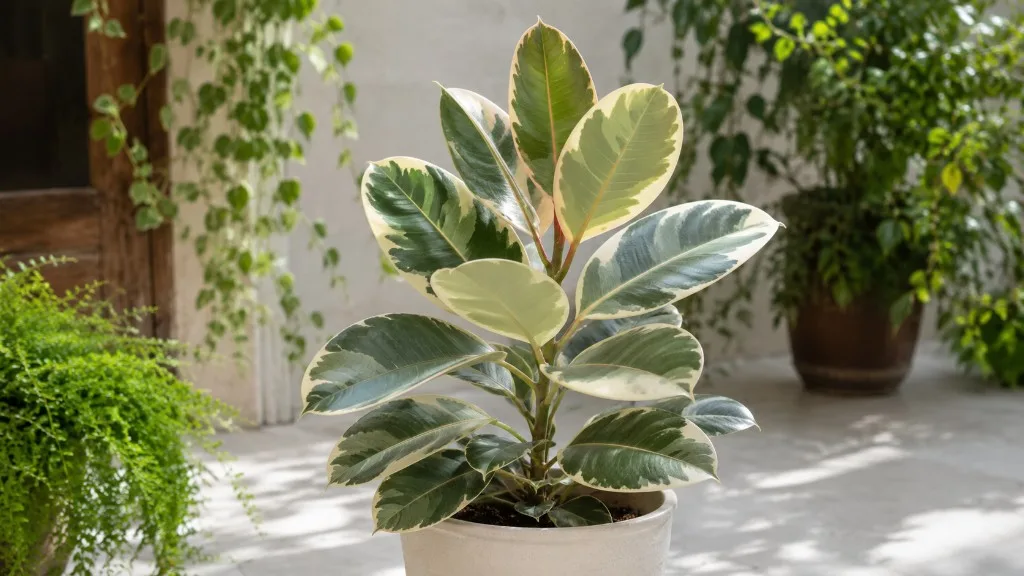
Ficus Tineke is a variegated form of Ficus elastica, with cream sectors that contain less chlorophyll than all-green cultivars. In real care terms, that means it has less energy margin when roots are stressed. If soil stays saturated, nutrient uptake drops, and pale sectors often show stress earlier than green tissue. The plant may look “randomly dramatic,” but the root zone usually explains the pattern.
Root oxygen and wet-soil failure
Rubber plant roots need moisture plus air pockets; persistent saturation removes oxygen and raises root-rot risk. Clemson Extension ties root rot in houseplants to overly frequent watering and mixes that drain poorly, not just “too much love” in general (Clemson HGIC). That is why texture and pore space matter as much as watering frequency.
Why cream sectors raise stress sensitivity
On variegated leaves, the pale sections are less forgiving when the root system is compromised. You often see smaller new leaves, weaker patterning, and brown margins before a full collapse. The response should be root-zone correction first: improve mix structure, verify drainage, and stabilize watering intervals.
Core Ficus Tineke Soil Recipe
The most reliable approach for homes is a peat-or-coir base plus meaningful perlite. You do not need ten ingredients to get a durable result. You need a blend that re-wets well, drains quickly, and stays open for months instead of compacting after repeated watering.
Baseline 40/30/30 blend
Use:
- 40% peat moss or buffered coco coir
- 30% quality indoor potting mix
- 30% perlite
Blend by volume, not weight. This ratio gives enough moisture retention without turning into a heavy sponge. It also maps cleanly to guidance that Ficus elastica performs in bright indirect light with good drainage and reduced overwatering risk (Missouri Botanical Garden).
Simple 2:1 fallback blend
If you only have bagged mix and perlite, use 2 parts indoor mix to 1 part perlite. This is often enough for established plants in average humidity, especially if pot size is conservative and runoff is emptied after watering.
How Much Perlite to Use
Perlite is not decorative filler; it is a structure tool. It helps preserve macropores so water can move down and air can return after watering. A practical band for Tineke is:
- 25-30% perlite in bright, warm rooms where pots dry quickly
- 30-40% in cooler, dimmer, or more humid rooms
If your top inch dries but the pot stays heavy for a week, increase perlite. If the mix dries too fast in peak summer, reduce slightly or choose a smaller pot. WSU potting-media guidance describes perlite as a pore-building amendment that supports drainage and root aeration in container systems (WSU Potting Soil PDF).
Peat vs Coco Coir for the Base
Both can work for Ficus Tineke when perlite is adequate. Peat generally retains moisture a bit longer and is familiar to most houseplant growers. Coir often drains a touch faster and is a renewable input, but low-quality coir may carry salts if unbuffered. Use reputable horticultural-grade coir and rinse or pre-buffer when needed.
The key is not which one wins online arguments. The key is whether your finished blend dries predictably in your room. Choose the base that fits your environment and habits, then tune perlite percentage around it.
Optional Bark and Grit Additions
Most growers do fine with the base recipe. Additions are optional, useful when you need extra structure:
- 10-20% medium orchid bark for longer-term chunk and slower compaction
- 5-10% coarse horticultural grit for added weight/stability
Skip fine play sand and heavy garden soil indoors. Both can reduce pore space and make wet-zone problems worse over time.
Pot Drainage Rules That Actually Matter
Even perfect mix fails in a bad container setup. Ficus elastica care references consistently stress drainage-hole use and no standing runoff retention (NC State Extension).
Drainage holes and saucers
Use a pot with at least one unobstructed drainage hole. Water thoroughly, then empty saucers or cachepots so the inner pot is never sitting in water. Hidden standing water in outer decorative pots is a common root-rot trigger in houseplants, including ficus (University of Florida EPI).
Why bottom gravel does not fix drainage
A gravel layer at the bottom does not “create drainage.” It usually reduces usable root-zone depth and can maintain a perched wet layer above the coarse boundary. Fix drainage in the mix and container design, not by adding rocks underneath.
Pot Size and Material Effects on Dry-Down
Pot size changes watering behavior more than people expect. Overpotting is a major risk: too much unused wet medium around a small root ball. Move up only one size at repotting, usually about 1-2 inches wider.
Material also matters:
- Terracotta dries faster and can help chronic overwaterers
- Plastic or glazed ceramic retain moisture longer and need stricter mix aeration
If soil is repeatedly wet too long, reduce pot size or raise perlite before changing five other variables.
Two Fast Drainage Tests Before Repotting
Cup flow test
Pack sample mix loosely into a cup with a drainage hole. Pour a measured amount of water. Good mix begins draining quickly and stops free-dripping within about 1-2 minutes.
Squeeze crumble test
Moisten a handful and squeeze. It should clump lightly, then crumble with a poke. If it stays as a dense mud ball, aeration is too low. If it collapses to dust immediately, moisture retention is too low.
These tests are simple but prevent most first-week repot mistakes.
pH, Salts, and Root-Zone Maintenance
Ficus elastica generally tolerates slightly acidic to neutral container ranges, often around pH 6.0-7.0 in practical indoor media. In normal home care, salt buildup usually causes more trouble than pH drift. Common signs are white crust on mix or pot rim, brown margins, and stalled growth despite acceptable light.
When salts accumulate, leach the pot thoroughly and drain runoff fully. Extension guidance on fertilizer toxicity in indoor containers links high soluble salts to marginal burn and reduced growth, and recommends corrective flushing (University of Maryland Extension).
Repot Timing and Soil Refresh Interval
The safest soil refresh window is late winter through spring active growth. Clemson specifically notes repotting rubber plants in late winter or early spring when needed (Clemson HGIC). Typical interval is every 1-2 years for active plants, or sooner when:
- roots circle heavily
- water channels down sides without wetting center
- mix smells sour or stays wet unusually long
For full repot workflow, use the dedicated Ficus Tineke repotting guide.
Common Soil Mistakes and Corrective Actions
Mistake 1: Straight bagged soil in a large pot.
Fix: repot to one-size-up max, add 30%+ perlite, verify drainage-hole function.
Mistake 2: Cachepot water left behind.
Fix: water at sink or remove/empty runoff every session.
Mistake 3: Weekly watering without depth check.
Fix: water by dryness at depth, not calendar.
Mistake 4: Mixing many variables at once.
Fix: adjust one lever first (mix, pot size, or placement), then observe two watering cycles.
Mistake 5: Treating every wilt as thirst.
Fix: wet soil plus wilt often means root stress; pause watering and inspect root conditions.
If chronic sogginess already caused symptoms, compare against Ficus Tineke overwatering signs and recovery.
Related Ficus Tineke Guides
Soil decisions work best when linked to the rest of care:
- Start from the species baseline in the Ficus Tineke overview
- Match dry-down to the watering guide
- Keep variegation stable with the light guide
- Use the full method in the repotting guide
Pet-safety reminder: Ficus elastica is considered toxic to cats and dogs if ingested, so keep repot debris and root trimmings out of reach (ASPCA Rubber Plant).
Conclusion
The best Ficus Tineke soil is not a secret product. It is a consistent, airy peat-or-coir mix with meaningful perlite, paired with proper drainage and sensible pot sizing. Start with 40/30/30 (or 2:1 mix-to-perlite), then tune perlite upward in cool or dim rooms where wet periods run long. Test your blend before repotting, drain every watering fully, and refresh soil on schedule instead of waiting for visible decline.
When roots stay oxygenated, Tineke becomes easier to water, easier to troubleshoot, and more likely to hold clean variegation without constant corrections.