Ficus Tineke Fertilizer: When, How, and Mistakes to Avoid
Ficus Tineke Fertilizer: When, How, and Mistakes to Avoid
Ficus Tineke Fertilizer: When, How, and Mistakes to Avoid
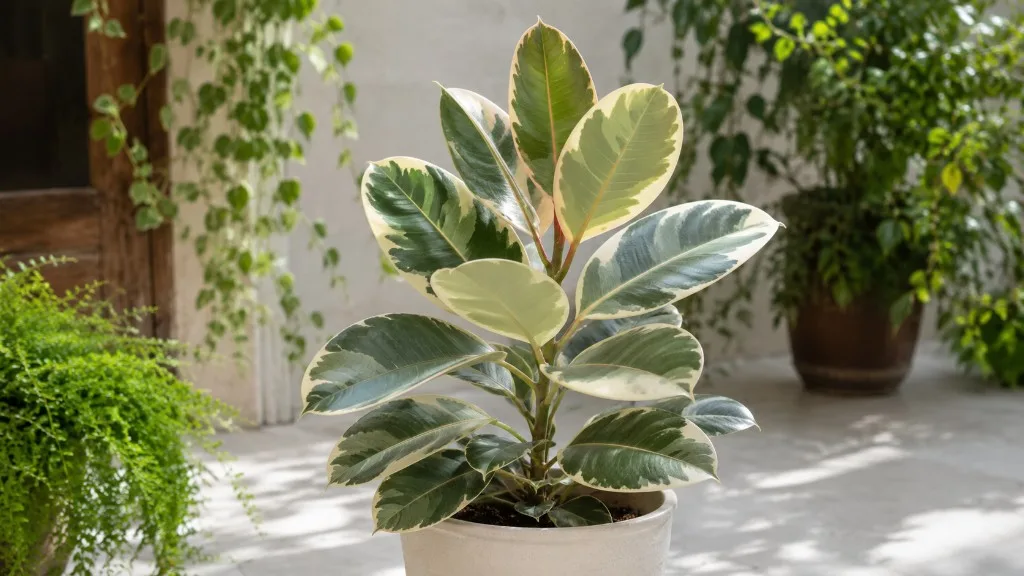
Ficus Tineke fertilizer decisions are simpler than the internet makes them sound - and more consequential than most growers realize. Ficus elastica ‘Tineke’, the variegated rubber plant with cream-margined leaves and pink-tinged new growth, is a moderate feeder that rewards conservative, seasonal feeding far more than aggressive year-round doses. Feed too much, too often, or at full label strength, and you get brown leaf margins, white salt crust on the soil, sudden leaf drop, and variegation that fades toward plain green. Feed correctly - a balanced diluted liquid fertilizer at half strength, once a month during the active growing season, with a complete winter pause - and the plant pushes out firm new leaves with stable color and sturdy stems.
The practical goal for most home growers is straightforward: use a balanced water-soluble fertilizer at half the label strength, apply it monthly from spring through early fall while the plant is actively growing, and pause entirely in late fall and winter. Water onto moist soil, never onto dry roots. Because Tineke’s variegated tissue carries less chlorophyll than all-green rubber plant leaves, it cannot metabolize heavy nitrogen the way a solid-green Ficus elastica might - lighter feeding protects both the roots and the color pattern you bought the plant for.
This guide covers when to fertilize, how much to use, which products work best, how to read deficiency versus burn, and the mistakes that cause more damage than skipping a month ever would.
Why Fertilizer Matters for Ficus Tineke
Ficus Tineke is a slow-to-moderate grower indoors, typically reaching 60 cm to 2.5 m tall over several years depending on light, pot size, and pruning. Even at that pace, the plant continuously builds new leaves, stems, and roots, pulling nitrogen, phosphorus, potassium, and trace elements out of the potting mix. Watering leaches some of those nutrients; root growth consumes others. Fertilizer replaces what the plant uses - but only up to the point its roots can absorb without salt damage.
The Missouri Botanical Garden notes that rubber plants (Ficus elastica) benefit from regular feeding during the growing season when grown as houseplants, using a balanced fertilizer applied according to label directions. Tineke follows the same family pattern: moderate feeding during active growth in containers, not heavy doses year-round. Think of feeding as maintenance for a healthy, actively growing plant - not a rescue tool for a Tineke that is pale because it sits in too little light or struggles with inconsistent watering. Fix light and water first, then add nutrients on a conservative schedule.
Variegation adds sensitivity. The cream and pink zones contain less chlorophyll, so the plant photosynthesizes less per leaf area than an all-green rubber plant. Aggressive feeding does not compensate for low light - it builds salts the roots cannot process, which is why variegated cultivars show fertilizer burn on leaf margins before the green center does.
When to Fertilize Ficus Tineke: Active Growth vs Rest
Timing is the first decision, and it follows the plant’s metabolism more than the calendar on your wall. Feed when Ficus Tineke is actively producing new leaves and extending stems, and stop when growth slows sharply. Indoors, that rhythm tracks warm weather, long days, and bright light. Most homes still see a noticeable slowdown in late fall and winter even with heating, because day length drops and light intensity falls through windows.
A Tineke kept in a heated room through December often retains its leaves and looks “alive,” which tricks growers into feeding on a summer schedule all year. In practice, lower light and shorter days reduce new shoot production even when old foliage stays upright. Unused nutrients then accumulate as soluble salts while roots absorb water more slowly - a common path to brown tips, margin necrosis on cream zones, and stunted spring growth.
Spring and Summer Feeding Window
Start feeding when you see fresh growth at stem tips - new leaves unfurling with the characteristic cream margins and pink sheath, side branches filling in, and roots visibly active if you gently check the drainage hole or slip the plant from its pot. In temperate climates, that usually means mid-spring through early fall, roughly April through September depending on your latitude, window exposure, and whether the plant sits near supplemental grow lights.
Clemson Extension recommends fertilizing with a water-soluble houseplant fertilizer every two weeks during active spring and summer growth - at half strength on a monthly schedule, that guidance translates to a conservative feed that protects variegated leaves from salt buildup. For most container Tineke plants, a half-strength balanced liquid feed once a month during this window is the safest default. Plants in very bright light with fast new leaf production may tolerate feeding every three to four weeks at half strength, but monthly is enough for the majority of indoor setups.
During this active window, watch the plant rather than the calendar. If new leaves are emerging steadily with good variegation and firm texture, the timing is right. If the plant is static - no new growth for weeks despite adequate light and water - solve those variables before adding food. Fertilizer on a plant that is not growing is wasted at best and harmful at worst.
| Month (temperate climate) | Growth phase | Feeding guidance |
|---|---|---|
| March–April | Waking up, new shoots | Start half-strength liquid if active growth visible |
| May–August | Peak foliage production | Monthly half-strength balanced liquid |
| September | Slowing slightly | Final light feed if still growing, or taper off |
| October | Wind-down | Stop feeding unless strong supplemental light |
| November–February | Low growth indoors | No fertilizer for typical setups |
The table is a framework, not a law. A Tineke in a bright east window in July may dry its pot every seven to ten days and use nutrients at a different rate than one in a north-facing room. The signal is new tissue with stable variegation, not a fixed date.
Fall Taper and Winter Pause
Taper feeding in early to mid-fall as day length drops and night temperatures cool near windows. One practical approach: give a final half-strength feed in early fall if you still see new growth, then stop entirely from late fall through winter - typically November through February for most indoor setups. Most Ficus Tineke plants do fine with no fertilizer during this rest period, especially in cooler rooms or north-facing windows.
Winter rest is not full dormancy like a deciduous tree losing all its leaves, but metabolic demand drops sharply. University of Maryland Extension notes that excessive or frequent fertilizer use is a primary cause of high soluble salts in indoor plants, with symptoms including brown leaf tips and marginal necrosis (University of Maryland Extension - Fertilizer Toxicity). Winter feeding on a plant that is not using nutrients is an easy way to create exactly that problem on a variegated cultivar whose cream margins show damage first.
Exception: if you grow under strong supplemental grow lights and the plant keeps producing new shoots all winter, you can feed lightly - still at half strength - but extend the interval to six to eight weeks and watch closely for salt crust. Even then, skipping winter feeds is safer than forcing growth with nutrients the roots cannot process. Resume normal monthly feeding only when you see clear new growth in spring, not simply because the calendar says March.
Best Fertilizer Type for Ficus Tineke
The best ficus tineke fertilizer for most homes is a complete, water-soluble, balanced houseplant formula with nitrogen adequate for leafy growth, phosphorus at moderate levels for root function, and potassium for overall vigor and stress tolerance. Micronutrients on the label - iron, magnesium, manganese - matter because pale new growth on otherwise well-watered plants sometimes traces to trace-element gaps rather than macronutrient hunger.
Avoid shopping by the word “rubber plant” on the bottle unless you already trust the brand’s dosing guidance. A standard balanced indoor formula used conservatively outperforms most specialty products applied at label strength. Tineke does not need bloom boosters, fruit formulas, or high-phosphorus products - it is grown for foliage, not flowers, and rarely blooms indoors anyway.
Balanced Liquid Formulas and NPK Ratios
A 10-10-10 or 20-20-20 water-soluble fertilizer diluted to half strength is the default recommendation across horticultural sources for Ficus Tineke and rubber plants generally. Equal ratios keep feeding simple when your main goal is steady foliage with stable variegation, not flowers or fruit.
Some growers prefer a slightly nitrogen-leaning ratio such as 3-1-2, which supports leaf expansion without excess phosphorus. Skip high-phosphorus “bloom boosters” - Tineke does not bloom indoors, and excess phosphorus adds salts without benefit while increasing burn risk on variegated margins. Liquid formulas win for control: mix at half the label strength, apply to moist soil until a little water drains, and discard saucer runoff. Can you use 10-10-10 on Ficus Tineke? Yes - at half strength, monthly during active growth, on moist soil.
Organic, Slow-Release, and What to Skip
Organic liquids - fish emulsion, compost tea, seaweed extract - work at half strength or weaker. Slow-release granules at Ficus Tineke repotting guide supply baseline nutrition for months; skip liquid feeding for two to three months if slow-release is already in the mix. Skip foliar feeding, fertilizer-pesticide combos, and fertilizer spikes in small pots - liquid half-strength feeding is the most predictable approach for Tineke.
Pet note: The ASPCA lists rubber plant (Ficus elastica) as toxic to cats and dogs, with ingestion causing oral and gastrointestinal irritation (ASPCA - Rubber Plant). Concentrated fertilizer solution and crusty soil are not safe for pets to ingest either. Keep plants, runoff, and stored fertilizer out of reach.
How Much Fertilizer to Use on Ficus Tineke
If you remember one number, make it half strength - never full label strength on a container-grown Ficus Tineke unless you have experience leaching salts regularly and the plant is in very bright light with fast, sustained growth.
Tineke sits in the moderate feeder category - more demanding than a snake plant, less salt-tolerant than a heavy outdoor feeder, but vulnerable in small pots. Cut the label rate to one-half; use quarter strength if you have a history of tip burn or the plant sits in moderate light. If the label says “1 teaspoon per litre,” use half a teaspoon per litre. Mix fresh each time. A 15-cm pot may need 300–500 ml of solution; a 25-cm pot may need 750 ml to 1 litre. Apply slowly around the soil surface until water runs from drainage holes, then empty the saucer. In hard-water regions, flush pots every six to eight weeks during the feeding season to prevent mineral and salt buildup.
How Often to Fertilize Ficus Tineke
For most indoor Ficus Tineke plants, once a month at half strength during spring and summer is the right frequency. That schedule gives the plant a steady supply of nutrients without overwhelming the root zone between applications. Here is how the frequency breaks down by situation:
- Standard indoor Tineke in Ficus Tineke light guide: Half-strength balanced liquid, once monthly, April through September.
- Tineke in medium light with slow growth: Half-strength balanced liquid, every six to eight weeks during active growth, or skip if no new leaves appear.
- Tineke in very bright light with fast new leaf production: Half-strength balanced liquid, every three to four weeks, watching closely for salt crust.
- Tineke after repotting with fresh mix: No liquid fertilizer for four to six weeks; fresh mix usually contains enough baseline nutrition.
- Tineke in fall and winter: No fertilizer for typical indoor setups without strong supplemental grow lights.
- Tineke showing stress - leaf drop, dry soil, recent move: No fertilizer until the plant stabilizes and pushes new growth.
If you miss a month during summer, do not double the next dose. Resume at half strength on the normal schedule. Tineke tolerates a skipped feed far better than a doubled one.
Step-by-Step: How to Feed Ficus Tineke Safely
Feeding Ficus Tineke is a short routine, but order matters - especially applying fertilizer to dry soil, which is how most burn problems start. Confirm you are in the active growing season with visible new growth. Check soil moisture: if the pot is dry, water with plain water first, wait thirty minutes, then proceed. Mix fertilizer at half strength in room-temperature water. Apply evenly across the soil surface until water runs from drainage holes. Discard saucer water within thirty minutes and note the date to prevent accidental double-feeding.
Pre-Feed Checks and the Moist-Soil Rule
Before every feed, run through this quick checklist in order:
Soil moisture: Is the mix moist below the surface? If dry, plain water first. The moist-soil rule is non-negotiable for ficus family plants.
Salt crust: Is there white crystalline buildup on the soil surface or pot rim? If yes, skip the feed and flush the pot with plain water instead. Resume feeding only after the crust is gone and the plant shows healthy new growth.
New growth signal: Are leaves actively unfurling or stems extending? No new growth for weeks means solve light and water before feeding.
Stress signals: Is the plant dropping leaves, recently repotted, or recently moved? Hold off until it stabilizes.
Season: Is it late fall or winter with no supplemental grow lights? Skip feeding.
Last feed date: Has it been at least three to four weeks since the last application? If not, wait.
This checklist takes thirty seconds and prevents the majority of fertilizer problems on variegated rubber plants. The moist-soil rule alone eliminates more root burn than any product upgrade ever will.
Signs Your Ficus Tineke Needs More Nutrition
Under-fertilizing is less common than over-fertilizing on Ficus Tineke, but it happens - especially on plants that have been in the same pot for two or more years without repotting or feeding, or on plants in very bright light that outpace their soil’s nutrient supply.
Pale new leaves with reduced cream variegation are the most reliable early signal - but confirm bright indirect light first, since pale stretched growth in a dim corner is a light problem, not hunger. Slow growth despite good conditions may indicate nutrient depletion in old, compacted soil; repotting into fresh mix often solves this more cleanly than escalating fertilizer. Smaller new leaves than older ones can suggest depleted nitrogen, but root-bound plants need fresh soil, not more feed. Uniform yellowing on older leaves while new growth looks normal is often natural senescence. If light, water, and pests check out and new growth stays pale during the active season, try one half-strength monthly feed and reassess after six to eight weeks.
Signs of Over-Fertilizing and Salt Buildup
Over-fertilizing is the dominant fertilizer mistake on Ficus Tineke, and variegated leaves show damage before all-green ones would. Watch for these signals:
- Brown or crispy margins on cream variegation, especially on newer leaves, while the green center still looks relatively healthy.
- White or yellowish crust on the soil surface, pot rim, or inside the drainage holes - classic soluble salt accumulation.
- Sudden leaf drop not explained by a recent move, cold draft, or watering change - multiple leaves yellowing and falling within days.
- Leaf tip burn on older leaves that previously looked fine, often appearing shortly after a feed.
- Chalky or necrotic patches on cream zones that spread inward from margins.
- Darkening green zones with loss of cream variegation after aggressive feeding - excess nitrogen can push reversion toward solid green.
- Sour or musty smell from the pot, indicating salt stress combined with poor drainage or root damage.
- Stunted new growth that emerges already damaged at the edges.
University of Maryland Extension describes fertilizer toxicity in indoor plants as brown leaf tips, marginal leaf scorch, and reduced growth caused by high soluble salts in the root zone (University of Maryland Extension - Fertilizer Toxicity). On Tineke, the cream tissue is the canary - it shows salt and burn damage first because it has less metabolic buffer than the green zones.
If you see any combination of salt crust and margin burn, stop feeding immediately and move to the flushing protocol below. Do not attempt to “balance” burn with more water-soluble feed.
How to Flush Ficus Tineke After Over-Feeding
Flushing leaches excess salts from the root zone and is the primary recovery tool when you have over-fed or see salt buildup. Here is the step-by-step process:
Step 1: Stop all fertilizer for at least four to six weeks. Step 2: Water deeply with plain water - two to three times the pot’s volume poured slowly until water runs freely from drainage holes. Step 3: Repeat the flush two to three days later to pull deeper salts out of the mix. Step 4: Empty the saucer after every flush. Step 5: Keep the plant in stable bright indirect light; avoid repotting during recovery unless soil is clearly degraded. Step 6: Wait for new growth with clean margins before resuming any feeding - typically four to eight weeks. Step 7: Resume at half strength on the monthly schedule, with plain-water flushes every six to eight weeks to prevent recurrence. Badly burned leaves will not heal; recovery means new clean growth. If leaf drop continues after two flushes and four weeks of rest, check roots for rot and consider repotting into fresh mix after the flush sequence.
Seasonal and Situational Adjustments
The monthly half-strength schedule is a baseline. Wait until the second or third new leaf of spring is expanding before resuming fertilizer - roots ramp up behind top growth. Taper in late summer: extend to six weeks or stop if growth slows. Skip entirely in dim winter rooms unless strong grow lights maintain summer-level photosynthesis. In bright summer windows, monthly half-strength still applies, but flush more often if salt crust appears faster.
After Repotting, Stress, and Variegation Sensitivity
After repotting: Fresh, quality potting mix usually contains enough baseline nutrition for four to six weeks. Do not liquid-feed immediately after repotting - the tender new root tips are vulnerable, and fresh mix plus fertilizer doubles the nutrient load. Resume monthly half-strength feeding only when you see active new growth, typically four to six weeks after repotting.
After stress events: Leaf drop from a move, cold draft, underwatering on Ficus Tineke episode, or pest treatment means the plant is allocating resources to survival, not growth. Hold fertilizer until new leaves emerge and the drop stabilizes. Feeding a stressed ficus is one of the fastest ways to accelerate leaf loss.
Variegation sensitivity: Tineke’s cream margins are metabolically expensive to maintain. Excess nitrogen pushes the plant toward solid green growth because all-green tissue photosynthesizes more efficiently. If you notice variegation fading after increasing fertilizer, cut back to half strength at a longer interval and ensure the plant is getting bright indirect light - variegation stability depends on both light and conservative feeding working together.
Root-bound plants: A severely root-bound Tineke in old, compacted soil may show hunger symptoms that repotting solves better than more fertilizer. If fertilizer has not helped after two months of conservative feeding, repot into fresh mix with 20% perlite before escalating doses.
Fertilizer and Other Ficus Tineke Care
Fertilizer only works when the rest of the care routine is in range. Tineke in bright indirect light uses nutrients efficiently; in dim light it uses less and accumulates salts faster relative to growth. A well-fed Tineke in too little light will stretch and lose variegation - fix light before increasing fertilizer. overwatering on Ficus Tineke impairs nutrient uptake; underwatering desiccates roots so they cannot absorb even correctly diluted fertilizer. Standard potting mix with 20% perlite drains well; repot every one to two years to reset the nutrient baseline. When light, water, and soil are aligned, monthly half-strength balanced liquid during the growing season supports steady growth without the leaf drop and margin burn that come from treating a variegated rubber plant like a heavy feeder.
Common Ficus Tineke Fertilizer Mistakes
These are the errors that cause more damage than skipping fertilizer entirely.
Feeding at full label strength. Container-grown Tineke cannot handle undiluted houseplant fertilizer rates. Half strength is the default; quarter strength is safer for cautious growers.
Feeding on dry soil. This causes immediate root burn. Always water first, wait, then apply diluted fertilizer.
Feeding through winter. Unused nutrients accumulate as salts while growth stalls. Pause from late fall through early spring.
Feeding after repotting or during stress. Fresh mix plus liquid feed, or fertilizer on a plant dropping leaves, compounds damage.
Using bloom boosters or high-phosphorus formulas. Tineke is a foliage plant. High phosphorus adds salts without benefit.
Feeding every watering. Even weak constant feeding builds salts in small pots faster than the plant uses nutrients.
Ignoring salt crust. White buildup on soil means stop feeding and flush - not another dose to “help” the plant.
Doubling up after a missed month. One skipped feed is harmless. A double dose causes burn.
Using slow-release and liquid without adjusting. Two sources of nutrients stack. Skip liquid for months after repotting into slow-release mix.
Chasing pale leaves with fertilizer when light is the problem. Stretching, pale growth in a dim corner needs more light, not more nitrogen.
Conclusion
Ficus Tineke fertilizer comes down to a short, repeatable rhythm: balanced diluted liquid at half strength, once a month during spring and summer, applied only to moist soil, with a complete pause in fall and winter. That schedule matches how a variegated rubber plant actually grows indoors - moderate demand, high sensitivity to salt, and variegation that shows damage long before an all-green houseplant would.
Start with a 10-10-10 or 20-20-20 water-soluble formula cut to half the label rate. Feed only when you see active new growth. Flush the pot with plain water every six to eight weeks during the feeding season to keep salts from building. If cream margins brown, salt crust appears, or leaves drop suddenly, stop feeding, flush twice, and wait for clean new growth before resuming.
Less is more with Tineke. A plant that goes one summer month without food will barely notice. A plant that gets double-strength feed on dry soil in January will remember it for months. Match food to growth, protect the variegation, and let the winter rest do its job.
When to use this page vs other Ficus Tineke guides
- Ficus Tineke overview - Start here for whole-plant context before deep-diving this topic.
- Ficus Tineke problems hub - Jump to symptom-specific fix guides when this care topic does not resolve the issue.
Related Ficus Tineke guides
- Ficus Tineke overview
- Ficus Tineke watering
- Ficus Tineke light
- Ficus Tineke soil
- Ficus Tineke propagation
- Ficus Tineke repotting
- Ficus Tineke problems
Related tool
Try the Fertilizer Dilution Calculator with ficus-tineke pre-selected to estimate needs for your setup.