Watering Ficus Tineke: Schedule, Soil Checks, and Mistakes
Watering Ficus Tineke: Schedule, Soil Checks, and Mistakes
Watering Ficus Tineke: Schedule, Soil Checks, and Mistakes
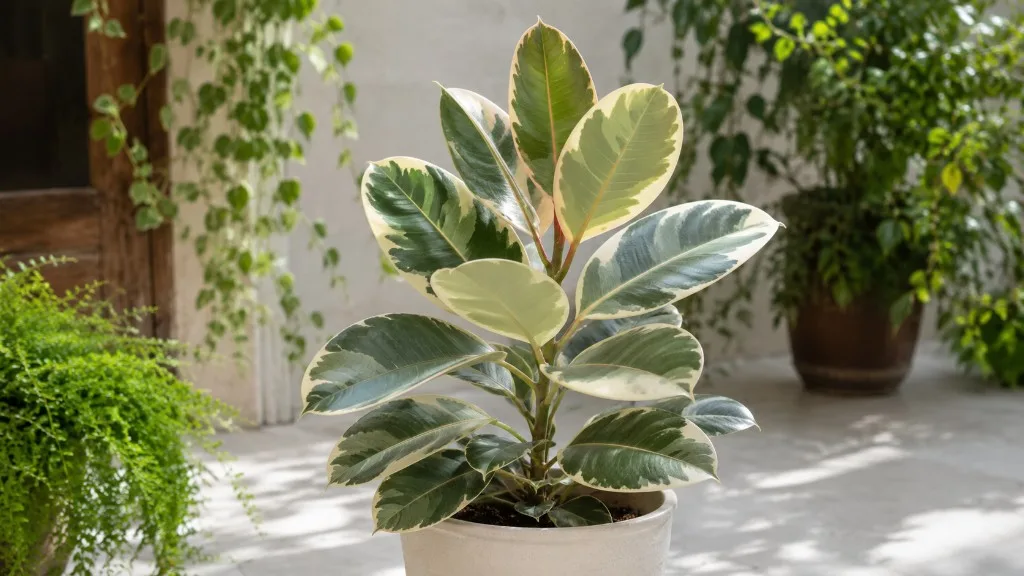
Ficus Tineke looks sturdy until you treat it like a succulent or a moisture-loving fern. The cream-and-green rubber plant wants consistent moisture in the root zone, but its roots also need air between drinks. Push too far toward soggy soil and you invite root rot on Ficus Tineke - the fastest way to lose an otherwise forgiving houseplant. The fix is not a calendar that says “water every Sunday.” The fix is a short routine: check whether the top 2 inches of soil are dry, water thoroughly when they are, let the pot drain completely, and adjust for season, pot size, and light. Ficus elastica ‘Tineke’ is a variegated cultivar of the classic rubber plant, native to warm Southeast Asian forests where rainfall is regular but roots never sit in stagnant water. Indoors, you become the weather system. This guide gives you the checks, the realistic schedules, and the mistakes that turn a glossy architectural Tineke into a yellowing, leaf-dropping mess.
Why Ficus Tineke Watering Trips Up Even Experienced Growers
Ficus Tineke sends contradictory signals on purpose - or at least it feels that way when you are standing over the pot with a watering can. Leaves can droop because the plant is genuinely dry. They can also droop because the roots are drowning and cannot move water upward. Lower leaves turn yellow after overwatering on Ficus Tineke, but they also yellow when light drops, when the plant acclimates to a new room, or when older foliage simply ages out. That overlap is why growers either water on autopilot every week or panic and underwater until the mix pulls away from the pot walls.
The core confusion comes from two popular but incomplete pieces of advice that collide in every rubber plant forum. One camp says rubber plants are drought-tolerant and should dry out completely. Another says they want evenly moist soil and steady care. Both contain partial truth. Ficus elastica stores some moisture in its thick leaves and stems, which gives it tolerance for a missed watering. But Tineke is not a cactus. It grows best when the root zone stays in a consistent moisture band - damp enough to support steady growth, dry enough at the surface between sessions that oxygen reaches the roots. Clemson University’s Home & Garden Information Center advises watering rubber plants thoroughly but letting the soil dry slightly to the touch between waterings, using a well-drained houseplant mix and a pot with proper drainage holes. (Clemson HGIC) Root rot, the guide notes, usually results from a mix that does not drain quickly or from overly frequent watering. That single sentence already explains why your decorative cachepot and your neighbour’s terracotta pot follow different rules.
Tineke adds one more variable: variegation. The pale cream panels on each leaf contain less chlorophyll than the green sections, which can make the plant slightly less efficient in low light and more sensitive to stress when watering swings wild. A plain green Ficus elastica ‘Burgundy’ may forgive a sloppy schedule more readily than a Tineke pushed into a dim corner and watered whenever someone remembers. Watering Ficus Tineke well means reading the plant’s current pot, light, and season - not memorizing one interval from a care tag.
What Consistent Moisture Means for Ficus Tineke
Consistent moisture does not mean permanently wet soil. It means the root ball cycles predictably between a full drink and a partial dry-down without long swings from mud to dust. Think of it as a rhythm: water deeply when the top 2 inches of mix feel dry, let excess drain away, then wait until that same depth dries again before the next session. The middle and lower root zone stays lightly moist for days after a thorough watering - that is the consistency Tineke prefers. What you are avoiding is the surface staying shiny-wet day after day while the lower roots suffocate, or the entire pot going bone dry for weeks until fine roots die back.
PlantTalk Colorado describes rubber plants as requiring evenly moist soil while warning that keeping the soil saturated will cause root problems. (PlantTalk Colorado) The distinction matters. Evenly moist means the root zone has access to water without being submerged. Saturated means air spaces in the mix have filled with water and stayed that way. Ficus Tineke thrives in the first condition and declines in the second.
In practice, consistent moisture for a container Tineke looks like this: after you water, the top half inch may dry within a day in bright, warm conditions. The zone from 2 inches down should still read slightly cool and faintly damp when you probe on day three or four. By the time the top 2 inches feel dry to your finger, the plant is ready for another full soak - not before. Small daily sips that keep only the surface wet break the rhythm. They create the worst of both worlds: stale moisture around the stem base, dry pockets in the center of the root ball, and a grower who thinks they are being diligent.
The amount of water per session matters less than how thoroughly you rewet the root ball when the dry-down test says go. Water until moisture moves through the full depth of the mix and exits the drainage holes. Then stop until the top 2 inches approach dry again. That cycle - full drink, partial dry-down, full drink - is the backbone of healthy Ficus Tineke watering.
The Top 2 Inches Dry Rule Explained
The most reliable trigger for watering Ficus Tineke is simple: water when the top 2 inches of soil feel dry to the touch. Two inches is roughly the depth of your second knuckle when you press a finger straight into the mix near the pot edge. At that depth you are sampling the upper root zone, not just the surface crust that dries fastest. If the soil feels cool, clings to your skin, or leaves a damp mark on your finger, wait. If it feels dry and crumbly at that depth, it is time to water - regardless of what day it is or when you watered last.
Why 2 inches specifically? Extension guidance points to the top 1–3 inches as the check zone for woody foliage plants like Ficus elastica. The surface alone lies - peat-based mixes can look pale and dry on top while remaining wet below. Two inches gets you into the zone where feeder roots actively pull water. This rule pairs naturally with consistent moisture because it prevents both extremes: you are not waiting for the entire pot to desiccate, and you are not watering while the upper root zone is still wet. The top 2 inches dry rule is a gate, not a volume instruction. When the gate opens, water fully. When it stays closed, keep the can away even if the leaves look dramatic.
Finger Test, Skewer Probe, and Pot Weight
The finger test is the fastest daily check for Ficus Tineke. Press your index finger into the mix about 2 inches deep near the pot rim, away from the main stem. Move to a second spot on the opposite side if the pot is large. Dry at depth means water. Damp at depth means wait, even if the surface looks lighter in colour. If you prefer cleaner hands, use a wooden chopstick or skewer instead. Insert it to mid-pot depth, wait thirty to sixty seconds, pull it out. Clinging soil particles and a darkened stick mean moisture remains. A clean, dry stick plus a light pot means the plant is ready.
The pot weight test is the most reliable signal once you learn your specific container. Lift the pot right after a thorough watering and notice the heft. Lift it every few days as the mix dries. A pot that feels dramatically lighter has lost much of its available moisture through the top and sides. Combine weight with the finger test when you are unsure: light pot plus dry top 2 inches equals water; heavy pot plus wilted leaves equals trouble, not thirst. Many experienced rubber plant growers trust weight more than appearance because thick Ficus Tineke leaves can look fine while the root zone is wrong.
How Often to Water Ficus Tineke Indoors
Indoor Ficus Tineke usually needs watering every 7 to 10 days during active warm growth and every 14 to 21 days during cooler, slower months - but the honest answer is always “when the top 2 inches of soil feel dry.” A Tineke in a bright east or south-facing room with warm temperatures may drink on the shorter end of the summer range. The same plant in a cooler north room during winter may sit nearly three weeks between sessions. A small nursery pot in dry, air-conditioned air can surprise you by drying in five days. The schedule is a guess until you confirm it against your home.
Check indoor Ficus Tineke at least twice a week during spring and summer growth. In winter, once a week is enough for most homes. Do not water by default on check day. Run the moisture tests first, then water or walk away. After two weeks in the same spot, you will know whether your plant behaves like a seven-day Tineke or a twelve-day Tineke. That personal baseline is more accurate than any blog chart because it accounts for your pot material, your mix, and your light.
Indoor humidity changes the interval more than beginners expect. Ficus elastica tolerates average indoor humidity, but heated winter rooms with humidity below thirty percent pull moisture from soil faster than humid summer air. Do not compensate by leaving the soil constantly wet - low humidity plus soggy mix invites fungal problems when airflow is weak. A humidifier or pebble tray that raises ambient humidity reduces leaf edge crisping without replacing the dry-down cycle in the pot.
Realistic Summer and Winter Intervals
In summer, long days and warm temperatures push Ficus Tineke into active growth. New leaves unfurl with pinkish sheaths, and water moves from soil to canopy quickly. Most indoor Tineke plants in six- to ten-inch pots need water every 7 to 10 days if they sit in Ficus Tineke light guide. Outdoor patio Tineke in warm climates - where temperatures stay above sixty-five degrees Fahrenheit at night - may need checks every five to seven days because wind and heat accelerate evaporation. Always confirm with the top 2 inches rule rather than assuming summer equals automatic weekly watering.
In winter, shorter days and cooler room temperatures slow growth. The same pot that dried in a week during August may take two to three weeks in January. Reduce frequency, not thoroughness - when you do water in winter, water fully until runoff. The most common winter mistake is continuing a summer weekly habit while the mix stays wet for days below the surface. Overwatering in winter causes more root rot cases on rubber plants than underwatering on Ficus Tineke because the plant is not using water quickly enough to dry the mix.
Should you water Ficus Tineke every week on autopilot? Only if your checks consistently show dry top 2 inches at that interval. For many indoor growers, weekly checks are smart while weekly watering is not. Use the calendar to remind yourself to probe the soil, not to pour water unconditionally.
Seasonal Watering Adjustments for Ficus Tineke
Ficus Tineke tracks season through light, temperature, and growth speed more closely than through the calendar date. In spring, as daylight lengthens, increase check frequency - a plant that needed water every fourteen days in February may move to every ten days by April, still gated by the top 2 inches dry test. In summer, confirm drainage before heat waves and remember that midday wilting that resolves by evening may be heat stress, not drought. In fall and winter, stretch intervals as evaporation drops; overwatering becomes the bigger risk when the same weekly habit leaves soil wet for days below the surface.
Active Growth vs Cool-Weather Slowdown
During active growth, the pot dries on a steady rhythm and consistent moisture pays off in clean cream-and-green patterning. Underwatering now produces smaller new leaves and brown crisping on pale sections. During cool-weather slowdown, roots absorb water more slowly - the top 2 inches dry rule prevents adding water the plant cannot use. A common error is flooding the pot after one wilted leaf from a draft or relocation while the root zone is still saturated. Fix the environmental cause before rewriting the watering schedule.
How to Water Ficus Tineke the Right Way
Technique matters as much as timing for Ficus Tineke. When the top 2 inches are dry, water slowly and evenly across the soil surface until water runs freely from the drainage holes. A rush of water often channels down the inside wall of the pot and out the bottom while the center of the root ball stays dry - especially in peat mixes that have dried slightly and repel water. If water runs through too quickly, pause, let the mix absorb for five minutes, then water again until the full depth wets.
Water at the base of the plant, directing flow onto soil rather than over the crown. Rubber plants dislike stale moisture around the stem base, and wet leaf axils in a crowded cluster invite fungal spotting on variegated panels. A narrow-spout watering can gives better control than a wide rose head that splashes foliage.
Always empty the saucer within thirty minutes of watering. PlantTalk Colorado explicitly warns that excess water in saucers or decorative outer pots leaves the plant sitting in water, which causes root problems alongside leaf drop. (PlantTalk Colorado) If you use a cachepot without drainage, remove the inner nursery pot to water at the sink, let it drain completely, then return it. Never let the inner pot sit in accumulated runoff.
Clemson HGIC adds that rubber plants should be watered thoroughly with proper drainage, and excess saucer water should be emptied after each session. (Clemson HGIC) If the mix has shrunk from the pot walls and water races down the gap, bottom-water in a tub for twenty to thirty minutes, then drain fully.
Pot Size, Soil Mix, and Drainage as Hidden Watering Factors
Your watering schedule is really a dry-down schedule, and pot size plus soil composition control how fast the mix dries. A four-inch nursery Tineke dries faster than a ten-inch specimen in the same room. Terracotta breathes and pulls moisture through its walls; glazed ceramic and plastic retain it longer. A chunky mix with twenty to thirty percent perlite dries faster than a heavy peat blend that compacts over time. You can follow the top 2 inches rule perfectly and still fail if the pot has no drainage holes or if the soil stays waterlogged for structural reasons.
Ficus Tineke prefers a well-drained houseplant mix - standard indoor potting soil amended with perlite or bark so water moves through while some moisture remains in the root zone. Clemson HGIC recommends a well-drained houseplant mix for rubber plants and ties root rot directly to mixes that do not drain quickly. (Clemson HGIC) If your Tineke takes more than three weeks to dry 2 inches down in summer despite bright light, suspect compacted soil or an oversized pot before you blame the plant.
Drainage holes are non-negotiable for consistent moisture management. Without them, “water when top 2 inches dry” becomes meaningless because the bottom of the root zone never truly dries and never truly breathes. A layer of pebbles at the bottom of a pot does not fix poor drainage - it reduces usable soil volume and can raise the water table in the root zone. Proper mix and holes matter more than pot geometry tricks.
When a New or Oversized Pot Slows Dry-Down
Ficus Tineke repotting guide changes watering immediately, often more than season does. After moving Ficus Tineke into a larger container, expect slower dry-down until roots grow into the fresh mix. Many growers overwater freshly repotted rubber plants because they keep the old seven-day schedule while the new volume stays wet for twelve or fourteen days. After repotting, check moisture every few days but water less often until you see new growth confirming root activity.
An oversized pot is a chronic overwatering trap. Extra soil holds extra water without extra roots to absorb it. The top 2 inches may dry on schedule while the bottom stays soggy for weeks - a classic root rot setup. Ficus Tineke should move up only one pot size at a time, typically when roots circle the bottom or emerge from drainage holes. If you inherited a Tineke in a pot that looks too large for the plant, lean heavily on moisture checks and consider repotting into a tighter fit when conditions are warm and the plant is stable.
Light, Temperature, and Humidity Change How Fast Soil Dries
Watering Ficus Tineke without considering light is like setting a timer without knowing what room the plant lives in. Bright indirect light drives photosynthesis and transpiration. A Tineke three feet from a south-facing window filtered by sheer curtains uses water faster than the same cultivar across a dim hallway. Variegated leaves amplify the relationship because pale sections can scorch in harsh direct sun - forcing you to pull the plant back - which then reduces water use. The watering schedule follows the actual placement, not the placement you wish you had.
Temperature works the same way. Rubber plants prefer warm indoor conditions - PlantTalk Colorado cites daytime temperatures around eighty degrees Fahrenheit and nighttime above sixty-five as ideal. (PlantTalk Colorado) Warm rooms accelerate dry-down. Cool drafts from AC vents or winter windows slow root activity and extend wet periods even when leaves look fine. Do not water a cold, shocked plant on the old summer schedule after you move it beside a chilly window.
Humidity affects leaf health more than soil dry-down, but the two connect. Dry air increases transpiration from broad Tineke leaves, which can pull soil moisture slightly faster. Misting leaves is a poor substitute for proper watering and can spot pale variegation. If humidity is chronically low, address the air around the plant while keeping the pot on the top 2 inches dry cycle. Pebble trays work when the pot sits above the water line, not in it - otherwise you recreate the saucer problem at the bottom of the pot.
Signs You Are Overwatering Ficus Tineke
Overwatering is the silent killer of Ficus Tineke because the plant looks thirsty while the roots are failing. Watch for these patterns together, not in isolation. Yellow leaves starting lower on the stem and spreading upward are the classic signal - a cluster plus wet soil means pause watering immediately. Soft, mushy stems near the soil line suggest advanced trouble. Leaf drop in clusters after heavy watering often points to root damage rather than acclimation, especially when combined with sour-smelling soil or fungus gnats.
Wilting despite wet soil is the paradox that confuses beginners. If leaves droop and the top 2 inches feel damp while the pot is heavy, do not add water - damaged roots cannot transport moisture. Sour or musty soil smell near the drainage hole and fungus gnats on the surface both indicate the dry-down cycle is broken. Clemson HGIC notes that root rot on rubber plants usually results from poor drainage or overly frequent watering. (Clemson HGIC) When several signs appear together, stop watering and inspect conditions before returning to the normal cycle.
Signs Ficus Tineke Is Thirsty or Underwatered
Underwatering Ficus Tineke is usually easier to diagnose than overwatering because the soil tells the truth. Dry, lightweight pot, top 2 inches dusty and crumbly, and slight leaf droop that resolves within hours after a thorough watering point clearly to thirst. Variegated leaves may curl slightly at the edges or feel thinner before green sections show stress. Repeated drought cycles - letting the entire root ball go bone dry for weeks - damage fine roots and make the plant react badly when water finally returns, sometimes dropping leaves after a long overdue drink.
Soil pulling away from the pot walls signals prolonged dryness. When you water a shrunken root ball, water runs down the gap without wetting the center. Fix with slow top watering in passes or bottom soaking, then resume regular top 2 inches checks so the problem does not repeat.
Brown, crispy edges on pale leaf sections can indicate underwatering combined with low humidity. Confirm soil dryness before assuming humidity alone is guilty. A plant dry at the roots cannot hydrate leaf margins no matter how misted the air feels.
Slow or stunted new growth during warm bright months may mean the plant lacks consistent moisture to support leaf production. Tineke should produce periodic new leaves in good conditions. If growth stalls while pests and light are ruled out, underwatering is a reasonable suspect - but verify dry soil before increasing frequency.
One dry episode is recoverable. Chronic neglect is not. Ficus Tineke forgives a missed week more readily than a month of swampy soil because its stored leaf moisture buffers short drought - but it cannot buffer dead roots.
Root Rot Prevention for Ficus Tineke
Root rot prevention on Ficus Tineke comes down to three linked habits: let the top 2 inches dry before watering, use well-drained mix in a pot with drainage holes, and never let the plant sit in standing water. Check before you pour - two minutes of finger or skewer testing prevents weeks of rescue work. Drain fully every time, match pot size to root mass, and repot every one to two years into slightly larger containers with fresh airy mix rather than jumping three sizes. PlantTalk Colorado states that saturation causes root problems and that decorative outer pots must have excess water discarded after each watering. (PlantTalk Colorado)
Early Warning Signs Before Roots Fail
Catch trouble early and Ficus Tineke often recovers without a full repot. Persistent fungus gnats, soil that stays dark and cool at the surface more than four days after watering, and slightly soft lower stems are pre-rot warnings. If you notice these signs, skip the next scheduled watering even if the top inch looks dry - often the zone below 2 inches is still wet. Wait until the full top 2 inches are dry and the pot weight drops before returning to normal.
Recovering Ficus Tineke from Overwatering and Root Damage
If overwatering has already happened, speed matters. Stop watering immediately and move the plant to bright indirect light with good airflow - not harsh sun that adds stress. Gently slide the root ball from the pot and inspect roots. Healthy rubber plant roots are firm and white or tan. Mushy, brown, or foul-smelling roots are rotted and need trimming with clean, sharp shears. Remove all soft tissue even if it means reducing the root mass significantly.
Repot into fresh, well-drained mix in a clean pot with drainage holes. Choose a pot sized to the remaining root ball, not the original oversized container. Water lightly once to settle mix around roots - just enough to moisten without saturating - then wait until the top 2 inches dry before the next full soak. Do not fertilize during recovery. New growth is your signal that roots are functioning again.
Severe root rot on a large Ficus Tineke may not be fully reversible. A young plant with mostly healthy roots after trim usually rebounds within weeks to months. After recovery, rebuild the top 2 inches dry routine slowly - many rescued plants get overwatered again out of guilt.
Common Ficus Tineke Watering Mistakes and Quick Fixes
The most damaging habits repeat across almost every struggling Tineke: calendar watering without soil checks, daily sips that keep only the surface wet, leaving water in the saucer or cachepot, repotting into too large a pot, watering after leaf drop without checking soil, and assuming wilting always means dry soil. The fix for all of them is the same habit chain: check top 2 inches → water deeply if dry → drain completely → adjust by season and pot weight. Use the calendar to remind yourself to check, not to pour unconditionally.
Conclusion
Watering Ficus Tineke well is not about memorizing whether Tuesday or Sunday is “water day.” It is about maintaining consistent moisture in the root zone while letting the top 2 inches of soil dry between thorough, fully drained soaks. That rhythm - check, soak, drain, wait - protects the firm roots and glossy variegated leaves that make Tineke worth the space in a bright room. Season, pot size, light, and mix change how fast the cycle spins, but the gate stays the same: dry at two inches, then water; damp at two inches, then wait.
Root rot is preventable for most indoor Tineke plants when drainage is real, saucers stay empty, and soil checks beat calendar habits. If you are unsure today, skip the pour and probe the pot instead. A Ficus Tineke that stays slightly too dry for one week forgives you. One that stays too wet for one week may not. Trust the top 2 inches, drain every session, and let the plant tell you the schedule through weight and soil - not the other way around.
When to use this page vs other Ficus Tineke guides
- Ficus Tineke overview - Start here for whole-plant context before deep-diving this topic.
- Ficus Tineke problems hub - Jump to symptom-specific fix guides when this care topic does not resolve the issue.
- Overwatering on Ficus Tineke - Escalate here when watering adjustments are not enough.
- Underwatering on Ficus Tineke - Escalate here when watering adjustments are not enough.
- Root Rot on Ficus Tineke - Escalate here when watering adjustments are not enough.
Related Ficus Tineke guides
- Ficus Tineke overview
- Ficus Tineke light
- Ficus Tineke soil
- Ficus Tineke propagation
- Ficus Tineke fertilizer
- Ficus Tineke repotting
- Overwatering on Ficus Tineke
- Underwatering on Ficus Tineke
- Root Rot on Ficus Tineke
- Wilting on Ficus Tineke
- Drooping Leaves on Ficus Tineke
- Mold on Soil on Ficus Tineke
Related tool
Try the Plant Watering Calculator with ficus-tineke pre-selected to estimate needs for your setup.