Wilting on Ficus Tineke: Causes, Checks & Fixes
Quick answer
Wilting on Ficus Tineke usually means lost leaf turgor from underwatering, root failure on wet soil, cold drafts, relocation shock, or low-light variegation stress-not one generic cause. First step: lift the pot and probe the top 2 inches of mix-heavy wet soil with limp leaves means pause watering; light dry soil with slightly curled leaves means soak thoroughly.
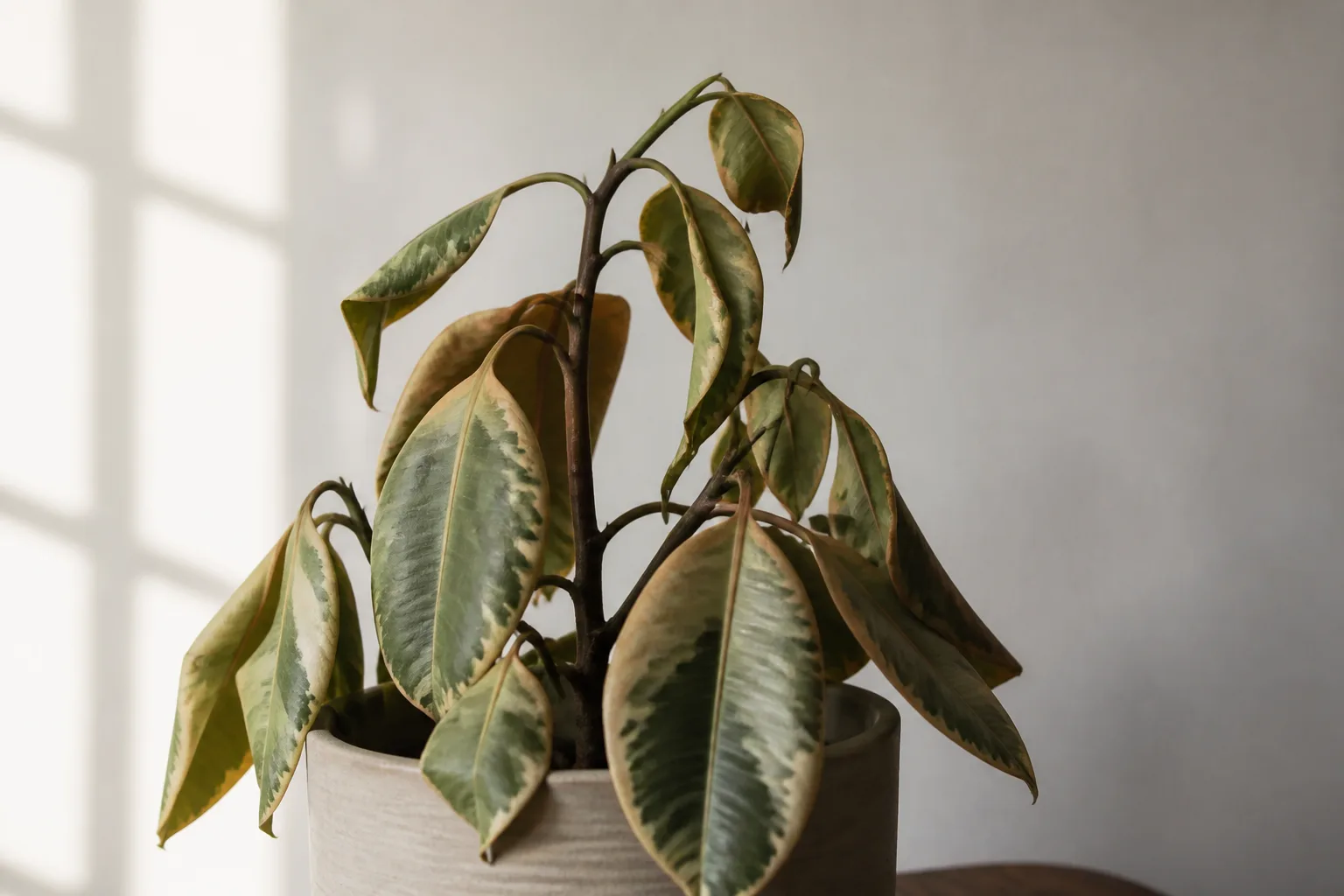
Wilting on Ficus Tineke: Causes, Checks & Fixes
This guide covers wilting on Ficus Tineke. See also the general Wilting guide, watering, and light pages for this plant.
Wilting on Ficus Tineke: Causes, Checks & Fixes
Quick answer
Wilting on Ficus Tineke (Ficus elastica ‘Tineke’) is lost turgor-thick variegated leaves and stems hang limp because water is not reaching leaf cells at the rate the plant loses it. On rubber plants the same limp look can mean opposite problems: a dry root ball that needs a soak, or damaged roots sitting in wet mix that cannot absorb water even when soil feels damp.
First step: lift the pot and probe the top 2 inches (5 cm) of mix near the rim. A heavy wet pot with limp leaves means stop watering and suspect root-zone failure-not thirst. A light dry pot with slightly curled but still firm leaves means water thoroughly until a little runs from the drainage hole, then empty the saucer. For the full wet-soil paradox and top-2-inch dry rule, see watering Ficus Tineke-this page walks through all wilt causes, confirmation checks, and cause-specific first fixes.
What wilting looks like on Ficus Tineke
Healthy Tineke holds glossy, thick leaves stiffly on an upright stem. Wilting breaks that architecture-the leaf blade softens, the petiole droops, and whole branches may hang. Because Ficus elastica stores some moisture in thick, leathery leaves, wilt often appears later than on thin-leaved houseplants-by the time leaves go fully limp, root stress may already be advanced.
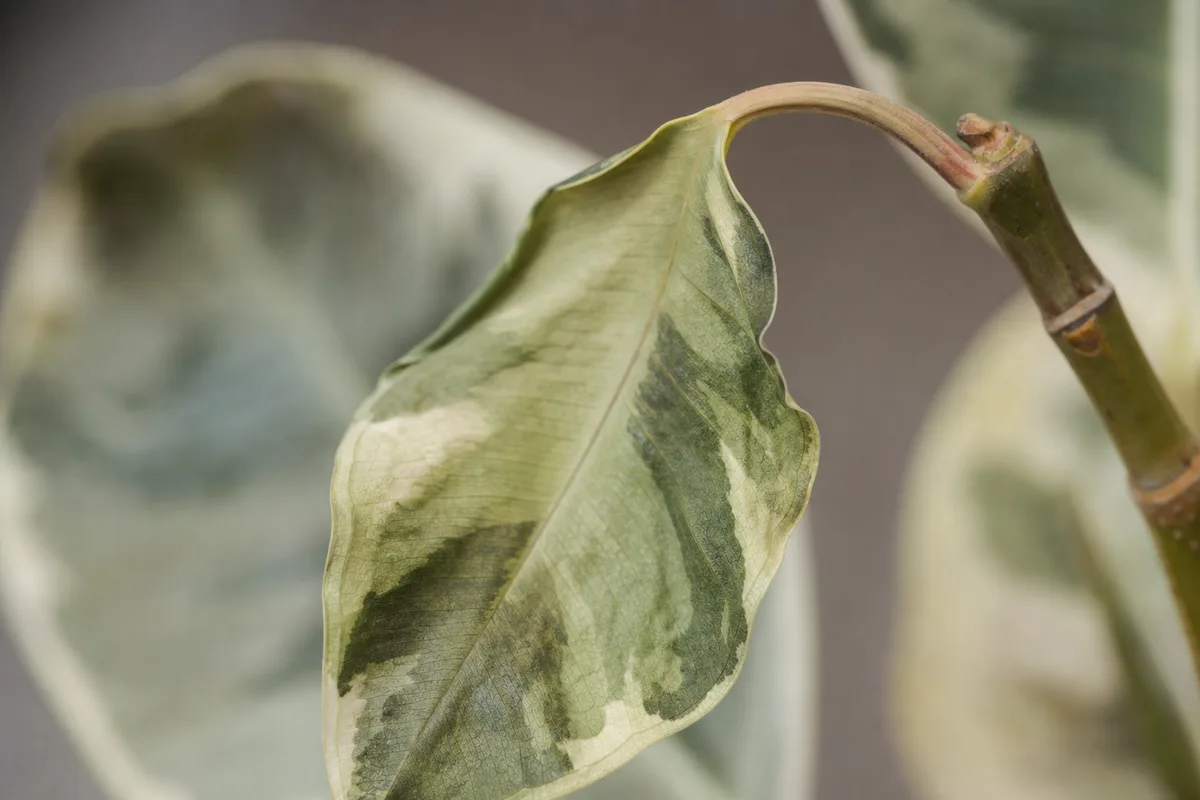
Wilting symptoms on Ficus Tineke - compare with healthy tissue on the same plant.
Limp leaves on heavy wet soil (overwatering / root failure)
The pot feels noticeably heavier than your last fully drained state. Top 2 inches stay cool and cling to a finger probe. Leaves hang limp across the canopy, often starting on lower branches with yellowing nearby. Soil may smell sour at the drainage hole. This is the wet-soil wilt paradox: the plant looks thirsty while roots are failing in saturated mix. Root rot on houseplants commonly produces wilt despite abundant moisture because decayed roots cannot transport water.
Slightly curled leaves on dry light soil (underwatering)
The pot lifts easily and sounds hollow when tapped. Top 2 inches are dry and crumbly; mix may have pulled slightly from the pot wall. Leaves droop with slight edge curl; pale cream sectors may feel thinner before green areas show obvious damage. A thorough soak often firms tissue within hours if roots are still healthy.
Rapid wilt after cold draft or window chill
Wilting or sudden leaf drop appears within days of a move beside a cold winter window, an AC vent, or a drafty door-even when soil moisture looks normal. Clemson Extension notes rubber plants should avoid temperatures below 55°F and cold drafts, which trigger leaf loss. Leaves may yellow and fall in clusters while the crown still feels firm.
Whole-plant wilt after repot or relocation
After a nursery delivery, room move, or repot, the entire canopy softens and older leaves drop. Soil moisture is often middle-of-the-road-not clearly wet or bone dry. NC State Extension notes rubber plants prefer to remain in one location and do not do well with drafts or cold-relocation shock is a known Ficus pattern. Crown tissue stays firm unless rot was already present.
Leggy mostly-green growth with limp new leaves (low light + marginal water)
Long bare stems with small mostly-green new leaves wilt easily because variegated tissue on Tineke photosynthesizes less efficiently in dim light. Chronic slow dry-down in a dark corner lets soil stay wet too long while the plant looks limp-low light and overwatering combine. New growth loses cream patterning before older leaves show classic underwatering curl.
Wilting vs drooping on Ficus Tineke
Both terms describe limp foliage, but search intent differs:
| Pattern | Best fit | Start here |
|---|---|---|
| Sudden full limpness, pot weight clearly wet or dry, possible cold snap or post-move shock | Wilting (acute turgor collapse) | This page |
| Gradual hang on otherwise firm leaves, seasonal light change, or one-sided window lean without full collapse | Drooping leaves (chronic posture change) | Drooping leaves |
| Yellow lower leaves + wet soil + limp canopy | Overwatering / root stress | Overwatering or root rot |
| Dry pot + crisp pale margins + limp leaves | Underwatering | Underwatering |
Use this wilting page when you need to separate wet-soil from dry-soil causes fast and decide whether the first action is water, pause water, warm the plant, or inspect roots.
Why Ficus Tineke wilts
Thick leaves mask root problems until wilt is advanced
Rubber plant leaves store water in succulent tissue. The canopy can look acceptable while fine roots are damaged. When turgor finally fails, growers often water a already-wet pot-worsening rot-or miss drought because only the newest leaves softened first.
Overwatering and root oxygen loss
Ficus elastica prefers soil that dries slightly between waterings in a well-drained mix with proper drainage holes. Calendar watering in cool dim winter rooms, oversized pots, or cachepots holding runoff keeps roots suffocated. Saturated mix triggers the wet-soil wilt pattern above.
Underwatering and fine root dieback
Repeated bone-dry cycles kill fine roots. The next overdue soak may produce wilt followed by leaf drop as the plant cannot absorb fast enough. Light pot plus dry top 2 inches is the tell.
Cold drafts and sub-55°F exposure
Temperature swings and cold air cause leaf loss on rubber plants independent of watering. Winter window sills and heating-season AC paths are common indoor triggers.
Relocation and repot shock
Ficus species treat moves and root disturbance as stress events. Temporary wilt after repot is expected if the crown stays firm-hold fertilizer and avoid stacking prune + repot + relocate on one day.
Low-light variegation stress
Tineke needs Ficus Tineke light guide to maintain variegation. Dim rooms slow growth, extend wet periods, and produce weak limp new foliage on stretched stems-see not enough light when leggy mostly-green growth accompanies wilt.
Pests on stressed plants
Spider mites on leaf undersides cause stippling and limp foliage in dry heated air. Webbing plus fine speckles point to pests, not water alone.
How to confirm the cause
Work through this checklist in order:
- Pot weight - Heavy and wet vs light and dry is the primary branch point for rubber plant wilt.
- Top 2-inch probe - Dry crumbly mix at depth means drought; cool clinging mix means pause watering.
- Crown firmness - Soft mushy tissue at the stem base with sour soil means escalate to root inspection, not another soak.
- Recent timeline - Move, repot, cold snap, or watering change in the last two weeks?
- Leaf pattern - Lower yellow leaves with wet soil suggest overwatering; uniform limpness on dry soil suggests thirst.
- Window and vent placement - Cold draft path within 3 feet (1 m) of the canopy?
- New growth quality - Leggy mostly-green stretch plus limp tips suggests light + moisture combo.
- Pest check - Webbing, stippling, or sticky residue on leaf undersides?
- Drainage audit - Saucer or cachepot holding water? Drainage holes blocked?
Diagnosing houseplant problems starts with checking whether wilt pairs with dry or wet soil at depth-never treat wilt as automatic thirst.
First fix for Ficus Tineke
Lift the pot, probe the top 2 inches of mix, and match one action to what you find-do not water until you know which branch applies.
| What you confirmed | First action |
|---|---|
| Heavy wet pot, damp top 2 inches, firm crown | Stop watering until top 2 inches dry; empty saucer; improve airflow. See overwatering if yellow lower leaves persist. |
| Light dry pot, dry top 2 inches, firm crown | Water thoroughly until runoff, drain completely, wait 24 hours and re-check turgor. |
| Soft crown or sour smell on wet soil | Do not water. Unpot, trim mushy roots, repot into fresh well-drained mix sized to root mass. See root rot. |
| Cold draft or recent move with middle moisture | Stabilize placement away from vents and chill; maintain bright indirect light; water only when top 2 inches dry. |
| Leggy dim growth with slow dry-down | Improve light first, then adjust watering to match slower use in the brighter spot. |
One change at a time. Ficus Tineke responds poorly when repot, prune, fertilize, and relocate stack on the same stressed week.
Step-by-step recovery by cause
Recovering from wet-soil / root-stress wilt
- Stop watering until the top 2 inches approach dry-even if leaves look limp.
- Move to bright indirect light with good air circulation; avoid harsh direct sun on a stressed root zone.
- Confirm drainage holes are open and saucers stay empty.
- If leaf drop continues after the mix dries appropriately, unpot and inspect roots-trim brown mushy tissue, repot smaller if needed.
- Resume the top 2 inches dry watering rhythm only after new growth or firm turgor on the youngest leaves.
Recovering from drought wilt
- Water slowly across the soil surface until the full root ball rewets; repeat if water channels through dry shrinkage gaps.
- Drain fully; never leave the pot in standing water.
- Wait 24–48 hours before judging-thick leaves rehydrate slower than thin foliage.
- Trim only leaves that stay collapsed and necrotic after two weeks.
Recovering from cold-draft wilt
- Move the pot away from the cold source-not into blasting heat; stable 65–80°F (18–27°C) room average is the goal.
- Avoid temperatures below 55°F on the canopy.
- Hold watering changes unless soil probes clearly dry or wet; fix environment first.
- Expect some permanent leaf loss on damaged tissue; new growth confirms recovery.
Recovering from relocation / repot shock
- Keep light and temperature stable for two to three weeks.
- Water when top 2 inches dry-do not compensate with extra water out of guilt.
- Skip fertilizer until new tip growth appears.
- Accept temporary leaf drop; worry only if the crown softens or smell turns sour.
Recovery timeline
Mild drought wilt on healthy roots often improves within hours to one day after a proper soak. Overwatering stress may take one to three weeks of corrected dry-down before turgor stabilizes-judge by stopped yellowing and new firm leaves, not old damaged panels. Cold-draft and relocation wilt commonly stabilizes in two to three weeks if environment stays stable. Advanced root rot recovery spans weeks to months and may require significant root pruning; some large specimens do not fully recover.
Damaged cream variegation on collapsed leaves rarely returns to full gloss-success is no further drop, firm crown, and healthy new patterned foliage.
Lookalike symptoms to rule out
- Yellow leaves - Often pairs with wet soil and lower-canopy loss; may precede full wilt.
- Drooping leaves - Gradual posture change without acute turgor crash; less about pot-weight paradox.
- Midday limpness that recovers by evening - Heat load exceeding root supply on a bright windowsill; not necessarily rot if soil dries normally overnight.
- Spider mite stippling - Fine dots and webbing on undersides; isolate and treat before rewriting the watering schedule.
- Normal lower-leaf senescence - One occasional old leaf yellowing on an otherwise firm plant is not wilt.
Mistakes to avoid
Do not water a wilting Tineke when the top 2 inches are already wet and the pot is heavy-that accelerates root failure. Do not assume wilt always means drought; rubber plants are famous for the wet-soil paradox. Do not fertilize, repot, and prune on the same day on a stressed plant. Do not leave the pot on a cold window sill while leaves are limp. Do not move repeatedly between rooms trying to “fix” acclimation wilt-pick one stable bright spot.
PlantTalk Colorado warns that saturated soil causes root problems and leaf drop on rubber plants-standing water in saucers is a common hidden cause.
Ficus Tineke care cross-check
Stable Tineke combines bright indirect light, top-2-inch dry watering, drainage, and stable temperatures. Variegated cultivars show stress faster than solid-green rubber plants in the same dim wet corner-align light before chasing fertilizer.
Winter slows growth; the same weekly watering habit that worked in August can waterlog roots in January. Pair moisture checks with season and light, not calendar memory. For routine rhythm detail see Ficus Tineke overview and watering guide.
How to prevent wilting next time
Check the top 2 inches of mix twice weekly in growth season; lift the pot occasionally to learn your plant’s dry weight. Empty saucers within thirty minutes of every watering. Keep the plant away from AC vents, winter glass, and frequently opened exterior doors. Match pot size to root mass-oversized containers stay wet too long. Rotate toward bright indirect light so variegated tissue keeps strength; wipe dust from cream panels monthly so light use stays efficient.
After any move or repot, wait two weeks before redesigning the entire care routine based on one limp leaf.
When to worry
Escalate immediately if the crown feels soft, soil smells sour or musty, multiple leaves drop daily despite corrected watering, or mushy roots appear on inspection. Those patterns point to advancing root rot-not a wait-and-see drought.
Low urgency: firm crown, clear wet-or-dry diagnosis, and wilt that began after a identifiable draft or move-environmental correction usually suffices.
Related Ficus Tineke problems
- Watering Ficus Tineke - top 2 inches dry rule and wet-soil wilt FAQ
- Overwatering - yellow lower leaves and heavy pot patterns
- Underwatering - dry pot and edge curl
- Root rot - soft crown and mushy roots
- Drooping leaves - gradual hang vs acute wilt
- Yellow leaves - moisture and cold overlap
- Not enough light - leggy wilt-prone growth
- Ficus Tineke overview - full care hub
Conclusion
Wilting on Ficus Tineke is diagnosable when you weigh the pot and probe soil before touching the watering can. Heavy wet soil with limp leaves means root-zone trouble-pause water. Light dry soil means soak and drain. Cold drafts and recent moves cause Ficus-style wilt without rot if the crown stays firm. Fix one variable at a time, judge recovery by new growth, and use the related guides above when one symptom overlaps another.
When to use this page vs other Ficus Tineke guides
- Ficus Tineke watering guide - Use for routine moisture checks before assuming wilting is the main issue.
- Ficus Tineke problems hub - Browse all 16 common issues on this species.
- Underwatering on Ficus Tineke - Different entry point when symptoms overlap with wilting.
- Overwatering on Ficus Tineke - Different entry point when symptoms overlap with wilting.
- Root Rot on Ficus Tineke - Different entry point when symptoms overlap with wilting.