Yellow Leaves on Ficus Tineke: Causes, Checks & Fixes
Quick answer
Yellow leaves on Ficus Tineke are a symptom, not one diagnosis. First step: probe the top 2 inches of mix and lift the pot-wet heavy soil with soft yellow lower variegated leaves points to overwatering; a light dry pot with crisp yellow edges points to drought; one fading lower leaf on an otherwise firm tree is often normal senescence.
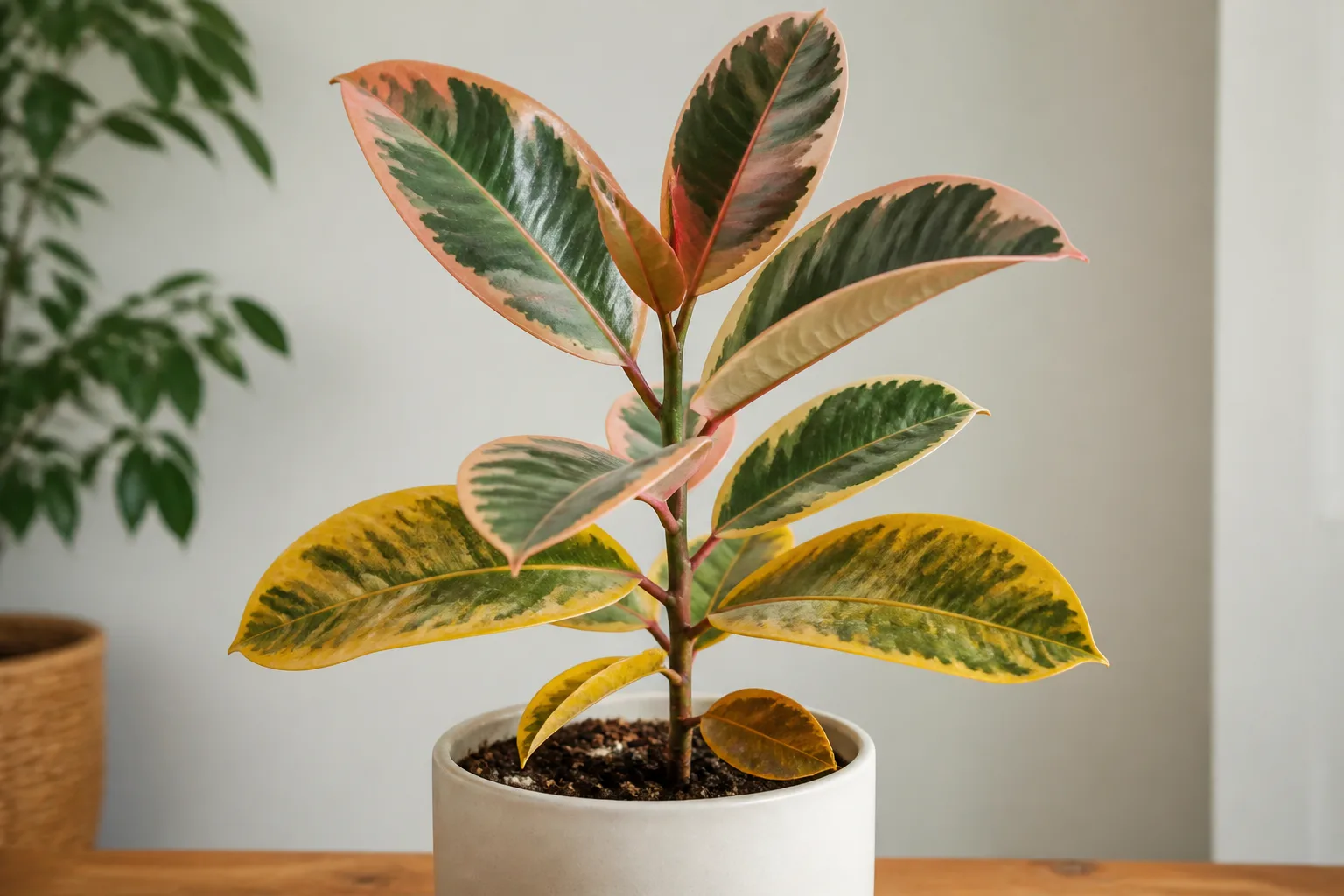
Yellow Leaves on Ficus Tineke: Causes, Checks & Fixes
This guide covers yellow leaves on Ficus Tineke. See also the general Yellow Leaves guide, watering, and light pages for this plant.
Yellow Leaves on Ficus Tineke: Causes, Checks & Fixes
Quick answer
Yellow leaves on Ficus Tineke (Ficus elastica ‘Tineke’) are a symptom, not a single diagnosis. This variegated rubber plant grows as an upright tree with thick cream-and-green leaves on a central stem-not a rosette. New growth emerges from the apical bud at the top; the oldest leaves sit lowest on the trunk and naturally age out.
First step: probe the top 2 inches (5 cm) of mix near the pot rim and lift the pot. A heavy wet pot with soft yellow lower variegated leaves points to overwatering or root stress-pause watering, do not fertilize. A light dry pot with slightly curled leaves and crisp yellow-brown edges on pale sectors points to underwatering-water thoroughly, then drain. One fading lower leaf over months on an otherwise firm tree is often normal senescence. Cold air below about 55°F (13°C), a recent move, or chronic low light on variegated foliage can also yellow leaves without wet soil.
Do not repot, fertilize, or move into harsh sun on day one. Match the first fix to what soil and placement reveal. Full species context: Ficus Tineke overview.
What yellow leaves look like on Ficus Tineke
Yellowing on Tineke follows patterns tied to variegated rubber-plant architecture-large oval leaves with cream, green, and sometimes pink zones on an upright stem with thick, leathery, glossy foliage.
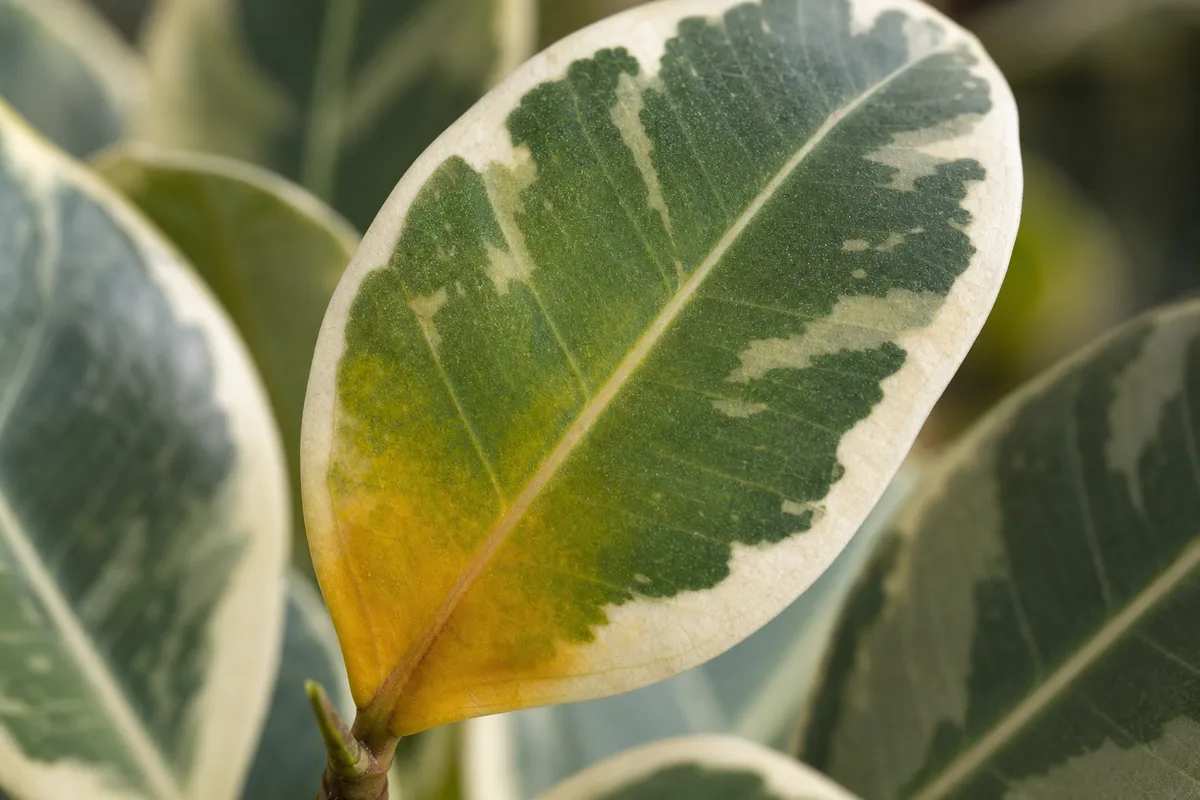
Yellow Leaves symptoms on Ficus Tineke - compare with healthy tissue on the same plant.
Overwatering and root stress (most common indoor cause):
- Lower leaves yellow first, often with soft, limp texture while mix stays damp
- Cream panels turn translucent or brown before the whole blade goes fully yellow-variegation shows stress early because pale tissue has less chlorophyll
- Pot feels heavy for days; top 2 inches stay cool and cling to a finger probe
- Wilting despite wet soil-the classic paradox when damaged roots cannot move water upward
- Sour smell, fungus gnats, or soft tissue at the stem base in advanced cases-see overwatering on Ficus Tineke and root rot
Underwatering:
- Pot lifts easily; top 2 inches are dry and crumbly
- Leaves may curl slightly at edges; pale cream sectors feel thinner
- Yellowing often appears with crisp brown margins on variegated panels, not uniform soft yellow
- A thorough soak firms tissue within hours if roots are still healthy-see underwatering on Ficus Tineke
Low light on variegated foliage:
- Upper leaves pale to yellow-green; stems stretch toward the window
- New leaves emerge mostly green with less cream and pink patterning
- Soil dries slowly in dim corners, which can compound overwatering yellowing even when you water modestly-see not enough light on Ficus Tineke
Cold draft or temperature shock:
- Rapid yellow-and-drop within days of placement beside a cold winter window, AC vent, or drafty door
- Can occur when soil moisture looks normal-temperature, not thirst, is the trigger
- Clemson Extension advises avoiding temperatures below 55°F and cold drafts on rubber plants
Post-move or acclimation stress:
- Cluster leaf drop after nursery delivery, repot, or room change
- Yellowing spreads across multiple leaves at once without clearly wet or bone-dry soil
- Crown stays firm unless rot was already present-see wilting on Ficus Tineke for the relocation overlap
Normal lower-leaf senescence:
- One or two lowest leaves fade from tip or margin to full yellow over weeks to months
- Apical new growth at the top of the stem stays green and firm; pink sheaths may still unfurl
- No sour wet soil, no rapid multi-leaf collapse, no soft crown
Ficus Tineke growth form: tree architecture, not a rosette
Understanding where leaves age prevents panic over harmless turnover.
Ficus elastica ‘Tineke’ is an upright, tree-like Moraceae fig with a single dominant stem or a few branching trunks-not a stemless rosette like a succulent or African violet. New leaves emerge from the apical meristem at the top of the stem inside a pink-tinged sheath. As the stem elongates, older leaves remain attached lower down until they senesce and drop.
That means recovery is measured by new leaves unfurling from the top, not by green growth from a central rosette. A healthy Tineke can shed one lower leaf every few months while the crown looks glossy. What is not normal: three or more leaves yellowing within two weeks, yellowing climbing the stem toward the apex, or lower yellow leaves paired with wet heavy soil and a soft stem base.
Why Ficus Tineke gets yellow leaves
Overwatering and the wilting paradox
Leaf yellowing may occur if soil stays too wet on rubber plants, and root rot usually results from mix that does not drain quickly or overly frequent watering. Tineke is especially vulnerable in cool, dim winter months when the same summer watering schedule keeps mix saturated for days. Roots lose oxygen; lower leaves yellow; growers see limp foliage and add more water-accelerating decline. For the full wet-soil workflow, see watering Ficus Tineke.
Underwatering in bright, dry rooms
Thick leaves store some moisture, but repeated drought cycles damage fine roots. A light pot, dry top 2 inches, and curled variegated leaves with crisp edges point to thirst-not the soft uniform yellow of overwatering.
Low light and variegation stress
Cream and pink zones contain less chlorophyll than green tissue. Tineke in a dim corner produces pale, yellow-green upper leaves and long bare stems while soil dries slowly-a combination that mimics overwatering. Variegated rubber plants need more light than solid green cultivars to maintain patterning; chronic dim conditions yellow foliage before a plain Ficus elastica ‘Burgundy’ would show obvious stress.
Cold drafts and sudden temperature drops
Rubber plants should avoid temperatures lower than 55°F and cold drafts. Window sills on winter nights, AC vents, and frequently opened exterior doors create microclimates that trigger rapid yellow-and-drop even when watering has not changed. NC State Extension notes rubber plants do not do well with drafts or cold.
Relocation and acclimation shock
Ficus species react to moves and environmental changes with leaf drop. A Tineke fresh from a humid greenhouse may yellow several leaves in a dry apartment while soil moisture sits in a middle range-not clearly wet or dry. Stabilize light and temperature before rewriting the watering schedule.
Normal aging of lower leaves
The lowest leaf on an upright stem is the oldest. It yellows, browns, and drops as the plant allocates resources to new apical growth-normal for some bottom leaves to turn yellow and drop on a mature Tineke with firm stems and ongoing top growth.
Lookalike symptoms to rule out
| What you see | More likely cause | Quick check |
|---|---|---|
| Soft yellow lower leaves, heavy wet pot | Overwatering / root rot | Top 2 inches damp; pot weight; root smell |
| Crisp edges, light pot, dry mix | Underwatering | Finger to 2 inches; lift pot |
| Pale stretched upper leaves, slow dry-down | Not enough light | New leaves mostly green; stem length |
| Rapid drop after window or AC move | Cold draft / relocation shock | Recent placement change |
| Limp leaves, wet soil, no yellow yet | Wilting paradox | Pause water; inspect roots |
| One lowest leaf fading slowly | Normal senescence | Apical growth green and firm |
| Brown tips only, not full yellow | Brown tips | Margin necrosis vs whole-blade yellow |
Natural cream-sector browning under chronic wet soil in dim light can overlap overwatering and low light-fix drainage and brightness together, not fertilizer.
How to confirm the cause
Work through these checks in order. One honest soil-and-weight reading beats guessing from photos.
- Top 2 inches moisture - Insert your finger or a dry skewer about 2 inches deep near the pot rim. Wet at depth with a heavy pot supports overwatering; dry crumbly mix with a light pot supports underwatering. The surface alone lies on peat-based mixes.
- Pot weight - Lift the container right after you know it was fully drained, then compare daily. Heavy plus limp yellow lower leaves means pause watering even if leaves look thirsty.
- Which leaves yellow - Lower-only soft yellow on wet soil differs from upper pale stretch on dry soil. One lowest leaf over months fits senescence.
- Variegation texture - Soft translucent cream panels on damp mix suggest root-zone failure. Crisp yellow-brown edges on pale zones with dry mix suggest drought or low humidity compounding thirst.
- Care context - Recent move, repot, winter window placement, or AC vent? Draft and shock can yellow leaves without changing your watering calendar.
- Apical growth - Firm new leaf sheath or glossy top leaves mean the plant is still functioning; widespread yellow climbing the stem with soft base tissue is escalation territory.
First fix for Ficus Tineke
Match one action to what the top 2 inches and pot weight tell you-nothing else on day one.
If soil is wet and the pot is heavy: Stop watering until the top 2 inches dry completely. Confirm drainage holes are clear and empty any saucer runoff. Move to stable Ficus Tineke light guide with good airflow-not harsh sun that adds stress. Do not fertilize, mist, or repot yet.
If soil is dry and the pot is light: Water thoroughly until a little runs from the drainage hole, then empty the saucer within thirty minutes. Wait for the top 2 inches to dry again before the next session.
If only one lower leaf is yellow on an otherwise firm tree: Snap or cut the spent leaf at the base when it is mostly yellow. Wear gloves-Ficus elastica sap is toxic to cats and dogs and can irritate skin. No watering change needed if soil rhythm and light are stable.
If yellowing followed a cold draft or move: Relocate away from the vent or window chill, keep temperatures stable, and water only when the top 2 inches dry-do not compensate with extra water.
Step-by-step recovery by cause
Overwatering / early root stress
Skip the next watering cycle even if the top inch looks dry-often the zone below 2 inches is still wet. After the top 2 inches dry, resume deep watering with full drainage. If yellowing continues through two dry-down cycles, unpot and inspect roots. Trim mushy brown tissue with clean shears, repot into fresh well-drained mix one size appropriate to the root mass, and see root rot on Ficus Tineke if the crown softens.
Underwatering
Soak slowly in passes if mix has shrunk from pot walls and water channels through gaps. Resume the top-2-inches-dry rhythm from the watering guide. Expect some lower leaves to drop after a long overdue drink-that is the plant shedding tissue it cannot support, not necessarily rot.
Low light
Move incrementally to brighter indirect light over one to two weeks if the plant lived in shade-sudden harsh south-window sun scorches cream panels. As light improves, dry-down speeds up; adjust watering to match. A grow light 12–24 inches above the canopy helps winter variegation.
Cold draft or relocation shock
Stabilize placement and temperature first. Water on the top-2-inches-dry rule only. Avoid fertilizer for several weeks. Leaf drop often slows within two to three weeks if the crown stays firm.
Normal senescence
Remove spent lower leaves when mostly yellow. No repot or schedule overhaul required if apical growth continues.
Recovery timeline
Fully yellow blades rarely re-green. They brown, drop, or stay yellow until removed. Judge success by stopped spread, firm stems, and new leaves unfurling from the top with visible cream-and-green patterning.
| Severity | What to expect |
|---|---|
| One lower leaf, stable care | Leaf drops within weeks; no further yellowing |
| Overwatering caught early | Yellowing stops after one to two dry-down cycles; new apical leaf in two to four weeks in warm growth |
| Root damage with trim and repot | Old yellow leaves drop; new growth may take four to eight weeks |
| Cold draft or move shock | Drop slows within two to three weeks after stable placement |
| Advanced rot with soft crown | May not recover-see when to worry below |
Winter corrections take longer because growth slows even after care stabilizes.
Mistakes to avoid
- Watering limp yellow leaves on an already wet pot - Classic overwatering trap on rubber plants; confirm weight first.
- Fertilizing a yellowing stressed plant - Salt buildup and forced growth on failing roots worsen yellowing; fix moisture and light first.
- Ficus Tineke repotting guide into a larger container on day one - Extra soil holds extra water without extra roots; tight fit with fresh airy mix only when roots are inspected.
- Assuming all yellow leaves need more light immediately - Move gradually; cream panels burn in unfiltered midday sun after months in shade.
- Misting instead of fixing soil - PlantTalk Colorado notes rubber plants prefer evenly moist soil but saturation causes root problems; misting does not fix wet roots.
- Ignoring sap when removing leaves - Wear gloves; keep cuttings away from pets. Rubber plant sap irritates skin and is toxic if ingested by cats or dogs.
Tineke care cross-check
Yellow leaves often mean a baseline care mismatch, not a mystery disease.
- Water: Top 2 inches dry before watering; empty saucers-details in watering Ficus Tineke
- Light: Bright indirect for most of the day; variegation fades in dim corners
- Temperature: Stable 60–80°F (15–27°C); avoid below 55°F and drafts
- Soil: Well-drained houseplant mix with perlite; no standing water in cachepots
- Season: Stretch winter intervals to 14–21 days when growth slows-continuing summer frequency in low light is a top yellow-leaves trigger
How to prevent yellow leaves next time
Check moisture twice weekly in summer, once weekly in winter-but water only when the top 2 inches dry, not on autopilot. Water rubber plants thoroughly and let soil dry slightly between waterings, with proper drainage and emptied saucers. Match pot size to root mass; oversized glazed pots extend wet cycles. Keep Tineke in bright indirect light so variegation and dry-down stay in sync. Rotate the pot a quarter turn weekly for even growth. After repotting, expect slower dry-down until roots colonize fresh mix-do not resume the old seven-day calendar blindly.
When to worry
Escalate within days if:
- Multiple leaves yellow in a cluster while soil stays wet and smells sour
- Stem base or crown feels soft-possible advancing rot
- Yellowing climbs the stem toward the apex while lower leaves drop
- Wilting persists through two full dry-down cycles after correcting watering
- No apical new growth for eight or more weeks in warm bright conditions after fixes
At that point inspect roots, trim decay, repot if needed, and read root rot on Ficus Tineke. A Tineke with a firm crown and one aging lower leaf rarely needs emergency intervention.
When to use this page vs other Ficus Tineke guides
- Ficus Tineke watering guide - Use for routine moisture checks before assuming yellow leaves is the main issue.
- Ficus Tineke problems hub - Browse all 16 common issues on this species.
- Overwatering on Ficus Tineke - Different entry point when symptoms overlap with yellow leaves.
- Underwatering on Ficus Tineke - Different entry point when symptoms overlap with yellow leaves.
- Not Enough Light on Ficus Tineke - Different entry point when symptoms overlap with yellow leaves.