Brown Tips on Ficus Tineke: Causes, Checks & Fixes
Quick answer
Brown tips on Ficus Tineke usually start on cream and pink leaf margins in dry winter air-not on the green zones first. First step: measure relative humidity at foliage height with a hygrometer; if below 40%, run a humidifier or pebble tray before you change watering or trim leaves.
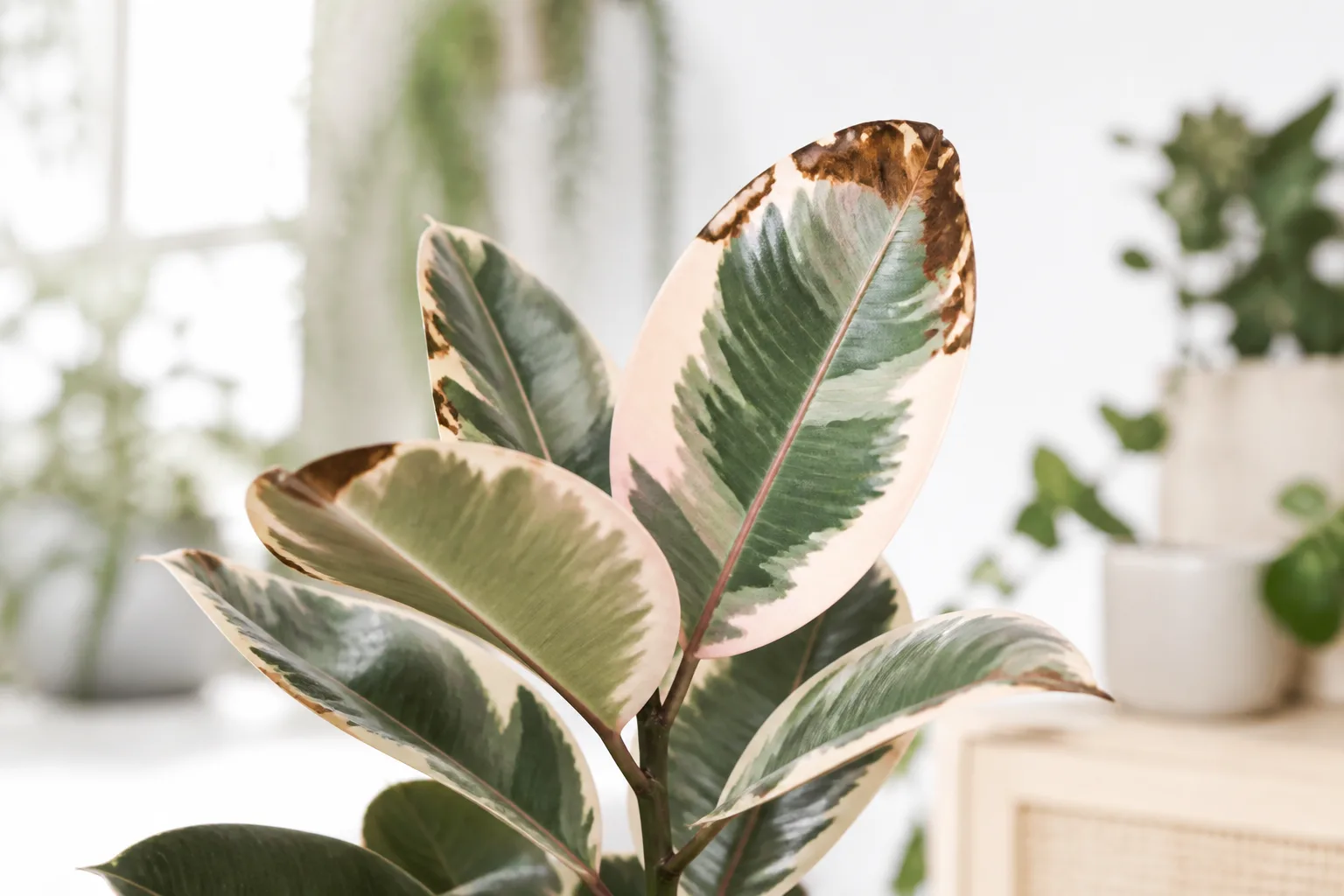
Brown Tips on Ficus Tineke: Causes, Checks & Fixes
This guide covers brown tips on Ficus Tineke. See also the general Brown Tips guide, watering, and light pages for this plant.
Brown Tips on Ficus Tineke: Causes, Checks & Fixes
Quick answer
Brown tips on Ficus Tineke (Ficus elastica ‘Tineke’) almost always start on cream and pink leaf margins, not on the green zones first. Variegated rubber plant tissue holds less chlorophyll and transpires faster at pale edges, so dry winter air, inconsistent watering, tap-water minerals, or direct sun on bleached zones all show up as crisp tan-to-brown tips and margins before the rest of the leaf collapses.
First step: measure relative humidity at foliage height with a hygrometer. If RH is below 40% and soil moisture at the top 1 to 2 inches still feels normal-not bone dry-raise ambient moisture with a humidifier nearby or a pebble tray with the pot base above the water line. Move Tineke off heat vents before you add extra water to the roots.
For whole-plant dry-air patterns with acceptable soil moisture, see low humidity on Ficus Tineke. For a light dry pot with limp leaves, see underwatering or wilting. This page owns localized tip and margin necrosis on variegated rubber plant leaves.
What brown tips look like on Ficus Tineke
Healthy Tineke leaves are thick, glossy, and splashed with cream, green, and pink-Clemson HGIC notes rubber plant foliage is often marked with yellow, cream, pink or white. Tip damage usually follows one of these patterns:
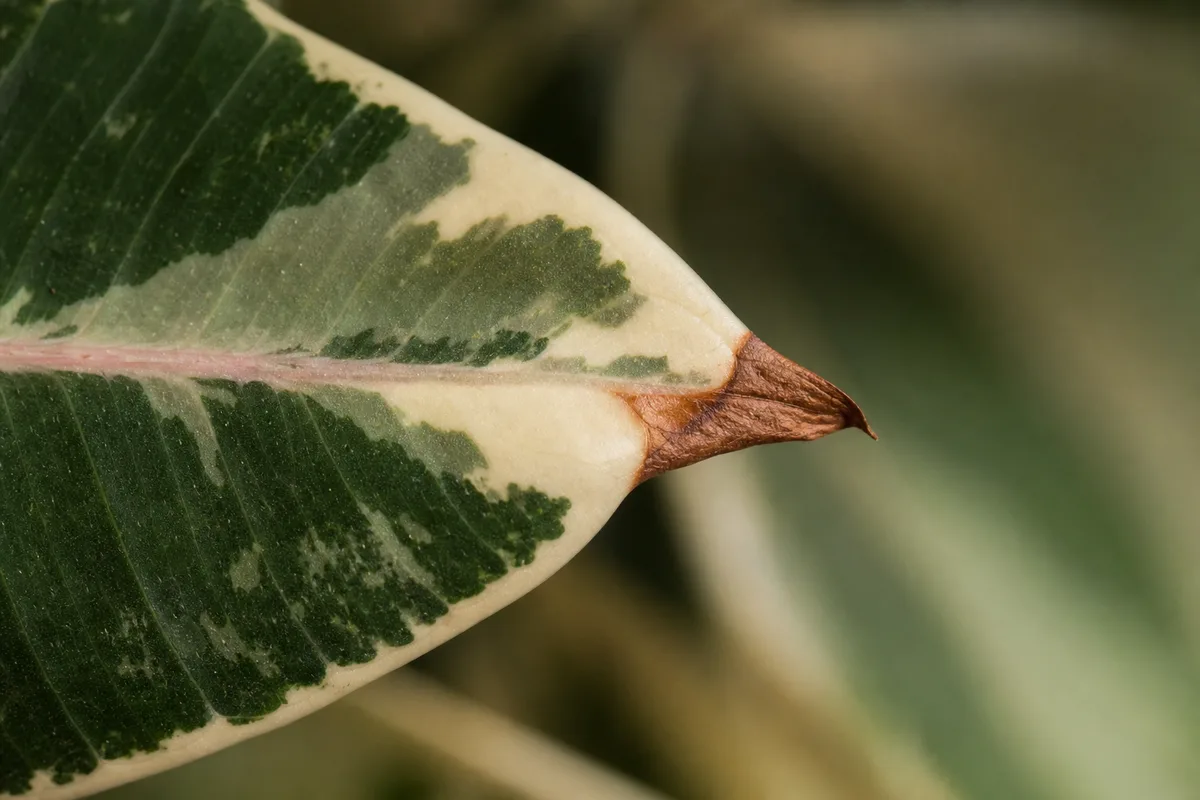
Brown Tips symptoms on Ficus Tineke - compare with healthy tissue on the same plant.
Crisp pale-margin burn (most common indoors):
- Narrow tan-to-brown band at cream or pink edges and tips while green tissue stays intact
- Papery, dry texture-not soft or waterlogged
- Often worse on leaves nearest radiators, forced-air vents, or single-pane winter windows
- Interior green zones may look fine while perimeter variegation crisps first
Sun scorch on pale zones:
- Bleached, bronze, or crispy patches on the window-facing side of leaves
- Cream and pink sectors burn before solid green areas show obvious damage
- Appears days to weeks after a move closer to unfiltered south or west glass
- May affect upper canopy leaves that receive hot afternoon rays
Salt and mineral edge burn:
- Brown margins persist even after you correct humidity and watering
- White crust on soil surface or pot rim
- Often follows heavy fertilizing or months of hard tap water
- Tips may look similar to humidity burn but do not improve when RH rises
Drought crisping:
- Very light pot; top 2 inches of mix dry and crumbly
- Entire leaf may curl slightly inward before margins brown
- Lower leaves often show stress first on an upright rubber plant
Unlike pest damage, clean tip necrosis has no stippling, webbing, or sticky residue. Spider mites and scale weaken rubber plants in dry air but rarely produce the uniform crispy pale-margin pattern that humidity and water stress create.
Why Ficus Tineke gets brown tips
Ficus elastica ‘Tineke’ needs more light than solid green rubber plants to maintain variegation, but that same pale tissue is more vulnerable to environmental stress. Cream and pink panels contain less chlorophyll, so they lose moisture to dry air faster and scorch under direct sun before green sections show damage. The plant’s large, stiff leaves transpire steadily in the bright indirect light variegation requires-a combination that makes margin burn common when humidity or water quality slips.
Low winter humidity on variegated margins
Rubber plants prefer humid conditions but tolerate average home air. Variegated Tineke is less forgiving: heated rooms often sit at 20–35% relative humidity from November through March, which is enough to crisp cream edges even when you water correctly. Low humidity is a common cause of brown leaf tips on houseplants, and pale variegation sectors show the damage first because they are the thinnest, most exposed tissue on each blade.
Direct sun on cream and pink tissue
Tineke in a dim shop needs brighter placement-but moving it suddenly onto an unfiltered south window scorches pale zones. The Ficus Tineke light guide explains acclimation: cream sections bleach and brown before green tissue under harsh midday sun. East-facing windows or filtered south light keeps variegation crisp without the scorch pattern that humidity burn lacks (scorch tracks one sun-exposed side; humidity burn often affects all pale margins on vent-side leaves).
Salt and fluoride from tap water and fertilizer
Brown tips that persist after humidity correction often trace to minerals concentrating at leaf margins. Excess fertilizer salts can build up in soil and lead to brown leaf tips. Fluoride and chlorine in treated tap water can scorch sensitive foliage over months; many rubber plant growers see similar margin burn with hard water. Overfeeding produces salt crust on the soil surface and brown edges that look like drought but do not respond to more water.
Drought stress and watering swings
Clemson Extension advises letting soil dry slightly between waterings on rubber plants, then soaking thoroughly. Long dry spells followed by heavy soaking impair root function; the plant cannot move water to distant leaf tips fast enough, and margins crisp even when the leaf center looks fine. See watering Ficus Tineke for the top-1-to-2-inch dry rule-chronic underwatering produces whole-leaf curl and crisp tips, not isolated pale-margin burn alone.
Cold drafts and heat vents
Clemson Extension warns rubber plants to avoid temperatures below 55°F and cold drafts, which trigger leaf drop. Leaves that remain often show crisp brown margins on the side facing a vent or draft. Night temperatures on window sills can run far below thermostat readings in winter, accelerating margin damage on already stressed variegation.
How to confirm the cause
Work through these checks in order before you trim, repot, or fertilize:
- Relative humidity at canopy height - Use a hygrometer. Below 40% RH with normal soil moisture strongly suggests humidity burn on pale margins. Above 45% with persistent tips points toward salt, fluoride, or sun scorch instead.
- Placement scan - Note leaves nearest radiators, AC vents, or single-pane windows. One-sided crisping on the vent-facing margin supports dry-air damage; uniform sun-side bleaching supports scorch.
- Soil moisture at depth - Push your finger into the top 2 inches. Dry and dusty with a lightweight pot means drought is contributing. Cool, damp soil for days suggests overwatering-a different problem with soft yellow leaves, not isolated crispy tips.
- Salt crust check - White mineral film on soil surface or pot rim after recent feeding or months of tap water supports flush-and-filter correction, not humidity alone.
- Light history - Did tips appear within two weeks of a move to a brighter window? Sun scorch on cream zones is likely. Did they appear when heating season started? Humidity is likely.
Lookalike comparison
| Pattern | Likely cause | Key differentiator | Urgency |
|---|---|---|---|
| Crisp pale margins, normal pot weight, RH below ~40% | Low humidity | Seasonal; near vent; green zones intact | Routine this week: raise RH and move off vents |
| Bleached or bronze patches on window-facing side | Sun scorch | One-sided; follows bright direct exposure | Same day: pull back from direct afternoon sun |
| Brown tips persist after humidity fix; white soil crust | Salt / tap water | Fertilizer or hard-water history | This week: flush soil and pause feeding |
| Light pot, dry top 2 inches, slight leaf curl | Drought | Weight and moisture confirm thirst | Same day: rehydrate, then stabilize schedule |
| Soft brown tips with yellow leaves on wet soil | Overwatering / root stress | Heavy pot; see yellow leaves | High: protect roots and correct watering now |
First fix for Ficus Tineke
If RH is below 40% and pale margins match humidity burn: run a small humidifier within a few feet of the canopy or set the pot on a pebble tray with the base above the water line. Move the plant off heat registers and give it one to two weeks before judging results-do not also repot, fertilize, and prune on the same day.
If the pot is genuinely dry: water thoroughly until a little runs from the drainage hole, then empty the saucer. Wait until the top 1 to 2 inches feel dry before the next soak per the watering guide.
If salt crust is visible or tips persist after humidity correction: flush the pot with plain water at two to three times the pot volume, pause fertilizer for six to eight weeks, and switch to filtered or rested tap water for the next month. Then restart feeding lightly using the Ficus Tineke fertilizer guide.
If sun scorch is confirmed: move Tineke back from unfiltered afternoon sun and acclimate gradually to bright indirect light over one to two weeks.
Make one care correction at a time so you can read the plant’s response. Variegated rubber plants communicate slowly-new leaves tell you whether the fix worked.
Recovery timeline
Brown tip tissue will not turn green again on Ficus elastica. That is normal for rubber plants and not a sign your correction failed.
Mild margin burn often stabilizes within two to four weeks once humidity, water quality, or light placement corrects. You are looking for new glossy variegated leaves unfurling with clean cream and pink edges-not old panels re-greening.
Sun-scorched pale zones may stay blemished permanently on affected leaves; new growth under filtered light should show intact variegation.
Salt-damaged margins improve only after flush and a feeding pause; expect four to six weeks before new leaves look fully clean.
Judge success by stopped spread and firm new growth at the terminal bud, not by saving every old leaf.
What not to do
- Do not mist leaves as the primary humidity fix - it raises RH for minutes, wets broad glossy foliage in poor airflow, and does nothing when your furnace runs at 2 a.m.
- Do not fertilize a stressed Tineke hoping to “green up” tips - overfeeding worsens salt burn on margins.
- Do not stack Ficus Tineke repotting guide, heavy pruning, and pesticide on the same day as a humidity or watering change.
- Do not trim living green tissue - remove only fully dead, papery brown zones if appearance matters; trimming does not treat the cause.
- Do not assume every brown tip means underwatering - a heavy wet pot with soft yellow leaves needs a dry-down, not a soak.
How to prevent brown tips next time
Keep Tineke in bright indirect light strong enough for variegation but filtered from harsh afternoon sun-rubber plants prefer bright light but are adaptable to low light; see the light guide for Tineke placement. Water when the top 1 to 2 inches of mix feel dry, then soak and empty the saucer. Aim for 40–50% RH at canopy height through winter; start a humidifier when heating season begins rather than after margins crisp.
Use filtered or rested tap water if your municipality treats water heavily or white crust appears on soil. Fertilize at quarter to half strength during active growth only; align rate and timing with the Ficus Tineke fertilizer guide, and flush the pot in spring if you fed heavily the prior year. Avoid drafts below 55°F (13°C) and placement directly over radiators. Scout leaf undersides weekly so dry-air stress does not mask early spider mites.
For full care baseline-temperature, repotting, and variegation light needs-see the Ficus Tineke overview.
Pet safety when trimming brown foliage
Ficus Tineke is toxic to cats and dogs. The plant contains milky latex sap in stems and leaves that irritates mouth, skin, and gastrointestinal tissue. The ASPCA lists rubber plant as toxic to pets, and Clemson Extension notes the sticky white sap can irritate skin or the stomach if eaten.
Wear gloves when trimming dead tips or handling cut leaves. Bag debris away from pets that chew foliage. If ingestion is suspected, contact your veterinarian or the ASPCA Animal Poison Control Center at (888) 426-4435. This is general information, not veterinary advice.
Conclusion
Treat brown tips on Ficus Tineke as a triage sequence, not a mystery: check RH first, confirm placement and soil moisture, then choose one correction path and watch new growth. If margins stop spreading within two to four weeks, continue the same plan and avoid stacking extra interventions. If tips continue despite 40-50% RH and steady watering, prioritize a salt flush plus fertilizer pause; persistent decline after that is your signal to inspect root health and use overwatering or yellow leaves workflows. For whole-plant dry-air patterns, switch to the low humidity guide.
When to use this page vs other Ficus Tineke guides
- Ficus Tineke watering guide - Use for routine moisture checks before assuming brown tips is the main issue.
- Ficus Tineke problems hub - Browse all 16 common issues on this species.
- Low Humidity on Ficus Tineke - Different entry point when symptoms overlap with brown tips.
- Underwatering on Ficus Tineke - Different entry point when symptoms overlap with brown tips.
- Overwatering on Ficus Tineke - Different entry point when symptoms overlap with brown tips.