Low Humidity on Ficus Tineke: Causes, Checks & Fixes
Quick answer
Low humidity on Ficus Tineke shows as crisp cream or pink leaf margins while soil moisture is still acceptable-common near heat vents in winter. First step: check relative humidity at foliage height with a hygrometer; if below 40%, run a humidifier nearby or set the pot on a pebble tray with the base above the water line.
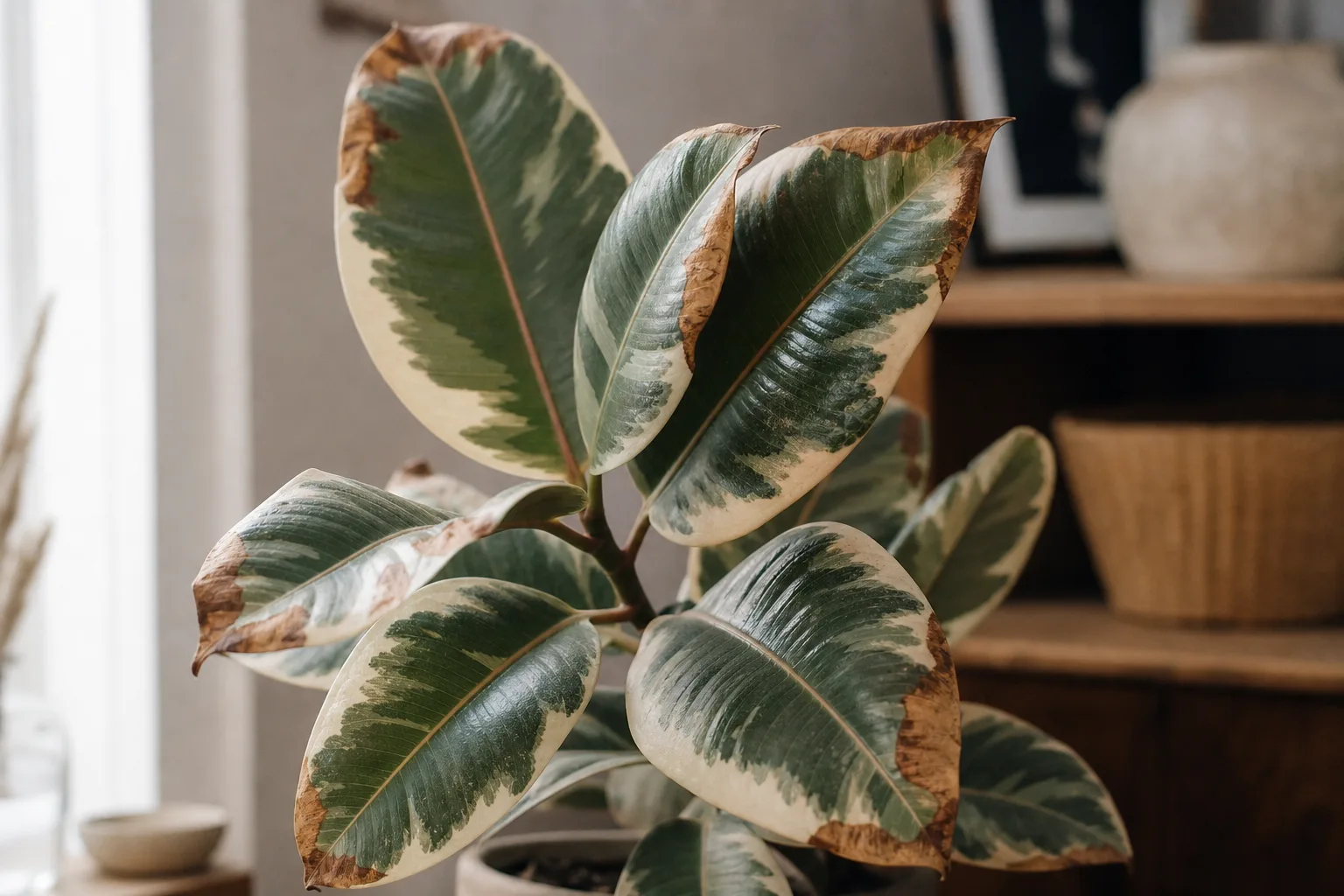
Low Humidity on Ficus Tineke: Causes, Checks & Fixes
This guide covers low humidity on Ficus Tineke. See also the general Low Humidity guide, watering, and light pages for this plant.
Low Humidity on Ficus Tineke: Causes, Checks & Fixes
Quick answer
Low humidity on Ficus Tineke (Ficus elastica ‘Tineke’) means the air around this variegated rubber plant is too dry for its pale leaf sectors to replace moisture lost through transpiration. The classic pattern is crisp brown or tan edges on cream and pink zones while the top 1 to 2 inches of soil still feel lightly dry-to-normal-especially after heating season starts, near radiators, or beside forced-air vents.
First step: measure relative humidity at foliage height with a hygrometer. If RH is below 40% and symptoms match dry air-not a thirsty root zone-raise ambient moisture with a humidifier nearby or a pebble tray with the pot base above the water line. Move Tineke off heat vents before you add extra water to the roots.
For isolated tip browning only, see brown tips on Ficus Tineke. For a light dry pot with limp leaves, see underwatering or wilting. This page owns whole-plant dry-air diagnosis when soil moisture is still acceptable.
Why humidity matters more for variegated Ficus Tineke
Rubber plants as a group prefer humid conditions but tolerate the dry air common in homes. Variegated Tineke is less forgiving than solid green Ficus elastica because cream and pink leaf panels transpire faster and hold less functional chlorophyll than the green zones. Dry air pulls moisture from those pale margins first, which is why humidity stress shows up as cosmetic edge burn on variegation long before the entire leaf collapses.
Tineke also grows large, stiff, glossy leaves that transpire steadily in Ficus Tineke light guide-the same light variegation needs to stay pink and cream. A plant in a bright south-facing room near a winter heat register loses leaf moisture from pale sectors faster than roots in correctly watered soil can replace it. That mismatch is the core of low-humidity damage on this cultivar.
Ficus species communicate broader stress through leaf drop-dry air or cold drafts may cause leaf loss on rubber plants-but margin crisping with firm stems and acceptable soil moisture is the early, specific humidity signal on Tineke. Knowing the Moraceae habit of dropping leaves after environmental shocks helps you avoid panic when one lower leaf falls-but multiple new leaves showing pale-edge burn in a dry room is a humidity problem, not acclimation.
Target humidity for Ficus Tineke indoors
What 40–50% RH looks like in practice
Aim for 40–50% relative humidity at canopy height, with 40% as a practical floor if you want clean variegation margins through winter. Many heated homes sit at 20–35% RH from November through March, which is enough to crisp cream edges even when you water correctly.
Use a digital hygrometer placed near the leaves-not on the opposite wall-because microclimates matter. A thermostat reading of 68°F near a radiator can still mean desert-dry air at the leaf surface two feet above the vent.
When average home air is enough
Tineke often looks fine through spring and fall without supplemental humidity if the pot is away from vents and the room naturally holds 40% or higher. Problems cluster when heating, AC, or a new placement drops local RH without changing your watering calendar. The Ficus Tineke overview covers temperature and humidity targets in full; this page focuses on diagnosing and fixing dry-air damage once symptoms appear.
Signs of low humidity on Ficus Tineke
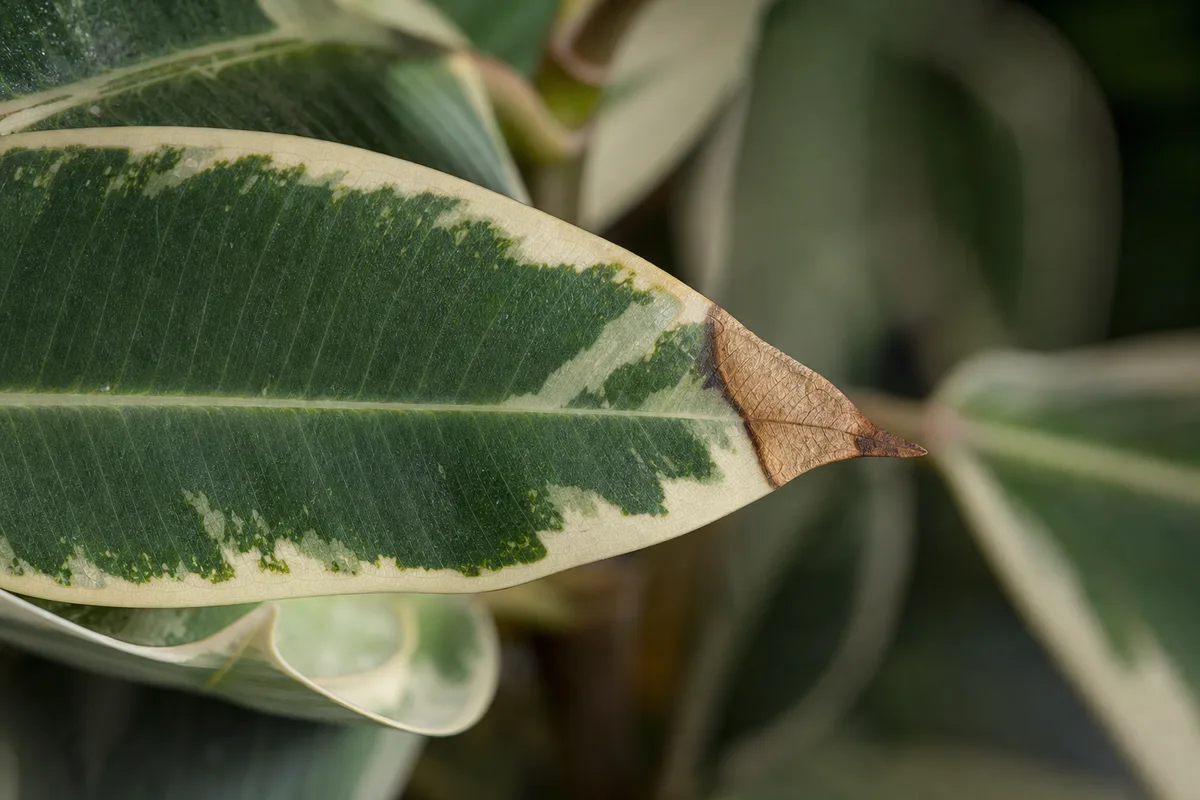
Low Humidity symptoms on Ficus Tineke - compare with healthy tissue on the same plant.
Margin browning vs whole-leaf crisping
Healthy Tineke leaves are thick, glossy, and splashed with cream, green, and pink. Low humidity usually starts at pale margins and tips:
- Cream and pink sectors turn tan, papery, or crisp while green tissue still looks firm
- New leaves may unfurl with dry edges on the pale panels before the blade fully expands
- No stippling or webbing on undersides-those point to spider mites, which thrive in warm, dry indoor air
Whole-leaf wilting with a very light pot suggests thirst, not humidity alone. Uniform yellowing with wet soil suggests overwatering. Sharp brown tips after heavy fertilizing or hard tap water overlap with brown tips-humidity damage tends to track pale zones first and seasonal dry air, not a single feeding event.
Winter forced-air heat and microclimates
Damage often appears within weeks of heating season. Watch these zones:
- Floor and desk registers blowing directly across the canopy
- Radiator covers and fireplace heat paths
- Window sills where cold glass and hot rising air meet
- AC vents in summer, which strip moisture from room air
The Spruce notes that Ficus Tineke should avoid exposure to draughts, dry heat vents, and AC units-the same microclimates that crisp variegated margins in winter. Tineke beside a heat source can show one-sided crisping on leaves facing the dry blast while the shaded side stays clean-a strong clue that air moisture, not roots, is failing.
Lookalike symptoms to rule out
| Pattern | Likely issue | Key differentiator |
|---|---|---|
| Crisp pale margins, moist-to-normal top inch, normal pot weight | Low humidity | RH below ~40%; near vent or dry winter room |
| Crisp margins, very light pot, dusty dry soil | Underwatering | Pot light; perks after thorough watering |
| Brown tips only, recent fertilizer or tap-water change | Brown tips | Tip-focused; not always seasonal |
| Yellow soft leaves, wet soil many days | Overwatering | Sour smell; stem softening at base |
| Stippling, bronzing, fine webbing | Spider mites | Moving specks on white paper test |
| Many leaves drop after move or repot | Acclimation stress | Timing matches environmental change |
The high-value scenario: “Soil check says fine but cream margins crisp in January next to a vent” → raise RH, do not water again.
How to confirm low humidity (not underwatering or salt burn)
Work through this confirmation path:
- Hygrometer reading - Place a meter at leaf height for 24 hours. Below 40% RH strongly supports dry-air stress on variegated rubber plants.
- Top-inch soil test - Press 1 to 2 inches deep-Clemson HGIC advises letting rubber plant soil dry slightly between waterings. Lightly dry-to-normal soil with crispy pale margins points to humidity. Bone-dry soil throughout points to thirst-or both if heating dried the pot faster than usual.
- Pot weight - Lift the container. Normal weight with edge burn supports air moisture failure. Very light weight supports underwatering.
- Microclimate scan - Map heat vents, radiators, fireplace paths, AC blow zones, and winter window drafts within 3 feet of foliage.
- Season and timing - Did crisping start when heating turned on, after a move to a drier room, or when AC began? Seasonal triggers support environmental diagnosis.
- New growth check - Inspect the terminal bud. A pink-sheathed leaf with dry pale edges while soil moisture is acceptable fits low humidity. Soft crown tissue with wet soil fits root problems-see watering.
One check alone misleads. Combine hygrometer data, soil moisture, and placement before changing care.
First fix for Ficus Tineke
Make one humidity correction first-do not simultaneously repot, fertilize, and overhaul watering.
Humidifier setup
Run a small cool-mist or ultrasonic humidifier several feet from the plant-not aimed directly at leaves. Target 40–50% RH at canopy height; heated rooms often need several hours of daily run time to reach that band in winter. Empty and clean the tank weekly to limit mineral buildup and microbial growth.
Keep the unit on a stable surface away from pets-Ficus Tineke is toxic to cats and dogs if chewed, and standing water attracts curious animals.
Pebble tray and plant grouping
Set the pot on a pebble tray: fill a wide tray with stones and water, then place the pot on top so the base stays above the water line. Evaporation raises local humidity a few points; wide trays work better than small saucers.
Group Tineke with other leafy plants to share transpiration humidity-Clemson HGIC recommends grouping plants that need higher humidity and adding a humidifier when indoor air is too dry in winter, including rubber plants (Ficus elastica). Grouping helps in moderately dry rooms but rarely replaces a humidifier when RH sits in the 20s all winter.
Why misting is secondary
Brief misting wettes leaf surfaces for minutes without changing overnight RH when the furnace cycles. On broad rubber-plant leaves, repeated misting in stagnant air can leave spots that invite fungal issues. Use misting for propagation humidity tents-not as the primary fix for a mature Tineke in a dry living room.
Relocate off dry heat paths
Move the pot at least 3 to 6 feet from heat vents and radiators before you buy equipment. Sometimes relocation alone stops margin crisping if the room baseline RH is acceptable away from the blast zone.
Recovery timeline
Judge recovery by new leaves, not old tissue:
- After humidifier or pebble tray setup: expect one to two weeks before new growth emerges without pale-edge crisping. Old brown margins remain permanently.
- Mild winter edge burn: stabilization often comes within one to two care cycles once RH stays above 40% and heat exposure drops.
- Combined dry air and slight underwatering: fix humidity and correct watering together; recovery may take two to four weeks if fine roots were stressed.
- Severe widespread crisping: several weeks. Remove fully dead leaves only after conditions stabilize-wear gloves because the sticky white sap may irritate skin.
Hold fertilizer until new growth looks firm and variegation is clean.
What not to do
Do not overwater because pale margins look dry when soil is already moist-that invites root rot on Ficus Tineke on a species that prefers letting soil dry slightly between waterings rather than staying chronically soggy. Do not mist heavily on a schedule instead of raising room RH. Do not confuse dry air with pest stippling-mites leave speckles and webbing; humidity alone does not. Do not stack Ficus Tineke repotting guide, pruning, and pesticide on the same day as humidity fixes. Do not expect old crispy tissue to green up-success is new clean growth from the tip. Do not place a humidifier jet directly against leaves night after night; raise ambient moisture instead.
When trimming damaged blades, wear gloves-Ficus sap is irritant and the plant is toxic to pets if ingested.
How to prevent dry-air damage next winter
- Monitor RH weekly from October through March in heated homes.
- Start humidifier season early-before crisping spreads across multiple leaves.
- Keep Tineke off vent paths year-round; summer AC dries air too.
- Maintain the watering rhythm from the watering guide-even moisture at the roots plus adequate air moisture at the leaves.
- Rotate the pot weekly for even variegation development in bright light without scorching pale zones against hot glass.
When to worry
Escalate if:
- New leaves stop emerging and the crown softens-inspect roots and soil moisture, not humidity alone
- Crisping spreads to entire leaves within days while soil stays wet-rule out overwatering and root rot
- RH stays above 50% but edges keep browning-suspect salt buildup, overfeeding, or direct sun scorch on pale panels
- Stippling or webbing appears-treat spider mites separately; dry air often precedes mite outbreaks
Moist soil, firm stems, and margin-only crisping on pale sectors in a dry winter room are lower urgency-humidifier or pebble tray plus relocation usually stabilizes Tineke within two weeks.
Conclusion
Low humidity on Ficus Tineke is an air-moisture problem, not a watering calendar problem-though heating season can increase both transpiration and faster soil drying. Cream and pink margins crisp first because variegated tissue loses water faster than green zones. Measure RH at leaf height, then raise ambient moisture with a humidifier or pebble tray, move off heat vents, and keep the soak-and-dry watering rhythm steady. Old burned margins will not heal; watch the terminal bud for new glossy leaves with clean variegation-that is the proof your fix worked.
Related Ficus Tineke problems
- Overview - temperature, humidity targets, and variegation care
- Brown tips - margin-specific browning overlap
- Watering - soak-and-dry rhythm; do not overwater when fixing dry air
- Underwatering - dry pot vs dry air disambiguation
- Spider mites - dry air and mite pressure
- Wilting - acute turgor loss when thirst is the driver
When to use this page vs other Ficus Tineke guides
- Ficus Tineke watering guide - Use for routine moisture checks before assuming low humidity is the main issue.
- Ficus Tineke problems hub - Browse all 16 common issues on this species.
- Brown Tips on Ficus Tineke - Different entry point when symptoms overlap with low humidity.