Overwatering on Ficus Tineke: Causes, Checks & Fixes
Quick answer
Overwatering on Ficus Tineke shows as a heavy wet pot, limp leaves on damp mix, and yellow lower leaves-often with edema bumps on variegated foliage. First step: stop watering until the top inch of mix dries completely.
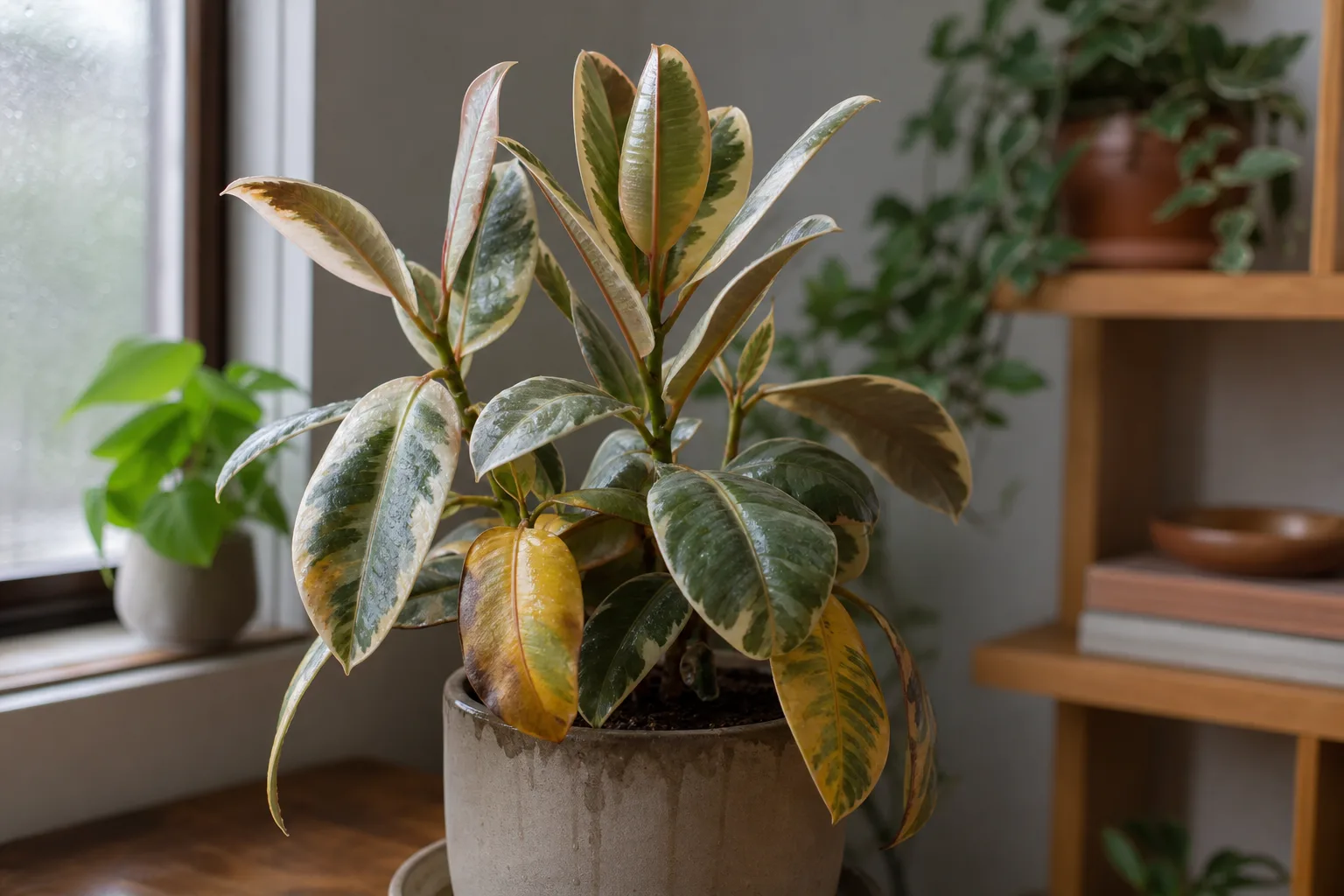
Overwatering on Ficus Tineke: Causes, Checks & Fixes
This guide covers overwatering on Ficus Tineke. See also the general Overwatering guide, watering, and light pages for this plant.
Overwatering on Ficus Tineke: Causes, Checks & Fixes
Quick answer
Ficus Tineke (Ficus elastica ‘Tineke’) is a variegated rubber plant with cream, green, and pink-blushed leaves. Overwatering means the root zone stays wet too long-and on Tineke the classic trap is limp leaves on heavy damp soil. Growers see drooping variegated foliage and water again, while failing roots cannot absorb moisture.
First step: stop watering immediately. Lift the pot. If the mix is wet and heavy one inch down, wait until the top inch dries before the next drink. Empty saucers and confirm drain holes are open. Do not fertilize, repot, or prune heavily on day one unless stems are already soft at the base.
Overwatering vs. other Ficus Tineke problems
The wilt-on-wet-soil paradox separates overwatering from thirst better than leaf color alone.
| Pattern | Pot weight | Soil at 1 inch | Stem at soil line | What it usually means |
|---|---|---|---|---|
| Overwatering | Heavy | Wet, cool, clings | Firm or softening | Failed roots on saturated mix |
| Underwatering | Light | Dry, crumbly | Firm | Turgor loss from drought |
| Low light + slow dry-down | Medium-heavy | Damp for weeks | Firm | Overwatering risk; see not enough light |
| Natural lower-leaf drop | Normal | Dry on schedule | Firm | Older leaves yellow and drop |
Fungus gnats hovering over the pot often appear alongside chronically wet mix-they signal the surface is not drying fast enough. See fungus gnats and root rot.
What overwatering looks like on Ficus Tineke
Tineke shows water stress on variegated tissue first-white and pink zones have less chlorophyll buffer.
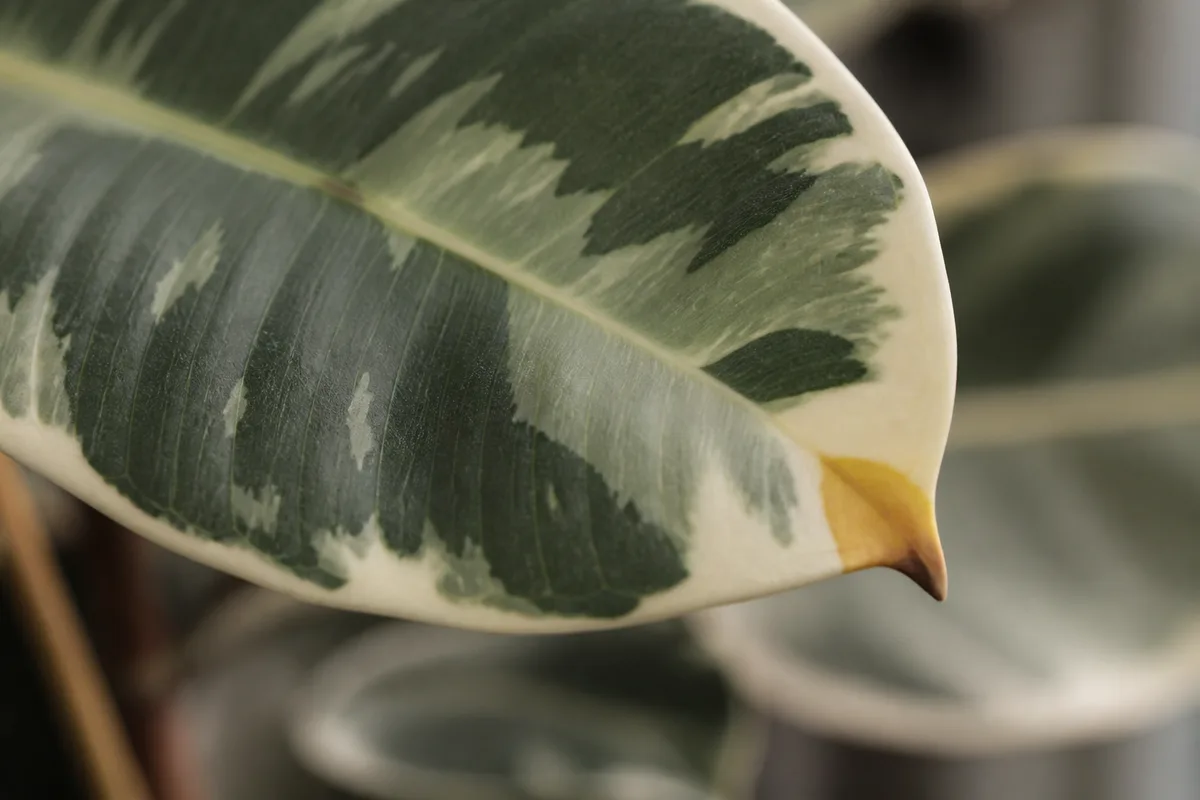
Overwatering symptoms on Ficus Tineke - compare with healthy tissue on the same plant.
Early signs:
- Yellow lower leaves while mix stays damp
- Limp glossy leaves on wet soil that do not perk after watering
- Edema-corky brown bumps on leaf undersides from cells bursting when roots take up water faster than leaves transpire
- Fungus gnats near the soil line
- Slowed new leaf unfurling-rolled tips stay closed longer
Advanced signs:
- Brown-edged yellow leaves on Ficus Tineke dropping from lower branches daily
- Soft stems at or just above the soil line
- Sour smell from drain holes
- Black root tips when you unpot-healthy rubber plant roots are firm and pale
Compare with underwatering: light dry pot, dull variegation, and recovery after one deep soak.
Why Ficus Tineke gets overwatered
Calendar watering in winter. Rubber plants slow growth when light drops. The same weekly soak that worked in summer leaves mix wet for weeks in a dim winter room.
Variegation in low light. Tineke in north windows or interior shelves uses less water but receives the same care as a summer patio plant. Slow evaporation keeps the root zone anaerobic.
Oversized pots and heavy mix. A large decorative pot with dense peat holds excess wet soil around a small root ball. Overwatering is among the most common indoor plant problems-oversized containers make it worse.
Saucers left full. Bottom-watering without emptying saucers keeps the bottom of the root ball saturated. Cachepots trap runoff the same way.
Thick leaves mask timing. Tineke’s large leaves look turgid briefly after roots start failing-by the time widespread yellowing appears, mix has been wet for weeks.
How to confirm the cause
- Pot weight - Heavy days after you thought you skipped watering confirms chronic sogginess.
- Moisture at one inch - Wet, cool, clinging soil with yellow lower leaves strongly suggests overwatering.
- Wilt response - Limp leaves that stay limp after watering mean roots, not thirst.
- Edema scan - Bumps on variegated leaf undersides confirm excess root uptake on wet mix.
- Stem base - Soft black tissue escalates toward root rot.
- Gnat check - Flying insects when you disturb the surface add evidence of chronic moisture.
First fix for Ficus Tineke
Stop watering until the top inch of mix dries.
- Skip all watering until the probe test shows dry crumbly mix at one inch-often seven to fourteen days.
- Empty saucers after any accidental spill or leftover runoff.
- Move to brighter indirect light if the plant sits in deep shade-slow evaporation worsens wet soil.
- Do not fertilize a waterlogged Tineke.
If stems stay firm and yellowing stops after dry-down, you may avoid Ficus Tineke repotting guide. If stems soften or leaves keep dropping after the mix dries, unpot and inspect roots.
Step-by-step recovery
Mild overwatering
- Dry-down as above.
- Remove fully yellow leaves-they will not recover.
- Resume watering only when the top inch dries per the watering guide.
Advanced root stress
- Unpot and rinse roots.
- Trim brown mushy roots; keep firm pale roots.
- Repot into fresh well-drained mix in a pot sized to the root mass-not larger.
- Wait one week before the first cautious watering.
Recovery timeline
- Mild case: Limp leaves firm within days to one week once soil oxygen returns.
- Moderate root damage: Yellowing stops spreading in two to three weeks; new variegated leaves in four to six weeks.
- Severe rot: Recovery takes months or requires propagation from firm stem tips.
Judge success by stable new growth at branch tips, not old edema bumps.
Mistakes to avoid
- Do not water because leaves look “thirsty” on wet soil.
- Do not repot into a larger pot to “help drying.”
- Do not fertilize while roots recover-salts stress failing tissue.
- Do not assume edema means pests-it is a water-uptake signal on wet mix.
How to prevent overwatering next time
Water when the top inch of mix dries-adjust for season and light. Use airy well-drained mix and a correctly sized pot. Empty saucers within 30 minutes. Increase light so Tineke uses water predictably-see the light guide. For full context, see the Ficus Tineke overview.
When to use this page vs other Ficus Tineke guides
- Ficus Tineke watering guide - Use for routine moisture checks before assuming overwatering is the main issue.
- Ficus Tineke problems hub - Browse all 16 common issues on this species.
- Root Rot on Ficus Tineke - Different entry point when symptoms overlap with overwatering.
- Yellow Leaves on Ficus Tineke - Different entry point when symptoms overlap with overwatering.
- Wilting on Ficus Tineke - Different entry point when symptoms overlap with overwatering.