Mold on Soil on Ficus Tineke: Causes, Checks & Fixes
Quick answer
White or gray fuzz on Ficus Tineke's soil is usually harmless saprophytic fungus feeding on organic debris in a persistently damp top layer. First step: scrape off the moldy surface, then let the top 2–3 cm of mix dry completely before watering again.
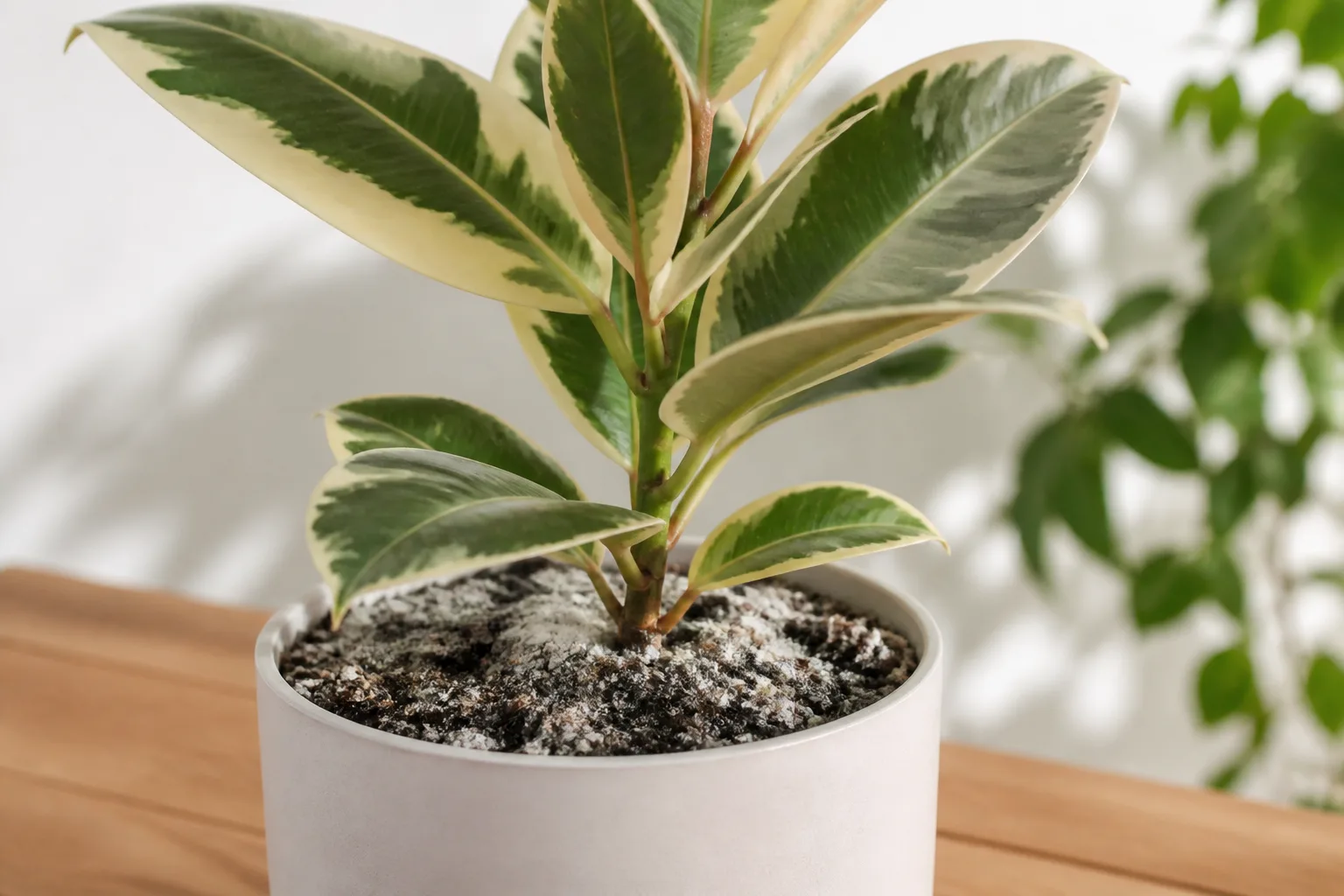
Mold on Soil on Ficus Tineke: Causes, Checks & Fixes
This guide covers mold on soil on Ficus Tineke. See also the general Mold on Soil guide, watering, and light pages for this plant.
Mold on Soil on Ficus Tineke: Causes, Checks & Fixes
Quick answer
White or gray fuzz on Ficus Tineke (Ficus elastica ‘Tineke’) potting mix is almost always saprophytic fungus-microbes feeding on decaying organic matter in a surface layer that stays damp too long. It is a moisture and airflow warning, not a death sentence for a healthy rubber plant.
First step: scrape off the top 1–2 cm of moldy soil and discard it, then stop watering until the top 2–3 cm of mix feels dry. Ficus elastica should be watered regularly but avoid overwatering, and Tineke is watered on that same dry-down cue in normal care. Surface mold clears once that rhythm returns. Do not reach for fungicide sprays on day one.
What mold on soil looks like on Ficus Tineke
The most common presentation is a fluffy white or pale gray film across the soil surface, sometimes in patches around the stem base. It may appear a few days after a heavy top-watering or when a room turns cool and the mix stops evaporating. A faint musty smell near the pot is possible but not required.
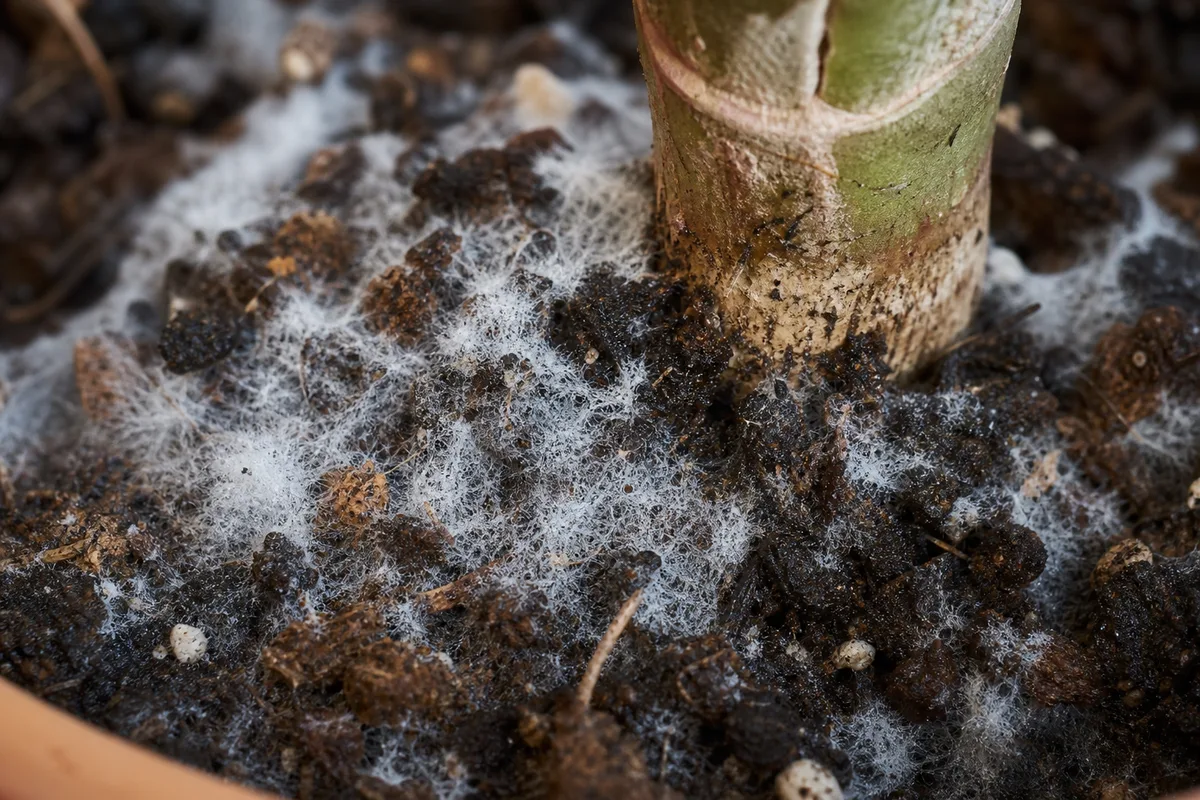
Mold on Soil symptoms on Ficus Tineke - compare with healthy tissue on the same plant.
On an otherwise healthy Tineke, leaves stay firm, cream-and-green variegation looks normal, and new growth at the tip continues. That separates harmless surface mold from root trouble, where lower leaves yellow-often on the pale cream sectors first-and stems may soften near the soil line.
Mold often arrives with companions:
- Fungus gnats on Ficus Tineke hovering when you brush the pot or water
- Dark, cool soil at the surface days after the last drink
- Fallen leaves or bark fines decomposing on top of the mix
- Green algae on the pot rim in very bright, constantly wet setups (a different organism, same moisture trigger)
Surface mold does not climb healthy leaves on its own. If you see powdery patches on foliage, look for pests or a separate foliar issue-not soil fungus spreading upward.
Why Ficus Tineke gets mold on soil
Tineke is a variegated rubber plant that wants Ficus Tineke light guide and a Ficus Tineke watering guide tied to dry-down, not a calendar. When those conditions slip, the top layer of mix becomes a fungal buffet.
Overwatering and slow dry-down are the leading triggers. Watering before the top 2–3 cm dries keeps the surface continuously moist-the exact habitat saprophytic fungi need. Roots in waterlogged soil lose oxygen and function poorly. In cool rooms, dim corners, or winter when growth slows, Tineke uses less water. The same weekly schedule that worked in summer can leave the pot heavy and wet for days.
Low light slows the whole system. Variegated Ficus elastica needs enough light to hold clean cream-and-green patterning. In shade, photosynthesis and water uptake drop, so evaporation from the soil surface lags even when you water conservatively. A plant that looks “fine” above soil can still host mold below.
Organic debris feeds the fungus. Tineke sheds lower leaves over time, and the cream panels are prone to edge browning in dry air. Those spent leaves landing on wet soil give mold a direct food source. Bark fines and peat in standard potting mix add more decomposing material at the surface.
Pot and setup issues make recurrence likely:
- Oversized decorative pots where a modest root ball sits in a large wet zone
- Poor drainage or saucers that hold standing water
- Heavy peat-rich mix without enough perlite-Tineke does better with standard potting mix plus about 20% perlite for airflow
- Top-watering only, which repeatedly wets the surface while the core stays damp
Mold and fungus gnats share the same wet-soil habitat. Gnats are mostly a nuisance on established plants, but their presence confirms the surface has been too moist for too long-and that overwatering may be stressing roots underneath.
How to confirm the cause
Work through these checks before Ficus Tineke repotting guide or spraying:
- Stem firmness - Press the base above the soil. Hard, woody tissue with fuzzy soil only = likely harmless mold. Soft, dented, or darkening tissue = investigate root health.
- Soil moisture at 2–3 cm - Cool, damp finger test after several days without water confirms slow dry-down. Light pot weight with dry surface suggests you may already be on track.
- Leaf pattern - Firm leaves with isolated surface mold points to culture, not infection. Widespread yellowing of lower leaves with wet soil pairs mold with possible overwatering stress on Tineke’s cream sectors.
- Smell - Neutral or slightly earthy is normal. Sharp sour or swamp odor suggests anaerobic conditions and possible root decline.
- Gnats and timing - Flies appearing right after watering and mold returning within a week of scraping both confirm chronic surface wetness.
- Light and season - Dim placement plus winter slowdown explains mold even when you have cut back watering somewhat.
If the plant is firm, leaves are stable, and only the soil surface is fuzzy, treat this as an environmental imbalance, not a plant disease.
First fix for Ficus Tineke
Scrape off the top 1–2 cm of moldy soil and let the surface dry out.
Use a spoon or small trowel to remove the fuzzy layer and any visible leaf litter with it. Bag and discard the material-do not compost indoors. Leave the plant in place; repotting is not the first move for a single mold flare-up on a healthy Tineke.
Then pause top-watering until the top 2–3 cm of mix is dry to the touch. For most homes that means several days to more than a week, depending on pot size, light, and season. Lift the pot before you water again: light weight plus dry surface means it is time.
After dry-down resumes, replace the scraped area with a thin layer of fresh, dry potting mix if you want a cleaner surface. Improve airflow around the pot-a small fan on low or simply pulling the plant slightly away from a crowded shelf helps the top layer cycle faster.
Step-by-step recovery
Once the first fix is done, work through these steps in order based on what you find:
Adjust watering to the pot, not the calendar. Water thoroughly until a little drains from the bottom, then empty the saucer. In active growth, many Tineke plants need water every 7–10 days; in winter slowdown, 14–21 days is common-but only when the top 2–3 cm is actually dry.
Shift light if the plant is dim. Move Tineke gradually toward brighter indirect light so it uses water faster and holds variegation. Abrupt jumps can cause leaf drop; inch it over a week.
Remove surface debris weekly. Pick off fallen leaves before they mold. Wipe dust from the broad leaves so the plant photosynthesizes efficiently.
Address fungus gnats if adults persist. Let the top 1–2 inches of soil dry completely before watering again, set yellow sticky traps for adults, and use a Bacillus thuringiensis israelensis (BTI) drench for larvae if flies keep appearing after two weeks of drier soil.
Bottom-water as an option. Bottom-watering keeps the soil surface dry and discourages gnats-setting the pot in a tray of water for 15–20 minutes lets roots drink from below while the surface stays drier, useful if top-watering repeatedly triggers mold.
Repot only when mold is chronic. If fuzz returns within days for a month despite dry surface intervals, the mix may be compacted, the pot oversized, or drainage failing. Repot in spring into fresh mix with perlite, using a container only slightly larger than the root ball.
Recovery timeline
Surface mold should stop reappearing within one to two weeks once the top layer reliably dries between waterings. You may still see a faint stain on old mix-that is cosmetic.
Fungus gnats often take two to four weeks to taper because of overlapping generations, even after soil corrections.
Plant recovery is measured by stable new growth and firm stems, not instant soil aesthetics. Yellow leaves already damaged by overwatering will not green up; watch the newest leaf at the tip. If cream sectors on fresh growth stay clean and the stem stays rigid, culture is back on track.
Escalation signs after two weeks of corrected care:
- Mold returns as fast as before
- Lower leaves keep yellowing while soil stays wet
- Stem base softens or smells sour
- Gnat numbers increase instead of fall
Those mean unpot and inspect roots-not another surface scrape alone.
Lookalike symptoms
Green algae on soil and pot rims needs constant moisture plus bright light. Fix is still less surface wetness, but algae is photosynthetic; mold is fungal decomposition.
Mineral crust from hard tap water looks chalky and flat, not fuzzy. Flush the pot periodically with plain water and scrape crust; it is not mold.
root rot on Ficus Tineke can coexist with surface mold but shows different above-soil signals: limp leaves despite wet mix, sour odor, brown mushy roots when you unpot. Firm Tineke tissue with fuzzy soil alone rarely requires root surgery.
Powdery mildew on leaves is a foliar fungus tied to humidity and airflow on leaf surfaces, not white fuzz sitting on soil. Check leaf tops and undersides separately.
Mistakes to avoid
Do not drench soil with fungicide for harmless saprophytic mold-it adds chemicals without fixing the wet surface that caused the problem.
Do not keep watering on schedule while mold is active. A calendar built for summer growth will overwater a slow winter Tineke.
Do not assume cinnamon or vinegar replaces dry-down. They may tidy the surface briefly; lasting control is moisture management.
Do not repot immediately on healthy plants with a single mold patch. Unnecessary repotting stresses Ficus species that already dislike abrupt change.
Do not ignore gnats as harmless if soil never dries. They confirm the environment that can eventually stress roots.
Do not use a pot without drainage or let the plant sit in a full saucer. Rubber plants tolerate missed water better than chronic sogginess.
Ficus Tineke care cross-check
Mold is a soil-surface symptom; fixing it means aligning with how Tineke actually grows in your room:
- Light: Bright indirect-enough to keep cream variegation crisp without harsh direct sun browning the pale margins
- Water: Top 2–3 cm dry before the next thorough drink; lighter pot weight confirms dry-down
- Mix: Standard potting soil with ~20% perlite; avoid dense, peat-heavy bags that crust and stay wet at the surface
- Humidity: Average to moderate (40–60%) is fine; low humidity browns cream edges but does not cause soil mold-overwatering does
- Season: Cut back frequency in fall and winter when new leaves emerge more slowly
When mold appears, one care correction at a time makes the plant’s response readable. Changing water, light, and pot all at once invites leaf drop that obscures whether the mold fix worked.
How to prevent mold next time
Let the top layer dry between waterings. That single habit prevents most surface fungus on houseplants.
Clean the soil surface when leaves fall. Tineke’s broad leaves drop litter that feeds mold if left on wet mix.
Match pot size to roots. A stylish oversized container looks good with an upright rubber plant silhouette but holds excess wet soil around a small root ball.
Use drainage holes and empty saucers within an hour of watering.
Favor bright placement so the plant cycles water at a healthy pace-especially for variegated forms that stall in shade.
Consider bottom-watering if top-wetting repeatedly grows mold despite conservative schedules.
Refresh the top inch of mix once or twice a year if organic fines have broken down into a spongy, always-damp crust.
When to worry
Surface mold on firm, growing Tineke is low urgency. Treat it as a prompt to dry the soil, not an emergency.
Raise urgency when:
- Stem tissue at the base feels soft or smells bad
- Many lower leaves yellow while soil stays dark and wet
- Mold returns within days for weeks despite scraping and dry intervals
- Fungus gnats remain heavy after a month of corrected watering
- The pot weighs the same or more a week after you thought you skipped water
In those cases, unpot, rinse roots gently, and cut away any brown mushy tissue before repotting into fresh, airy mix. Advanced root rot on Ficus can be hard to reverse; early intervention when mold is the first warning is the better outcome.
For a healthy plant with a one-time fuzzy patch, scraping, drying, and adjusting water rhythm is usually all you need.
When to use this page vs other Ficus Tineke guides
- Ficus Tineke watering guide - Use for routine moisture checks before assuming mold on soil is the main issue.
- Ficus Tineke problems hub - Browse all 16 common issues on this species.
- Fungus Gnats on Ficus Tineke - Different entry point when symptoms overlap with mold on soil.
- Overwatering on Ficus Tineke - Different entry point when symptoms overlap with mold on soil.
- Root Rot on Ficus Tineke - Different entry point when symptoms overlap with mold on soil.