Slow Growth on Ficus Tineke: Causes, Checks & Fixes
Quick answer
Slow growth on Ficus Tineke is often normal winter dormancy when variegated leaves hold color and stems stay firm. First step: confirm the season-if growth is absent April through August with pale small new leaves, move to brighter indirect light and check whether roots circle the pot.
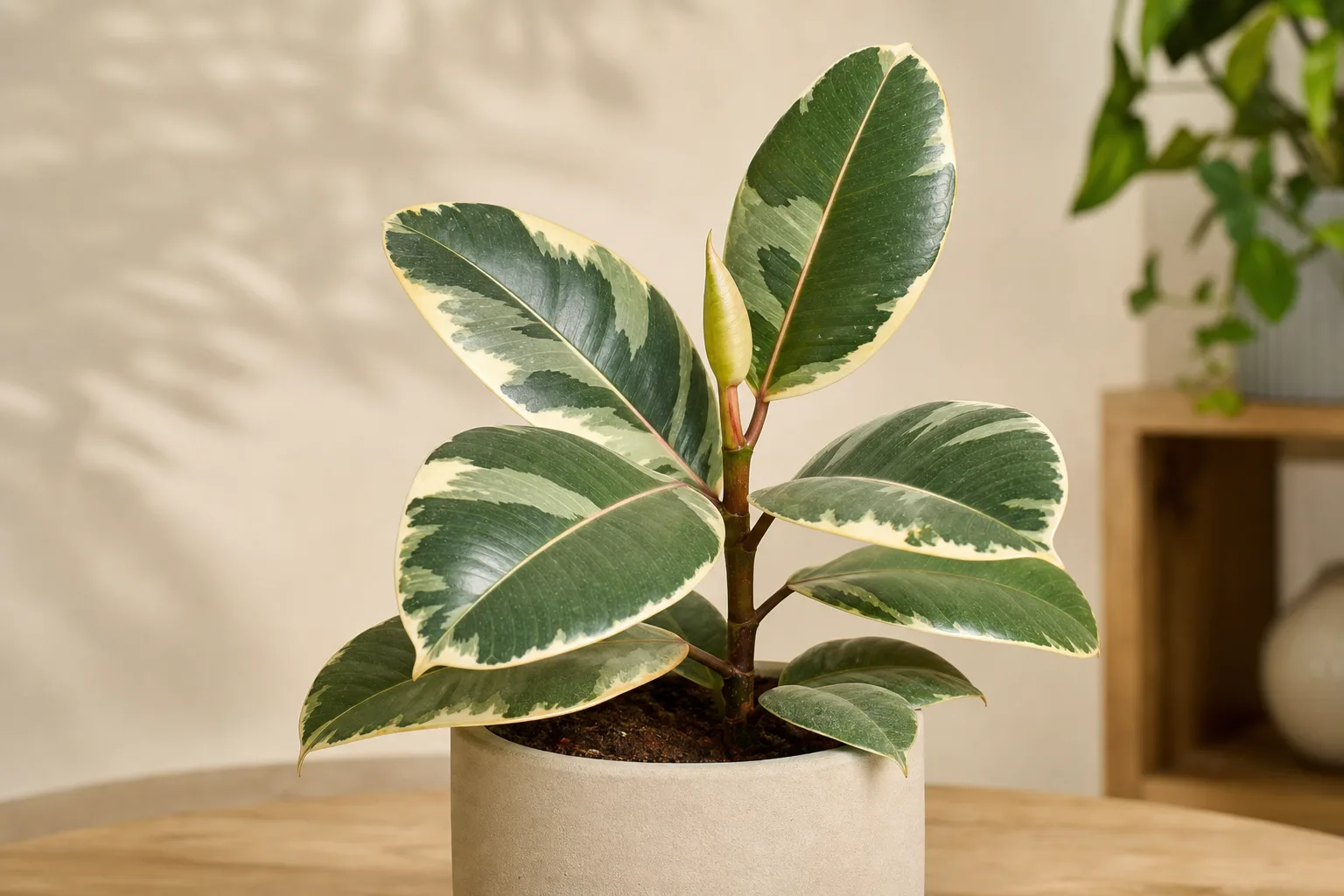
Slow Growth on Ficus Tineke: Causes, Checks & Fixes
This guide covers slow growth on Ficus Tineke. See also the general Slow Growth guide, watering, and light pages for this plant.
Slow Growth on Ficus Tineke: Causes, Checks & Fixes
Quick answer
Slow growth on Ficus Tineke (Ficus elastica ‘Tineke’) requires separating normal winter dormancy from pathological stall. Variegated rubber plants grow moderately in bright indirect light and pause visibly in cool, short-day winter when new leaves may be absent for weeks with firm existing foliage-that is often fine. Concern starts when growth stays absent April through August with pale small new leaves, faded variegation, or circling roots.
First step: confirm season and light. In active months, move to brighter indirect light (east window or filtered south/west within a few feet of glass) and verify the top 2 inches of mix dry between waterings before Ficus Tineke repotting guide or feeding.
What slow growth looks on Ficus Tineke
Normal winter pause - no new leaves for weeks; existing large variegated leaves stay glossy and firm; pot dries slowly in cool dim rooms.
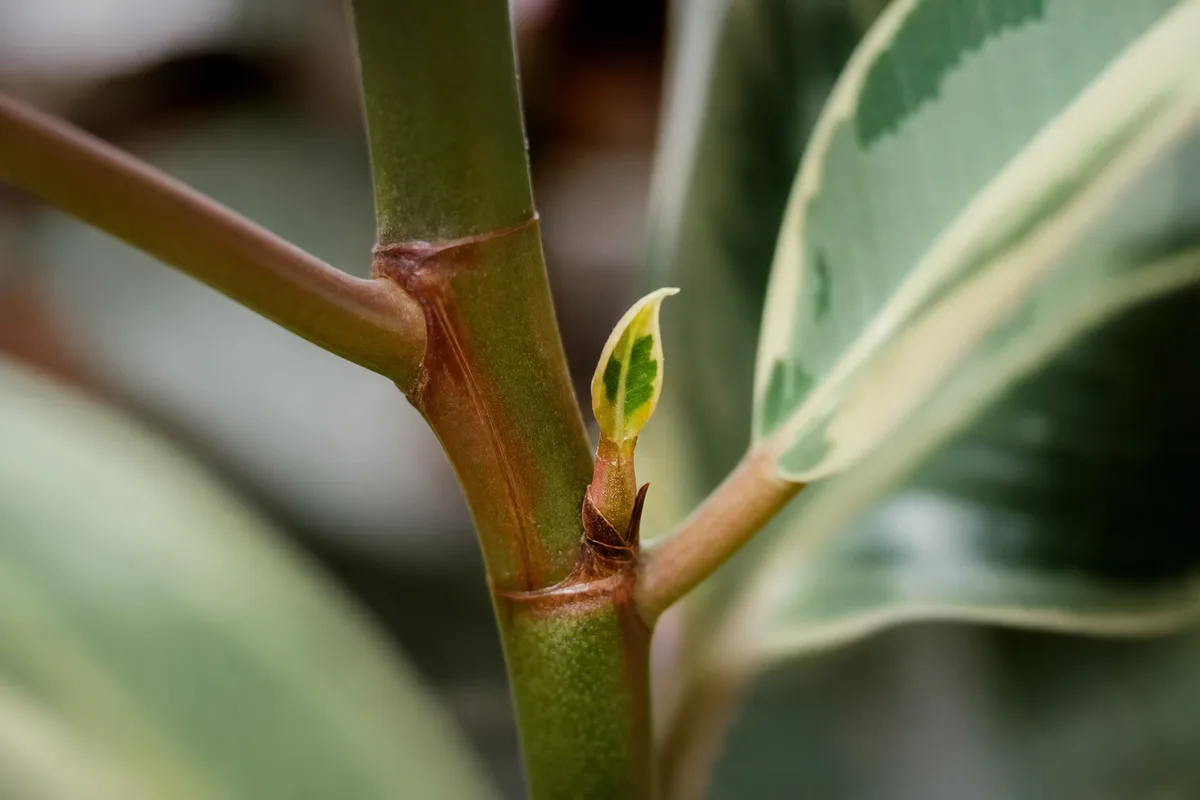
Slow Growth symptoms on Ficus Tineke - compare with healthy tissue on the same plant.
Pathological stall - no new leaves April–August; new foliage smaller and greener with reduced cream margins; long gaps between leaves on new stems (light stress overlap); roots circling pot; very light pot between waterings (drought) or stays wet weeks (overwatering in dim light).
Differs from leggy stretch (leggy growth) which shows long internodes actively elongating toward light.
Why Ficus Tineke grows slowly
Winter dormancy
Rubber plants slow growth in cool low-light winter-normal for Tineke.
Insufficient light for variegation
Variegated cultivars need more light than solid-green forms; low light stalls growth and reverts margins toward green.
Root-bound or compacted mix
Fine roots fill pots; uptake limits growth while leaves look acceptable initially.
Cold stress
Temperatures below 55°F (13°C) slow metabolism-drafts near windows compound winter stall.
Overwatering in dim rooms
Wet roots in low light stop growth before yellow leaves appear.
How to confirm the cause
- Calendar - winter vs active season
- New leaf quality - size and variegation on latest leaf
- Light audit - canopy within few feet of bright window?
- Root peek - circling or sour mix?
- Pot weight rhythm - matches watering guide?
First fix for Ficus Tineke
Winter dormancy: reduce watering slightly; do not fertilize; wait for spring.
Active season stall: increase bright indirect light first; match watering to dry-down per watering guide. After 2–3 weeks without new leaves, repot in spring if roots circle heavily.
Lookalike symptoms to rule out
Leggy growth shows long internodes actively stretching toward a window-stems elongate between leaves. Slow growth with short gaps and pale small new foliage points to light or roots, not stretch. See leggy growth on Ficus Tineke when internodes lengthen.
Not enough light overlaps when new leaves emerge smaller and greener with faded cream margins-but the plant may still push occasional leaves slowly. True stall means no new leaves April through August. Compare with the not enough light guide.
Overwatering in dim rooms stalls growth before yellow leaves appear-pot stays heavy weeks without dry-down. Pair with overwatering if soil smells sour or lower leaves yellow on wet mix.
Spider mites cause stippling and webbing on variegated margins with growth pause-inspect undersides before assuming dormancy. See spider mites if leaves look dusty or sticky.
Step-by-step spring recovery
When active-season stall is confirmed (not winter rest), work through these steps:
- Light audit - move within a few feet of a bright east window or filtered south/west glass; variegated rubber plants need more light than solid-green forms.
- Watering reset - water only when top 2 inches dry per watering guide; do not feed yet.
- Wait two to three weeks - count for a new variegated leaf sheath at the stem tip.
- Root peek in spring - if still stalled, slide the root ball out; circling white roots in a tight mass mean repot one size up into fresh well-drained mix.
- Hold fertilizer until a firm new leaf unfurls-then see fertilizer guide for half-strength monthly active-season feeding.
- Rotate weekly so cream margins develop evenly on both sides of the canopy.
Recovery timeline
New leaves in 2–4 weeks after light/root fix; variegation restores over several new leaves. Winter resume naturally March–April in most homes.
Dormancy vs stress table
| Signal | Normal winter rest | Stress stall |
|---|---|---|
| Season | Nov–Feb | Apr–Aug |
| Leaf turgor | Firm glossy | Pale, small, or dropping |
| Variegation | Stable on old leaves | Fades on new growth |
| Soil | Slow dry-down | Wet weeks or chronic drought |
| Roots | Healthy white | Circling or mushy |
What not to do
Do not fertilize dormant or stressed plants. Do not repot mid-winter without rot emergency. Do not assume slow equals thirsty-check weight first.
How to prevent slow growth next time
Bright indirect light per overview and light guide, spring repotting before severe binding, winter watering reduction, see not enough light if variegation fades.
When to worry
Treat slow growth as urgent when yellow leaves accompany wet heavy soil (root rot on Ficus Tineke risk), sudden leaf drop follows a cold draft below 55°F (13°C), or sticky webbing appears on variegated margins (mites).
Winter rest with firm glossy leaves and no new growth November through February is low urgency-reduce water and wait for spring.
When to use this page vs other Ficus Tineke guides
- Ficus Tineke watering guide - Use for routine moisture checks before assuming slow growth is the main issue.
- Ficus Tineke problems hub - Browse all 16 common issues on this species.
- Not Enough Light on Ficus Tineke - Different entry point when symptoms overlap with slow growth.
- Leggy Growth on Ficus Tineke - Different entry point when symptoms overlap with slow growth.
- Yellow Leaves on Ficus Tineke - Different entry point when symptoms overlap with slow growth.