Root Rot on Ficus Tineke: Causes, Checks & Fixes
Quick answer
Root rot on Ficus Tineke usually starts when winter overwatering keeps soil wet while growth slows. Stop watering, probe the top 2 inches, unpot to inspect roots, trim mushy tissue, and repot into fresh well-drained mix before the woody stem base softens.
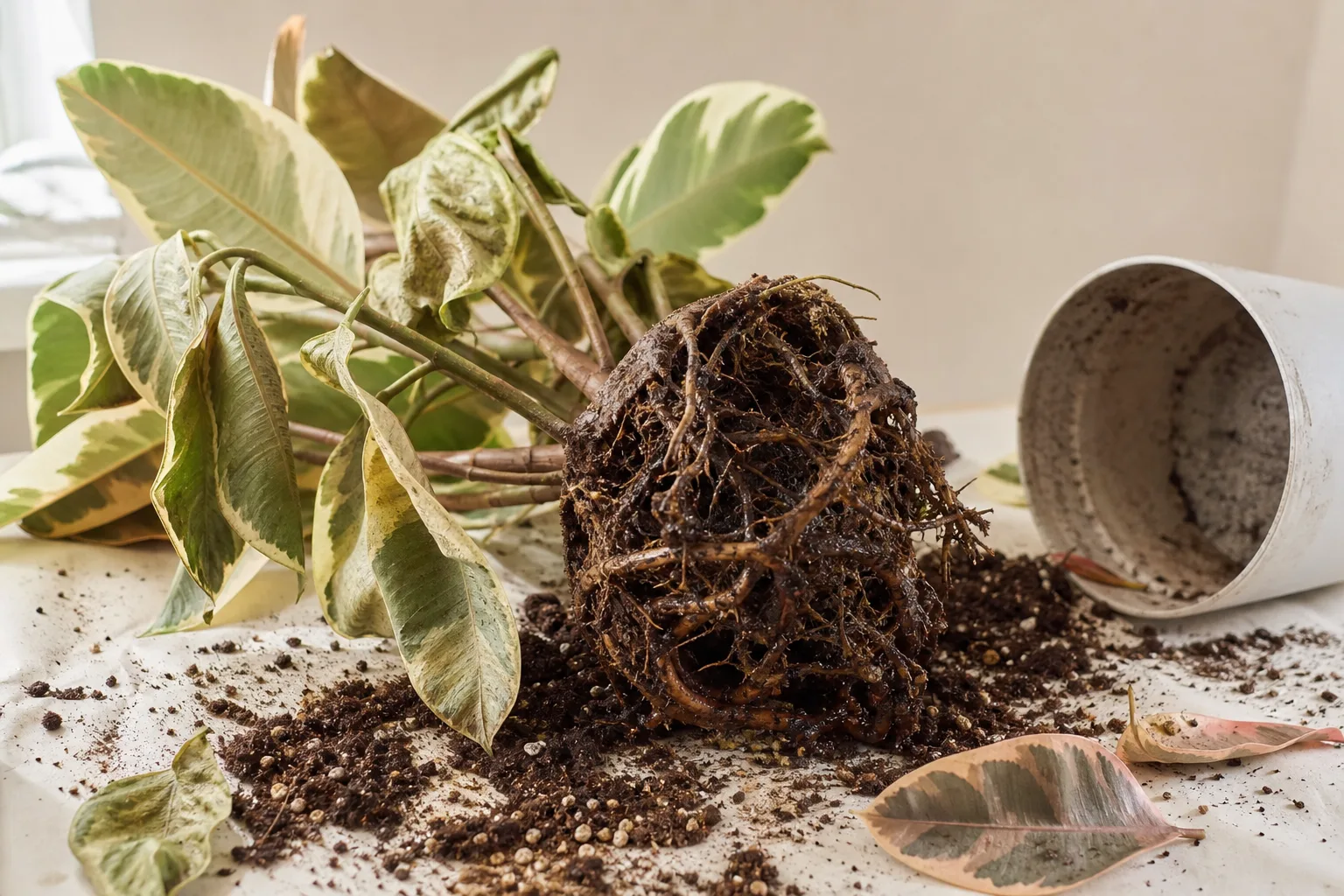
Root Rot on Ficus Tineke: Causes, Checks & Fixes
This guide covers root rot on Ficus Tineke. See also the general Root Rot guide, watering, and light pages for this plant.
Root Rot on Ficus Tineke: Causes, Checks & Fixes
Quick answer
Root rot on Ficus Tineke (Ficus elastica ‘Tineke’) is a drainage and watering failure, not a leaf disease. Clemson HGIC notes that root rot usually results from a soil mix that does not drain quickly or overly frequent watering on rubber plants. On this upright woody cultivar with thick cream-and-green leaves, the first warning is often limp variegated foliage while the pot still feels heavy and the top 2 inches of mix stay damp.
First step: stop watering immediately. Lift the pot, probe the top 2 inches near the rim, and knock the plant out only if soil smells sour, lower leaves yellow on wet mix, or the stem base feels soft. For the full wet-soil wilt paradox and top-2-inch dry rule, see watering Ficus Tineke-this page covers root-rot confirmation, numbered rescue, recovery, and prevention.
Root rot vs other Ficus Tineke problems - why wilt on wet soil matters
The symptom that sends most Tineke owners down the wrong path is wilting that looks like thirst while soil is wet. Damaged roots lose the ability to absorb water; leaves droop even though the mix is saturated. Root rot on houseplants commonly produces this pattern-wilt despite abundant moisture-because decayed root tissue cannot transport water upward.
That is different from underwatering, where the pot lifts easily and the top 2 inches are dry and crumbly. It is also different from cold-draft leaf drop, where the crown stays firm and yellowing follows a move beside a winter window or AC vent. Clemson Extension advises rubber plants to avoid temperatures below 55°F and cold drafts, which trigger leaf loss without necessarily rotting roots first.
On Tineke specifically, cream variegation panels may brown or crisp under chronic saturation in dim corners before classic yellow lower leaves appear-variegated tissue photosynthesizes less efficiently than green sections, so stress shows on pale sectors early. Do not confuse that with normal aging of a few bottom leaves.
What root rot looks like on Ficus Tineke
Healthy Tineke holds glossy, stiff, leathery leaves on an upright woody stem with a terminal bud at the top. Root rot breaks that architecture from the ground up.
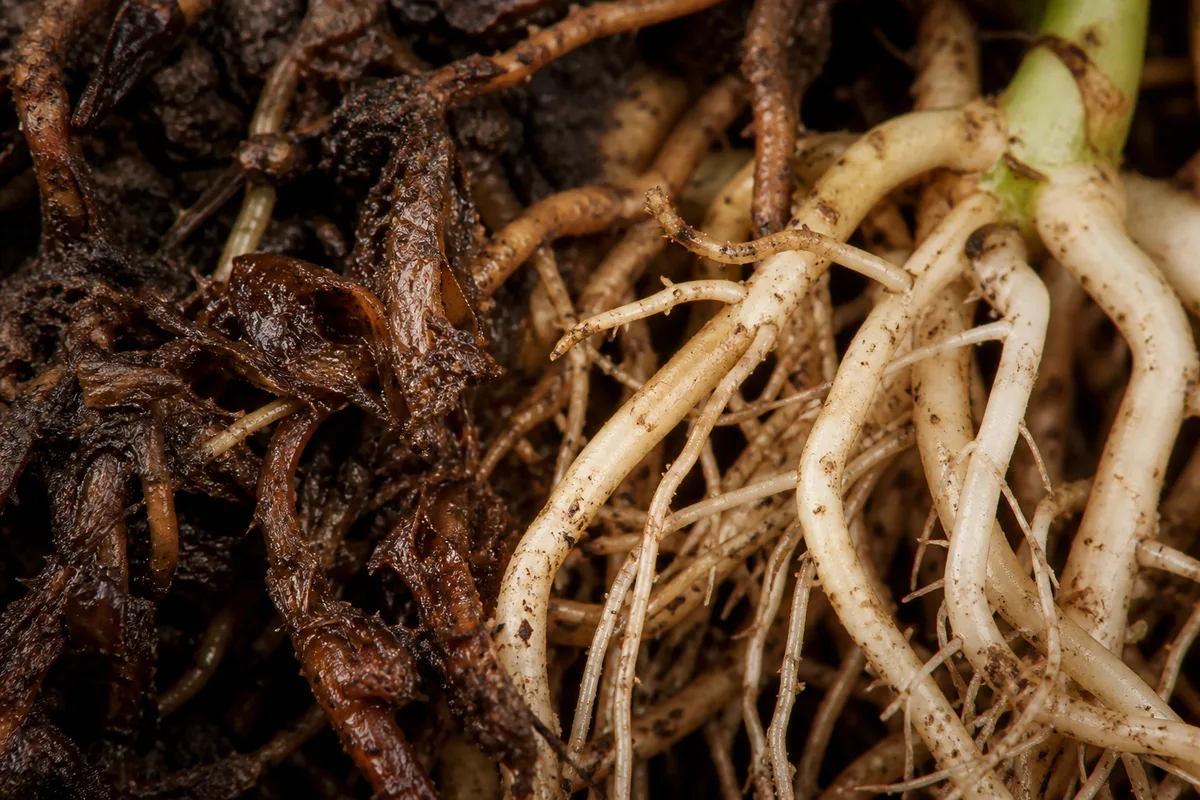
Root Rot symptoms on Ficus Tineke - compare with healthy tissue on the same plant.
Early signs
- Limp variegated leaves across the canopy while the pot feels noticeably heavier than your last fully drained state
- Yellowing lower leaves spreading upward; leaf yellowing may occur if soil stays too wet on rubber plants
- Top 2 inches stay cool and cling to a finger or skewer probe for many days after the last watering
- Sour or musty smell near the drainage hole
- Fungus gnats hovering at the soil surface-chronically wet mix invites them; see fungus gnats on Ficus Tineke if pests persist after soil dries
Advanced signs
- Soft, mushy tissue at the woody stem base where it meets the soil line-this is the salvage threshold
- Brown, translucent, or slimy roots when you slide the root ball from the pot; healthy rubber plant roots are firm and white or tan
- Stalled terminal bud-no new glossy variegated leaves emerging from the top
- Cluster leaf drop that continues daily even after you stop watering
Compare with underwatering: a light dry pot, slightly curled but firm leaves, and dry top 2 inches point to thirst, not rot. Compare with overwatering before roots fail: wet soil and limp leaves without mushy roots or sour smell may still recover with a dry-down pause alone.
Why Ficus Tineke gets root rot
Ficus elastica ‘Tineke’ is an upright woody houseplant with thick glossy leaves-not a moisture-loving rosette. It tolerates brief dry spells better than roots sitting in stagnant water. UF/IFAS recommends container soil be allowed to become fairly dry between waterings, and warns rubber plants are easily damaged by overwatering.
Overwatering, poor drainage, oversized pots, and cachepots
Root rot needs oxygen-starved, waterlogged soil. Common triggers on Tineke:
- Calendar watering without checking whether the top 2 inches are dry
- Blocked or missing drainage holes
- Heavy peat-only mix that compacts and holds water at the bottom while the surface looks dry
- Oversized pots-extra soil volume stays wet without enough roots to pull moisture; see Ficus Tineke repotting for right-sizing
- Cachepots and full saucers-PlantTalk Colorado warns that saturated soil and standing water in saucers cause root problems and leaf drop on rubber plants
Winter semi-dormancy and low-light slow dry-down
From fall through late winter, shorter days and cooler room temperatures slow growth. The same weekly watering that worked in summer can leave soil wet for weeks. Missouri Botanical Garden advises avoiding overwatering and reducing watering from fall to late winter on Ficus elastica. NC State Extension notes rubber plants should have watering reduced when dormant from fall to late winter.
A Tineke pushed into a dim corner dries the mix slowly while leaves still transpire-low light plus wet soil is a common winter rot setup. Align light before increasing water frequency.
Variegation sensitivity under chronic saturation
Tineke’s cream panels contain less chlorophyll than green sections. Under chronic wet soil and marginal light, pale sectors brown or crisp before the whole plant shows classic overwatering yellowing. That does not mean variegation caused the rot-it means variegated tissue flags stress sooner. Plain green rubber plant cultivars in the same wet corner may look stable slightly longer.
How to confirm the cause
Work through these checks before repotting. One strong signal plus wet soil warrants inspection; three together confirm rot.
Top-two-inch dry, pot weight, and drainage check
- Lift the pot right now and compare heft to your memory of a fully drained state. Heavy plus limp leaves suggests root-zone trouble.
- Probe the top 2 inches near the rim on two sides. Cool, clinging soil at depth means do not add water.
- Confirm drainage holes are open and the plant is not sitting in a full saucer or cachepot reservoir.
- Sniff at the drainage hole-sour odor supports rot over simple thirst.
Root and stem inspection on woody Ficus
Gently slide the root ball from the pot. Healthy roots: firm, white or tan, attached to soil. Rotted roots: brown, black, translucent, or slimy; they may fall away when touched. Check the woody stem base-firm bark is good; soft mush at the soil line is advanced damage.
Wilted leaves may indicate soil that is too dry or too wet-rotting roots cannot take up water. On Tineke, wet soil plus mushy roots confirms rot; dry soil plus firm roots points elsewhere.
Lookalike comparison
| Pattern | Pot weight | Top 2 inches | Roots on inspection | Likely cause |
|---|---|---|---|---|
| Limp leaves, wet mix, sour smell | Heavy | Damp at depth | Mushy brown | Root rot |
| Limp leaves, dry mix | Light | Dry, crumbly | Firm, white/tan | Underwatering |
| Yellow drop after window move, firm crown | Normal | Variable | Firm | Cold draft / relocation |
| Cream panels brown, slow growth, dim spot | Heavy or normal | Slow dry-down | May be firm early | Low light + chronic wet soil |
| Yellow lower leaves only, firm stem | Heavy | Wet | Firm but stressed | Early overwatering before full rot |
First fix for Ficus Tineke
Stop all watering the moment you suspect rot. Do not pour because leaves look wilted-on wet soil that deepens the damage.
Then work in order:
- Move to bright indirect light with good airflow-not harsh direct sun that scorches variegated panels.
- Unpot gently and shake away old wet mix from rotted sections.
- Trim all mushy roots with clean, sharp scissors or pruners. Remove soft tissue back to firm white root; it is better to lose root mass than leave decay. Wear gloves-milky latex sap can irritate skin.
- Let cut root surfaces air-dry for several hours to half a day on newspaper in shade.
- Repot into fresh well-drained mix-standard houseplant soil amended with perlite; see Ficus Tineke soil. Use a clean pot sized to the remaining root ball, not the canopy width.
- Water lightly once to settle mix around roots-just enough to moisten without saturating-then wait until the top 2 inches dry before the next full soak.
- Do not fertilize until new growth resumes.
Plants with partial rot may be salvaged by pruning out the rotted part and repotting into fresh mix. Young Tineke with a firm crown and some healthy roots after trim often rebounds; a soft stem base may not.
Recovery timeline
Mild rot caught early-some firm roots remain, crown is hard, only lower leaves affected-may stabilize within two to four weeks after trim and repot. You are looking for stopped leaf drop and the first firm new variegated leaf unfurling from the terminal bud, not old cream panels re-greening.
Moderate rot with significant root loss can take one to three months before steady new growth. Damaged leaves may hang limp until the plant sheds them; that is normal.
Severe rot-soft crown, most roots gone, daily collapse-often does not recover. If no new terminal growth appears after six to eight weeks in good conditions, the plant is unlikely to survive.
Judge success by new glossy variegated leaves and firm woody stem, not by saving every old leaf.
What not to do
- Do not keep watering because leaves wilt when soil is already wet-watering a wilted plant with rotting roots makes the problem worse
- Do not repot into dense garden soil or a larger pot “to help drying”-both trap moisture
- Do not fertilize stressed roots; wait for new growth
- Do not mist leaves as a substitute for fixing soil-wet foliage in a stagnant corner adds fungal risk on variegated panels
- Do not assume recovery because one leaf perks briefly; confirm with terminal bud activity
How to prevent root rot next time
Prevention on Tineke matches the watering guide rhythm:
- Water when the top 2 inches of mix feel dry-not on a fixed calendar
- Use drainage holes and well-drained potting mix
- Empty saucers within thirty minutes of every watering
- Reduce frequency from fall through late winter when growth slows
- Match pot size to root mass-one size up at repot, not three
- Keep bright indirect light so the mix dries predictably; rotate away from dim wet corners
- Check twice weekly in warm months; learn your pot’s dry weight by lifting
Reduce watering when the plant is dormant from fall to late winter and never leave the inner pot sitting in cachepot runoff.
Pet safety and latex sap when trimming roots
Ficus elastica exudes milky latex sap when roots or stems are cut. Clemson HGIC notes the sap may irritate skin or the stomach if eaten-keep plants away from pets and children that chew foliage. The ASPCA lists fig species as toxic to dogs and cats, with gastrointestinal and dermal irritation possible. Wear gloves during root trim, wash tools and hands after, and bag trimmed debris away from pets. This is not veterinary advice-contact your vet or ASPCA Poison Control if a pet ingests plant material.
Related Ficus Tineke guides
- Watering Ficus Tineke - top 2 inches dry rule and wet-soil wilt FAQ
- Overwatering - early yellowing before full rot
- Wilting - wet vs dry wilt diagnosis
- Yellow leaves - moisture and seasonal overlap
- Fungus gnats - wet-soil co-symptom
- Ficus Tineke soil and repotting
- Ficus Tineke overview - full care hub
- Root rot on rubber plant - same Ficus elastica species reference
Conclusion
Root rot on Ficus Tineke is preventable when drainage is real, saucers stay empty, and top-2-inch dry checks beat calendar habits. When rot appears, the rescue path is clear: stop water, inspect roots, trim mush, repot tight, wait for terminal bud growth. Wilting on wet soil is the diagnostic key-do not treat it as thirst. Use the related guides when symptoms overlap, and judge recovery by firm new variegated leaves, not by old damaged panels.