Root Rot on Rubber Plant: Causes, Checks & Fixes
Quick answer
Root rot on Rubber Plant means roots have turned mushy from sitting in wet soil too long-usually a winter watering mismatch. Stop watering, unpot, trim brown soft roots back to firm tissue, air-dry cuts for 24 hours, and repot into fresh well-drained mix before the stem base softens.
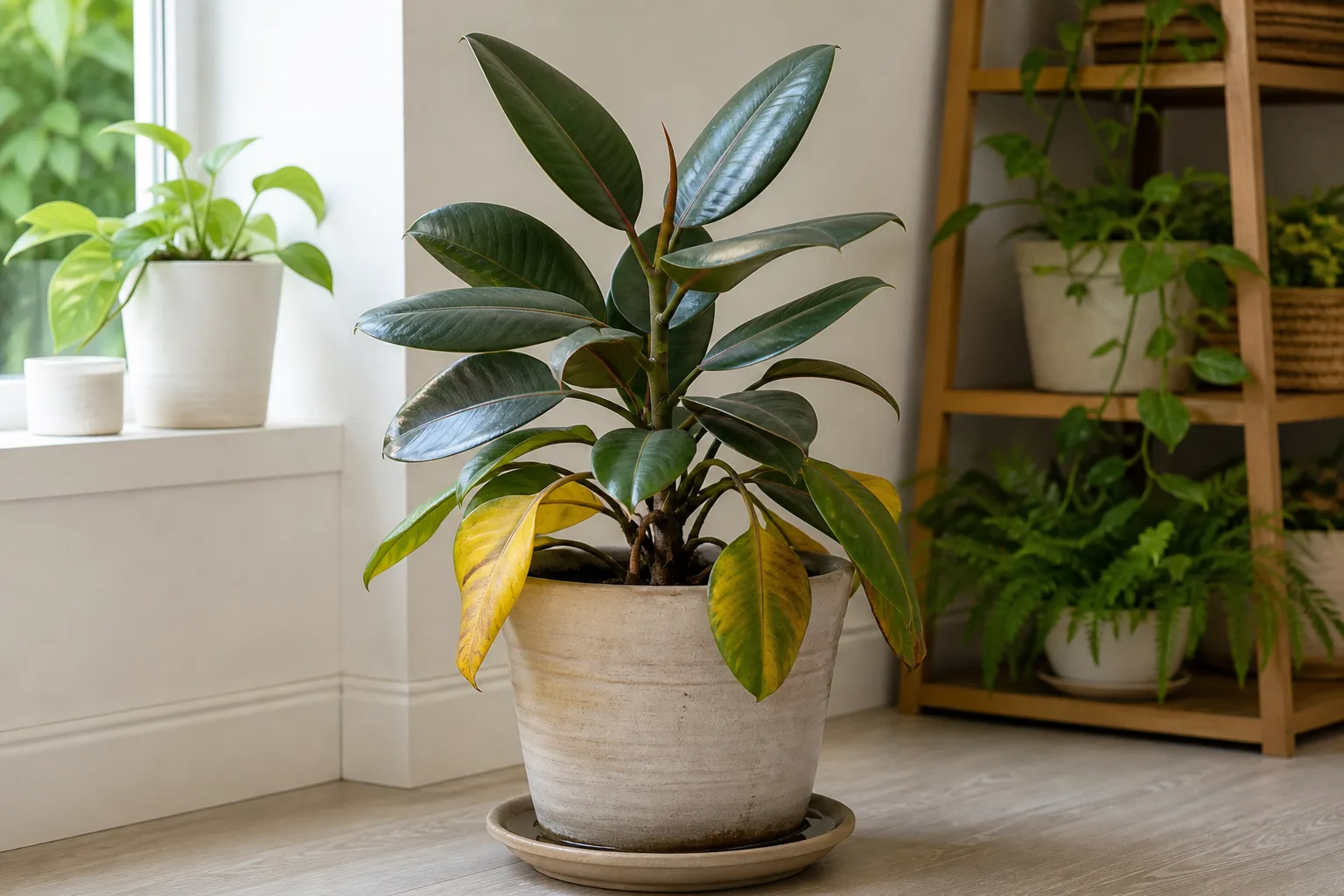
Root Rot on Rubber Plant: Causes, Checks & Fixes
This guide covers root rot on Rubber Plant. See also the general Root Rot guide, watering, and light pages for this plant.
Root Rot on Rubber Plant: Causes, Checks & Fixes
Quick answer
Root rot on Rubber Plant is confirmed root failure-not a leaf disease you can spray away. This page is for mushy roots, sour-smelling mix, or wilt-on-wet-soil after chronic overwatering. If the pot is heavy but roots are still firm and you have not unpot yet, start with the overwatering guide for early triage.
First step: stop all watering. Slide the plant out of its pot and inspect roots before you add another drink. Clemson HGIC notes that root rot usually results from a soil mix that does not drain quickly or overly frequent watering. Missouri Botanical Garden advises to avoid overwatering and reduce watering from fall to late winter when indoor growth slows-the season when most Rubber Plant rot begins.
What root rot looks like on Rubber Plant
Root rot on Ficus elastica develops in the root zone before the whole canopy collapses. Early signs are easy to misread as thirst because thick glossy leaves hold water well and droop slowly.
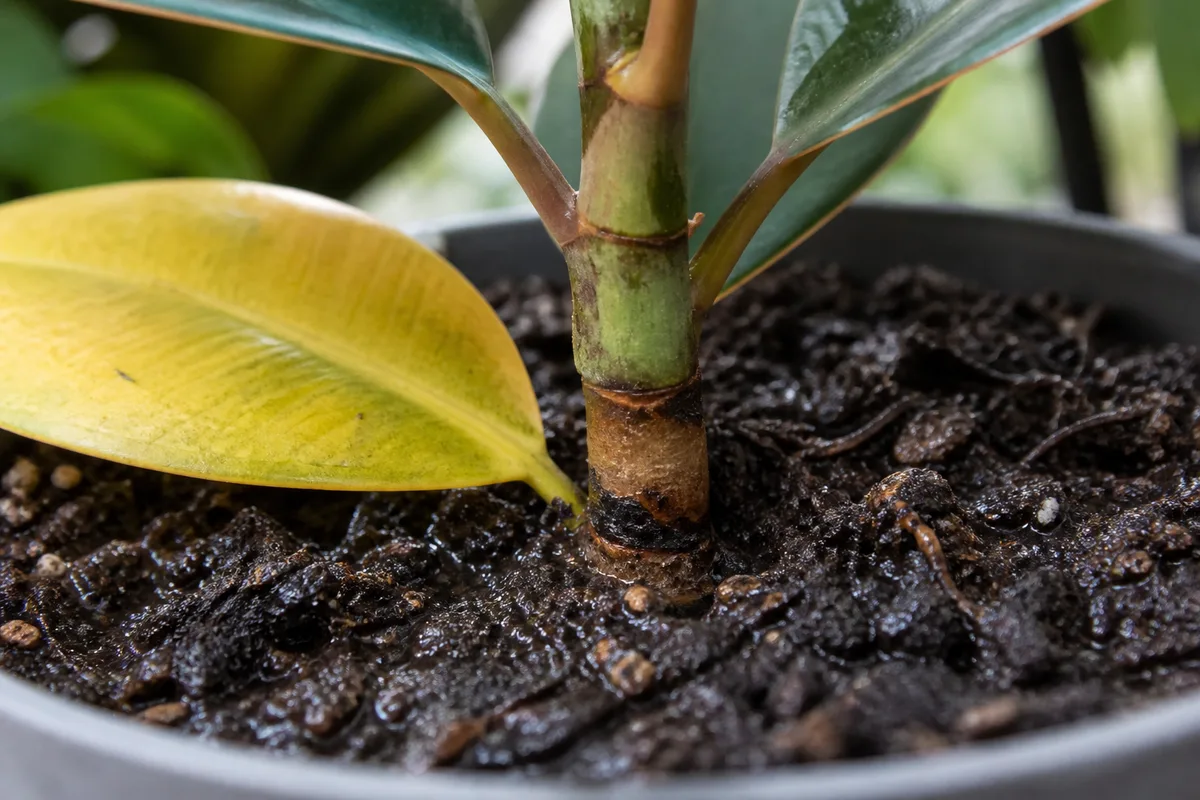
Root Rot symptoms on Rubber Plant - compare with healthy tissue on the same plant.
Yellow drooping leaves on wet soil
Lower leaves often yellow and drop first while the mix stays damp several days after watering. The pot feels heavy and cool. New growth at the tip may still look firm for a while, which tricks growers into watering again. Leaf yellowing may occur if the soil stays too wet.
The wilt-on-wet-soil trap
One of the most confusing patterns: leaves go limp and soft even though soil is wet. Wilting is not always a sign to water-rotting roots cannot take up moisture, so the plant looks thirsty while sitting in saturated mix. Reaching for the watering can at this stage spreads rot.
Soft stem base and sour-smelling mix
Advanced rot moves up from roots into the stem. The base feels spongy when you press near the soil line. Lifting the pot releases a sour or musty smell. White mold on the soil surface and fungus gnats hovering near the drainage hole often appear when the root zone has stayed anaerobic too long. When you unpot, brown or black roots feel mushy and may fall apart-healthy roots are firm and white or tan.
Why Rubber Plant gets root rot
Rubber Plant tolerates brief dry spells better than constantly wet soil. UF/IFAS recommends the soil be allowed to become fairly dry between waterings, especially in containers and warns the plant is easily damaged if over-watered. Root rot is the end stage when that wet-soil pattern persists.
Winter semi-dormancy and calendar watering
Rubber Plant slows growth sharply in short winter days. NC State Extension notes to reduce watering when the plant is dormant from fall to late winter. Continuing a summer rhythm-watering every seven to ten days while the plant barely transpires-keeps the root zone wet for weeks. That mismatch is the most common rot trigger indoors.
Oversized pots, heavy peat mix, and poor drainage
A large decorative pot with a modest root ball stays wet in the center long after the surface looks dry. Dense peat-only mix without perlite or coarse bark holds moisture around thick Ficus roots longer than Rubber Plant overview prefers. Pots without holes, full saucers, and cache pots that trap runoff keep roots in standing water. Match your soil mix to fast dry-down, not moisture retention.
Relocation, drafts, and sympathy watering
Rubber Plant reacts to change before it reacts to slow neglect. A move, repot, or cold draft can trigger leaf loss-and owners often water heavily to “help,” soaking mix that was already damp. That stress stack accelerates rot in winter when dry-down is already slow. Stabilize placement and check soil before sympathy watering.
How to confirm root rot
Work through this checklist before trimming or repotting. Each step narrows the diagnosis.
- Soil moisture at depth - Push your finger 2 inches into the mix. Wet, cool soil days after the last watering supports rot over drought.
- Pot weight - Compare to a known dry baseline. A persistently heavy pot means water is trapped throughout the root ball.
- Smell - Sour or musty odor from the drainage hole or when you lift the plant from its saucer points to anaerobic roots.
- Leaf pattern - Yellowing and drop from lower leaves upward while top growth still looks glossy fits rot. Random drop after a move without wet soil may be draft stress instead.
- Root inspection - Unpot and brush away mix. Mushy brown or black roots confirm rot; firm white or tan roots suggest another cause.
- Season and light - Wet soil during semi-dormant winter in dim light is high risk. Check your watering rhythm against the season.
Lookalikes: underwatering on Rubber Plant, draft stress, early overwatering, natural ageing
| Symptom pattern | Soil condition | Root texture | Likely cause |
|---|---|---|---|
| Crisp curling leaves, papery edges | Dry 2 inches down, light pot | Firm white/tan roots | Underwatering |
| Leaf drop after move or near AC vent | Normal dry-down | Firm roots | Draft or relocation stress |
| Heavy pot, yellow lower leaves, no sour smell yet | Wet several days | Mostly firm roots | Early overwatering - see overwatering guide |
| One or two old lower leaves fading slowly | Normal dry-down between drinks | Firm roots | Natural ageing |
| Wilt, sour smell, mushy roots | Wet throughout | Brown, soft, foul-smelling | Confirmed root rot |
If roots are firm and soil dries normally, you likely caught a watering problem before rot set in. Adjust schedule and drainage without surgery.
First fix for Rubber Plant
Stop watering. That single pause prevents rot from spreading while you assess severity. Do not fertilize, mist for humidity, or repot on impulse the same hour-work through inspection first.
Stop watering and assess severity
- Mild - Some mushy fine roots but most mass is firm; stem base is hard; sour smell is faint.
- Moderate - Roughly 25–50% of roots are soft; several lower leaves yellowed; stem still firm at base.
- Severe - More than half the roots are mushy, stem base feels spongy, or multiple branches wilt on wet soil.
Mild cases may recover after trimming and repotting. Severe crown involvement often requires stem-cutting propagation from firm wood above the rot line.
Trim mushy roots, air-dry, and repot
When roots are confirmed rotten, follow this sequence:
- Unpot gently - Slide the plant out; do not yank the stem. Brush or rinse away wet mix so you can see all roots.
- Trim only rotten tissue - With clean sharp scissors sterilized in rubbing alcohol, cut mushy roots back to firm white or tan material. Wear gloves; milky sap irritates skin and the plant is toxic to pets.
- Discard old mix - Bag sour soil; do not reuse it or compost it near other plants.
- Air-dry cut surfaces - Let trimmed roots and any stem cuts sit in open air for 12–24 hours so wounds callus before repotting.
- Repot into fresh well-drained mix - Use a pot with drainage holes only slightly larger than the remaining root mass. See the repotting guide for pot sizing after root loss.
- Hold water briefly - Wait three to seven days, then water lightly once to settle new mix. Resume the top-2-inch dry-down rule from the watering guide.
Plants with partial rot may be salvaged by pruning out the rotted part and repotting into fresh mix.
When stem-cutting propagation is the only salvage path
If the stem base is soft or more than half the root mass is gone, saving the whole plant is unlikely. Take a cutting from firm tissue six to eight inches above healthy wood:
- Rinse latex sap from the cut end under cool running water for 10–15 seconds.
- Remove lower leaves, leaving one or two at the top.
- Plant in moist perlite-heavy mix under Rubber Plant light guide with a vented humidity cover.
- Do not water the parent pot hoping it recovers-focus salvage effort on the cutting.
Full sap-safe steps and timing are in the propagation guide.
Recovery timeline
Mild rot with mostly firm roots often stabilizes within one to two weeks after trim and repot. Yellow leaves may not green up again, but firm new glossy leaves at the growing tip confirm recovery.
Moderate rot with substantial root loss takes several weeks to a few months. Expect continued lower leaf drop while roots rebuild. Do not fertilize until new growth looks normal.
Severe rot may take a full growing season to know whether the plant survived-and dropped leaves do not regrow on bare stems without new buds. Improvement signs: lighter pot between waterings, upright new leaves, soil that dries at a predictable pace. Worsening signs: spreading soft stems, sour smell returning quickly after repot, or wilting on wet soil mean rot is advancing-escalate to propagation.
What not to do
Do not water because leaves look wilted when soil is already wet-that deepens anaerobic conditions. Do not repot into a much larger container to “help drying”; extra soil holds more water longer. Do not fertilize stressed or rotting roots; salts add further damage. Do not mist leaves hoping to fix soggy roots; that does not dry the mix. Do not assume a single yellow lower leaf means rot-check soil, smell, and roots together.
How to prevent root rot next time
Match watering to season and light. In active growth with bright indirect light, water when the top 2 inches of soil are dry-roughly every 7–10 days in summer for many homes. From fall through late winter, stretch to every 14–21 days or longer if the pot stays heavy. Use well-drained mix with perlite or coarse bark, always empty saucers after watering, and size pots to root mass-not canopy width.
Learn your pot’s dry-down baseline: weigh the pot when freshly watered versus dry, or note how many days pass before the top 2 inches feel dry. A persistently heavy pot or fungus gnats at the soil surface are early alarms-cut water before rot spreads. Fungus gnats and surface mold often appear when soil stays wet too long; treat the moisture problem first.
When to worry
Act the same day if several leaves fail at once, soil smells sour, stem bases soften, or the plant wilts while soil is wet. Those signs mean rot may be moving into the stem.
A single old lower leaf fading slowly with soil drying normally between waterings is lower urgency-but wet soil plus rapid multi-leaf drop should not wait through another watering cycle.
If you are unsure, unpot and look. A five-minute root inspection prevents weeks of guessing and can save the plant when rot is still localized.
Conclusion
Root rot on Rubber Plant is a rescue problem, not a spray-and-wait disease. Confirm mushy roots and sour soil, stop watering, trim rotten tissue, air-dry, and repot into fresh well-drained mix sized to the root ball. Firm new top growth-not perfect old leaves-is how you know Ficus elastica is recovering. When the crown fails, stem cuttings from firm wood above the rot line are the backup plan. Match water to how fast your pot actually dries across seasons, and this forgiving species stays healthy for years.
Sources consulted: Clemson HGIC Rubber Plant and Indoor Plants – Watering, Missouri Botanical Garden PlantFinder and overwatering visual guide, UF/IFAS ST252, NC State Extension Ficus elastica, ASPCA fig toxicity, and LeafyPixels watering, overwatering, repotting, propagation, and soil guides.
When to use this page vs other Rubber Plant guides
- Rubber Plant watering guide - Use for routine moisture checks before assuming root rot is the main issue.
- Rubber Plant problems hub - Browse all 17 common issues on this species.
- Overwatering on Rubber Plant - Different entry point when symptoms overlap with root rot.
- Yellow Leaves on Rubber Plant - Different entry point when symptoms overlap with root rot.
- Wilting on Rubber Plant - Different entry point when symptoms overlap with root rot.