Overwatering on Rubber Plant: Causes, Checks & Fixes
Quick answer
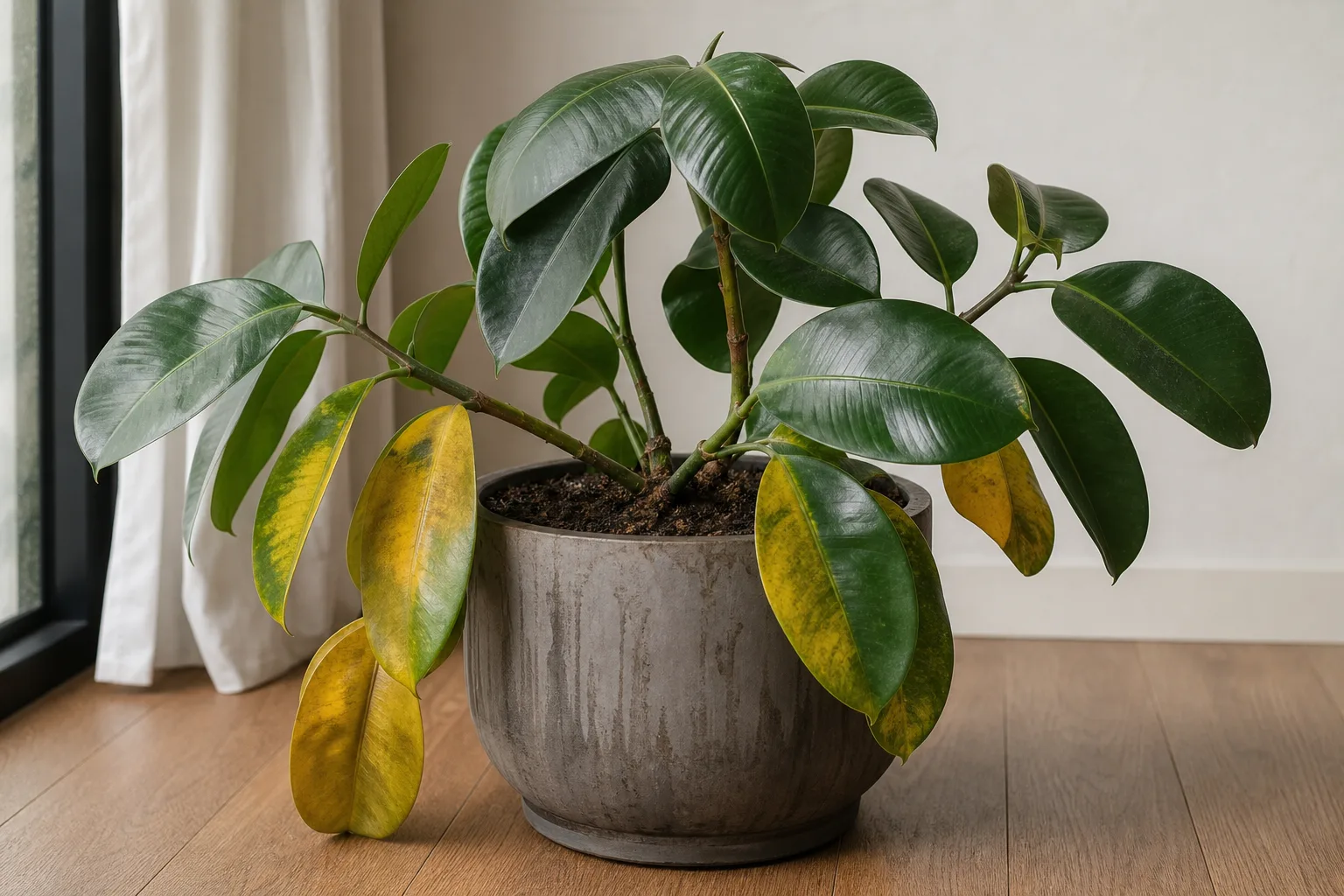
Stop watering immediately and check whether the top 2 inches of soil are still wet. A heavy pot, sour smell, and yellow dropping lower leaves on Rubber Plant usually mean the roots are suffocating-do not water again until the mix dries throughout.
Overwatering on Rubber Plant: Causes, Checks & Fixes
This guide covers overwatering on Rubber Plant. See also the general Overwatering guide, watering, and light pages for this plant.
Overwatering on Rubber Plant: Causes, Checks & Fixes
Quick answer
If your Rubber Plant looks unhappy and the pot feels heavy, stop watering-that is the first and most important step. Insert your finger 2 inches into the mix. Wet soil combined with yellow dropping lower leaves and a sour smell from the pot points to overwatering, not a need for more water. Ficus elastica uses moisture quickly in bright warm months but very slowly when semi-dormant in cool winter light. Watering on a calendar instead of checking soil keeps roots saturated and invites root rot.
What overwatering looks like on Rubber Plant
Overwatering on Rubber Plant usually shows up in the root zone before the whole canopy fails. Early signs include soil that stays damp several days after watering, a pot that feels unusually heavy, and lower leaves turning yellow and dropping while the mix is still wet. You may notice brown patches developing on leaf undersides, white mold on the soil surface, fungus gnats hovering near the pot, or a sour musty smell when you lift the plant from its saucer.
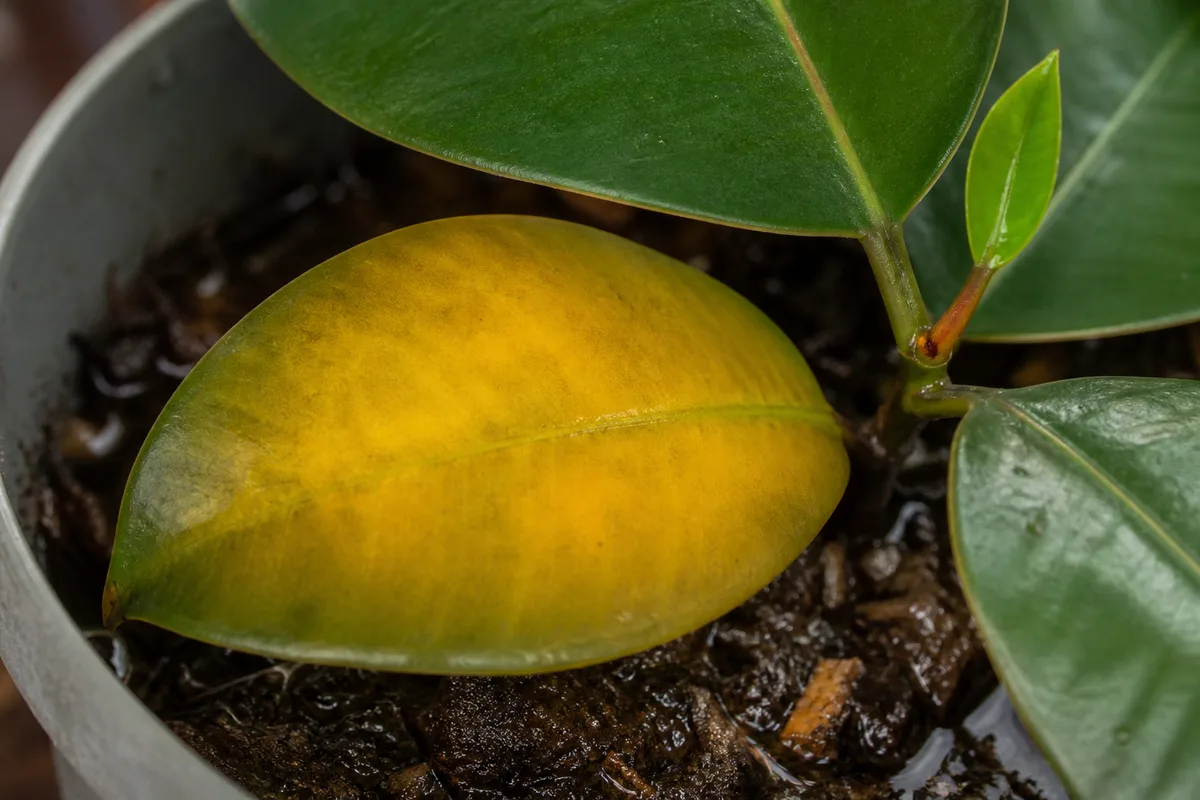
Overwatering symptoms on Rubber Plant - compare with healthy tissue on the same plant.
Rubber Plant leaves are thick, glossy, and 8–12 inches long when mature. Healthy foliage feels firm and upright. Overwatered leaves often go soft and limp before they yellow, sometimes with a dull light-green cast instead of deep glossy color. The plant typically sacrifices older lower leaves first while trying to protect newer growth at the top-so a pattern of bottom-up yellowing with wet soil is a strong overwatering signal.
One confusing pattern: advanced root damage can make a Rubber Plant wilt and drop leaves even though the soil is wet. Wilting is not always a sign to water-root decline from excess moisture can look like drought. Damaged roots cannot absorb water properly, so the plant looks thirsty while sitting in saturated mix. If leaves are limp and soil is damp, suspect root trouble before you reach for the watering can.
Why Rubber Plant gets overwatering
Rubber Plant evolved as a broadleaf evergreen tree in warm humid regions of southeastern Asia. Indoors it grows moderately to fast in Rubber Plant light guide but slows sharply in short winter days. That seasonal shift is where most overwatering starts.
Several habits push Ficus elastica into wet soil:
Calendar watering. Watering every Sunday regardless of season ignores how fast your pot dries. Cool rooms, dim winter light, and semi-dormant growth use far less water than a summer plant near a bright window.
Winter schedule mismatch. Rubber Plant is semi-dormant in cold months and more prone to overwatering when growth slows. Reduce watering from fall to late winter when indoor growth slows; continuing a summer rhythm keeps the root zone wet for weeks while the plant barely transpires.
Heavy or slow-draining mix. Standard peat-heavy potting soil without perlite or coarse bark holds moisture around thick roots longer than Rubber Plant overview prefers. Dense old mix that has broken down behaves like a sponge.
Oversized pots. A large decorative pot with a modest root ball stays wet in the center long after the surface looks dry. Extra soil volume holds water the plant cannot use quickly enough.
Low light slowing dry-down. Rubber Plant needs bright indirect light to grow well. In a dim corner, soil evaporates slowly and roots remain wet even with modest watering. The same volume of water that works in summer sun becomes excessive indoors in winter shade.
Poor drainage setup. Pots without holes, saucers left full after watering, or cache pots that trap runoff keep roots in standing water. Empty excess water from saucers after watering-even one missed dump after a thorough drink can suffocate fine roots.
Recent stress stacking. Rubber Plant reacts to change before it reacts to slow neglect. A move, repot, or draft combined with heavy watering makes leaf drop and wet-soil symptoms look like separate problems when overwatering is the common thread.
How to confirm the cause
Work through these checks in order before changing anything else:
- Soil moisture at depth - Surface dryness can hide wet roots below. Push your finger 2 inches into the mix or compare pot weight before and after a known dry period. A heavy, cool pot usually means wet soil throughout.
- Leaf pattern - Yellowing and drop starting from lower older leaves while top growth still looks firm supports overwatering. Random drop across the whole plant may involve draft or move stress as well.
- Leaf texture with soil condition - Soft limp leaves with damp soil suggest overwatering or root rot. Crisp curling leaves with bone-dry soil point to underwatering on Rubber Plant.
- Smell and pests - Sour odor, surface mold, and fungus gnats often appear when soil stays wet too long.
- Season and light - Is it winter with short days and slow new growth? Wet soil during semi-dormancy is high risk. Is the plant in weak light where the pot dries slowly?
- Drainage check - Does water run freely from the bottom? Is the saucer empty? Is the plant sitting in a sealed outer pot?
If soil is dry 2 inches down, the pot is light, and leaves are curling inward, underwatering is more likely. Do not water until you know which direction the problem runs.
Lookalike symptoms
Underwatering also causes leaf drop and drooping, which confuses many growers. The difference is soil texture and leaf feel: an underwatered Rubber Plant has dry mix deep in the pot, and leaves may curl inward or feel papery at the edges. Overwatered plants wilt with wet mix and soft yellowing foliage.
Cold drafts and sudden moves trigger leaf drop from cold drafts on Ficus elastica without necessarily keeping soil wet. If the pot is drying normally and leaves drop after a relocation or near an AC vent, stabilize placement before assuming root rot-though check that sympathy watering did not soak the mix afterward.
Natural ageing causes occasional lower leaf loss on a healthy plant with firm soil and active top growth. One or two old leaves fading over months is different from several leaves failing within a week on wet soil.
Root rot is often the end stage of chronic overwatering-root rot usually results from soil that does not drain quickly or overly frequent watering. If stems soften at the base or roots are mushy on inspection, see the root rot guide for trimming and Rubber Plant repotting guide steps.
Not enough light produces pale stretched growth and slow dry-down that mimics overwatering risk-the pot stays wet because the plant is not using water, even if you are not watering excessively often.
The first fix to try
Stop watering. Do not give another drink until you have checked soil at 2 inches depth and assessed whether the pot is still heavy. This single pause prevents rot from spreading and gives you a clear baseline.
Move the plant to bright indirect light if it is in a dim spot so remaining moisture evaporates faster, but do not stack repotting, pruning, fertilizer, or pesticide on the same day. One correction at a time makes it obvious what helped.
Empty any water sitting in the saucer. If the decorative outer pot has no drainage, remove the nursery pot after watering sessions so excess never pools around the roots.
If leaves stop declining after the mix dries completely and top growth stays firm, you likely caught the problem early. Resume watering only when the top 2 inches are dry, then water thoroughly and discard runoff within 30 minutes.
Step-by-step recovery when leaves keep dropping
If yellowing continues after the surface dries, or soil smells sour, escalate carefully:
- Unpot and inspect - Gently slide the plant out and brush away mix from the root ball. Healthy roots are firm and white or tan. Mushy brown or black roots are rot.
- Trim only rotten tissue - With clean sharp scissors, cut away soft roots back to firm material. Wear gloves when handling cut stems; Rubber Plant sap can irritate skin.
- Discard old wet mix - Do not reuse sour soil. Bag it and repot into fresh well-drained mix with perlite or coarse bark.
- Choose appropriate pot size - Repot into a container with drainage holes only slightly larger than the root mass. An oversized pot stays wet longer.
- Hold water briefly after repot - Let the plant settle in bright indirect light. Water lightly once to settle new mix if roots were mostly healthy; wait longer if you removed substantial root tissue.
- Resume on dry-down rhythm - When you do water again, soak until runoff exits the bottom, then wait until the top 2 inches are dry before the next drink.
If more than half the root mass is mushy with soft stem tissue at the base, saving the plant becomes unlikely. A stem cutting from firm tissue above the rot line is sometimes the only salvage path.
Recovery timeline and what to watch
Minor overwatering caught while roots are still mostly firm often stabilizes within one to two weeks once watering stops and the mix dries. Yellow leaves may not green up again, but firm new leaves at the tip confirm recovery.
Moderate cases with some root loss take several weeks to a few months. Expect old leaves to continue dropping while the plant rebuilds roots. Do not fertilize until new growth looks normal-feeding stressed roots adds salt stress.
Severe root rot can take a full growing season to know whether the plant survived, and dropped leaves do not grow back on bare stems without new buds. Improvement signs include a lighter pot between waterings, new glossy leaves emerging upright, and soil that dries at a predictable pace. Worsening signs-spreading soft stems, sour smell returning quickly after repot, or wilting on wet soil-mean rot is advancing.
Mistakes to avoid
Do not water because leaves look sad without checking soil first-overwatering is the main cause of death for potted plants, and wilting with wet mix is a classic trap on Ficus species. Do not mist leaves or increase humidity hoping to fix soggy roots; that does not dry the soil and can slow evaporation from the pot.
Avoid repotting into a much larger container to “help drying.” Extra soil holds more water and stays wet longer. Do not use dense peat-only mix without perlite or bark for Rubber Plant.
Do not fertilize a stressed or rotting plant hoping to push new growth. Salts stress damaged roots further. During winter semi-dormancy, reduce both water and feed regardless of how bare lower stems look.
Do not assume leaf drop after a move means underwatering-sympathy watering on already wet soil is a common second mistake after relocation stress.
How to prevent overwatering next time
Match watering to season and light. In warm active growth with bright indirect light, water when the top 2 inches of soil are dry-roughly every 7–10 days in summer for many homes. From fall through late winter, stretch to every 14–21 days or longer if the pot stays heavy. Avoid overwatering by letting the soil become fairly dry between waterings.
Use well-drained houseplant mix with perlite or coarse bark and a pot with drainage holes. Always empty saucers after watering. Keep Rubber Plant where bright indirect light is realistic most of the day so the mix cycles between wet and dry predictably.
Learn your pot’s dry-down rhythm during the first month after purchase. Weigh the pot when freshly watered versus dry, or note how many days pass before the top 2 inches feel dry. That personal baseline beats any generic schedule.
Inspect leaf undersides and soil surface during weekly care. Firm top growth and a pot that lightens between waterings mean your rhythm is working. Fungus gnats, surface mold, or a persistently heavy pot are early alarms-cut water before rot spreads.
When to worry
Treat overwatering as urgent if several leaves fail at once, soil smells sour, stem bases soften, or the plant wilts while soil is wet. Those signs mean rot may be moving into the stem.
Slow yellowing on one or two lower leaves with soil drying normally between waterings can wait for a schedule adjustment. But wet soil plus rapid multi-leaf drop should not wait through another watering cycle-act the same day.
If you are unsure whether roots are healthy, unpot and look. A five-minute inspection prevents weeks of guessing and can save the plant when rot is still localized.
Conclusion
Overwatering is among the most common indoor plant problems-and one of the most common ways Rubber Plant fails indoors, especially when winter watering matches a summer schedule. Stop watering, confirm wet soil and leaf pattern, then let the mix dry before you adjust anything else. Firm new top growth-not perfect old leaves-is how you know Ficus elastica is recovering. Match water to how fast your pot actually dries in your light and season, and this plant stays forgiving for years.
When to use this page vs other Rubber Plant guides
- Rubber Plant watering guide - Use for routine moisture checks before assuming overwatering is the main issue.
- Rubber Plant problems hub - Browse all 17 common issues on this species.
- Root Rot on Rubber Plant - Different entry point when symptoms overlap with overwatering.
- Yellow Leaves on Rubber Plant - Different entry point when symptoms overlap with overwatering.
- Wilting on Rubber Plant - Different entry point when symptoms overlap with overwatering.