Fungus Gnats on Rubber Plant: Causes, Checks & Fixes
Quick answer
Fungus gnats on Rubber Plant almost always mean the soil surface has stayed wet too long-often from calendar watering or slow winter dry-down. First step: let the top 2 inches of soil dry completely, then set yellow sticky traps near the pot while you fix your watering rhythm.
Fungus Gnats on Rubber Plant: Causes, Checks & Fixes
This guide covers fungus gnats on Rubber Plant. See also the general Fungus Gnats guide, watering, and light pages for this plant.
Fungus Gnats on Rubber Plant: Causes, Checks & Fixes
Quick answer
Fungus gnats around a Rubber Plant are a moisture signal, not a leaf disease. The tiny flies breed in damp organic potting mix, where larvae feed on fungi and decaying matter in the upper soil layer. On Ficus elastica, their appearance usually tracks overwatering on Rubber Plant, slow winter dry-down, or a pot that holds water around the root ball longer than the plant can use it.
First step: let the top 2 inches of soil dry completely before you water again, and place a yellow sticky trap at the pot base. That combination breaks larval survival in the surface mix and catches egg-laying adults while you adjust how often you water.
What fungus gnats look like on Rubber Plant
Healthy Rubber Plant leaves are thick, glossy, and pest-free on the surface. Fungus gnats do not chew foliage or leave stippling like spider mites. The signs are behavioral and soil-based:
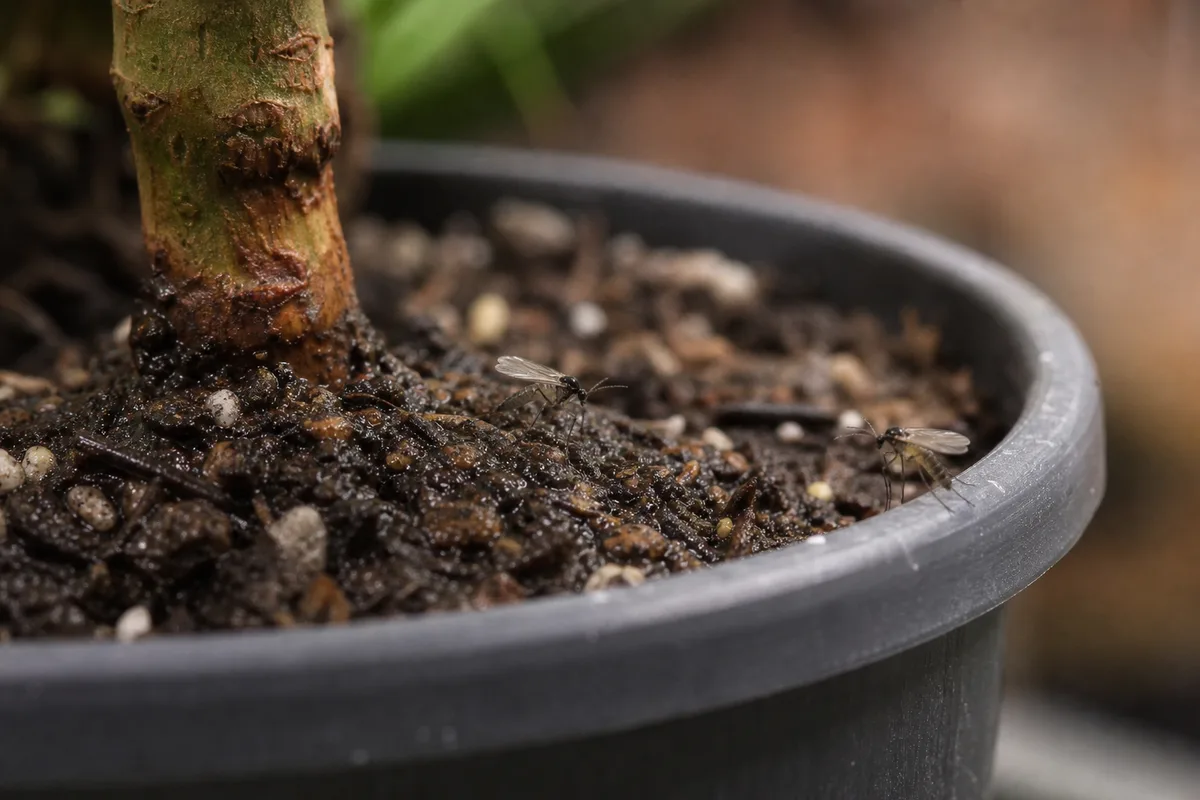
Fungus Gnats symptoms on Rubber Plant - compare with healthy tissue on the same plant.
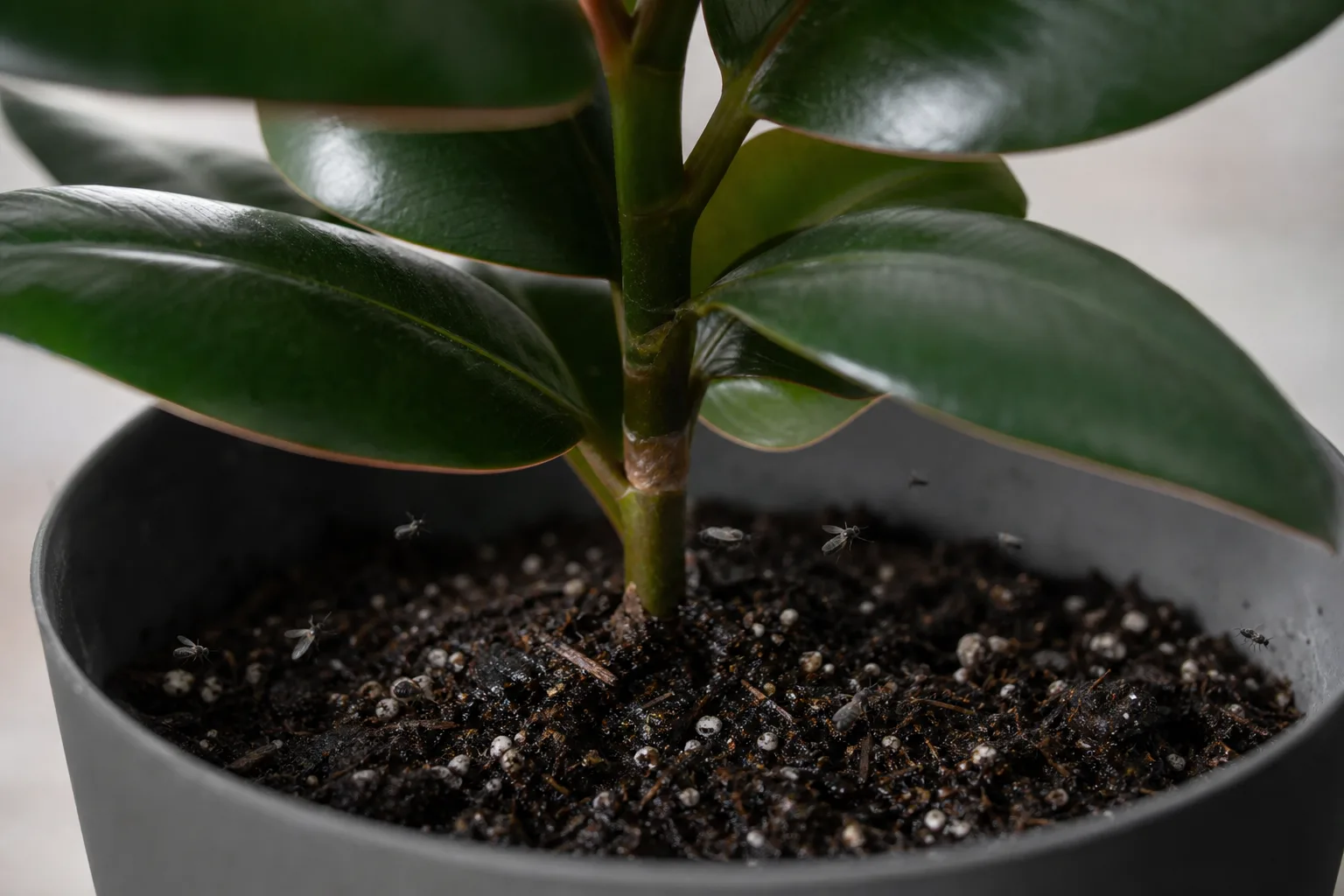
- Tiny dark flies (about 1/8 inch long) that hover near the pot, windows, or lamps-especially when you water or bump the container
- Flies rising in a cloud from the soil surface after watering
- Topsoil that stays dark and cool for many days between waterings
- Fine translucent larvae visible in the upper inch of mix if you scrape gently with a spoon
- Yellow sticky traps near the pot catching many small gnat-like insects
On an established Rubber Plant, the plant may look otherwise fine at first. Gnats are often the first warning that the root zone is wetter than Rubber Plant overview prefers-before yellow dropping leaves or soft roots appear.
Why Rubber Plant gets fungus gnats
Rubber Plant is not uniquely susceptible to fungus gnats as a species. Any houseplant in constantly damp mix can host them. What matters is how this plant is usually watered and where it sits in a home.
Calendar watering instead of soil checks. Rubber Plant should be watered when the top 2 inches of soil are dry-roughly every 7–10 days in active summer growth and every 14–21 days in cooler winter months when growth slows. Watering on a fixed schedule without checking the pot keeps the surface wet long enough for gnats to complete their life cycle.
Winter slow-down in dim light. Rubber Plant is semi-dormant in cold months and uses much less water. The same summer volume applied in November keeps mix saturated for weeks. Reduce watering from fall to late winter when growth slows. Low light slows transpiration, so the pot dries slowly even when you think you are being conservative.
Organic, moisture-retentive mix. Standard peat-heavy potting compost with perlite and bark works when drainage and watering match-but aged, compacted mix holds surface moisture longer. Larvae feed on fungi growing in that damp organic layer.
Oversized or cache pots. A large decorative pot around a smaller nursery container can trap water in the gap. The Rubber Plant root ball may be appropriately sized while the surrounding soil stays wet and breeds gnats.
Recent repot or heavy feeding. Fresh organic mix and warm conditions after Rubber Plant repotting guide can briefly favor fungal growth in the topsoil. That alone rarely causes a long infestation unless watering keeps the surface wet.
Gnats indicate habitat-not that your Rubber Plant is doomed. They mean the moisture environment needs correction before chronic wet roots trigger the yellow leaf drop and root rot this plant is known for under overwatering.
How to confirm the cause
Work through these checks before reaching for sprays:
- Fly behavior - Disturb the soil or water the pot. Fungus gnats rise from the mix. If insects stay on leaf undersides only, look for aphids, mealybugs, or scale instead.
- Soil moisture depth - Insert your finger to the second knuckle (about 2 inches). If it feels cool and wet while flies are present, you have a moisture-driven gnat problem.
- Pot weight - Lift the container after you think it should have dried. A heavy pot days after the last watering confirms slow dry-down.
- Larva check - Scrape the top half-inch of mix onto white paper. Translucent worm-like larvae with dark heads confirm active breeding in soil.
- Trap count - Place a yellow sticky trap at soil level for three days. Dozens of small flies on one Rubber Plant pot confirm infestation level.
- Plant health cross-check - Firm upright stems and glossy new leaves suggest gnats are still mostly a nuisance. Yellow lower leaves, soft petioles, or sour smell suggest wet-root stress beyond gnats alone.
- Drainage audit - Confirm drainage holes are open, saucers are emptied within an hour of watering, and no standing water sits in outer cache pots.
If traps stay clean, soil dries normally, and no larvae appear, the flying insects may be fruit flies from kitchen waste or drain flies-not a Rubber Plant soil issue.
First fix for Rubber Plant
Stop watering until the top 2 inches of soil are completely dry, and set a yellow sticky trap at the base of the pot.
This single step targets the cause (wet surface habitat) and reduces adult egg-layers at the same time. Check dryness with your finger, not the calendar. On a large Rubber Plant in a heavy pot, drying the top 2 inches may take one to two weeks in winter-wait until the depth is genuinely dry before the next thorough soak.
Do not drench with hydrogen peroxide, repot, or apply systemic insecticides on day one. Rubber Plant dislikes stacked stressors; fix moisture first unless larvae are overwhelming a small newly rooted cutting.
Step-by-step recovery
After the initial dry-down and trap placement:
- Resume watering only at the 2-inch dry threshold. Water thoroughly until it drains from the bottom, then empty the saucer. Never leave the pot sitting in runoff.
- Keep sticky traps in place for three to four weeks. Replace cards when they fill up. Falling catch counts mean fewer adults.
- Apply BTI (Bacillus thuringiensis israelensis) if larvae persist after the surface dries. Soak a mosquito dunk piece in water, then use that water to saturate the top layer of mix. Repeat every five to seven days for several cycles to catch newly hatched larvae. BTI targets larvae in soil and is commonly used on houseplants when label directions allow.
- Consider bottom watering temporarily if the surface keeps staying wet. Set the pot in a tray of water for 15–30 minutes so roots drink from below while the top inch stays drier and less attractive for egg-laying.
- Top-dress with coarse sand or fine gravel (about half an inch) if adults still lay eggs on bare wet peat. This is a secondary barrier, not a substitute for drying the mix.
- Move to brighter indirect light if the plant sits in a dim corner. Rubber Plant uses water faster in adequate light, which helps the pot dry predictably-without sun-scorching leaves.
- Repot only if infestation and wet soil persist after four to six weeks of corrected care, or if mix smells sour and roots feel soft when you inspect. Use fresh well-drained mix with perlite and coarse bark; choose a pot only slightly larger than the root ball.
Wear gloves when handling soil or trimming roots-Rubber Plant sap is irritating and the plant is toxic to cats and dogs if ingested.
Recovery timeline
You should see fewer flies on traps within one to two weeks once the top layer stays dry between waterings. Larval generations overlap, so full suppression often takes four to six weeks of consistent dry cycles plus BTI if needed.
Judge success by fly counts on traps and stable new growth-not by old yellow leaves reverting. A firm new leaf unfurling at the top means the root zone is stabilizing even if a few gnats still appear.
Lookalike symptoms to rule out
Fruit flies hover around ripening produce and trash, not consistently at one plant pot when watered. Vinegar traps work for fruit flies but not fungus gnats.
Drain flies breed in sink or shower drains. Cover the Rubber Plant pot overnight with mesh; if flies appear on the cover but not from soil, check nearby drains.
Shore flies resemble fungus gnats but are less common indoors and often tied to algae on constantly wet surfaces.
Whiteflies rest on leaf undersides and fly in a white cloud when shaken. They do not breed in soil.
Mold on soil surface often shares the same overwatering cause. White fuzzy mold is harmless to leaves but confirms the surface stays too wet-fix moisture for both issues.
Mistakes to avoid
Do not spray neem or insecticidal soap on soil expecting larval control-adult sprays miss larvae in the mix and add unnecessary stress to a plant that needs drier roots, not foliar pesticides.
Do not keep watering lightly every few days to “avoid drought.” Light frequent sips keep the top inch permanently moist-the exact habitat fungus gnats need.
Do not assume gnats mean repot every plant immediately. Rubber Plant handles repotting best in spring; an unnecessary winter repot plus gnat stress can trigger leaf drop.
Do not ignore rising trap counts while soil still feels wet at 2 inches depth. Adults will keep laying eggs until the surface dries.
Do not use imidacloprid or other systemic insecticides as a first response on a pet-accessible toxic plant unless you have read the label carefully and excluded pets from the area.
Rubber Plant care cross-check
Fungus gnats often appear alongside early overwatering stress. Align these basics:
- Light: Rubber Plant light guide most of the day so the plant uses water steadily.
- Water: Top 2 inches dry before each soak; extend intervals in winter.
- Mix: Well-draining peat-free compost with 20–25% perlite and coarse bark.
- Pot: Drainage holes mandatory; avoid oversized containers.
- Temperature: Protect from cold drafts below 10°C (50°F)-draft stress causes leaf drop that can mask or compound root issues.
If gnats arrived after a recent move or repot, give the plant stable conditions for several weeks before adding more interventions beyond moisture correction.
How to prevent fungus gnats next time
Treat sticky traps as early-warning tools in fall and winter when Rubber Plant watering mistakes are most common. One trap per large pot catches reinfestations before larvae numbers explode.
Quarantine new plants for two to three weeks before placing them near your Rubber Plant. Gnat eggs often hitchhike in nursery soil.
Remove fallen leaf debris from the soil surface so organic matter does not hold moisture at the crown.
Refresh compacted mix when repotting on the every 1–2 year schedule young Rubber Plants need-or every 2–3 years for mature specimens. Aged peat that never dries on top is a recurring gnat risk.
When in doubt, under-water slightly in winter rather than keeping mix constantly moist. Rubber Plant tolerates brief dry edges better than chronic wet roots.
When to worry
Treat as urgent when multiple lower leaves yellow and drop within days, stems soften at soil level, or the mix smells sour despite surface drying. Those patterns suggest root rot or advanced wet-root damage-not gnats alone.
Also escalate if you run a propagation tray of Rubber Plant cuttings in the same room. Cuttings in moist rooting mix are far more vulnerable to larval root feeding than a mature plant.
A few gnats on an otherwise firm, glossy Rubber Plant with drying soil is lower urgency. Stay consistent with dry-down and traps before adding harsh chemicals.
Conclusion
Fungus gnats on Rubber Plant tell you the potting mix has been wet on top for too long. Confirm flies rise from soil, dry the top 2 inches before every watering, and use sticky traps while you reset your rhythm. Add BTI if larvae persist, repot only when moisture fixes fail or roots are clearly compromised, and judge recovery by cleaner traps and firm new leaves-not by instant disappearance of every fly.
When to use this page vs other Rubber Plant guides
- Rubber Plant watering guide - Use for routine moisture checks before assuming fungus gnats is the main issue.
- Rubber Plant problems hub - Browse all 17 common issues on this species.
- Overwatering on Rubber Plant - Different entry point when symptoms overlap with fungus gnats.
- Mold on Soil on Rubber Plant - Different entry point when symptoms overlap with fungus gnats.
- Root Rot on Rubber Plant - Different entry point when symptoms overlap with fungus gnats.