Mold on Soil on Rubber Plant: Causes, Checks & Fixes
Quick answer
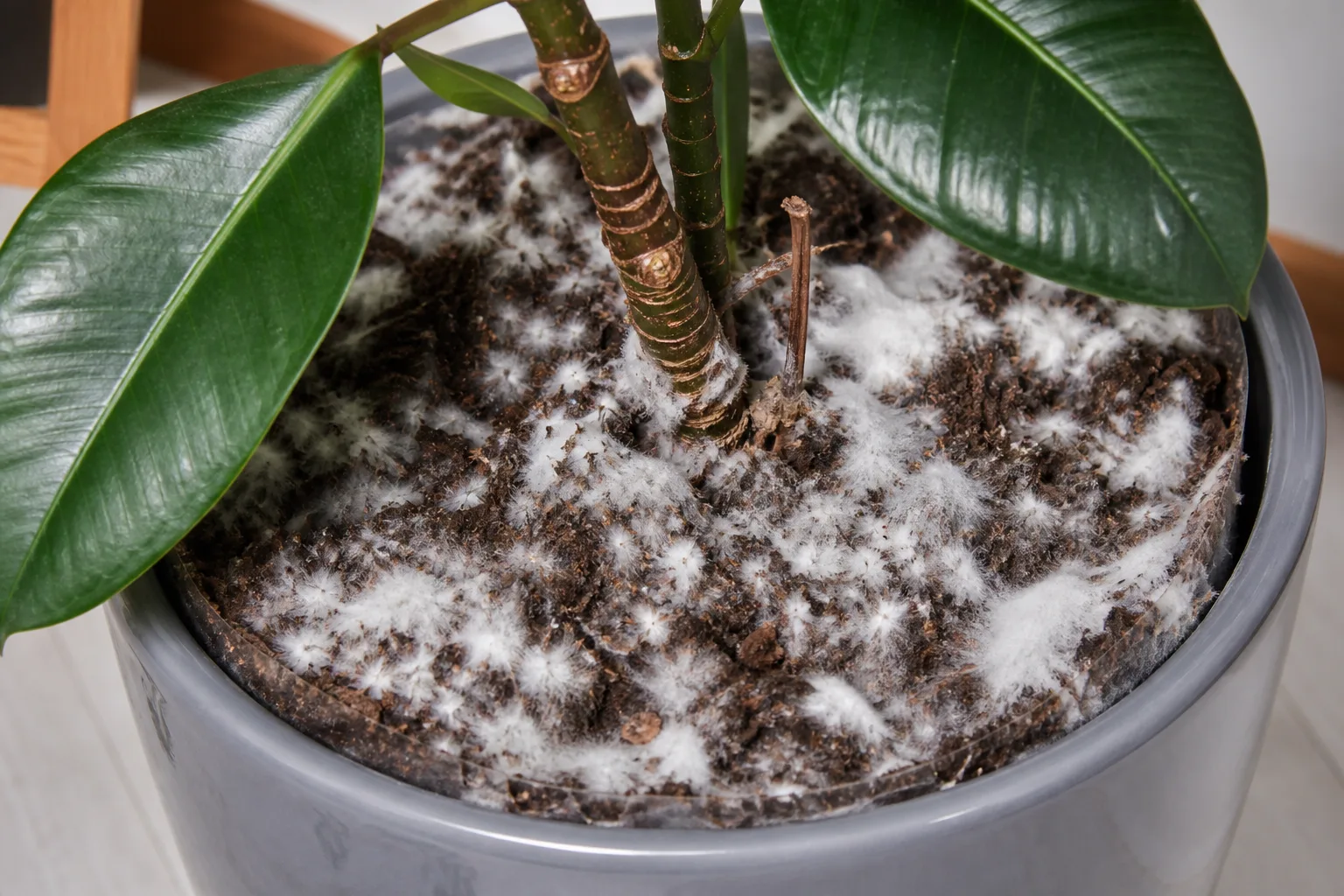
Fluffy white or gray mold on Rubber Plant soil is usually harmless surface fungus feeding on damp organic mix-not a sign your leaves are infected. First step: stop watering and let the top 2 inches of soil dry before you scrape or replace anything.
Mold on Soil on Rubber Plant: Causes, Checks & Fixes
This guide covers mold on soil on Rubber Plant. See also the general Mold on Soil guide, watering, and light pages for this plant.
Mold on Soil on Rubber Plant: Causes, Checks & Fixes
Quick answer
White or gray fuzz on your Rubber Plant pot is almost always saprophytic mold-a harmless fungus breaking down organic matter in wet soil. It is not the same as powdery mildew on leaves and rarely attacks healthy Ficus elastica tissue directly. The real concern is what the mold reveals: the soil surface is staying damp too long, which puts a plant that needs dry-down between waterings at risk for yellow leaves, leaf drop, and root rot.
First step: stop watering and let the top 2 inches of soil dry completely. Rubber Plant tolerates a dry surface far better than a chronically wet one. Once the mix is dry, scrape off the moldy top layer, confirm drainage and light, then resume watering only when your finger test says the top 2 inches are dry again.
What mold on soil looks like on Rubber Plant
Surface mold on a Rubber Plant pot has a distinct look that separates it from leaf problems:
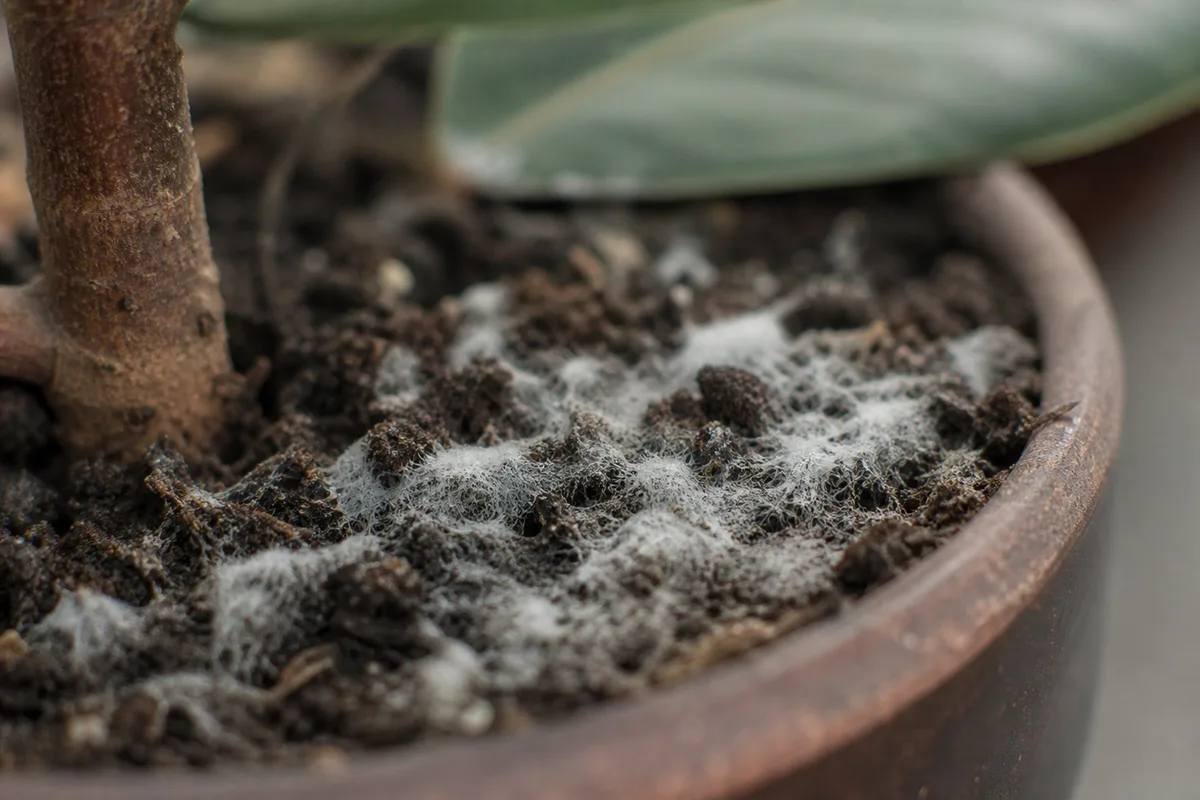
Mold on Soil symptoms on Rubber Plant - compare with healthy tissue on the same plant.
Typical surface mold:
- White, gray, or occasionally greenish fuzzy film on the top of the mix only
- Soil surface stays visibly damp for several days after watering
- Light musty smell near the pot rim
- Plant leaves remain glossy, firm, and upright in early cases
- Small dark flies may hover when you touch the soil
Signs the moisture problem is affecting the plant:
- Lower leaves turning yellow and dropping
- Pot feels heavy days after you thought it should have dried
- Sour or rotten smell from the drainage hole
- New growth stunted or soft at the stem base
- Persistent fungus gnats every time you water
Rubber Plant leaves are large and show stress clearly once roots stay wet too long. Surface mold can appear while leaves still look fine-that window is when correcting watering is easiest.
Why Rubber Plant gets mold on soil
Rubber Plant is not a bog plant. It wants Rubber Plant light guide, well-draining mix, and soil that dries partway between waterings. When the surface stays wet, organic particles in peat-based or bark-heavy mixes feed saprophytic fungi that colonize the top layer.
Several Rubber Plant habits make mold more likely:
overwatering on Rubber Plant on a calendar. Watering every week regardless of how fast the pot dries keeps the surface damp. In winter, when Rubber Plant growth slows and the plant is semi-dormant, the same schedule can leave the mix wet for weeks-Clemson and Missouri Botanical Garden both recommend reducing watering from fall to late winter.
Low light slowing evaporation. A Rubber Plant in a dim corner uses less water than one in bright indirect light. The top layer dries slowly even if you water correctly in summer.
Oversized pots. Extra soil volume holds moisture longer than roots can use, especially on a young plant. The center may dry while the surface stays wet enough for mold.
Organic debris on the surface. Fallen Rubber Plant leaves and bark fines give fungi a food source. Large glossy leaves shed regularly; debris left on wet soil accelerates mold.
Poor airflow around grouped plants. Stagnant air between crowded pots slows surface drying. Mold and fungus gnats often appear together in the same wet-soil habitat-the fungal mat can attract fungus gnats that feed on decaying organic matter.
Dense, water-retentive mix. Heavy peat without enough perlite or coarse bark holds surface moisture. Rubber Plant needs good drainage-not a mix that stays spongy on top.
How to confirm the cause
Work through these checks before Rubber Plant repotting guide or spraying fungicide:
- Finger test at 2 inches - Insert your finger to the second knuckle. If the surface is wet or cool and damp at depth, you are watering too frequently or the pot is not drying in your light conditions.
- Pot weight - Lift the container. A heavy pot days after watering confirms slow dry-down.
- Leaf pattern - Mold alone with firm, green upper leaves points to surface moisture. Yellowing lower leaves plus mold suggests chronic overwatering affecting roots.
- Smell check - Musty surface odor fits harmless mold. Sour smell from the drainage hole suggests anaerobic conditions and possible root decline.
- Fly test - Disturb the soil surface. Clouds of tiny flies confirm fungus gnats sharing the wet habitat.
- Saucer and cachepot check - Standing water under the pot keeps the bottom saturated and the surface slow to dry.
- Light audit - Confirm bright indirect light for most of the day. Weak light extends surface wetness without reducing how much you water.
If mold is only on the surface, leaves are stable, and smell is mild, you likely have cosmetic saprophytic growth tied to moisture-not an emergency repot.
First fix for Rubber Plant
Stop watering immediately and let the top 2 inches of soil dry completely before you do anything else.
This single step breaks the fungus-friendly wet cycle and matches how Rubber Plant should be watered year-round-let the soil dry slightly to the touch between waterings. Do not scrape mold and then water the next day-that replaces one damp surface with another. Do not mist the soil or leaves hoping to wash mold away; that adds moisture.
Wait until the finger test reads dry at 2 inches, then scrape off the top inch of affected mix with a spoon and discard it. Leave the plant in place unless drainage or pot size is clearly wrong.
Step-by-step recovery
After the surface has dried:
- Remove visible mold and debris - Scrape the top 1–2 cm of moldy soil and any fallen leaf litter. Wash the spoon between pots if you have multiple plants.
- Refresh the surface - Add a thin layer of dry, well-draining mix matching your usual perlite-and-bark blend. Do not pack it down.
- Empty standing water - After future waterings, discard excess from saucers within 30 minutes so the pot never sits in a puddle.
- Improve light if needed - Move toward brighter indirect light so the mix dries at the pace Rubber Plant actually uses water. Avoid direct hot afternoon sun that scorches leaves.
- Adjust winter rhythm - From fall through late winter, stretch intervals between waterings. Semi-dormant roots absorb less; surface mold in cold months often traces to summer watering habits.
- Address fungus gnats together - If flies appear, let the top 1–2 inches dry completely, set yellow sticky traps near the pot base, and fix moisture before reaching for sprays.
- Repot only if mold returns fast - If fuzzy growth comes back within a week after drying and scraping, check whether the pot is too large, drainage holes are blocked, or the mix is too heavy. Repot in spring into a slightly smaller or right-sized container with chunkier mix.
Do not repot on day one for mild surface mold on an otherwise healthy plant. Do not fertilize a stressed plant hoping to push growth-that is irrelevant to mold and can salt-stress wet roots.
Recovery timeline
Surface mold often disappears within a few days once the top layer dries and you remove the visible mat. Adjusting your Rubber Plant watering guide takes one to two weeks to feel routine; the pot weight should feel noticeably lighter before you water again.
If overwatering has already yellowed lower leaves, expect one to three months of stable care before new glossy growth looks normal. Those yellow leaves will drop and will not revert to green. Judge success by firm new leaves at the top, not by saving old damaged ones.
Lookalike symptoms to rule out
Powdery mildew on leaves appears as dry white powder on leaf surfaces, not fuzzy growth on soil. It follows humidity and poor airflow on foliage, not a wet pot surface alone.
Mineral or fertilizer crust looks like hard white or tan deposits on the soil rim, not cottony fuzz. Flush the pot if salts accumulate; that is a feeding and water-quality issue, not saprophytic mold.
Green algae on the surface needs constant light and moisture together. It is also harmless but signals the same over-wet, low-airflow conditions as white mold.
Root rot without visible mold can smell sour and cause drooping with no fuzzy top layer. Soft brown roots on inspection mean repotting and root trimming, not scrape-and-wait.
Mealybugs on stems look like white cotton patches on leaf axils and stems, not a uniform soil mat. Wipe stems and treat pests separately from soil mold.
Mistakes to avoid
Do not drench the plant with fungicide or cinnamon as a first response. Fixing moisture and airflow resolves most cases without chemicals.
Do not keep a decorative cachepot that traps water around the nursery pot. Rubber Plant roots suffocate when the bottom stays saturated.
Do not assume mold means the plant is doomed. Surface fungus on an otherwise healthy Rubber Plant is a warning, not a death sentence.
Do not scrape mold repeatedly without changing how you water. You will see the same fuzz return within days.
Do not increase watering because leaves dropped after a move. Rubber Plant often drops leaves from stress; adding water to a stressed plant in a wet pot worsens mold and root risk.
How to prevent mold on soil next time
Match watering to the pot, not the calendar. Water when the top 2 inches are dry-roughly every 7–10 days in active summer growth and every 14–21 days in winter when the plant slows. Avoid overwatering and empty saucers so the plant never sits in standing water.
Use well-draining mix with perlite and coarse bark. Good drainage lets the surface dry between sessions while the root zone stays appropriately moist after a thorough drink.
Keep bright indirect light consistent. A plant that dries predictably in good light rarely grows chronic surface mold.
Clean the soil surface during weekly care. Remove fallen Rubber Plant leaves before they decompose into fungal food.
Right-size the container. Repot when roots circle the base, not preemptively into a much larger pot that holds excess wet soil.
Improve airflow between grouped houseplants. A small fan or spacing between pots helps surface layers dry.
When to worry
Treat as urgent when soil smells sour, stems soften at the base, multiple leaves yellow and drop within days, or the plant wilts in wet soil. Those patterns suggest root decline beyond cosmetic surface mold.
Also escalate when mold returns within days after drying and scraping, fungus gnats persist for weeks despite dry surface intervals, or new growth stays pale and weak. Chronic wet conditions on Rubber Plant in winter are a common path to root rot.
Surface mold alone on a firm, glossy plant in good light is lower urgency. Confirm moisture, scrape, dry, and adjust rhythm before repotting or panicking.
Conclusion
Mold on Rubber Plant soil is usually harmless surface fungus telling you the mix stays wet too long-not a leaf disease requiring spray. Let the top 2 inches dry, remove the fuzzy layer, fix drainage and light, and water only when the finger test says so. Catch it at the soil surface and you prevent the yellow leaves and root stress that actually threaten a healthy Ficus elastica.
When to use this page vs other Rubber Plant guides
- Rubber Plant watering guide - Use for routine moisture checks before assuming mold on soil is the main issue.
- Rubber Plant problems hub - Browse all 17 common issues on this species.
- Fungus Gnats on Rubber Plant - Different entry point when symptoms overlap with mold on soil.
- Overwatering on Rubber Plant - Different entry point when symptoms overlap with mold on soil.
- Root Rot on Rubber Plant - Different entry point when symptoms overlap with mold on soil.