Slow Growth on Rubber Plant: Causes, Checks & Fixes
Quick answer
Slow growth on Rubber Plant is often normal in cool dim winter. If no new glossy leaves appear through a warm bright season, insufficient light is the usual limiter-move to bright indirect light before repotting or fertilizing.
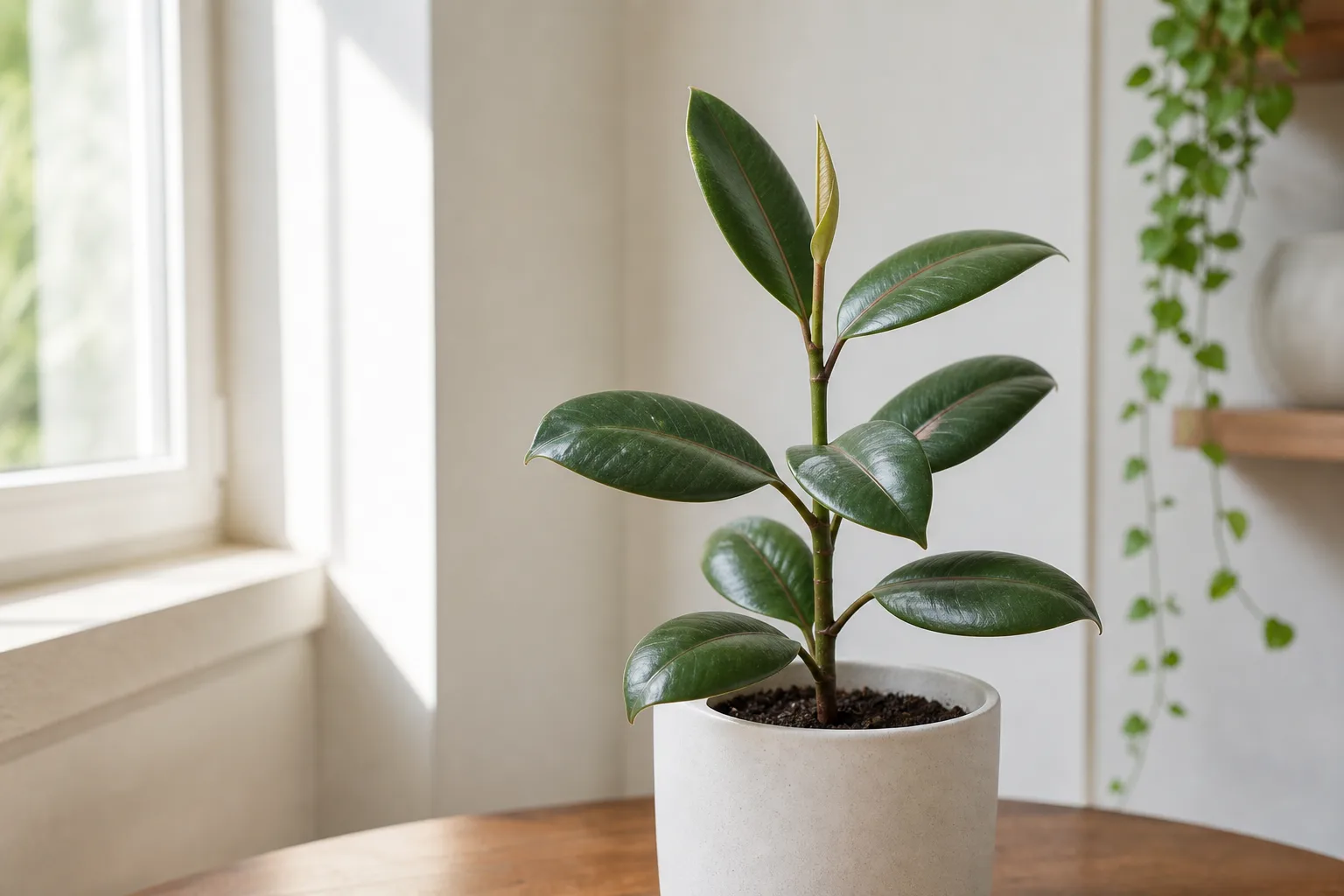
Slow Growth on Rubber Plant: Causes, Checks & Fixes
This guide covers slow growth on Rubber Plant. See also the general Slow Growth guide, watering, and light pages for this plant.
Slow Growth on Rubber Plant: Causes, Checks & Fixes
Quick answer
Rubber Plant (Ficus elastica) has a rapid growth rate when light, warmth, and roots support it-but indoors it often looks stalled for reasons that are either normal or fixable. Cool dim winter and recovery after a move or repot can pause new leaves for weeks without meaning the plant is failing.
In bright indirect light during spring and summer, a healthy Rubber Plant often unfurls a new glossy leaf every two to four weeks. Mature specimens and variegated cultivars may run slower. Concern starts when the plant pushes no new glossy leaves through a full warm season despite firm existing foliage, or when new leaves arrive smaller with long gaps between them on the stem.
First fix: move the plant to bright indirect light and watch dry-down speed for two weeks before repotting or fertilizing. Rubber Plant cannot photosynthesize enough energy for large new leaves in dim corners, and stacking other fixes without fixing light rarely speeds growth. Window placement detail lives on the Rubber Plant light guide.
Slow dry-down in a dim corner often misreads as underwatering-the mix stays wet because the plant is not transpiring actively. That light signal belongs in your first check, not a calendar guess.
How this page differs from other growth guides
| Your main question | Start here | Use instead |
|---|---|---|
| ”Is my rubber plant supposed to grow this slowly?” | This page - normal pace, winter rest, stall diagnosis | - |
| ”Which window is bright enough?” | Brief light audit below | Not enough light - full placement audit |
| ”Why are stems long with sparse leaves?” | Lookalikes section | Leggy growth - etiolation and spring pruning |
| ”Yellow leaves on wet soil, no new tips” | When to worry | Overwatering or root rot |
This page covers all stall causes-seasonal rest, light limits, rootbound pots, oversized containers, and post-change pauses. If stems are visibly stretching with long gaps between leaves, start with the leggy growth guide after reading the scope table above.
What slow growth looks like on Rubber Plant
Healthy Rubber Plant growth means a firm glossy leaf unfurling from the stem tip every few weeks during spring and summer in good light. Slow growth is the absence of that rhythm-or new tissue that looks weaker than older leaves.
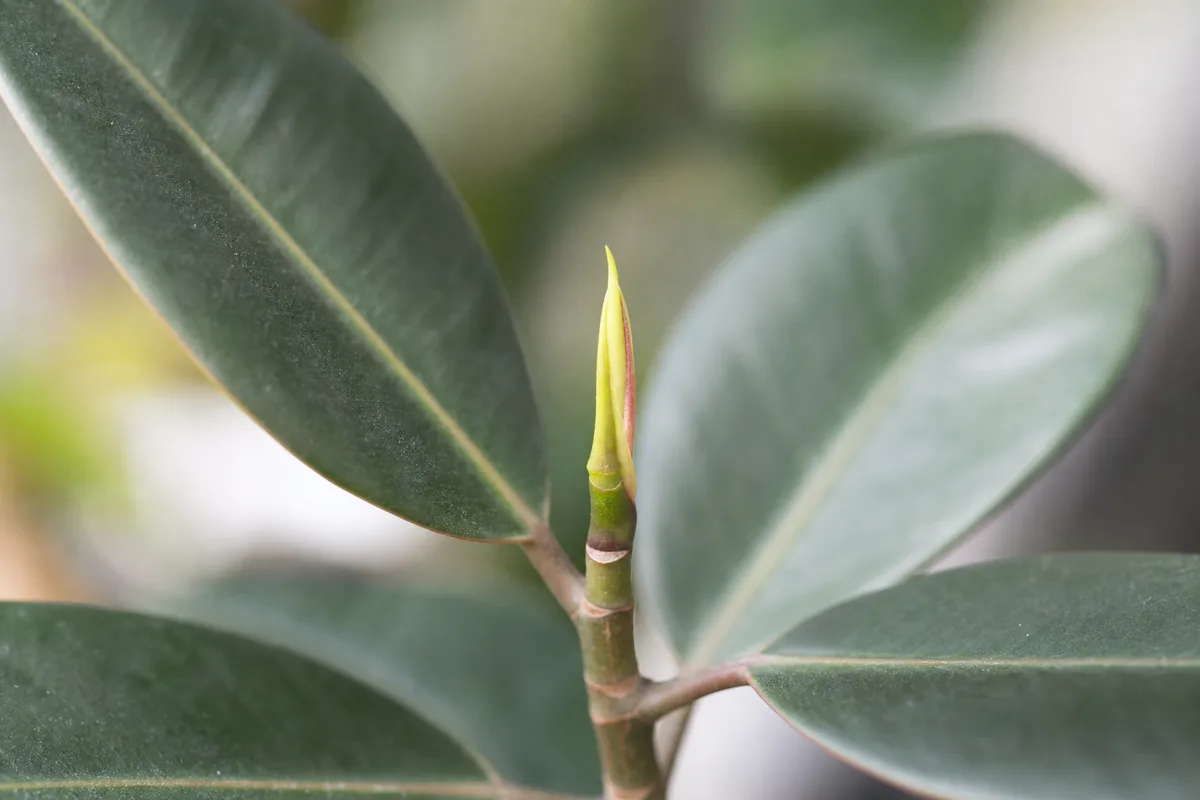
Slow Growth symptoms on Rubber Plant - compare with healthy tissue on the same plant.
Typical signs:
- No new leaf sheath at the top for months during warm active months
- Smaller new leaves than the mature baseline on the same stem
- Long internodes-visible gaps between leaves climbing the stem (often paired with pale color)
- Static height while the pot feels light and soil dries normally (suggests light or nutrients, not drought)
- Soil that stays wet for ten days or more after one watering while growth stops (suggests root stress)
- One-sided lean toward a window without new upright tips
What is often normal, not a problem:
- Little or no new growth from late fall through winter when light drops and the plant is semi-dormant
- A quiet month after repotting, a room change, or heavy leaf drop while the plant re-establishes
- A mature specimen growing more slowly than a young plant in the same window-large-leaved trees use energy differently than fresh cuttings
Rubber Plant stores momentum in its thick stems and trunk base. A plant can look healthy and glossy while barely adding height if light barely covers maintenance photosynthesis.
Track new leaves on a calendar
Mark the stem tip with a small piece of tape or note the date each glossy leaf fully opens. Comparing your plant to itself over months separates normal winter quiet from a true warm-season stall better than comparing to a fast-growing pothos in the same room.
Case-style walkthrough: A Rubber Plant in a dim north-facing room produced no new sheath from November through February-normal rest with firm leaves. After moving to an east window in mid-March and holding the same dry-down watering rule, a new glossy leaf sheath appeared five weeks later. Dry-down sped from roughly fourteen days to eight as light improved; that shift confirmed light was the bottleneck, not thirst.
Why Rubber Plant grows slowly
Insufficient light is the main indoor limiter
Rubber Plant is often sold as low-light tolerant, and it will survive dim corners-but Clemson Extension notes it grows best with morning light from an east window. University of Maryland Extension classifies rubber plant among medium-bright houseplants suited to east- or west-facing windows-not deep interior shade.
In low light, Rubber Plant still respires but produces little surplus carbohydrate for new leaf tissue. Internodes stretch, new leaves shrink, and soil dries slowly because the plant is not transpiring actively. That slow dry-down often leads owners to water less frequently on calendar while the real issue is photons, not thirst.
Variegated cultivars such as ‘Tineke’ or ‘Ruby’ need more light than solid-green ‘Burgundy’ types because less chlorophyll means slower photosynthesis in the same spot. Cultivar light floors are covered on the overview.
Winter rest and cool temperatures
Rubber Plant slows naturally when days shorten and rooms cool. NC State Extension recommends reducing watering when the plant is dormant from fall to late winter. Growth near stops below about 55°F (13°C) or in cold drafts-common near poorly sealed windows and AC vents.
Expecting summer leaf frequency in January sets up unnecessary repotting and fertilizer. Match winter rhythm on the watering guide.
Overwatering and damaged roots
Rubber Plant is more prone to overwatering in winter when uptake is low. Root rot from soil that does not drain quickly or overly frequent watering kills fine roots first. The plant may keep old leaves while the apical bud stalls because damaged roots cannot supply water and nutrients for expansion-even when the mix feels damp.
Chronic wet soil also invites fungus gnats and compacts mix around thick roots that prefer good drainage and occasional drying. See overwatering when wet soil and stalled tips coincide.
Rootbound or oversized pots
Roots circling the pot base or escaping drainage holes restrict uptake-growth slows despite correct light and watering. Rubber Plant shows this as a top-heavy plant that dries out in two to three days yet adds no height.
An oversized pot causes the opposite problem: a small root ball sitting in a large wet zone. Growth stalls while soil stays soggy in the outer ring. Rubber Plant does not appreciate swimming in unused mix. Repot timing and pot sizing are on the repotting guide.
Recovery after change
Rubber Plant prefers to remain in one location and reacts to moves, repotting, and draft exposure before it reacts to slow neglect. Leaf drop after relocation often precedes a growth pause while the plant rebalances. Patience is warranted if light and watering are otherwise correct.
Nutrient gaps-after basics are right
Depleted substrate can limit leaf size, but fertilizer rarely fixes dim light or rotted roots. Clemson recommends water-soluble fertilizer every two weeks during active spring and summer growth on healthy plants-and less often in lower light. Feeding a stressed stagnant plant pushes salt without solving the bottleneck. Full feed timing is on the fertilizer guide.
How to confirm the cause
Work through these checks in order:
- Season and temperature - Is it November through February, or is the plant near a cold draft? Quiet growth may be normal. Warm spring with no new tips is not.
- Light at the canopy - Can you read comfortably without a lamp at the leaf level during midday? That is a practical rule-of-thumb for bright indirect light-not a lux measurement. Rubber Plant wants bright indirect light, not a dim hallway. East or filtered south/west exposure beats a north-facing interior wall. Run a full audit on not enough light if unsure.
- New leaf quality - Are emerging leaves glossy and firm, or pale and small with long stem gaps? Small pale leaves strongly suggest light; firm old leaves with no tip growth suggest roots or water.
- Soil dry-down - Insert a finger 2 inches into the mix. In warm months, healthy Rubber Plant in appropriate light usually needs water roughly every 7–10 days per the watering guide. Soil wet ten days after watering in moderate warmth points to overwatering, oversized pot, or low light reducing uptake.
- Pot weight and roots - Lift the pot. Very light with limp leaves suggests underwatering. Very heavy with no growth suggests excess moisture. Slide the plant out if growth stalled all season-look for circling white roots or brown mushy tissue.
- Recent changes - Repot, move, or heat/AC season within the last month? Pause expectations before escalating care.
- Pest check - Inspect leaf undersides and stem joints for mealybugs, scale, or sticky residue. Low-level sap feeders drain vigor without obvious collapse.
Confirmed patterns:
| What you see | Likely cause | What confirms it | Related guide |
|---|---|---|---|
| No tips all winter; firm leaves; dry soil | Seasonal rest | New sheath in spring when light increases | Watering |
| No tips all summer; dim placement | Low light | Brighter spot produces sheath within 4–8 weeks | Light, not enough light |
| Fast dry-down; circling roots; no height gain | Rootbound | New growth after spring repot one size up | Repotting |
| Wet outer ring; small root ball in huge pot | Oversized container | Stall eases after tighter repot with fresh mix | Overwatering |
| Wet soil; yellow leaves; sour smell | Root stress | Firm roots and new tips only after drying cycle | Root rot |
If light is clearly inadequate and roots are firm and pale, you have a light diagnosis-not a repot emergency.
First fix for Rubber Plant
Move the plant to the brightest stable spot that offers bright indirect light-ideally within a few feet of an east window or a south/west window filtered by sheer curtain.
Do this before repotting, pruning hard, or fertilizing. Rubber Plant cannot use extra nutrients or fresh mix to compensate for photosynthesis that is not happening. Keep the same watering rule-water when the top 2 inches of soil are dry-but expect dry-down to speed up in brighter light; check moisture every few days the first two weeks.
Do not jump from deep shade to harsh midday sun in one step; acclimate over a week to avoid scorch on large leaves.
Step-by-step recovery
After improving light, address secondary limits in this order:
- Stabilize watering - Water thoroughly until drainage runs clear, then let the top 2 inches dry before the next drink. In winter, stretch intervals to every 14–21 days as growth slows. Empty saucers so roots are not re-absorbing standing water.
- Warmth and placement - Keep temperatures in the 65–85°F (18–29°C) comfort range and away from cold drafts. Avoid moving the pot again while new growth initiates.
- Repot if rootbound - In late winter or early spring, move one pot size up with well-draining houseplant mix plus perlite if your blend stays heavy. Trim only mushy roots; do not fertilize for several weeks after repotting.
- Downsize or refresh if overpotted or stale - If the root ball is tiny in a huge wet pot, repot into a tighter fit with fresh airy mix. If mix is broken down and always wet, replace it even at the same pot size.
- Feed lightly during active growth only - Once new firm leaves appear and roots are healthy, apply balanced liquid fertilizer at half strength every two weeks through spring and summer per Clemson guidance. Stop in fall.
- Dust leaves - Wipe broad Rubber Plant leaves with a damp cloth so lower light sites still capture what is available. Dust blocks photosynthesis on large surfaces.
- Prune only after growth resumes - If stems are leggy from past low light, pinch or cut above a node after new tight growth shows the plant is energized-not before. See leggy growth for spring pruning detail.
Grow-light setup for interior and north-facing rooms
When the best window still falls short-especially through winter-supplement with a full-spectrum LED grow light placed 30–45 cm (12–18 inches) above the canopy for 10–12 hours daily on a timer. University of Maryland Extension notes that artificial light can improve growth when natural light is inadequate, and recommends limiting total daily light to about 16 hours when combining lamps with daylight.
Practical setup for Rubber Plant:
- Position the lamp overhead, not to one side, so the canopy receives even coverage
- Raise the fixture if new leaves bleach or look washed out; lower it if growth stays flat after four weeks
- Expect faster dry-down under supplemental light-recheck soil every few days the first two weeks
- Treat grow lights as a bridge while you improve window placement, not a permanent substitute for zero natural light
Window bands, scorch limits, and long-term light planning are on the light guide.
Recovery timeline
During active warm months with corrected light, many Rubber Plants produce a visible new leaf sheath within four to eight weeks. Tighter internodes on that new growth confirm the fix is working.
Winter improvements may show little above-soil change until March or April even if roots are healthier-track progress by spring flush, not December expectations.
Old leaves do not enlarge retroactively. A small leaf from a dim period stays small; judge recovery by new glossy tissue at the tip.
If light, watering, and roots are corrected and no bud activity appears by mid-spring, inspect roots again for hidden rot or consider whether the plant has been kept below 55°F. Contact your local cooperative extension office or a master gardener helpline if corrected care fails through a full growing season.
Lookalike symptoms to rule out
| Symptom pattern | Likely issue | Read next |
|---|---|---|
| Firm leaves, dry soil, no tips Nov–Feb | Normal winter rest | This page - reduce water; wait for longer days |
| Long stems, sparse leaves, lean to window | Leggy stretch from weak light | Leggy growth |
| Pale dull leaves, soil wet for weeks | Low light slowing uptake | Not enough light |
| Yellow leaves, sour soil, soft base | Root decline | Root rot |
| Very light pot, curled crispy edges | Drought pause | Underwatering |
| Multiple leaves drop after a move | Environment shock | Leaf drop |
Leaf drop without a growth stall usually signals move, draft, or water stress-not simple slow growth. Stabilize environment first per the overview troubleshooting hub.
Mistakes to avoid
Do not fertilize heavily to force growth on a plant in dim light or with damaged roots-salt stress makes recovery slower.
Do not repot on day one without checking light and moisture pattern. Unnecessary repotting triggers another growth pause on a change-sensitive Ficus.
Do not keep watering on a summer calendar in winter while the plant is semi-dormant; wet cold soil is a common hidden cause of stalled spring growth.
Do not interpret variegated cultivar reversion as slow growth alone-pale new leaves on ‘Tineke’ often need more light, not more fertilizer.
Do not place in direct hot afternoon sun immediately from deep shade; scorched leaves set growth back further.
Do not repot and fertilize the same week to “jump-start” growth on a change-sensitive Rubber Plant-stacking interventions makes it impossible to know what helped.
Rubber Plant care cross-check
Slow growth often means one pillar of normal care is out of range:
| Factor | Healthy target for growth | Stagnation clue | Guide |
|---|---|---|---|
| Light | Bright indirect; east or filtered south/west | Long gaps between leaves, pale new tips | Light |
| Water | Top 2 inches dry before watering | Wet soil >10 days; or pot very light | Watering |
| Temperature | 65–85°F; avoid <55°F | Growth stops near cold windows | Overview |
| Roots | Firm white tips; room to expand | Circling roots; mushy brown smell | Root rot |
| Feed | Half-strength every 2 weeks in spring–summer only | Pale small leaves after light is fixed | Fertilizer |
Rubber Plant tolerates average home humidity (40–60%) when other factors are right; low humidity alone rarely explains total growth stop unless paired with heat stress.
Pet safety when repotting or feeding for growth
Ficus elastica is toxic to cats and dogs per the ASPCA. Milky latex sap can irritate skin and mouths if ingested.
When you repot, trim roots, or wipe leaves during a growth-recovery push:
- Wear gloves-sap contact can irritate sensitive skin
- Keep pets away from trimmed roots, spilled soil, and pruned leaves until cleanup is complete
- Do not rely on tough leaves as chew-safe; toxicity applies to all cultivars
- If a pet ingests foliage, contact your veterinarian or ASPCA Animal Poison Control at (888) 426-4435
Pet placement and household safety context is on the Rubber Plant overview.
How to prevent slow growth next time
Place Rubber Plant where bright indirect light is realistic all year, not only where the pot looks best. Rotate a quarter turn weekly once growth is active to keep stems upright.
Repot every 1–2 years while young, or when roots circle and growth slows despite good light. Use well-draining mix and pots with drainage holes.
Match watering to season-reduce from fall through late winter as uptake drops.
Keep the plant in one stable spot when possible; batch environment changes instead of stacking repot, move, and prune the same week.
Feed only during active growth on healthy plants. Track new leaf frequency monthly rather than expecting daily visible change on a tree-like houseplant.
When to worry
Escalate beyond light and watering adjustments if:
- Multiple leaves yellow and drop while soil stays wet and smells sour
- Stem bases soften or black patches spread-possible rot, not dormancy
- Sticky leaves with crawling insects persist after isolation and rinse
- No apical bud activity by mid-spring after a full season of corrected bright light and firm roots
A firm Rubber Plant with no winter leaves but no decline is usually fine. A warm-season plant that looks worse while standing still needs root or pest inspection-not more fertilizer.
Related Rubber Plant guides
- Overview - growth expectations, cultivar differences, pet safety, troubleshooting hub
- Light - window placement, grow lights, scorch warnings
- Watering - dry-down rhythm, winter reduction
- Fertilizer - half-strength timing during active growth
- Repotting - one-size-up timing, root disturbance
- Not enough light - placement audit when brightness is uncertain
- Leggy growth - etiolation with long internodes and spring pruning
- Root rot - mushy roots, sour soil, crown decline
- Overwatering - wet mix stall with firm foliage
- Underwatering - drought pause with light pot and curled leaves
- Leaf drop - sudden shed after moves or drafts