Leggy Growth on Rubber Plant: Causes, Checks & Fixes
Quick answer
Leggy Rubber Plant stems mean the plant is stretching for light-not a disease. Move it to bright indirect light first, then prune lanky stems in spring once new growth tightens up.
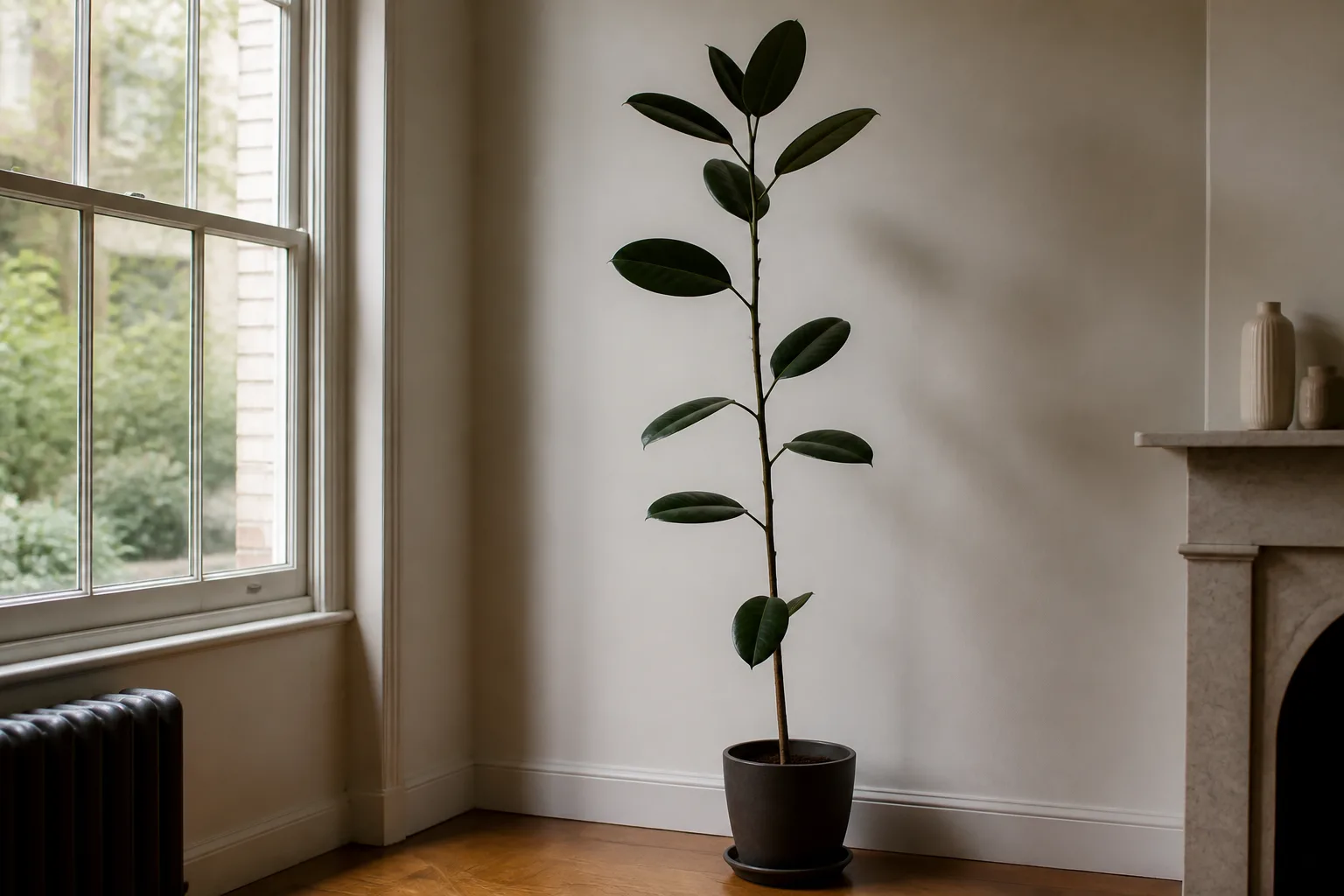
Leggy Growth on Rubber Plant: Causes, Checks & Fixes
This guide covers leggy growth on Rubber Plant. See also the general Leggy Growth guide, watering, and light pages for this plant.
Leggy Growth on Rubber Plant: Causes, Checks & Fixes
Quick answer
Leggy Rubber Plant (Ficus elastica) growth is almost always a light problem, not a disease or nutrient crisis. In dim rooms the plant stretches toward the brightest source: internodes lengthen, new leaves emerge smaller and paler, and the tree-like silhouette turns into a sparse pole with glossy leaves spaced far apart.
First step: move the plant to brighter indirect light-not fertilizer, not a bigger pot, not a deep prune on day one. Rubber Plant survives low light better than many houseplants, but survival is not compact growth. Once light improves and new leaves sit closer together, prune lanky stems in spring to encourage branching.
For window placement, shadow tests, and acclimation in depth, see not enough light on Rubber Plant. This page is the stretch-and-prune anchor-how to confirm etiolation, time spring cuts after light correction, tell leggy stretch from normal upward tree growth, and decide between a tall silhouette and a bushier habit.
Leggy growth vs. not enough light on Rubber Plant
Both pages address etiolation from insufficient usable light, but they serve different reader intents:
| Your question | Start here |
|---|---|
| Where should I put the pot? Window distance and shadow test? | Not enough light |
| Should I prune stretched stems? When? How much at once? | This page |
| Is long internode stretch etiolation, rot, or natural tree habit? | This page (lookalike table below) |
| Grow-light distance, hours, and scorch warnings | Light guide and grow-light section below |
Leggy growth is what etiolation looks like on Ficus elastica-elongated internodes, smaller new leaves, and lean toward the brightest direction. The not-enough-light guide walks through the first light correction; this page picks up at recognition, confirmation, spring pruning after light is stable, and realistic reshape timelines.
What leggy growth looks like on Rubber Plant
Healthy Rubber Plant foliage is stiff, glossy, and large-often 8 to 12 inches long on mature plants-with relatively short spaces between leaves along each stem. Leggy growth breaks that pattern:
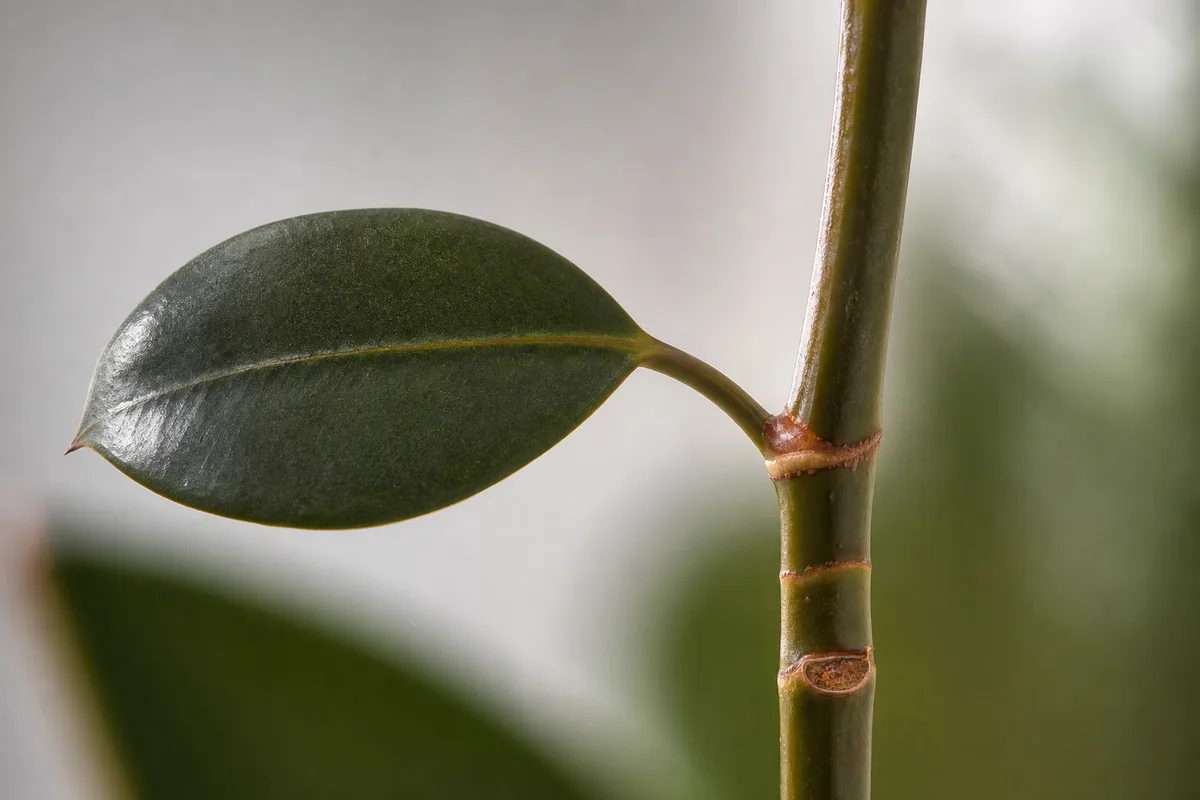
Leggy Growth symptoms on Rubber Plant - compare with healthy tissue on the same plant.
- Long bare gaps between leaves along upright stems
- Smaller or paler new leaves compared with older growth near the top
- Strong lean toward a window or lamp; one side may stay bare
- Thin, soft-looking new stems that cannot hold large leaves upright without leaning
- Lower leaf drop on Rubber Plant leaving a naked trunk while the tip keeps stretching
Variegated vs. solid-green cultivar patterns
Variegated cultivars such as ‘Tineke’ or ‘Tricolor’ often show legginess and faded patterning first because they need more light than solid-green ‘Robusta’ or ‘Burgundy’ forms. In the same dim corner, a green rubber plant may look merely slow while a variegated sibling already shows 3-inch internodes and washed-out cream zones. On Ficus elastica, a mature 10-inch leaf adds real weight to an elongated stem-weak stretch fails sooner than on compact-leaf houseplants.
This is different from normal Rubber Plant behavior after a move. The species drops leaves when conditions change, but legginess is a gradual stretch pattern tied to weak light over weeks or months-not a sudden shed after Rubber Plant repotting guide or a draft.
Why Rubber Plant gets leggy
Rubber Plant is marketed as adaptable, and that tolerance creates confusion. Clemson Extension notes rubber plants prefer bright light but are adaptable to low light-they will live in dim corners, yet they may grow tall and lanky indoors without enough brightness. Low light triggers etiolation: the plant stretches to reach for more light, elongating internodes to reach photosynthetically useful light.
Several Rubber Plant-specific factors make this worse:
Distance from the window. Light intensity drops sharply as you move away from glass. A Rubber Plant on a bookshelf across the room may get far less usable light than one within a few feet of an east or filtered west window-even if both spots “feel bright” to you.
Winter light drop. Shorter days and weaker sun reduce indoor light levels. A plant that looked fine in summer can stretch through winter unless you move it closer to glass or add supplemental lighting.
One-sided exposure. Rubber Plant stems grow toward light. Without weekly rotation, one side stays shaded and the plant develops a permanent lean and uneven canopy.
Over-fertilizing in low light. Rubber Plant fed heavily in dim conditions can push weak, elongated shoots the plant cannot support with dense foliage. Clemson recommends fertilizing less often in lower light.
Natural tree habit vs. true etiolation
Left alone, Rubber Plant tends toward a tall narrow form. Missouri Botanical Garden notes you can leave stems unpruned for a tree-like shape or prune main branches for a bushier habit-without pruning, a lanky silhouette is expected even in decent light. True etiolation adds smaller pale new leaves, dramatic lean, and internodes far longer than the plant showed when you bought it. A deliberate tree form in bright light still needs adequate top exposure so new leaves stay large and glossy rather than sparse.
Leggy growth is rarely caused by underwatering on Rubber Plant alone. Drought stress on Rubber Plant shows curled leaves and dry soil, not long internodes. Root rot from overwatering in a dark corner can cause yellowing and drop, but the stretch pattern still points to light as the primary driver.
How to confirm the cause
Work through these checks before pruning or repotting:
- Window relationship - Is the canopy within a few feet of an east window, or filtered south/west light? University of Maryland Extension classifies rubber plant among medium-bright houseplants suited to east or west exposures-several feet back from a north window or deep in a room often falls below what keeps Rubber Plant compact.
- Lean direction - Stems pointing at the brightest glass strongly suggest light-seeking stretch.
- New vs old leaf size - Compare the newest leaf to one from a year ago. Smaller, paler, or less glossy new foliage fits low light; uniform large glossy leaves fit adequate brightness.
- Season timing - Did stretch accelerate after daylight shortened? Winter etiolation is common indoors.
- Recent changes - A move to a darker spot, new furniture blocking light, or closing curtains for winter can trigger stretch within one to two growth cycles.
- Soil and roots - Confirm the pot is not waterlogged. Overwatering in low light can add leaf yellowing, but soggy soil without long internodes points to watering problems instead of pure legginess.
- Pest check - Mealybugs and scale can weaken growth, but they do not create the classic long-internode stretch toward windows. Look at leaf axils and undersides if growth is stunted and sticky-not merely tall.
If light is clearly weak and the stretch pattern matches, you have enough to act without a soil test or fertilizer.
First fix for Rubber Plant
Move the plant to brighter indirect light and let it acclimate for one to two weeks before any major pruning.
Choose a spot with bright indirect light or morning sun-Clemson notes rubber plants grow best with morning light from an east window. Missouri Botanical Garden recommends siting indoors in bright indirect light or part shade with protection from afternoon sun.
If the plant has lived in deep shade for months, shift it in stages over seven to ten days rather than jumping straight into harsh midday sun. Sudden intense direct light can scorch large Rubber Plant leaves.
Do not fertilize a stretched plant hoping to “fill it out”-that can worsen weak growth in unchanged light. Do not repot unless roots are clearly failing; legginess is not a pot-size issue.
Step-by-step recovery
After light improves:
- Rotate the pot weekly so all sides receive similar exposure and new growth stays more even.
- Adjust watering to match brighter conditions. Soil in stronger light dries faster; check the top 2 inches before watering rather than keeping a dim-corner schedule that leaves roots wet too long.
- Wait for tighter new growth - Look for shorter gaps between emerging leaves and firmer, glossier new foliage. That confirms the light fix is working.
- Prune in spring once active growth resumes. Cut leggy stems just above a leaf node to encourage branching. Clemson suggests pruning in spring to rejuvenate overgrown plants, and MOBOT notes pruning main branches encourages a bushier habit. Follow node placement and the one-third rule in the Rubber Plant pruning guide. Wear gloves-milky sap can irritate skin.
- Remove no more than one-third of the plant in a single session if the plant is stressed. Stagger hard cuts if needed.
- Stake temporarily only if a heavy stem with large leaves threatens to snap before new growth stiffens. Remove the stake once the stem stands on its own.
- Root tip cuttings from pruned stems if you want backup plants-see Rubber Plant propagation for water or moist-mix rooting steps.
Grow-light setup when windows are not enough
If the brightest window still produces stretch after two weeks, or winter days drop below useful natural light, add supplemental illumination rather than accepting bare trunks.
- Fixture: Full-spectrum LED grow light aimed at the full canopy, not just one side
- Distance: 12–18 inches above the foliage-close enough that your hand casts a soft shadow at midday near the leaves; raise the fixture if new leaves bleach
- Duration: 10–12 hours daily on a timer, combined with whatever natural window light you have
- Cap: Keep total daily illumination under about 16 hours when supplementing
- Adjust: Lower slightly if stems still lean toward the bulb after one week; see the Rubber Plant light guide for cultivar-specific scorch warnings on variegated types
Recovery vignette: A home grower moved a bookshelf Rubber Plant with roughly 4-inch internodes to within two feet of a filtered east window in early March. The first new leaf opened three weeks later with a noticeably shorter gap above the prior node; after a spring prune just above the third node, lateral buds broke within five weeks and the canopy looked fuller by midsummer-matching the typical light-first, prune-second sequence extension sources recommend for lanky Ficus elastica.
Recovery timeline
Light correction shows in new growth within two to four weeks during active spring or summer growth. Winter recovery is slower; expect months before you judge success.
Old stretched sections never shorten-only new nodes produce compact spacing. After spring pruning, lateral buds often break within three to six weeks in warm bright conditions. A severely leggy plant may need two pruning cycles over a year to look full again.
Judge recovery by new leaf spacing and gloss, not by old bare stem length disappearing.
Lookalike symptoms to rule out
| What you see | Likely cause | First check |
|---|---|---|
| Long internodes, lean to window, smaller pale new leaves | Leggy growth / etiolation | Window distance, shadow test, new leaf quality |
| Dull gloss, wet soil for weeks, gradual thinning | Not enough light - broader dim-light stress | Placement map, dry-down rhythm |
| Compact internodes, large glossy leaves, upright habit | Normal upward tree growth in good light | Compare internode length to when you bought the plant |
| Yellow lower leaves, sour soil, soft stems | Overwatering - often in dim light | Top 2 inches dry-down, drainage, root firmness |
| Stippling, webbing, cottony clusters | Spider mites or mealybugs | Undersides and axils-not directional window lean |
Normal upward growth in good light. Young Rubber Plant stems naturally reach upward. Compact internodes and large glossy leaves distinguish healthy vertical growth from etiolation.
Leaf drop after a move. Rubber Plant often sheds leaves when relocated or exposed to cold drafts. That is shock, not legginess-look for long internodes and lean, not just fallen leaves on the floor.
Nitrogen deficiency. Whole-plant pale yellowing on older leaves can suggest feeding issues, but deficiency rarely causes dramatic lean toward light. Increase light first; fertilize lightly in spring only after basics are stable.
Mistakes to avoid
Do not prune heavily without improving light first-you will get bare stubs that stretch again.
Do not place a shade-acclimated Rubber Plant into direct afternoon sun in one move. Acclimate gradually to prevent scorched patches on large leaves.
Do not assume a “low light” label means Rubber Plant prefers dim rooms. It means the plant may survive there, not that it will stay bushy.
Do not ignore one-sided lean until stems kink or topple. Large Rubber Plant leaves add weight; weak elongated stems fail without support or correction.
Do not stack repotting, heavy feeding, and hard pruning in the same week. Rubber Plant reacts badly to multiple changes at once.
Do not heavy-prune variegated cultivars in unchanged low light-pattern loss often worsens before new compact growth can form.
Rubber Plant care cross-check
Leggy growth often appears when general care looks “fine” on paper but light does not match this plant’s needs. Cross-check:
- Light: Bright indirect for most of the day; east window or filtered south/west is ideal indoors. Full placement guidance: Rubber Plant light.
- Water: Top 2 inches dry before watering-roughly every 7 to 10 days in summer, less in winter semi-dormancy.
- Temperature: Stable 18–29°C (65–85°F); avoid cold drafts below about 10°C (50°F) that trigger leaf drop on stretched plants.
- Humidity: 40–60% is comfortable; low humidity alone rarely causes legginess.
- Feeding: Monthly at half strength in spring and summer only when actively growing in adequate light.
When light and watering align, new Rubber Plant leaves should emerge firm, glossy, and closer together within one growth cycle.
How to prevent leggy growth next time
Place new Rubber Plant purchases where bright indirect light is realistic long term-not where the pot looks best in a dark corner. Prune in spring before stems become bare trunks. Rotate weekly, reduce fertilizer in lower light, and supplement winter windows with a grow light if stretch starts again.
If you want a tall tree silhouette, legginess on the lower trunk may be acceptable-just keep the top in enough light that new leaves stay large and glossy rather than pale and sparse.
When to worry
Legginess alone is a care adjustment, not a crisis. Escalate attention if:
- Stems soften or blacken at the base while soil stays wet-possible rot; see Root Rot on Rubber Plant
- More than a third of leaves drop within weeks alongside rapid lean
- New growth stays pale and small for months despite a clear light upgrade
- Pests spread while the plant is weak from dim conditions
In those cases, inspect roots, confirm drainage, and treat pests before expecting pruning alone to restore shape.
Pet safety when pruning leggy Rubber Plant
Rubber Plant bleeds milky latex sap when stems are cut. Clemson HGIC notes the sap may irritate skin or the stomach if eaten and recommends keeping plants away from pets or children that chew foliage. The ASPCA lists rubber plant as toxic to cats and dogs, with ingestion causing oral irritation, drooling, and vomiting. Wear gloves when pruning, wipe sap from floors and tools, and dispose of cut stems and fallen leaves where curious pets cannot reach them. If a pet chews a leaf or cutting, contact your veterinarian or the ASPCA Animal Poison Control hotline at (888) 426-4435.
Tree form vs. bushiness: what to do next
You have two valid outcomes once light is corrected:
- Keep the tree silhouette - Accept a bare lower trunk if the top stays in bright light with large glossy new leaves. Light staking may help until stems stiffen.
- Force a bushier habit - Spring prune main stems just above nodes, limit removal to one-third per session, and let lateral buds break before the next hard cut. Technique details live in the pruning guide.
Either path starts with photons, not scissors. Old stretched internodes never revert-only new growth and selective cuts reshape the display.
Related Rubber Plant problems
- Not enough light - comprehensive light diagnosis when fade and stall accompany stretch
- Rubber Plant light - window placement, grow lights, and warning signs
- Pruning Rubber Plant - safe node cuts and one-third removal limits
- Rubber Plant propagation - rooting tip cuttings from pruned stems
- Root rot - when stretch pairs with wet soil and soft stems
- Slow growth - stalled growth without extreme internode elongation
- Rubber Plant overview - species biology and baseline care
When to use this page vs other Rubber Plant guides
- Rubber Plant watering guide - Use for routine moisture checks before assuming leggy growth is the main issue.
- Rubber Plant problems hub - Browse all 17 common issues on this species.
- Not Enough Light on Rubber Plant - Different entry point when symptoms overlap with leggy growth.
- Slow Growth on Rubber Plant - Different entry point when symptoms overlap with leggy growth.
- Leaf Drop on Rubber Plant - Different entry point when symptoms overlap with leggy growth.