Not Enough Light on Rubber Plant: Causes, Checks & Fixes
Quick answer
Not enough light makes Rubber Plant dull, leggy, and prone to leaf drop-not because it dies in shade, but because it cannot photosynthesize enough to support large glossy leaves. Move to bright indirect light or morning east-window sun before you change watering or fertilizer.
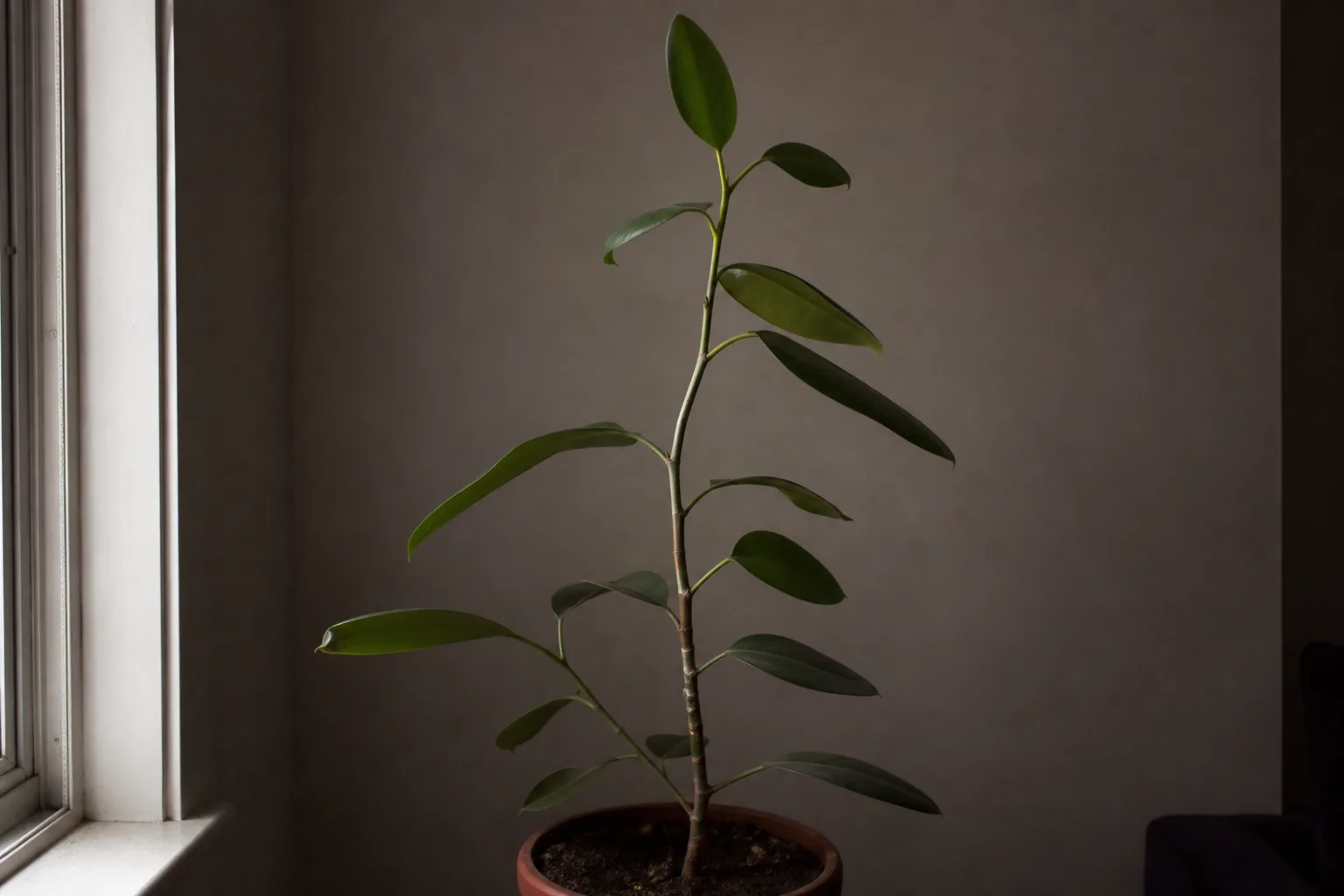
Not Enough Light on Rubber Plant: Causes, Checks & Fixes
This guide covers not enough light on Rubber Plant. See also the general Not Enough Light guide, watering, and light pages for this plant.
Not Enough Light on Rubber Plant: Causes, Checks & Fixes
Quick answer
Rubber Plant (Ficus elastica) needs more brightness than its “low-light tolerant” reputation suggests. Clemson Extension notes rubber plants prefer bright light but are adaptable to low light-they survive dim rooms, yet they grow best with morning light from an east window and may become tall and lanky without enough intensity.
When light falls short, large glossy leaves become a liability. Growth slows, new foliage emerges smaller and paler, stems lean toward glass, and lower leaves drop. Soil in dark corners stays wet longer, which invites overwatering on Rubber Plant problems on top of the light stress.
First step: move the plant to brighter indirect light-not fertilizer, not Rubber Plant repotting guide, not a deep prune on day one. Shift gradually if it has lived in deep shade for months. Once new leaves look glossier and sit closer together, adjust watering to match faster dry-down in the brighter spot.
What not enough light looks like on Rubber Plant
Healthy Rubber Plant leaves are stiff, leathery, and glossy-often 8 to 12 inches long on mature specimens-with relatively short spaces between leaves along each stem. Insufficient light breaks that pattern gradually:
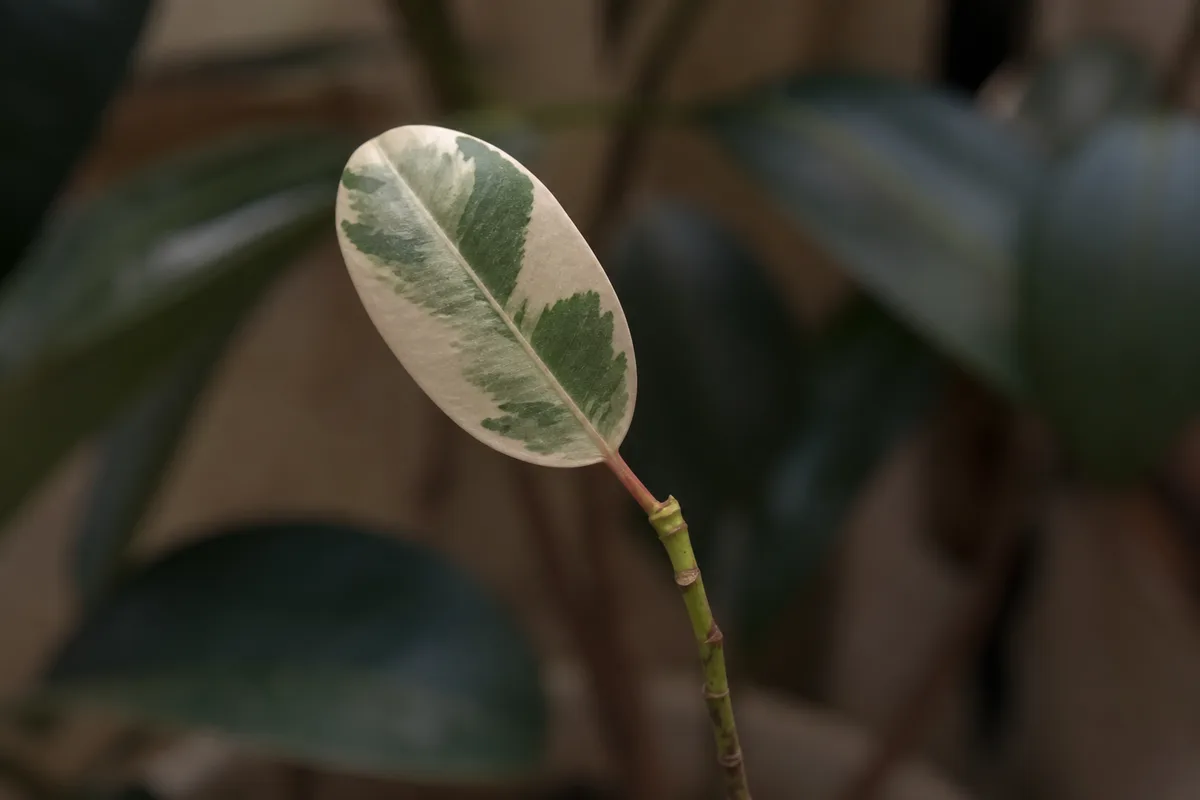
Not Enough Light symptoms on Rubber Plant - compare with healthy tissue on the same plant.
- Dull or washed-out foliage - deep green or burgundy cultivars look flat; variegated ‘Tineke’ or ‘Tricolor’ lose crisp patterning
- Smaller new leaves compared with older growth near the top
- Long internodes - bare gaps between leaves as the plant stretches toward light
- Lean toward windows or lamps; one shaded side may stay sparse
- Slow or stalled growth through spring and summer when the plant should be active
- Lower leaf drop on Rubber Plant while the tip keeps producing weak new shoots
- Soil that stays damp for weeks because the plant uses less water in low light
NC State Extension notes too little light may cause leaf loss on rubber plant, alongside cold drafts and overwatering. University of Maryland Extension classifies rubber plant among medium-bright houseplants suited to east or west-facing windows-not deep interior rooms far from glass.
This is different from sudden leaf drop after a move. Rubber Plant reacts to placement changes quickly, but chronic low-light stress shows as a months-long pattern of pale new growth, stretch, and gradual thinning-not a one-time shed after repotting.
Why Rubber Plant struggles in low light
Rubber Plant’s tolerance for dim conditions creates a common trap. Growers see the plant alive in a corner and assume the spot is adequate. In reality, Clemson notes rubber plants may grow tall and lanky indoors when light is weak-survival without the compact, glossy form most people want.
Several Rubber Plant-specific factors make low light worse:
Large leaf energy demand. Each mature leaf is a photosynthetic panel. Without enough light, the plant cannot support its own canopy and sheds lower leaves while stretching the tip toward brighter zones.
Distance from the window. Maryland Extension explains light intensity decreases rapidly with distance from the source. A Rubber Plant on a bookshelf across the room may receive far less usable light than one within a few feet of an east or filtered west window-even when both spots feel “bright” to human eyes.
Winter daylight drop. Shorter days and weaker sun cut indoor light levels. A plant that looked acceptable in summer can fade and stretch through winter unless you move it closer to glass or add supplemental lighting.
Slow dry-down in dim corners. Rubber Plant in low light transpires less and uses water slowly. Soil that stays wet too long raises yellowing and root stress risks-especially when growth slows and NC State recommends reducing watering from fall to late winter when the plant is dormant.
Variegated cultivars need more light. ‘Tineke’, ‘Tricolor’, and other patterned forms often fade and stretch before solid-green ‘Robusta’ or ‘Burgundy’ types show obvious stress because less chlorophyll means less photosynthetic capacity per leaf.
One-sided exposure. Without weekly rotation, shaded sides stay bare while the lit side stretches, producing a permanent lean and uneven canopy.
Low light alone rarely causes the curled, crispy leaves typical of drought stress on Rubber Plant. It also does not produce scorched brown patches-that pattern points to too much direct sun, not too little.
How to confirm the cause
Work through these checks before repotting, fertilizing, or heavy pruning:
- Window relationship - Is the canopy within a few feet of an east window, or filtered south or west light? Several feet back from glass or deep in a north-facing room often falls below what keeps Rubber Plant glossy and compact.
- Lean direction - Stems pointing at the brightest glass strongly suggest light-seeking growth.
- New vs old leaf comparison - Smaller, paler, or less glossy newest leaves fit low light; uniformly large glossy leaves fit adequate brightness.
- Season timing - Did symptoms accelerate after daylight shortened? Winter fade and stretch are common indoors.
- Soil moisture rhythm - Insert a finger 2 inches into the mix. If soil stays wet for two weeks or more while leaves pale and drop, low light may be slowing water use and compounding stress.
- Recent environmental changes - New furniture blocking light, closed curtains for winter, or a move to a darker room can trigger decline within one to two growth cycles.
- Pest check - Mealybugs, scale, and spider mites weaken growth but do not create classic stretch toward windows. Inspect leaf axils if growth is stunted and sticky-not merely pale.
If light is clearly weak and the symptom pattern matches, you have enough to act without a soil test or fertilizer.
First fix for Rubber Plant
Move the plant to brighter indirect light and acclimate over seven to ten days if it came from deep shade.
Choose a spot with Rubber Plant light guide or gentle morning sun. Clemson notes rubber plants grow best with morning light from an east window. Missouri Botanical Garden recommends siting indoors in bright indirect light or part shade with protection from afternoon sun.
If the only upgrade is a harsh south or west window, use sheer curtains or sit the pot a few feet back so large leaves avoid midday scorch. Jumping from deep shade straight into direct afternoon sun can bleach or brown patches that will not recover.
Do not fertilize a pale stretched plant hoping to “green it up”-that can push weak shoots in unchanged light. Clemson recommends fertilizing less often in lower light. Do not repot unless roots are clearly failing; insufficient light is not a pot-size problem.
Step-by-step recovery
After light improves:
- Rotate the pot weekly so all sides receive similar exposure and new growth stays more even.
- Recheck watering - Soil in brighter light dries faster. Water when the top 2 inches are dry rather than keeping a dim-corner schedule that leaves roots wet too long.
- Watch new growth - Look for shorter gaps between emerging leaves, firmer texture, and restored gloss. That confirms the light fix is working within two to four weeks in warm active growth.
- Prune in spring if stems are badly stretched after light stabilizes. Cut above a leaf node to encourage branching. Wear gloves-milky sap can irritate skin.
- Add a grow light if the best window still falls short in winter. Maryland Extension notes most plants need a dark period and suggests illuminating for no more than 16 hours total per day when combining artificial and natural light. Full-spectrum lamps for 10 to 12 hours can supplement weak winter sun-place them close enough that foliage casts a soft shadow at midday.
- Reduce winter watering when growth slows in lower light months to match slower dry-down.
Tip cuttings from pruned stems root easily if you want a backup while the parent fills in.
Recovery timeline
Light correction shows in new growth within two to four weeks during active spring or summer growth. Winter recovery is slower; judge progress over months rather than weeks.
Old pale or stretched sections do not regain full gloss or compact spacing-only new nodes produce healthier leaves. After spring pruning, lateral buds often break within three to six weeks in warm bright conditions. A plant that lived in deep shade for years may need two pruning cycles over a year to look full again.
Judge recovery by new leaf size, gloss, and spacing, not by old bare stem length disappearing.
Lookalike symptoms to rule out
Too much direct sun. Scorched brown or bleached patches on sun-facing leaves mean excessive light, not insufficient light. Rubber Plant wants bright indirect light-not harsh midday rays on large leaves.
Leaf drop after a move. Rubber Plant often sheds leaves when relocated or exposed to cold drafts. That is shock, not chronic low light-look for long internodes and lean over weeks, not just fallen leaves after one change.
Overwatering in a dark corner. Yellowing lower leaves, sour soil smell, and soft stems suggest root stress. NC State notes overwatering can cause loss of leaves-pair yellowing with stretch and you likely have both low light and wet soil to fix.
underwatering on Rubber Plant. Curled leaves, very dry soil, and crisp edges point to drought-not the pale stretch typical of dim rooms.
Spider mites or mealybugs. Stippling, webbing, or cottony clusters indicate pests. They may slow growth but do not produce directional stretch toward windows.
Nitrogen deficiency. Whole-plant pale yellowing on older leaves can suggest feeding issues, but deficiency rarely causes dramatic lean toward light. Improve light first; fertilize lightly in spring only after basics are stable.
Mistakes to avoid
Do not assume “indoor plant” means Rubber Plant thrives anywhere with a lamp on at night-ambient room light is far below window-level intensity.
Do not place a shade-acclimated plant into direct afternoon sun in one move. Acclimate gradually to prevent scorched patches on large leaves.
Do not stack repotting, heavy feeding, and hard pruning in the same week. Rubber Plant reacts badly to multiple changes at once.
Do not ignore wet soil in a dim corner while chasing fertilizer or humidity fixes. Fix light and dry-down rhythm together.
Do not expect variegated cultivars to hold crisp color in deep shade-move them to brighter filtered light or accept reversion.
Rubber Plant care cross-check
Insufficient light often appears when general care looks “fine” on paper but brightness does not match Rubber Plant overview’s needs. Cross-check:
- Light: Bright indirect for most of the day; east window or filtered south/west is ideal indoors.
- Water: Top 2 inches dry before watering-roughly every 7 to 10 days in summer, less in winter semi-dormancy.
- Temperature: Stable 18–29°C (65–85°F); Clemson notes avoid temperatures below 55°F and cold drafts that trigger leaf drop on already weak plants.
- Humidity: 40–60% is comfortable; low humidity alone rarely causes dull foliage or stretch.
- Feeding: Every two weeks during active spring and summer growth in adequate light; less in dim conditions.
When light and watering align, new Rubber Plant leaves should emerge firm, glossy, and closer together within one growth cycle.
How to prevent not enough light next time
Place new Rubber Plant purchases where bright indirect light is realistic long term-not where the pot looks best in a dark corner. Prune in spring before stems become bare trunks. Rotate weekly, reduce fertilizer in lower light, and supplement winter windows with a grow light if dull foliage or stretch starts again.
If you must keep Rubber Plant in a marginal spot, choose solid-green cultivars over variegated forms and accept a taller, sparser silhouette rather than fighting the plant’s growth habit with excess water or feed.
When to worry
Chronic low light alone is a care adjustment, not a crisis. Escalate attention if:
- Stems soften or blacken at the base while soil stays wet-possible rot, not just dim light
- More than a third of leaves drop within weeks alongside rapid lean
- New growth stays pale and small for months despite a clear light upgrade
- Pests spread while the plant is weak from dim conditions
In those cases, inspect roots, confirm drainage, and treat pests before expecting light alone to restore health.
Conclusion
Not enough light on Rubber Plant is the plant telling you it cannot support its large glossy leaves in the current spot-not a mysterious disease. Move it to bright indirect light or morning east-window sun first, let new growth tighten, then adjust watering and prune in spring if needed. Old faded leaves will not fully revert, but with better light and stable care, Ficus elastica can regain the dense, glossy presence that makes it worth keeping in a bright room.
When to use this page vs other Rubber Plant guides
- Rubber Plant watering guide - Use for routine moisture checks before assuming not enough light is the main issue.
- Rubber Plant problems hub - Browse all 17 common issues on this species.
- Leggy Growth on Rubber Plant - Different entry point when symptoms overlap with not enough light.
- Slow Growth on Rubber Plant - Different entry point when symptoms overlap with not enough light.
- Yellow Leaves on Rubber Plant - Different entry point when symptoms overlap with not enough light.