Underwatering on Rubber Plant: Causes, Checks & Fixes
Quick answer
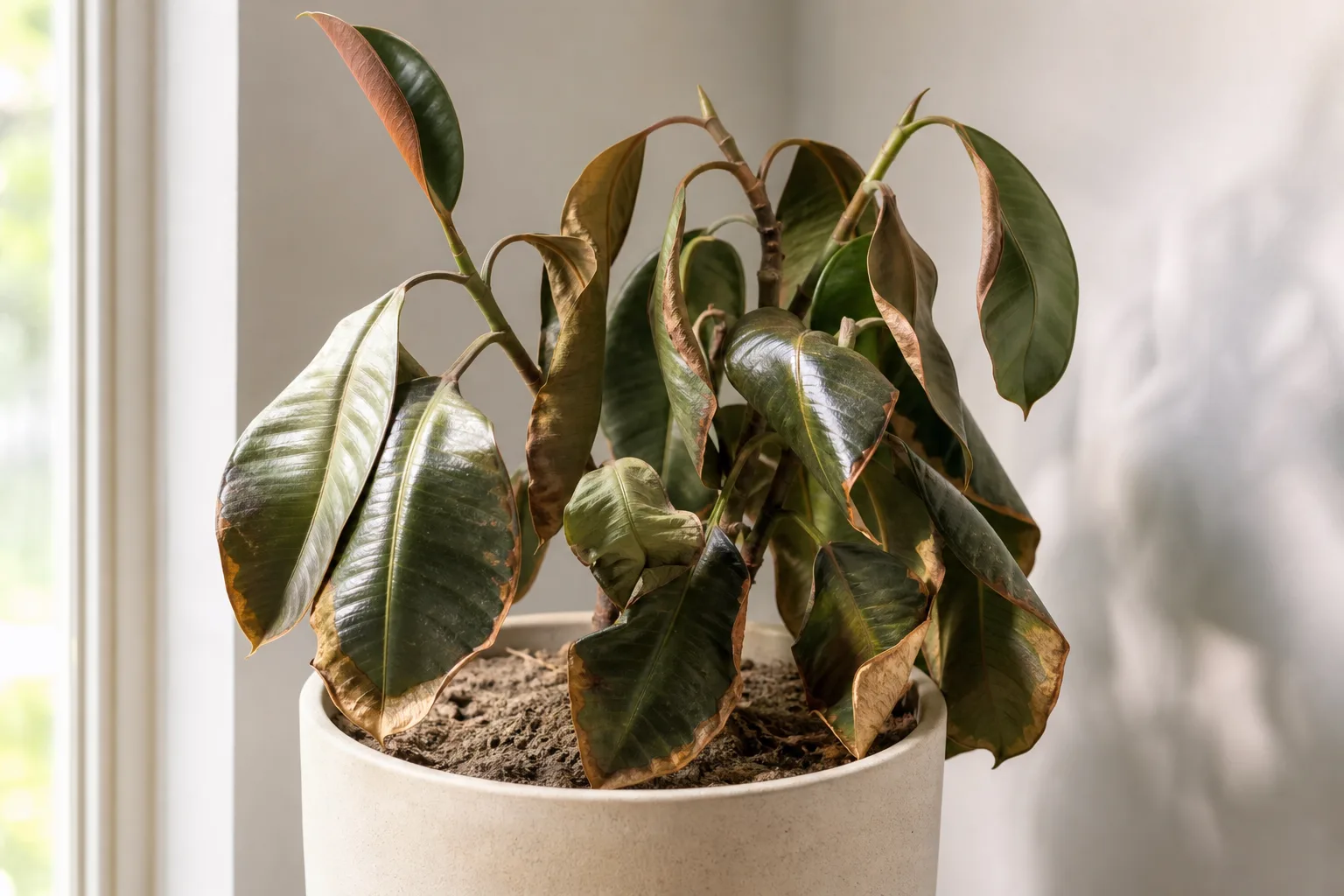
Underwatering on Rubber Plant shows as inward-curling leaves, a feather-light pot, and bone-dry soil-not mushy roots or sour smell. First step: water thoroughly until excess drains, then wait until the top 2 inches of soil dry before the next drink.
Underwatering on Rubber Plant: Causes, Checks & Fixes
This guide covers underwatering on Rubber Plant. See also the general Underwatering guide, watering, and light pages for this plant.
Underwatering on Rubber Plant: Causes, Checks & Fixes
Quick answer
Rubber Plant (Ficus elastica) handles missed water better than chronic soggy soil, but long drought still stresses its large leathery leaves. Clemson HGIC advises watering thoroughly while letting soil dry slightly between sessions, and PlantTalk Colorado notes that too much or too little water can cause leaves to drop. Underwatering shows when the pot feels feather-light, mix is dry throughout the top 2 inches, and leaves curl inward or droop without sour soil smell or mushy stems.
First step: water thoroughly until excess drains from the bottom, then discard saucer water. Do not mist leaves as a substitute-roots need a full soak, not surface humidity. After that one correction, return to checking the top 2 inches of soil before the next drink.
Why Rubber Plant gets underwatering
Rubber Plant leaves are thick and waxy, which helps the plant survive short dry spells better than thin-leaved tropicals. That same toughness makes underwatering easy to miss-you may not see obvious wilt until the root zone has been dry for days. Large mature specimens in heavy ceramic pots can look fine on top while the lower half of the mix stays dust-dry, especially if water has been channeling through dry pockets without rewetting the whole root ball.
Several home conditions push rubber plants toward drought faster than a weekly calendar suggests:
- Bright light and warm rooms increase transpiration from broad 8–12 inch leaves, so a plant near a sunny window dries faster than the same cultivar in a dim hallway.
- Small or root-filled pots hold less moisture; a crowded root ball can go from adequately moist to bone dry in four or five days during active summer growth.
- Hydrophobic dry-out happens when peat-heavy mix shrinks away from pot walls after extended neglect. Water runs straight through the channel without soaking the center, leaving roots thirsty even after you “watered.”
- Seasonal misreads cause underwatering in summer while growers under-water in winter thinking dormancy means no checks at all-NC State Extension recommends reducing watering when the plant is dormant from fall to late winter, not skipping soil checks entirely.
Rubber Plant also reacts sharply to change. A recent move, repot, or draft exposure can trigger leaf drop that looks like drought stress. Always pair visual symptoms with pot weight and soil moisture before assuming the fix is more water.
What underwatering looks like on Rubber Plant
Typical drought symptoms:
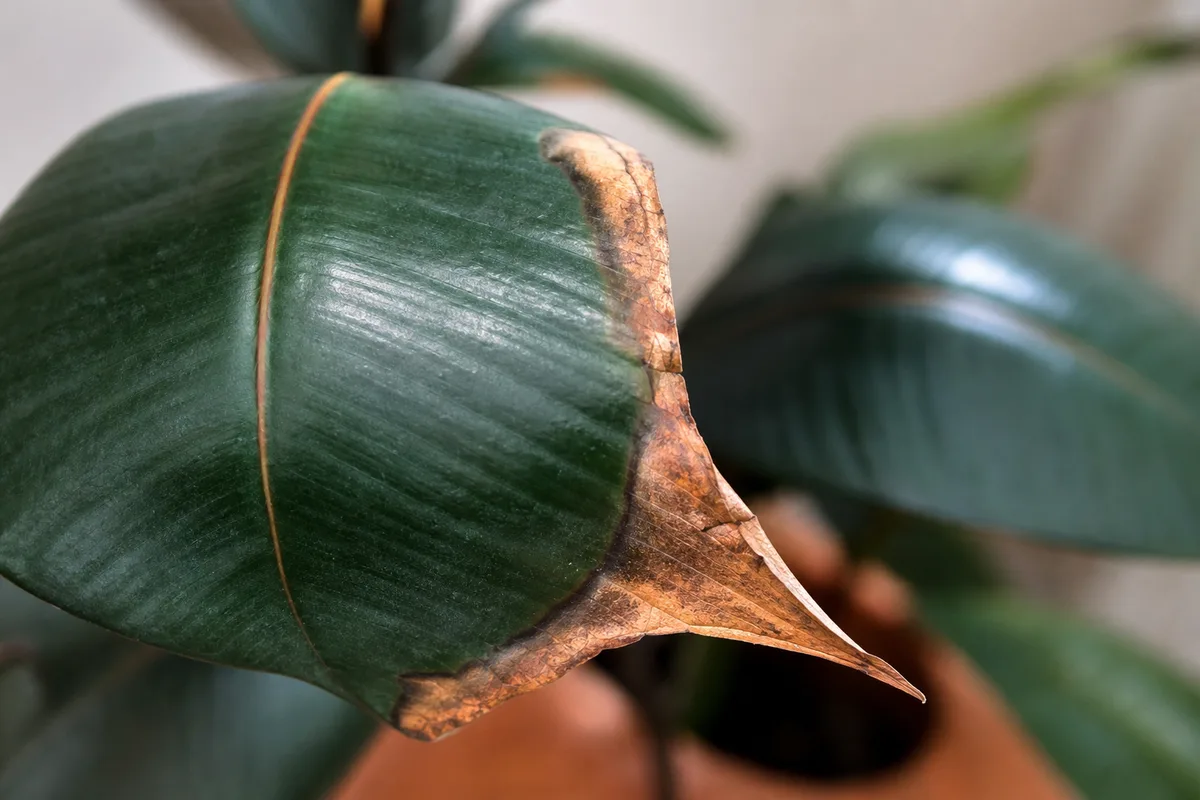
Underwatering symptoms on Rubber Plant - compare with healthy tissue on the same plant.
- Leaves curling inward and upward along the midrib-the plant reduces exposed surface area to conserve moisture
- Drooping or limp stems paired with a very light pot, not a heavy wet one
- Crispy brown edges or tips that feel papery, often without yellowing first
- Dry, cracked soil pulling away from the pot rim
- Lower leaf drop on Rubber Plant after repeated dry cycles, starting from the bottom up
- Slowed or smaller new leaves at the top when drought has been chronic
What underwatering usually does not look like:
- Soft, yellow lower leaves on constantly wet soil
- Sour or musty smell from the mix
- Mushy brown roots when you slide the plant from its pot
- Fungus gnats hovering over persistently damp surface soil
The texture difference matters. Underwatered leaves feel papery and brittle before they drop; overwatered leaves go soft and limp while soil stays wet. Damaged crispy tissue will not turn green again, but the plant can recover through new growth once roots rehydrate.
How to confirm underwatering
Work through these checks in order before you change your watering routine:
- Pot-weight test - Lift the pot. A thoroughly watered rubber plant feels noticeably heavy. If it is feather-light and the surface looks pale and dry, drought is likely.
- Finger or skewer test at 2 inches - Push your finger to the second knuckle or leave a dry wooden skewer in the pot for 10 minutes. If the mix is dry at that depth and the pot is light, underwatering is confirmed. Cool clingy soil means wait.
- Stem and root spot-check - Gently slide the plant partway out if symptoms are severe. Firm tan roots support a thirst diagnosis. Brown mushy roots point to overwatering on Rubber Plant or rot instead-adding more water will worsen that problem.
- Leaf texture and pattern - Inward curl with crispy edges on a light dry pot fits drought. Yellow soft leaves on wet heavy soil does not.
- Response test - Water once thoroughly, let drain, and recheck in 24 hours. Mild dehydration often shows firmer leaves and less curl within a day. No improvement on wet soil after a soak suggests root damage, not simple thirst.
- Environment cross-check - Note recent moves, heat vents, or Rubber Plant repotting guide within the last two weeks. Rubber Plant prefers to remain in one location and does not do well with drafts. Relocation leaf drop can overlap with drought signs, but a light dry pot still needs water even if a move happened recently.
If soil is dry, the pot is light, stems are firm, and roots are not mushy, you have enough evidence to treat underwatering-not root rot on Rubber Plant.
First fix for Rubber Plant
Water thoroughly and slowly until excess runs from the drainage holes, then empty the saucer completely.
Use room-temperature water and wet the entire soil surface evenly-not just one side of the pot. For large floor plants, this may take a minute or two of slow pouring. Missouri Botanical Garden recommends watering regularly during the growing season while allowing soil to become fairly dry between waterings in containers-the key is one full drink, then a real dry-down before the next session.
If water races through in seconds and the pot still feels light, the mix may have gone hydrophobic:
- Bottom-water the nursery pot in a basin for 20–30 minutes, then let it drain fully.
- Or poke a few shallow holes in the dry surface crust and water again slowly.
Do not compensate with twice-daily splashes for a week-that keeps the surface damp while leaving the root ball unevenly wet and swings you toward rot. One deep correction, then resume normal dry-down checks.
Do not fertilize a drought-stressed rubber plant on day one. Rehydrate first; hold feed until new growth proves roots are functioning again.
Step-by-step recovery
After the initial deep soak:
- Wait for dry-down - Let the top 2 inches of soil dry before the next watering. In Rubber Plant light guide, that is often every 7–10 days in spring and summer and every 14–21 days in fall and winter, but the soil check always overrides the calendar.
- Monitor leaf response - Expect less curl and firmer petioles within 24–48 hours if roots were healthy. Persistent droop on wet soil means stop and inspect roots.
- Trim only fully dead tissue - Remove leaves that are entirely brown and crispy if they bother you aesthetically. Partially damaged leaves can still photosynthesize while the plant rebuilds.
- Stabilize placement - Keep the plant in bright indirect light without moving it again while it recovers. Drafts and cold air cause leaf drop that can mask improvement.
- Refresh hydrophobic mix if needed - If water keeps channeling after two proper soaks, scrape and replace the top inch of mix or repot into fresh well-draining houseplant soil with perlite or bark. Repot only when dry-out failure is confirmed-not on the first dry spell.
- Resume fertilizer later - Wait until you see firm new leaves opening at the top, usually four to eight weeks after severe stress, before feeding at half strength during active growth.
Recovery timeline
Mild underwatering often shows visible firming within one to two days after a thorough watering. Crispy margins on existing leaves remain permanent; judge recovery by new glossy foliage and stopped leaf drop, not by old blemishes reversing.
Moderate drought with several dropped lower leaves may need two to four weeks of stable dry-down watering before new top growth looks normal size again. Chronic underwatering that damaged fine root hairs can take six to eight weeks before growth rate matches pre-stress levels.
If the plant still droops heavily seven days after a confirmed deep soak on firm roots, or if stems soften at the soil line, shift diagnosis toward root rot or cold damage rather than simple thirst.
Lookalike symptoms
Overwatering and root rot - Both can cause drooping, but overwatered rubber plants sit in heavy wet pots, often with yellow soft lower leaves, fungus gnats, or sour-smelling soil. Root rot usually results from soil that does not drain quickly or overly frequent watering. The wilt paradox: rotting roots cannot transport water, so the plant droops despite wet mix. Check roots before adding more water to a drooping plant.
Low humidity - Very dry indoor air can crisp leaf edges on rubber plants, especially in winter when heating runs. Humidity stress often affects leaf margins on otherwise firm, well-watered plants without a light dry pot. Misting may help surface humidity briefly but does not fix true underwatering.
Cold drafts and relocation shock - Sudden leaf drop near windows, doors, or HVAC vents can happen within 24–48 hours without dry soil. Rubber Plant does not tolerate cold drafts. If the pot is still moist and the drop followed a move, stabilize placement first-but do not skip water if the soil is genuinely dry.
Normal lower leaf drop - Some bottom yellowing and drop is normal on mature specimens as they shed older foliage. Single older leaves fading while new top leaves stay glossy and the pot weight is normal is lower concern than widespread curl on a feather-light pot.
Mistakes to avoid
- Adding water without checking soil - Drooping does not always mean thirst. Confirm dry weight first.
- Misting instead of watering - Leaves may look briefly damp while roots stay dry. Rubber Plant needs root-zone moisture.
- Daily shallow splashes after one dry spell - Prevents proper dry-down and invites overwatering injury.
- Watering on a fixed calendar - Vacation schedules and seasonal light changes alter dry-down speed. Check the top 2 inches every time.
- Ignoring hydrophobic channeling - Repeated quick pours through dry pockets leave the center thirsty.
- Fertilizing to “help recovery” - Salt stress on drought-damaged roots makes things worse. Rehydrate first.
- Repotting immediately - Only repot if mix structure has failed or roots are damaged, not after a single missed watering on healthy roots.
How to prevent underwatering next time
Build a rhythm around pot weight and soil depth, not a phone reminder alone:
- Check the top 2 inches before every major watering. Clemson HGIC recommends letting soil dry slightly to the touch between waterings.
- Match frequency to season - Reduce watering from fall to late winter when growth slows, but still check; a plant above a heating vent may dry faster in January than in June.
- Keep bright indirect light - Rubber Plant in adequate light uses water predictably and shows drought early through curl rather than sudden mass drop.
- Use pots with drainage holes - Then empty saucers so the next dry-down reading stays accurate.
- Learn your pot’s weight - Lift after a full watering once to calibrate what “dry” feels like for that specific container.
Rubber Plant is generally more forgiving of slightly dry soil than soggy soil-but “forgiving” is not “immune.” Repeated drought cycles still strip lower leaves and stall growth until care stabilizes.
When to worry
Lower urgency: one or two older lower leaves with crispy tips, firm stems, and a pot that dried only slightly past the normal window. A single deep soak and adjusted check schedule usually resolves this.
Higher urgency: most leaves curling and papery, soil shrunken away from pot walls, or no firming 48 hours after a confirmed thorough watering on tan firm roots. Also act promptly if you find mushy roots, sour smell, or stem softening-those point away from simple underwatering toward rot or infection.
A large rubber plant that dropped many leaves during a long vacation may survive with consistent care, but bare stems without new buds after eight weeks of stable watering suggest damage beyond drought stress alone.
When to use this page vs other Rubber Plant guides
- Rubber Plant watering guide - Use for routine moisture checks before assuming underwatering is the main issue.
- Rubber Plant problems hub - Browse all 17 common issues on this species.
- Wilting on Rubber Plant - Different entry point when symptoms overlap with underwatering.
- Brown Tips on Rubber Plant - Different entry point when symptoms overlap with underwatering.
- Yellow Leaves on Rubber Plant - Different entry point when symptoms overlap with underwatering.