Leaf Drop on Rubber Plant: Causes, Checks & Fixes
Quick answer
Leaf drop on Rubber Plant is usually stress from sudden change, cold drafts, or watering mismatch, not a random disease. First fix: stabilize the plant in one bright spot and correct watering based on soil dry-down before pruning, fertilizing, or repotting.
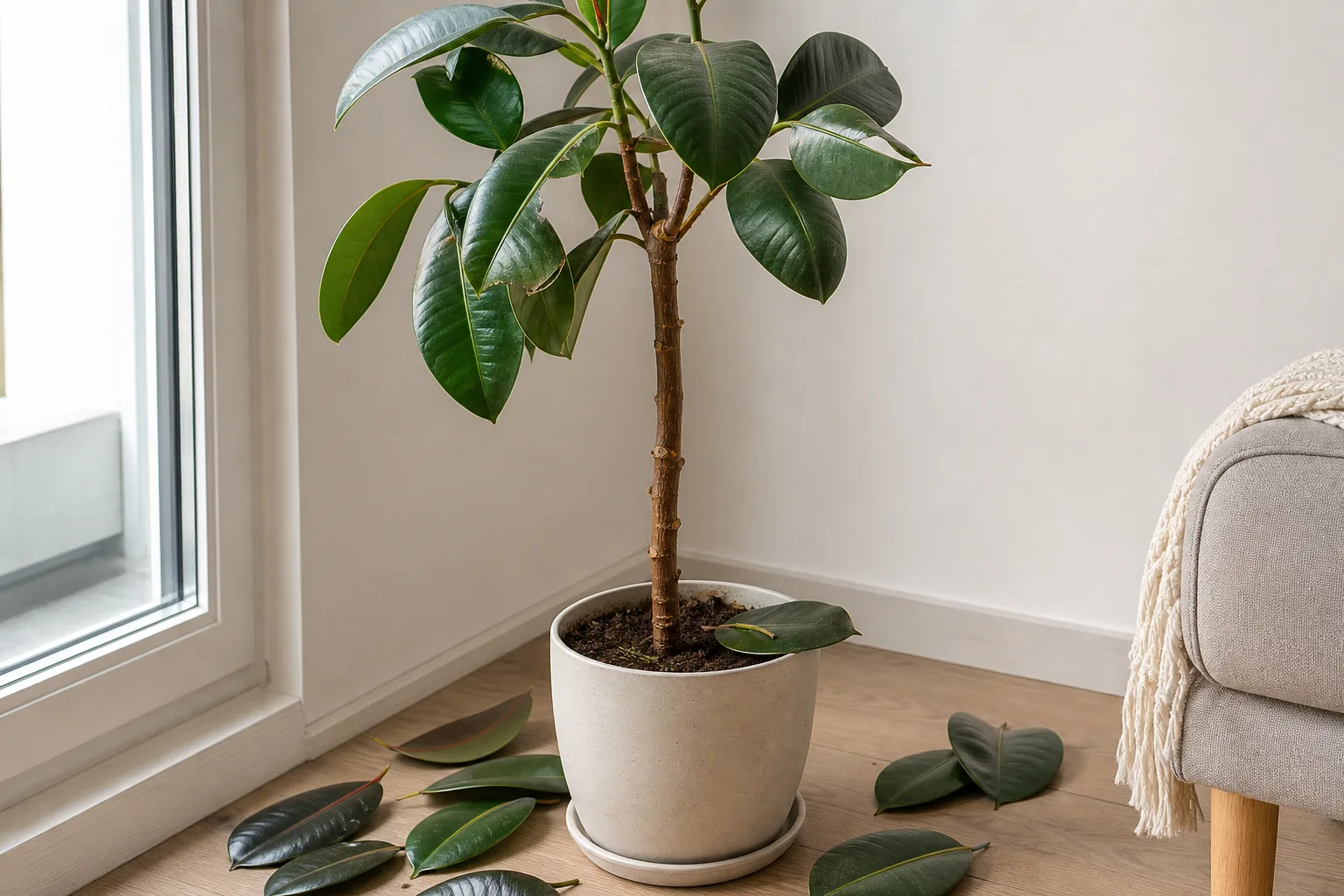
Leaf Drop on Rubber Plant: Causes, Checks & Fixes
This guide covers leaf drop on Rubber Plant. See also the general Leaf Drop guide, watering, and light pages for this plant.
Leaf Drop on Rubber Plant: Causes, Checks & Fixes
Quick answer
Leaf drop on Rubber Plant (Ficus elastica) is usually a stress signal, not a mystery disease. This species prefers to remain in one location and does not do well with drafts or cold temperatures, so leaf loss often starts after a move, a cold window draft, or a sudden watering change. Your first action is simple: stabilize conditions in one bright spot and check soil moisture before doing anything else. Do not stack fixes on day one.
If you need quick triage:
- Wet, heavy pot + yellowing/drop -> likely overwatering stress.
- Very dry, light pot + curling/crisp edges -> likely underwatering stress.
- Sudden drop after move or draft with otherwise normal soil -> likely environmental shock.
- Sour smell, soft stem base, ongoing drop on wet soil -> possible root rot escalation.
Why Rubber Plant drops leaves
Rubber Plant is a large-leaf tropical fig that reacts strongly to abrupt environmental changes. NC State notes that overwatering can cause loss of leaves and that too little light, dry air, or cold drafts may cause leaf loss. Clemson adds that you should avoid temperatures lower than 55F, sudden drops in temperature, and cold drafts.
The most common triggers are:
- Relocation shock: moving the pot from one room or light pattern to another.
- Cold or HVAC exposure: especially near winter glass, vents, and doors.
- Watering mismatch: too wet for too long, or severe dry-down swings.
- Low light + wet mix: roots stay damp too long and decline starts.
- Pest pressure: mealybugs, scale, and spider mites can accelerate shedding on stressed plants (NC State lists these as common pests).
What leaf drop looks like on Rubber Plant
Healthy Rubber Plant leaves are thick, glossy, and usually 8-12 inches long. Stress leaf drop often appears as a cluster event: several leaves over days instead of one occasional lower leaf over weeks. Some leaves yellow first, while others can drop green after sudden stress.
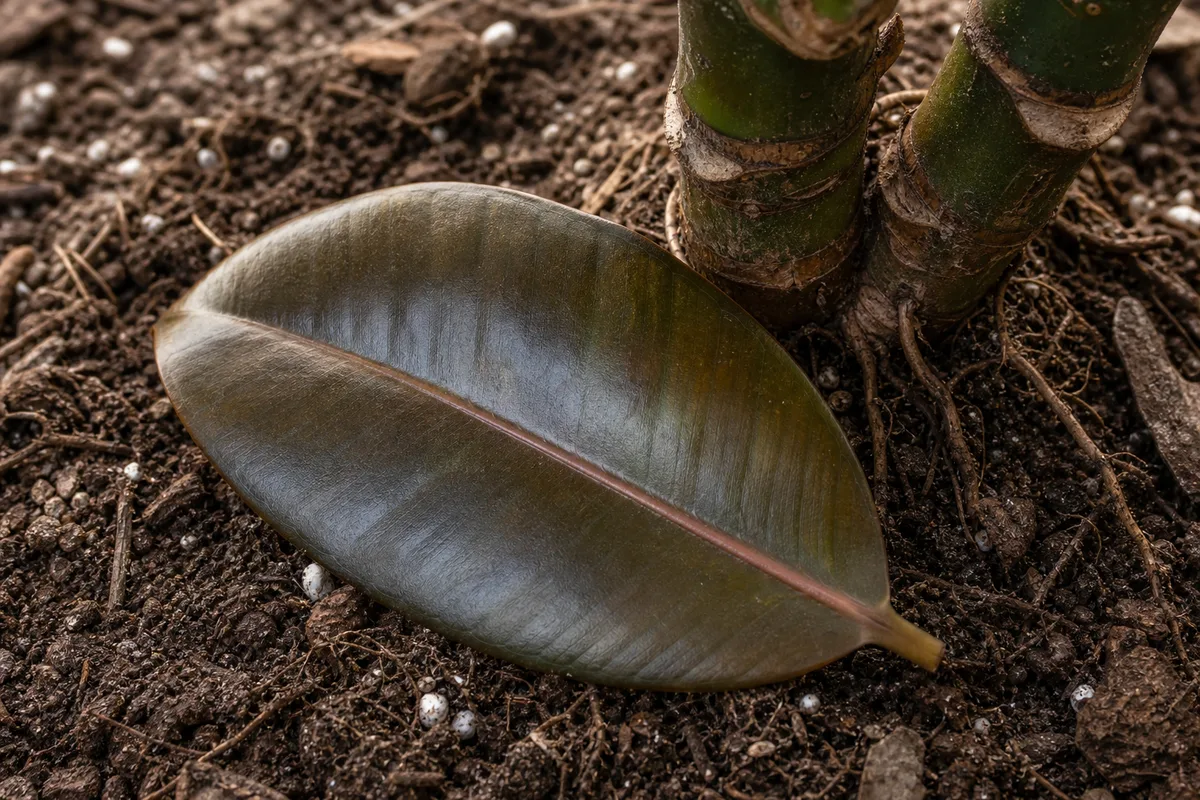
Leaf Drop symptoms on Rubber Plant - compare with healthy tissue on the same plant.
One or two older bottom leaves fading slowly can be normal, and NC State notes it is normal for some bottom leaves to turn yellow and drop. The concern pattern is faster or wider shedding, especially when paired with a recent trigger such as moving the plant, Rubber Plant repotting guide, draft exposure, or a watering shift.
How to confirm the cause
Use this order so you avoid guessing:
- Timeline check: What changed in the last 14 days? Move, repot, seasonal HVAC start, open window, missed watering cycle?
- Soil and pot-weight check: Heavy cool pot plus damp soil at 2 inches suggests overwatering stress. Very light pot and dry mix suggest underwatering stress.
- Temperature and airflow check: Clemson guidance says avoid below 55F and cold drafts; check leaf-level exposure, not just thermostat average.
- Canopy pattern check: Bottom-up yellowing with wet soil suggests moisture stress; side-specific drop near a draft source suggests environmental shock.
- Root-risk check: Sour soil smell, blackened soft roots, or soft stem base suggests rot progression.
- Pest check: Look under leaves and at nodes for scale, mealybugs, and spider mites.
If diagnosis remains unclear, compare with related guides:
First fix for Rubber Plant
Choose one correction first: stabilize placement and watering. Keep the pot in Rubber Plant light guide with protection from afternoon sun, away from vents and draft lines. Then water by dry-down, not by calendar.
Missouri Botanical Garden recommends watering regularly in active growth, avoiding overwatering, and reducing watering from fall to late winter. If the plant is currently dropping leaves, avoid repotting, feeding, and hard pruning on the same day unless rot is obvious. One variable at a time makes recovery easier to read.
For draft-driven drop, Colorado PlantTalk also recommends keeping Rubber Plant away from drafty doors, furnace airflow, and AC flow.
Step-by-step recovery
After the first stabilization, recover in sequence:
- Day 1-3: Hold steady. Keep light consistent, avoid moving the pot, and reassess soil moisture once daily without watering reflexively.
- Day 4-10: If soil is still wet and symptoms continue, improve aeration and drainage behavior (empty saucers, avoid standing runoff, check pot holes).
- Week 2-3: If drop slows and top leaves stay firm, continue the same routine; do not “reward” with fertilizer.
- Week 3+: If wet-soil decline continues (sour smell, soft stem base), escalate to root inspection and repot only if rot is confirmed.
This sequence prevents the common mistake of stacking five interventions at once, which makes cause and recovery impossible to interpret.
Recovery timeline
Recovery depends on cause severity:
- Mild environmental shock: drop often stabilizes within 1-3 weeks after conditions are stabilized.
- Moderate watering stress: expect 3-8 weeks before you see clear improvement in top growth behavior.
- Rot-involved cases: recovery can take one full growing season, and some stem sections may stay bare.
Signs of improvement:
- Leaf drop slows or stops.
- New leaves emerge glossy and firm.
- Pot dry-down becomes predictable again.
Signs of worsening:
- Continued multi-leaf drop on wet soil.
- Stem softening at the base.
- Persistent sour odor from mix.
- Pest flare-ups while plant vigor declines.
Use Wilting on Rubber Plant and Yellow Leaves on Rubber Plant when pattern overlap makes diagnosis confusing.
Lookalike symptoms to rule out
Leaf drop overlaps with several other issues:
- Overwatering: drop with heavy wet mix, yellowing, sometimes sour odor.
- Underwatering: drop with very dry mix, lighter pot, and often crisp edges.
- Low light: gradual thinning and weaker growth before drop events. See Not Enough Light on Rubber Plant.
- Low humidity + airflow stress: edge damage and faster water loss in heated or air-conditioned rooms. See Low Humidity on Rubber Plant.
- Pests: visible stippling, honeydew, or cottony residue with drop progression.
Leaf drop vs yellow leaves vs wilting
Use symptom vocabulary to pick the right path:
- Leaf drop: leaves detach and fall; color may be green or yellow.
- Yellow leaves: color change is primary signal, often before drop.
- Wilting: loss of firmness and turgor, with or without immediate drop.
If your main symptom is detachment, stay on this page. If color or turgor changes are the main symptom, use the yellow or wilting guides for a cleaner diagnostic route.
What not to do
Do not panic-water after every dropped leaf. Do not rotate or relocate the pot repeatedly while trying to “find a better spot.” Do not fertilize a stressed plant until growth restarts.
Avoid immediate repot unless rot signs are present. Unnecessary repotting adds more stress to an already shedding plant.
Wear gloves when pruning or handling damaged stems because latex sap can irritate skin, and Rubber Plant (fig) is toxic to cats and dogs. If a pet ingests plant material, contact your veterinarian or ASPCA Animal Poison Control promptly.
How to prevent leaf drop next time
Keep one stable location and acclimate moves gradually. PlantTalk notes that Rubber Plants do best in medium to bright filtered light and should be kept away from drafts and direct furnace or AC airflow.
Use seasonal watering logic: in active growth, water after dry-down; in shorter low-light seasons, water less often. NC State and Missouri Botanical Garden both support reduced winter watering for this species.
Add a monthly prevention check:
- Confirm pot has open drainage holes.
- Empty saucer runoff after watering.
- Inspect undersides of leaves for pests.
- Confirm airflow is gentle, not direct from vents or window leaks.
- Recheck placement before weather changes (first cold snap, first summer AC cycle).
Related Rubber Plant problems
Use these pages when your symptom pattern shifts:
- Rubber Plant overview
- Watering guide
- Overwatering
- Underwatering
- Yellow leaves
- Wilting
- Root rot
- Not enough light
- Low humidity
When to worry
Treat leaf drop as urgent if several leaves fail in one week, stems soften, the pot smells sour, or pests spread across multiple leaves quickly. These signs suggest compounded stress or root decline.
Lower urgency cases include one occasional old lower leaf dropping while top growth remains firm and new leaves keep emerging.
If symptoms continue beyond 3-4 weeks despite stable conditions, reassess root health and switch to the closest lookalike guide rather than repeating the same fix.
When to use this page vs other Rubber Plant guides
- Rubber Plant watering guide - Use for routine moisture checks before assuming leaf drop is the main issue.
- Rubber Plant problems hub - Browse all 17 common issues on this species.
- Yellow Leaves on Rubber Plant - Different entry point when symptoms overlap with leaf drop.
- Drooping Leaves on Rubber Plant - Different entry point when symptoms overlap with leaf drop.
- Root Rot on Rubber Plant - Different entry point when symptoms overlap with leaf drop.