Low Humidity on Rubber Plant: Causes, Checks & Fixes
Quick answer
Rubber Plant tolerates average indoor air but dry winter heating can brown leaf tips on its large glossy blades. First step: move it away from radiators and forced-air vents, then raise local humidity modestly if brown edges keep spreading.
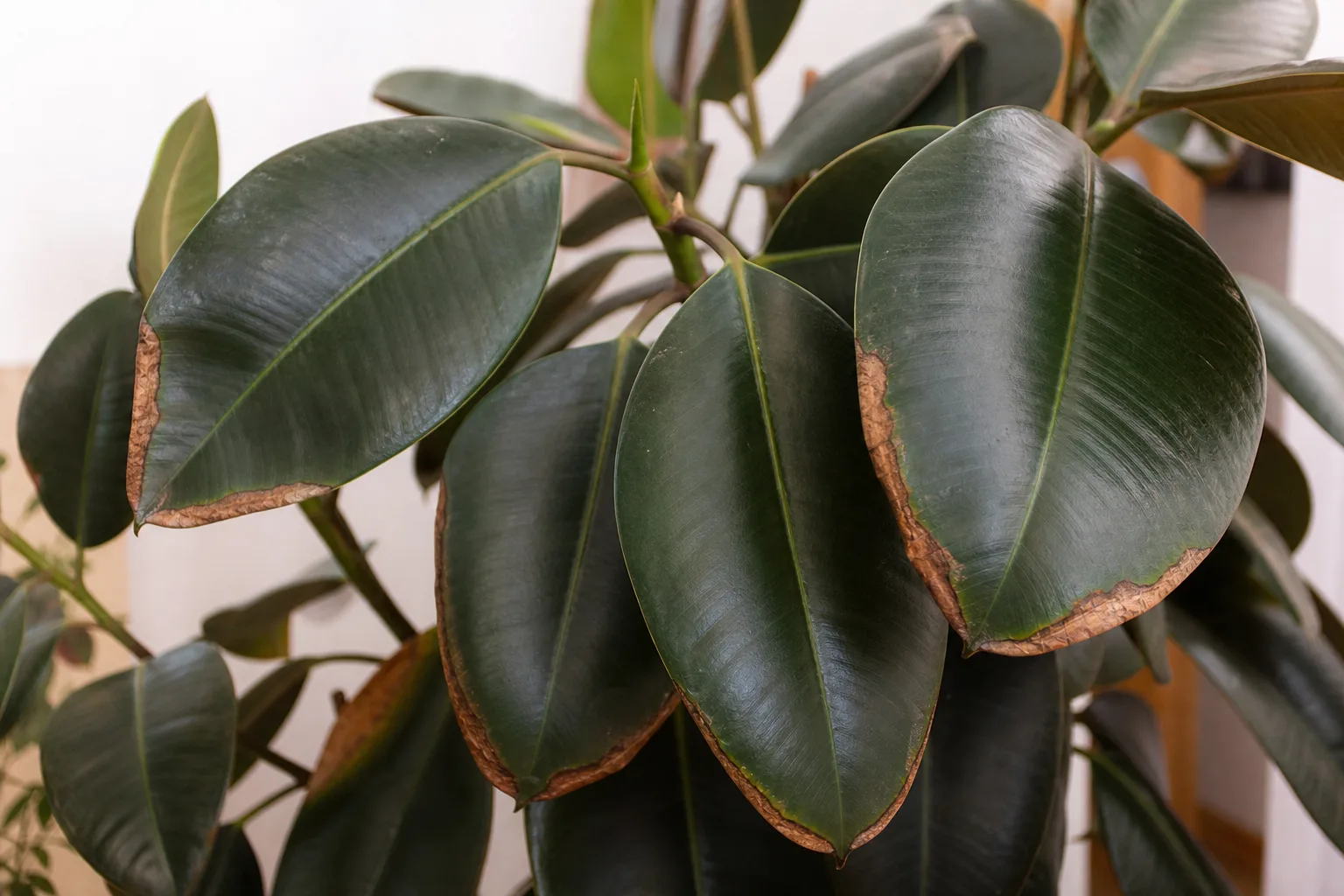
Low Humidity on Rubber Plant: Causes, Checks & Fixes
This guide covers low humidity on Rubber Plant. See also the general Low Humidity guide, watering, and light pages for this plant.
Low Humidity on Rubber Plant: Causes, Checks & Fixes
Quick answer
Rubber Plant (Ficus elastica) evolved in humid tropical forests but tolerates the dry air common in homes better than many tropical houseplants. Low humidity rarely kills it. What you usually see is cosmetic: crispy brown tips and edges on large, stiff, glossy leaves-especially in winter when central heating pulls room humidity down.
First step: move the plant away from radiators, forced-air vents, and hot draft paths that strip moisture from leaf margins. If brown edges keep spreading after placement is stable, add modest local humidity with a humidifier or pebble tray-not heavy misting onto soil.
Before chasing humidity, rule out underwatering on Rubber Plant and salt buildup. Both produce similar brown edges on Rubber Plant.
What low humidity looks like on Rubber Plant
Low-humidity stress on Rubber Plant is usually edge damage, not whole-plant collapse.
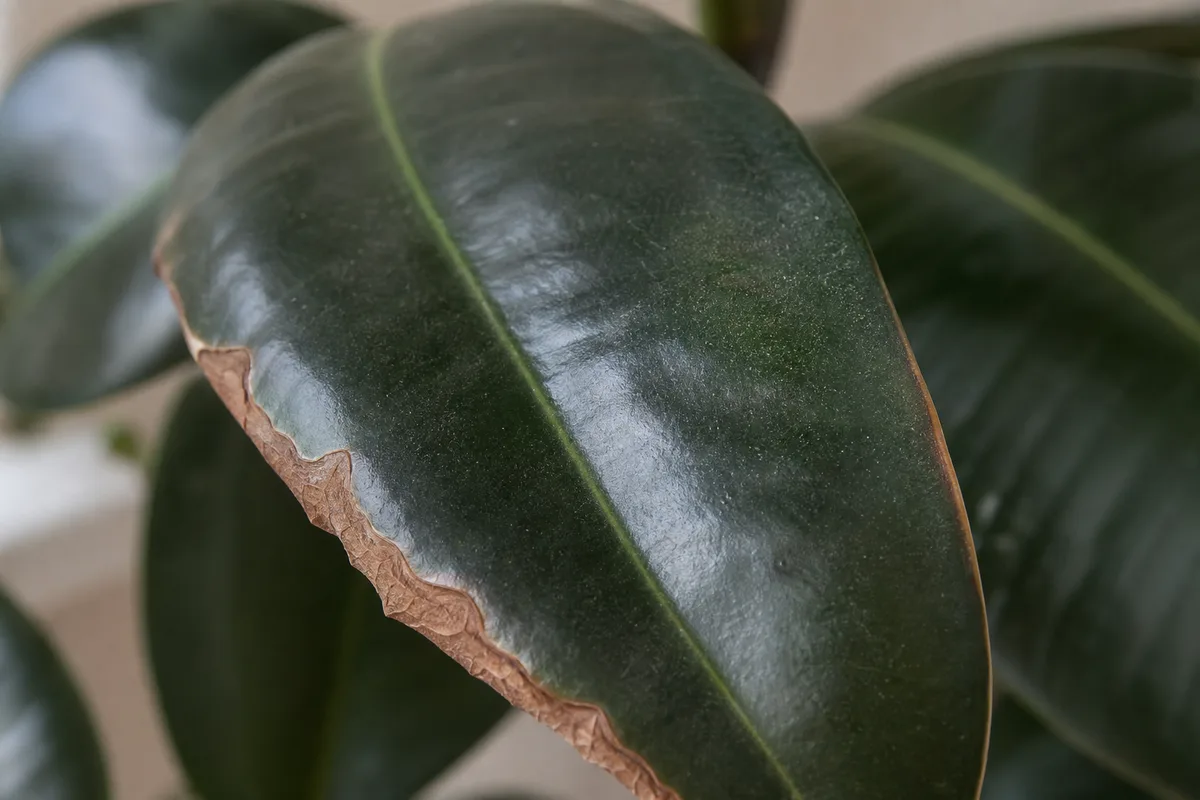
Low Humidity symptoms on Rubber Plant - compare with healthy tissue on the same plant.
Typical humidity-related signs:
- Crispy brown tips and margins on otherwise firm, glossy leaves
- Damage concentrated on leaves closest to heaters, radiators, or AC vents
- Symptoms worsen through winter heating season while stems stay upright
- Newest leaves may show thin brown edges before older blades
- Variegated cultivars like Tineke or Tricolor sometimes brown at pale sections faster than solid green forms
What low humidity usually does not look like:
- Yellow, soft leaves with a heavy, wet pot (overwatering on Rubber Plant pattern)
- Widespread leaf drop within days after a move or cold draft (environmental shock-cold drafts and dry air both stress Rubber Plant)
- Large pale scorched patches on leaves facing a south window (sunburn-direct summer sun can scorch rubber plant foliage)
- Fine stippling with webbing on leaf undersides (spider mites in dry, warm rooms)
Rubber Plant’s stiff, glossy, large leaves lose water fastest at the tips and edges-the farthest point from the vascular system delivering moisture from roots. When dry air pulls water out faster than roots can replace it, those margin cells dry out and turn brown.
Why Rubber Plant gets low humidity stress
Rubber Plant is more forgiving of dry air than ferns or calatheas, but it still prefers humid conditions and medium relative humidity with temperatures above 55°F. Most homes run 30–40% relative humidity in winter-well below the 40–60% range Rubber Plant grows best in.
Several factors make Rubber Plant overview show humidity stress in real homes:
Winter heating. Forced-air furnaces and radiators dry the air around nearby plants. Large Rubber Plant leaves transpire constantly; dry air accelerates water loss at margins.
Localized dry zones. A plant on a mantel above a fireplace, on a radiator shelf, or directly under a ceiling vent sits in a microclimate far drier than the rest of the room. Only the leaves facing that heat source may brown first-a useful clue.
Draft pairing. Rubber Plant does not do well with drafts or cold temperatures. Cold window glass plus dry heated air in winter compounds stress. Leaf drop from a draft can look like a watering problem when humidity and temperature are both off.
Dry air plus inconsistent watering. Brown tips from underwatering and brown tips from low humidity look alike. Rubber Plant watered on a calendar instead of by soil dryness often shows edge burn when dry air increases transpiration demand.
Spider mites in dry warmth. Warm, dry, stagnant air around a stressed Rubber Plant invites spider mites. Mite damage adds stippling and webbing-not classic humidity browning-but the same dry placement often causes both.
How to confirm the cause
Work through these checks in order before changing humidity:
- Soil moisture - Insert your finger 2 inches into the mix. If it is bone dry and leaves are curling inward, underwatering may be the primary issue. If soil stays wet and the pot feels heavy, overwatering is more likely than dry air.
- Pot weight and drainage - Lift the pot after watering and again a week later. A chronically heavy pot with sour smell points to root problems, not humidity.
- Damage pattern - Are only leaves near a heater or vent browning? Localized edge burn strongly suggests dry air at that spot. Uniform tip burn on all leaves may mean Rubber Plant watering guide or salt buildup.
- Season and room - Did symptoms start or worsen when heating turned on? Winter onset fits low humidity. Sudden drop after a move fits draft or relocation stress.
- Leaf undersides - Check with a hand lens for spider mite stippling and fine webbing. Treat pests if present; raising humidity alone will not clear an active infestation.
- Light exposure - Confirm the plant is not getting strong direct afternoon sun through glass, which scorches leaves in a different pattern than dry-air tip burn.
- New growth - If the newest leaf at the top is firm and glossy with clean edges, the plant is still healthy overall. Old lower leaves with minor winter tips are lower priority.
If soil moisture is normal, stems are firm, damage clusters near dry-air sources, and no pests appear, low humidity is a strong diagnosis.
First fix for Rubber Plant
Move Rubber Plant away from heating vents, radiators, fireplaces, and forced-air drafts so dry heated air is not blasting directly across its leaves.
This single step removes the most common localized humidity drain without stacking treatments. Pull the pot back from window glass that gets cold at night, too-Rubber Plant prefers to remain in one stable location without cold drafts.
Do not reach for a humidifier on day one if the plant sits on a radiator shelf. Placement fixes the root cause faster than adding moisture to an entire room while the vent still desiccates the canopy.
Do not increase watering to “compensate” for dry air. Wet soil with dry air still browns tips and risks root rot on Rubber Plant in winter when growth slows.
Step-by-step recovery
After moving the plant to stable placement:
- Raise local humidity modestly - Run a cool-mist humidifier nearby or set the pot on a pebble tray with water below pot level. Clustering houseplants together also increases humidity around the group as water evaporates from leaves and trays.
- Wipe leaves with a damp cloth - NC State recommends cleaning dust from large glossy leaves with a damp soft cloth. This supports photosynthesis and slightly raises local moisture at the leaf surface.
- Hold Rubber Plant repotting guide and fertilizer - Do not repot or feed a stressed Rubber Plant for two to three weeks. Let it stabilize in the new spot first.
- Trim only fully dead tissue - Snip leaves that are entirely brown if they look unsightly. Leave mostly green blades with brown tips; they still photosynthesize while new growth forms.
- Treat spider mites if found - Rinse leaf undersides and isolate the plant if webbing is present. Dry air management helps prevention but does not replace pest control.
- Flush soil if salt crust is visible - White mineral crust on soil surface can burn leaf margins similarly to dry air. Run plain water through the pot until it drains freely, then resume normal dry-down watering.
Skip heavy misting onto foliage and soil. Water sitting on leaves in a poorly ventilated corner can encourage fungal issues, and misting adds little lasting humidity compared with a humidifier or pebble tray.
Recovery timeline
Once dry-air exposure stops, edge browning on existing leaves should not spread further within one to two weeks. New leaves emerging over the next two to four weeks should look firm, glossy, and largely free of fresh tip burn if humidity and watering are stable.
Damaged brown tips and margins will not turn green again-that tissue is dead. Judge recovery by stopped symptom spread and healthy new growth at the stem tip, not by old blades returning to perfect form.
If brown edges keep advancing on new leaves after four weeks of stable care, re-check watering rhythm, light level, and hidden drafts before buying more humidity gear.
Lookalike symptoms to rule out
Underwatering - Top 2 inches of soil very dry, leaves may curl inward, and too little water can cause leaves to drop. Crispy tips appear, but the pot feels light and soil pulls away from the sides.
Overwatering - Yellow leaves, soft texture, heavy pot, and sour soil smell. Overwatering can cause loss of leaves and is more dangerous than dry winter air on Rubber Plant.
Salt or fertilizer burn - Brown tips with white crust on soil surface. Flush the pot and reduce fertilizer rather than raising humidity.
Sun scorch - Bleached or brown patches on leaves facing direct sun, especially on variegated pale sections. Move to bright indirect light with protection from afternoon sun.
Cold draft shock - Sudden leaf drop after moving near an exterior door or cold window. Stabilize temperature and placement; humidity alone will not stop draft-triggered drop.
Spider mites - Fine stippling, webbing, and dull leaves in warm dry corners. Confirm with a tap test over white paper.
Mistakes to avoid
Do not chase greenhouse-level humidity above 60% for Rubber Plant. It prefers humid air but tolerates dry indoor conditions-modest improvement is enough for most homes.
Do not mist heavily onto soil and leaf axils. That adds surface moisture without fixing ambient dryness and can worsen fungus gnats or leaf spot in stagnant air.
Do not overwater to hydrate leaves from the roots. Rubber Plant is semi-dormant in winter and more prone to rot when soil stays wet in cool, low-light months.
Do not move the plant repeatedly between rooms hunting humidity. Rubber Plant prefers to remain in one location and drops leaves when bounced between environments.
Do not prune aggressively while the plant is still losing new tips. Fix the environment first, then trim cosmetic damage after growth stabilizes.
Rubber Plant care cross-check
Low humidity symptoms often appear when other basics are slightly off. Confirm these match your plant’s normal needs:
- Light - Bright indirect light or partial shade; avoid unfiltered direct sun that scorches large leaves.
- Watering - Water when the top 2 inches of soil are dry; reduce frequency in winter when growth slows.
- Temperature - Keep above 55°F; avoid cold drafts and sudden temperature drops.
- Humidity target - Aim for 40–60% in heated rooms; kitchens and bathrooms often run higher without extra effort.
- Leaf hygiene - Wipe dust from broad leaves so the plant uses available light and moisture efficiently.
How to prevent low humidity next time
Place Rubber Plant away from heating vents, radiators, and fireplace mantels before winter heating starts. If you only have one bright spot near a vent, deflect airflow with furniture or a vent cover so it does not hit the canopy directly.
Run a humidifier in the room during heating season, or group Rubber Plant with other houseplants to share transpired moisture. RHS notes that grouping plants or using pebble trays raises humidity around foliage-especially effective for large-leaved plants like Rubber Plant.
Keep watering tied to soil dryness, not the calendar. Dry winter air increases transpiration; a plant that was borderline underwatered in summer will show tip burn faster in heated air.
Wipe leaves monthly or when dusty. Clean foliage handles dry spells slightly better than dust-coated blades that cannot exchange moisture efficiently.
Inspect leaf undersides during weekly care in winter. Catching spider mites early in dry corners prevents a secondary crisis on top of humidity stress.
When to worry
Treat as urgent if several leaves yellow and drop within days, stems soften at the base, soil smells sour, or spider mite webbing covers multiple branches. Those patterns point to watering failure, root rot, or pest outbreak-not cosmetic winter tip burn.
A few brown tips on lower or outer leaves in a heated room while new top growth stays glossy is lower urgency. Adjust placement and humidity, then watch new leaves for two to four weeks.
If the plant keeps dropping leaves after you stabilize humidity, temperature, and watering, inspect roots for mushiness. Rubber Plant can look like a humidity problem when the root system is actually failing from winter overwatering.
Conclusion
Low humidity on Rubber Plant is usually a winter placement problem, not a death sentence. Move it off the radiator shelf, buffer dry air modestly, and judge success by firm new leaves-not by old brown tips reversing. Rule out underwatering and pests along the way, and you will avoid the common trap of overwatering a plant that only needed better air around its glossy blades.
When to use this page vs other Rubber Plant guides
- Rubber Plant watering guide - Use for routine moisture checks before assuming low humidity is the main issue.
- Rubber Plant problems hub - Browse all 17 common issues on this species.
- Brown Tips on Rubber Plant - Different entry point when symptoms overlap with low humidity.
- Leaf Drop on Rubber Plant - Different entry point when symptoms overlap with low humidity.