Yellow Leaves on Rubber Plant: Causes, Checks & Fixes
Quick answer
Yellow leaves on Rubber Plant usually mean the soil has stayed too wet, though cold drafts, too little light, salt buildup, and relocation stress also yellow foliage. First step: check pot weight and soil moisture at 2 inches depth before watering, fertilizing, or repotting.
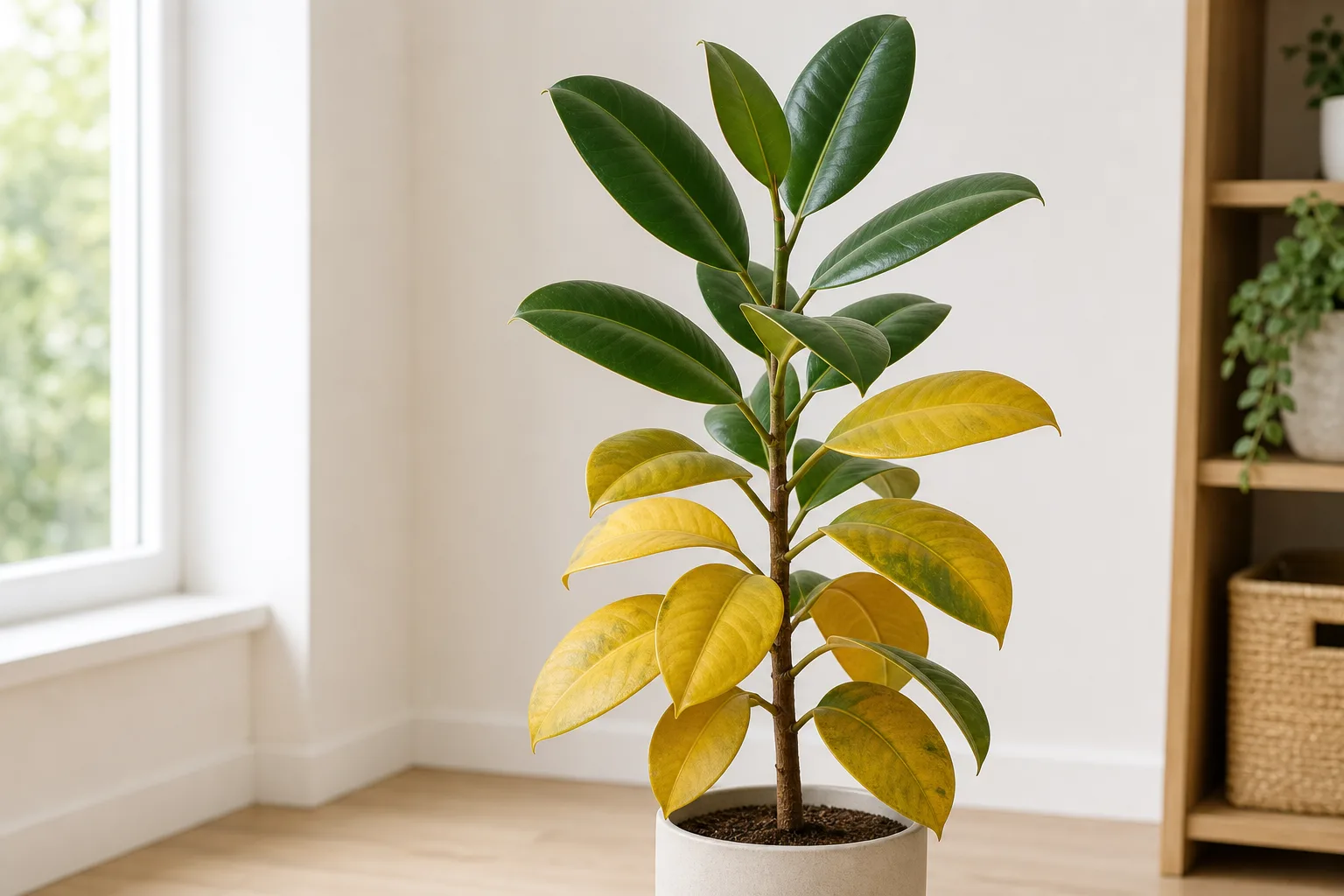
Yellow Leaves on Rubber Plant: Causes, Checks & Fixes
This guide covers yellow leaves on Rubber Plant. See also the general Yellow Leaves guide, watering, and light pages for this plant.
Yellow Leaves on Rubber Plant: Causes, Checks & Fixes
Quick answer
Yellow leaves on Rubber Plant (Ficus elastica) most often trace back to wet roots or environmental stress-not hunger. Clemson HGIC states that leaf yellowing may occur if the soil stays too wet. NC State adds that overwatering can cause loss of leaves and that some bottom leaves turning yellow and drop is normal on an otherwise healthy plant.
First step: lift the pot and push your finger 2 inches into the mix. A heavy cool pot with damp soil points toward overwatering. A very light pot with dusty dry mix points toward underwatering or salt stress. Only after you know which water pattern you have should you adjust light, flush salts, or inspect for pests.
Quick triage:
- Wet heavy pot + soft yellow lower leaves → likely overwatering or early root stress.
- Light dry pot + crisp yellow edges → likely underwatering or salt buildup.
- Uniform pale new growth in a dim corner → likely insufficient light.
- Rapid yellow-and-drop after a move or cold draft → likely environmental shock.
- Stippling, honeydew, or distorted new growth → check pests before assuming a watering fault.
What yellow leaves look like on Rubber Plant
Rubber Plant leaves are thick, glossy, and usually 8–12 inches long when mature. Healthy foliage feels firm and upright with deep green color (or strong variegation on cultivars like Tineke and Ruby). Yellowing rarely looks the same across every cause-the pattern and what the soil is doing tell you which branch to follow.
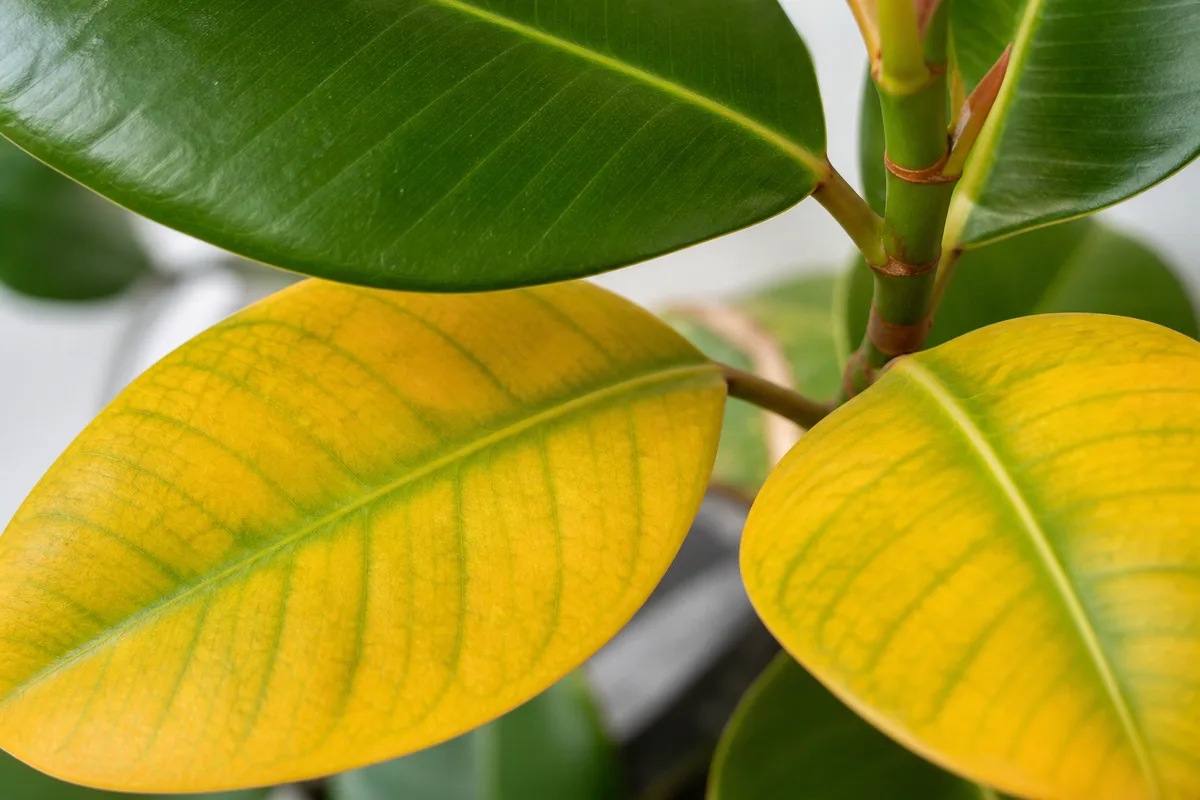
Yellow Leaves symptoms on Rubber Plant - compare with healthy tissue on the same plant.
Yellow lower leaves only (normal aging)
One or two older bottom leaves fading slowly over weeks or months while new tips stay dark green and glossy is often normal senescence. The rest of the plant looks vigorous, the pot dries predictably between waterings, and stems feel firm. NC State describes this as normal for some bottom leaves to turn yellow and drop on an established plant.
Soft yellow lower leaves on a wet heavy pot (overwatering)
Overwatering yellowing usually starts from the bottom up while the mix stays damp several days after watering. Leaves may go dull light-green before turning yellow, feel soft or limp, and sometimes drop while soil is still wet. The pot feels unusually heavy and cool. A sour musty smell from the drainage holes suggests chronic moisture stress. Advanced root decline can make the plant wilt even though soil is wet-damaged roots cannot absorb water properly.
Crisp yellow leaves on a light dry pot (underwatering)
Underwatering is less common indoors but shows as dry mix deep in the pot, a lightweight pot, and lower leaves turning yellow with dry crispy edges or slight inward curl. Leaves feel papery rather than mushy. This pattern is the opposite of soft yellowing on wet soil.
Uniform pale new growth in dim light (low light)
When newest leaves emerge smaller, paler, or less variegated than older ones, insufficient light is often the driver-not fertilizer deficiency. Solid-green Robusta and Burgundy types tolerate moderate light better than variegated Tineke and Ruby cultivars, which lose pink and cream color fastest in dim rooms because white leaf sections photosynthesize less efficiently. The pot may also stay wet longer in low light because the plant uses water slowly.
Rapid yellow-and-drop after cold or relocation
Clemson warns to avoid cold drafts and temperatures lower than 55°F. Sudden chill near winter glass, AC vents, or doors can yellow leaves within days. Relocation stress works similarly: Ficus elastica prefers to remain in one location and often yellows or drops leaves after a move even when the new spot is technically better. Sympathy watering on already wet soil after a move is a common second mistake.
Yellowing with brown tips or white soil crust (salt buildup)
Repeated fertilizer on dry soil, hard tap water, or years without flushing can leave mineral buildup on soil surfaces in the mix. Signs include yellowing with dry brown leaf margins, dull foliage despite correct watering, and white crust on the soil surface or pot rim. The pot may feel normal weight-not necessarily heavy or bone dry.
Stippling or distorted new growth (pests)
Spider mites cause fine stippling and webbing on leaf undersides in dry air. Aphids cluster on tender new growth and can yellow leaves through sap feeding. Mealybugs and scale stress the plant enough to cause chlorosis even when watering is correct. NC State lists spider mites, mealybugs, and scale as common pests on Ficus elastica.
Why Rubber Plant leaves turn yellow
Rubber Plant evolved as a broadleaf evergreen in warm humid regions of southeastern Asia. Indoors it grows moderately in bright indirect light but slows sharply in short winter days. Most yellowing indoors ties to how fast the root zone dries relative to how often you water.
Overwatering is the leading cause, especially in winter when growth slows but watering stays on a summer schedule. Missouri Botanical Garden recommends reducing watering from fall to late winter when indoor growth slows.
Low light slows transpiration so the same watering rhythm that worked in summer leaves roots damp for weeks in a dim corner.
Cold drafts and sudden temperature drops yellow leaves even when watering looks correct-Ficus species react visibly to chill.
Relocation and Rubber Plant repotting guide stress trigger yellow-and-drop because the plant prioritizes stability over gradual adjustment.
Salt accumulation from fertilizer and hard water damages fine roots and shows up as marginal yellowing and browning.
Pest feeding weakens foliage and can yellow new growth before you notice the insects.
Normal aging sheds older lower leaves on a healthy upright trunk-different from several leaves failing within a week.
Wet pot vs dry pot: symptom matrix
| What you notice | Soil and pot | Likely cause | Next step |
|---|---|---|---|
| Soft yellow lower leaves, may drop | Heavy, damp 2+ days | Overwatering / root stress | Stop watering; see overwatering guide |
| Yellow with crisp dry edges | Light, dusty dry throughout | Underwatering | Soak once, then resume dry-down rhythm |
| Pale small new leaves, long gaps between nodes | Normal to slow dry-down | Low light | Move to brighter indirect light |
| Yellow-and-drop after move or near vent | May be normal weight | Relocation / draft shock | Stabilize placement; do not overwater |
| Yellow + brown tips, white soil crust | Normal weight | Salt buildup | Flush mix; hold fertilizer |
| Stippling, honeydew, cottony clusters | Any moisture state | Pests | Inspect undersides; see pest guides |
| One old lower leaf over months | Normal dry-down | Normal aging | Monitor only if top growth stays firm |
| Wilting with wet soil | Heavy, sour smell possible | Advanced root decline | Inspect roots; see root rot guide |
How to confirm the cause
Work through this checklist in order before changing multiple variables:
- Soil moisture at depth - Push your finger 2 inches into the mix. Surface dryness can hide wet roots below. Compare pot weight before and after a known dry period.
- Leaf pattern - Bottom-up yellowing on wet soil supports overwatering. Uniform pale new growth in a dim spot supports low light. One slow lower leaf on a firm plant supports aging.
- Leaf texture with soil condition - Soft limp yellow leaves with damp soil suggest overwatering. Crisp yellow edges with dry soil suggest underwatering or salts.
- Smell and drainage - Sour odor, saucers left full, or sealed cache pots point to chronic wetness. White crust on soil points to salt buildup.
- Recent changes - Move, repot, seasonal HVAC start, or draft exposure in the last two weeks? Stabilize before assuming disease.
- Pest scan - Check leaf undersides, stem joints, and new growth tips for mites, aphids, mealybugs, and scale.
- Escalation check - If soil is wet, several leaves are failing, and stems feel soft, unpot and inspect roots before the next watering cycle.
If overwatering is confirmed, use the dedicated Overwatering on Rubber Plant guide for trim-and-repot steps. If the main symptom is droop rather than color change, see Drooping Leaves on Rubber Plant.
First fix for Rubber Plant
One action first: check soil moisture at 2 inches depth and stop reactive watering. Do not fertilize, repot, or prune heavily on day one unless rot is obvious. Match your first fix to what the checklist showed.
If soil is wet and stems are still firm
Stop watering until the top 2 inches of soil are dry. Empty saucers and confirm drainage holes are open. Move to bright indirect light with protection from afternoon sun if the plant sits in deep shade so remaining moisture evaporates faster. Remove fully yellow leaves only after the plant stabilizes-wear gloves because latex sap can irritate skin.
If soil is dry and the pot is light
Water thoroughly until a small amount drains from the bottom, then discard runoff within 30 minutes. Resume the dry-down rhythm: water again only when the top 2 inches are dry. Do not leave the plant in soggy mix after a drought spell.
If mix smells sour or stems soften
Treat as possible root rot. Stop watering, unpot, and inspect roots-firm white or tan tissue is salvageable; mushy brown roots need trimming and fresh well-drained mix. See Root Rot on Rubber Plant for the full escalation path.
If the plant sits in a cold draft
Move away from window leaks, AC vents, and doors. Clemson recommends avoiding temperatures lower than 55°F and cold drafts. Hold watering steady unless soil checks show a separate moisture problem.
If only lower leaves fade slowly over months
No immediate fix may be needed when top growth stays glossy and soil dries normally. Watch for acceleration-several leaves failing within a week is not normal aging.
If yellowing followed a recent move
Keep the plant in one bright stable spot for at least two weeks. Do not sympathy-water on wet soil. Relocation yellowing often lags the actual move by one to two weeks because Rubber Plant holds leaves longer than many houseplants.
If salt crust or brown tips dominate
Flush the pot with plain room-temperature water equal to several times the pot volume, letting it drain fully. Hold fertilizer until new growth looks normal. Repot into fresh mix if crust persists or roots are circling.
If pests are present
Isolate the plant and rinse leaf undersides. Confirm active insects before spraying. See Aphids on Rubber Plant or Spider Mites on Rubber Plant for species-specific treatment steps.
Step-by-step recovery by cause
After the first fix, recover in sequence-one variable at a time:
- Days 1–3: Hold steady. Reassess soil moisture daily without reflex watering. Keep light consistent.
- Days 4–10: If wet-soil yellowing continues, improve drainage behavior (empty saucers, check pot holes, avoid sealed outer pots).
- Weeks 2–4: If symptoms stabilize and top leaves stay firm, continue the same rhythm. Do not fertilize yet.
- Week 3+: If yellowing spreads on wet soil with sour smell, escalate to root inspection and repot only if rot is confirmed.
For draft or relocation stress, recovery often means simply not changing anything else for two to three weeks while new growth resumes.
Recovery timeline
Recovery depends on cause and severity:
- Mild overwatering caught early: symptoms often stabilize within one to two weeks once watering stops and mix dries. Yellow leaves may not green up again.
- Environmental shock after a move: yellowing may slow within two to three weeks after placement stabilizes.
- Moderate root stress: expect three to eight weeks before firm new glossy leaves emerge at the growing tip.
- Salt flush response: marginal browning may persist on old leaves; judge recovery by new growth color and normal dry-down.
- Severe root rot: can take a full growing season to know whether the plant survived.
Signs of improvement: leaf loss slows, new leaves emerge glossy and upright, pot weight lightens predictably between waterings.
Signs of worsening: spreading soft stems, sour smell returning quickly, wilting on wet soil, or pest flare-ups while vigor declines.
Lookalike symptoms to rule out
Leaf drop without prominent yellowing may be pure stress shedding-see Leaf Drop on Rubber Plant.
Wilting with firm green leaves points toward turgor loss rather than chlorosis-see Wilting on Rubber Plant.
Brown tips without full yellowing often mean salt or low humidity-see Brown Tips on Rubber Plant.
Only underwatering signs (curl, crisp edges, very light pot) are covered in depth on Underwatering on Rubber Plant.
Persistent pale stretch in a dim room is Not Enough Light on Rubber Plant.
What not to do
Do not fertilize yellow plants in wet soil-salts stress damaged roots further. Do not repot reactively before diagnosing moisture; unnecessary repotting adds stress to an already yellowing plant. Do not water because leaves look sad without checking soil first-wilting is not always a sign to water, and overwatered Rubber Plants can wilt while soil stays damp.
Do not mist leaves hoping to fix soggy roots; that does not dry the mix. Do not move the pot repeatedly while troubleshooting-Ficus elastica reacts to change before slow neglect. Do not assume one yellow lower leaf means root rot; check soil, smell, and roots together.
Wear gloves when removing yellow leaves because Rubber Plant sap can irritate skin. The plant is toxic to cats and dogs; contact your veterinarian or ASPCA Animal Poison Control at (888) 426-4435 if a pet ingests plant material.
How to prevent yellow leaves on Rubber Plant
Match watering to season and light. In active growth with bright indirect light, water when the top 2 inches of soil are dry-roughly every 7–10 days in summer for many homes. From fall through late winter, stretch to every 14–21 days or longer if the pot stays heavy. Water regularly during the growing season but avoid overwatering.
Use well-drained houseplant mix with perlite or coarse bark in a pot with drainage holes. Empty saucers after every watering. Keep temperatures above about 55°F (13°C) and away from drafty windows and vents.
Place variegated cultivars in brighter spots than solid-green types so new leaves keep their color. Flush the pot with plain water once or twice a year to wash accumulated salts from fertilizer and hard water.
Weekly prevention check:
- Confirm top growth looks glossy and firm.
- Note pot weight and whether the top 2 inches are dry before watering.
- Inspect leaf undersides for pests.
- Confirm the plant is not in direct AC or furnace airflow.
Rubber Plant care cross-check
If yellowing keeps returning despite correct watering, revisit baseline care:
- Rubber Plant overview - cultivar light needs and seasonal rhythm
- Watering guide - dry-down method and winter reduction
- Light guide - placement for solid-green vs variegated types
Related Rubber Plant problems
Use these pages when your symptom pattern shifts:
- Overwatering
- Underwatering
- Root rot
- Leaf drop
- Drooping leaves
- Wilting
- Not enough light
- Aphids
- Spider mites
- Brown tips
When to worry
Treat yellowing as urgent if several leaves fail at once, soil smells sour, stem bases soften, or the plant wilts while soil is wet. Those signs suggest root decline may be advancing into the stem.
Lower urgency cases include one occasional old lower leaf fading slowly while top growth remains firm and new leaves keep emerging.
If symptoms continue beyond three to four weeks despite stable conditions and correct dry-down, unpot and inspect roots rather than repeating the same fix.
When to use this page vs other Rubber Plant guides
- Rubber Plant watering guide - Use for routine moisture checks before assuming yellow leaves is the main issue.
- Rubber Plant problems hub - Browse all 17 common issues on this species.
- Overwatering on Rubber Plant - Different entry point when symptoms overlap with yellow leaves.
- Underwatering on Rubber Plant - Different entry point when symptoms overlap with yellow leaves.
- Not Enough Light on Rubber Plant - Different entry point when symptoms overlap with yellow leaves.