Aphids on Rubber Plant: Causes, Checks & Fixes
Quick answer
Aphids on Rubber Plant gather on soft new leaves and stem tips, leaving sticky honeydew that can attract ants and sooty mold. First step: move the plant away from others and rinse leaf undersides and new growth with a firm water spray before applying any insecticide.
Aphids on Rubber Plant: Causes, Checks & Fixes
This guide covers aphids on Rubber Plant. See also the general Aphids guide, watering, and light pages for this plant.
Aphids on Rubber Plant: Causes, Checks & Fixes
Quick answer
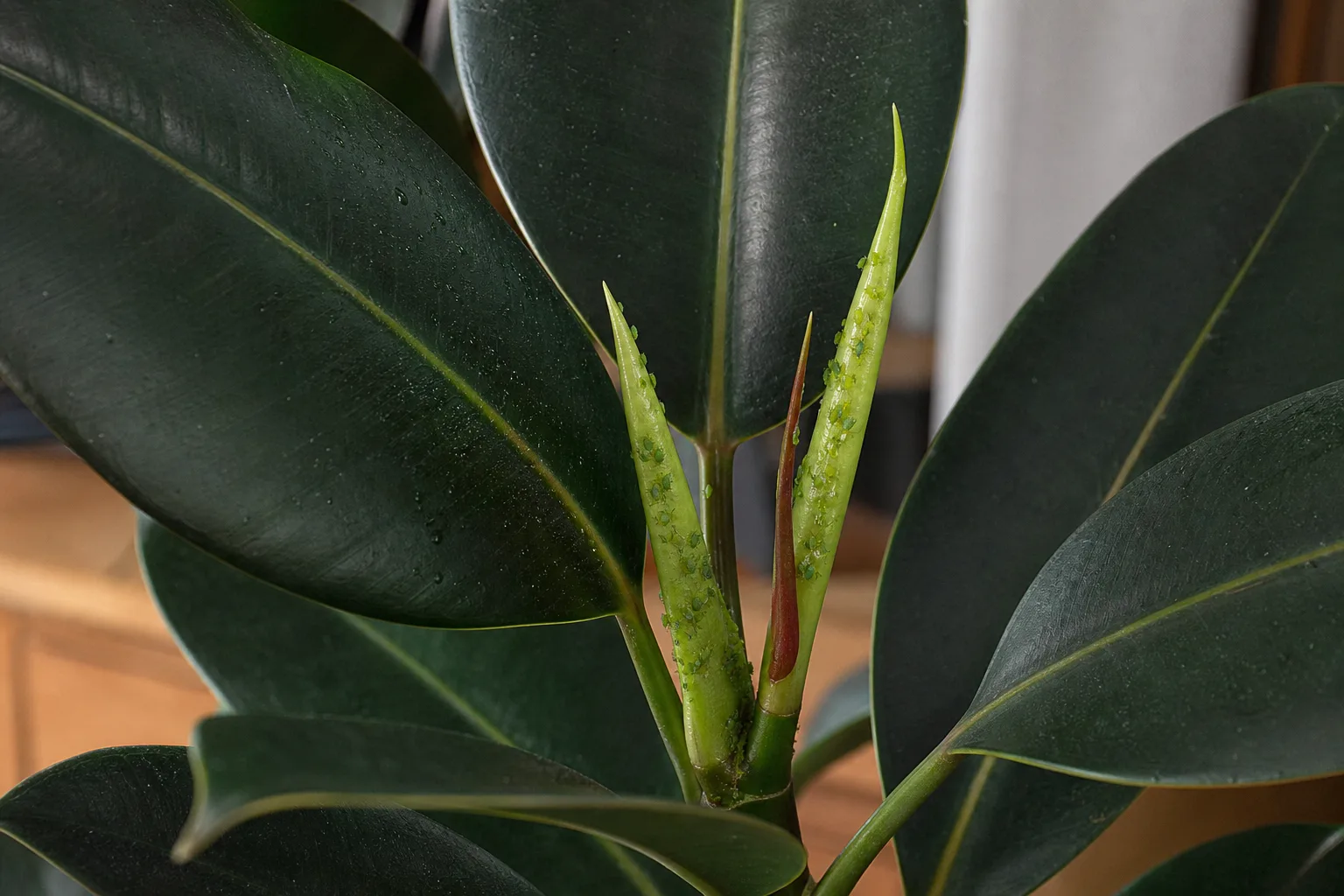
Aphids on Rubber Plant (Ficus elastica) are small sap-sucking insects that cluster on the soft tissue this tree pushes out fastest-new leaf sheaths, pink stipules, and tender stem tips above older glossy foliage. Missouri Botanical Garden lists aphids among pests to watch for on Ficus elastica. They pierce phloem sap, distort young leaves, and excrete sticky honeydew that can attract ants and sooty mold on those broad 8–12 inch leaves.
First step: isolate the plant and rinse new growth and leaf undersides with a firm stream of water. Rubber Plant leaves are large and smooth enough to shower effectively, but you need to confirm live aphids before reaching for sprays. A stressed rubber tree already dropping leaves from a recent move will not recover faster if you pile on chemicals on day one.
What aphids look like on Rubber Plant
Healthy Rubber Plant leaves are thick, glossy, and firm. Aphid damage concentrates where growth is soft:
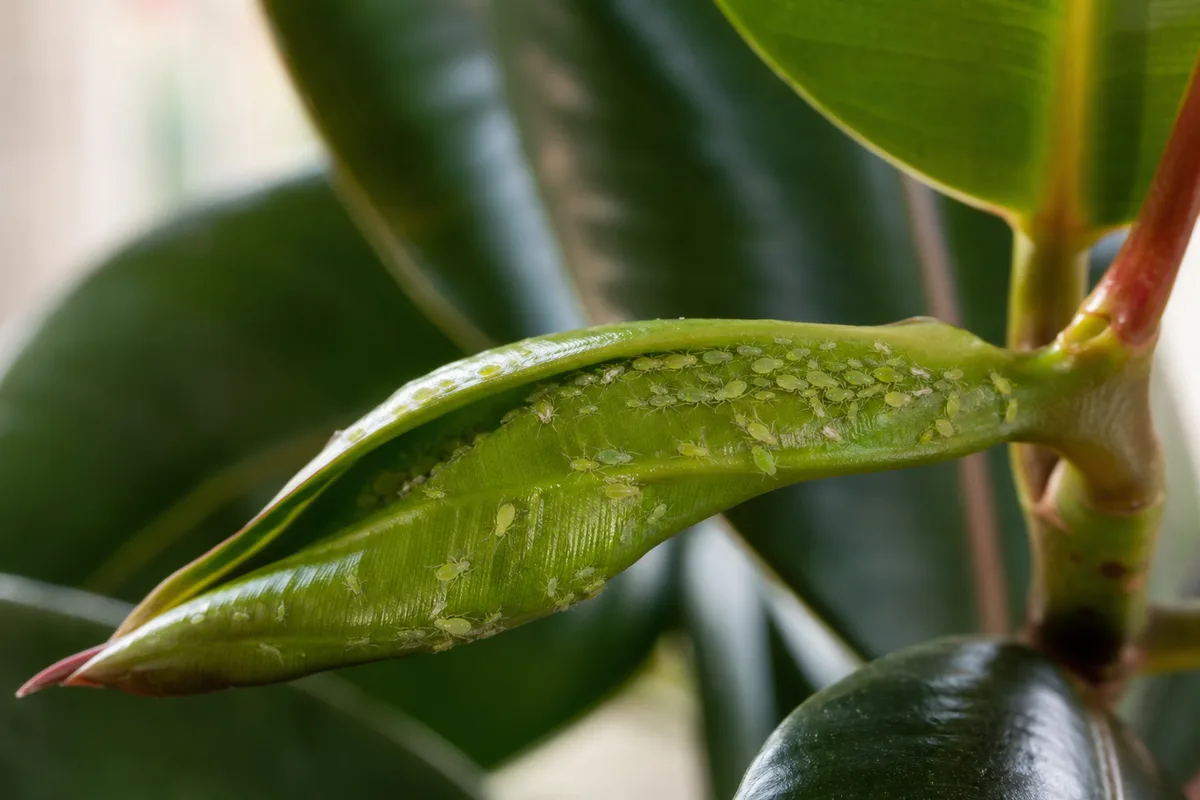
Aphids symptoms on Rubber Plant - compare with healthy tissue on the same plant.
- Clusters of tiny pear-shaped insects on new leaf unfurling points, leaf axils, and stem tips-often green, but aphids can also be black, brown, yellow, or pink
- Sticky, shiny patches on upper leaf surfaces where honeydew dripped from feeding sites above
- Curled or puckered new leaves while older mature leaves still look normal
- Ant trails on the pot, saucer, or nearby surfaces-ants harvest honeydew and protect aphid colonies
- Black sooty mold that wipes off with a damp cloth; it grows on honeydew, not inside leaf tissue
- Stunted or twisted new shoots when feeding is heavy on a single growing tip
Rubber Plant latex sap is unrelated to aphid honeydew. Sap appears when you cut or snap a stem and dries milky white. Honeydew stays tacky, often gathers dust, and follows insect colonies-not mechanical damage.
Because Rubber Plant holds leaves for a long time, you may see honeydew on older glossy foliage while aphids remain on the newest growth above. Always trace stickiness upward to the active feeding zone.
Why Rubber Plant gets aphids
Aphids are not a random Rubber Plant disease-they are introduced pests that exploit tender growth. Clemson Extension notes that houseplant insects most often enter on newly purchased plants or specimens brought in from outdoors. Skipping quarantine is the most common way they reach a Ficus collection.
Rubber Plant is vulnerable during active growth windows. When light is adequate and you feed every two weeks through spring and summer, the plant pushes large new leaves quickly. Aphids prefer soft, new plant growth, and excess nitrogen produces even more of the tender shoots they colonize.
Indoor conditions also matter. Rubber Plant tolerates average home humidity, but warm stagnant air near a heat vent, crowded plant shelves with poor airflow, and dusty leaves make weekly scouting harder. A tree recently moved, repotted, or chilled by a draft may shed lower leaves from stress- that leaf drop does not mean aphids caused the problem, but the plant has less reserve while pests multiply on new tips.
Ants complicate control. Ants protect aphids from predators and parasites, so honeydew on a Rubber Plant sitting on a patio or near a kitchen window with ant access can mean reinfestation even after you rinse insects off.
How to confirm the cause
Work through these checks before treating:
- Location on the plant - Aphids on new growth and undersides near stem joints. If stickiness appears with no insects anywhere and you recently pruned a stem, check whether latex dried on leaves below the cut.
- Hand lens inspection - Aphids are soft-bodied with cornicles on the hind end. They move slowly when disturbed compared with flying whiteflies.
- Tap test - Shake a stem over white paper. Whiteflies fly in a cloud; aphids stay put as small clusters.
- Ant activity - Ants on the pot strongly suggest honeydew producers are present on the plant above.
- Sooty mold check - Rub a dark upper leaf patch. Sooty mold smears and wipes away; dried latex does not spread as a uniform tacky film across multiple leaves.
- Nearby plants - Many aphid species colonize a wide range of houseplants. Check every Ficus and broad-leaf neighbor, not only the tree that looks worst.
- Care cross-check - Confirm soil is not soggy for days and the plant is not in a cold draft. These stress Rubber Plant but do not create aphids; they matter for recovery speed.
If you find uniform glossy leaves, firm new growth, and no insects after a careful underside check, sticky residue may be dust, hard-water spotting, or old honeydew from a past infestation already cleared-keep scouting weekly rather than spraying blindly.
First fix for Rubber Plant
Move the infested plant away from other houseplants and rinse new leaves, leaf undersides, and stem tips with a firm shower or hose spray.
Hold the pot tilted or cover the soil with plastic so you do not waterlog the mix while blasting foliage. Rubber Plant leaves are sturdy enough for repeated rinsing when drainage stays good. A strong stream of water knocks aphids off sturdy plants and washes fresh honeydew before ants or sooty mold take hold.
Do not apply insecticidal soap, neem, or systemic products until you have confirmed live aphids and finished at least one thorough rinse. Do not fertilize a pest-hit tree hoping to push replacement growth-that produces more soft tissue aphids prefer. Do not repot on day one unless you also have root rot on Rubber Plant or fungus gnat larvae in soggy soil; aphids on foliage rarely require fresh mix.
Wear gloves when handling heavily infested stems. Rubber Plant sap can irritate skin and the plant is toxic to cats and dogs if chewed.
Step-by-step recovery
After the initial isolation and rinse:
- Repeat water sprays every two to three days until live aphids are gone on inspection. Target undersides and leaf axils where Rubber Plant new growth hides pests.
- Apply insecticidal soap if colonies persist after several rinses. Clemson Extension recommends insecticidal soap for aphids on houseplants, covering all surfaces because soaps work on contact only. Repeat at label intervals through at least one full generation.
- Test soap on one leaf first if you are unsure about sensitivity. Wait 48 hours before treating the whole plant.
- Wipe sooty mold off glossy upper leaves with plain water once honeydew production stops. Trim leaves that stay more than half coated if they no longer look functional.
- Manage ants on pot rims or nearby surfaces if they return to protect colonies. Sticky barriers on table legs or ant bait away from pets can help predators reach aphids.
- Prune only heavily infested new tips you cannot clean-make cuts above a node and dab latex with a damp cloth. Sterilize blades between cuts.
- Hold fertilizer until new growth looks clean and firm for two weeks. Resume at half strength if the plant is actively growing in bright light.
Keep the plant isolated until you see no new aphids for at least two weeks after the last treatment.
Recovery timeline
Water knockdown shows results within two to three days when colonies are moderate and confined to one or two new shoots. A full soap course often takes one to two weeks with label-interval repeats because aphid nymphs hide in curled leaves and eggs hatch on staggered schedules.
Honeydew dries up within days once feeding stops; sooty mold stops spreading and can be wiped away over one to three weeks. Mildly distorted new Rubber Plant leaves often flatten as the next leaf emerges cleanly. Judge success by firm upright new growth and falling pest counts-not by restoring every older glossy leaf to perfection.
Lookalike symptoms to rule out
Mealybugs look like white cottony clusters in leaf axils rather than dense green groups on new tips. Clemson lists mealybugs as a main Rubber Plant pest-confirm identity before choosing treatment.
Scale insects appear as immobile brown or tan disks on stems and leaf veins, not soft moving clusters.
Spider mites cause fine stippling and webbing, usually in hot dry air-not typical heavy honeydew on new Ficus growth. NC State notes spider mites among problematic Rubber Plant pests.
Whiteflies fly when disturbed and leave similar honeydew, but adults are visible as tiny white moths.
Normal leaf yellowing and drop on lower older leaves happens with overwatering on Rubber Plant, cold drafts, or recent moves. Without insects on new growth, that pattern is cultural stress-not aphids.
Rubber Plant latex from pruning or broken stems is milky and localized to wound sites, not spread as sweet tackiness across multiple untouched leaves.
Mistakes to avoid
Do not return an isolated plant to the shelf after a single rinse. Indoor aphid populations rarely decline without repeated intervention.
Do not use dish detergent instead of products labeled for plants-harsh soaps can damage glossy foliage.
Do not ignore ants while treating only the Ficus above them.
Do not spray insecticides in direct sun on leaves just rinsed; let foliage dry and treat in evening or morning light indoors.
Do not stack Rubber Plant repotting guide, heavy pruning, and chemical treatment the same week on a tree already stressed from a recent move-Rubber Plant reacts to change before it reacts to slow neglect.
Do not assume sticky leaves alone mean aphids. Confirm insects first.
Rubber Plant care cross-check
While treating aphids, keep baseline care stable:
- Light - Rubber Plant light guide supports stiff new leaves. Weak light slows recovery and encourages leggy soft shoots.
- Water - Water when the top 2 inches of soil are dry; avoid keeping roots wet for days while you shower foliage repeatedly.
- Temperature - Avoid cold drafts below about 55°F that trigger leaf drop unrelated to pests.
- Dust - Washing leaves occasionally helps the plant stay healthy and makes pests easier to see on glossy surfaces.
Fixing pests without stabilizing light and watering leaves Rubber Plant vulnerable to the leaf-drop problems it is already known for.
How to prevent aphids next time
Isolate new plants for six weeks before placing them near existing collections and inspect undersides weekly during that period.
Scout new Rubber Plant growth every week through spring and summer when the tree pushes large leaves. Pay special attention after fertilizing-use balanced feed at half strength rather than pushing excess nitrogen.
Quarantine any plant that summered outdoors before it rejoins indoor Ficus groupings.
Preserve beneficial predators when possible. Lady beetles, lacewings, and parasitic wasps reduce aphid numbers if broad-spectrum sprays have not eliminated them.
Keep ants off plant tables and wipe dusty leaves every few weeks so early colonies are visible on dark glossy foliage.
When to worry
Treat as urgent when aphids cover most new growth on multiple branches, ants swarm daily, or sooty mold blocks light on a large share of the canopy within a week. Also escalate if new leaves stop opening entirely while colonies remain visible.
Lower urgency fits a handful of aphids on one spring shoot if you isolate and rinse immediately. Rubber Plant rarely dies from aphids alone on an otherwise healthy tree-but heavy sustained feeding weakens growth and invites secondary mold.
Replace severely declining specimens only after repeated control cycles fail and the tree keeps losing new tips despite stable care. Take a healthy cutting first if you want backup-air layering and stem cuttings work when parent tissue is still firm.
Conclusion
Aphids on Rubber Plant announce themselves on new glossy growth, not on every mature leaf. Isolate, rinse undersides and stem tips, confirm live insects, then repeat water sprays or use labeled insecticidal soap if needed. Stable bright light and proper watering support clean new leaves once honeydew and ants are gone-that is the recovery signal worth watching for on Ficus elastica.
When to use this page vs other Rubber Plant guides
- Rubber Plant watering guide - Use for routine moisture checks before assuming aphids is the main issue.
- Rubber Plant problems hub - Browse all 17 common issues on this species.
- Mealybugs on Rubber Plant - Different entry point when symptoms overlap with aphids.
- Spider Mites on Rubber Plant - Different entry point when symptoms overlap with aphids.
- Yellow Leaves on Rubber Plant - Different entry point when symptoms overlap with aphids.