Mealybugs on Rubber Plant: Causes, Checks & Fixes
Quick answer
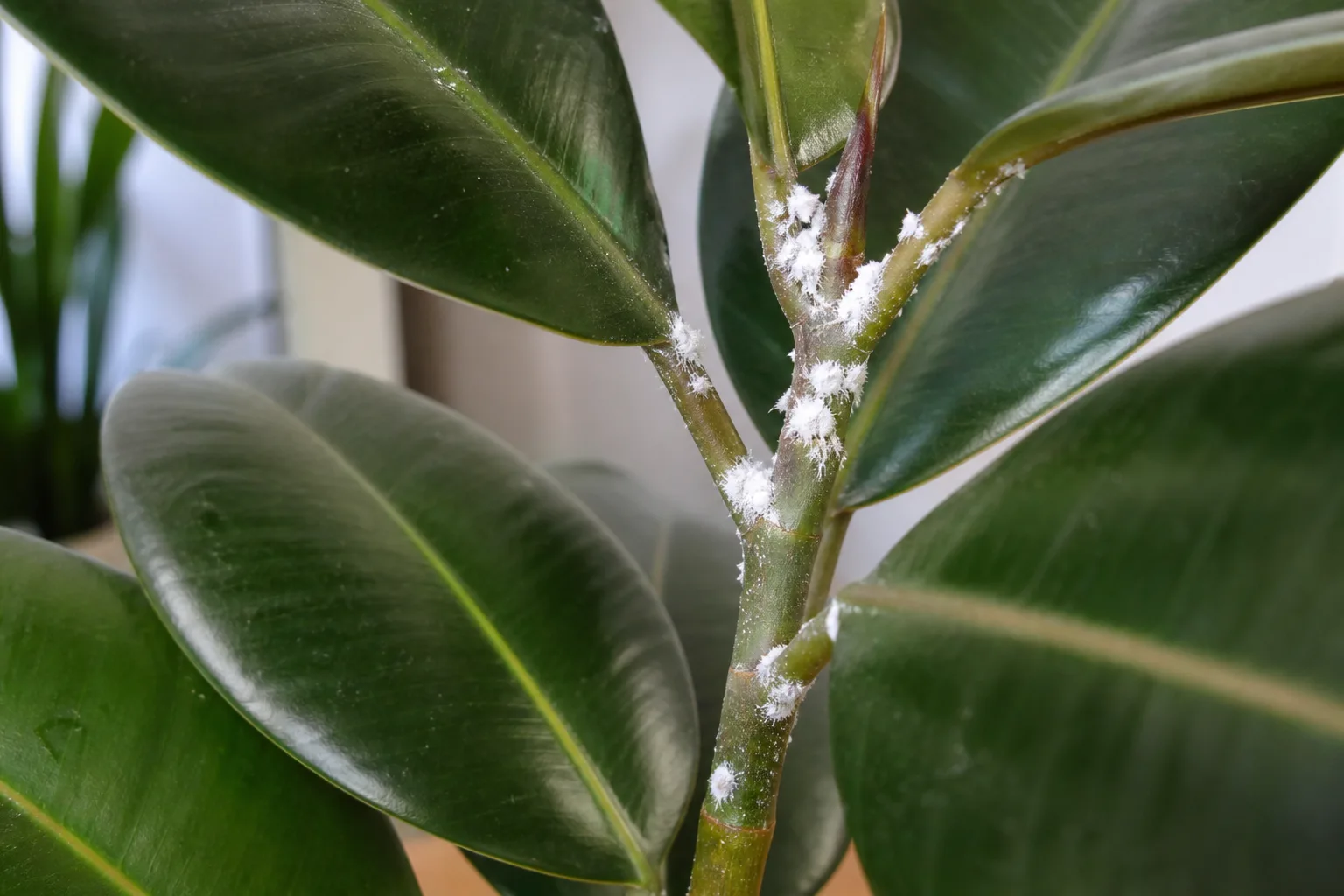
Mealybugs on Rubber Plant show up as white cottony clusters in leaf axils and stem forks on large glossy leaves. First step: move the plant away from others and dab every visible bug with a cotton swab dipped in 70% rubbing alcohol before any spray.
Mealybugs on Rubber Plant: Causes, Checks & Fixes
This guide covers mealybugs on Rubber Plant. See also the general Mealybugs guide, watering, and light pages for this plant.
Mealybugs on Rubber Plant: Causes, Checks & Fixes
Quick answer
Mealybugs on Rubber Plant (Ficus elastica) appear as white, cottony wax clusters tucked into leaf axils, where thick petioles meet the stem, and in branch forks on the tree-like crown. They suck sap, weaken growth, and leave sticky honeydew that can turn into black sooty mold on large glossy blades.
First step: isolate the plant and dab every visible mealybug with a cotton swab dipped in 70% rubbing alcohol. That stops immediate spread and kills adults you can reach. Only after manual removal should you plan repeat sprays for hidden eggs and crawlers.
What mealybugs look like on Rubber Plant
Rubber Plant leaves are stiff, leathery, and often 8 to 12 inches long with raised pale midribs underneath. Those thick petioles create deep pockets where mealybugs hide-exactly the protected spots they prefer on many houseplants.
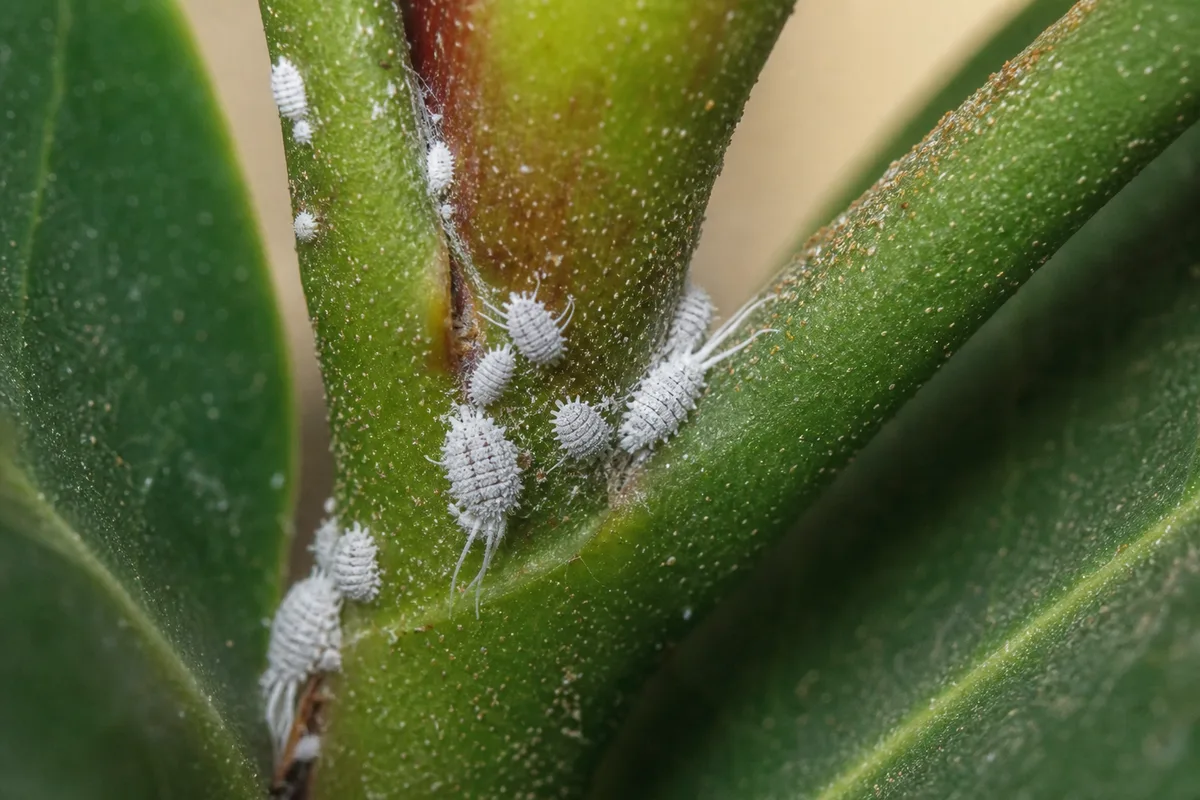
Mealybugs symptoms on Rubber Plant - compare with healthy tissue on the same plant.
Typical signs on Ficus elastica:
- White, cottony masses at leaf bases, stem forks, and the growing tip
- Slow-moving oval insects if you part the wax with a fingernail
- Shiny, tacky patches on upper leaf surfaces from honeydew drips
- Black sooty mold on honeydew-coated leaves
- Yellowing or stunted new leaves when feeding is heavy
- Ant trails on the pot or nearby surfaces farming honeydew
Mealybugs are covered with powdery wax and taper toward the tail. Cottony white wax is usually the first visible sign. On a tall Rubber Plant, infestations often start low on older leaves near the trunk and climb upward as crawlers spread.
Why Rubber Plant gets mealybugs
Mealybugs are not caused by bad luck alone. They arrive on new plants, hitchhike on tools, or exploit a plant already stressed by unstable care.
Indoor conditions favor them. Mealybugs thrive where winters are mild and plants grow year-round-exactly what happens in heated homes. Ficus species, including rubber plant, are among houseplants commonly attacked by aboveground mealybugs.
Rubber Plant’s structure hides pests. The upright tree-like habit with large leaves on stiff stalks creates branch crotches and leaf sheaths where sprays miss. Persistent colonies survive in those crevices while the canopy looks mostly clean from across the room.
Stress invites trouble. Rubber Plant reacts sharply to moves, cold drafts, and watering swings-often dropping leaves before you notice slow neglect. A plant recovering from a recent relocation or sitting in dim light with wet soil is easier prey than a stable specimen in Rubber Plant light guide with proper dry-down between waterings.
Introduction from outside the home. Mealybugs spread when new nursery plants skip quarantine, when infested pots touch clean ones, or when crawlers walk across shared shelves. Adult females do not fly, but young crawlers move plant to plant on contact.
How to confirm the cause
Work through these checks before you buy spray:
- Location on the plant - Mealybugs cluster in leaf axils, stem joints, and the crown. Random dry white spots on leaf faces alone are less typical.
- Texture test - Part the white mass gently. Mealybugs feel soft and may show a pinkish or gray body. Scale is hard and fused to the stem.
- Movement - Crawlers and adults move slowly when disturbed. Scale and dried sap do not.
- Honeydew check - Rub a glossy upper leaf. Tacky residue with optional black sooty film points to sap feeders, not dust or latex drips from a recent cut.
- Underside and trunk inspection - Follow the main stem from soil line upward with a hand lens. Check where each large leaf attaches.
- Neighbor plants - Inspect every Ficus, pothos, hoya, and dracaena within reach. Mealybugs rarely stay on one pot once established.
- Care cross-check - Confirm the pot is not waterlogged. overwatering on Rubber Plant does not create mealybugs, but soggy stress plus pests compounds leaf drop on Rubber Plant.
If you find cottony colonies with honeydew and no hard scale shell, mealybugs are confirmed.
First fix for Rubber Plant
Move the plant to an isolated spot with bright indirect light, then dab every visible mealybug with a cotton swab dipped in 70% isopropyl alcohol.
Isolation prevents crawlers from reaching your collection. Direct alcohol contact kills exposed adults and removes wax. Test alcohol on one leaf first and wait a day-some houseplants burn if solution pools on tissue.
Work systematically from the soil line up the trunk, opening each leaf axil where petioles meet stem. On a large Rubber Plant, expect this to take twenty to forty minutes the first pass. Wear gloves when handling cut or bruised tissue-the milky latex sap irritates skin.
Do not shower the whole plant on day one if that soaks already-wet soil. Do not repot immediately unless you confirm root-feeding mealybugs. Do not fertilize a pest-hit plant hoping to push new growth-that produces tender tissue pests prefer.
Step-by-step recovery
After the alcohol dab pass:
- Repeat manual removal every three to five days until you stop finding live white clusters on inspection.
- Apply insecticidal soap to leaf axils, stem forks, and undersides where mealybugs hide. Cover crevices thoroughly; soap only works on direct contact. Repeat at label intervals through at least two mealybug generations.
- Optional shower rinse on a warm day if soil moisture is moderate. A strong stream dislodges exposed nymphs on sturdy leaves-repeat every few days alongside dabbing.
- Wipe honeydew and sooty mold from glossy blades with a damp cloth once feeding stops. Trim only leaves that are more than half coated and no longer functional.
- Manage ants if present. Ants protect mealybugs from predators in exchange for honeydew-control ants on pot rims and shelves.
- Inspect quarantined plants weekly for six weeks. Eggs and hidden nymphs hatch after the first treatment wave; most failures come from stopping too early.
- Repot only if root mealybugs are suspected-white wax near the root crown, or foliar bugs gone but colonies return within days. Shake off old mix, rinse roots, and repot into fresh well-draining soil. Wait before resuming normal watering.
Systemic soil treatments exist for severe houseplant infestations, but they work slowly on large woody specimens and carry risks to pollinators if you later move plants outdoors. Treat them as a last resort after repeated contact treatments fail.
Recovery timeline
Manual alcohol dabbing shows visible reduction within a few days when colonies are small. A full soap cycle with label-interval repeats typically takes two to four weeks. Large tree-like Rubber Plants with deep axils may need six weeks of monitoring before you declare the plant clean.
Old leaves with heavy sooty mold rarely regain their original gloss-watch for firm new leaves opening without wax at their bases. That is your recovery signal, not perfection on lower canopy foliage.
Lookalike symptoms to rule out
Scale insects form hard brown, tan, or white domes glued to stems. They do not look cottony and do not wipe off easily. Rubber Plant commonly hosts scale alongside mealybugs-check for both.
Spider mites cause fine stippling and webbing, not cottony wax. Mites favor hot, dry air; mealybugs tolerate average room humidity.
Powdery mildew puts a dry white dust on leaf surfaces, not clustered wax in axils. It spreads in patches without honeydew.
Natural latex drips white when you cut or snap a leaf. It dries firm and is not cottony, clustered, or accompanied by crawling insects.
Mineral dust or hard-water spots wipe off dry or with water alone. Mealybug wax stays until you physically remove it.
Mistakes to avoid
Do not return the plant to your collection after one treatment. Eggs hatch on a staggered schedule-plan for repeats.
Do not soak soil repeatedly while fighting pests. Rubber Plant roots rot easily in wet mix, and leaf drop from root stress masks pest recovery.
Do not prune heavily without gloves. Latex sap is messy and the plant is toxic to cats and dogs if chewed.
Do not use broad outdoor pesticides indoors without label clearance for houseplants and the specific pest.
Do not ignore nearby plants. Mealybugs on one tall Rubber Plant often mean hidden colonies on lower shelves.
Rubber Plant care cross-check
While treating pests, keep baseline care stable:
- Light - Bright indirect light supports recovery. Dim corners slow new growth and extend rehab time.
- Water - Water when the top 2 inches of soil are dry. Let the pot lighten before the next drink; avoid saucers holding standing water.
- Humidity - Target 40–60%. Mealybugs do not require dry air, but stable humidity reduces extra leaf-drop stress.
- Temperature - Keep above 55°F and away from cold drafts. Sudden drops trigger leaf loss that complicates pest monitoring.
- Dust - Wipe large glossy leaves occasionally. Clean leaves make new wax clusters easier to spot during weekly checks.
Fixing only the bugs while ignoring wet soil or dark placement often brings the infestation back.
How to prevent mealybugs next time
Quarantine every new plant for at least two weeks before placing it near your Rubber Plant. Inspect leaf axils and stem forks at purchase-dealers often miss pests on large Ficus specimens.
Add mealybug checks to weekly care: one pass up the trunk with a hand lens takes minutes once you know the hiding spots. Mealybugs, scales, and spider mites are the main insect issues to watch for on Rubber Plant. Clemson notes mealybugs may infest rubber plants.
Avoid excess nitrogen fertilizer during active pest season. High nitrogen with regular watering stimulates tender new growth where mealybugs prefer to lay eggs.
Keep plants spaced so leaves do not touch-crawlers bridge gaps between pots. Clean stakes, saucers, and shelf surfaces if you had a prior outbreak.
When bringing plants indoors for winter, inspect them before they rejoin the room with your Rubber Plant.
When to worry
Treat as urgent when cottony colonies cover multiple branches, honeydew drips onto furniture daily, ants swarm the pot, or new leaves fail to open cleanly. Heavy feeding on a plant already dropping leaves from overwatering or cold drafts can spiral quickly.
Mealybugs are very difficult to control on large infestations. Heavily infested plants may need to be discarded rather than repeatedly treated with pesticides-especially if the specimen was already weak.
A few isolated white tufts on one lower leaf, caught early, are manageable. Scale the response to the spread you actually see.
Conclusion
Mealybugs on Rubber Plant hide where thick leaf stalks meet the trunk-out of sight until honeydew or sooty mold gives them away. Isolate first, dab with alcohol, then follow with thorough soap sprays on a repeat schedule until new growth comes in clean. Stable light, correct watering, and weekly axil checks keep this tree-like houseplant ahead of the next crawler wave.
When to use this page vs other Rubber Plant guides
- Rubber Plant watering guide - Use for routine moisture checks before assuming mealybugs is the main issue.
- Rubber Plant problems hub - Browse all 17 common issues on this species.
- Yellow Leaves on Rubber Plant - Different entry point when symptoms overlap with mealybugs.
- Slow Growth on Rubber Plant - Different entry point when symptoms overlap with mealybugs.
- Spider Mites on Rubber Plant - Different entry point when symptoms overlap with mealybugs.