How to Prune a Rubber Plant: When, Where & What to Cut
How to Prune a Rubber Plant: When, Where & What to Cut
How to Prune a Rubber Plant: When, Where & What to Cut
Quick answer
First, remove only dead, damaged, or diseased leaves and stems with clean, sharp scissors. Cut each affected petiole or branch back to firm tissue at the base. Do not top the main trunk or start shaping until urgent cleanup is finished and you have identified a healthy node for any planned structural cut.
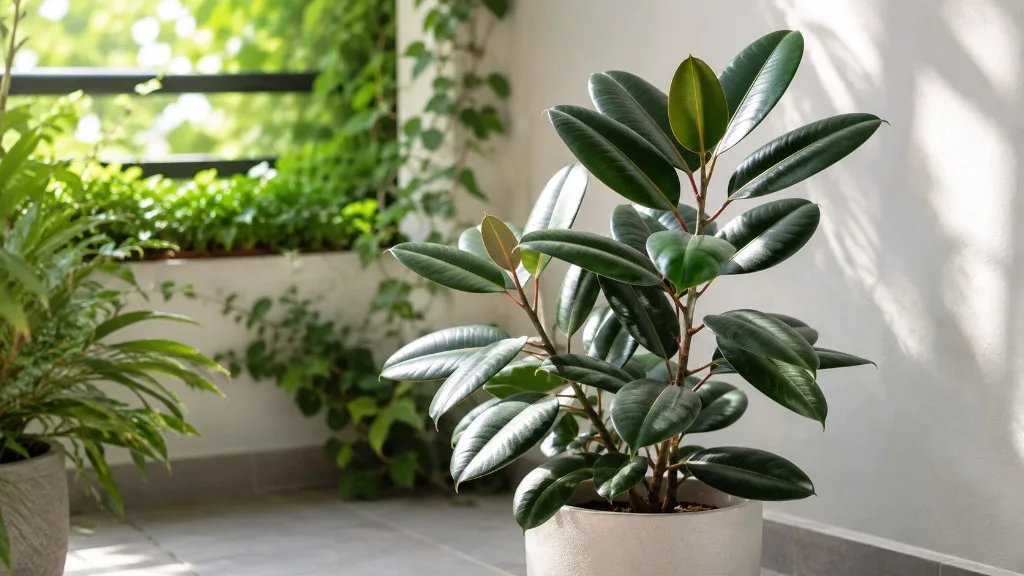
Ficus elastica - the rubber plant or rubber tree - grows indoors as a single upright leader with large glossy leaves spaced along the trunk. Most owners prune when that column hits the ceiling, sheds lower leaves, or leans hard toward a window. Pruning redirects apical dominance, controls height, and removes failing tissue. Every structural cut should land just above a leaf node, because rubber plants backbud from nodes, not from smooth bare internode tissue between leaves.
What pruning does for rubber plants
Rubber plant pruning solves four jobs that show up in almost every home:
Cleanup removes yellow petioles, scorched leaf edges, or pest-coated foliage whenever you spot them. Tip pinching shortens soft new growth during active seasons to slow vertical stretch without a dramatic height change. Branch shortening cuts individual side stems above nodes to balance an uneven canopy. Topping removes the terminal bud on the main trunk so dormant buds below can break into new branches.
Each structural job follows the same rule: new shoots emerge from nodes - the slightly swollen rings where leaves attach. NC State Extension notes that rubber plant responds to pruning main branches for a bushier habit or can be left unpruned for a tall tree form. The plant does not sprout reliably from random mid-stem tissue, so cut placement decides whether you get branching or a dying stub.
Pruning also gives you a close look at scale along midribs, mealybugs in leaf axils, and stem softness that signals root stress. A clean cut heals faster than a torn leaf, and removing compromised tissue early limits pest spread.
Inspect the plant before you cut
Before any structural cut, read the whole plant from soil line to crown:
- Stem firmness: A soft, water-soaked base suggests root rot on Rubber Plant - stabilize watering and roots before topping.
- Node health: Look for plump rings along the trunk; dormant buds often appear as small bumps beside old leaf scars.
- Canopy balance: Note which side faces the window and whether lower trunk is bare - bare lower wood rarely refoliates reliably indoors.
- Recent stress: Leaf drop after a move, repot, or draft means the plant is reacting to change - wait until it holds leaves steadily before hard cuts.
- Light quality: A rubber plant in chronic dim light will stretch again after topping unless placement improves first.
Decide your goal before touching shears: height reduction, bushiness, asymmetry correction, or damage removal. Each goal uses the same cut mechanics but different planning.
When to prune a rubber plant
The best window for structural pruning and topping runs from late spring through early summer, when lengthening days and warmer room temperatures support fast callusing and bud break. Clemson HGIC recommends spring pruning to rejuvenate tall indoor rubber plants when the plant is actively growing. During that window, new shoots commonly appear within two to four weeks after a hard cut on a healthy specimen in Rubber Plant light guide.
Avoid heavy cutbacks in autumn and winter unless you have no choice. Shorter days slow metabolism, so a November topping may sit nearly dormant for two months before meaningful regrowth. Light maintenance - removing a yellow leaf or pinching a soft tip - is fine whenever you see active new leaves unfurling, including late winter in heated homes.
If you repotted within the last two to three weeks, delay heavy pruning unless you are only removing dead material. Rubber Plant repotting guide plus a hard cut stacks two stresses and often triggers leaf drop.
Best season for structural cuts
Think in three phases. Early spring is ideal for planned shaping - the bright season ahead supports recovery. Mid to late spring through early summer is the peak window for topping and branch work. Late summer into fall suits light touch-ups only; allow six to eight weeks before your indoor environment cools if you remove large sections of canopy.
Variegated forms such as ‘Tineke’ and ‘Ruby’ need strong light after major cuts or replacement foliage may emerge less colorful until conditions improve.
Emergency cuts any time
Remove dead, blackened, or mushy stems immediately, regardless of month. Cut out stems heavily infested with scale or mealybug when treatment requires removing the worst material. Trim snapped branches or physical damage as soon as you notice it. Emergency cuts follow the same node rules; expect stabilization rather than vigorous branching off-season.
Tools, sap safety, and pet precautions
Use sharp bypass pruning shears for stems up to finger thickness. Dull blades crush tissue and slow healing. Wipe cutting surfaces with 70% isopropyl alcohol before you start and between plants if you prune multiple ficuses.
Gather a damp cloth for sap, nitrile or gardening gloves, and a bag for trimmings. Have your target node chosen before the first stroke - latex flows the moment the blade passes through.
Ficus elastica belongs to Moraceae, the fig family. The species name refers to milky latex sap that irritates skin and eyes and can stain floors and furniture. NC State Extension notes that cut leaf surfaces drip sap. The ASPCA lists fig species as toxic to cats and dogs; ingestion causes oral irritation, drooling, and vomiting. Pet Poison Helpline classifies rubber tree as moderately toxic to pets.
Do not confuse Ficus elastica with baby rubber plant (Peperomia obtusifolia) - an unrelated species that shares a nickname but is generally considered non-toxic to pets. Keep pets away during pruning, dispose of cuttings in a closed bin, and wash hands and tools when finished.
The first cut to make
After urgent deadwood removal, the first structural action depends on your goal:
For bushiness or height control: Identify the node where you want new branches to emerge - usually on the upper third of the trunk where foliage still surrounds the stem. Sterilize shears, don gloves, and make one topping cut about 5–10 mm (¼ inch) above that node at a slight angle. One decisive stroke; sawing with dull blades creates crush zones that die back.
For balance only: Shorten the longest side branch above a node on the overgrown face before touching the main leader. Correcting asymmetry incrementally avoids removing too much photosynthetic area at once.
After cutting, dab heavy sap drip with a damp cloth. Do not apply pruning paint - rubber plants heal open cuts best when air reaches the tissue.
Where to cut above a node
A node is the junction where a leaf meets the stem - a slight ridge or ring, sometimes with a small dormant bud visible. New branches emerge from nodes, not from smooth internode tissue between leaves.
The reliable target is 5–10 mm above the node - close enough that no long dead stub remains, far enough that bud tissue stays intact. Cutting too far above leaves a brown stub that rarely sprouts and may rot. Cutting through the node itself can destroy the bud you need.
For leaf-only cleanup, snip the petiole where it meets the stem rather than tearing leaves off. Tearing creates ragged wounds that drip more sap than a clean petiole cut.
When removing a side branch back to the main trunk, cut just outside the branch collar where the smaller stem meets the larger one rather than flush-cutting into trunk wood.
Shaping for bushiness, height, or balance
Bushiness: Topping the main growing tip releases apical dominance - the hormonal control the terminal bud exerts over lateral buds. Most healthy rubber plants produce two or more shoots from nodes directly below a spring topping cut. Once those branches reach 15–20 cm (6–8 inches), tip-prune them again during the next growing season to multiply leaders.
Height control: Decide maximum acceptable height and cut the main stem at that level above a node. The plant will not continue upward from the removed tip; new growth emerges below. Accept temporary bareness on the upper trunk - lower bare sections rarely refoliate on many indoor specimens, which is why rubber plants look leggy before owners prune.
Asymmetry: Reduce the side that leans toward the window first, not the weaker shaded face. Rotate the pot a quarter turn weekly after pruning so new growth fills evenly.
Two-stage reduction: For a very tall plant with a naked lower trunk, cut roughly one-third from the top first to activate mid-stem buds; once side shoots leaf out, cut the remaining upper section to final height. Staging distributes shock and preserves photosynthetic surface during recovery.
How much you can safely remove
Do not remove more than one-third of healthy foliage in a single session. That limit keeps the root system from supporting a canopy suddenly too large for available photosynthetic area. Rubber plants store starch in stems and roots and tolerate larger cuts better than delicate tropicals, but staying within one-third keeps bud break in the normal two-to-four-week window during active season.
If more drastic reshaping is needed, spread major cuts across sessions separated by three to four weeks during the growing season. Each interval lets the plant produce new leaves and shows you where buds are actually breaking before you remove more.
Light cleanup - a few yellow leaves or one thin branch - does not count heavily against the one-third rule. When in doubt, cut less, wait, observe, then continue.
Aftercare and recovery timeline
After pruning, keep the rubber plant in bright indirect light - the same quality it had before, or slightly brighter if the canopy is thinner. Avoid harsh direct afternoon sun immediately; reduced foliage means less tolerance for scorch while the plant rebalances.
Water when the top 2 inches of soil are dry, the same rhythm as pre-prune unless many leaves dropped - then verify moisture before watering, because wet soil with reduced uptake is a common post-prune rot pathway. Clemson HGIC recommends watering when the top layer dries and reducing frequency in winter dormancy.
Hold fertilizer for two to three weeks after moderate to heavy pruning. Resume half-strength balanced feed once new shoots show expanding leaves.
Recovery timeline:
- Light tip pruning: new growth in one to two weeks during active season
- Standard topping: visible buds in two to four weeks; assessable branches in six to eight weeks
- Hard renovation cuts low on the trunk: two to three months before the plant looks presentable
- Off-season cuts: may sit largely idle until spring even on healthy plants
Watch for excessive leaf drop on remaining branches in the first two weeks - some shock is normal; widespread drop of green leaves usually means watering or cut severity needs adjustment.
Signs pruning worked - or went too far
Pruning worked when:
- Firm new buds swell at nodes below the cut within two to four weeks (active season)
- Two or more side shoots emerge from a topping cut
- Remaining leaves stay attached and firm
- The silhouette matches your goal better even if still sparse
Pruning went too far or was mistimed when:
- No bud activity after four weeks in bright light during spring
- Stem softens or blackens below the cut face
- Green leaves drop in clusters while soil stays wet
- New shoots emerge thin, pale, and stretched - often a light issue, not a failed cut
If a stub was left too long, make a corrective cut 5–10 mm above the lowest firm node during active growth, removing all browned tissue above it.
Common mistakes to avoid
Heavy pruning in winter when light is weakest - the cut may be correct but the plant sits idle; do not keep cutting; wait for spring.
Stub cuts above nodes - dead segments that brown and sometimes rot before dieback reaches the node.
Dirty or dull tools - crushed wounds that blacken at the cut face.
Removing too much at once - stalled growth, leaf drop, and rot risk in wet soil.
Wound sealant - traps moisture; rubber plants heal better open.
Ignoring sap - stained floors and irritated skin are preventable with gloves and a cloth.
Pruning a stressed plant without fixing root rot, chronic overwatering on Rubber Plant, or recent repot shock first.
Using prunings as cuttings
Healthy stems removed during spring or summer pruning can become new plants. Choose cuttings 15–20 cm (6–8 inches) with at least one node and one or two leaves. Remove the lowest leaf, let sap dry 30–60 minutes, then root in moist well-draining mix or water. Clemson HGIC notes rubber plants propagate readily from stem or tip cuttings and air layering.
Do not propagate from pest- or disease-affected removals. Move water-rooted cuttings to soil once roots reach 3–5 cm (1–2 inches) so they do not become too fragile.
Conclusion
Rubber plant pruning works when you match the cut to the growth phase, respect the one-third rule, and place every structural slice just above a healthy node. Late spring through early summer is the window where Ficus elastica most reliably breaks side shoots after topping. Before you cut, clarify whether you want height reduction, bushiness, or cleanup; sterilize sharp shears; wear gloves for latex sap; and keep cuttings away from pets. After pruning, water by moisture check rather than habit, hold fertilizer briefly, and repeat on new branches once they mature - apical dominance returns every time a single tip dominates again.
When to use this page vs other Rubber Plant guides
- Rubber Plant overview - Start here for whole-plant context before deep-diving this topic.
- Rubber Plant problems hub - Jump to symptom-specific fix guides when this care topic does not resolve the issue.
- Leggy Growth on Rubber Plant - Escalate here when pruning adjustments are not enough.
- Slow Growth on Rubber Plant - Escalate here when pruning adjustments are not enough.
- Brown Tips on Rubber Plant - Escalate here when pruning adjustments are not enough.