Root Rot on Ficus Burgundy: Causes, Checks & Fixes
Quick answer
Root rot on Ficus Burgundy usually starts when winter overwatering keeps soil wet while growth slows. Stop watering, confirm the top two inches are damp-not dry-then unpot and inspect roots before the woody stem base softens.
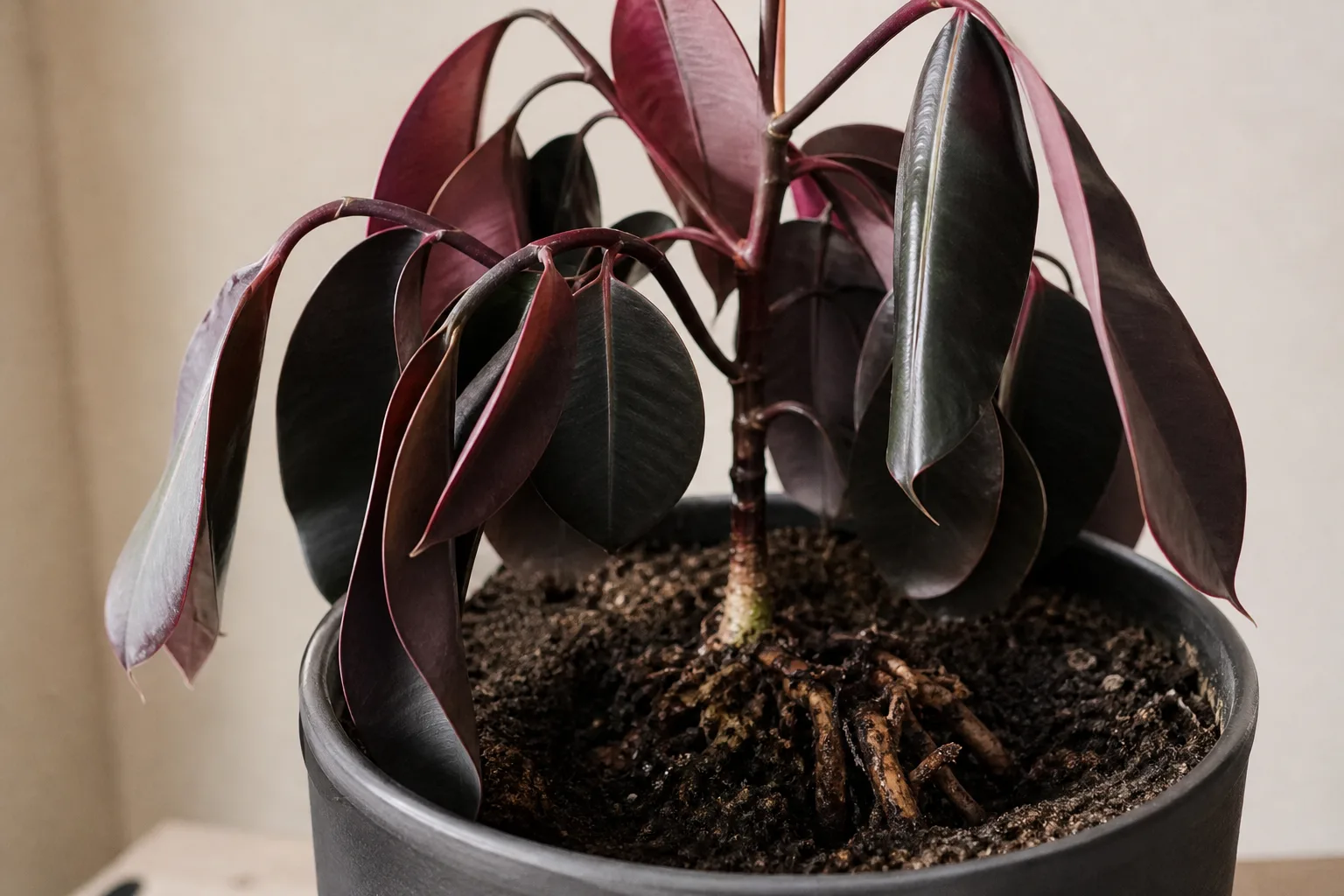
Root Rot on Ficus Burgundy: Causes, Checks & Fixes
This guide covers root rot on Ficus Burgundy. See also the general Root Rot guide, watering, and light pages for this plant.
Root Rot on Ficus Burgundy: Causes, Checks & Fixes
Quick answer
Ficus Burgundy (Ficus elastica ‘Burgundy’) is an upright woody rubber plant with thick glossy leaves-not a moisture-loving rosette. Root rot here is almost always a drainage and watering failure, not a leaf disease. Clemson HGIC states that root rot usually results from a soil mix that does not drain quickly or overly frequent watering. The hallmark trap is wilting leaves while soil stays wet: damaged roots cannot absorb water, so the canopy collapses even though the mix is damp.
First step: stop watering immediately. Confirm moisture at two inches deep-if the mix is still wet and leaves are limp, you are not dealing with thirst. Lift the pot to check weight, empty any standing saucer water, and unpot only when you are ready to inspect and trim roots. Do not add more water expecting the plant to perk up. Full prevention context: watering Ficus Burgundy.
Root rot vs. other Ficus Burgundy problems - why wilt on wet soil matters
Burgundy rubber plants send confusing signals. A single lower leaf yellowing can mean normal shedding, a draft, or root stress. The combination that points to rot is limp glossy leaves + wet or heavy pot + sour smell-not dry soil and a lightweight container.
| Pattern | Soil at 2 inches | Pot weight | Leaf/stem feel | Likely cause |
|---|---|---|---|---|
| Root rot | Wet, cool, clings | Heavy | Limp leaves, soft stem base possible | Overwatering, poor drainage, oversized pot |
| Underwatering | Dry, crumbly | Light | Droopy but firm leaves | Missed watering, hydrophobic dry mix |
| Early overwatering (roots intact) | Wet surface, damp core | Heavy | Yellow lower leaves, stems still firm | Pause watering before rot sets in - see overwatering |
| Cold draft leaf drop | Normal moisture | Normal | Whole leaves drop, stems firm | Move away from AC vents and winter windows |
| Low light + slow dry-down | Wet for weeks | Heavy | Dull leaves, stalled terminal bud | Reduce watering frequency, improve light |
The wilt paradox is the key diagnostic: wilted leaves may indicate soil that is too dry or too wet-rotting roots cannot take up water. On Ficus Burgundy, dark burgundy foliage can hide early chlorosis longer than variegated rubber plants, so watch for soft leaf texture and stalled new growth at the terminal bud, not just visible yellowing.
What root rot looks like on Ficus Burgundy
Early signs
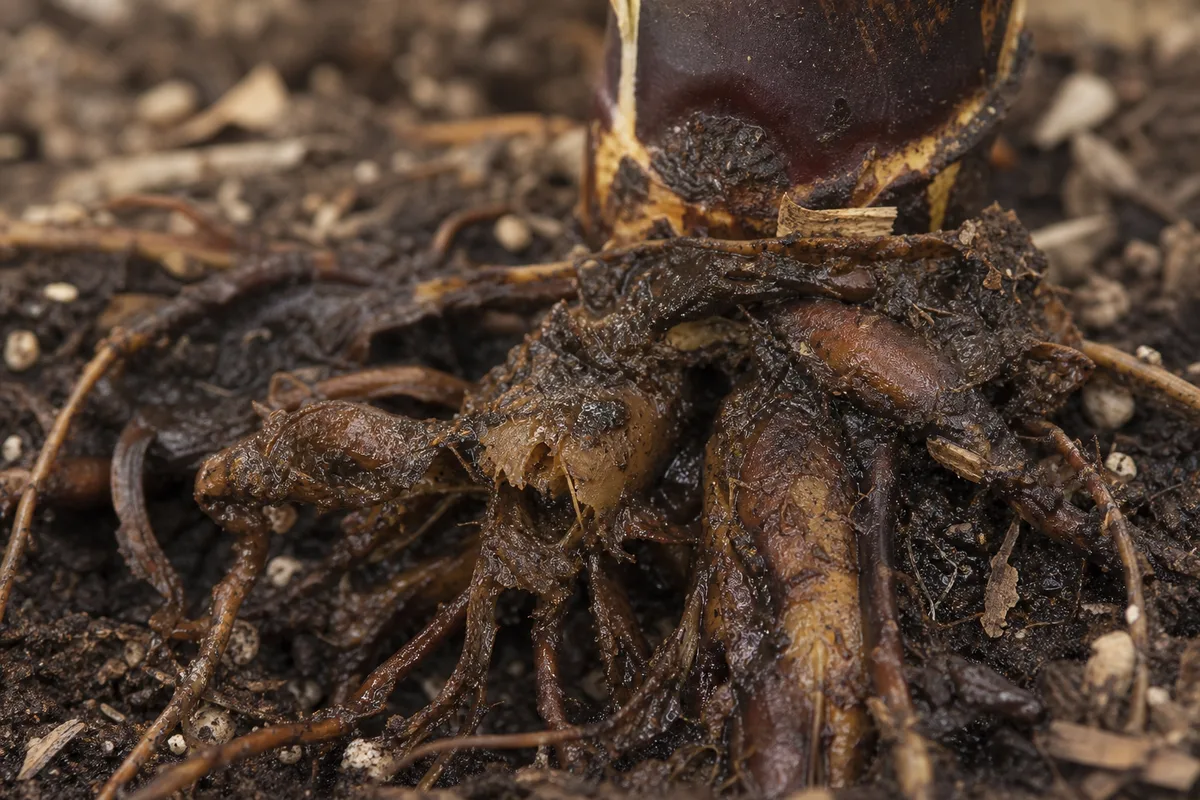
Root Rot symptoms on Ficus Burgundy - compare with healthy tissue on the same plant.
- Limp, dull glossy leaves across several branches while soil at two inches stays damp
- Yellow lower leaves dropping in clusters over one to two weeks-not a single old leaf fading slowly
- Sour or musty smell when you probe near the drainage hole
- Fungus gnats hovering over constantly wet mix - see fungus gnats on Ficus Burgundy
- Stalled terminal bud - no firm new burgundy leaves emerging from the top
Dark cultivar leaves mask early chlorosis. By the time yellow shows on lower foliage, root damage may already be advanced. Trust pot weight and smell as much as leaf colour.
Advanced signs
- Soft woody tissue at the soil line - the trunk should feel firm, not spongy
- Brown, mushy, translucent roots when you unpot; healthy Ficus roots are firm and pale
- Leaves collapsing despite moist mix; stems may weep milky latex when damaged
- Terminal bud wilting - recovery becomes unlikely once the growing point fails
Compare with underwatering: a dry lightweight pot, soil pulling from the pot wall, and wilted but firm leaves point away from rot.
Why Ficus Burgundy gets root rot
Overwatering, poor drainage, oversized pots, and cachepots
Ficus elastica tolerates brief dry spells better than constantly wet soil. UF/IFAS recommends the soil be allowed to become fairly dry between waterings, especially in containers and warns the plant is easily damaged if over-watered. Root rot develops when several failures stack:
- Watering on a calendar instead of checking whether the top two inches are dry
- Blocked or missing drainage holes - or a cachepot holding standing runoff overnight
- Oversized pots after repotting: extra mix stays wet while roots occupy only part of the volume
- Heavy, compacted peat mix that looks dry on top while the core stays saturated
- Leaving saucers full after watering - bottom roots re-saturate and lose oxygen
Clemson HGIC links leaf yellowing to soil that stays too wet on rubber plants. On Burgundy cultivars, that yellowing may arrive late because dark leaves hide the change.
Winter semi-dormancy and low-light slow dry-down
Missouri Botanical Garden advises to avoid overwatering and reduce watering from fall to late winter when indoor growth slows. NC State notes to reduce watering when the plant is dormant from fall to late winter. A summer watering rhythm in a dim winter corner keeps soil wet for weeks while the plant uses little water - the classic winter rot setup.
Low light slows evaporation without slowing your watering habit. A pot that dried in eight days in July may stay heavy for twenty days in January. The top two inches dry rule still applies; you simply wait longer between triggers.
How to confirm the cause
Work through this checklist before repotting or trimming.
Top-two-inch dry, pot weight, and drainage check
- Finger or skewer at two inches near the pot edge - not just the surface. Wet clinging mix with limp leaves supports rot over thirst.
- Pot weight - lift after your last watering and compare now. A heavy pot plus limp leaves means pause, not pour.
- Drainage hole - confirm water exits freely; probe for blocked holes or roots plugging the base.
- Saucer and cachepot - pour out standing water; lift inner pots from decorative shells.
- Smell - sour anaerobic mix confirms oxygen-starved roots.
If only the surface is dry but two inches down is wet, the plant is not thirsty. This matches the protocol in the Ficus Burgundy watering guide.
Root and stem inspection on woody Ficus
Knock the plant gently out of its pot. Healthy Ficus elastica roots are firm, pale, and resilient. Rotted roots are brown, translucent, slimy, or mushy and may fall away when touched. Check the stem base - woody tissue should be solid. Soft bark at soil level often means crown rot, which is harder to reverse than root-tip damage alone.
When rot is confirmed vs. suspected
Confirmed: mushy roots, sour smell, wilt on wet soil, soft stem base. Proceed to rescue steps.
Suspected but roots still firm: stop watering, let the top third of mix dry, improve drainage and light. Repot only if symptoms worsen after one dry-down cycle - overlapping with early overwatering recovery.
First fix for Ficus Burgundy
Stop all watering. That is the single first action-not repotting, not fertilizing, not misting wilted leaves.
Once you have confirmed mushy roots or advanced symptoms, follow this numbered rescue workflow:
- Unpot carefully and shake off wet mix. Work over newspaper; latex sap irritates skin.
- Trim all mushy roots with clean, sharp scissors or pruners. Cut back to firm white tissue. Sterilize blades between cuts on badly affected plants.
- Air-dry cut surfaces for several hours to overnight in a warm, shaded spot. Do not leave roots exposed to direct sun.
- Repot into fresh well-drained mix - see soil for Ficus Burgundy - in a pot sized to the remaining root mass, not the canopy width. One to two inches wider than the trimmed root ball is enough.
- Water lightly once to settle mix, then wait until the top two inches dry before the next thorough soak.
- Place in bright indirect light away from cold drafts. NC State warns that overwatering and cold drafts cause leaf loss on rubber plants-stable warmth helps recovery.
Plants with partial rot may be salvaged by pruning out the rotted part of the root system. If more than half the root mass is mush or the stem base is soft, recovery is unlikely-focus on learning the prevention stack for your next plant.
Recovery timeline
Mild root damage may stabilize within one to two watering cycles after trim and repot, once the mix dries and re-wets on the top-two-inch schedule. Damaged leaves rarely re-green-recovery means firm new glossy leaves emerging from the terminal bud, not saving every old burgundy blade.
Expect two to six weeks before confident new top growth on a moderately trimmed plant in bright indirect light during spring or summer. Winter rescue is slower; do not fertilize until you see active new leaves.
Signs of improvement: firm stem base, no spreading sour smell, new terminal leaves holding upright, roots firm when you gently tug the plant after several weeks.
Signs the problem is worsening: continuing stem softening, terminal bud collapse, more leaves dropping despite corrected watering, roots turning mushy again on re-inspection.
Severe crown involvement is often fatal. Honest salvage threshold: if the trunk is spongy above the soil line, discard or propagate from any firm stem cuttings above healthy tissue-see Ficus Burgundy propagation only after stabilizing the parent or accepting loss.
What not to do
- Do not keep watering wilted leaves when soil is wet. Watering a plant with rotting roots makes the problem worse-the roots cannot use the water.
- Do not repot into dense garden soil or a pot without drainage holes.
- Do not fertilize until new growth resumes-salts stress damaged roots.
- Do not oversize the rescue pot “to give it room.” Extra wet mix kills trimmed roots.
- Do not assume yellow lower leaves always mean rot-single leaf drop can be normal; cluster drop on wet soil is the warning.
How to prevent root rot next time
Prevention is cultural, not chemical. Align daily habits with the watering guide:
- Water only when the top two inches of soil feel dry - not on a fixed calendar.
- Use drainage holes and empty saucers within thirty minutes of every soak.
- Avoid cachepots that hold runoff unless you lift and drain after each watering.
- Match pot size to roots - follow repotting guidance and resist jumping several sizes at once.
- Reduce frequency from fall to late winter when growth slows.
- Improve light in dim corners so mix dries predictably - see light for Ficus Burgundy.
- Refresh compacted mix on schedule; old peat holds water unevenly.
Bright indirect light helps the top two inches dry on a steady rhythm. A plant in a north-facing winter room needs fewer drinks than the same cultivar on a bright east window.
Pet safety and latex sap when trimming damaged tissue
Ficus elastica is toxic to cats and dogs. Clemson HGIC notes the sticky white sap may irritate skin or the stomach if eaten and recommends keeping plants away from pets and young children that chew foliage.
When trimming rotted roots or damaged stems:
- Wear gloves - milky latex can irritate skin on contact.
- Bag and discard trimmed roots and leaves; do not leave debris where pets can reach them.
- Wash tools and hands after the session.
- Contact your veterinarian if a pet ingests plant material - this guide is not medical advice.
Related Ficus Burgundy guides
- Watering Ficus Burgundy - top-two-inch dry rule and overwatered symptom patterns
- Overwatering on Ficus Burgundy - early intervention before roots fail
- Wilting on Ficus Burgundy - separating thirst from root damage
- Yellow leaves on Ficus Burgundy
- Fungus gnats on Ficus Burgundy
- Soil for Ficus Burgundy
- Repotting Ficus Burgundy