Ficus Burgundy Light Needs: Windows, Sun & Color
Ficus Burgundy Light Needs: Windows, Sun & Color
Ficus Burgundy Light Needs: Windows, Sun & Color
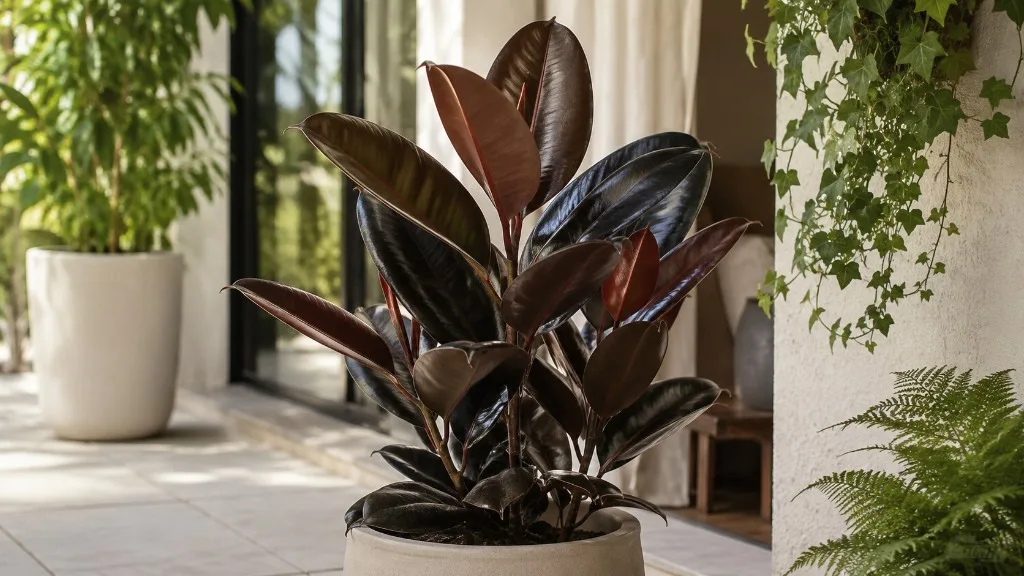
Ficus elastica ‘Burgundy’ - sold as Burgundy rubber plant, Burgundy rubber tree, or sometimes Black Prince - is grown for one visual payoff: those thick, glossy leaves that read almost black-green in good light, with red-tinged midribs and new growth that unfurls in deep wine tones. That color is not permanent wallpaper. It is a light-dependent pigment display. Give the plant bright indirect light for most of the day and the foliage stays rich and dense. Park it in a dim corner because it “still looks fine” and within a few weeks the newest leaves tell a different story - more green chlorophyll, less burgundy anthocyanin, longer gaps between leaves, and a plant that survives but stops looking like the photo on the nursery tag.
The practical target is straightforward: place Ficus Burgundy where it receives strong ambient brightness without harsh direct sun beating on the leaves for hours. Think near a window that sees open sky, with direct rays either limited to gentle morning sun or softened by distance, sheer fabric, or a few feet of setback from hot afternoon glass. That is not the same as “any spot that feels bright to your eyes.” Human vision adapts to dim rooms; the plant does not. Clemson Extension recommends bright light, with morning light from an east window often ideal - but low light produces leggy, stunted growth and washed color.
This guide focuses on the decisions that keep Ficus Burgundy dark: how much light it actually needs, why low light fades leaves green, where to put the pot by window direction, when direct sun helps versus hurts, how to acclimate without triggering mass leaf drop, and how to read warning signs on new growth before you rewrite the Ficus Burgundy watering guide or repot a healthy root system.
How Much Light Ficus Burgundy Actually Needs
Ficus Burgundy is a tropical fig native to South and Southeast Asia, where mature trees grow in bright, filtered conditions at the forest edge - not in deep shade and not in all-day exposed scorch. Indoors, that translates to bright indirect light as the default, with roughly six to eight hours of meaningful daily brightness as a useful benchmark many rubber plant guides cite for healthy foliage.
Bright indirect light sits between two failure zones. Too little light forces the plant to prioritize photosynthetic efficiency over display pigments - leaves green up, internodes stretch, and lower foliage may yellow and drop as the plant rebalances energy. Too much unfiltered direct sun, especially hot afternoon rays through west or south glass, can bleach, crisp, or curl even these thick leaves, particularly if the plant was grown in softer nursery light and moved without acclimation. Ficus Burgundy is tougher than variegated rubber plant types in high light, but toughness is not immunity to sudden exposure jumps.
Placement success shows up in new leaves, not nostalgia for the old ones. Healthy new growth should emerge firm, glossy, and dark - burgundy to near-black depending on your angle and room - with short internodes (little space between leaf pairs) and an upright habit that does not lean hard toward the glass. If the plant meets those checks, your light is probably in range even if the spot fails a casual “bright room” eye test.
The Short Answer for Busy Growers
If you only remember four rules, use these. Default placement: brightest window available with bright indirect exposure - east window, or south/west with sheer curtain or a few feet of setback from hot glass. Color rule: brightness equals darkness for this cultivar; low light equals green reversion on new leaves, not a mysterious disease. Direct sun rule: morning sun is often fine when acclimated; avoid harsh midday and afternoon beams on unadapted plants, especially in summer. Diagnostic rule: judge light by the newest leaf or shoot after 10 to 14 days in a spot; old leaves never re-darken after you fix placement.
Light also sets the pace for water use. A Ficus Burgundy in stronger correct light dries its pot faster, grows more actively in warm months, and tolerates less chronic soggy soil. A plant moved to lower light needs less frequent watering - otherwise you chase yellow leaves with root stress when the real problem is dim exposure. Treat light as the throttle for the whole care system.
Why Light Controls Burgundy Leaf Color
The burgundy look is chemistry, not branding. Anthocyanins - the same pigment family that reddens fall foliage and purples many houseplant leaves - accumulate in Ficus Burgundy leaves when the plant has enough light energy to invest in protective and display pigments without starving basic growth. In lower light, anthocyanin production drops. Chlorophyll, the green photosynthetic pigment, dominates instead because the plant is maximizing light capture per square inch of leaf. The result is not instant, but it is reliable: new leaves emerge greener, the plant looks less “Black Prince” and more generic rubber plant, and the glossy depth that made you buy the cultivar flattens toward ordinary forest green.
Experienced growers describe this as the plant “choosing sunscreen or solar panels.” In bright conditions, anthocyanins act partly as UV and light-stress protection - dark pigments shield leaf tissue while still allowing photosynthesis. In dim conditions, the plant skips the expensive sunscreen and runs more plain green chlorophyll instead. That is why two pots of the same Ficus Burgundy in the same home can look like different cultivars: one near an east window with open sky, one in a hallway with reflected brightness only.
Anthocyanins vs Chlorophyll in Dark Foliage
Chlorophyll converts light to sugar. It is essential and green. Anthocyanins are accessory pigments that modify color and provide photoprotection; they are expensive to produce and often increase with light intensity up to a cultivar-specific limit. Ficus Burgundy sits on the dark-leaf end of the Ficus elastica group. Missouri Botanical Garden notes that rubber plant cultivars vary in variegation and leaf color, with species-level preference for part sun to full sun outdoors in warm zones - context that explains why indoor “medium light” labels underserve a plant bred for strong brightness.
Compared to Ficus elastica ‘Tineke’ or ‘Ruby’, Burgundy can tolerate slightly lower light before cosmetic failure because it is not maintaining white or pink variegation zones that bleach first. That relative tolerance misleads people. Burgundy will survive in lower light longer than a heavily variegated rubber plant, but survival without burgundy color defeats the purpose of this cultivar. You bought dark foliage; low light removes the reason it exists.
Dust matters more on dark leaves than pale ones. A thick layer of dust scatters light before it reaches chloroplasts, effectively dimming the plant in place. Wiping leaves with a damp cloth is not vanity maintenance on Ficus Burgundy - it is a light-efficiency fix that supports color and growth, especially near kitchen or urban windows where grime accumulates fast.
What Bright Indirect Light Means in Practice
Bright indirect light means the plant sees a bright sky or strong ambient illumination, but leaves are not baked by a direct sunbeam for long stretches. Practical tests you can use without buying equipment:
- Shadow test: At midday, your hand held near the leaves casts a soft, fuzzy shadow - light is present - but not a hard, knife-edge shadow that indicates direct beam on the foliage for hours.
- Window test: Stand where the pot sits. Can you see sky or bright outdoor scenery from the plant’s perspective? If yes, and no hot glass contact, you are likely in indirect-bright range. If the plant faces a wall across a dark room, you are not.
- Duration test: One to three hours of gentle direct morning sun on east glass often still counts as workable bright indirect for this cultivar when acclimated. Five hours of afternoon west sun through clear glass in July is a different category - often scorch territory unless filtered.
Light meters and phone apps that estimate lux or foot-candles add precision if you want numbers. Foliage houseplants in the rubber plant class commonly perform well in roughly 1,000 to 2,500 lux for bright indirect bands, with brief higher peaks during acclimated morning sun. Exact numbers vary by app and phone hardware; treat them as comparison tools between spots in your home, not gospel.
Best Window Placement for Ficus Burgundy
Window direction is a starting guess, not a verdict. A “south window” blocked by a neighbor’s balcony may deliver less usable light than an open east window. Ficus Burgundy placement succeeds when canopy-level brightness stays strong for enough hours daily and heat load on leaves stays manageable.
Indoors, put the pot within one to three feet (30–90 cm) of the glass on the chosen exposure when using bright indirect light as the goal - not on a sofa across the room where human eyes read brightness but the plant receives a fraction of the photons. Rotate the pot a quarter turn every week or two once growth stabilizes to prevent hard lean; Ficus species noticeably orient toward light sources.
East, South, West, and North Windows Compared
An east-facing window is the most reliable default for Ficus Burgundy in most homes. Morning sun is bright but cooler than late-day sun, delivering the intensity that drives anthocyanin-rich color without the heat spike that bleaches or crisps leaves on west glass. Many plants tolerate one to three hours of direct early sun on east panes when acclimated, then spend the rest of the day in strong indirect brightness - an excellent match for burgundy color goals.
A south-facing window delivers the strongest winter sun in the northern hemisphere and can be outstanding for Ficus Burgundy from fall through spring when rays are weaker and days are short. In summer, south glass can overheat leaves and soil; watch for bleached patches on the glass-facing side. Use a sheer curtain, pull the pot back slightly, or accept that summer south may need diffusion even for a sun-tolerant dark cultivar.
A west-facing window supplies powerful afternoon rays - high risk for unacclimated plants and for pots sitting in direct beam during the hottest hours. West can work with sheer curtains, partial setback from the pane, or acclimated plants that already grew in strong light. Watch for one-sided damage on leaves facing the glass. If west is your only bright option, diffuse peak hours rather than accepting crisp edges as normal.
A north-facing window rarely provides enough brightness for deep burgundy color long-term, especially in winter at mid and high latitudes. North may keep a Ficus Burgundy alive with slow green-leaning growth in summer, but expect stretching, smaller new leaves, and color drift unless you add a grow light. Treat persistent north placement as supplemental-light territory if dark foliage is the goal.
Distance From the Glass and Room Depth
Light falls off fast with distance. Moving a pot from one foot to six feet from the same window can drop usable intensity dramatically - the difference between burgundy new growth and green reversion over time. If you must keep the plant farther for furniture reasons, compensate with a brighter window category (south or east instead of north) or an LED grow lamp, not more fertilizer.
Hot glass contact is a separate issue from brightness. Leaves pressed against summer window panes can scorch locally even when the exposure would be fine at a slight distance. Keep foliage clear of glass, especially west and south, and watch dark pots on windowsills - they heat root zones and compound leaf stress.
Direct Sun: What Ficus Burgundy Can Tolerate
Ficus Burgundy is more direct-sun tolerant than variegated rubber plant cultivars because dark pigments and thick leaf tissue handle higher photon loads before visible bleaching - but “more tolerant” still requires acclimation and heat awareness. Indoors, site rubber plants in bright indirect light or part shade with protection from afternoon sun, while emphasizing that low light is unsuitable and produces leggy growth.
Outdoors in USDA zones 10–12, Ficus elastica grows in part sun to full sun contexts when rooted in ground and hardened off; indoor pots in temperate climates face different heat dynamics through glass and should be conservative until the plant proves otherwise.
Morning Sun vs Harsh Afternoon Rays
Morning direct sun - especially east exposure before noon - is the safest direct ray category for Ficus Burgundy. Light intensity is rising, air and glass temperatures are lower, and anthocyanin-rich leaves often color up more deeply with modest early direct exposure once the plant is acclimated. Many growers report their best burgundy tone on east sills with two to three hours of morning sun, then bright indirect the rest of the day.
Midday and afternoon direct sun - particularly west and unfiltered south in summer - carries higher heat and UV load. Unacclimated plants may show bleached tan patches, crisp brown edges, or leaf cupping within days. Even acclimated plants have limits on hot window sills above radiators or dark surfaces that reflect heat upward. If you want afternoon sun, build up exposure slowly and prefer filtered light through sheer fabric over raw beam on the canopy.
How to Acclimate to Stronger Exposure
Plants grown in nursery shade houses or big-box dim shelves arrive soft. Jumping them to a blazing west sill without transition is how crisp leaves and Ficus leaf drop happen together - and then people overwater the shedding plant, making everything worse.
A practical acclimation path over 7 to 14 days:
- Days 1–3: Move to bright indirect one to two feet farther from the target sunny window than final placement, or use a sheer curtain full-time.
- Days 4–7: Reduce filtering or move six inches closer daily while watching newest leaves for bleach or curl during peak hours.
- Days 8–14: Reach final position if new growth stays firm and dark; if crisping appears, retreat one step and hold a week.
Make one environmental change at a time. Do not acclimate to sun, repot, and fertilize heavily in the same week. Ficus elastica reacts to instability with leaf drop - often lower leaves first - which can be normal adjustment if light and watering stabilize afterward. ASPCA lists Ficus species as toxic to cats and dogs due to irritant sap; wear gloves when handling cut stems during pruning after sun stress.
Low Light Limits and Green Leaf Reversion
Ficus Burgundy can survive lower light better than heavily variegated rubber plants, which makes it a frequent candidate for dim corners, office desks, and hallway tables. Survival is not the same as cultivar performance. In low light, the plant gradually greens, stretches, and thins - losing the dense, upright silhouette that reads “statement plant.”
Low light failure follows a predictable sequence. First, new leaves emerge lighter and more green, with less burgundy overlay. Internodes lengthen - visible gaps between leaf pairs increase and the stem looks like it is reaching. Growth slows, so pots stay wet longer, raising root rot on Ficus Burgundy risk if watering habits do not adjust. Lower leaves may yellow and drop as the plant sheds foliage it cannot support energetically. None of that requires a pest or nutrient crisis; it is often pure photon deficit.
Signs Your Plant Needs More Brightness
Use new growth as your primary signal. Move the plant or add light if you see several of these on fresh leaves or stems over two weeks:
- Green-dominant new foliage where prior leaves were dark burgundy
- Long internodes and visible lean toward the brightest direction
- Smaller leaf size on new flushes compared to older leaves formed in better light
- Slow unfurling of new leaves with soft or thin texture
- Lower leaf yellowing and drop without overwatering on Ficus Burgundy symptoms in the root zone
Fix priority is increase brightness, not nitrogen fertilizer. Feed cannot substitute for anthocyanin-driving light flux. If the only available spot is dim, accept greener growth or install a grow light - do not pretend the cultivar will stay black in a north hallway without help.
Seasonal Light Adjustments Through the Year
Window light is not static. Winter lowers sun angle and shortens photoperiod; a Ficus Burgundy that thrived six inches from a south window in June may stretch and green slightly by February in the same physical spot because total daily light drops. Summer intensifies rays on south and west glass; a placement that was perfect in March may scorch in August without diffusion or setback.
Seasonal management is mostly small moves and observation, not radical reshuffling. In late fall, move closer to the brightest window or add LED hours before stretch becomes structural. In late spring, watch west and south for first bleach signs and add sheer filtering early rather than after damage. If you summer the plant outdoors, harden it in open shade before any direct outdoor sun - outdoor photon totals exceed indoor glass-filtered light quickly.
Avoid rotating among three windows every month. Ficus species prefer stable placement once adjusted. Seasonal tweaks of inches, not rooms, respect that biology while correcting total daily light swings.
Grow Lights When Natural Light Falls Short
When the brightest window still produces green new leaves or leggy stems - common in winter, north rooms, or apartments with light wells - a full-spectrum LED grow light is the most reliable fix. Ficus Burgundy responds like other rubber plants: artificial light supports compact growth and better color when spectrum and duration are adequate, not when a weak bulb decorates the shelf nearby.
Spectrum, Hours, and Placement for Dark Foliage
Position a full-spectrum LED 12 to 18 inches (30–45 cm) above the top leaves, not to the side only. Side lighting alone produces lean; overhead or angled top light mimics window sky brightness more evenly. Run 10 to 14 hours daily on a timer to supplement natural window light; in fully windowless rooms, 12 to 16 hours is a common foliage-houseplant range, watching for heat buildup near the canopy.
Choose fixtures labeled full spectrum or balanced white (often 4000K–6500K range) rather than purely red-blue “blurple” panels unless you already know their output map. Increase distance if leaves feel hot to the touch after hours on, or if new growth curls despite adequate watering - heat stress mimics sun stress. For dark-leaf cultivars like Burgundy, prioritize even canopy coverage over maximum PAR at one point - a slightly wider fixture at moderate height often colors the whole plant better than a narrow beam that only saturates the top leaf.
Warning Signs of Too Much or Too Little Light
Wrong light rarely announces itself with one obvious symptom. Too little light whispers through green new leaves and stretch for weeks before the plant looks “bad.” Too much sun can strike fast on unacclimated plants - bleach and crisp within days of a move to hot glass.
Too little light - watch for: green-dominant new foliage, long internodes, strong directional lean, small new leaves, slow growth, lower leaf drop paired with slow dry-down and wet-feeling soil surface days after watering.
Too much light - watch for: bleached or tan patches, especially on the window-facing side; crisp brown edges that progress rather than stable old mechanical damage; leaf cupping or folding during brightest hours; sudden scorch after an unacclimated move; soil and pot overheating on a summer sill.
Reading New Growth Before Old Damage
Old leaves are historical records. A lower leaf that yellowed after a dim winter will not re-burgundy when you fix light. A sun-bleached mature leaf will not fully green back. New leaves and the newest internodes tell you whether current placement works.
After any move, wait 10 to 14 days before judging failure - unless acute scorch appears, in which case pull back immediately. During adjustment, Ficus Burgundy may drop a few lower leaves; stabilize light and match watering to the new dry-down rate before Ficus Burgundy repotting guide or feeding. If new growth after two weeks is firm, dark, and closely spaced, the spot is working even if older leaves look imperfect.
Conclusion
Ficus Burgundy rewards one placement principle above the rest: bright indirect light strong enough to keep anthocyanins ahead of plain green chlorophyll, with harsh direct sun avoided until the plant acclimates and you can manage heat on the leaves. East windows and filtered south or west exposures are the usual winners; north windows and deep room placements need honest acceptance of greener foliage or the addition of a full-spectrum grow light. Low light does not kill this cultivar quickly - it fades the reason you chose it, turning Black Prince into a generic rubber plant one new leaf at a time.
Use new growth as your feedback loop, link brighter light to faster dry-down and adjusted watering, and move exposure in small acclimated steps rather than sudden jumps that trigger leaf drop. Wipe dust from dark glossy leaves so light actually reaches the tissue. Get those habits right and Ficus Burgundy stays dense, glossy, and deeply burgundy - a cultivar-specific outcome that general “medium light” labels were never precise enough to guarantee.
When to use this page vs other Ficus Burgundy guides
- Ficus Burgundy overview - Start here for whole-plant context before deep-diving this topic.
- Ficus Burgundy problems hub - Jump to symptom-specific fix guides when this care topic does not resolve the issue.
- Not Enough Light on Ficus Burgundy - Escalate here when light adjustments are not enough.
- Leggy Growth on Ficus Burgundy - Escalate here when light adjustments are not enough.
Related Ficus Burgundy guides
- Ficus Burgundy overview
- Ficus Burgundy watering
- Ficus Burgundy soil
- Ficus Burgundy propagation
- Ficus Burgundy fertilizer
- Ficus Burgundy repotting
- Not Enough Light on Ficus Burgundy
- Leggy Growth on Ficus Burgundy
- Ficus Burgundy problems
Related tool
Try the Plant Problem Diagnosis Tool with ficus-burgundy pre-selected to estimate needs for your setup.