Yellow Leaves on Ficus Burgundy: Causes, Checks & Fixes
Quick answer
Yellow leaves on Ficus Burgundy usually mean wet roots, cold drafts, or too little light-not fertilizer deficiency. First step: lift the pot and push your finger 2 inches deep; a heavy wet pot with soft yellow lower leaves needs dry-down, while a light dry pot with curling thick leaves needs a thorough soak.
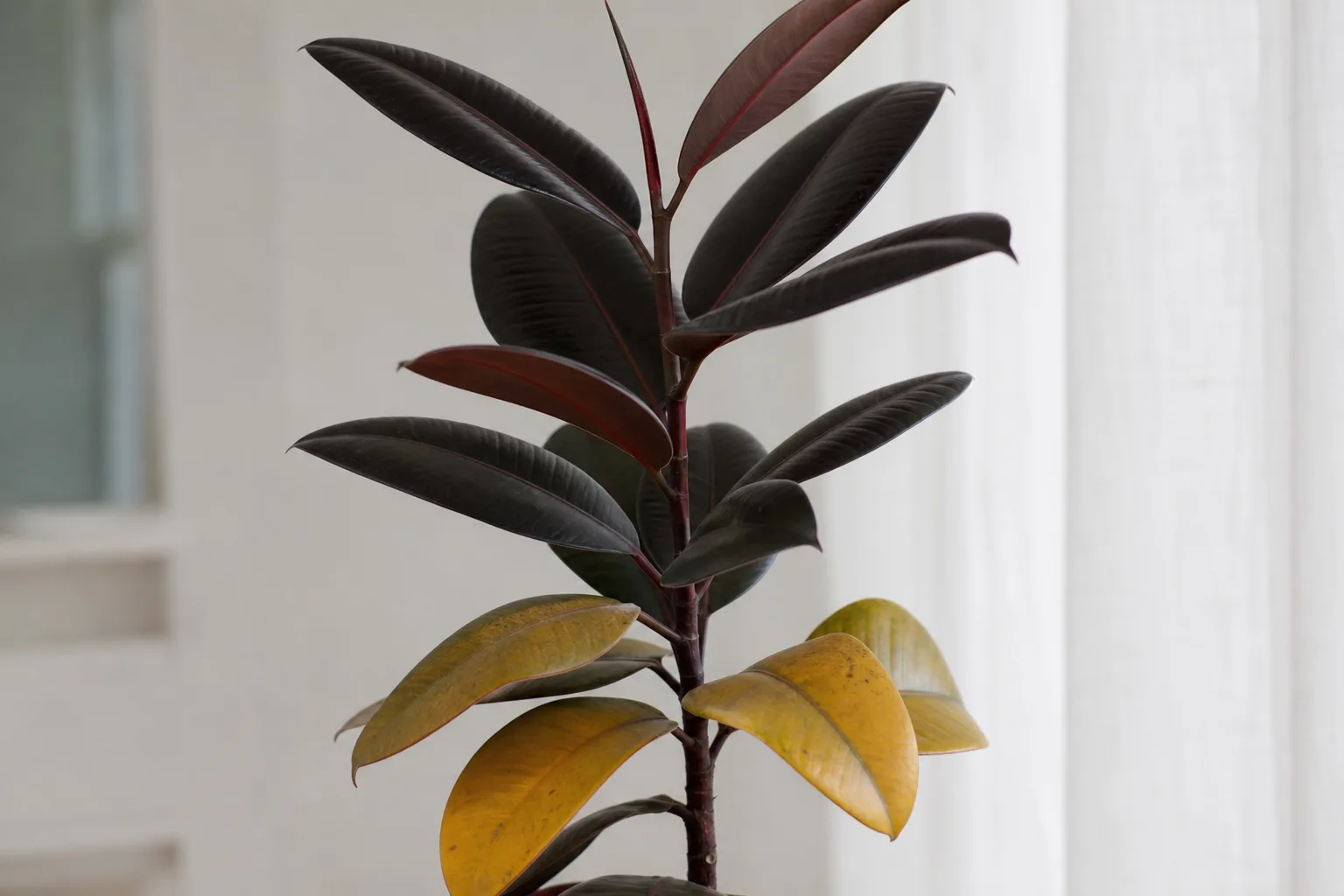
Yellow Leaves on Ficus Burgundy: Causes, Checks & Fixes
This guide covers yellow leaves on Ficus Burgundy. See also the general Yellow Leaves guide, watering, and light pages for this plant.
Yellow Leaves on Ficus Burgundy: Causes, Checks & Fixes
Quick answer
Ficus Burgundy (Ficus elastica ‘Burgundy’) is a woody rubber tree with thick, glossy, deep maroon-to-burgundy leaves on an upright stem-not a rosette plant. Yellow leaves here almost always trace to wet roots, cold drafts, or insufficient light, not hunger. Clemson HGIC notes that leaf yellowing may occur if the soil stays too wet, and that too little light, dry air, or cold drafts may cause leaf loss.
First step: lift the pot and check soil at 2 inches deep. A heavy wet pot with soft yellow lower leaves means stop watering until the top 2 inches dry. A light dry pot with curled thick leaves means underwatering. If several leaves yellowed after a move or cold window exposure, stabilize placement before repotting or fertilizing. Full species context: Ficus Burgundy overview.
What yellow leaves look like on Ficus Burgundy
On this cultivar, yellowing follows rubber-tree architecture: older lower leaves fail first while new growth emerges at stem tips, not from a central rosette crown.
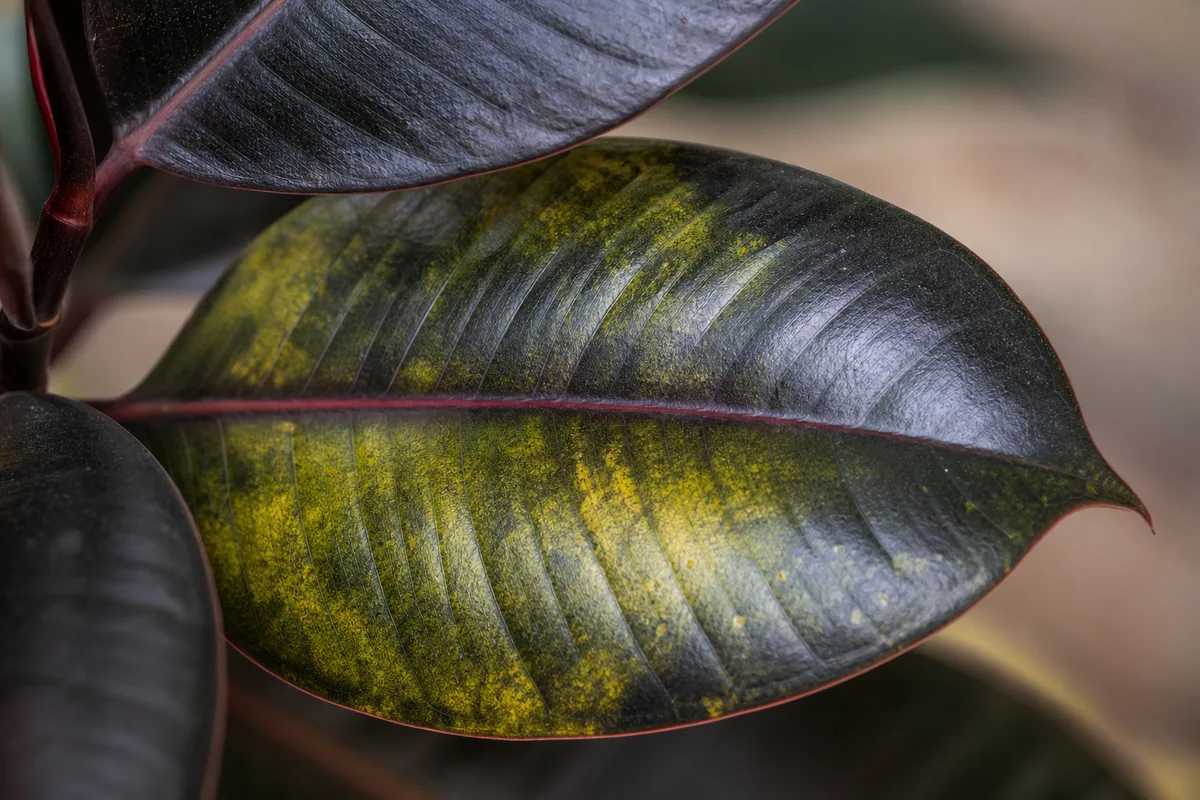
Yellow Leaves symptoms on Ficus Burgundy - compare with healthy tissue on the same plant.
Normal aging (low urgency):
- One or two oldest lower leaves fade from green to yellow over weeks or months
- Leaf blade stays firm until it drops; stem and trunk feel solid
- New leaves at the top stay glossy and burgundy
- Some bottom leaves turning yellow and dropping is normal on Ficus elastica
Overwatering stress:
- Multiple lower leaves yellow while mix stays damp
- Pot feels heavy; soil clings when you probe 2 inches deep
- Leaves may droop despite wet soil; sour smell when you lift the pot
- Apical tips may still look glossy while roots fail below-do not assume the top means roots are healthy
Underwatering (less common but real):
- Lower leaves yellow or brown on a light, dusty-dry pot
- Thick leaf blades curl slightly inward; plant perks after a thorough soak
- Often follows a missed watering stretch or a heat spike that dried the root ball fast
Cold draft and relocation shock:
- Rapid yellow-and-drop across several leaves after a move, repot, or cold window exposure
- Avoid temperatures lower than 55°F and cold drafts-rubber plants react sharply to sudden temperature drops
- Can occur even when watering looks correct
Low light:
- New leaves emerge greener and smaller at stem tips; burgundy color fades in dim offices
- Lower leaves may yellow slowly as the plant sheds foliage it cannot support in shade
- Bright indirect light or morning light from an east window supports the dark foliage this cultivar is grown for
Yellow leaves vs. other Ficus Burgundy problems
| Pattern | Pot weight | Soil at 2 inches | New growth at stem tips | Likely cause |
|---|---|---|---|---|
| Bottom-up yellow, firm trunk | Heavy | Wet, cool, clings | Still glossy burgundy | Overwatering / slow dry-down |
| Curled yellow lower leaves | Light | Dry throughout | Smaller, may look dull | Underwatering |
| Rapid multi-leaf yellow-and-drop | Normal | Moist or dry | Wilting or stunted | Cold draft, move shock, or repot stress |
| Greener smaller new leaves | Normal | On schedule | Pale green, not burgundy | Low light |
| Single slow yellow lower leaf | Normal | Dry on schedule | Firm burgundy tips | Normal aging |
For wet-soil rescue beyond yellowing, see overwatering on Ficus Burgundy and root rot. For watering rhythm, see the watering guide.
Why Ficus Burgundy gets yellow leaves
Overwatering in winter. Ficus elastica slows growth from fall through late winter but many growers keep a summer watering schedule. Reduce watering when the plant is dormant from fall to late winter. Dense glossy leaves and a large pot surface area slow evaporation-roots sit in damp mix while upper foliage still looks acceptable.
Poor drainage and standing water. Blocked holes, dense peat-heavy mix, oversized pots, and saucers left full after watering keep the root zone oxygen-poor. Root rot usually results from soil that does not drain quickly or overly frequent watering.
Cold drafts and temperature drops. Rubber plants prefer warm room temperatures and do not tolerate sudden drops or cold drafts. A tree beside a single-pane winter window or an AC vent can yellow and drop leaves even when soil moisture is correct.
Insufficient light. Burgundy rubber plants need bright indirect light to maintain dark foliage. Dim corners slow dry-down (raising overwatering risk) and trigger green, smaller new growth before older lower leaves shed.
Post-move and repot stress. Ficus elastica prefers to remain in one location and does not do well with drafts or cold temperatures. Relocation, repotting, or bringing a new plant home can trigger a temporary yellow-and-drop phase unrelated to root rot.
How to confirm the cause
Work through checks in order-pot weight and soil moisture come before fertilizer or repotting.
- Lift the pot. Heavy and wet suggests overwatering; light and dry suggests underwatering.
- Probe 2 inches deep near the pot edge. Water when this zone is dry-that is the rubber-plant rhythm Clemson and NC State describe for Ficus elastica.
- Smell the soil when you lift the pot. Sour odor on wet mix means inspect roots-see root rot guide.
- Note timing. Did yellowing follow a move, repot, or cold snap? Draft and relocation stress often clears after two to three weeks of stable placement.
- Inspect new growth at stem tips. Firm glossy burgundy leaves mean the apical bud is healthy. Green, small, or limp new leaves point to light or root stress.
- Count affected leaves. One slow lower leaf is often aging; three or more yellowing at once on wet soil needs immediate dry-down.
Stunted slow growth with yellowing leaves is a symptom of overwatering-pair that pattern with a heavy pot before treating as nutrient deficiency.
The first fix to try
Stop watering until the top 2 inches of soil are dry if the pot is heavy and wet. Confirm drainage holes are open and empty saucers within 30 minutes of watering. Do not fertilize a yellow plant in wet soil.
If the pot is light and soil is dusty dry throughout, water thoroughly until excess drains, then resume the dry-down rhythm.
If yellowing followed a move or cold exposure, move the tree to bright indirect light away from drafty windows and AC vents. Hold off on repotting until new growth stabilizes.
Remove fully yellow spent leaves after the plant firms up-they will not re-green. Keep firm green-burgundy leaves even if margins look imperfect; they still photosynthesize while roots recover.
Lookalike symptoms
Underwatering also yellows lower leaves on Ficus Burgundy, but the pot feels light, mix is dusty dry several inches down, and thick blades curl slightly inward before yellowing. Soak once if that pattern fits-do not assume every yellow leaf means too much water.
Cold drafts and relocation shock trigger rapid yellow-and-drop without keeping soil constantly wet. If the pot dries on your normal schedule and leaves failed after a move or near an AC vent, stabilize placement before repotting. Sympathy watering on already-wet mix is a common second mistake after draft stress.
Normal ageing is one or two slow lower leaves fading over months on a firm trunk with glossy burgundy tips. That differs from three or more leaves failing within a week on heavy wet soil.
Root rot is the end stage of chronic overwatering-soft stems at the base, sour smell, and mushy roots on inspection. Follow the root rot guide if those signs appear; yellow leaves alone on firm wood may still be early overwatering.
Step-by-step recovery when yellowing continues
If yellowing spreads after the surface dries, or soil smells sour, work through these steps in order:
- Pause watering until the top 2 inches are dry-confirm with finger or skewer at the pot edge.
- Empty saucers and confirm drainage holes are open; lift nursery pots out of cachepots after every drink.
- Move to bright indirect light if the tree sits in a dim corner-faster dry-down helps wet roots recover.
- Unpot and inspect if smell persists or stems soften-trim only mushy roots with clean scissors; rubber plant sap can irritate skin.
- Repot into fresh well-drained mix only if roots were trimmed or mix is sour-one size up, not oversized.
- Resume watering on dry-down rhythm when new firm burgundy leaves appear at stem tips-see the watering guide for seasonal timing.
Recovery timeline and what to watch
Fully yellow leaves usually drop and do not return to burgundy. Judge recovery by new firm glossy leaves at stem tips, not by old blade color-typically within two to four weeks after watering rhythm and placement stabilize.
Signs of improvement:
- Yellowing stops spreading up the stem
- New leaves emerge firm, upright, and progressively more burgundy in adequate light
- Pot weight feels normal for your watering schedule
- Trunk and lower stems stay firm
Signs the problem is worsening:
- Multiple leaves yellowing weekly on still-wet soil
- Stems softening at the soil line
- Sour smell intensifies
- New growth absent for more than a month in warm bright conditions
When to worry
Treat yellow leaves as urgent when several fail at once on a heavy wet pot, soil smells sour, stems soften at the base, or the plant wilts while mix stays damp. Those patterns can advance to root rot within days-act the same day.
A single slow yellow lower leaf with soil drying normally between waterings can wait for a schedule check. Wet soil plus rapid multi-leaf yellow-and-drop should not wait through another watering cycle.
If unsure whether roots are healthy, unpot and look-a five-minute inspection beats weeks of guessing.
Related Ficus Burgundy guides
- Overwatering - wet-soil rescue when yellowing pairs with heavy pots
- Root rot - mushy roots and soft stem bases
- Underwatering - light dry pot with curled thick leaves
- Not enough light - greener smaller new leaves at stem tips
- Watering guide - seasonal dry-down rhythm
- Overview - full species care context
Mistakes to avoid
- Do not fertilize yellow plants in wet soil-salt buildup and root stress both yellow foliage
- Do not increase watering when leaves droop on a heavy wet pot-that deepens root failure
- Do not repot on day one unless roots are mushy or mix smells sour; relocation stress can mimic overwatering
- Do not assume all yellow lower leaves are aging when soil stays wet and several leaves fail at once
- Do not place beside cold windows in winter without checking for draft yellow-and-drop
How to prevent yellow leaves next time
Water thoroughly but let soil dry slightly between waterings-use the 2-inch probe, not a calendar. Use well-drained houseplant mix in a pot with drainage holes sized to the root mass.
Keep temperatures above 55°F and away from heating vents and AC drafts. Provide bright indirect or east-window morning light so burgundy color and dry-down stay in balance.
Reduce watering from fall through late winter when growth slows. Inspect leaf undersides during weekly care-pests are less common on rubber plants but mealybugs can stress foliage if ignored.