Underwatering on Ficus Burgundy: Causes, Checks & Fixes
Quick answer
Underwatering on Ficus Burgundy shows as a very light pot, limp glossy leaves, and dry mix several centimetres down. First step: bottom-water until the surface moistens, drain fully, then resume watering when the top 2–3 cm dries.
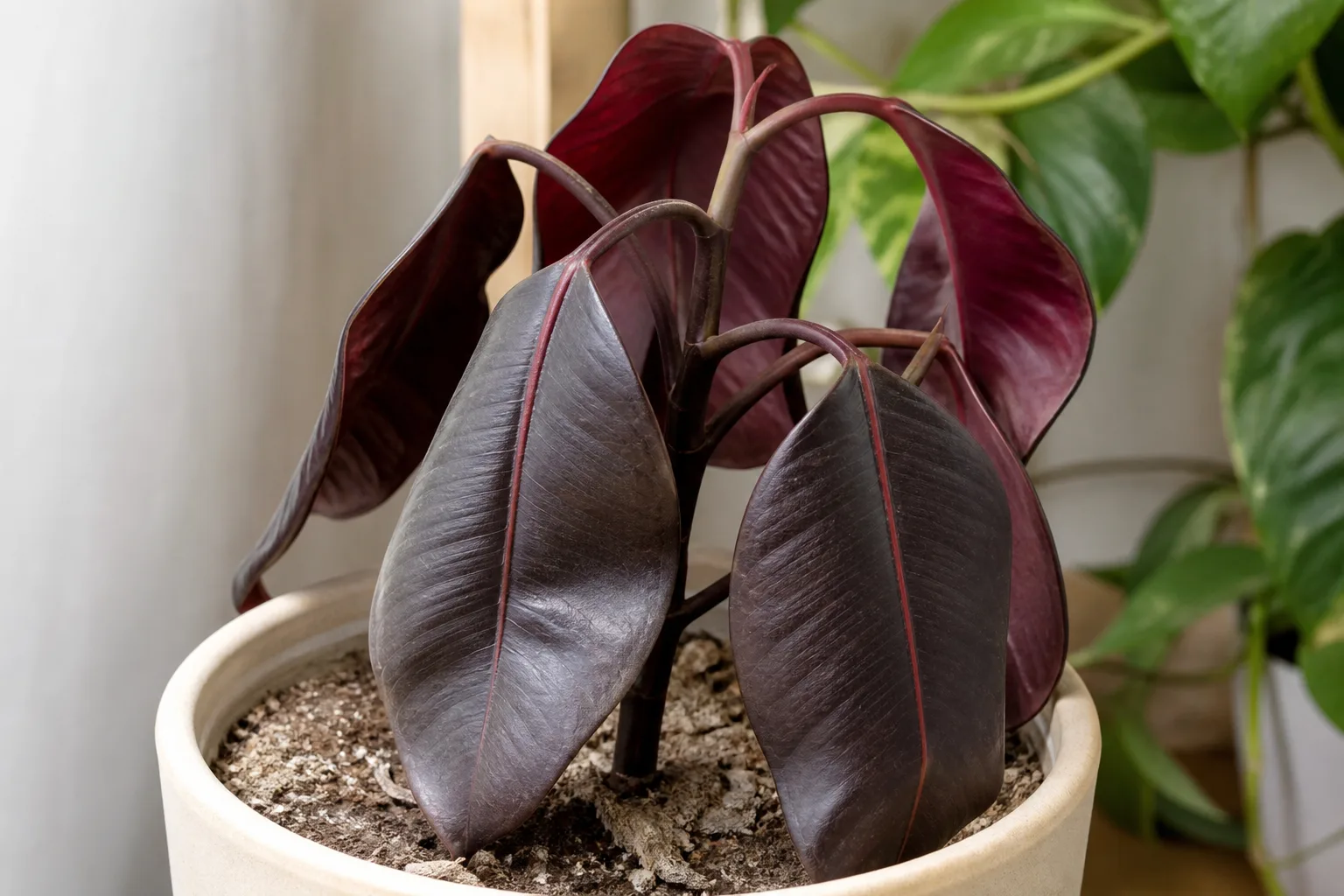
Underwatering on Ficus Burgundy: Causes, Checks & Fixes
This guide covers underwatering on Ficus Burgundy. See also the general Underwatering guide, watering, and light pages for this plant.
Underwatering on Ficus Burgundy: Causes, Checks & Fixes
Quick answer
Underwatering on Ficus Burgundy (Ficus elastica ‘Burgundy’) means the root zone stayed dry too long for this plant to replace the water it loses through its thick, glossy leaves. The pot feels feather-light, the mix is dusty several centimetres down, and stems hang limp even though there is no sour smell or wet soil.
First step: bottom-water the plant until the surface moistens, then let it drain completely. One thorough soak that rewets the whole root ball beats repeated small sips that never reach dry centre soil. After drainage, wait until the top 2–3 cm dries before the next drink-the same trigger Ficus Burgundy prefers during active growth.
What underwatering looks like on Ficus Burgundy
Burgundy rubber plants store some moisture in their stems and leathery leaves, so they can look merely tired for a few days before the damage becomes obvious. When drought goes too far, the pattern is distinct from the wet-soil wilt of overwatering.
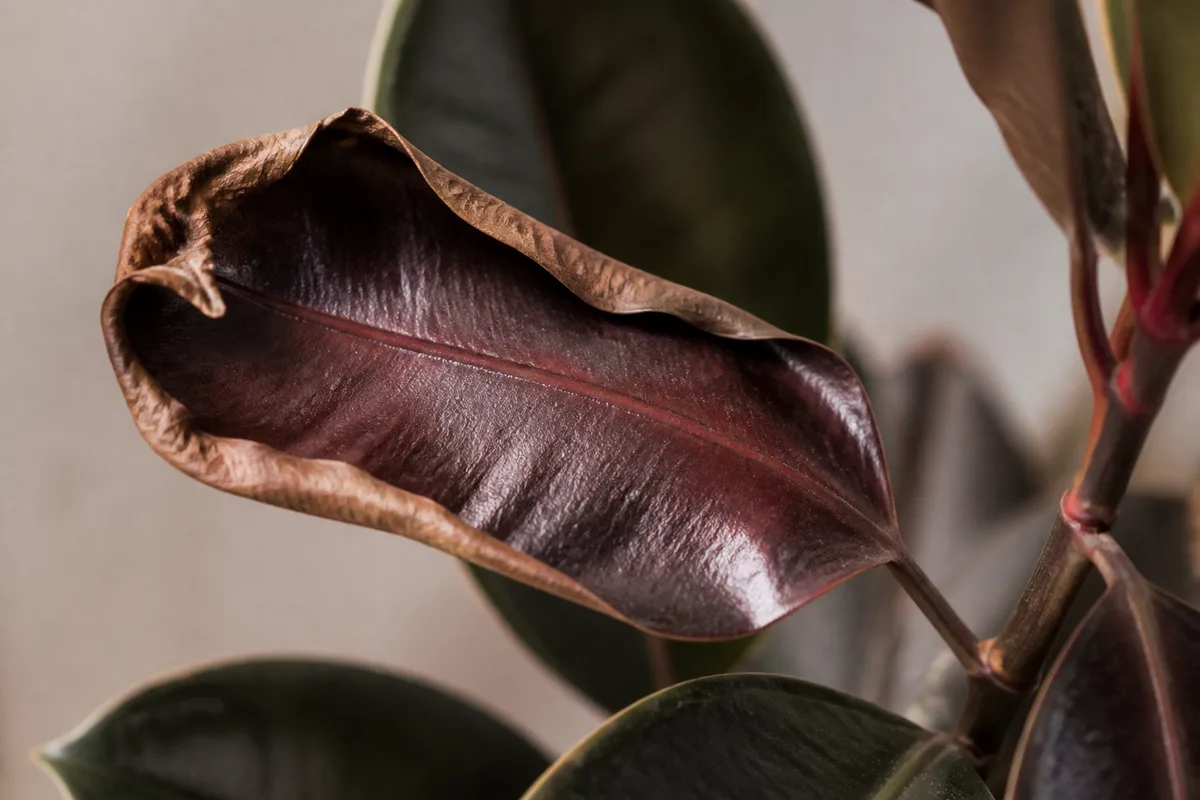
Underwatering symptoms on Ficus Burgundy - compare with healthy tissue on the same plant.
Above soil, watch for:
- Limp or drooping leaves on otherwise firm stems-the whole canopy may sag, not just one branch. Wilting often means roots cannot supply enough moisture to leaves
- Dry, pale, or dusty soil that has shrunk and pulled away from the pot wall
- Crispy brown edges on dark burgundy leaves; the damage stands out against the glossy surface
- A very light pot when lifted with one hand
- Slowed or stalled new growth during warm months when the plant should be pushing leaves
- Lower leaf drop after repeated dry cycles, as the plant sheds older foliage to conserve water
Below soil, healthy roots on a thirsty Ficus Burgundy are usually firm and pale, not mushy. There should be no swampy odour. If you tip the plant out, fine root tips may look dry or brittle, but they should not collapse like rot.
What makes Burgundy different from generic houseplants: the deep leaf colour hides early stress. A pothos might curl dramatically after two dry days; Ficus Burgundy often stays upright until the mix has been dry through much of the pot. By the time leaves droop, the problem is usually more than a surface dry spell.
Why Ficus Burgundy gets underwatered
Rubber plants are famous for dying from too much water, so many owners swing the other way-waiting until the whole pot feels like a brick before watering again. Clemson HGIC notes that rubber plants need thorough watering but also a slight dry-down between drinks; the failure mode indoors is often calendar fear after a past overwatering scare.
Common Burgundy-specific triggers:
- Bright light and warm rooms - Ficus Burgundy in a sunny window or warm conservatory transpires faster than the same plant in a dim corner. The top 2–3 cm may dry every five to seven days in summer while a calendar says “every two weeks.”
- Small or rootbound pots - A crowded root ball has little soil volume to hold moisture. The pot can go from adequately damp to desert-dry in a few days. Rootbound plants in small containers dry out quickly and may need repotting.
- Hydrophobic, dried-out mix - When peat-heavy soil stays dry too long, water runs down the pot sides without soaking the centre. The surface may look briefly damp while roots remain thirsty.
- Heating vents, fireplaces, and dry winter air - Warm airflow pulls moisture from large leaf surfaces. Average household humidity is fine for Ficus Burgundy, but a spot directly above a radiator dries the pot faster than the rest of the room.
- Winter schedule mismatch - Growth slows in cool months, but indoor heating can still dry pots. Skipping checks for three weeks because “it is winter” can underwater a plant sitting in dry, heated air.
- Bottom-watering wicks that stopped working - If you rely on capillary mats or wicks, a clogged or lifted wick can leave the root ball dry while you assume the system is watering.
PlantTalk Colorado stresses that rubber plants need evenly moist soil but that too little water causes leaves to drop-the opposite failure from saturated mix. Ficus Burgundy sits in the middle: it tolerates a partial dry-down at the top, but it does not want the entire root zone parched for weeks.
How to confirm the cause
Work through these checks before you soak the plant or change pots:
- Pot weight - Lift the container. A thirsty Ficus Burgundy feels dramatically lighter than it does one hour after a thorough watering. A light pot is a reliable sign the mix needs water.
- Moisture at 5 cm depth - Press your finger or a wooden skewer into the mix near the pot edge, not against the stem. Dry and crumbly at that depth with limp leaves supports underwatering. Cool, clinging soil means wait.
- Soil pull-away - Gap between mix and pot wall is a strong drought signal.
- Leaf texture - Thin, papery, or crispy margins with dry soil fit drought. Soft, yellow lower leaves on wet soil suggest overwatering instead.
- Recent care history - Have you skipped multiple checks, travelled, or cut back watering after yellow leaves? Fear of overwatering is a common prelude to drought stress on rubber plants.
- Drainage and saucer - Confirm you are not confusing underwatering with a plant sitting in an empty saucer that never received water while the top looked fine.
- Quick perk test - If roots are still healthy, Ficus Burgundy often firms up within hours after a real soak. No improvement after 48 hours with wet soil means look elsewhere.
If soil is wet at depth, the pot is heavy, and leaves are still limp, do not add more water-that pattern fits damaged roots from overwatering, not thirst.
First fix for Ficus Burgundy
Bottom-water until the surface moistens, then drain the pot completely.
Set the container in a sink or tray of room-temperature water so the mix can draw moisture upward through the drainage holes. Leave it until the top 2–3 cm feels evenly damp-often 20 to 45 minutes for a moderately dry pot. Lift the plant out, let excess water run off, and empty the saucer so the roots are not sitting in stagnant water.
If water ran straight through the surface on a previous attempt, the mix had likely gone hydrophobic. Very dry soil may need soaking to wet properly again. Bottom-watering is the right first response because it bypasses the repelling dry crust.
After this first soak:
- Return the plant to its usual bright indirect spot-do not park it in harsh direct sun while stressed.
- Do not fertilize until leaves look turgid and new growth is stable for two weeks.
- Resume the normal rhythm: water thoroughly when the top 2–3 cm dries, roughly every 7–10 days in warm active growth and every 14–21 days in cooler months, always confirmed by touch or pot weight rather than a fixed calendar.
That single rehydration is the first fix. Repotting, pruning, or moving rooms can wait until the plant perks up.
Step-by-step recovery
Once the root ball is rewet, support recovery in this order:
- Monitor perk-up - Stems should stiffen and leaves should lift within 12 to 48 hours if roots are intact.
- Trim only fully dead tissue - Snip crispy brown leaf tips or entirely brown leaves for appearance. Wear gloves; Ficus sap can irritate skin.
- Switch to slow top-watering if bottom-soaks are inconvenient - After the first rescue soak, water from the top slowly until drainage runs clear, ensuring the stream penetrates the centre of the mix.
- Adjust frequency to placement - Bright, warm spots may need checks twice weekly; cool winter corners may need less-but still verify dryness at 5 cm before each drink.
- Repot only if drought was chronic - If the root ball was so dry it would not absorb water after two bottom-soaks, or roots are a tight brick in a tiny pot, move to a well-draining mix with 20% perlite in spring. Do not repot a collapsed plant on day one unless rehydration fails.
- Hold fertilizer - Feed monthly in spring and summer only after the plant looks stable. Salt on drought-stressed roots adds stress without fixing thirst.
Recovery timeline
Mild underwatering often reverses within hours to one day after a proper soak-the best early sign is leaves that no longer droop when you lightly lift a branch.
New leaf buds and firm dark foliage mean the root system is working again; expect visible new growth within two to four weeks during warm months. Old crispy margins on existing leaves will not green up; judge success on fresh tissue.
If the plant was dry for many weeks, fine roots may have died back. Recovery can take several weeks to a few months, with smaller new leaves at first. Continued wilting after the mix stays evenly moist for 48 hours suggests root damage or another problem-not ongoing simple thirst.
Worsening signs: leaves turn yellow while soil stays wet after your rescue soak, stems soften at the base, or the plant sheds most of its canopy without new buds-escalate to a root inspection for rot or cold damage.
Lookalike symptoms
- Overwatering - Limp leaves with heavy, wet soil, yellow lower leaves, and sometimes fungus gnats. Wilt here means roots cannot breathe, not that the plant needs more water.
- Low humidity - Brown leaf edges with otherwise turgid leaves and moist soil at depth. Fix humidity or placement, not another soak.
- Move or repot shock - Leaf drop after relocation even when watering was correct. Stabilize light and wait; do not drown the plant to “help.”
- Not enough light - Leggy, sparse growth with soil that stays wet too long because the plant uses little water. Underwatering in low light is less common but can happen if you forget checks entirely.
- Cold drafts - Leaf drop near air-conditioner vents with soil that may be either too dry or unevenly dry. Move the pot before changing the watering volume.
The decisive split is pot weight plus moisture at 5 cm: light and dry equals underwatering; heavy and damp equals look elsewhere.
What not to do
Do not mist leaves instead of soaking the mix-surface humidity does not rehydrate roots. Do not water a little every day after drought; shallow sips keep the top damp while the centre stays dry and invites fungal issues on stressed tissue.
Avoid fertilizing a collapsed plant before it perks up. Do not repot immediately into a much larger pot “to hold more water”-extra wet soil around a small root ball causes rot once you start watering again.
Do not assume drooping always means overwatering on Ficus Burgundy; check dryness first. And do not leave the plant in a full saucer for days after a rescue bottom-soak-drain within 30 minutes.
How to prevent underwatering next time
Build a simple routine tied to this plant’s actual dry-down speed:
- Check the top 2–3 cm at least twice weekly during spring and summer.
- Lift the pot after every thorough watering and compare weight every few days-you will learn your home’s rhythm faster than any chart.
- In bright rooms, small pots, or near heat sources, expect shorter intervals than the 14–21 day winter range.
- Refresh peat-heavy mix that repeatedly goes hydrophobic, and always use a pot with drainage holes.
- After travel, run finger and weight checks before assuming the plant is fine because the surface looks pale.
Clemson HGIC recommends watering rubber plants thoroughly while letting soil dry slightly between sessions-the prevention goal for Ficus Burgundy is consistent partial dry-down, not letting the entire root ball crash to dust.
When to worry
Act the same day if the plant is fully wilted, soil has pulled away from the pot wall, and the container feels empty when lifted-especially in hot, bright placement where leaf loss can accelerate.
Escalate to unpotting if two thorough soaks over a week fail to firm stems, or if lower leaves yellow while soil stays wet after rehydration. Chronic drought can kill fine roots; at that point you are treating root loss, not a simple missed watering.
Conclusion
Underwatering on Ficus Burgundy is a moisture-timing problem, not a mystery disease. Confirm it with a light pot and dry mix at 5 cm, rehydrate the full root ball with one thorough bottom-soak, then return to watering when the top 2–3 cm dries. The burgundy rubber plant forgives a missed drink better than it forgives soggy soil-but repeated drought still shows up as limp glossy leaves, crispy edges, and stalled growth until you read the pot instead of the calendar.
For baseline watering rhythm and seasonal dry-down, see the Ficus Burgundy watering guide and overview.
Related Ficus Burgundy guides
- Ficus Burgundy overview - burgundy rubber plant biology and care hub
- Watering Ficus Burgundy - top 2–3 cm dry-down rhythm
- Overwatering on Ficus Burgundy - heavy pot vs. light pot split
- Drooping leaves on Ficus Burgundy - wilt differential
- Root rot on Ficus Burgundy - when drought has damaged fine roots