Drooping Leaves on Ficus Burgundy: Causes, Checks & Fixes
Quick answer
Drooping Ficus Burgundy leaves usually mean the plant cannot hold its normal stiff posture-most often from dry roots, wet damaged roots, cold drafts, or relocation shock. First step: lift the pot and check the top 1–2 inches of mix; dry and light means soak, wet and heavy means stop watering and inspect roots.
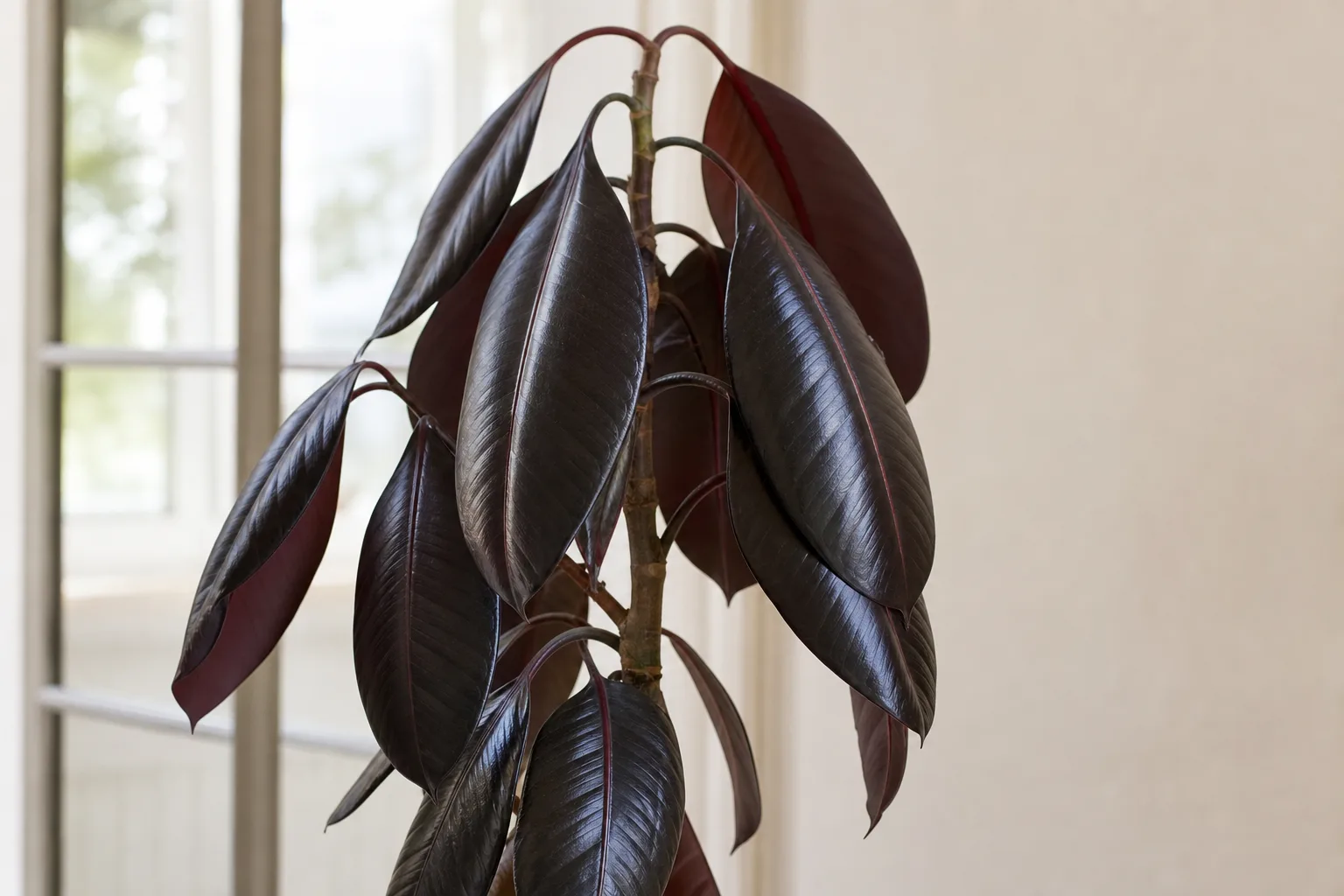
Drooping Leaves on Ficus Burgundy: Causes, Checks & Fixes
This guide covers drooping leaves on Ficus Burgundy. See also the general Drooping Leaves guide, watering, and light pages for this plant.
Drooping Leaves on Ficus Burgundy: Causes, Checks & Fixes
Quick answer
Drooping leaves on Ficus Burgundy (Ficus elastica ‘Burgundy’) mean the plant has lost its usual stiff, glossy posture-thick burgundy leaves hang downward along the stem instead of standing at their normal angle. On this rubber tree, drooping is a stress signal, not a disease name. The same limp look can come from thirst, soggy roots, a recent move, cold drafts, or low light-but the fix depends entirely on which one is active.
First step: run the wet-vs-dry soil fork. Lift the pot with one hand and push your finger 1–2 inches into the mix. A light pot with dusty dry soil means drought-soak and drain. A heavy pot with cool, damp soil that stays wet for many days means damaged roots from overwatering-stop watering and inspect. If moisture is even and you moved the plant within the last two weeks, suspect relocation shock before you change the watering schedule.
This page is a drooping diagnostic router. For step-by-step drought recovery, see underwatering on Ficus Burgundy. For wet-soil decline, see overwatering and root rot. Acute sudden collapse with rapid tissue softening is covered on wilting-drooping here means the gradual hang of otherwise firm glossy leaves losing posture.
What drooping looks like on Ficus Burgundy
Ficus Burgundy leaves are normally thick, waxy, and stiff-they hold their angle along upright stems and show deep burgundy color when the plant is happy. Drooping changes that tree-like silhouette: foliage hangs downward, branches may look weighed down, and the plant loses its upright profile even though leaves are still attached.
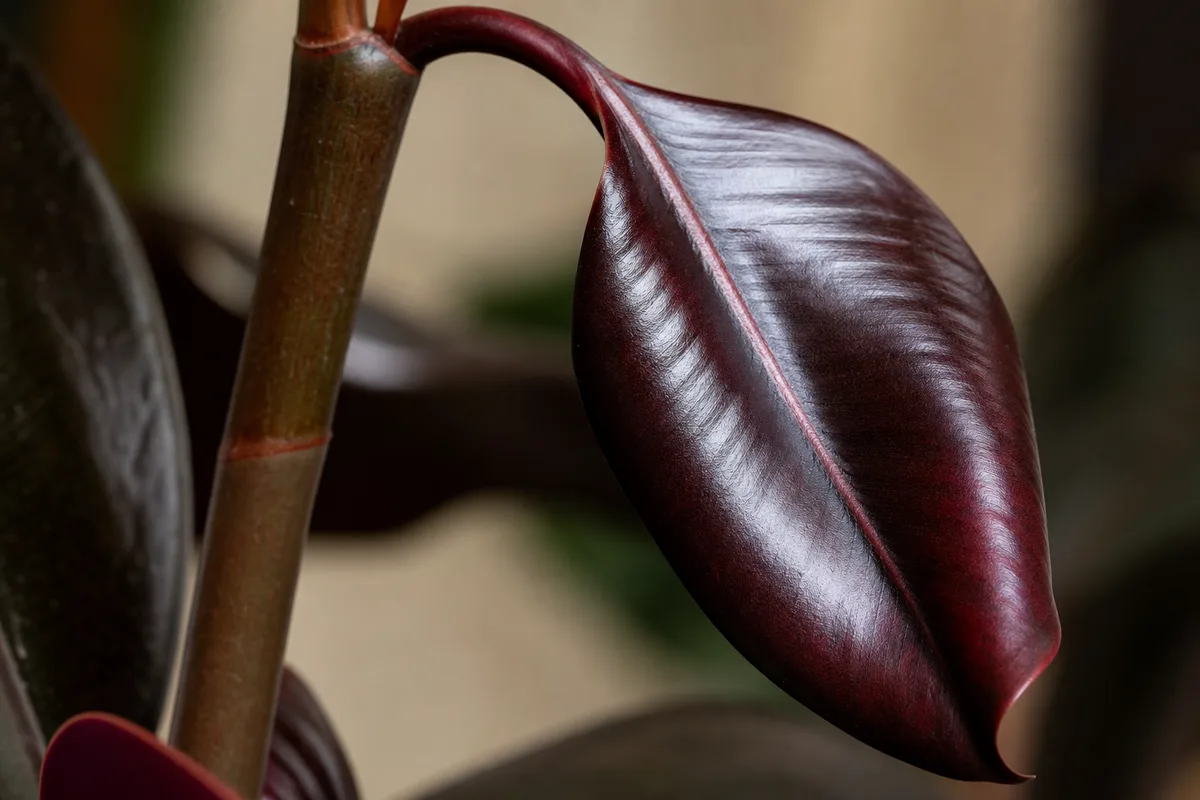
Drooping Leaves symptoms on Ficus Burgundy - compare with healthy tissue on the same plant.
Typical drooping patterns on burgundy rubber plants:
- Whole branches sag while the stem base still feels firm-common when the root zone is dry or when a cold draft has stressed the canopy
- Limp heavy leaves on wet mix-the paradoxical pattern where soil feels damp but leaves cannot hold turgor because roots are failing
- Slightly curled but firm leaves on a light, dry pot-underwatering before the canopy fully collapses
- Yellow lower leaves paired with droop while soil stays wet-points toward root stress rather than thirst
- Sudden droop after a missed watering in bright light-large glossy leaves transpire steadily and can go from firm to hanging in a few days
- Widespread droop after a move or repot even when soil moisture looks correct-classic relocation reaction on Ficus elastica
- Greenish new leaves on long internodes alongside droop in a dim room-low light weakens structure even when watering is technically correct
What makes Burgundy different from generic houseplants: Ficus elastica stores water in thick stems and leathery, glossy leaves that mask early root stress. A fern or pothos may wilt dramatically after one dry day; Ficus Burgundy often stays upright until the mix has been wrong for longer. By the time leaves droop, the problem is usually more than a surface dry spell-or root damage may already be advanced.
Drooping vs. wilting on Ficus Burgundy: Both describe limp foliage, but owners usually search “drooping” when leaves gradually lose posture over days and “wilting” when collapse feels sudden or floppy. The diagnostic path is the same-wet-vs-dry soil first-but wilting on Ficus Burgundy covers acute collapse and emergency triage. This page focuses on the posture change itself and routes you to the correct cause.
Why Ficus Burgundy leaves droop (ranked causes)
Underwatering and fast dry-down
Rubber plants are famous for dying from too much water, so many owners wait too long between drinks. Clemson HGIC advises watering thoroughly but letting the soil dry slightly to the touch between waterings-the failure mode indoors is often calendar fear after a past overwatering scare, leaving the pot bone-dry while thick leaves still look glossy.
Bright windows, small nursery pots, and heating vents accelerate dry-down. Ficus Burgundy in a sunny room may need water every seven to ten days in summer while a dim corner plant goes two weeks-but both should follow the top 1–2 inch dry-down rule, not a fixed schedule. The Ficus Burgundy watering guide covers seasonal rhythm.
Overwatering and root damage
Paradoxically, drooping on wet soil is one of the most common rubber plant problems. When roots sit saturated, they lose oxygen and function-damaged roots cannot move water upward, so leaves droop exactly as they do in drought. Lower yellow leaves, sour smell, fungus gnats, and a heavy pot confirm this branch. Adding water makes it worse.
Clemson HGIC notes root rot usually results from soil that does not drain quickly or overly frequent watering. Winter calendar watering in a cool dim room is a frequent trigger-evaporation slows while the owner keeps a midsummer schedule.
Cold drafts and temperature drops
Ficus elastica is sensitive to chill. Clemson HGIC warns to avoid temperatures lower than 55°F, sudden drops, and cold drafts. A burgundy rubber plant pressed against a cold winter window or sitting in an AC vent stream can droop and drop leaves within days without a clear wet-or-dry soil mismatch. Night temps below about 60°F in an unheated room produce the same pattern.
Relocation, Ficus Burgundy repotting guide, and draft shock
Rubber trees react sharply to environmental change. A nursery-to-home transition, new room, repot, or even rotating the pot to a different window can trigger drooping and leaf drop when moisture has been even. Ficus elastica is native to warm Southeast Asian forests and expects stable bright conditions-frequent moves compound stress.
Low light and leggy weakness
Insufficient light does not usually cause overnight droop, but chronic dim placement produces long internodes, smaller leaves, and a weak canopy that sags under its own weight. New growth may emerge more green than burgundy-a color signal covered in our not enough light guide and overview. Low light also slows evaporation, which makes overwatering more likely when watering frequency stays unchanged.
Spider mites in dry heat
Dry indoor air combined with dusty leaf surfaces can invite spider mites on rubber trees. Stippling, fine webbing on undersides, and dull tired foliage can accompany droop-but mites usually do not change pot weight the way drought or rot does. Inspect undersides before you treat drooping as watering alone.
How to confirm the cause
Work through these checks in order before you change anything:
- Pot weight - Lift one corner after you know the heavy feel post-watering. Dramatically lighter = drought likely. Heavy and unchanged for days = too wet likely.
- Finger test at 1–2 inches - Water when the top soil dries slightly between drinks. Dusty dry throughout supports thirst. Cool, clingy dampness for many days supports overwatering.
- Leaf texture - Slightly curled but still firm on dry mix suggests underwatering. Soft, limp leaves on wet mix with yellow lower foliage suggests root stress.
- Smell and drainage - Neutral dry soil vs. sour swampy odor from the pot. Blocked drainage holes and standing saucer water keep roots saturated.
- Recent move timeline - Repot, relocation, or window change within two weeks? Even moisture + droop may be shock, not soil mismatch.
- Temperature - Night temps below 55°F, cold glass contact, or AC drafts on the canopy can droop leaves with moist soil. Warm stable placement matters.
- Pest scan - Stippling, webbing, or sticky residue on undersides-mites or scale can weaken foliage without changing pot weight much.
Wet soil vs. dry soil fork
| Check | Points to underwatering | Points to overwatering / root stress |
|---|---|---|
| Pot weight | Noticeably light | Heavy for days after last water |
| Mix at 1–2 inches | Dusty, dry, may pull from pot wall | Cool, dark, damp many days |
| Leaf pattern | Slightly curled, firm texture; all limp | Lower yellow leaves; limp despite wet mix |
| Crown at soil line | Firm | Soft or darkening = escalate |
| Smell | Neutral | Sour or swampy |
| First fix | Soak and drain | Stop water; inspect roots if no improvement |
If the fork is unclear-moist but not soggy, no recent move-wait 24 hours and recheck weight before soaking. One wrong drench on wet roots sets Ficus Burgundy back weeks.
Relocation and draft check
When soil moisture is even and appropriate but the plant drooped after:
- Bringing it home from a nursery or garden center
- Moving to a new window or room
- Repotting into fresh mix
- Sitting near a cold winter window or AC vent
…treat stability as the first fix: stop moving it, keep warmth above 60°F, maintain the top 1–2 inch dry-down rule without swinging to flood or drought, and expect some leaf drop over two to four weeks. Do not repot again to “fix” droop-that compounds shock.
First fix for Ficus Burgundy drooping leaves
Branch on soil moisture-one action only:
If the mix is dry 1–2 inches down and the pot is light: Bottom-water or soak until the root zone rewets, then drain completely. If peat has gone hydrophobic and water runs down the sides, bottom-water until the surface moistens. Full soak-and-drain steps: underwatering on Ficus Burgundy.
If the mix is wet, heavy, or sour-smelling: Stop watering until the top inch dries. Verify drainage holes are open and empty the saucer. If leaves stay limp after the mix has been evenly moist-not saturated-for three to four days, unpot and inspect roots. Mushy brown roots mean root rot-trim, dry, and repot; do not soak.
If you recently moved or repotted and moisture is even: Hold placement and watering steady. No fertilizer, no second repot, no aggressive pruning on the same week. Give two to four weeks for new growth to firm before you judge failure.
If cold drafts are the obvious trigger: Move the plant back from glass, close the AC vent path, and keep night temps above 60°F. Do not compensate with extra water unless the mix is genuinely dry.
Do not mist, fertilize, or prune heavily on day one. Ficus Burgundy needs one clear correction so you can read the response.
Recovery timeline
Drought drooping often reverses within one to three days after a proper soak-you will feel leaves thicken and lift. Overwatering droop improves only after the root zone dries and damaged tissue is removed-count one to three weeks for mild cases, longer if rot was advanced.
Relocation droop may persist two to four weeks with ongoing leaf drop even when care is correct. Old drooped leaves may not fully re-stiffen; firm new burgundy growth from stem tips is the success signal.
Cold-draft droop often stabilizes within a week once warmth returns, though dropped leaves do not regrow on the same node. Chronic drooping over months without a clear wet/dry event suggests root decline, chronic low light, or repeated shock from moving-inspect roots and review light placement if watering corrections fail.
Lookalike symptoms to rule out
| Symptom pattern | Likely cause | Where to go next |
|---|---|---|
| Light pot, dry 1–2 inches, slightly curled firm leaves | Underwatering | Underwatering guide |
| Heavy wet pot, yellow lower leaves, gnats | Overwatering | Overwatering guide |
| Wet soil, mushy roots, sour smell | Root rot | Root rot guide |
| Drooped after move; even moisture | Relocation shock | Stabilize; watering rhythm |
| Cold window, moist soil, leaf drop | Draft / chill | Warm placement above 60°F |
| Green new leaves, long stems, dim room | Low light | Not enough light |
| Stippling, webbing, dusty leaves | Spider mites | Spider mites |
| Sudden floppy collapse, soft tissue | Acute wilting | Wilting guide |
| Yellow lower leaves only, firm canopy | Normal aging vs. stress | Yellow leaves |
What not to do
Do not water because leaves look limp without checking soil-wet-soil droop is root failure until proven otherwise. Do not drench daily after one dry spell; rubber plants rot in soggy mix. Do not move the plant repeatedly while recovering-relocation shock masks whether your soak or dry-down worked. Do not mist instead of watering roots when the mix is dry. Do not fertilize a drooping Ficus Burgundy before moisture and roots are stable. Do not repot into a much larger pot to “hold more water”-extra wet soil around a small root ball invites rot.
When handling a stressed rubber tree, remember milky latex sap can irritate skin-wear gloves when pruning or unpotting.
How to prevent drooping next time
Build habits around early detection before posture fails:
- Weigh the pot occasionally so sudden lightness triggers a check before leaves hang
- Check the top 1–2 inches every few days-more often in bright light and summer, less in cool winter-but never skip entirely
- Keep placement stable once the plant is acclimated; batch moves and repots for spring when growth is active
- Use well-drained mix with perlite and pots with open drainage-see soil guide
- Pull back from cold windows in winter and keep the canopy out of AC vent streams
- Pair steady moisture with bright indirect light-Ficus elastica grows best in bright indirect light or part shade for compact growth and deep leaf color
- Reduce winter watering frequency when growth slows in cooler dim rooms-calendar schedules from summer cause the most common wet-soil droop
When to worry
Escalate beyond a simple soak or dry-down if:
- Leaves stay limp after correct moisture has been stable for three to four days
- Stem base feels soft or smells sour at the soil line
- Most roots are brown and mushy on inspection
- Drooping spreads quickly while soil is wet-rot may be advancing
- New growth stops for more than a month after you corrected watering
- Spider mites or mealybugs coat stressed foliage-pests exploit weak plants
A firm stem with some dropped lower leaves can still recover if roots are pale and solid. Blackening stems from the base upward or a collapsed root ball may require stem cuttings from firm upper growth as a last resort-see our propagation guide.
Conclusion
Drooping Ficus Burgundy leaves are fixable when you split wet from dry before you act. Lift the pot, check 1–2 inches down, note whether lower leaves are yellowing, and recall any recent move or cold exposure. Route drought to a soak, wet soil to a pause and root check, chill to warmer placement, and shock to stable care-not another relocation. Judge recovery by firm new burgundy leaves, not by saving every hanger-and use the underwatering, overwatering, and watering guides when you need cause-specific depth beyond this drooping router.
When to use this page vs other Ficus Burgundy guides
- Ficus Burgundy watering guide - Use for routine moisture checks before assuming drooping leaves is the main issue.
- Ficus Burgundy problems hub - Browse all 16 common issues on this species.
- Underwatering on Ficus Burgundy - Different entry point when symptoms overlap with drooping leaves.
- Overwatering on Ficus Burgundy - Different entry point when symptoms overlap with drooping leaves.
- Root Rot on Ficus Burgundy - Different entry point when symptoms overlap with drooping leaves.