Wilting on Ficus Burgundy: Causes, Checks & Fixes
Quick answer
Wilting on Ficus Burgundy usually means water stress, root failure, cold drafts, or relocation shock-not one simple cause. First step: lift the pot and probe the top 1–2 inches of mix-heavy wet soil with limp leaves means stop watering; a light dry pot means soak and drain.
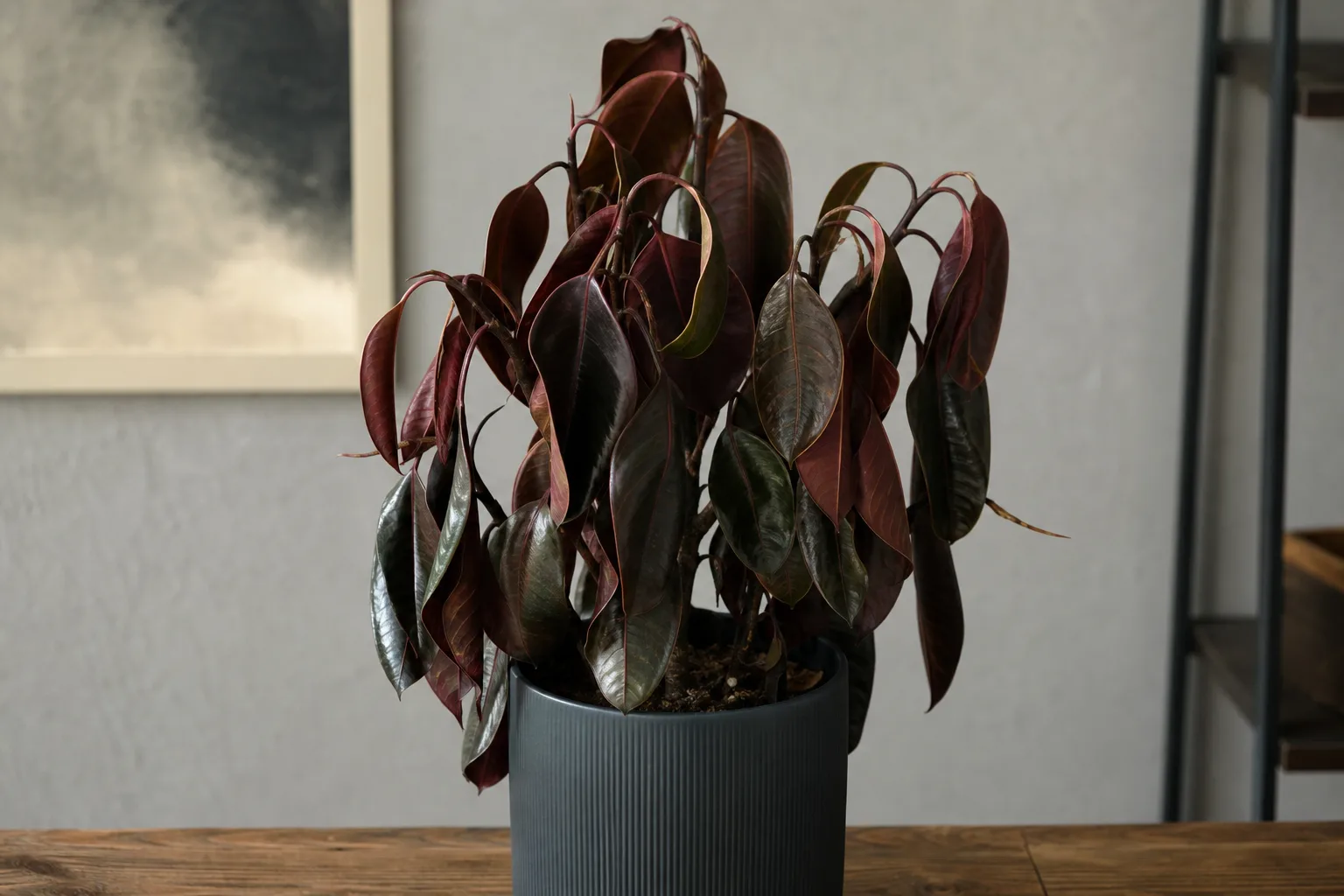
Wilting on Ficus Burgundy: Causes, Checks & Fixes
This guide covers wilting on Ficus Burgundy. See also the general Wilting guide, watering, and light pages for this plant.
Wilting on Ficus Burgundy: Causes, Checks & Fixes
Quick answer
Wilting on Ficus Burgundy (Ficus elastica ‘Burgundy’) means the plant lost enough internal water pressure that its thick, glossy leaves and stems hang limp instead of standing firm. On rubber trees the same limp look can come from opposite causes-drought, soggy roots, cold drafts, relocation shock, or pest stress-so guessing from leaf texture alone fails.
First step: lift the pot and probe the top 1–2 inches (2.5–5 cm) of mix before you pour anything. A heavy, cool, damp pot with limp leaves means damaged or oxygen-starved roots, not thirst-pause watering. A light, dry pot with slightly curled but still firm leaves means underwatering-one thorough soak until drainage runs, then empty the saucer.
What wilting looks like on Ficus Burgundy
Burgundy rubber plants store water in stems and leathery leaves, which masks early root trouble. By the time the canopy wilts, stress is often already advanced-unlike thin-leaved plants that droop after one missed drink.

Wilting symptoms on Ficus Burgundy - compare with healthy tissue on the same plant.
Common above-soil patterns:
- Limp, heavy-feeling glossy leaves that hang straight down from thick stems instead of angling outward
- Whole branches sagging while leaf colour stays dark burgundy-not always yellow first
- Paradoxical wilt with wet soil-the surface looks damp, the pot feels heavy, yet leaves collapse (wilt with moist soil often signals root uptake failure)
- Slightly curled leaf margins on a light, dry pot-drought wilt before edges turn fully crispy
- Sudden limpness and leaf drop within days of a move, repot, or placement beside a cold window or AC vent
- Stippled, dull leaves with fine webbing on undersides in dry heated rooms-spider mite stress overlapping wilt
Below soil, healthy roots on a thirsty plant are firm and pale. Roots on an overwatered plant may be brown, mushy, or sour-smelling while the mix above them still holds moisture.
Wilting vs drooping on Ficus Burgundy
These terms overlap in casual search, but the distinction helps you pick the right fix:
| Signal | Wilting (this page) | Drooping (gradual sag) |
|---|---|---|
| Speed | Often rapid-overnight or within days | Usually gradual over weeks |
| Leaf texture | Soft, limp, lost turgor | May stay glossy but hang lower |
| Soil clue | Wet-heavy or bone-dry pot is decisive | Soil may be inconsistently moist |
| Common trigger | Wrong water direction, cold draft, shock | Low light stretch, mild underwatering |
If stems are long and leaning toward a window but still firm, see drooping leaves on Ficus Burgundy. If leaves are actively limp and the pot weight tells a clear wet-or-dry story, stay on this page.
Why Ficus Burgundy wilts
Overwatering and root failure (wet-soil wilt)
The most dangerous wilt pattern on Ficus Burgundy is limp leaves on heavy, wet mix. Clemson HGIC links rubber plant root rot to soil that does not drain quickly or to watering too often. Saturated roots lose oxygen; they stop absorbing water even when the mix is full of it-classic “dying of thirst in a sea of plenty.” Thick leaves hide the problem until collapse is obvious.
Winter calendar watering in a dim, cool room makes this worse: the pot dries slowly on top while you keep adding water on a summer schedule.
Underwatering (dry-pot wilt)
Ficus Burgundy tolerates a partial dry-down at the top but not a parched root ball for weeks. A light pot, dusty mix 2–3 cm down, and limp leaves fit drought-especially in bright windows, small pots, or near heating vents. Too much or too little water both cause rubber plant leaves to drop.
Cold drafts and temperature shock
Ficus elastica is sensitive to cold drafts and temperatures below about 55°F (13°C). Winter window sills, frequently opened doors, and air-conditioning vents pointed at the canopy can trigger sudden leaf drop and limp branches without any change in your watering can. NC State Extension notes that overwatering and cold drafts both cause leaf loss on rubber plants.
Relocation and repot shock
Rubber trees prefer stable placement. Ficus elastica does not do well with drafts or repeated moves-a nursery-to-home transition, room shuffle, or fresh repot disrupts root function temporarily. Expect some limpness and lower leaf drop once; repeated collapse means conditions are still wrong.
Low light with slow root use
In dim corners the plant transpires less and the mix stays wet longer. Owners who keep watering on a bright-room schedule create wet-soil wilt even though the plant looks “lazy” rather than actively growing. Leggy stretch and greenish new leaves often accompany this-see not enough light on Ficus Burgundy.
Pests and secondary wilt
Spider mites in dry, dusty conditions can stipple leaves and weaken turgor. Scale and mealybugs drain sap over time. Check undersides and stem joints before assuming water alone will fix limp foliage.
How to confirm the cause
Work through this checklist in order-pot weight and moisture direction come before Ficus Burgundy repotting guide or fertilizer:
- Pot weight - Heavy and cool after days without watering → wet-soil problem. Feather-light → drought.
- Top 1–2 inch probe - Finger or skewer at the pot edge. Clinging damp soil with limp leaves → stop water. Dry crumbly mix → soak.
- Leaf texture - Firm but curled on dry soil = thirst. Soft, yellowing lower leaves on wet soil = root stress.
- Crown firmness - Press the base gently. Soft, mushy tissue with wet mix = escalate toward root rot.
- Smell - Sour or swampy odour from drainage holes supports rot, not simple underwatering.
- Placement history - New window, AC vent, or repot within two weeks? Consider shock or cold before changing everything.
- Thermometer check - Leaf surface near glass below 55°F (13°C) overnight fits cold-draft wilt.
- Pest scan - Webbing, stippling, or sticky residue on stems means treat pests alongside moisture correction.
First fix for Ficus Burgundy
Do not water until you know whether the pot is wet-heavy or dry-light.
That single rule prevents the most common Burgundy rubber plant mistake: pouring water onto already saturated mix because limp leaves “look thirsty.”
- If the pot is heavy and the top inch is damp: Stop watering. Move to brighter indirect light if the plant sits in deep shade-slow evaporation worsens wet soil. Empty any saucer water. Let the top 1–2 inches dry before the next check. Full branch details live on overwatering on Ficus Burgundy.
- If the pot is light and mix is dry 2–3 cm down: Bottom-water or top-soak slowly until drainage runs, then empty the saucer within 30 minutes. See underwatering on Ficus Burgundy for rehydration steps.
- If the plant was just moved or repotted: Hold placement steady, water on dry-down only, and wait two weeks-no fertilizer, no second repot.
- If cold draft is obvious: Move the pot away from the vent or window chill first; moisture changes come second.
Make one correction, then watch for 48–72 hours before stacking treatments.
Step-by-step recovery by cause
Wet-soil wilt / overwatering
- Pause watering until the top 1–2 inches dry.
- Confirm drainage holes are open and the saucer stays empty.
- Increase indirect light modestly if the plant sits in shade-roots need oxygen and modest warmth to recover.
- If limpness continues after one full dry-down cycle, unpot and inspect roots; trim mushy tissue and repot into fresh well-draining mix only if rot is confirmed.
- Judge recovery by new stipules and firm upper leaves, not old limp ones refilling.
Dry-pot wilt / underwatering
- One thorough soak until the root ball rewets; drain completely.
- Resume watering when the top 2–3 cm dries-typically every 7–10 days in warm bright growth, longer in winter.
- Trim fully brown crispy leaves only for appearance; they will not green up.
Cold-draft wilt
- Move to stable 65–85°F (18–30°C) placement away from vents and cold glass.
- Water on normal dry-down only-do not compensate for leaf drop with extra water on wet mix.
- Expect some dropped leaves; new growth under stable conditions confirms recovery.
Relocation / repot shock
- Keep light and temperature steady for two weeks.
- Water when the top 1–2 inches dry; avoid fertilizing until new growth looks normal.
- Accept one round of lower leaf drop; repeated wilt means underlying water or light issues remain.
Recovery timeline
Simple underwatering: leaves often firm within hours to one day after a proper soak if roots are intact.
Overwatering caught early: limpness may ease over several days to two weeks once soil oxygen returns; judge progress by stable new growth, not old leaf posture.
Root rot or advanced root damage: recovery takes weeks to months; some branches may not survive. Propagation from healthy top cuttings may be the salvage path if the crown softens.
Cold or move shock: leaf drop may continue one to two weeks; new firm leaves under stable temps mean the plant is past the worst.
Old wilted leaves rarely return to their former arch-they drop or stay limp while new burgundy foliage tells you the fix worked.
Lookalike symptoms
- Yellow leaves - Often precede or accompany wilt; yellow lower leaves on wet soil point to root stress, not aging alone.
- Drooping without lost turgor - Long-term sag toward light; stems stay firm. See drooping leaves.
- Root rot - Wilt plus sour smell, mushy roots, soft crown on wet mix. Urgent unpotting; see root rot on Ficus Burgundy.
- Low humidity alone - Brown tips with otherwise firm leaves and appropriate soil moisture; rarely causes whole-branch collapse.
- Normal lower-leaf senescence - One or two old bottom leaves yellow and drop on an otherwise upright plant with correct pot weight-not whole-canopy wilt.
What not to do
Do not water a wilting Ficus Burgundy when the pot is already heavy and damp-that deepens root failure. Do not mist leaves instead of fixing soil moisture; surface wetness does not reoxygenate roots.
Avoid fertilizing a collapsed plant before roots recover. Do not repot, prune heavily, and relocate on the same day-stacked stress on Ficus elastica triggers more leaf drop.
Do not assume wilting always means underwatering because rubber plants are “drought tolerant”; their thick leaves hide dry stress but also hide wet-root stress until wilt is severe.
Ficus Burgundy care cross-check
Stable burgundy rubber trees combine Ficus Burgundy light guide, top 1–2 inch dry-down watering, well-draining mix, and draft-free placement. Review the Ficus Burgundy care overview for color-and-light relationships, pet toxicity, and seasonal rhythm. The watering guide explains pot-weight checks and winter slowdown-critical for preventing wet-soil wilt in cool dim rooms.
Water thoroughly only when the probe says dry; empty saucers within 30 minutes. In winter, stretch intervals when growth slows but still verify depth-calendar watering is the top wilt trigger indoors.
How to prevent wilting next time
- Check pot weight every few days until you learn your room’s rhythm.
- Probe the top 1–2 inches before every drink-never pour because the leaves look tired.
- Keep temperatures above 55°F (13°C) and away from AC blasts and cold window glass in winter.
- Minimize moves once the plant acclimates; when you must relocate, do it gradually if light intensity changes sharply.
- Match pot size to roots-oversized pots stay wet too long and cause paradoxical wilt.
- Wipe leaves monthly to catch mites early and improve light absorption on dark foliage.
Clemson HGIC recommends thorough watering with a slight dry-down between sessions-the prevention sweet spot for Ficus Burgundy is consistent partial dry-down, not constant dampness or long drought.
When to worry
Escalate the same day if the crown feels soft while soil is wet, wilting spreads to most of the canopy over 48 hours despite correct dry-down, or stems blacken at the base. Those patterns fit advancing rot, not a missed watering.
Medium urgency: wilt persisting more than one week after you corrected the water direction (dry soak vs wet pause). Low urgency: mild limpness on a dry light pot you forgot to water, or one-time leaf drop after a single move with firm crown and normal soil moisture.
Related Ficus Burgundy problems
- Overwatering on Ficus Burgundy - Limp leaves on heavy wet soil
- Underwatering on Ficus Burgundy - Light dry pot and crispy edges
- Root rot on Ficus Burgundy - Wilt with sour smell and mushy roots
- Drooping leaves on Ficus Burgundy - Gradual sag vs acute wilt
- Yellow leaves on Ficus Burgundy - Early warning before collapse
- Not enough light on Ficus Burgundy - Leggy growth with slow soil dry-down
- Ficus Burgundy care overview - Light, water, and troubleshooting hub
Conclusion
Wilting on Ficus Burgundy is a directional symptom, not one disease. Lift the pot, probe the top 1–2 inches, and split wet-heavy wilt from dry-light wilt before you touch the watering can. Cold drafts below 55°F, relocation shock, and root failure all mimic thirst through limp glossy leaves-but each needs a different first fix. Thick Ficus elastica foliage stores water and hides stress; by the time branches hang, act on pot weight and crown firmness, not leaf gloss alone. Recovery shows in new stipules and firm dark leaves, not necessarily in old limp tissue standing back up.
When to use this page vs other Ficus Burgundy guides
- Ficus Burgundy watering guide - Use for routine moisture checks before assuming wilting is the main issue.
- Ficus Burgundy problems hub - Browse all 16 common issues on this species.
- Underwatering on Ficus Burgundy - Different entry point when symptoms overlap with wilting.
- Overwatering on Ficus Burgundy - Different entry point when symptoms overlap with wilting.
- Root Rot on Ficus Burgundy - Different entry point when symptoms overlap with wilting.