Aphids on Ficus Burgundy: Causes, Checks & Fixes
Quick answer
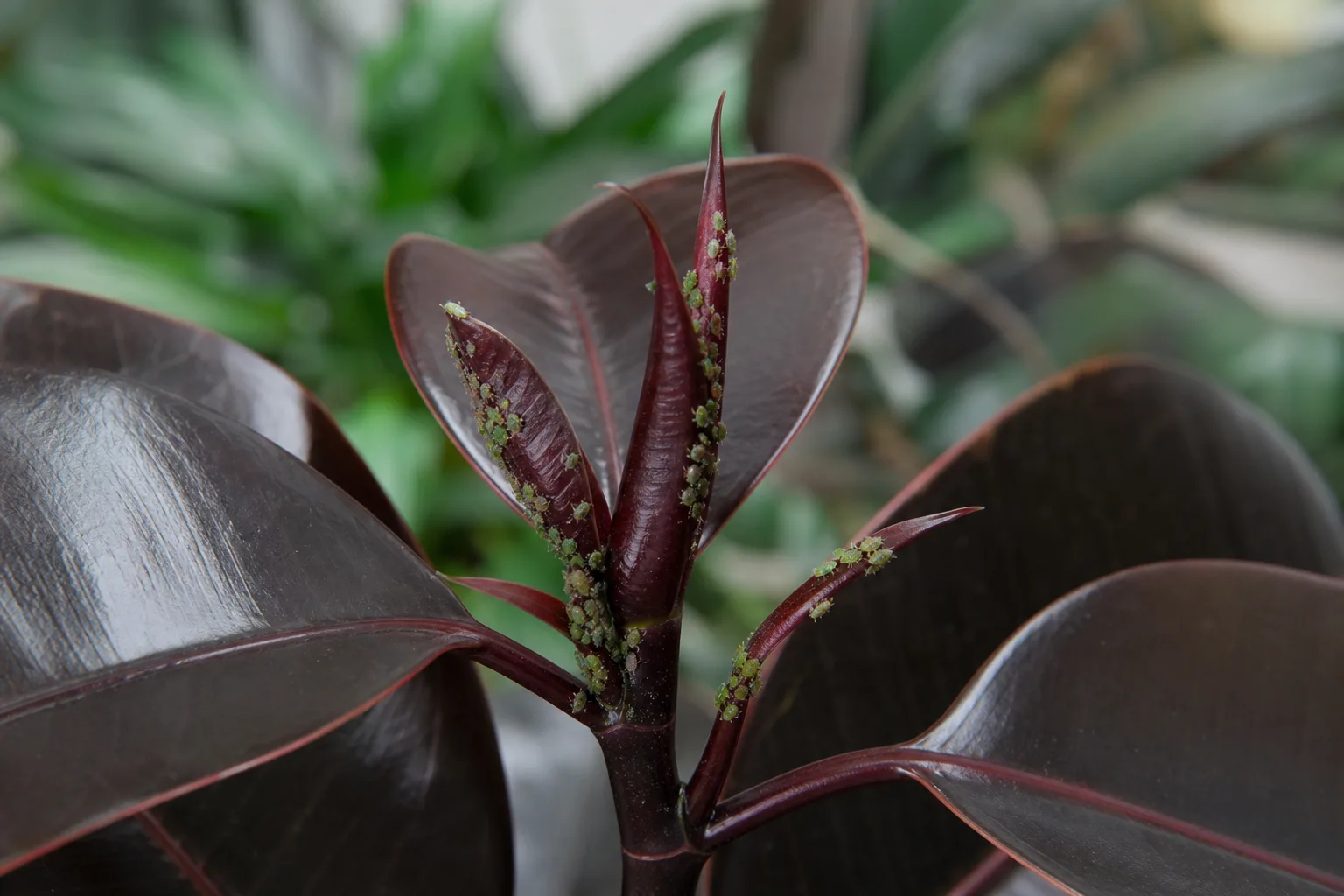
Aphids on Ficus Burgundy cluster on tender new shoots at the stem tip. First step: isolate the plant and rinse new growth and leaf undersides with a forceful lukewarm shower before applying any spray.
Aphids on Ficus Burgundy: Causes, Checks & Fixes
This guide covers aphids on Ficus Burgundy. See also the general Aphids guide, watering, and light pages for this plant.
Aphids on Ficus Burgundy: Causes, Checks & Fixes
Quick answer
Aphids on Ficus Burgundy (Ficus elastica ‘Burgundy’) are small sap-sucking insects that colonize the softest tissue on the plant-usually the new leaf unfolding at each stem tip and the petiole bases just below it. On this burgundy rubber plant cultivar, the first visible clue is often not the insects themselves but shiny honeydew on the deep maroon leaf surface, which shows up as pale sticky spots long before the colony looks large.
First step: isolate the plant and rinse new growth and leaf undersides with a forceful lukewarm shower. Move Ficus Burgundy away from other houseplants, then knock aphids off with water before reaching for soap or oil. Indoor rubber plants lack the predators that control aphids outdoors, so a small cluster at the top of one stem can spread to every plant on the same windowsill within a week if you skip isolation and physical removal. Species background: Ficus Burgundy overview.
What aphids look like on Ficus Burgundy
Aphids are pear-shaped, soft-bodied insects roughly 1/16 to 1/8 inch long. They may be green, black, brown, yellow, or pink depending on species. On Ficus Burgundy they most often gather where the plant is actively growing:
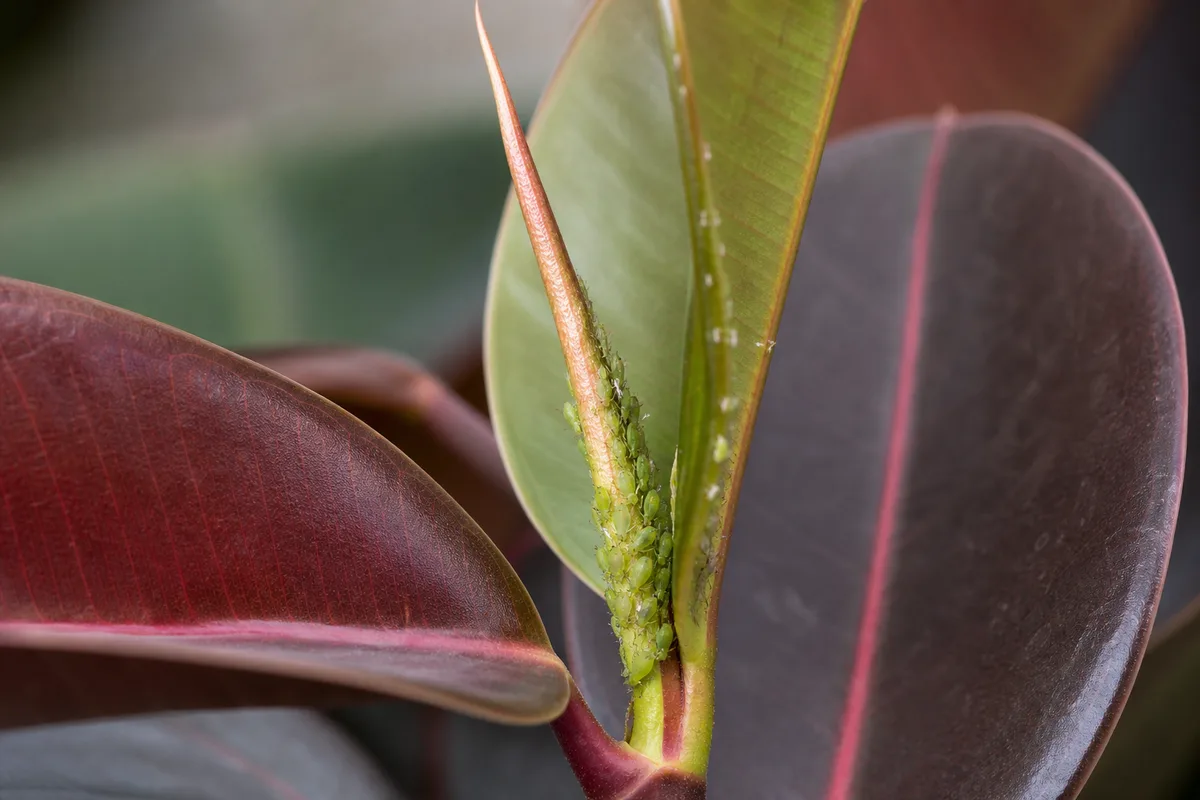
Aphids symptoms on Ficus Burgundy - compare with healthy tissue on the same plant.
- Stem tips - clusters on the sheath of the newest leaf as it unfurls
- Petiole bases - where the thick leaf stalk meets the main stem or branch
- Undersides of young leaves - especially along the midrib on leaves that are still soft
Because Burgundy rubber plant leaves are large, thick, and dark, honeydew reads clearly as glossy sticky patches that attract dust. Sooty mold may follow, leaving black film on otherwise clean foliage. Feeding can curl, twist, or stunt new leaves while older hardened leaves below often look untouched.
You may also see whitish cast skins stuck near colonies-aphids molt as they grow, and the empty skins remain after the live insects move to fresher tissue. Winged adults can appear when a colony gets crowded; they are a sign the infestation is mature enough to spread to other pots.
Honeydew vs. rubber sap on dark leaves
Burgundy cultivar leaves make early pest detection easier than on plain green rubber plants: pale tacky honeydew stands out against deep maroon gloss. Honeydew stays sticky, may coat several upper leaves below the feeding zone, and follows insect colonies at stem tips. Milky latex sap appears only where you cut or break a stem, dries whitish, and does not spread as sweet tackiness across untouched foliage. If you recently pruned and see localized dried white spots below the cut, that is sap-not aphids.
Why Ficus Burgundy gets aphids
Ficus Burgundy is the same species as the standard rubber plant (Ficus elastica), so pest biology matches the aphids on rubber plant guide-but the dark-leaf cultivar makes honeydew easier to spot early. Rubber plants are not aphid magnets the way tender herbs are, but Ficus Burgundy fits the profile when new growth is soft and plentiful. Spring and summer active growth-when you are watering on the watering schedule and feeding monthly-produces the tender shoots aphids prefer. NC State lists mealybugs, scales, and spider mites among common Ficus elastica pest problems-aphids follow the same soft-growth pattern on rubber trees indoors. Heavy or frequent nitrogen fertilizer pushes even more soft tissue; stressed plants recovering from a move or repot can also attract sap feeders.
The most common introduction routes indoors:
- New plants brought home without quarantine
- Open windows in warm weather, especially near garden beds
- Infested neighbors on the same shelf or plant stand
- Contaminated tools or hands after handling another affected plant
Ficus Burgundy in weak light grows slowly but any new shoots that do appear stay soft longer, giving aphids more time to establish before you notice. Dusty leaves do not cause aphids directly, but dust hides early honeydew on dark foliage-exactly why regular wiping matters on this cultivar. See light requirements for keeping internodes tight and leaves thick.
Indoor environments lack lady beetles, lacewings, and parasitic wasps that control aphids outside. A colony that would collapse in a garden can persist on a burgundy rubber plant for months without intervention.
How to confirm the cause
Work through these checks in order before buying sprays:
- Locate the colony - Inspect stem tips and petiole axils with a phone flashlight or hand lens. Live aphids move slowly when disturbed; scale insects do not.
- Test for honeydew - Run a finger along the leaf surface near new growth. Sticky residue that rubs off confirms sap feeding even if insects are hidden inside a curled leaf.
- Check for cast skins and ants - Whitish molt skins near the stem tip support an aphid diagnosis. Ants farming honeydew mean the colony is established.
- Rule out mealybugs - White cottony masses in leaf axils with filaments are mealybugs, not aphids. Alcohol dab treatment works for mealybugs; aphids need a different first pass.
- Rule out scale - Hard brown or tan bumps that scrape off with a fingernail are scale, not soft-bodied aphids.
- Rule out thrips - Silvery scrape marks and black specks of frass on leaves suggest thrips, which are slender and fast-running rather than pear-shaped clusters.
- Scan the collection - If one Ficus Burgundy has aphids at the tip, check every nearby rubber plant, fiddle-leaf fig, and weeping fig on the same surface.
Confirmed diagnosis requires moving insects plus honeydew or new-growth damage at the stem tip. Yellow lower leaves alone, without insects or stickiness above, usually point to watering or acclimation-not this pest.
Lookalike comparison
| What you see | Insect behavior | Sticky residue | First action |
|---|---|---|---|
| Pear-shaped clusters at stem tip | Slow-moving, soft-bodied | Sweet honeydew on dark leaves | Isolate and shower |
| White cotton in leaf axils | Hidden in wax | Honeydew possible | Alcohol dab (mealybugs) |
| Hard tan bumps on stems | Immobile | Minimal | Scrape test; different treatment |
| Silvery streaks, black specks | Fast, slender | Light | Check spider mites |
| Lower leaf drop only | No insects at tip | None | Stabilize care, not spray |
| Milky spots below a fresh cut | N/A | Dried white sap | Wipe; not a pest |
First fix for Ficus Burgundy
Isolate the plant and rinse new growth and leaf undersides with a forceful lukewarm shower.
Move the pot to a bathroom or outdoor shade (weather permitting), tilt it so water drains freely, and spray the stem tip, petiole bases, and leaf undersides for a full minute. Ficus Burgundy’s thick waxy leaves tolerate a firm shower better than fuzzy-leaved plants, but avoid blasting cold water on a plant that just came from a warm room.
That rinse achieves three things: it knocks off a large share of live aphids, washes away honeydew that would attract ants, and lets you see how many insects remain once foliage dries. Let the plant drain completely before returning it to its isolation spot.
Do not apply insecticidal soap, neem oil, or alcohol the same hour as the shower unless insects are still dense after drying-stacking treatments on wet leaves reduces contact and increases runoff mess. Do not repot, fertilize, or prune heavily on day one.
Step-by-step recovery
After the initial rinse, work through these steps based on what you still see:
- Repeat the rinse in 48 hours if more than a few aphids remain on new growth. Two thorough water knockdowns often clear light infestations without chemicals.
- Apply insecticidal soap when live aphids persist on stem tips or curled leaves. Coat stems, petioles, and both leaf surfaces until runoff; soap only kills on contact, so hidden aphids inside tightly curled new leaves may survive the first pass. Use products labeled for indoor houseplants and follow label directions.
- Prune only if necessary - If one new shoot is heavily curled and packed with insects, cut it off with clean shears, wipe sap with a damp cloth, and dispose of the cutting in sealed trash-not the compost pail indoors. Wear gloves; rubber plant sap irritates skin.
- Repeat soap or neem every 5–7 days for at least three cycles. Aphids reproduce quickly; eggs and nymphs hatch between treatments, so one spray rarely finishes the job.
- Wipe leaves once colonies shrink - After insects are gone, remove sooty mold and remaining honeydew with a damp cloth. This is especially worthwhile on dark Burgundy foliage where residue shows easily.
- Inspect neighbors weekly for two weeks after the Burgundy plant looks clean. Aphids spread before symptoms show on the second plant.
Escalate to neem oil or a ready-to-use plant oil spray if soap fails after three timed applications. Avoid homemade dish-soap mixes-they can burn glossy rubber plant leaves.
Recovery timeline
Within 48 hours of the first shower, live aphid counts on the stem tip should drop sharply. Honeydew may still feel tacky until you wipe leaves; that is leftover residue, not proof that insects remain.
One to two weeks of rinse-plus-soap cycles should stop new curling on emerging leaves. The leaf currently distorted will not uncurl, but the next leaf should open flatter and clean.
Three to four weeks is a realistic window to call the plant clear if you have seen no live aphids through three weekly checks. Hold fertilizer until new growth looks normal for two weeks-feeding a recovering rubber plant pushes soft shoots before the pest cycle is fully broken.
Worsening signs: ants increasing, sooty mold spreading to older leaves, winged aphids on multiple plants, or new shoots aborting entirely. Those mean the colony outpaced rinsing and needs tighter isolation and repeated contact sprays.
What not to do
Do not skip isolation because the colony looks small-aphids on one new shoot spread fast indoors. Avoid homemade soap sprays not labeled for plants; they can scar Ficus Burgundy’s glossy leaves. Do not fertilize while aphids are actively feeding on soft new growth.
Do not assume one treatment is enough; always plan for repeat applications at five- to seven-day intervals. Avoid drenching the soil with pesticides unless you also have soil pests-aphids on rubber plants live on stems and leaves, not in the mix.
Do not apply oil or soap to a wilted or sun-stressed plant in hot direct sun; treat in bright indirect light and let leaves dry before returning the pot to a sunny window. When pruning infested tips, keep cuttings away from pets-Ficus Burgundy is toxic to cats and dogs and the milky sap irritates skin and mouth tissue. Contact your veterinarian immediately if a cat or dog chews treated foliage, pruned stems, or sap residue.
Ficus Burgundy care cross-check
Aphids exploit soft growth, so align care once the pest is controlled:
- Light - Bright indirect light keeps internodes tight and leaves thick; weak light produces fewer but softer shoots.
- Watering - Water when the top 2–3 cm dries per the watering guide; overwatering stresses roots and does not help pest recovery.
- Fertilizer - Resume monthly feeding only after new growth is clean; excess nitrogen produces aphid-friendly tissue.
- Leaf wiping - Monthly dust removal on dark burgundy leaves doubles as an inspection pass for honeydew.
- Airflow - Space pots so you can see stem tips from the side, not only from above.
How to prevent aphids next time
Quarantine every new plant for 14 days before it joins your Ficus collection. During weekly care, inspect stem tips and petiole bases-the same spots aphids colonize first on Burgundy rubber plants.
Wash or shower foliage periodically during active growth, especially if the plant sits near an open window in summer. Avoid overfeeding; use half-strength fertilizer on schedule rather than extra doses to push growth.
When you spot honeydew early on dark leaves, rinse immediately before the colony numbers in the hundreds. Keep ants off plant stands-ants protect aphids from natural enemies and signal a well-fed colony.
When to worry
Treat as urgent if multiple plants show aphids or ants within the same week, if sooty mold covers more than a few leaves, or if new growth stops entirely while insects remain at the tip. Winged aphids mean dispersal is underway.
A small cluster on one stem tip after a single rinse is manageable. A plant that still carries live aphids through three weekly soap cycles may need disposal if you cannot isolate it from a large collection-throwing away one heavily infested pot beats treating an entire shelf repeatedly. For collection-wide outbreaks that do not respond to repeated treatment, contact your local cooperative extension office for pest-management guidance.
Conclusion
Aphids on Ficus Burgundy announce themselves on new shoots and dark glossy leaves through sticky honeydew, curled tips, and slow-moving pear-shaped clusters. Confirm them at the stem tip, isolate and shower first, then follow with labeled contact sprays on a weekly cycle until new leaves open clean. Prevention is quarantine, restrained feeding, and regular inspection of the tender growth aphids target before the rest of the canopy is affected.
Related Ficus Burgundy guides
- Ficus Burgundy overview - burgundy rubber plant biology and care hub
- Watering Ficus Burgundy - dry-down rhythm after pest recovery
- Light for Ficus Burgundy - bright indirect light for firm new growth
- Fertilizer for Ficus Burgundy - when to resume feeding after pests clear
- Mealybugs on Ficus Burgundy - cottony white lookalike in leaf axils
- Aphids on rubber plant - species-level companion for Ficus elastica