Brown Tips on Ficus Burgundy: Causes, Checks & Fixes
Quick answer
Brown tips on Ficus Burgundy usually follow dry winter air, uneven watering, tap-water minerals, or harsh direct sun-not a fertilizer shortage. First step: push your finger 2 inches into the soil and note whether the pot feels light or heavy before you change anything else.
Brown Tips on Ficus Burgundy: Causes, Checks & Fixes
This guide covers brown tips on Ficus Burgundy. See also the general Brown Tips guide, watering, and light pages for this plant.
Brown Tips on Ficus Burgundy: Causes, Checks & Fixes
Quick answer
Brown tips on Ficus Burgundy (Ficus elastica ‘Burgundy’) are almost always environmental. The burgundy rubber plant has large, stiff, glossy leaves-the tip is the farthest point from the roots, so it dries first when humidity drops, watering swings, or minerals build up in the pot. Clemson notes rubber plants prefer humid conditions but tolerate the dry air common in homes; NC State lists medium relative humidity with temperature above 55°F as ideal indoors.
First step: push your finger 2 inches into the soil and note whether the pot feels light or heavy. Light soil with a lightweight pot means underwatering or chronic drought stress is likely. Heavy wet soil with firm but yellowing leaves points toward overwatering or root stress-not a humidity fix. Only after you know which water pattern you have should you adjust humidity, flush salts, or move the plant away from hot window glass. For the full watering rhythm, see the Ficus Burgundy watering guide.
What brown tips look like on Ficus Burgundy
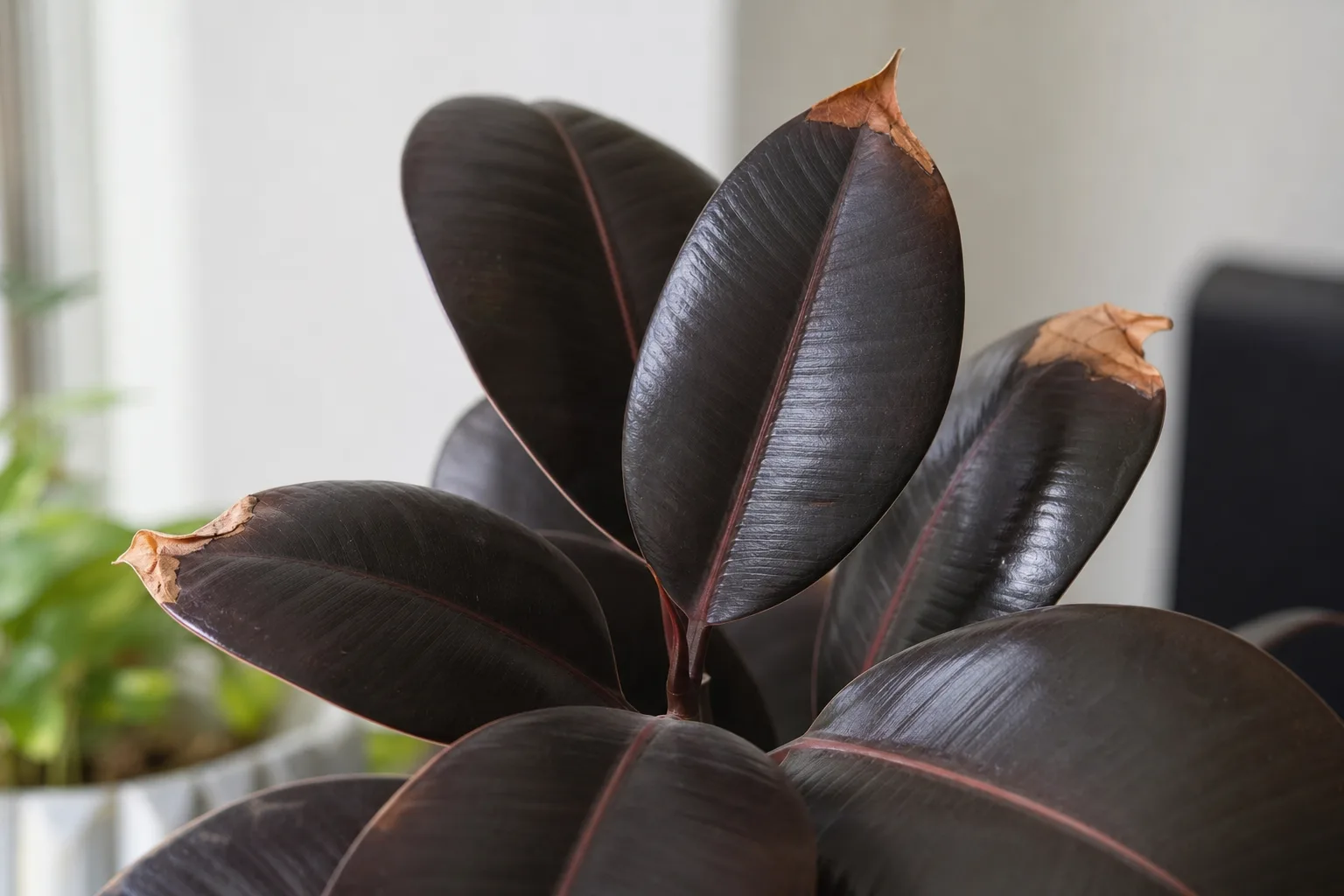
Ficus Burgundy leaves are oblong, leathery blades with deep burgundy upper surfaces and reddish undersides. Mature leaves can reach 8 to 12 inches long or more. Tip damage usually shows in one of three patterns:
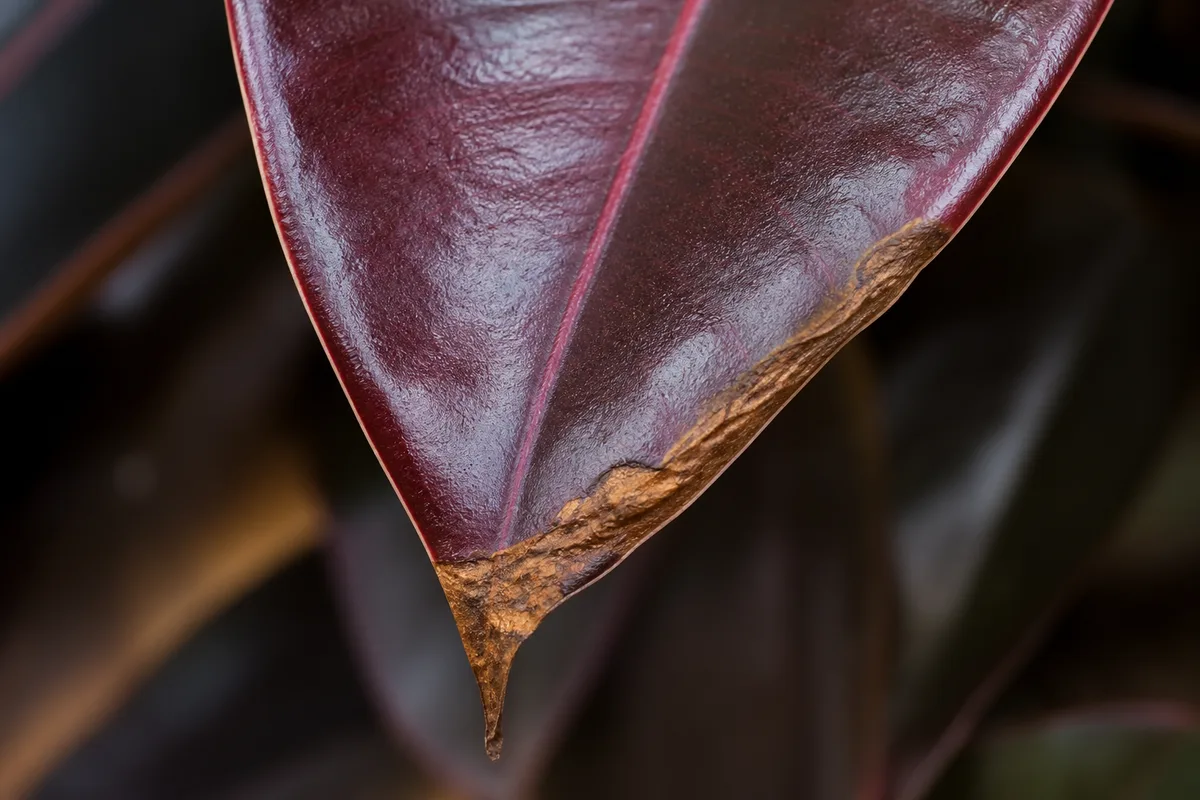
Brown Tips symptoms on Ficus Burgundy - compare with healthy tissue on the same plant.
Crispy dry tips (most common indoors):
- Narrow tan-to-brown band at the very point, sometimes creeping slightly down the margin
- Papery, dry texture you can crumble between fingers
- Rest of the leaf stays dark burgundy, glossy, and firm
- Often worse on leaves nearest radiators, AC vents, or south-facing glass in winter
Soft brown tips with yellowing:
- Brown zone feels soft or waterlogged, not crispy
- Yellow may spread inward from the tip or appear on adjacent leaves
- Pot feels heavy; soil stays damp for days
- May pair with drooping petioles even though tips look “dry”
Scorched patches near tips and edges:
- Bleached or bronze areas on the sun-facing side of the leaf
- Damage appears suddenly after a move closer to a window
- Affects upper leaves more than shaded lower foliage
- New growth may emerge greener than usual-a sign light stress is reducing anthocyanin pigment
Unlike pest damage, clean tip necrosis has no stippling, webbing, or sticky residue. Mealybugs and scale can weaken leaves, but they rarely produce the uniform crispy tip pattern that humidity and water stress create.
Why Ficus Burgundy gets brown tips
Ficus Burgundy is adaptable, but its leaf size works against it when conditions slip. Large coriaceous leaves lose moisture through wide surfaces; the vascular supply thins toward the margin, so tips desiccate before the rest of the blade shows stress. The plant’s thick leaves hide root stress until tips show damage-a theme across the burgundy rubber plant care cluster.
Low humidity in heated winter rooms is the most common trigger. Central heating drops indoor relative humidity well below the 40–60% range Ficus elastica grows best in. Low humidity is the most common cause of brown leaf tips on houseplants, and while Burgundy tolerates average home air better than ferns or calatheas, dry winter air still browns margins on thick foliage-especially leaves nearest a furnace vent.
Inconsistent watering stresses roots and leaf tips alike. Ficus Burgundy should be watered thoroughly, but let the soil dry slightly to the touch between watering times. Long dry spells followed by heavy soaking impair root function; the plant cannot move water to leaf margins fast enough, and tips burn even when the center of the leaf looks fine. Too much water without dry-down causes a different pattern-soft brown tips with yellowing-but chronic underwatering produces the classic crispy point. See underwatering and overwatering for the full wet-vs-dry split.
Mineral and salt buildup concentrates at leaf edges over time. Fertilizer salts and hard-water minerals accumulate in potting mix and draw moisture away from fine root hairs. Excess salts can build up in the soil when too much fertilizer is applied, which can also lead to brown leaf tips. Ficus Burgundy fed during active growth needs occasional flushing or half-strength feeds to avoid salt scorch on tips-the fertilizer guide covers salt flush steps in detail.
Direct sun and hot glass scorch glossy leaves. NC State advises bright indirect light or partial shade and protection from the afternoon sun indoors. PlantTalk Colorado warns that unfiltered, direct sunlight can damage leaves. A Ficus Burgundy pushed against a south window in summer can show bleached or crispy edges within days, and prolonged low light before a sudden move to harsh sun makes scorch more likely because leaves formed in dim conditions lack protective pigment.
Cold drafts and sudden temperature drops do not always brown tips first, but they weaken the plant and accelerate margin damage on stressed foliage. Clemson advises avoiding temperatures lower than 55° F, sudden drops in temperatures, and cold drafts; NC State notes rubber plants do not do well with drafts or cold temperatures.
How to confirm the cause
Work through these checks in order before you trim, repot, or fertilize:
- Soil moisture at depth - Push your finger 2 inches into the mix. Dry and dusty means underwatering is in play. Cool, damp, or soggy for days suggests overwatering or poor drainage.
- Pot weight - Lift the container. A light pot with crispy tips confirms drought stress. A heavy pot with soft brown tips points to wet roots.
- Humidity and placement - Note proximity to radiators, forced-air vents, and single-pane winter windows. Readings below 40% in winter support a humidity diagnosis when soil moisture is normal. See low humidity if edges brown while soil stays evenly moist.
- Light exposure - Identify which leaf side browned. Sun-facing bleaching on upper leaves after a recent move suggests scorch, not salt burn. Review light placement if new growth is fading to green alongside tip damage.
- Salt crust check - Look for white mineral film on the soil surface or inside the pot rim. Tip burn with crust often follows heavy feeding or hard tap water.
- New growth condition - Healthy dark glossy new leaves with only older tips browned often means past stress or normal ageing. Browning on emerging leaves means the current environment is still wrong.
- Root smell (only if soil is wet) - Sour odor from the drainage hole suggests root problems; tip browning may be secondary to chronic overwatering.
If soil is evenly moist, stems are firm, and tips are crispy in a dry winter room, humidity or underwatering is the likely path-not fertilizer.
First fix for Ficus Burgundy
Water thoroughly only if the top 2 inches of soil are dry and the pot feels light.
This single step addresses the most common mistake-adding water to a plant that is already sitting wet, or ignoring a genuinely dry root zone. Water until it runs from the drainage holes, then empty the saucer. Do not water again until the top 2 inches feel dry. That dry-down is what prevents both drought tip burn and the root stress that mimics it.
Do not trim all the brown tips on day one. Do not fertilize a stressed plant. Do not repot unless roots are mushy or the mix never dries. Confirm the water pattern first; everything else follows from that reading.
Step-by-step recovery
After the initial watering check:
- Stabilize the watering rhythm - Match summer frequency (roughly every 7–10 days when the top 2 inches are dry) to slower winter use (every 14–21 days). Reduce watering altogether when the plant is dormant (from fall to late winter).
- Raise humidity modestly if air is dry - Cluster houseplants together or set on a pebble-filled saucer with the pot base above the waterline, or run a humidifier targeting 40–60% near the canopy.
- Move off hot window glass if sun-facing sides bleached - Shift to bright indirect light per the light guide. Morning light from an east window works well; filter harsh afternoon sun.
- Flush accumulated salts in spring if white crust or post-feeding tip burn appeared - Run plain room-temperature water through the pot at two to three times the pot volume. Let it drain fully; skip fertilizer for several weeks afterward.
- Switch to filtered or rested tap water if tips persist after humidity and watering are stable - Hard water minerals concentrate at margins on many houseplants.
- Trim cosmetic damage last - Once new growth emerges clean, snip dead tip tissue with clean scissors, following the natural leaf curve. Leave a thin brown edge rather than cutting into healthy green tissue. Wear gloves; milky sap that some people find irritating to the skin can drip from cut leaves. Ficus elastica is toxic to cats and dogs-keep trimmed debris away from pets and wash hands before handling animals.
If soil stayed wet, stems softened, or roots smell sour, skip the humidity fixes and treat as overwatering: stop watering, improve light and airflow, and inspect roots only if decline continues.
Recovery timeline
Underwatering-related crisp tips often stop spreading within days of one thorough, well-drained watering. Humidity improvements show on new leaves over one to three weeks because existing brown tissue cannot revert. Salt-flush benefits appear on the next flush of spring growth. Sun scorch stops immediately once exposure is corrected, but scorched patches remain until you trim or the leaf is replaced.
Judge success by new glossy burgundy leaves with intact tips-not by old blades returning to perfect form.
Lookalike symptoms to rule out
Whole-leaf yellowing with wet soil is overwatering or root rot on Ficus Burgundy, not simple tip burn. Clemson links leaf yellowing to soil that stays too wet.
Uniform leaf drop after a move reflects draft or placement stress more than tip necrosis. Rubber plants prefer to remain in one location and struggle with cold drafts.
Spider mite stippling shows as pale dots and fine webbing, usually with overall dull foliage-not isolated crispy points on otherwise glossy leaves.
Scale or mealybug patches appear as bumps or cottony clusters on stems and leaf undersides. Weak infested leaves may yellow, but the primary sign is pest presence, not clean margin desiccation.
Normal lower-leaf ageing - NC State notes some bottom leaves turning yellow and drop is normal. A single older leaf with a dry tip while new growth stays perfect may need no treatment beyond stable care.
Color fade on new growth - Greener new leaves without tip burn usually mean insufficient light, not humidity stress. Fix light before chasing humidity changes.
Mistakes to avoid
Do not increase fertilizer to “green up” browned tips-salt burn makes margins worse. Do not mist heavily onto soil; surface moisture encourages fungus gnats without meaningfully raising humidity. Do not cut deep into healthy green tissue when trimming; you wound live cells and expose latex sap. Do not place the plant in direct afternoon sun hoping brighter light fixes tips-that scorches Ficus elastica foliage. Do not water on a calendar if the pot is still heavy from the last drink.
Ficus Burgundy care cross-check
Bright indirect light keeps the plant using water predictably and sustains deep burgundy color. Well-drained houseplant mix with perlite and bark supports the dry-down Ficus Burgundy needs. Temperatures above about 55°F at night and protection from furnace drafts reduce stress that makes tip burn spread faster. Wash the leaves with water when they get dusty to keep them attractive and help you spot pests early. The same species is covered in depth on the rubber plant brown tips guide if you want parallel framing under the generic rubber-plant slug.
How to prevent brown tips next time
Water when the top 2 inches of soil are dry, not on a fixed weekday schedule. Empty saucers after every watering. Keep the plant in bright filtered light away from hot glass. Raise winter humidity with a humidifier or pebble tray rather than relying on occasional misting. Feed at half strength during active growth and flush salts once or twice a year. Avoid relocating the pot and changing watering volume in the same week-Ficus Burgundy handles boring, stable care better than stacked adjustments.
When to worry
Treat as urgent when brown tips are soft and spreading with yellow leaves, several leaves fail within days, soil smells sour, or stems soften at the base. Those signs suggest root failure, not cosmetic dryness.
Lower urgency applies when a few older leaves show crispy points in dry winter air while new growth stays firm and dark burgundy. Monitor for two weeks after correcting water and humidity; if new tips stay clean, the plant is recovering.
Conclusion
Brown tips on Ficus Burgundy look alarming on large dark glossy leaves, but the diagnostic path is straightforward. Read soil moisture and pot weight first, then match the fix to humidity, watering rhythm, salts, or sun exposure. Trim old damage only after new leaves prove conditions are stable. That sequence stops most tip burn without the Ficus Burgundy repotting guide, feeding, and pruning pile-ups that stressed Ficus elastica tolerate poorly.
This guide synthesizes Clemson HGIC, NC State Extension, Iowa State Yard and Garden, PlantTalk Colorado, and Missouri Botanical Garden references with LeafyPixels Ficus Burgundy overview, watering, light, fertilizer, and related problem pages. Claims were checked against those sources before publication.
When to use this page vs other Ficus Burgundy guides
- Ficus Burgundy watering guide - Use for routine moisture checks before assuming brown tips is the main issue.
- Ficus Burgundy problems hub - Browse all 16 common issues on this species.
- Low Humidity on Ficus Burgundy - Different entry point when symptoms overlap with brown tips.
- Underwatering on Ficus Burgundy - Different entry point when symptoms overlap with brown tips.
- Overwatering on Ficus Burgundy - Different entry point when symptoms overlap with brown tips.