Ficus Benjamina Care: Light, Water & Tips
Ficus benjamina
Ficus benjamina: find the right position and never move it. Water consistently when top inch dries. Leaf drop from any change is normal - stabilise conditions and new growth follows.
Ficus Benjamina Care: Light, Water & Tips
Start with wateringThe most common care mistake for Ficus BenjaminaWatering guide →Ficus Benjamina care essentials
Light
bright indirect light, medium indirect light
Water
Water when top inch dries. Every 7 days in summer; every 10–14 days in winter. Consistency is key.
Soil
Well-draining potting mix with perlite. Slightly acidic pH 6–6.5.
Humidity
Moderate to high humidity (50–60%)
Temperature
18°C to 26°C (65–78°F)
Fertilizer
Feed lightly during active growth. Balanced liquid fertilizer.
About Ficus Benjamina
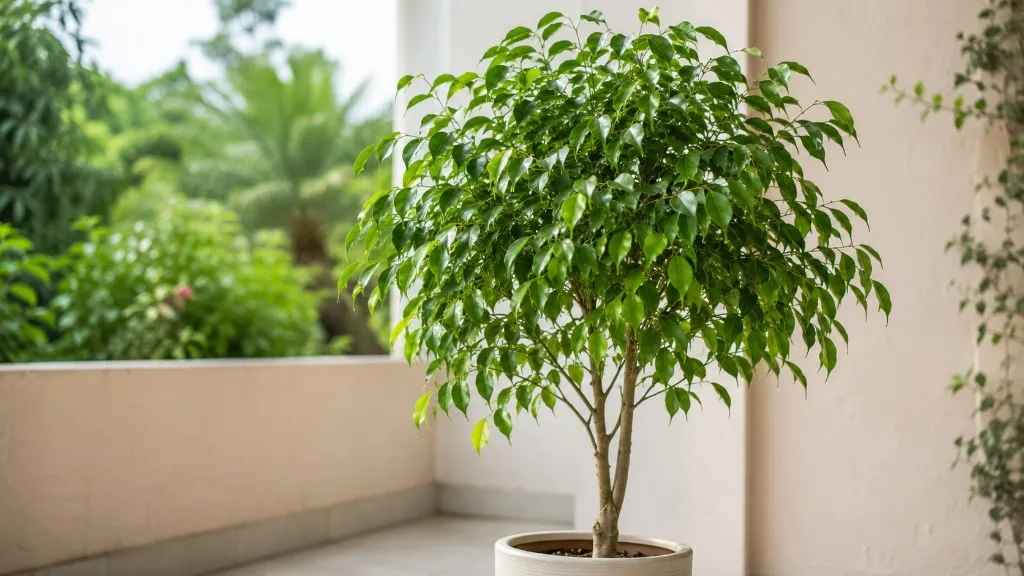
Ficus Benjamina has a upright growth habit.
| Detail | Information |
|---|---|
| Growth habit | Upright |
| Scientific name | Ficus benjamina |
Ficus Benjamina Care: Light, Water & Tips
Why Ficus Benjamina Feels Easy in the Store and Tricky at Home
Ficus benjamina, the weeping fig, is one of the most recognizable indoor trees in commerce. It also has a reputation for dropping leaves the moment conditions change, and that reputation is deserved.
The plant is not inherently fragile. It is just highly reactive to shifts in light, temperature, airflow, and watering. Once you understand that, its behavior starts to make sense.
If you want the shortest accurate summary, it is this:
Ficus benjamina likes bright filtered light, a consistent routine, and very little environmental drama.
What Makes This Ficus Different From Other Indoor Trees
The weeping fig grows with many small leaves on fine arching branches. That gives it an elegant silhouette, but it also means the plant constantly decides which leaves are worth keeping under current conditions.
When the environment changes, it adjusts fast by shedding foliage it can no longer support. That is why a plant that looked dense in a greenhouse or store can thin dramatically after a move into a darker, drier, or draftier room.
This is not the same behavior as a thicker-leaved rubber plant. Benjamina usually shows stress by leaf drop first, not by obvious wilting first.
Light: Strong Ambient Light, Not a Dark Corner
Clemson HGIC recommends bright indirect or curtain-filtered light for weeping ficus, and that is still the most useful practical target.
Good placements often include:
- an east window
- a bright room near a south or west window with the harshest rays filtered
- a stable bright office or living room with strong ambient daylight
What usually fails:
- deep corners
- rooms where the plant is far from glass
- moving the tree repeatedly between brighter and dimmer spots
Signs the light is not enough include:
- thinning interior foliage
- smaller new leaves
- stretched growth
- slow drying that tempts overwatering
Stability Matters More Than Perfection
This is the care point most guides understate.
Ficus benjamina often tolerates slightly imperfect conditions better than it tolerates constant change. A decent bright spot that stays consistent is usually better than a “perfect” spot the plant gets moved in and out of every few weeks.
Common triggers for stress-related leaf drop:
- moving the tree across rooms
- turning it sharply after it has settled
- placing it in the path of AC or heat vents
- sudden temperature swings
- repotting and relocating at the same time
If the plant drops leaves after a move, your first response should usually be stabilize and wait, not move it again.
Watering: Consistent, But Never Automatic
Weeping fig wants a middle path. It dislikes both chronic wet roots and wild swings between dust-dry and saturated soil.
The practical rule is:
- water when the top 1 to 2 inches of mix are dry
- soak thoroughly
- let excess drain completely
Do not reduce this to a calendar. The same tree may dry quickly in summer near bright glass and much more slowly in winter or in a lower-light room.
The biggest watering mistake is not underwatering. It is watering a stressed tree because leaf drop looks like thirst even when the pot is still damp.
Why Overwatering Hits This Plant So Hard
Once Ficus benjamina is stressed by lower light or a move, it uses water more slowly. If you keep watering on the old schedule, the mix stays wet longer than you think, roots lose oxygen, and the tree starts dropping or yellowing leaves for a second reason.
That creates a common grower trap:
- the tree drops leaves after a move
- the owner assumes it needs help
- the owner waters more
- the root zone stays wet
- the tree declines further
If the pot still feels heavy, adding more water is usually the wrong move.
Soil and Drainage
This species does not need an exotic soil recipe, but it does need a potting mix that drains and re-wets reliably. A standard indoor mix improved with perlite or bark is usually enough.
What matters more than brand:
- the pot has drainage holes
- the mix does not stay soggy for long stretches
- runoff does not sit trapped in an outer container
If the top dries while the container remains heavy for days, reassess the setup before you blame the tree itself.
Temperature, Drafts, and Indoor Placement
Clemson warns that weeping ficus responds badly to drafts and temperature swings, and that shows up in real homes all the time.
Avoid placing the tree:
- beside exterior doors
- under HVAC vents
- against cold winter glass
- next to radiators or strong heat sources
Warm ordinary indoor conditions are usually fine. Air blasting across the canopy is not.
Humidity: Helpful, but Not the First Diagnosis
Average indoor humidity is often workable if the tree has good light and stable placement. Humidity becomes more important when winter heating dries the air hard enough to support spider mites or crisp the foliage.
If you are troubleshooting, light, drafts, and moisture in the pot usually matter before room humidity does.
Leaf Drop: When to Worry and When to Wait
This is the issue most people search for, so it deserves a blunt answer.
Some leaf drop after a significant change is normal on this species. Worry more when leaf drop is paired with:
- persistently wet media
- yellow leaves spreading fast
- soft stem tissue
- a dark room that slows drying
- obvious pest activity
If the plant recently moved but the roots are not staying wet, patience is often the fix. If the plant is dropping leaves on a damp heavy pot, investigate the roots and watering routine.
Fertilizer: Modest and Seasonal
Weeping fig is not a heavy feeder indoors. A balanced liquid fertilizer during active growth is usually enough.
Skip or reduce feeding when:
- the tree is newly repotted
- the light is weak
- growth is stalled
- the plant is dropping leaves from stress
Feeding a plant that is not actively using nutrients usually adds salts, not health.
Repotting and Root Health
Repot only when the tree actually needs it:
- roots filling the pot
- mix breaking down and staying wet or compacted
- water racing through without even absorption
Move up only one pot size. Oversizing is a common way to create long wet cycles around a root system that cannot use that much media.
Do not combine a major move and a repot unless you have no better option.
Pruning and Shape
Benjamina tolerates pruning well when healthy. Light structural pruning can help maintain shape, remove weak growth, or manage size.
Prune during active growth when possible so the tree can replace lost foliage more easily. If the plant is already shedding heavily from stress, stabilize it before doing optional shaping work.
Pet Safety
The ASPCA lists ficus under toxic or irritating fig plants, and Pet Poison Helpline describes the usual exposure signs as oral irritation, vomiting, diarrhea, and skin irritation from sap contact.
For practical home placement, that means:
- do not place the tree where pets can chew hanging branches
- clean fallen leaves promptly in pet-accessible homes
- wash up after pruning if sap gets on your skin
Who This Plant Is Best For
Ficus benjamina is a strong fit if you want:
- an indoor tree with a softer, finer silhouette
- a long-term bright-room specimen
- a plant you are willing to leave in one stable place
It is a weaker fit if you:
- rearrange plants constantly
- want something tolerant of dark corners
- need a pet-accessible floor tree
Conclusion
Ficus benjamina is not difficult because it needs exotic care. It is difficult because it reacts quickly when light, drafts, and watering get out of sync. If you give it bright filtered light, a draining mix, careful watering, and a stable placement, it usually settles into a reliable long-term indoor tree.
When problems show up, resist the urge to change everything at once. Check light, drafts, and root-zone moisture first. On this species, calm diagnosis usually works better than busy care.
Related Ficus Benjamina guides
- Ficus Benjamina light for placement and grow-light decisions
- Ficus Benjamina watering for moisture checks and seasonal timing
- Ficus Benjamina soil for mix and drainage choices
- Ficus Benjamina repotting for root-health timing
- Leaf Drop on Ficus Benjamina when shedding is already underway
- Yellow Leaves on Ficus Benjamina when moisture stress or low light is showing
How to care for Ficus Benjamina?
How much light does Ficus Benjamina need?
bright indirect light, medium indirect light
- bright indirect light, medium indirect light - bright indirect light, medium indirect light.
When should you water Ficus Benjamina?
Water when top inch dries. Every 7 days in summer; every 10–14 days in winter. Consistency is key.
- Check top 2 inches - Water when top inch dries.
- Drain excess water - Water when top inch dries.
What soil works best for Ficus Benjamina?
Well-draining potting mix with perlite. Slightly acidic pH 6–6.5.
- Well-draining mix - Well-draining potting mix with perlite.
Grower notes for Ficus Benjamina
What matters most with Ficus Benjamina
Ficus Benjamina often reacts to change before it reacts to bad care. Leaf drop after a move is common, but repeated drop means light, drafts, watering, or root conditions are still unstable. In practice, the care checkpoint is simple: bright indirect light, medium indirect light. Pair that with well-draining potting mix with perlite. Slightly acidic pH 6–6.5, and avoid changing water, pot size, and placement all at once.
Best placement in a real home
Ficus Benjamina belongs where bright indirect light, medium indirect light is realistic for most of the day, not only where the pot looks good. Water when top inch dries. Every 7 days in summer; every 10–14 days in winter. Consistency is key. If the pot stays wet longer than expected, move the plant into better light or reassess the mix before watering again. Humidity target: Moderate to high humidity (50–60%).. Temperature comfort zone: 18°C to 26°C (65–78°F).
Before you buy this plant
Choose Ficus Benjamina with firm new growth, clean leaf undersides, and soil that does not smell sour or feel compacted. Be cautious if you see leaf-drop, sticky residue, collapsed crowns, or a pot that is wet in poor light. Cosmetic old-leaf damage is less worrying than weak roots or active pests.
First month after bringing it home
Do not repot Ficus Benjamina on day one unless the mix is failing or pests are obvious. Quarantine it, learn how fast the pot dries, and keep care boring while it adjusts. Watch especially for leaf-drop, yellow-leaves, and spider-mites. If problems appear, correct the condition first rather than stacking fertilizer, repotting, and pruning together.
Safety note for Ficus Benjamina
Ficus Benjamina is not a plant to keep within reach of pets or children. Treat it as an inaccessible display plant. Use gloves if sap or plant tissue is irritating, and pick a pet-safe alternative for floor pots or low shelves.
How to tell Ficus Benjamina is settling in
If you plan to multiply it later, common methods include Stem cuttings and Air layering. If yellow-leaves shows up early, inspect light, watering, and roots before assuming the plant is permanently weak.
Is it pet safe?
Ficus Benjamina is toxic to cats and dogs.
Toxic to cats and dogs; sap causes skin and mouth irritation.
Watering Ficus Benjamina
Water when top inch dries. Every 7 days in summer; every 10–14 days in winter. Consistency is key.
Soil & potting for Ficus Benjamina
Well-draining potting mix with perlite. Slightly acidic pH 6–6.5.
Humidity & temperature for Ficus Benjamina
Ficus Benjamina prefers moderate to high humidity (50–60%), though normal home humidity is usually fine. Keep temperatures around 18°C to 26°C (65–78°F).
| Detail | Information |
|---|---|
| Humidity | Moderate to high humidity (50–60%) - normal home humidity is fine. |
| Ideal temperature | 18°C to 26°C (65–78°F) |
Fertilizer & pruning for Ficus Benjamina
Use feed lightly during active growth. Balanced liquid fertilizer. for Ficus Benjamina.
| Detail | Information |
|---|---|
| Fertilizer type | Feed lightly during active growth. Balanced liquid fertilizer. |
Common problems on Ficus Benjamina
Leaf Drop
HighLikely cause: Any environmental change - moving, cold draft, watering change - triggers mass leaf drop in this highly sensitive species
Quick fix: Identify and remove the stressor; stabilise position; maintain consistent watering; new growth in 6–12 weeks
Full fix guide →Yellow Leaves
MediumLikely cause: Yellow leaves alongside leaf drop indicates overwatering stress or root problems
Quick fix: Allow soil to dry; check drainage; reduce watering frequency
Full fix guide →Spider Mites
MediumLikely cause: Small leaves in dry air are vulnerable to spider mite infestations
Quick fix: Shower plant; apply neem oil every 5 days for 3 weeks; raise humidity
Full fix guide →Brown Tips
MediumLikely cause: Common on this plant type; confirm with recent watering, light, and root checks.
Quick fix: Inspect the plant and correct the most likely care stressor before stacking treatments.
Full fix guide →Root Rot
MediumLikely cause: Common on this plant type; confirm with recent watering, light, and root checks.
Quick fix: Inspect the plant and correct the most likely care stressor before stacking treatments.
Full fix guide →Overwatering
MediumLikely cause: Common on this plant type; confirm with recent watering, light, and root checks.
Quick fix: Inspect the plant and correct the most likely care stressor before stacking treatments.
Full fix guide →Underwatering
MediumLikely cause: Common on this plant type; confirm with recent watering, light, and root checks.
Quick fix: Inspect the plant and correct the most likely care stressor before stacking treatments.
Full fix guide →Mealybugs
MediumLikely cause: Common on this plant type; confirm with recent watering, light, and root checks.
Quick fix: Inspect the plant and correct the most likely care stressor before stacking treatments.
Full fix guide →Aphids
MediumLikely cause: Common on this plant type; confirm with recent watering, light, and root checks.
Quick fix: Inspect the plant and correct the most likely care stressor before stacking treatments.
Full fix guide →Leggy Growth
MediumLikely cause: Common on this plant type; confirm with recent watering, light, and root checks.
Quick fix: Inspect the plant and correct the most likely care stressor before stacking treatments.
Full fix guide →Slow Growth
MediumLikely cause: Common on this plant type; confirm with recent watering, light, and root checks.
Quick fix: Inspect the plant and correct the most likely care stressor before stacking treatments.
Full fix guide →Wilting
MediumLikely cause: Common on this plant type; confirm with recent watering, light, and root checks.
Quick fix: Inspect the plant and correct the most likely care stressor before stacking treatments.
Full fix guide →Drooping Leaves
MediumLikely cause: Common on this plant type; confirm with recent watering, light, and root checks.
Quick fix: Inspect the plant and correct the most likely care stressor before stacking treatments.
Full fix guide →Low Humidity
MediumLikely cause: Common on this plant type; confirm with recent watering, light, and root checks.
Quick fix: Inspect the plant and correct the most likely care stressor before stacking treatments.
Full fix guide →Not Enough Light
MediumLikely cause: Common on this plant type; confirm with recent watering, light, and root checks.
Quick fix: Inspect the plant and correct the most likely care stressor before stacking treatments.
Full fix guide →Fungus Gnats
MediumLikely cause: Common on this plant type; confirm with recent watering, light, and root checks.
Quick fix: Inspect the plant and correct the most likely care stressor before stacking treatments.
Full fix guide →Mold on Soil
MediumLikely cause: Common on this plant type; confirm with recent watering, light, and root checks.
Quick fix: Inspect the plant and correct the most likely care stressor before stacking treatments.
Full fix guide →